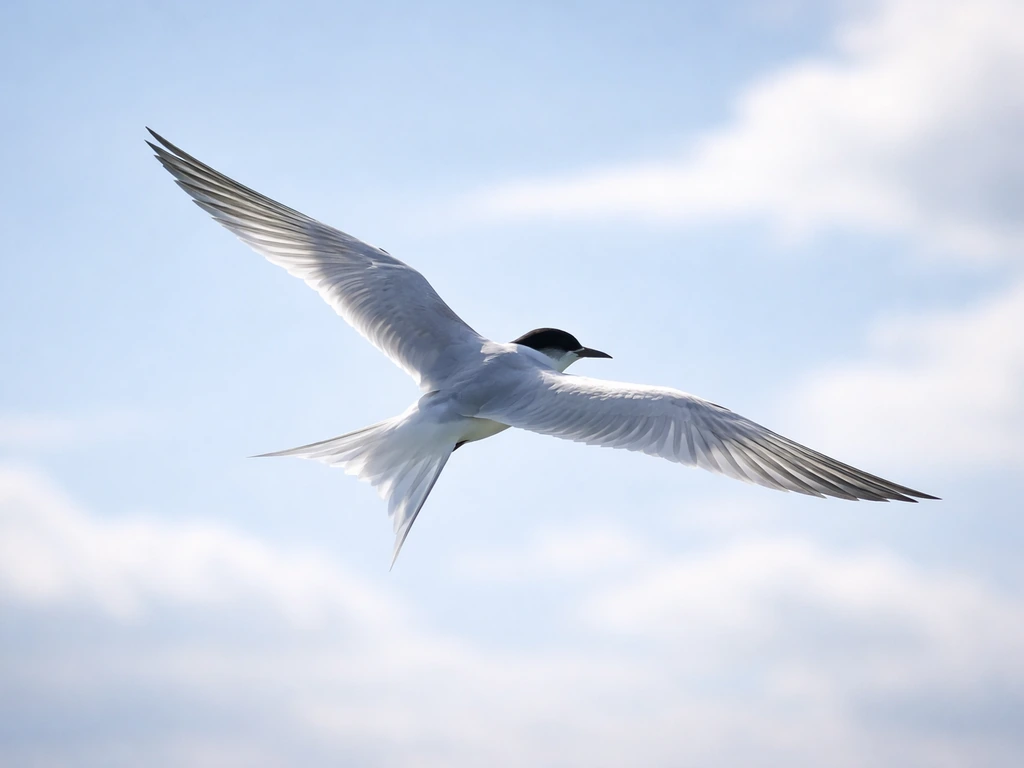
When a bird flies over your head, the most likely explanation is simple biology: it's going somewhere, looking for something to eat, riding a thermal, or defending a nest nearby. That said, humans have been reading meaning into overhead birds for thousands of years, and those cultural layers are worth understanding too. So here is a straight answer to both versions of the question: what birds are actually doing when they pass over you, and what traditions say it means.
Bird Flying Over Your Head Meaning: Real Reasons and What to Do

Marcus Chen
22 Apr 2026
What people have always believed about birds flying overhead

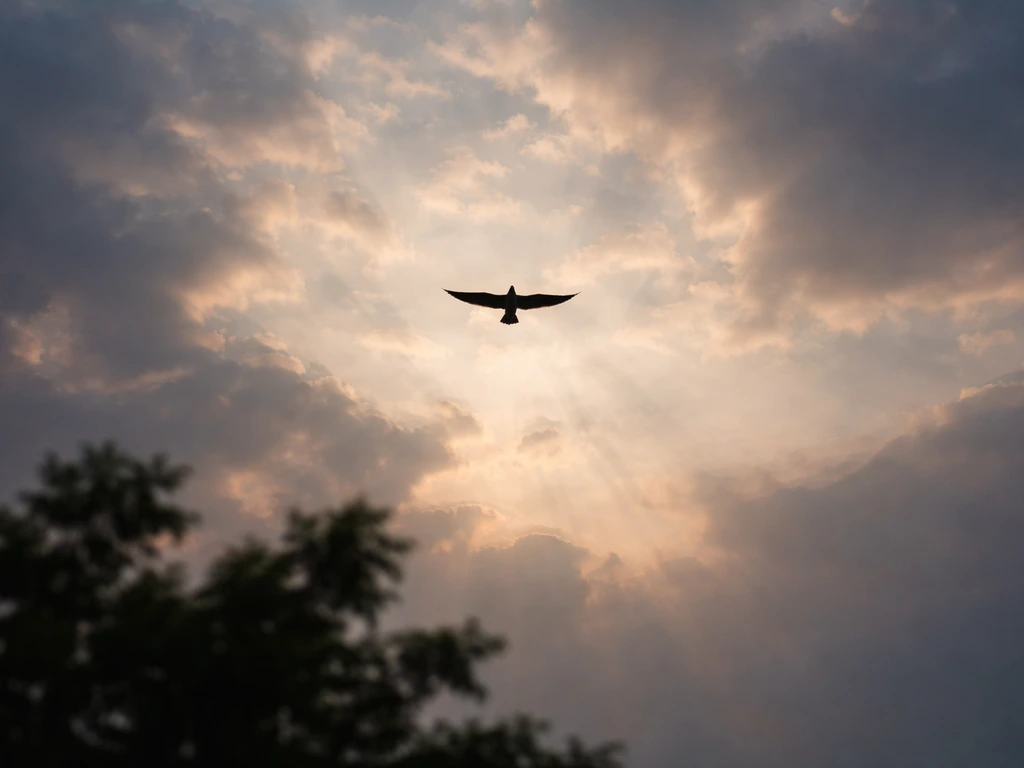
The idea that a bird flying over your head carries a message is one of the oldest symbolic beliefs on record. Ancient Greeks and Romans practiced ornithomancy, a structured system of reading bird omens from flight behavior, direction, and calls. The direction a bird crossed the sky (left versus right) could mark good or bad fortune, and specific species carried specific meanings. It was not a casual belief system; it was institutionalized divination used to guide decisions in war and politics.
That tradition never fully disappeared. In Persian and Indian lore, the legendary Huma bird was said to bestow kingship on any person its shadow fell across, making an overhead bird literally life-changing in symbolic terms. And modern popular culture still echoes this: common interpretations frame a bird flying over your head as a sign of protection, spiritual guidance, or incoming change. Three seagulls flying directly overhead together have been cited as a warning of death in some Western maritime traditions. A bird leaving a dropping on your head, by contrast, is widely treated as a luck omen rather than an insult.
These are cultural interpretations, not wildlife science. A mainstream conservation organization like Audubon frames bird superstitions as culturally ingrained stories rather than literal truth. That framing is honest and useful. You can appreciate the symbolism without assuming the crow circling above you has a prophecy to deliver. Both things can coexist: the biology is real, the symbolism is human, and knowing the difference helps you respond appropriately.
Why birds actually fly over people: the biology
Birds are not thinking about you when they pass overhead. They are running the same behavioral programs they always run: finding food, navigating between roosts, staying aloft efficiently, or defending territory. The fact that you are standing below is usually incidental.
Riding thermals and conserving energy
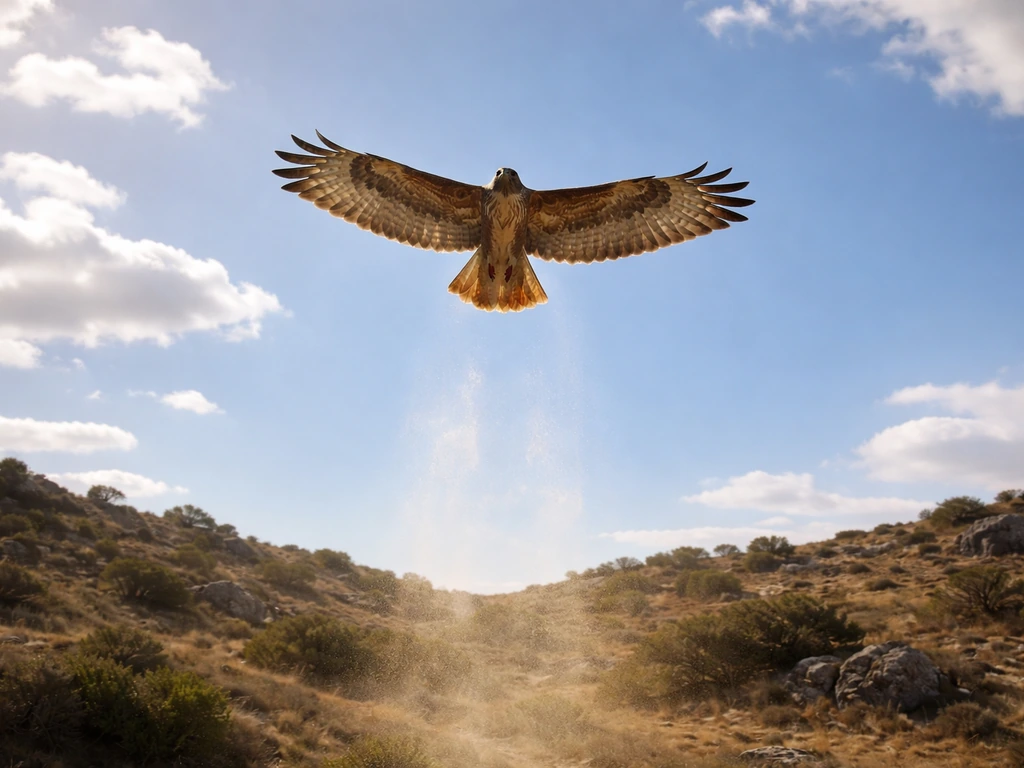
This is the big one for large birds, especially raptors and vultures. Thermals are columns of warm air that rise when the ground heats unevenly under sunlight. A soaring bird that finds a thermal can gain hundreds of feet of altitude with almost no flapping, then glide long distances toward the next one. If a large bird seems to be circling lazily overhead, it is almost certainly riding a thermal, not watching you specifically. The circle is the shape of the updraft column. The bird is spiraling upward inside it. This is pure aerodynamic efficiency, not omen behavior.
Scanning for food
While riding thermals, raptors and vultures are simultaneously scanning the ground below for prey or carrion. Their visual acuity is dramatically sharper than ours, and the altitude gives them a wide search area. If you see a bird of prey circling and then suddenly tuck its wings and stoop (dive), it spotted something. The circling overhead was the search phase, not a reaction to your presence.
Hawking insects along a flight path
Smaller birds, including swallows, swifts, and flycatchers, feed by launching from a perch, catching insects mid-air, and returning. This hunting style is called hawking. If you are standing near a good insect patch, a hedgerow, a light source at dusk, or any other insect concentration point, small birds may make repeated passes directly over your position. They are not circling you. They are following the insects. You just happen to be standing in the hunting zone.
Moving between roosts and perches
Birds commute. They move between feeding areas, water sources, roost sites, and nesting locations multiple times a day. If you are standing near a tree line, a body of water, or any vegetated area, you are probably near a flight corridor. The bird that just crossed over your head was simply using its regular route. You were in the way, and it flew over rather than around.
Territorial or nest defense
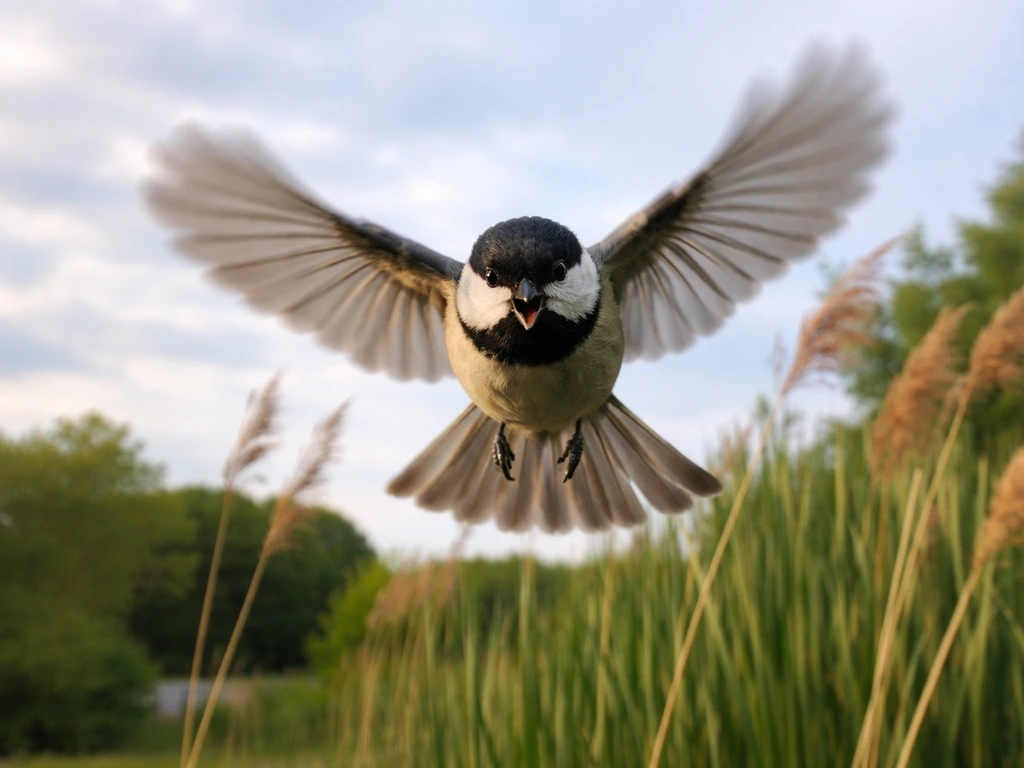
This is the one case where the bird may actually be reacting to you. During nesting season, many species (red-winged blackbirds, mockingbirds, magpies, and some gulls being common examples) will actively defend a zone around their nest. A bird that makes a close, fast, repeated pass over your head while calling loudly is often giving you a warning. It perceives you as a threat to nearby eggs or chicks. This is behavioral, not symbolic, and it deserves a practical response, which we will get to shortly.
What the bird's size and flight style tells you
You do not need binoculars or a field guide to make a reasonable guess about what a bird overhead is doing. Wing shape and flight pattern give you a lot of information.
| What you see | Likely species type | Most probable behavior |
|---|---|---|
| Large, broad wings, slow circles, minimal flapping | Vulture, hawk, eagle | Riding thermals, scanning for food |
| Medium size, fast wingbeats, wide circles with occasional stoops | Falcon (e.g., peregrine) | Hunting, ringing up on prey |
| Small, fast, erratic passes back and forth | Swallow, swift, flycatcher | Hawking insects along a feeding route |
| Medium, noisy, repetitive close passes with alarm calls | Mockingbird, red-winged blackbird, magpie, gull | Territorial or nest defense (nesting season) |
| Any size, straight-line pass, no circling | Most species | Commuting between roost, food, or water source |
| Any size, landing or near-landing attempts, repeated passes | Any species | Possibly disoriented, injured, or investigating attractant near you |
Wing shape is particularly reliable. Long, narrow, swept-back wings mean a fast flier built for speed (falcons, swifts). Wide, slotted wings with spread feather tips at the wingtips mean a soarer built for sustained gliding (eagles, vultures, large hawks). Short, rounded wings usually belong to woodland birds that need maneuverability, not distance. Connecting wing anatomy to behavior is one of the clearest shortcuts in bird identification, and it works even with a brief overhead glimpse.
If you are curious about what circling specifically signals as a behavior pattern, that topic gets more detailed treatment in the related piece on bird flying in circles meaning, which covers the thermal-riding and hunting mechanics in more depth. If you are also wondering about bird flying meaning in those tighter loops, the same mechanics can help you interpret what you see bird flying in circles meaning.
Normal behavior vs. something that needs your attention
Most of the time, a bird flying over your head is completely normal and requires nothing from you. Here is how to tell the difference.
Completely normal, no action needed
- A large bird circling silently at height, especially over open terrain or on a warm afternoon
- Small birds making repeated fast passes near flowering plants, a light source, or a hedgerow
- Any bird crossing overhead in a straight line without vocalization
- Birds moving in groups between trees or toward water at dawn or dusk
Worth paying attention to
- Repeated close passes with loud alarm calls, especially in spring and early summer (nesting season): this is territorial defense, and you may be too close to a nest
- A bird that appears to be targeting you specifically, tracking your movement rather than a fixed territory point
- An unusually low approach or landing attempt from a species that normally avoids humans: this can indicate illness, injury, or disorientation
- Accumulation of droppings in a specific spot you walk through regularly: large quantities of droppings from a roost site carry a genuine health consideration
On the health point: the CDC and Mayo Clinic both note that soil contaminated with bird (or bat) droppings can harbor Histoplasma, the fungus that causes histoplasmosis, a respiratory illness. The risk comes primarily from disturbing accumulated droppings (digging, sweeping, or renovating near a roost), not from a single bird passing over. But if birds are roosting heavily in or around your home and you need to clean up, use appropriate protection or hire professionals. People who are immunocompromised face higher risk.
What to do in the moment
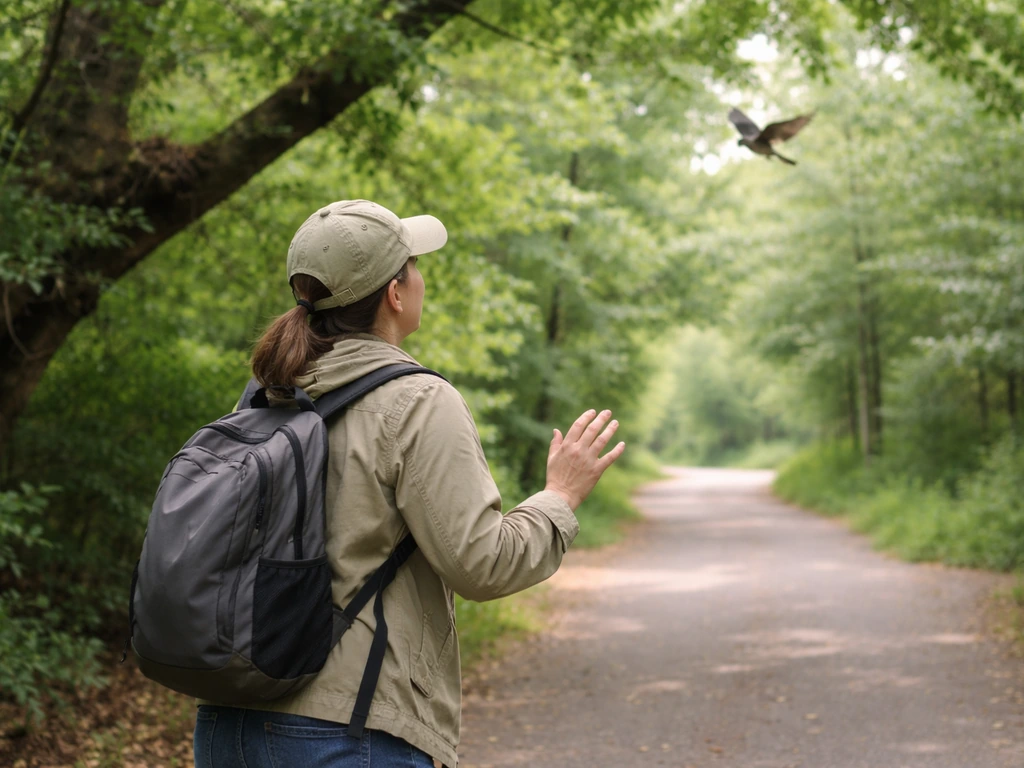
If a bird is making aggressive passes over your head, the U. S. Fish and Wildlife Service recommends a few practical steps. Do not approach the nest, wave at the bird, or make sudden movements that escalate the bird's threat assessment.
Protect your head and eyes. Carrying an open umbrella above you is one of the most effective deterrents during a nesting defense situation because it creates a visual barrier the bird cannot easily navigate around. A stick held vertically above your head can serve the same purpose.
Research on swooping birds has also found that wearing eyes on the back of a hat (mock eyespots) can reduce the frequency of direct strikes, since many birds are less likely to attack when they think they are being watched.
If a bird is circling you at a distance without aggression, the right move is just to observe. Note the wing shape, whether it is flapping or gliding, whether it is gaining or losing altitude, and whether it eventually moves away or stoops. These observations will tell you far more about what the bird is actually doing than any symbolic interpretation will.
If a bird lands very close to you and refuses to leave, or if it appears unable to fly away normally, keep a respectful distance and contact a local wildlife rehabilitator rather than trying to handle it. Most wild birds should not be touched. Attempting to pick up an adult bird is stressful for the animal and usually unnecessary.
- Stay calm and keep moving if the bird is simply passing overhead
- Protect your head with an open umbrella, bag, or arm if a bird is making close aggressive passes
- Do not look directly up and linger under a circling bird of prey: you are not the target, but you are in the way
- Move out of the immediate area if the bird is clearly defending a nearby nest: the aggression stops when you leave the territory radius
- Note what you see: species size, wing shape, flap-vs-glide, and direction of travel help you understand what was happening
- Contact a wildlife rehabilitator if a bird appears injured, grounded, or unable to fly
Reducing repeated flyovers near your home
If birds are repeatedly flying over or near a specific spot around your property, there is usually an attractant drawing them. Removing the attractant is more effective and more durable than any deterrent.
The Washington Department of Fish and Wildlife recommends securing trash so birds cannot access it, feeding pets indoors rather than leaving food bowls outside, and managing fruit-bearing plants or birdseed that has fallen under feeders. Birdseed on the ground in particular draws ground-feeding birds, which in turn draws raptors that hunt them. One attractant cascades into a whole food chain using your yard as a hunting ground.
If the issue is nesting birds making aggressive overhead passes, the most effective long-term solution is to wait out the nesting season. Most songbird nest cycles run four to six weeks from egg-laying to fledging. Once the young have left, the territorial behavior stops. If you need to regularly pass through that area during the nesting period, use the umbrella technique described above and alter your route slightly where possible. Discouraging nesting in very high-traffic human areas before the season starts (removing potential nest sites in late winter before birds return) is a humane prevention strategy.
- Secure trash bins with locking lids so birds cannot forage near your home
- Feed pets indoors and remove outdoor food bowls after meals
- Clean up fallen birdseed under feeders, or move feeders away from high-traffic areas
- Trim dense shrubs or hedges in areas where you do not want birds to roost or nest
- If droppings are accumulating on a surface you use, clean with appropriate protection and consider blocking roost access points
- During nesting season, use an umbrella or hat with a brim as simple head protection when passing through a known territory zone
The simplest way to think about this: birds are not drawn to you personally. They are drawn to resources, flight corridors, and nesting opportunities. Adjust those environmental factors and the overhead traffic adjusts with them. Understanding the biology of why birds fly the routes they do, how thermals work, why certain wing shapes correspond to certain behaviors, makes these practical steps make intuitive sense rather than feeling like arbitrary rules.
The cultural meanings attached to birds flying overhead are genuinely interesting as windows into how human civilizations have interpreted the natural world. If you have seen a bird flying emoji online, the bird flying emoji meaning is usually based on these same symbolic traditions rather than what the bird is actually doing.
If you are wondering about specific symbolic ideas like bird flying out of cage meaning, the same approach applies: compare the cultural interpretation to the bird's real behavior first. For a similar kind of interpretation versus reality, see bird flew away meaning and how it compares to what birds are actually doing. That includes popular emoji interpretations, like what a bird flying emoji meaning can imply in texting culture.
But grounding those interpretations in what birds are actually doing makes both the symbolism and the safety guidance more meaningful. If you are comparing “bird flying meaning” with real behavior, it helps to keep the focus on biology first and treat symbolism as a separate, cultural layer. If you are wondering about “bird flew away meaning,” it usually points to the same basics: the bird has moved on to another part of its route or habitat bird flying meaning. A vulture riding a thermal above you is not an omen.
It is a masterpiece of aerodynamic efficiency, and once you recognize that, it becomes something even better than a symbol: it becomes something real.
FAQ
How can I tell if the bird is just passing overhead versus actually “targeting” me?
Look for repeat behavior and distance. A commuting or feeding bird usually crosses once and continues on. Nest defense birds make close, fast, repeated passes with loud calls and may swoop toward your head or the same spot again and again.
If the bird drops something on me, does that always count as good luck?
Symbolically, some traditions treat it as luck, but practically it means sanitation risk. Avoid touching your clothing or shoes directly, clean the area promptly, and wash hands. If you were under a roost and there are heavy droppings nearby, be extra cautious about dust when cleaning.
Is a bird circling in the sky always a sign of a thermal?
Most of the time, yes for large soaring birds, but not always. Some species circle while searching for prey, and weather can shift flight patterns. A thermal rider tends to spiral upward efficiently, while a predator on patrol may change altitude and then stoop when it spots something.
What should I do if I am walking on a path and a nesting bird suddenly gets aggressive?
Do not stop to stare or wave, and avoid sudden arm swings. Use a visual barrier like an umbrella above your head, or hold a stick vertically as you move through the area. If there is a detour, change routes early rather than waiting for another swoop.
Can I scare the bird away with loud yelling or throwing things?
It often escalates the threat response. Sudden movements, objects, or direct attention can increase swooping. If the bird is defensive, the safer approach is a calm retreat, a barrier overhead, and passing quickly through without confronting the bird.
What’s the safest way to clean bird droppings if birds roost near my home?
Avoid dry sweeping or brushing that raises dust. Ventilate the area, use damp methods to collect material, wear appropriate protection if you are immunocompromised, and consider professional help if droppings are heavy or concentrated around a roost.
How long does nesting-season aggression typically last?
For many songbirds it can run several weeks, often from egg-laying through fledging (commonly about 4 to 6 weeks). After the young leave the nest, the close-range territorial behavior usually stops, so note your dates and revisit your tactics if it continues past fledging.
Do certain wing shapes reliably indicate what a bird is doing, or can I misread it?
Wing shape is a helpful clue, but it is not perfect from below and at a distance. Lighting, wind, and partial views can blur details. Combine wing shape with motion cues, like whether the bird is gaining altitude in spirals, hunting from a perch, or making repeated stoops.
Why do birds keep flying over the same spot around my yard even if I don’t see a nest?
You may be near a predictable route between resources, like feeding areas, water, roost trees, or a flight corridor along vegetation. Also check for attractants you might not notice, such as spilled pet food, accessible trash, fruiting plants, or ground seed under feeders.
What if the bird lands near me and seems injured or unable to fly?
Keep a respectful distance and avoid handling. Contact a local wildlife rehabilitator or animal control for guidance. If it is truly unable to fly, attempting to pick it up can both stress the bird and expose you to bites or scratches.
Are there times when I should seek professional help even if the bird isn’t “attacking”?
Yes, if birds are roosting heavily on buildings, repeatedly producing heavy droppings in living spaces, or causing ongoing overhead aggression in high-traffic areas. Professionals can address roost deterrence and cleanup safely without displacing birds illegally or increasing contamination risk.