
When most people search 'bird in flight meaning,' they are asking about symbolism: what does an image, tattoo, quote, or logo of a bird mid-flight represent? The short version is that a bird in flight almost universally signals freedom, aspiration, forward motion, and the release from whatever holds you down. But the phrase can also be a literal descriptor (a bird that is currently flying), a technical term in avian biology (a 'flighted bird' as opposed to a flightless one), or a reference to the aerodynamics of wing movement and lift. Which meaning applies depends almost entirely on context, and this guide will help you decode it fast.
Bird in Flight Meaning: Symbolism and Flight Facts

Marcus Chen
20 May 2026
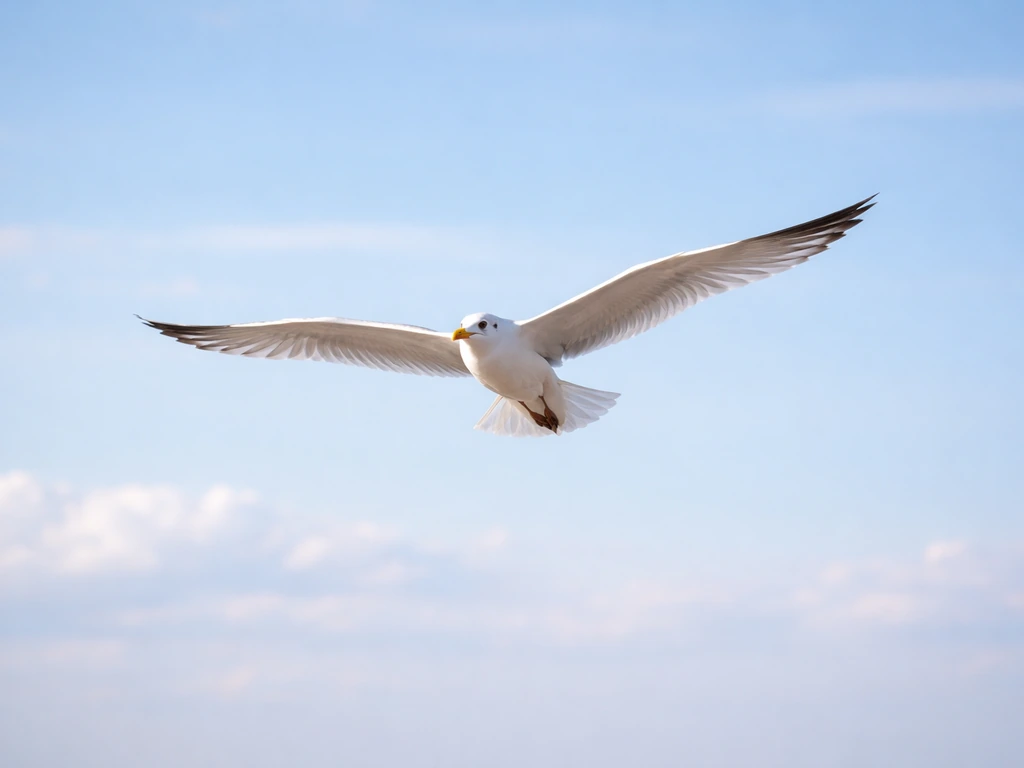
What people usually mean by 'bird in flight meaning'
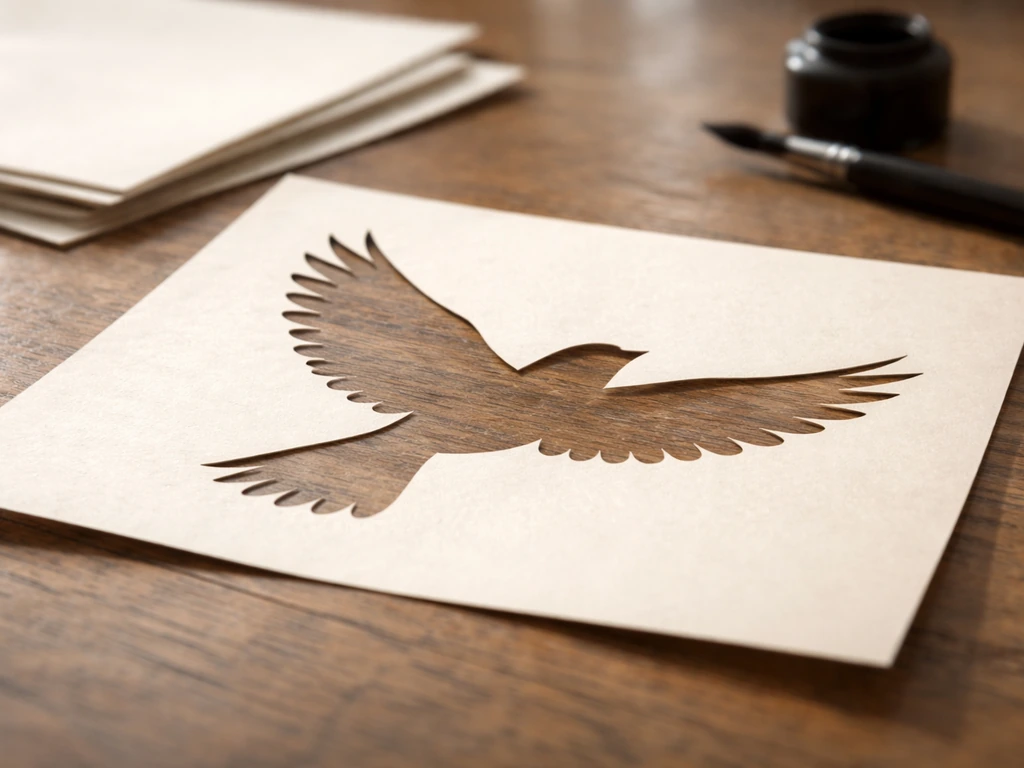
There are really three separate things someone might be asking when they land on this phrase, and they pull in very different directions.
The most common intent is symbolic. Someone has seen a bird-in-flight image on a tattoo, a logo, a painting, a poem, or a greeting card and wants to know what it is supposed to convey emotionally or culturally. This is the interpretation that dominates tattoo guides, art-symbolism articles, and social-media captions, and it almost always maps to themes of freedom, release, aspiration, or transcendence.
The second meaning is purely literal. In English, 'in flight' is simply an adjective phrase meaning the bird is airborne at that moment. If a wildlife photographer titles a shot 'eagle in flight,' they are describing the physical state of the bird, not making a philosophical statement. Cambridge Dictionary treats 'in flight' exactly this way: the subject is currently flying rather than perched or grounded.
The third, more technical meaning involves the phrase 'flighted bird,' which is used in ornithology and bird-keeping to distinguish species (or individuals) that retain full flight capability from flightless birds like penguins, ostriches, or kiwis. If you found the phrase in an educational or scientific context, that distinction is likely what the text is navigating. The difference between a flighted and a flightless bird matters enormously in evolutionary biology, and it deserves its own treatment further down.
Cultural and emotional symbolism: freedom, aspiration, change, and perspective
The symbolic weight of a bird in flight is old, cross-cultural, and remarkably consistent. Across art history, literary traditions, and contemporary design, a bird breaking from the ground and moving through open sky carries a tight cluster of meanings.
- Freedom and escape: The bird has left the earth, which is the most direct visual metaphor for breaking free from constraints, whether physical, emotional, or social.
- Aspiration and forward motion: Flight requires active effort and direction. A bird in motion (rather than hovering or perched) implies purpose, ambition, and momentum.
- Transcendence and spiritual journey: In funerary and cemetery art, a bird rising upward is explicitly associated with the soul leaving the body and ascending toward an afterlife. This is one of the oldest uses of the image.
- New perspective: The phrase 'bird's-eye view' (Merriam-Webster defines it as 'a view from a high angle, as if seen by a bird in flight') shows how deeply the idea of elevated, wide-angle perspective is baked into the metaphor.
- Change and transformation: A bird mid-flight is between two points. It has left one place and has not yet arrived at another, which makes it a natural symbol for transition, reinvention, or life change.
Academic art-symbolism literature, including scholarly discussions going back to at least 2008, confirms that these readings are not just modern tattoo folklore. Birds in flight appear in paintings, poetry, religious iconography, and political emblems for the same core reasons: they represent what humans cannot do physically but deeply want to do metaphorically. The sky is the limit, and the bird is already there.
How medium, species, and pose change the message
Here is where things get genuinely interesting. The same basic image, a bird in flight, can mean very different things depending on which bird, how it is posed, and where you encountered it.
Species matters
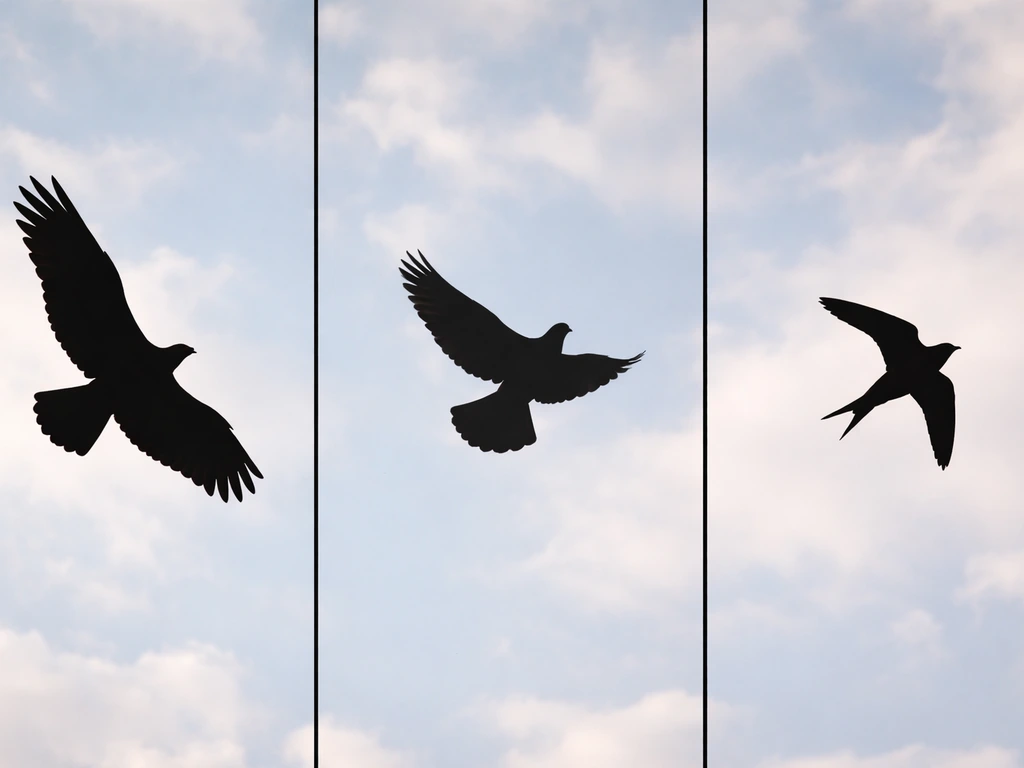
| Bird | Most common symbolic reading in flight |
|---|---|
| Eagle | Power, national pride, strength, dominance |
| Dove | Peace, purity, hope (especially with olive branch) |
| Swallow or sparrow | Freedom, resilience, return home |
| Owl | Wisdom, mystery, transition between worlds |
| Raven or crow | Death, intelligence, transformation, foreboding |
| Phoenix (mythological) | Rebirth, resurrection, rising from destruction |
| Hummingbird | Joy, agility, living fully in the moment |
| Crane | Longevity, grace, good fortune (especially in East Asian traditions) |
Pose and direction shift the tone
A bird soaring upward with wings fully spread in open sky signals aspiration and liberation most clearly. A bird flying away from the viewer (toward the horizon) can mean release, departure, or moving on. A bird diving reads as focus and precision rather than freedom. A flock in formation adds community and collective purpose to the mix. The negative space matters too: lots of open sky amplifies the sense of freedom, while a cluttered background can mute it.
Medium tells you which reading to apply
- Tattoo: Almost always symbolic. Tattoo guides consistently describe 'a bird in flight' as representing freedom, aspiration, or movement and release. The species and placement on the body add further personal meaning.
- Logo or emblem: Usually aspirational or authoritative depending on the bird. Eagles in logos signal strength and leadership; simpler silhouettes of birds in flight (think airline logos) signal freedom of movement and travel.
- Fine-art painting: Context-dependent, but birds in flight have appeared in Western art for centuries as stand-ins for the soul, for freedom from tyranny, or for nature's power.
- Photography title: Likely literal. A wildlife photographer is describing what the camera captured, not making a symbolic claim.
- Poem or literary quote: Almost certainly metaphorical, often tied to aspiration, grief, or transformation.
- Cemetery or memorial art: Primarily the transcendence/ascension reading, with strong spiritual overtones.
- Educational or scientific text: Read it as a literal or technical descriptor. This is where 'flighted bird' distinctions come in.
What 'flighted bird' actually means scientifically
If you came across the phrase in a biology article, ornithology book, or bird-keeping guide, 'flighted bird' or 'bird in flight' may be pointing at a technical distinction rather than a metaphor. In avian biology, birds are broadly divided into those that can fly (flighted species) and those that cannot (flightless species). In other words, the avion meaning bird phrase is often pointing to the literal idea of birds that can fly flighted birds. This is one of the more striking evolutionary splits in the animal kingdom.
Flightless birds, which include ostriches, emus, penguins, kiwis, and the extinct dodo, lost powered flight over evolutionary time, typically because their environments offered enough food and safety on the ground (or in the water) that the energetic cost of maintaining flight muscles and hollow bones was no longer worth it. Their wings often shrank or repurposed: penguin wings became flippers, ostrich wings became display and balance structures.
Flighted birds, by contrast, retain the full anatomical toolkit for powered flight: asymmetric feathers for lift, fused clavicles (the wishbone) to absorb the stress of wingbeats, a keeled sternum for muscle attachment, and hollow bones to reduce weight. When a scientific text uses 'bird in flight,' it is usually describing the active, aerodynamic state of one of these species rather than making a cultural statement. The distinction between flighted and flightless is worth keeping in mind because it reframes the metaphor: a bird in flight is not just any bird. It is a bird deploying a genuinely remarkable evolved capability. In this context, the term flighted bird is essentially the same idea as a bird in flight, meaning it can retain powered flight rather than being flightless.
A quick checklist to decode any 'bird in flight' image you find today
If you are trying to interpret a specific image or phrase right now, run through these questions in order. If you want a quick way to decide which angle is being used, also see the bird in flight passenger meaning interpretation so you can match the wording to the intended message.
- Where did you find it? (Tattoo, logo, poem, photo caption, scientific article, memorial art) This alone narrows the reading by about 80%.
- Which species is shown? Check the table above. Species carries strong pre-loaded symbolism that overrides generic 'bird in flight' meanings.
- Which direction is the bird moving? Upward or outward signals aspiration/freedom. Diving signals focus/precision. Flying away signals departure or release.
- How much sky surrounds the bird? Open sky amplifies freedom themes. Enclosed or dark backgrounds shift the meaning toward tension, mystery, or spiritual transit.
- Is it a single bird or a flock? Solitary birds lean toward individual freedom or solitude. Flocks add community, migration, and collective movement to the symbolism.
- Does the surrounding text use metaphorical or technical language? If words like 'soul,' 'journey,' or 'aspiration' appear nearby, it is symbolic. If 'wingspan,' 'lift,' or 'flightless' appear, it is scientific.
- Is the bird stylized or realistic? Highly stylized silhouettes (common in logos and tattoos) lean symbolic. Detailed, realistic renderings lean literal or scientific.
The real mechanics behind the metaphor
Understanding why the 'bird in flight' image carries so much symbolic power becomes even richer when you know what is actually happening physically. Flight is not passive. It is one of the most energy-demanding things a vertebrate can do, and every element of a bird's anatomy is shaped around making it possible.
How a bird generates lift and thrust
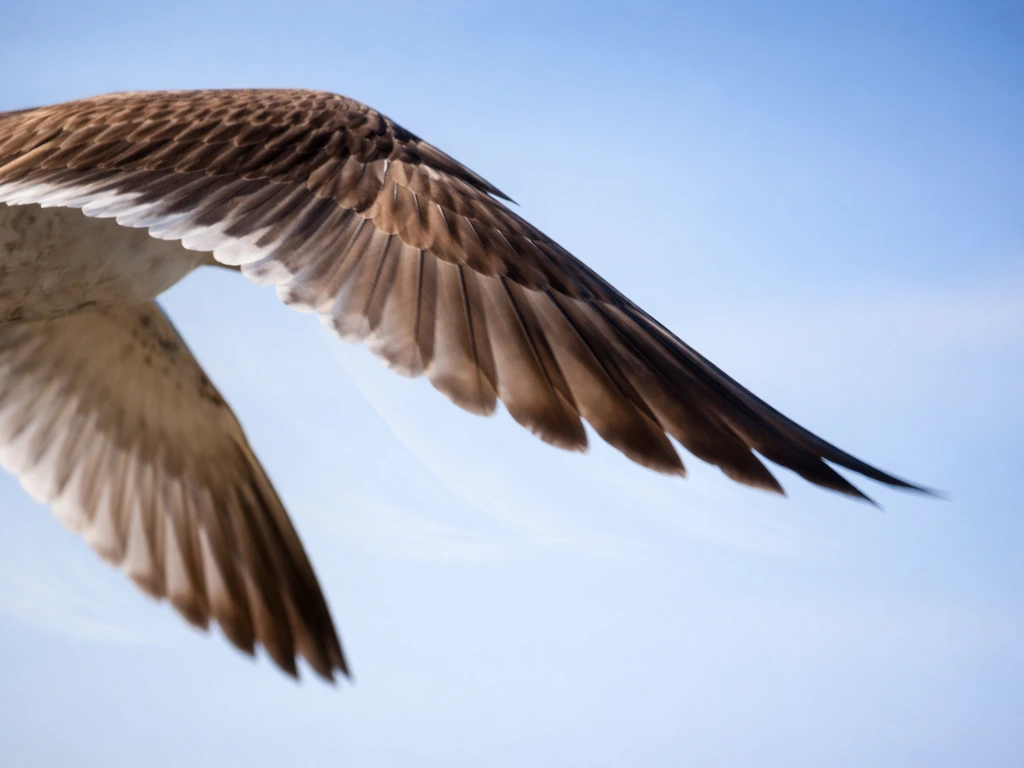
Lift comes from the shape and angle of the wing moving through air. A bird's wing is cambered (curved on top, flatter below), so air traveling over the upper surface moves faster and creates lower pressure, pulling the wing upward. Thrust comes from the downstroke of the wingbeat, where the primary feathers at the wingtip angle forward and push air backward. The upstroke is more about recovery: many birds partially fold the wing to reduce drag on the way back up.
Flapping vs. soaring
Not all 'birds in flight' are doing the same thing aerodynamically. Small songbirds like sparrows use continuous flapping, burning energy constantly. Large birds like eagles and albatrosses use soaring strategies: thermal soaring (riding columns of rising warm air without flapping) or dynamic soaring (using wind speed gradients near ocean waves). An albatross can travel thousands of kilometers using almost no muscle energy once airborne. This matters for the metaphor: the image of a soaring eagle, wings fully spread and barely moving, conveys effortless power precisely because that is what the bird is actually doing. It is not struggling. It is using physics.
Wing posture and what it communicates
Wings fully spread and flat signal gliding or soaring, the visually 'free' posture most commonly used in logos and symbolic art. Wings bent sharply at the wrist with the bird in a tuck signal a dive or stoop, the posture of a peregrine falcon hitting 240 mph. Wings beating rapidly in a blur signal effort and urgency. Artists and designers choose these postures intentionally because they carry different emotional registers, even for viewers who have never consciously studied bird anatomy. The mechanics are doing the emotional work underneath the symbol.
That connection between real biology and cultural meaning is exactly why the bird-in-flight image has stayed so durable across centuries and cultures. It is not arbitrary. A bird in full soaring flight is genuinely doing something extraordinary: defying gravity through evolved precision engineering. When we use that image to represent our own aspirations, we are borrowing from something real. The phrase “bird has flown” is often used to mean that something has already happened and cannot be changed bird in full soaring flight. The metaphor holds because the physics holds. In some artwork, you may even see that same idea framed as “bird has flown deep purple” to suggest distance, depth, and transformation.
FAQ
How can I tell if “bird in flight” is meant literally or symbolically in an image or caption?
Check the wording around it. If it appears in a wildlife photo title, field guide, or biology text, it is likely describing an airborne moment. If it is in a tattoo, logo, poem, or motivational quote, it is usually symbolic, focusing on freedom or aspiration rather than the bird’s species or posture.
Does the species of the bird change the meaning of a bird in flight image?
Yes. Many interpretations are general (freedom, forward motion), but certain birds carry extra associations. For example, eagles often suggest power and leadership, doves commonly relate to peace, and swallows are frequently tied to return and new beginnings, so the species can tilt the emotional tone.
What does the direction of flight (toward you vs toward the horizon) usually imply?
A bird flying away toward the horizon is often read as moving on, departure, or release. A bird coming toward the viewer can feel more immediate and active, sometimes read as pursuit or momentum, so the composition often shifts the takeaway even if the pose is similar.
How do wing position and body posture affect interpretation (soaring vs flapping vs diving)?
Wings wide and level with minimal motion commonly signals gliding, ease, and “effortless” freedom. Fast flapping often reads as urgency, struggle, or determination. A tucked wing or sharp dive typically shifts meaning toward focus, precision, and decisive action rather than open-ended liberation.
If an artist uses negative space (lots of sky) versus a cluttered background, what changes?
Open sky usually amplifies the sense of freedom and possibility. A busy background can imply context, constraint, or urgency, making the image feel less like transcendence and more like a specific moment within a situation.
What does it mean if the phrase shows up in a biology or bird-keeping context as “flighted” rather than “in flight”?
In technical contexts, “flighted” is about capability, not symbolism. It distinguishes birds that retain powered flight from flightless species, which have different anatomy and evolved tradeoffs, so the “meaning” is classification and physiology.
Can “bird in flight” ever imply something negative, like loss or danger?
It can. Although the default is uplifting symbolism, a bird diving, scattering, or appearing under storm clouds can be read as risk, pressure, or disruption. Cultural context and the rest of the artwork (colors, mood, additional symbols) usually determine whether it feels hopeful or ominous.
Is “bird in flight” the same as “bird has flown” in meaning?
Not quite. “Bird has flown” typically frames an event as already completed or irreversible, like “it’s too late” or “the chance is gone.” “Bird in flight” more often communicates ongoing motion or a state (aspiration in progress) rather than finality.
Are there common mistakes people make when interpreting bird-in-flight symbols?
Yes. People often assume every bird-in-flight design means the same thing, even when the pose and surrounding symbols differ. Another mistake is treating a biology term as a metaphor, when a text using “flighted” is likely classifying flight capability rather than sending a personal message.
What should I do if I’m trying to match a specific phrase to the intended message?
Confirm the source type first (art vs wildlife vs science). Then identify three cues: bird species (if shown), posture (soaring, flapping, diving), and direction (toward or away). If those align with your goal, you can be confident the interpretation is consistent with the context.
Next Articles
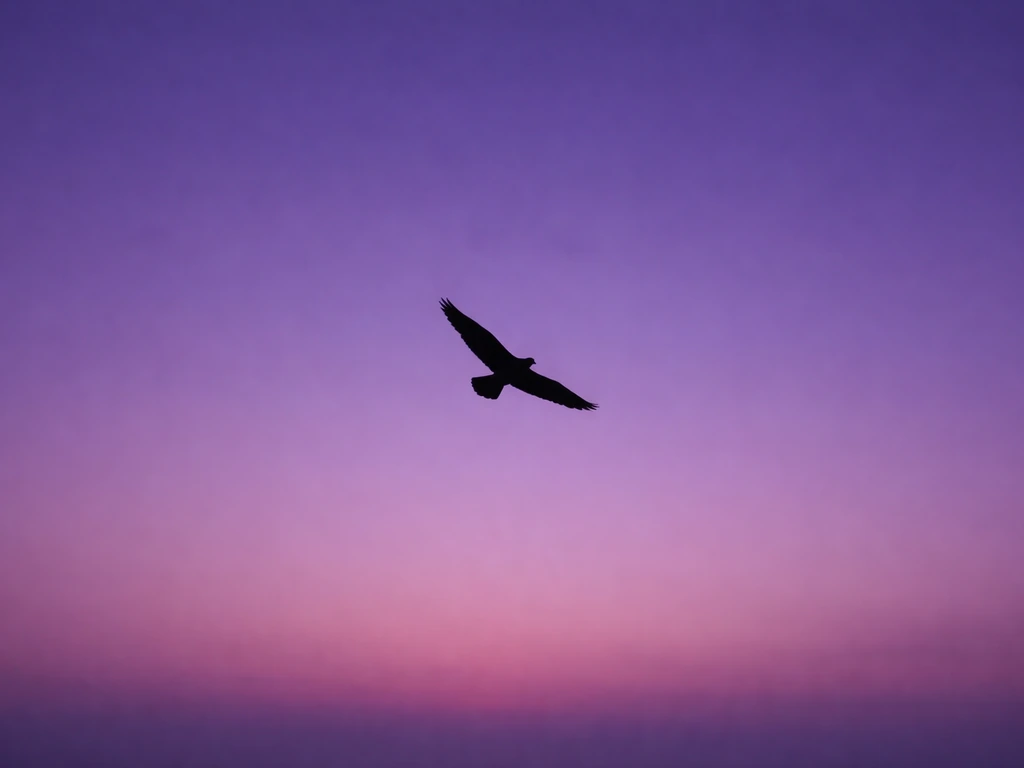
Bird Has Flown Deep Purple: Meaning and Flight Checks Today
Disambiguate bird has flown deep purple as real flight or metaphor, then verify with lift, wingbeat, and color checks.

Bird With White Tail When Flying: How to Identify It
Identify a bird with a white tail in flight using wing and tail marks, lookalikes, and photo angles, plus ID steps.
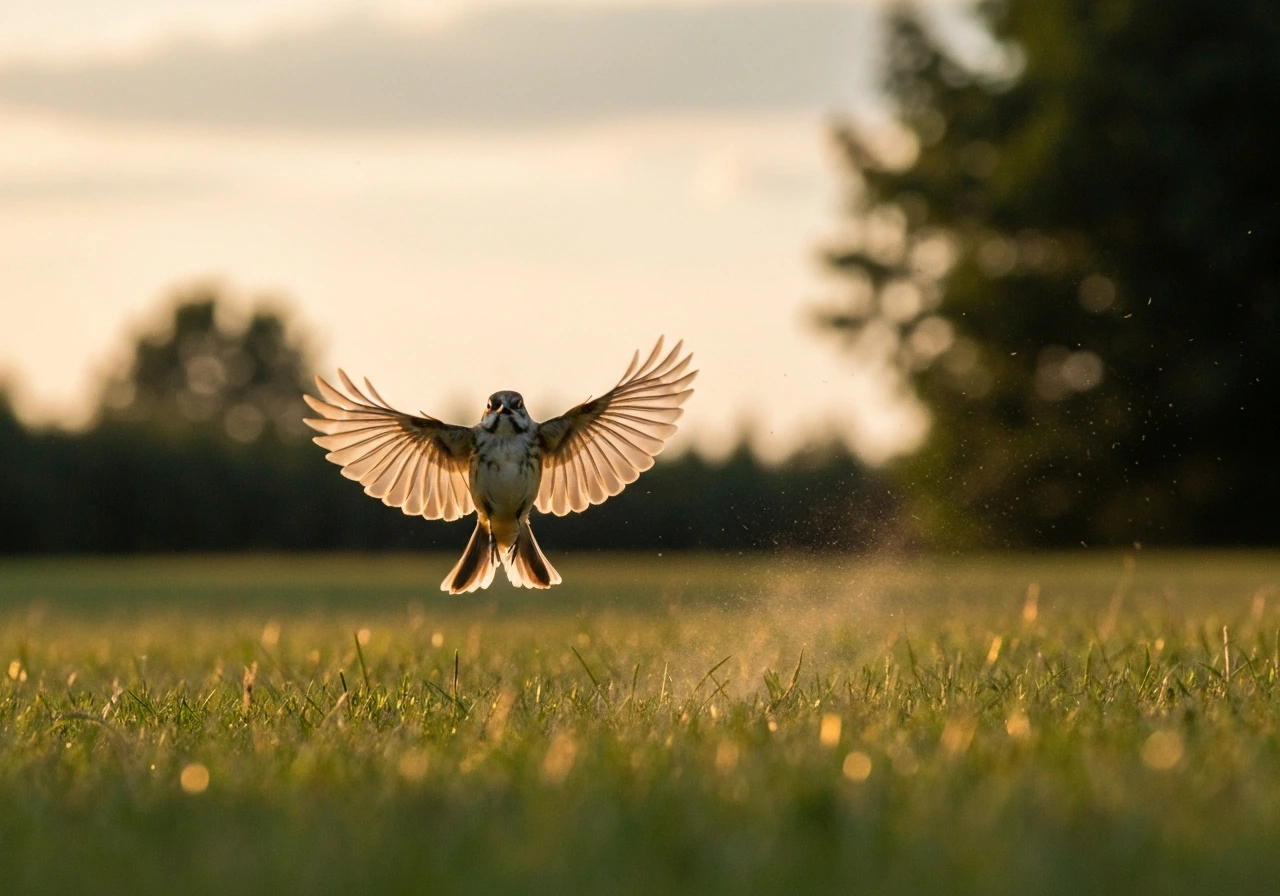
Bird Is Flying: What It Means and How Flight Works
Understand what bird is flying means and how wings, lift, thrust, and control pitch roll and yaw in flight.