
When someone calls a bird a "flyer," they mean it is an animal capable of powered flight, and often they are making a quality judgment too: a strong flyer covers long distances with ease, a weak flyer gets airborne reluctantly and not for long, and a flightless bird is not a flyer at all. Dictionaries back this up directly. Cambridge Dictionary lists "flyer" as a zoology and bird-watching term, noting it is simply another spelling of "flier," while Dictionary.com defines it as "something that flies, as a bird or insect." So if you see the word in a field guide or nature article next to a bird's name, it is almost always describing that bird's relationship to flight, either celebrating it, qualifying it, or contrasting it against species that can't fly.
Flyer Meaning Bird: What It Says About Flight Ability

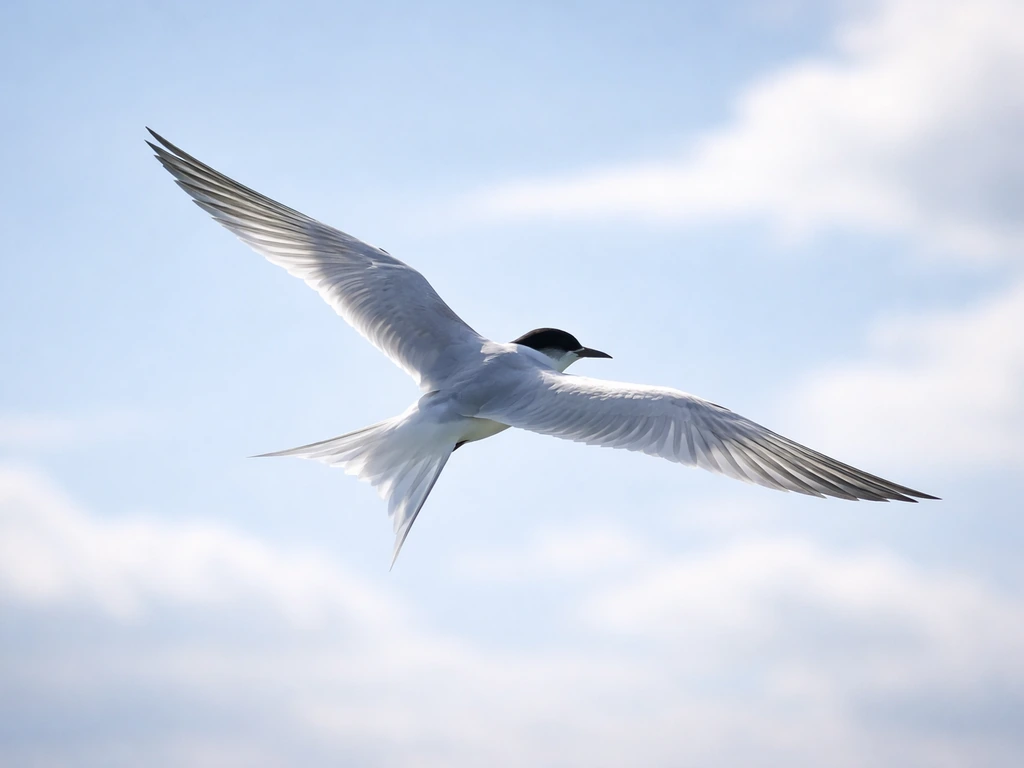
What "flyer" actually means in a bird context

In ornithology and everyday birdwatching language, "flyer" (or "flier") is a descriptor that places a bird somewhere on a spectrum of flight capability. At one end you have birds described as strong flyers: species that sustain powered flight efficiently, often over vast distances, with anatomy that is optimized for the task. In the middle you have weak flyers: birds that can technically get airborne but do so awkwardly, briefly, or only as a last resort. At the other end sit the flightless birds, which are not flyers at all by any reasonable definition.
The phrasing matters. "Strong flyer" is a compliment built on measurable traits like wing efficiency and muscle power. "Weak flier" is a gentle field-guide warning that the bird you are watching would rather run. "Flightless" is a definitive anatomical category, not just a behavioral preference. When you see "flyer" used alone without a modifier, context usually tells you which end of the spectrum the writer means, and this article will show you exactly how to read those cues.
The spectrum: strong flyers, weak flyers, and birds that don't fly at all
Thinking in three broad categories makes it much easier to interpret any "flyer" claim you encounter about a bird.
Strong flyers
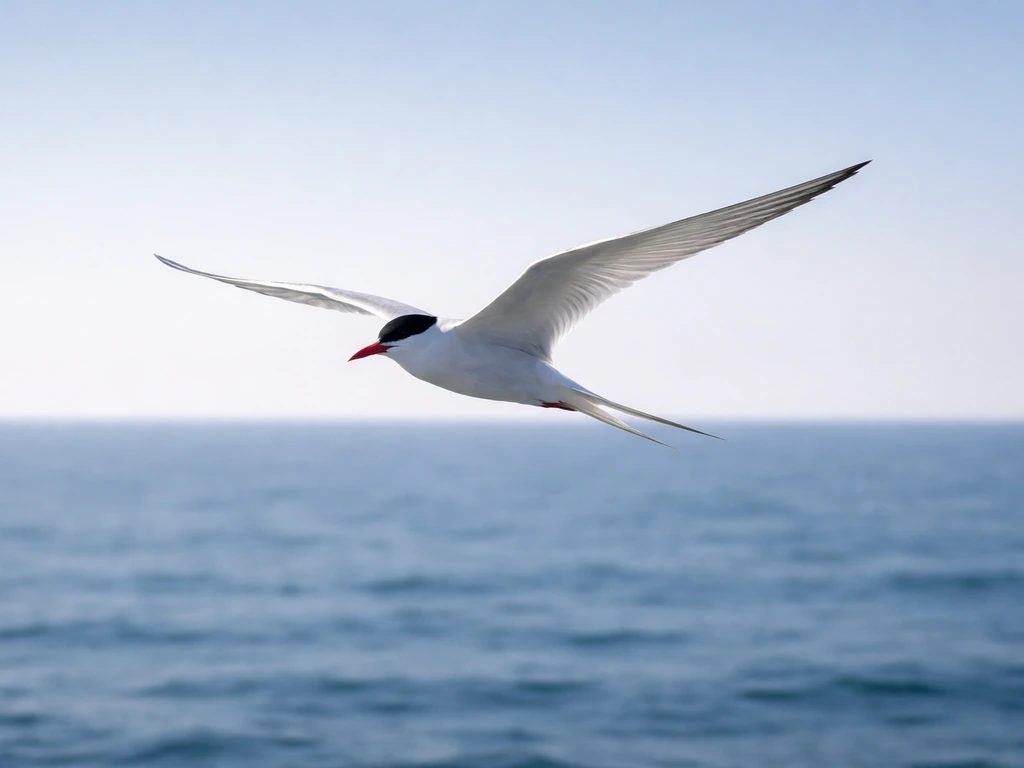
Strong flyers are birds whose entire body plan is built around efficient, sustained flight. Swifts, albatrosses, peregrine falcons, and Arctic terns fall here. These birds have high-aspect-ratio wings (long and narrow relative to their area), low wing loading (relatively light body weight per unit of wing area), and powerful pectoral muscles. The result is a bird that can stay aloft for hours, days, or in the case of the common swift, potentially months at a time. When a field guide or naturalist calls a bird a "flyer" without any qualifying adjective, this is usually the category they are evoking.
Weak flyers
Weak flyers can get off the ground but they do not do it well or willingly. The king rail is a textbook example. The Missouri Department of Conservation's field guide describes rails as "generally weak fliers" and notes that most of them "would rather walk or run to safety than fly." These birds have the wings and muscles to achieve flight, but their anatomy and behavior are not optimized for it. Rails, for instance, famously become fully flightless for about a month after a complete molt, a temporary dip all the way to the bottom of the flyer spectrum.
Flightless birds
There are more than 60 extant flightless bird species, and calling any of them a "flyer" would be a mistake. Also, if you are looking up "avion meaning bird," remember that "avion" is about flight-related wording, so comparing it to how flightless birds are described can help keep the meanings straight in flightless birds. The big ratite groups (ostriches, emus, cassowaries, rheas, kiwis) and penguins are the most familiar examples. Their anatomy has diverged so far from the flight-capable template that flight is simply not possible, regardless of motivation. Penguins are a fascinating edge case: their wings became flippers optimized for underwater propulsion, and their sternum actually retains a pronounced keel for anchoring powerful muscles, but those muscles now drive swimming rather than flight.
How birds actually fly: what earns the "flyer" label
Flight is not just a behavior, it is a whole-body engineering solution. A bird earns the "strong flyer" label because its anatomy generates enough mechanical power output to sustain lift efficiently relative to its metabolic cost. Biomechanics research frames this as the ratio of power output to power input: the more efficiently a bird converts muscle energy into airborne motion, the better a flyer it is. Wing shape is the most visible shortcut to understanding this. High aspect ratio wings (think albatross or swift) produce less drag per unit of lift, which makes sustained flight cheaper. Low aspect ratio wings (think a quail or grouse) generate rapid lift for a quick takeoff but burn energy fast, making long-distance flight impractical. Wing loading adds another layer: a lighter bird relative to its wing area stays aloft more easily, which is why so many long-distance migrants are surprisingly light for their wingspan.
Flight style is the behavioral fingerprint of all this anatomy. A bird with long, narrow wings and low wing loading tends to soar, glide, or flap slowly and rhythmically. A bird with short, broad wings and higher wing loading tends to burst into fast, twisting flight but tires quickly. When you see these descriptions in a field guide, they are indirect ways of ranking where a bird sits on the flyer spectrum.
The anatomy behind it: wings, muscles, bones, and feathers
Four physical systems explain almost everything about why a bird is a strong flyer, a weak flyer, or flightless.
The sternum and keel
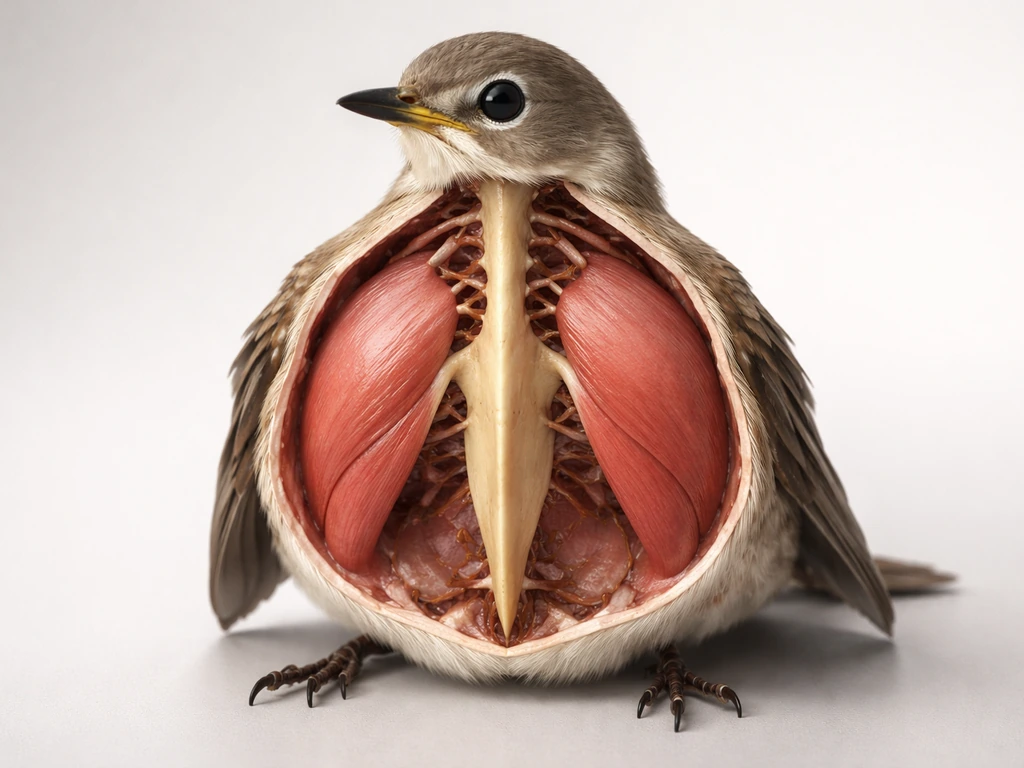
The sternum (breastbone) and its keel (the ridge running along it) are the structural foundation of flight. The keel is the primary attachment site for the major flight muscles in flying birds. Research published in BMC Biology found that birds using forelimb propulsion have sterna that are roughly 33 percent larger relative to body size than birds that lack forelimb propulsion. Flightless birds either have a greatly reduced keel or none at all. Ostriches are the classic example of a flat, keel-free sternum. Without that anchor point, you simply cannot build the flight muscles needed to sustain powered flight.
Flight muscles
Two muscles do most of the work in powered flight. The pectoralis is the large muscle that drives the downstroke, generating the power that pushes the bird upward and forward. The supracoracoideus handles the upstroke, and it does so through a clever pulley mechanism: its tendon runs through a bony canal called the foramen triosseum and connects to the top of the humerus, so when the muscle contracts from below, it pulls the wing upward. NCSU teaching material likewise describes the supracoracoid as a major flight muscle and explains that its contraction raises the wing via this muscle-to-wing motion mapping blank" rel="noopener noreferrer">supracoracoideus handles the upstroke. Together these two muscles account for the bulk of flight power. Ornithology Education notes that the supracoracoideus, along with the pectoralis, is one of the two major flight muscles that power flight The supracoracoideus handles the upstroke. In strong flyers they are proportionally massive; in flightless birds they are small and weak.
The skeleton
Flying birds have lightweight, hollow bones with internal struts that maintain strength without adding mass. They also have fused collarbones (the furcula, or wishbone) that act as a spring, storing and releasing energy during the wingbeat cycle. Flightless birds like ostriches have denser, heavier bones, a trade-off that suits terrestrial strength over aerial efficiency. Penguins sit in an interesting middle ground: their bones are denser than those of flying birds, which actually helps with diving by reducing buoyancy.
Wings and feathers
Wing shape, as discussed above, is the visible summary of a bird's flight strategy. Feathers add the fine-grained control: primary feathers generate thrust, secondaries generate lift, and the alula (a small group of feathers on the "thumb") acts like a leading-edge slot on an aircraft wing to prevent stalling at low speeds. Flightless birds often have wings that are small, rigid, or paddle-like, feathers that are fluffy and loosely structured rather than tightly interlocked for aerodynamic precision. In penguins the wing feathers are short, dense, and scale-like, perfect for hydrodynamics rather than aerodynamics.
Real birds commonly described as flyers (and why)
| Bird | Flyer category | Key anatomical reason |
|---|---|---|
| Arctic tern | Strong flyer | Long, narrow wings; low wing loading; migrates pole to pole annually |
| Wandering albatross | Strong flyer | Highest aspect ratio wings of any living bird; dynamic soaring specialist |
| Peregrine falcon | Strong flyer | Compact, swept wings; powerful pectoralis; fastest animal in a dive |
| Common swift | Strong flyer | Extremely long primaries; can stay airborne for months |
| King rail | Weak flyer | Adequate wings but prefers running; temporarily flightless after molt |
| Corncrake | Weak flyer | Reluctant to fly; rails family; migrates but struggles with sustained flight |
| Ostrich | Flightless | No keel on sternum; tiny, useless wings; dense bones; ratite group |
| Emperor penguin | Flightless | Wings modified into flippers; denser bones aid diving; keel present but for swimming muscles |
Notice that the "why" column in every case comes back to the same anatomical systems: sternum/keel size, muscle mass, bone density, and wing shape. Once you know what to look for, the "flyer" label almost explains itself.
Easy mix-up: when "flyer" has nothing to do with birds
The word "flyer" carries at least two other common meanings that have nothing to do with bird flight, and if you stumbled here from a general search, it is worth ruling these out quickly. Cambridge Dictionary lists a "flyer" as a person who operates an aircraft or travels as a passenger ("frequent flyer" being the everyday example most people know), and also as a printed sheet of paper used to advertise something, the kind handed out on street corners or stuffed in mailboxes. The destination topic, prefix meaning flight or bird, can help when you see related word forms beyond the plain “flyer” label. Merriam-Webster covers both senses too. Neither of these has any connection to ornithology.
The simplest way to tell which meaning you are dealing with is to look at the surrounding words. If you see "flyer" next to a species name, a field guide entry, a nature documentary description, or any biological context, it is the bird-flight sense. If you see it next to words like "frequent," "miles," "airline," or "rewards," it is the travel sense. If it is next to words like "distribute," "print," "event," or "promotion," it is the advertising sense. The word itself is identical in all three uses, so context is doing all the disambiguation work.
How to interpret "flyer" when you encounter it in real life

Whether you are reading a field guide, watching a documentary, or trying to parse a wildlife article, here is a practical checklist for figuring out exactly what "flyer" means in that specific context.
- Check for a modifier. "Strong flyer," "accomplished flyer," or "capable flyer" signals top-tier flight performance. "Weak flier," "reluctant flier," or "poor flier" signals limited capability. "Flyer" alone usually implies flight-capable but tells you nothing about quality without more context.
- Look at the species. If you can identify the bird being described, a quick lookup of its family often tells you the baseline. Rails (Rallidae) trend toward weak flight. Swifts (Apodidae) and falcons (Falconidae) trend toward exceptional flight. Ratites and penguins are flightless by definition.
- Look for wing morphology clues. Descriptions mentioning long, narrow, or pointed wings suggest a strong flyer. Short, rounded, or reduced wings suggest a weak flyer or flightless bird.
- Check the behavior description. Does the source mention migration distance, hovering, soaring, or sustained pursuit? Strong flyer. Does it mention running, hiding in vegetation, or reluctance to take off? Weak flyer.
- Verify the source type. Field guides use "flyer" precisely and technically. Popular media may use it loosely or metaphorically. If precision matters, cross-check with a reputable ornithological reference or species account.
- Rule out non-bird meanings first. If the context is not clearly biological, check whether "flyer" refers to aviation travel or printed advertising before assuming a bird connection.
If you are researching a specific species and want to go deeper, the anatomy is the most reliable guide. A bird described as a flyer that also has a large keel, proportionally massive pectoral muscles, hollow bones, and high-aspect-ratio wings is almost certainly a genuine strong flyer. A bird with a reduced keel, small flight muscles, dense bones, and stubby wings is either a weak flyer or flightless, regardless of what any single label says. The biology does not lie.
This site covers many of the adjacent concepts in detail if you want to keep pulling on this thread. The idea of what it means for a bird to be "in flight" as a concept, the evolutionary paths that led certain lineages to abandon flight entirely, and even the cultural weight that flight carries in language and literature all connect back to understanding what it really means to call a bird a flyer. If you are also wondering about the bird in flight meaning behind the phrase “in flight,” this article’s framework for the flyer label can help you interpret it. The phrase “bird has flown meaning” describes the idiom about something being finished or past, not about actual bird flight in flight. If you meant the phrase “bird in flight passenger meaning,” this article’s “in flight” concept helps clarify how context changes what a similar label refers to. That same flight-driven framing can also help you interpret poetic phrases like “bird has flown deep purple” in context. Start with the anatomy, follow the behavior, and the label will always make sense.
FAQ
If a field guide says a bird is a “flyer” but doesn’t specify strong or weak, how can I tell which one it means?
Use the description cues. Look for accompanying traits like wing shape (long and narrow vs short and rounded), takeoff behavior (steady soaring vs reluctant bursts), and habitat (open-water gliders vs dense-vegetation runners). Strong flyers are usually paired with notes about sustained flight or efficient soaring, while weak flyers are often described as preferring to run or fly only when forced.
Can a “weak flyer” still be seen flying often, even if it is not efficient at flight?
Yes. “Weak flier” is about capability and efficiency, not frequency. Some birds can take off when startled, make short flights between perches, or glide down from cover. The label usually implies the flight phase is brief, costly, or avoided when other options (running, hiding) work.
Are there birds that are temporarily flightless, and would they still be called “flyers” in casual writing?
Some species can be temporarily unable to fly during molt or wing-feather replacement. In those cases, a bird may be described as generally capable of flight, but you might see wording like “weak flier” or notes about reduced flight during the molt period. If the context is seasonal or physiological, treat the label as situational.
What is the most common mistake when interpreting “flyer” for birds from search results or social media?
Assuming every use of “flyer” automatically means bird capability. It can refer to an advertising handout, a passenger airline status term, or aircraft operations. If “flyer” is near words like miles, rewards, print, event, promotion, or airline, it is almost certainly not zoology.
If I see “flyer” used for insects as well, is it the same idea as for birds?
Broadly, yes. The core meaning is “something that flies,” but the biological details differ. For insects, the term usually describes the ability to fly rather than a spectrum based on bird-like wing loading and keel muscle systems.
How do I distinguish “flightless” from “weak flier” when the text is vague?
Check for anatomical or definitive wording. “Flightless” usually comes with statements that powered flight is not possible, often linked to reduced or absent keel/flight-muscle structures. If the text emphasizes preference, awkward takeoff, or short-distance escapes rather than impossibility, it is more likely referring to weak flight capability.
Do birds with aquatic adaptations count as “strong flyers,” “weak flyers,” or something else, like penguins?
They do not fit neatly into the same flight-efficiency categories. Penguins retain some flight-related structures, but their wings and feather structure are specialized for swimming. In practice, they are treated as flightless for powered aerial flight, so “flyer” is misleading unless the author is talking metaphorically or about historical anatomy.
If “flyer” is “flier” as well, does spelling change the bird meaning?
Not really. “Flyer” and “flier” are spelling variants used for the same concepts in dictionaries, including the bird-watching usage. What matters is context around the word, for example proximity to species names and biological descriptors.

Understand bird in flight meaning in symbolism and art, plus basics of how birds fly to interpret posture and intent.

Disambiguate bird has flown deep purple as real flight or metaphor, then verify with lift, wingbeat, and color checks.
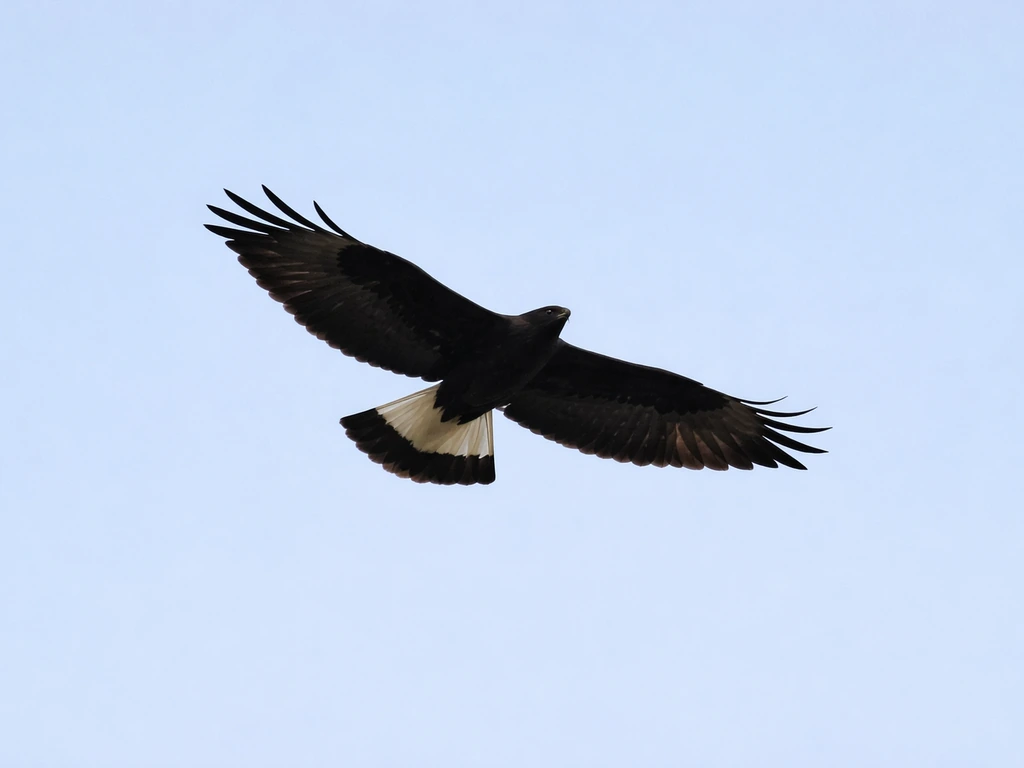
Identify a bird with a white tail in flight using wing and tail marks, lookalikes, and photo angles, plus ID steps.