Bird wings and butterfly wings are an example of analogous structures. They do the same job (powered flight) but evolved completely independently, from entirely different biological origins. If you're looking for a one-line quiz answer, that's it. But understanding why they're analogous, and how to tell analogous from homologous in any pairing you encounter, is what will actually stick with you.
Bird Wings and Butterfly Wings Are an Example of Analogous Structures

Marcus Chen
12 Apr 2026

What 'are an example of' is really asking
When a biology question asks what two structures 'are an example of,' it's almost always prompting you to classify the relationship between them using one of two frameworks: homology or analogy. These are the two main ways biologists explain why unrelated organisms end up with structures that look or work similarly.
Homologous structures share a common evolutionary origin. The underlying anatomy, the developmental blueprint, the genes at work, all trace back to a shared ancestor. Analogous structures share a common function but arose through convergent evolution, meaning nature independently landed on a similar solution in lineages that are not closely related. The key word in 'analogous' is independent. Same destination, different road.
This distinction matters far beyond a homework question. The flying of birds is an example of a solution evolution stumbled onto through one particular anatomical path, and understanding that path is what separates homology from analogy. When you see a similar outcome in a completely different lineage, you're almost certainly looking at analogy.
Homologous vs analogous vs common descent: a quick decision guide
Here's a simple three-question framework you can apply to any pair of structures:
- Do they share a common ancestor that had a structurally similar feature? If yes, lean toward homologous.
- Do they have the same underlying anatomy (same bones, same tissues, same developmental origin)? If yes, lean toward homologous.
- Do they perform the same function but come from very different lineages with different underlying anatomy? If yes, that's your analogy.
The trap most people fall into is assuming that because two things look alike or do the same thing, they must share the same origin. They don't have to. Convergent evolution is remarkably powerful. As the National Center for Science Education points out, structural similarity arises either from common ancestry (homology) or from convergent evolution (analogy), and those are genuinely different causes with different implications for the family tree.
A useful shortcut: if the structures are in organisms that share a vertebrate backbone and a common forelimb blueprint (think bird, bat, whale, human), you're probably looking at homology. If one of the organisms is an insect, a plant, or anything else that diverged from vertebrates hundreds of millions of years ago, you're almost certainly looking at analogy.
Bird wings vs butterfly wings: built differently from the ground up
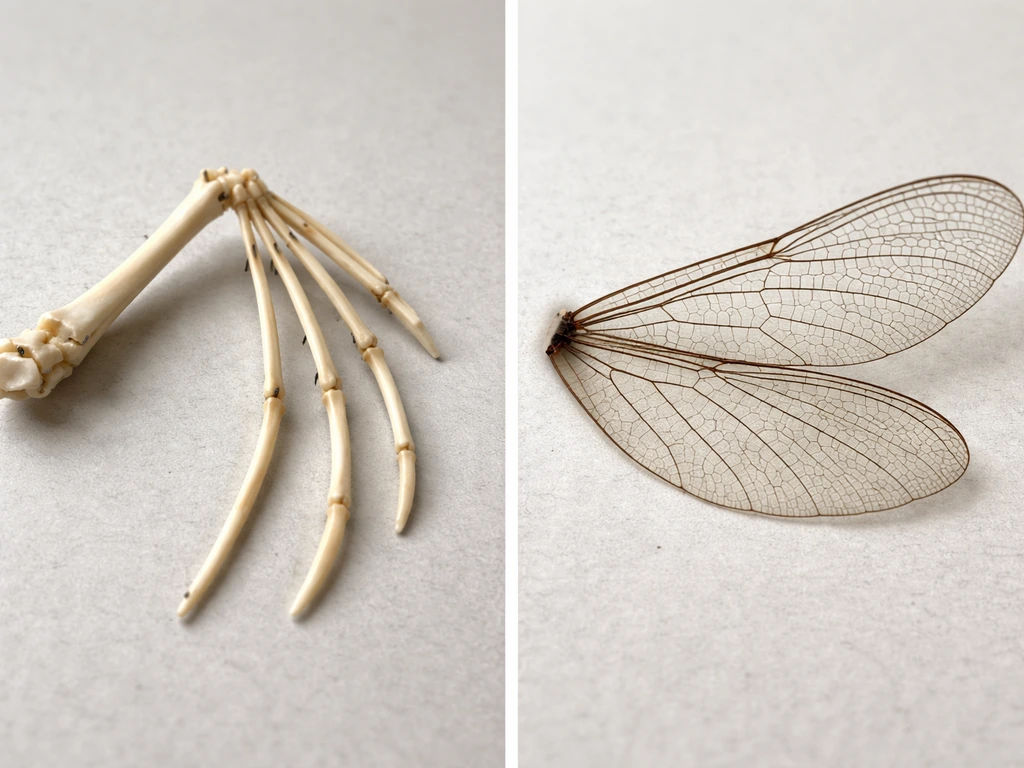
A bird wing is a heavily modified vertebrate forelimb. Inside it you'll find the humerus, radius, ulna, and fused wrist-and-hand bones (the carpometacarpus), all recognizable as the same bones that form your own arm. Feathers, which are made of keratin and grow from follicles in the skin, provide the aerodynamic surface. The whole structure is powered by large flight muscles (primarily the pectoralis and supracoracoideus) anchored to a keeled sternum. It is, in every anatomical sense, a repurposed arm.
A butterfly wing is something else entirely. Insects don't have anything like a vertebrate forelimb. Butterfly wings grow from the thorax as flattened extensions of the insect's exoskeleton, formed during metamorphosis from wing discs (clusters of cells in the larva). They're covered not in feathers but in tiny scales made of chitin, stacked like roof tiles, which is where the order name Lepidoptera (scale-wing) comes from. The veins you see running through a butterfly wing are hollow tubes that carry hemolymph and provide structural support. There is no humerus. There is no muscle running through the wing itself in the way bird flight muscles work. The resemblance to a bird wing is purely functional: both surfaces generate lift and enable flight.
This is the clearest possible case of analogy. The function converged. The anatomy did not. A bird flying in the sky is an example of a vertebrate forelimb doing a job that a butterfly's thoracic appendage also does, through a completely unrelated mechanical and developmental pathway.
Bird wings vs bat wings: where it gets genuinely interesting
Here's where students often get tripped up: bat wings and bird wings are actually homologous structures, not analogous ones, because both are modified vertebrate forelimbs derived from the same ancestral tetrapod limb. But they're also a great example of how homologous structures can look very different and perform the same function in different ways.
A bat wing still has a humerus, radius, ulna, and elongated finger bones (the digits are dramatically stretched to support the wing membrane, called the patagium). There are no feathers. The aerodynamic surface is a thin elastic membrane of skin stretched between the elongated fingers, body, and in some species the tail. Compare that to a bird wing, where the fingers are fused and reduced, and feathers do all the aerodynamic heavy lifting. Same ancestral bones, wildly different expression.
So when someone asks whether bat wings and bird wings are analogous or homologous, the answer is homologous (shared origin in the tetrapod forelimb) but with an important caveat: powered flight evolved independently in birds and bats, which means flight itself in these two groups is an example of convergent evolution, even though the underlying limb is homologous. The structures are homologous; the flight capability is convergent. That nuance is worth knowing.
Insect wings vs bird wings vs bat wings: testing the concept across all three
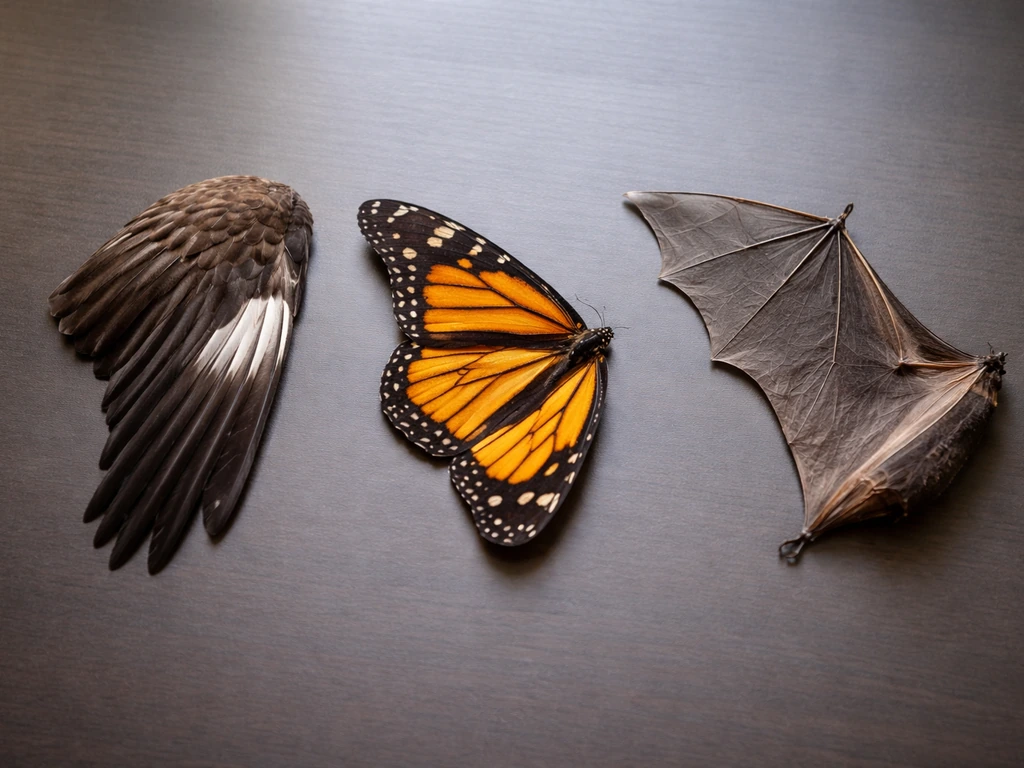
Let's put all three pairings side by side so you can see the pattern clearly.
| Pairing | Relationship | Shared origin? | Shared function? | Why |
|---|---|---|---|---|
| Bird wing vs butterfly wing | Analogous | No | Yes (flight) | Vertebrate forelimb vs insect thoracic appendage; completely different developmental origins |
| Bird wing vs bat wing | Homologous | Yes (tetrapod forelimb) | Yes (flight) | Both modified from same ancestral arm bones; flight evolved independently (convergent) but limb origin is shared |
| Insect wing vs bird wing | Analogous | No | Yes (flight) | Insect wings have no vertebrate forelimb equivalent; entirely separate evolutionary innovation |
The insect vs bird comparison deserves a little more attention because it's so stark. Insect wings are thought to have originated either from paranotal lobes (extensions of the thoracic segments) or from modified gill-like structures in aquatic ancestors, depending on which hypothesis you find most convincing. Either way, there is no ancestral limb shared with vertebrates anywhere in the picture. The last common ancestor of insects and birds was something so simple it didn't have anything resembling a wing in any form. Everything about insect and bird wings arose after that split, completely independently. That's the textbook definition of convergent evolution producing analogous structures.
It's also worth noting that not all birds rely on the same flight dynamics. Bird migration is an example of how the same homologous forelimb, shaped by millions of years of selection, can produce wildly different flight specializations across species, from the long-distance soaring of albatrosses to the rapid wingbeat hovering of hummingbirds. The homologous structure is the canvas; natural selection paints something different on each one.
And for a grounding comparison within birds themselves, consider that even movement on the ground tells a story about evolutionary specialization. The movement of the turkey bird is called a walk or strut on the ground, because turkeys, despite having perfectly functional homologous forelimbs, have traded much of their aerial ability for terrestrial bulk. Same origin, different outcome.
Common misconceptions and how to phrase the answer correctly
Misconception 1: similar function means same origin
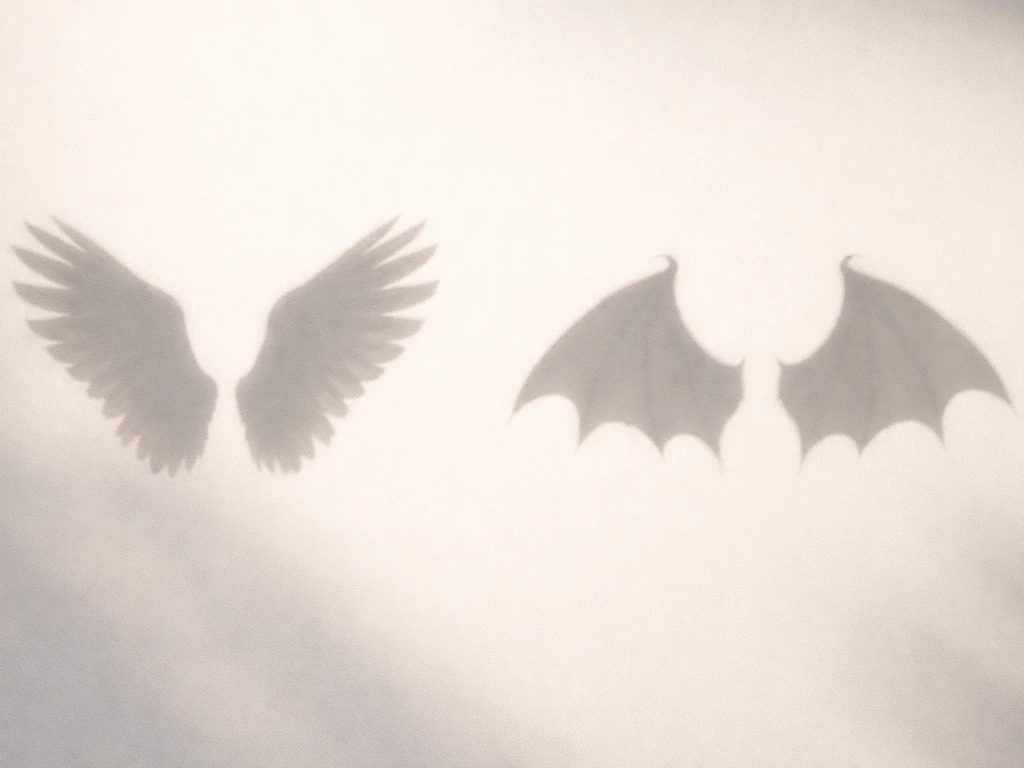
This is the biggest one. Wings work similarly in birds, bats, butterflies, and even some flying fish. That functional similarity doesn't tell you anything reliable about evolutionary origin. You have to look at the underlying anatomy and developmental history. Function can converge. Anatomy, especially the specific bones and tissues involved, is much harder to fake through convergence.
Misconception 2: 'analogous' means superficially similar
Analogy in biology doesn't mean 'vaguely alike.' It has a precise meaning: same function, different evolutionary origin. Two structures can be deeply, mechanically similar in how they generate lift while still being completely analogous if they evolved independently. Don't let the depth of the similarity fool you.
Misconception 3: bird and bat wings are analogous because flight evolved separately
This trips people up constantly. Yes, powered flight evolved independently in birds and bats. But the wings themselves, as modified tetrapod forelimbs, are homologous. The relevant question for homology vs analogy is about the structure, not the behavior it enables. The limb origin is shared; the flight is convergent. Both statements can be true simultaneously.
How to phrase it for a quiz or homework
For bird wings and butterfly wings (or any insect wing vs bird wing pairing): 'Bird wings and butterfly wings are an example of analogous structures because they perform the same function (flight) but evolved from entirely different anatomical origins through convergent evolution. Bird wings are modified vertebrate forelimbs, while butterfly wings are thoracic appendages derived from the insect exoskeleton with no shared ancestral structure.' That answer hits the definition, the anatomical evidence, and the evolutionary mechanism. It's complete.
For bat wings and bird wings: 'Bat wings and bird wings are an example of homologous structures because both are derived from the same ancestral tetrapod forelimb, sharing the same underlying bones (humerus, radius, ulna). However, powered flight evolved independently in each lineage, making flight itself an example of convergent evolution.' That distinction between the structure (homologous) and the capability (convergent) is what separates a solid answer from a great one.
As a final practical check: a flying bird is an example of a vertebrate lineage that solved flight with a particular anatomical toolkit, and every time you see that same toolkit in another vertebrate, you're looking at homology. Every time you see flight solved with a completely different toolkit, in insects, in some extinct pterosaurs' unique wing membrane arrangement, you're looking at analogy. Keeping that frame in mind makes these questions easy to answer on the spot.
FAQ
If two wing types both help an organism fly, does that automatically mean they are analogous?
No. Similar function (flight) is consistent with analogy, but the reliable test is evolutionary origin. If the underlying structure shares a developmental and anatomical blueprint from a common ancestor (for example, a vertebrate forelimb pattern), the structures are homologous even if they both enable flight.
How can I tell homology from analogy when the wings look very similar in overall shape?
Don’t rely on the “outer design.” Check for structural correspondences that are hard to replicate by convergence, like specific bone sets, muscle placement, and developmental origin. For bird vs butterfly, the presence or absence of vertebrate limb bones and the different wing growth source (endoskeleton vs exoskeleton) are decisive.
Are bird wings and butterfly wings “both wings” in a taxonomic sense, or is “wing” just a functional label?
“Wing” often describes function, not ancestry. A bird wing is a modified internal forelimb, while a butterfly wing is an outgrowth of the insect exoskeleton formed during metamorphosis. So they are both wings in effect, but not in structural lineage.
What’s a common mistake students make with analogous vs homologous structures?
Assuming that “same job” or “same appearance” equals the same origin. The common trap is treating function or surface similarity as proof of shared ancestry, instead of using anatomy and developmental history to determine origin.
Do bat wings and butterfly wings count as analogous, or is there another category?
They are analogous in the structural sense, because bat wings are modified vertebrate forelimbs, while butterfly wings are insect exoskeletal appendages. Their flight capability converged, and there is no shared tetrapod-limb blueprint underlying both wing types.
If powered flight evolved independently in birds and bats, does that mean bird wings and bat wings are analogous?
Not necessarily. In that pairing, the structures are homologous (same ancestral tetrapod forelimb bones and developmental framework), while the ability or solution for powered flight is convergent. So you can have homology for the wing structure and analogy at the level of the behavior or outcome.
How should I answer if a question asks for an “example of convergent evolution” instead of “analogous structures”?
Use different targets for the vocabulary. Convergent evolution refers to independent evolution of similar traits or functions, so “powered flight” solutions arising in unrelated lineages is convergent. Analogous structures refers to the specific structural features produced independently to serve a similar function, like bird wings vs butterfly wings.
Can analogy ever involve deep biomechanical similarity, like both wings producing lift efficiently?
Yes. Convergent evolution can yield very effective, even lift-generating systems that look and work similarly at the aerodynamic level. The key is that the internal anatomy and developmental origin still differ, which keeps the relationship analogous, not homologous.