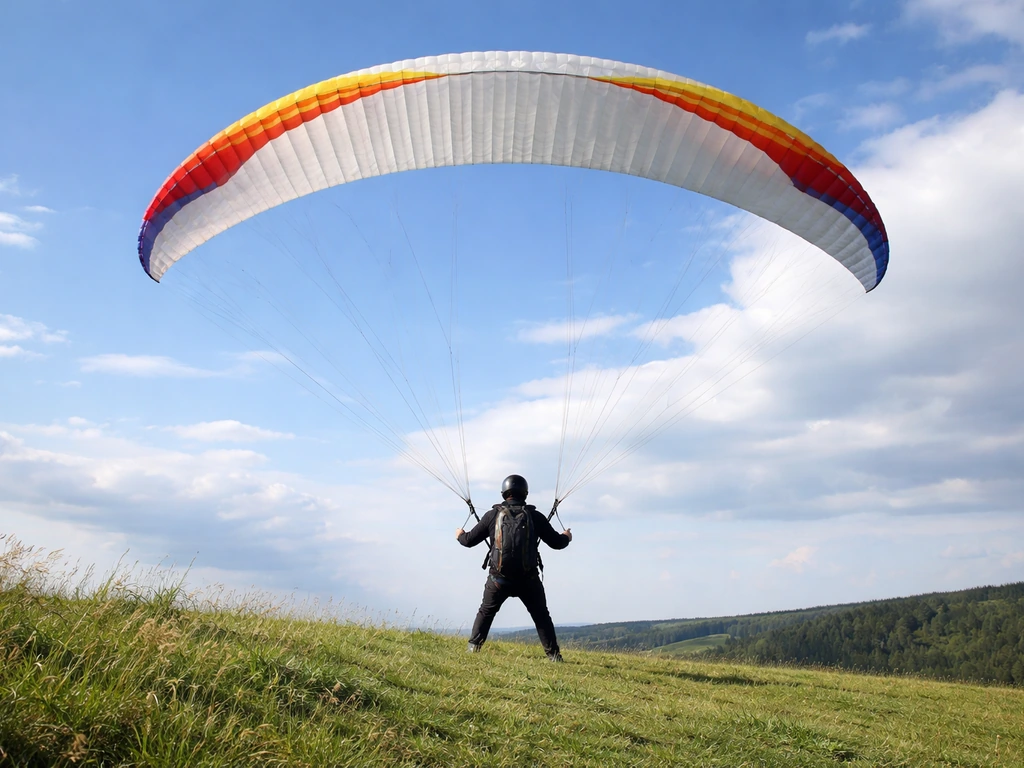
A human cannot flap their arms and fly like a bird. That is a biological fact, not a failure of imagination. But if what you really want is to move through open air the way a bird does, using aerodynamic forces, your own body, and a controlled descent or powered thrust, then the options available in 2026 are genuinely remarkable. Wingsuits let you glide at over 100 mph with a lift-to-drag ratio that rivals some soaring birds. Powered jet suits can carry you to 12,000 feet. The gap between "man can fly in the air like a bird" and reality is much narrower than most people think, as long as you understand exactly what that phrase means.
Man Can Fly in the Air Like a Bird: What’s Real Today

Marcus Chen
21 May 2026
What 'fly like a bird' actually means

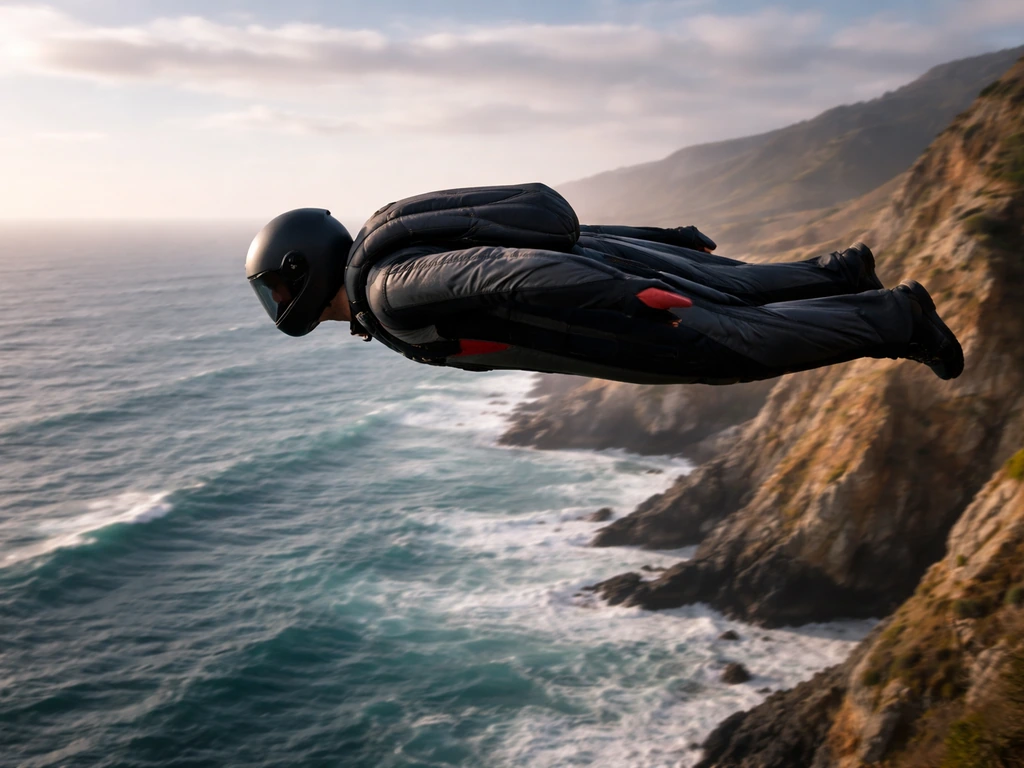
When people say they want to fly like a bird, they usually mean one of three things: free, unpowered gliding on the wind; the full flapping, self-powered, bird-style locomotion; or simply the feeling of moving through the air unenclosed by a cockpit or fuselage. The first is achievable today. The third is achievable today. The second, true ornithoptic flapping flight powered entirely by the human body, is not. The distinction matters because it changes everything about what path you take.
There is also a cultural layer to this question. Phrases like "I can fly like a bird not in the sky" carry metaphorical weight in music and literature, and searching for this topic sometimes leads people to those contexts rather than practical aeronautics. This article is about the literal physics: getting a human body into the air and keeping it there in a birdlike way.
Why birds can actually do this
Birds fly because millions of years of evolution produced a body plan specifically optimized for it. Understanding that biology is the fastest way to understand why humans face the constraints we do.
Wings, lift, and the downstroke
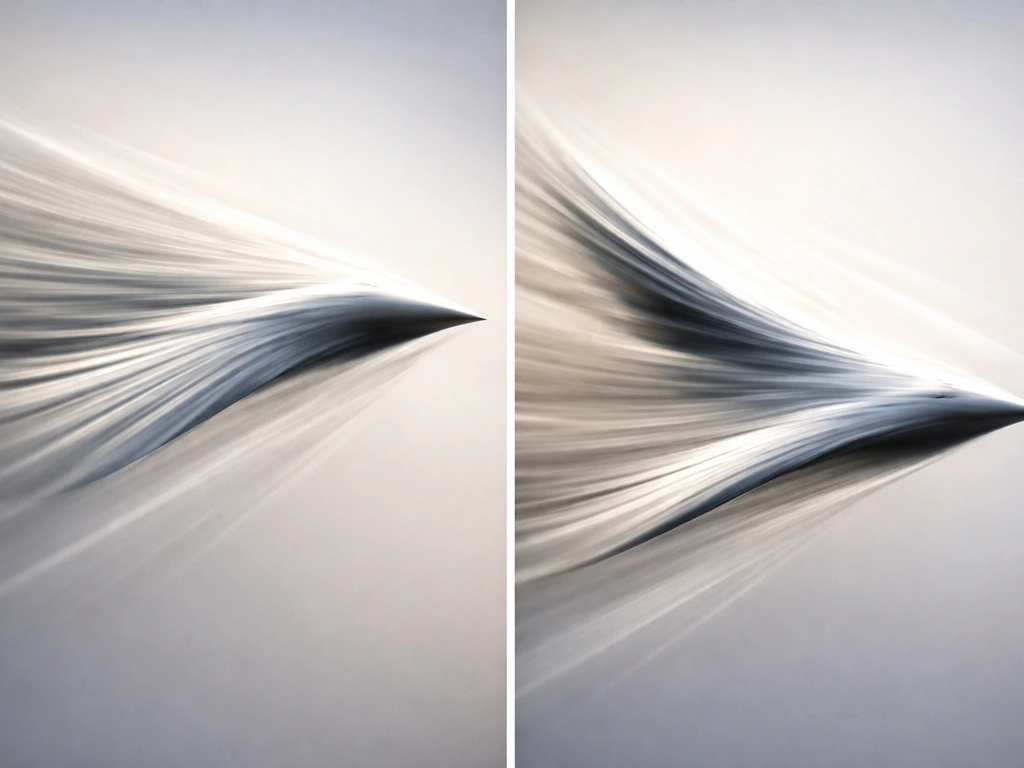
A bird's wing is an airfoil. Curved on top, flatter below, it forces air to travel faster over the upper surface, which drops pressure there and pulls the wing upward. That is lift. During flapping, the downstroke does most of the work: force measurements show that the downstroke generates the overwhelming majority of weight-support force, while drag forces during the early downstroke also contribute a meaningful upward component. The wing is not just swinging up and down; the bird is continuously adjusting the angle of attack (the angle the wing presents to oncoming air), changing wing shape by folding or spreading feathers, and modulating shoulder-joint velocity to control exactly how much lift and thrust each stroke produces.
Lift and thrust from one surface
Here is something most people do not realize: birds do not have a separate propeller. The same wing produces both lift (upward force) and thrust (forward force) by rotating the lift vector forward during the downstroke. The wing shape, stroke angle, and angle-of-attack changes all combine to push air backward and downward simultaneously. This is not quasi-steady aerodynamics like a fixed airplane wing; it involves complex, unsteady vortex structures in the wake that contribute forces in ways that are still being actively studied. The engineering term is unsteady aerodynamics, and it is why flapping is far harder to replicate mechanically than it looks.
Power, weight, and the metabolic cost
Birds are light. Hollow bones, fused skeletal elements, and feathers that are strong for their mass all reduce the weight that muscles must lift. Flight muscles in strong fliers can account for 25 to 35 percent of total body weight, and they are packed with fast-twitch fibers and mitochondria. Measured power output studies show that flight follows a characteristic curve: slow flight and hovering are actually the most power-expensive modes, and a mid-range cruising speed is most efficient. Hovering, by the way, is not a general bird skill. Only hummingbirds sustain true hovering, and it requires a specialized figure-eight wing stroke that is metabolically extraordinary. Most birds you see in the sky are doing something much less demanding.
What a human would need to do the same thing
Translating bird-flight requirements into human terms is sobering but useful. The numbers explain exactly why flapping flight is off the table and why other approaches work.
| Requirement | Bird (typical) | Human equivalent |
|---|---|---|
| Body weight | 0.01–10 kg for most fliers | 70–90 kg average adult |
| Wing area relative to body | Large, foldable, feathered | Arms cover ~0.4 m² fixed |
| Flight muscle fraction | 25–35% of body mass | Arm/shoulder muscles ~5–8% of body mass |
| Power-to-weight ratio | High; sustained flapping possible | Far too low for sustained flapping lift |
| Lift control surfaces | Wings + tail + body posture | Arms + legs + core posture only |
| Aerodynamic adaptation | Evolved airfoil feather structure | No natural airfoil; needs suit/wing aid |
Human-powered ornithopters, flapping-wing aircraft driven entirely by the pilot's legs and arms via pedals and mechanisms, have achieved flight. The University of Toronto's Snowbird project is the most cited example, completing a short, tow-assisted flight. But these are constrained, brief demonstrations, not free soaring flight. The inertial power requirement for flapping flight scales strongly with wingbeat frequency and wing mass, and human muscles simply cannot sustain the output needed to keep a body of 70-plus kilograms aloft by flapping alone. NASA's aeronautics education materials are blunt about this: heavier-than-air flapping flight for humans requires technology, not just effort.
The realistic options available right now
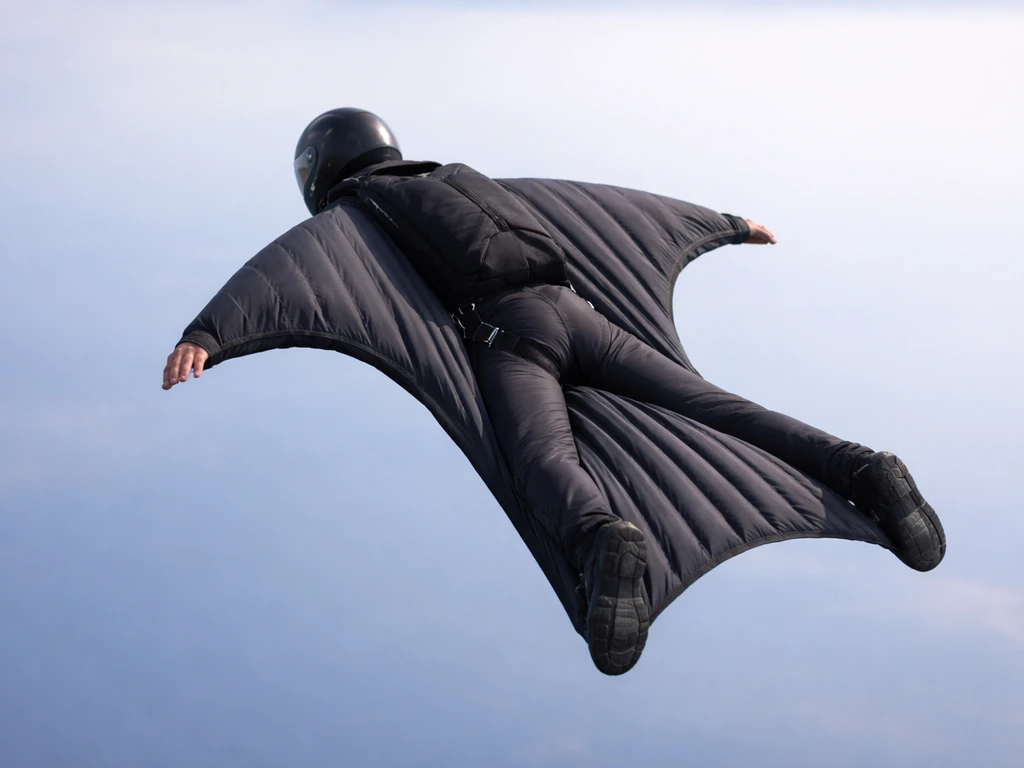
If pure flapping is out, what actually works? Those options are the closest practical answer to “can we fly like a bird” for most people today pure flapping is out. Three categories are worth understanding in detail, because they differ fundamentally in how they generate lift and thrust and in what skills and resources they demand.
Wingsuits: gliding on gravity
A wingsuit is a fabric garment with pressurized cells between the arms, legs, and torso that inflate during freefall to create a wing-shaped planform around your body. You are not generating powered lift; you are trading altitude for forward speed in a controlled glide, exactly like a soaring bird riding a thermal down to a lower altitude.
The USPA describes wingsuit flying in terms of three performance tasks: best lift (maximizing time aloft), best glide (maximizing horizontal distance), and least drag (maximizing speed). Those are aerodynamic concepts a peregrine or a swift would recognize. A skilled wingsuit pilot can achieve a glide ratio of roughly 3:1, meaning three meters of horizontal travel for every meter of altitude lost, which is competitive with many soaring birds in non-thermal conditions.
Powered wingsuits and jet suits
Add thrust and the picture changes. Electric powered wingsuits use small jet impellers mounted on the suit to provide forward or upward thrust. A documented example uses approximately 15 kW of total thrust power split across two 7. 5 kW impellers, providing thrust for up to five minutes of flight.
Gravity Industries' jet suit uses miniature gas turbines on the arms and back, with reported capabilities including altitudes around 12,000 feet and maximum flight times of roughly 10 minutes, though most real-world flights are considerably shorter. Gravity Industries reports that its jet suit can reach altitudes around 12,000 feet and provide about 10 minutes of maximum flight time, with typical flights often shorter altitudes around 12,000 feet and maximum flight times of roughly 10 minutes.
These systems are closer to personal aircraft than to bird biology. The pilot is not flapping; they are managing thrust vectors, fuel or battery state, and aerodynamic stability simultaneously. The sensory and control demands are significant.
Proximity flying and BASE
At the extreme end of wingsuit flying is proximity flying, where pilots in wingsuits descend along cliff faces and terrain at very low altitude, threading ridgelines and valleys. This is visually the closest thing to how a swift or kestrel moves through a landscape. It is also among the most dangerous activities a human can attempt, and it represents an endpoint of a long skill progression, not a starting point.
| Option | How lift/thrust works | Bird analogy | Entry cost (approx.) | Duration |
|---|---|---|---|---|
| Wingsuit (basic) | Glide via gravity-driven aerodynamic planform | Soaring/gliding bird (albatross, swift) | $1,500–3,000 for suit + skydiving prereqs | Full skydive ~60–90 sec freefall |
| Powered wingsuit (electric) | Glide + electric impeller thrust | Partial: added thrust like tailwind assist | $50,000+ for full system | Up to ~5 minutes powered |
| Jet suit (gas turbines) | Thrust-driven, body as stabilizer | Very loose analogy; more like a rocket bird | $450,000+ for Gravity suit | ~5–10 minutes |
| Human-powered ornithopter | Flapping via pedal mechanism | Closest to true bird flight | Experimental/custom build | Seconds to a few minutes, tow-assisted |
Training and skill progression: where to actually start
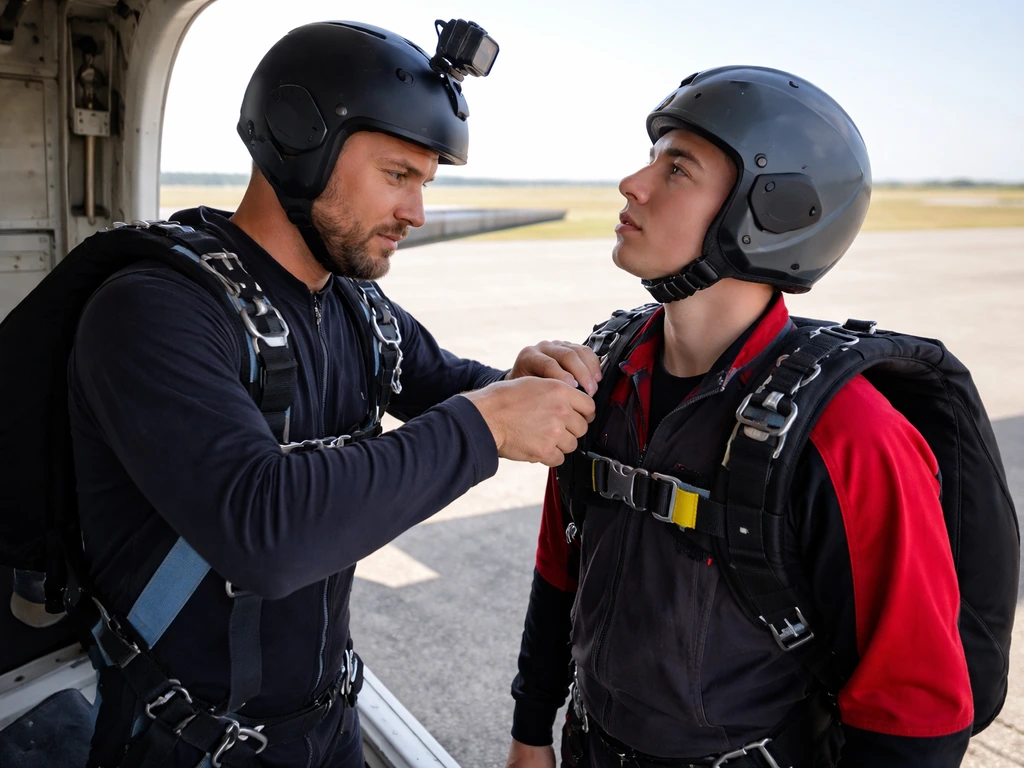
The path into wingsuit flying is structured and non-negotiable if you want to survive it. The USPA, which governs sport skydiving in the United States, has a Basic Safety Requirement of at least 200 logged skydives before a person may fly a wingsuit. That requirement came about after early fatalities in the sport made it clear that underprepared pilots were getting killed. The 200-jump minimum is not arbitrary; it is the baseline at which a skydiver has reliable body awareness, emergency procedure reflexes, and canopy skills.
- Start with an Accelerated Freefall (AFF) course at a USPA-affiliated dropzone. This is typically 8–10 jumps with an instructor and covers basic freefall body position, altitude awareness, and parachute deployment.
- Build your solo jump count to at least 200, focusing on body flight precision, turns, tracking, and canopy accuracy. USPA's licensing progression (A through D licenses) provides the structured framework.
- Use wind-tunnel time alongside jumping. Indoor skydiving tunnels let you practice body position and control without altitude stakes; USPA explicitly recommends tunnel training as part of progression.
- Take a dedicated first-flight wingsuit course from a USPA-rated instructor before ever wearing a wingsuit on a jump. This covers suit inflation, toggle use, deployment procedure, and emergency protocols specific to wingsuits.
- Start with a small beginner wingsuit, not a high-performance suit. Larger suits are faster and have worse glide at low speeds, which makes canopy deployment more complex.
- For powered suit or jet suit aspirations, contact the manufacturer or operator directly (e.g., Gravity Industries offers experience flights and training programs). These systems require aviation-adjacent safety training, not just skydiving experience.
Wind-tunnel training deserves special emphasis. A good tunnel session can compress weeks of freefall learning into hours. You feel the airflow, learn to read your body's effect on it, and build the muscle memory that makes body-position corrections instinctive. That instinct is exactly what birds have from birth, developed over weeks of fledgling practice. You are doing the same thing, just in a more compressed and controlled environment.
What the hazards really are, and what will never match bird flight
Wingsuit fatalities have involved experienced jumpers, not just beginners. USPA's safety data shows that proximity flying and formation flying introduce collision risks and terrain-strike risks that remain serious even after thousands of jumps. Loss of control in a wingsuit at 150 mph with a cliff face fifty meters away is not a recoverable situation. Even in a standard altitude jump, a deployment problem inside a wingsuit is more complex to handle than in a standard freefall, because the suit affects body position and arm reach. Regulatory constraints also apply: airspace rules, restrictions on BASE jumping in many countries, and the operational limits of powered suits all narrow where and how you can fly.
Then there are the things that simply will never be the same as bird flight, no matter how good the technology gets. Birds modulate aerodynamic forces at the feather level in real time, adjusting individual primary feathers to shed vortices or manage turbulence.
Engineering and bioflight analyses, including work synthesized in ScienceDirect studies on bird flight, treat feather structure and wing mechanics as key to producing lift and thrust forces through evolving geometry, kinematics, and aerodynamic effects Birds modulate aerodynamic forces at the feather level in real time. Their sensory systems feed directly into motor control loops that operate faster than conscious thought.
A swift's turns in a narrow alley are not planned; they are reflexive, proprioceptive, and instantaneous. A human in a wingsuit is working with a flat fabric planform, human reaction times, and a body that was never shaped by selection pressure for flight. The continuous flapping efficiency of a migratory bird, the pinpoint hover of a hummingbird, the 10,000-kilometer non-stop transoceanic endurance of certain shorebirds: none of that is on the human table.
What is on the table is genuinely thrilling and aerodynamically sophisticated, but intellectually honest comparisons matter.
There is also the question of whether humans can fly like a bird in a deeper evolutionary sense. The short answer is no. On the Moon, it is not about flapping harder, and the question can a bird fly on the moon comes down to atmosphere, gravity, and available lift The short answer is no.. Birds evolved flight over roughly 150 million years from theropod dinosaur ancestors. Their entire skeleton, respiratory system, and neurology is organized around flight. We are upright, heavy, broad-shouldered primates. Technology bridges part of that gap; biology sets the ceiling.
How to choose your path and start this week
The right starting point depends on what you actually want from the experience and what your resources look like. Here is how to think through it.
- If you want the closest thing to soaring birdlike glide and you have 12 to 18 months to invest: start AFF at a USPA dropzone near you. Use the USPA's dropzone locator at uspa.aero to find a facility. Budget roughly $1,500 to $2,000 for AFF and your first 25 jumps, then approximately $20 to $25 per jump to build your count to 200.
- If you want to feel freefall and body aerodynamics before committing to skydiving: book an indoor skydiving session at a vertical wind tunnel. Most major cities have one. A single 2-minute session gives you a real sense of body-position control in moving air.
- If your interest is powered flight and the jet suit experience: research Gravity Industries experience flights, which are offered in the UK and through select event operators internationally. Expect costs in the thousands for a supervised flight experience.
- If your interest is primarily scientific or educational: the biomechanics of bird flight are documented in excellent open-access research. Understanding how birds modulate lift and thrust through wing kinematics is fascinating in its own right and gives context to everything above.
- If you are drawn to the metaphorical or cultural side of 'flying like a bird': that is a completely valid entry point too, and the biology and physics of actual bird flight make the metaphors richer, not thinner.
Whatever path you choose, find a qualified instructor before you find a YouTube tutorial. The USPA's Instructional Rating Manual sets standards for skydiving instruction that exist specifically because self-teaching in this domain kills people. A rated instructor at an accredited facility is not a bureaucratic hurdle; they are the reason experienced wingsuit pilots are still alive to fly on weekends. Start there, build the foundation, and the air opens up from there.
FAQ
Can I just buy a wingsuit and jump, or do I need a specific prerequisite routine first?
You need a structured progression, not a single leap. Practically, you should start with conventional skydiving to master freefall stability, emergency procedures, and safe canopy handling, then only move into wingsuit training with an instructor at an accredited drop zone. A wingsuit changes your body position, fall rate, and deployment timing, so “knowing how to skydive” is not the same as “knowing how to skydive in a wingsuit.”
What is the main difference between wingsuit “best lift,” “best glide,” and “least drag” in real flying terms?
They correspond to different priorities in how you hold body angle and suit tension. Best lift aims to maximize time aloft by trading speed for upward aerodynamic support, best glide aims for maximum horizontal distance by balancing lift and drag during descent, least drag targets maximum speed by minimizing aerodynamic resistance. As conditions change (wind, exit altitude, air density), the optimal posture changes too, so you do not pick one setting and forget it.
Is proximity flying something I can try after a small number of jumps if I’m naturally fearless or athletic?
Experience and reflexes are necessary but not sufficient, proximity flying amplifies the consequences of any lapse. You are operating at very low altitude near terrain, so there is little room for errors like unstable exit, incorrect line-of-sight decisions, or a delayed response to oscillations. The sport generally treats proximity as an endpoint with a long skill ladder, not a “you can do it if you feel ready” step.
How do I estimate whether wind or weather will make a wingsuit jump unsafe or unproductive?
Treat crosswind and turbulence as performance and risk multipliers. Crosswind can create large off-target drift, while turbulence can induce roll and pitching moments that are harder to correct quickly at speed. Your training should include reading drift and planning exit points, not just choosing a “clear day.” If the wind is strong enough that your instructor would not like to do the equivalent freefall task, assume the wingsuit is a no-go.
What are common mistakes that lead to control problems specifically in wingsuits?
A frequent issue is mismatch between body position and the suit’s intended angle of attack, leading to either insufficient lift (too fast, too low) or unstable pitch and roll (too much control input at the wrong time). Another common mistake is rushing setup, especially after exit, which compresses the time you have to correct heading before speed builds. Instructors often emphasize smooth, repeatable transitions from the exit to the stable glide posture.
If a powered jet suit can reach higher altitude, does that remove the need for skydiving skills?
It reduces reliance on pure freefall skills, but it does not remove core safety competencies. You still must manage stability, understand emergency shutdown or fuel or battery limitations, and operate within strict airspace rules and manufacturer limits. Also, powered systems can have short endurance windows, so you need practiced decision-making for turn planning, reserve handling, and abort criteria, not just “takeoff and go.”
What happens if my wingsuit deployment or emergency procedure goes wrong, is it similar to normal skydiving?
It is usually more complicated because your suit affects your reach, body geometry, and airflow. Standard freefall procedures assume a certain body layout and control authority that may not apply the same way once you are in a wingsuit configuration. This is why training emphasizes how to recognize abnormal positions early and rehearse decision-making so you act before the situation becomes unrecoverable.
Can humans fly on the Moon or other low-atmosphere worlds the way we do here with wingsuits?
Not like we do on Earth. Wingsuits rely on sufficient atmospheric density to generate lift and drag, and in very thin air there is not enough aerodynamic force to support sustained glide. Even if you could “fall” from higher altitude, there would be no meaningful birdlike flight because the atmosphere is too weak to produce the required lift vector.
What’s the safest practical way to get the “birdlike” experience without aiming for advanced maneuvers?
Start with education and low-consequence goals: stable horizontal glide posture, smooth heading control, and conservative airspeed targets under instructor supervision. Many people get the core sensation of moving through open air by focusing on repeatable flight mechanics rather than speed records or terrain-following. You get the most value when your first objective is consistent control, not performance.
How should I choose between wingsuit training paths, for example tunnel training versus more time on jump training?
Use tunnel training to shorten the learning curve for body position and airflow awareness, but do not substitute it for real jump progression. The tunnel builds muscle memory, but it cannot fully replicate exit, altitude management, canopy integration, or emergency handling timelines. A strong plan usually combines both, with tunnel sessions specifically tied to the maneuvers you will practice on the next jump.