If you just watched a video or spotted something in the sky and searched 'bird flying with snake meaning,' here's the direct answer: it could mean two very different things. Either you're looking at a real predatory bird carrying a live snake as prey (a documented, if dramatic, wildlife behavior), or you've encountered a cultural or folklore claim where the image is being read as an omen or symbol. Which one applies depends entirely on the context, the species involved, and whether the footage holds up to scrutiny. Both are worth understanding.
Bird Flying With Snake Meaning: Folklore and Real Explanations

Marcus Chen
8 Jul 2026
Literal vs. symbolic: what people actually mean when they say this
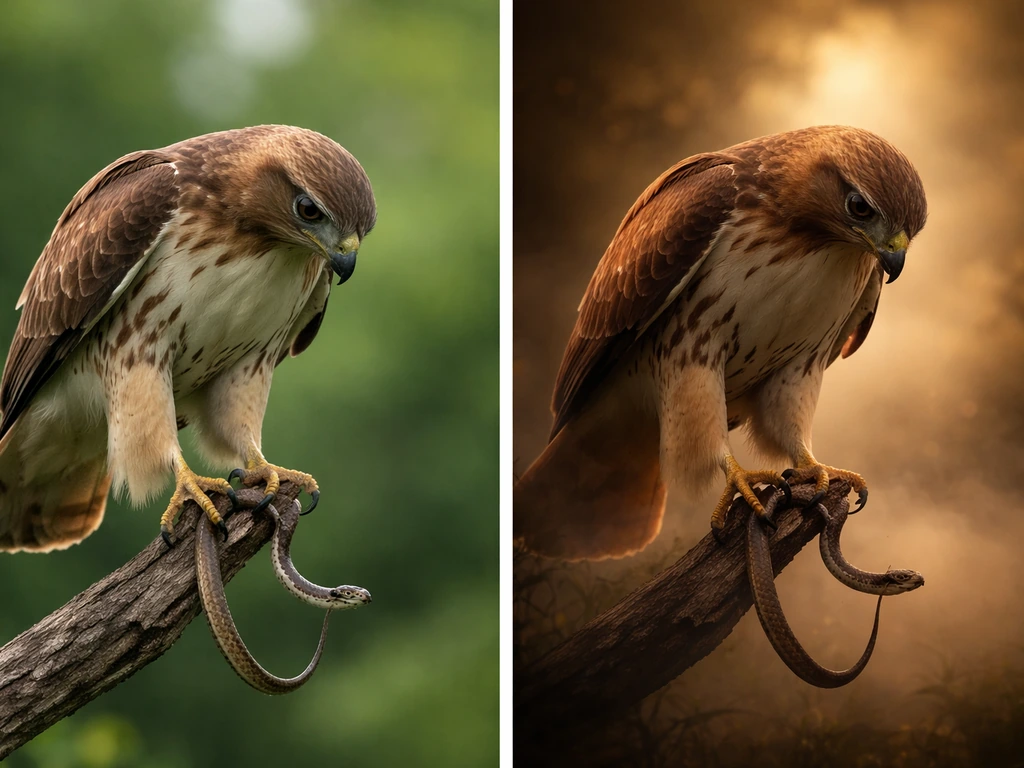
The phrase 'bird flying with snake' sits at an interesting crossroads. In a wildlife or birding context, it describes a real behavior: a raptor catching a snake and carrying it through the air, either to a feeding perch or back to a nest. This happens. It's been documented in field observations, including an archived ornithological record of a bald eagle carrying a Maritime garter snake in its talons. It's not everyday behavior, but it's not mythological either.
In a symbolic or cultural context, the same image carries entirely different weight. Across many traditions, a bird and snake together represent a cosmic power struggle: sky versus earth, spirit versus instinct, order versus chaos. When someone searches for 'meaning,' they often want to know whether what they saw (or dreamed, or found in a photo) is a good or bad omen. If you’re also wondering what a bird flying towards you means in a dream or omen context, the interpretation can change depending on your tradition and circumstances meaning. The answer there is genuinely region-dependent and tradition-dependent, which is worth unpacking on its own.
Cultural and folklore interpretations across regions
Bird-and-snake imagery shows up in symbolic systems across cultures, and the interpretations rarely agree with each other. In Mesoamerican traditions, the feathered serpent (Quetzalcoatl) fuses both animals into a single divine figure representing wind, sky, and transformation. In many Indigenous North American traditions, eagles carrying snakes symbolize triumph over adversity or a battle between upper and lower worlds. In Hindu iconography, Garuda (an eagle-like deity) is the eternal enemy of the Nagas (serpent beings), so a bird catching a snake can read as a divine act of protection. In European heraldry, an eagle grasping a serpent typically signals strength and victory over enemies.
Some Southeast Asian traditions took a more practical omen approach. Historical records from Austronesian cultures describe specific birds (and even lizards or snakes crossing one's path) as omens, classified under terms like tigmamanukan, where the direction and behavior of the animal encounter carried specific predictive meanings. So if your interest in the phrase comes from a dream or an unexpected sighting, the cultural meaning you'll find is almost always tied to your own regional tradition rather than some universal truth.
The common thread across most of these traditions is a tension between two powerful forces. The bird, especially a raptor, represents the sky, the sun, or spiritual authority. The snake represents the earth, the underworld, hidden knowledge, or danger. Their interaction is almost universally framed as a battle or a conquest. Whether that's an omen for the viewer, a symbol of internal conflict, or simply a culturally charged image depends on the tradition you're drawing from.
Why a bird might actually be carrying a snake
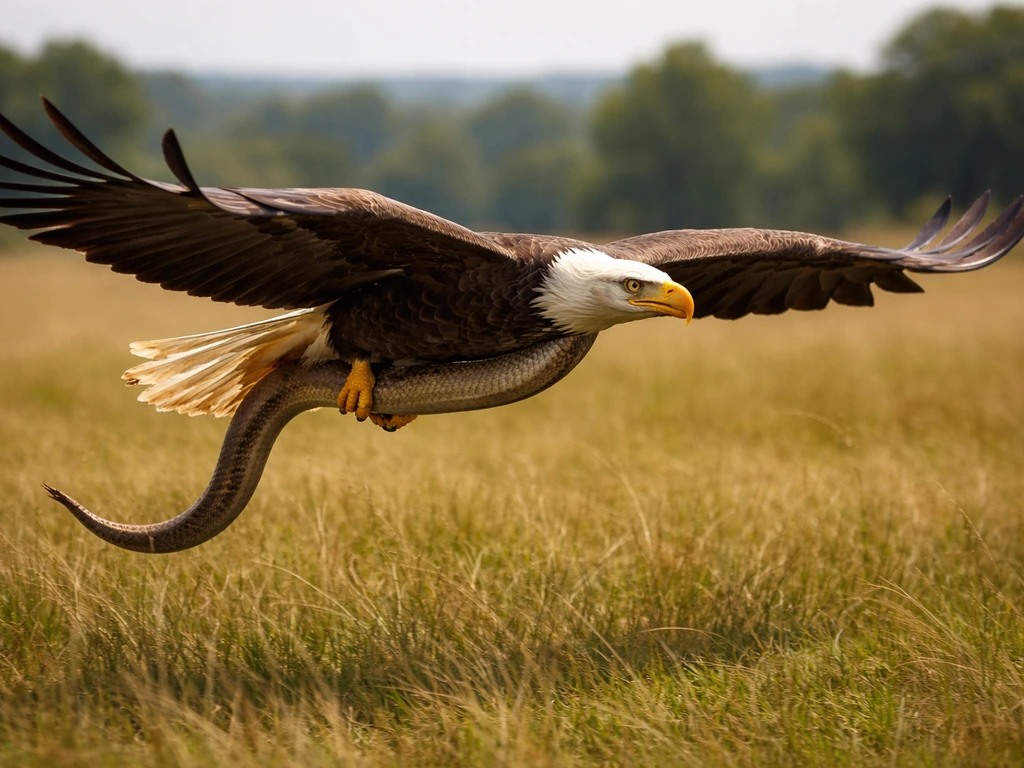
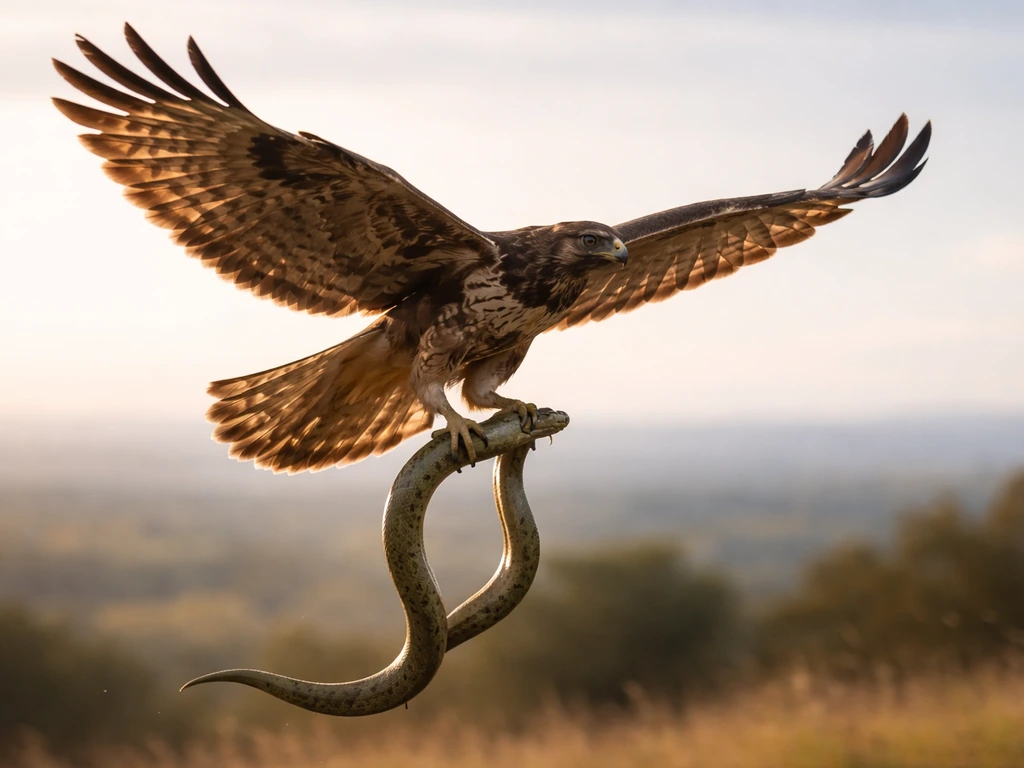
In real life, when a bird is flying with a snake, the explanation is almost always predation or prey transport. Raptors are the main actors here. A hawk, eagle, or specialized snake-eating raptor will catch a snake with its talons, kill it or incapacitate it, and then carry it to a safe location to eat or to bring back to a nest for chicks. This is straightforward hunting behavior, not a rare anomaly.
There are a few variations on this basic behavior. Some birds are bringing food to a nest (nest provisioning), especially during breeding season when chicks require regular protein-heavy meals. Others are simply relocating prey to a perch where they can eat without interference from ground-level scavengers or competing predators. Occasionally, a bird may pick up a dead snake opportunistically, functioning more as a scavenger than an active predator. In all of these cases, the bird is transporting a snake through the air for a practical reason rooted in survival.
One real-world incident drives home how genuine this behavior is: a hawk carrying a live snake reportedly struck a power line during flight, and the resulting electrical arc started a wildfire. That's not the kind of detail that ends up in a fire report if the behavior itself were unusual or staged.
Which birds can realistically do this
Not every bird you see in the sky is capable of catching and carrying a snake. Species matters enormously here, both for assessing real sightings and for evaluating viral videos.
Snake-eagles (genus Circaetus and related species in Africa and Asia) are the specialists. They've evolved specifically for this: thick, scaled legs that resist bites, powerful short toes for gripping, and hunting behavior built around spotting and swooping on snakes from a hovering perch. The black-chested snake eagle, for example, hunts venomous snakes up to about 80 cm in length. These birds are built for exactly what their name implies, and Audubon notes they swoop in, grab with the talons, and work to neutralize the snake quickly to minimize danger.
Outside of snake-eagles, several other raptors are documented snake hunters and carriers. Red-tailed hawks, Cooper's hawks, and other Buteo and Accipiter species will take snakes as opportunistic prey. Bald eagles have been field-observed carrying garter snakes. Ospreys are fish specialists but will occasionally take a snake near water. Owls, particularly great horned owls and barn owls, have been documented attacking snakes, though they tend to be less successful against larger specimens.
Research published in The Auk documents raptors (hawks, falcons, and owls) attacking snakes and sometimes getting the worst of the encounter. Snake defenses are effective enough that fatal snakebite events in hawks have been reported in veterinary literature. This matters for interpreting sightings: if you're watching a bird actually struggle with a snake mid-flight, you're witnessing something that's genuinely dangerous for the bird, not a casual transaction.
| Bird Type | Realistic Snake-Carrier? | Notes |
|---|---|---|
| Snake-eagles (Circaetus spp.) | Yes, highly specialized | Evolved specifically for snake predation; thick legs resist bites |
| Bald eagle | Yes, documented | Field-observed carrying garter snakes; primarily takes larger prey |
| Red-tailed hawk | Yes, opportunistic | Common North American snake hunter; carries prey to perches |
| Great horned owl | Possible, with risk | Documented attacking snakes; documented snakebite fatalities |
| Osprey | Rarely | Fish specialist; occasional opportunistic behavior near water |
| Small songbirds | No | Too small; not predators of snakes; mobbing behavior only |
How to tell what you're actually seeing
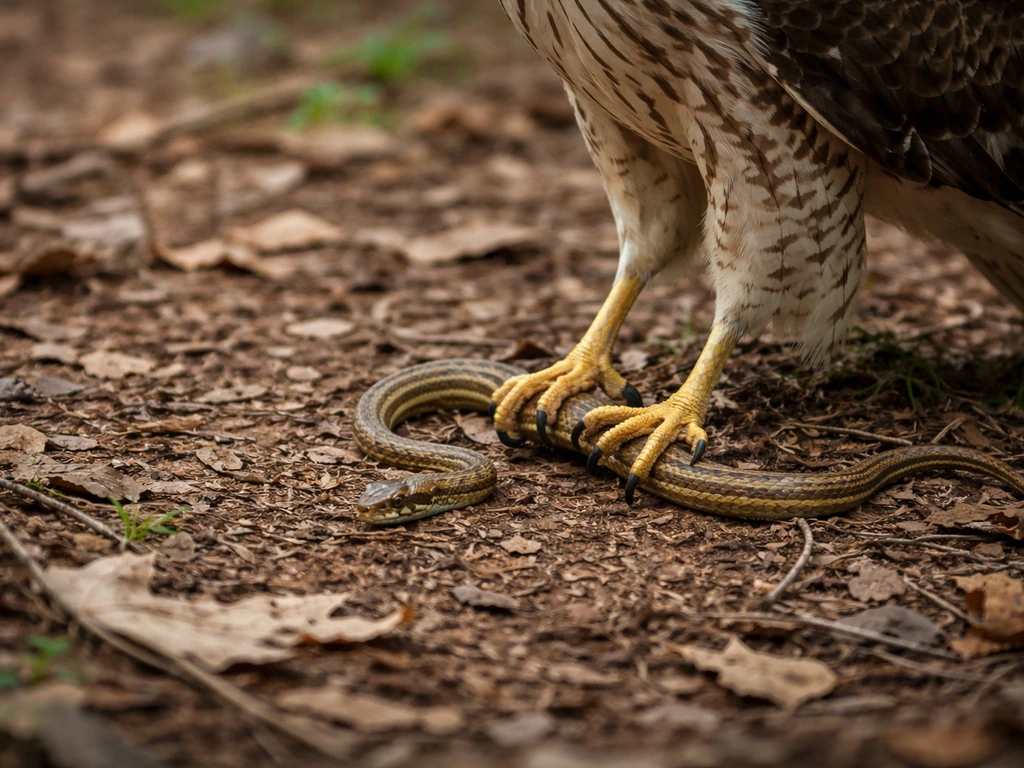
If you're looking at a photo or video and trying to work out whether it's real, a few visual and contextual checks go a long way. Start with the bird itself. Can you identify the species? If the bird is small (a pigeon, a robin, a crow), it almost certainly cannot be carrying a snake in the way a raptor would. If it looks like a hawk or eagle, that's more plausible, but you still want to check the size relationship between bird and snake. A red-tailed hawk carries prey roughly proportional to itself, so a massive python dangling from a sparrow-sized bird is an immediate red flag.
Next, look at how the snake is being held. Raptors carry prey in their talons, not their beaks. If the snake appears to be dangling from the bird's feet and the bird is flying with noticeably labored wingbeats or altered posture, that's consistent with real prey-carrying. If the snake looks neatly positioned or implausibly still, be skeptical. A live snake being carried will usually writhe and twist, which actually creates visible aerodynamic instability for the bird.
Context clues help enormously. Where was the video filmed? If it's sub-Saharan Africa and the bird looks like a snake-eagle, real behavior is highly plausible. If it's a suburban backyard barbecue and a hawk is dramatically dropping a snake onto guests, that's the setup for at least two viral videos that were later identified as staged marketing stunts, not wildlife footage. Geographic and behavioral plausibility matter as much as the image itself.
Also watch for editing or staging cues: unusual camera positioning that seems pre-planned, suspiciously perfect timing, absence of natural animal wariness, or a bird that seems oddly undisturbed by humans filming close by. Real wildlife encounters tend to be messier, briefer, and less cinematically convenient.
What carrying a snake actually does to a bird's flight
This is where the biology gets genuinely interesting. Carrying any prey item changes a bird's flight dynamics, and a struggling, wriggling snake is one of the more challenging payloads a raptor can manage. The core issue is weight and balance. A bird's wing loading (the ratio of body weight to wing area) determines how much lift it generates per wingbeat.
Add a heavy snake, and the bird effectively increases its wing loading, which means it needs faster wingbeats or a steeper angle of attack to maintain altitude. Research on maximum load-carrying during takeoff in birds shows that flight muscle capability directly constrains how much weight a bird can get off the ground with. Peer-reviewed flight biomechanics studies of bird takeoff and landing analyze how [lift and drag contributions change across wingbeats](https://pmc. ncbi.
nlm. nih. gov/articles/PMC6877630/) and can help explain how carrying heavy or struggling prey affects control near those phases.
A wriggling snake makes this worse by introducing an unpredictable pendulum effect. The snake's movement shifts the bird's center of mass moment to moment, requiring constant micro-corrections in wing kinematics to stay stable. Studies on bird takeoff mechanics show that precise coordination of wing stroke timing is essential for controlled flight, and an asymmetrically squirming payload disrupts exactly that. This is why raptors typically try to subdue or kill prey before flying with it, rather than hauling a fully alive, fighting animal through the air over long distances. When you do see a bird struggling to maintain altitude or flying in an unusually erratic path, live prey is a plausible explanation.
Talon design also plays a role in how securely a bird can grip a snake in flight. Research connecting raptor talon shape to biomechanical performance shows that talon morphology is shaped by the relative size of prey the bird typically takes. Snake-eagles have shorter, more powerful toes suited for gripping long cylindrical prey (a snake's body shape) rather than the deeper puncture grip that bird-hunting raptors use. This means a bird's grip can actually tell you something about whether the prey it's carrying is appropriate for its species.
What to do if you see this in the wild
If you come across a bird carrying a snake in real life, the best thing you can do is keep your distance and observe without interfering. The NPS recommends staying at least 150 feet from wildlife in many park settings, and that's a reasonable baseline for any encounter involving an active predator. Raptors are stressed by human proximity even when they don't show it visibly, and a bird carrying prey is already working hard. Getting closer can cause the bird to drop its meal or abandon the behavior entirely.
Do not attempt to intervene, even if the snake appears to still be alive. Predation is a normal part of ecological function, and the bird is doing exactly what its biology is built for. Wildlife authorities and the CDC are consistent on this point: handling or attempting to rescue wild animals (including snakes that appear injured) puts you at risk of bites, disease transmission, and legal liability, and it disrupts the animal's behavior in ways that can be harmful. If you believe an animal is genuinely injured in a way unrelated to normal predation, contact a licensed wildlife rehabilitator rather than intervening yourself.
If you're trying to photograph or video the encounter, do it from where you're standing. A telephoto lens or zoomed phone camera will serve you far better than creeping closer, and you'll end up with footage that's actually usable rather than a blurry close-up of a startled hawk fleeing the scene.
- Stay at least 150 feet away from any active raptor with prey
- Do not attempt to separate the bird from the snake or 'rescue' the snake
- Do not approach to get a better photo; use zoom instead
- If the bird appears injured (not just struggling with prey), contact a licensed wildlife rehabilitator
- Do not attempt to handle snakes that have been dropped or abandoned by a bird
- If in a national park or managed wildlife area, report unusual behavior to rangers
Pulling it all together: how to read a specific case
When you're trying to evaluate a specific video or sighting, run through three questions in order. First, is the species plausible? A large raptor (eagle, hawk, snake-eagle) in appropriate habitat is a real candidate. A small or non-predatory bird is not. Second, does the flight behavior match? Real prey-carrying changes a bird's wingbeat pattern and body posture in observable ways. A bird flying perfectly smoothly with a conveniently still snake is suspicious. Third, does the context check out? Real wildlife encounters don't come with perfect camera angles and don't tend to happen at suburban barbecues with a production crew conveniently standing by.
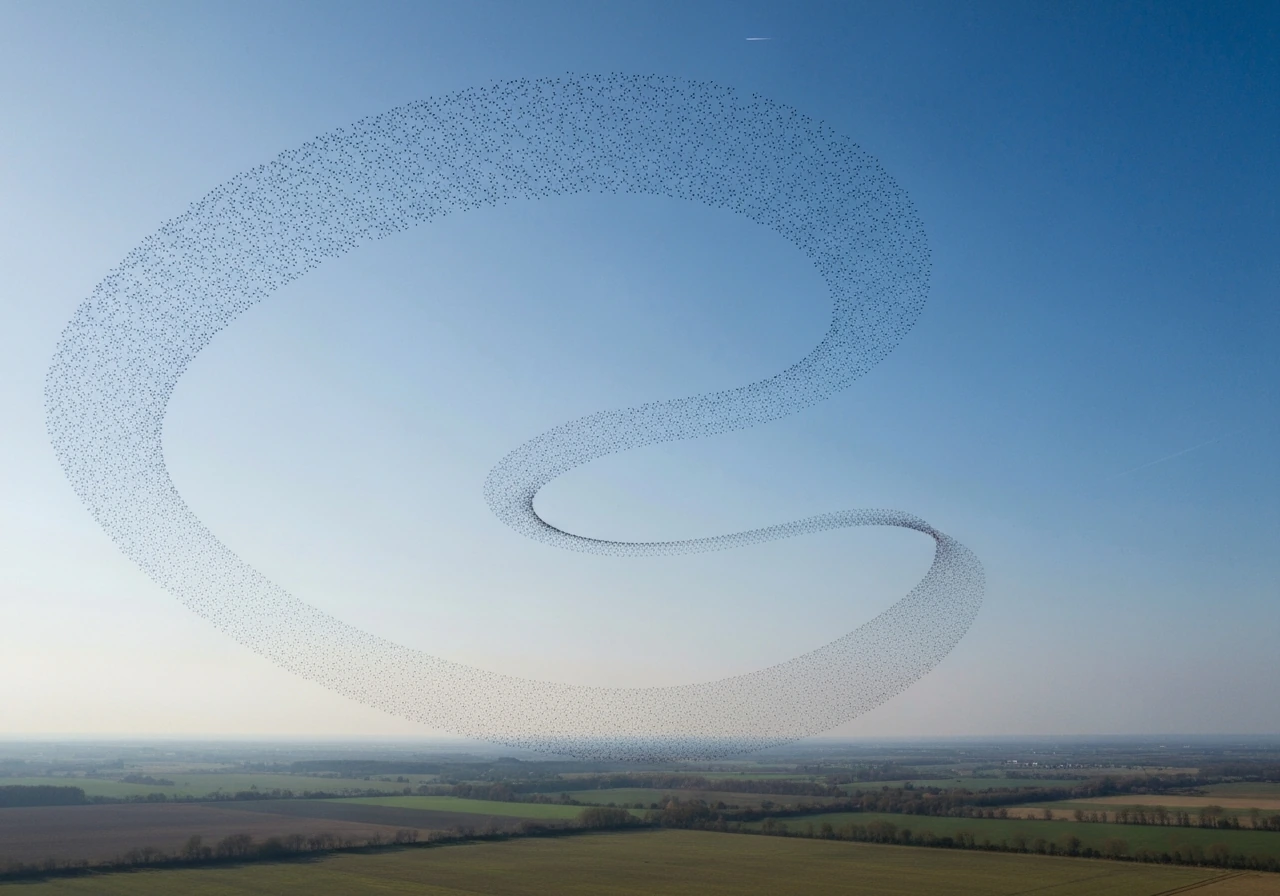
If the symbolic or cultural meaning is what you're really after, accept that the interpretation depends entirely on the tradition you're working within, and there's no single universal answer. The bird-and-snake image has carried meaning for thousands of years across many cultures precisely because it captures something primal: two powerful animals in direct conflict. That same kind of instinctive flocking behavior also helps explain why bird flocks fly in circles two powerful animals. But the specific meaning, whether omen, metaphor, or divine symbol, belongs to the cultural context, not to the image itself.
For readers who find themselves drawn to the behavioral side of this, bird flight patterns and what they reveal about a bird's intentions and physical state is a genuinely rich area. How a bird moves through the air, especially under the load of prey, tells you a great deal about what's actually happening. That intersection of flight mechanics and observable behavior is something worth exploring further if today's search sparked your curiosity. In this section, we focus on the literal side and bird flight explained in terms of flight dynamics, balance, and takeoff.
FAQ
How can I tell if the bird is carrying a live snake versus a dead one?
Watch the snake’s motion and the bird’s behavior. Live prey usually writhes or changes position during flight, and the bird may show repeated posture corrections or less steady course. With dead prey, the payload often hangs more consistently, and wingbeat pattern tends to look more uniform (even if the bird is still slower or more direct in flight).
Could a smaller bird (like a crow or robin) ever be flying with a snake?
It’s very unlikely for most songbirds and small corvids to carry a snake through the air as “real prey transport,” mainly due to size and grip limits. If the bird in the video is small, treat it as a red flag for misidentification (for example, the snake may be attached off-camera or the “snake” may be something else like rope).
What species are most likely to match “bird flying with snake meaning” in real life?
The best real-world match is a snake-eagle (especially in Africa and parts of Asia), plus some other raptors that occasionally take snakes, such as red-tailed hawks, Cooper’s hawks, and eagles that opportunistically carry certain local snake species. If you can identify the bird shape and region, you can narrow plausibility fast.
Why do some videos look “staged” even if the bird is real?
Common cues include a snake that stays unnaturally still, a bird that appears undisturbed by close human presence, filming angles that stay perfectly framed, and a scenario that seems staged for impact (for example, dropping prey onto people rather than flying to a feeding or nest location). Also look for abrupt cuts that skip the moment of capture or talon grip.
What should I do if I see this happening near my house or pets?
Keep pets indoors and maintain distance, especially if the bird is actively transporting prey. Don’t try to intervene or “save” the snake, because you can get bitten and you may cause the bird to drop the prey. If you’re worried about an active predator in a populated area, contact local wildlife authorities for guidance.
Is it safe to approach to get a better photo if the bird seems calm?
No, even calm-looking raptors can be stressed by proximity and may abandon prey or drop it. Use a zoom lens or stay at a respectful distance, because the risk is not only the bird’s reaction, it is also the possibility of the snake being released or biting if it’s near you.
Can this happen during daylight foraging, or is it mostly a special event?
It can occur during normal hunting and feeding routines, but it’s not everyday for all raptors. Snake-focused hunters may be more likely to be seen in certain seasons and habitats where snakes are active, so repeat sightings in the same area can reflect local prey availability rather than a one-off “omen.”
If I’m interpreting it spiritually or as an omen, how do I avoid common mistakes?
Don’t treat the image as having a universal meaning. First, identify your tradition or the cultural system you’re drawing from, then check how that system usually frames bird-and-serpent imagery (often power struggle or protection). Also consider your personal context, since dream or omen interpretations commonly change based on the situation rather than the literal event alone.