
A bird strike is exactly what it sounds like: a bird collides with an aircraft, usually during takeoff, climb, approach, or landing. It's more common than most passengers realize, and the vast majority of incidents are handled as routine maintenance events rather than emergencies. That said, knowing what actually happens, what the risks are, and what you should do if you witness or experience one can make a meaningful difference. Here's the full picture, from the biology behind why birds and planes keep meeting in the sky to the practical steps you take afterward.
Bird Hit Plane Crash: What to Do, Report, and Prevent

Marcus Chen
15 Apr 2026
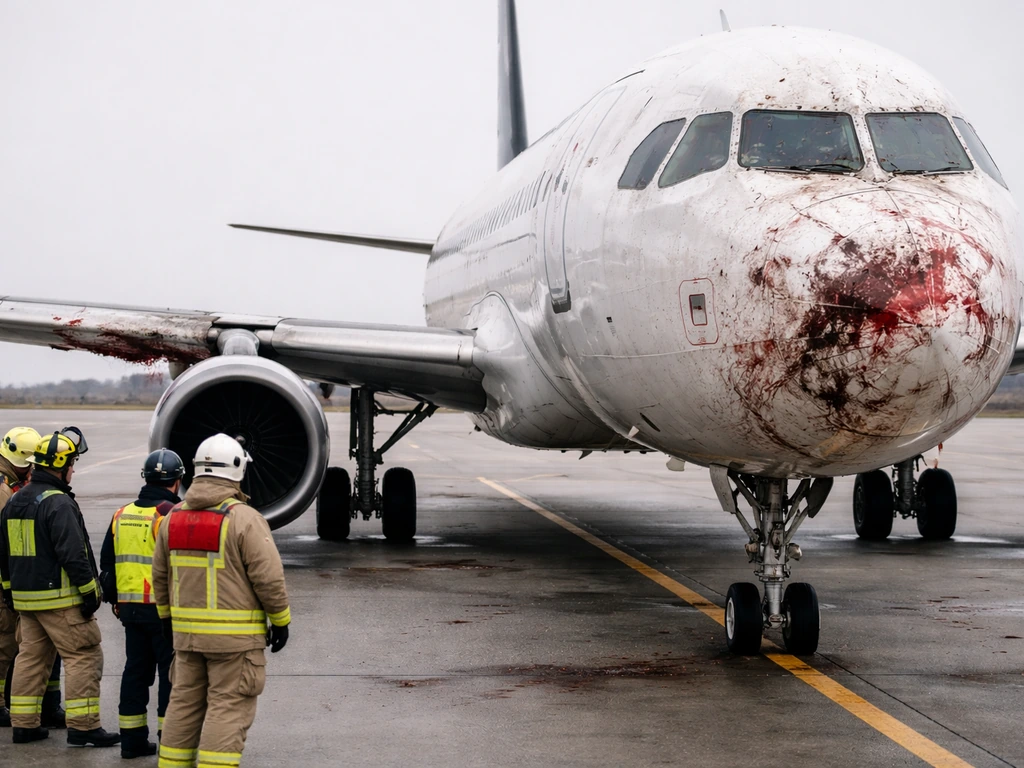
What people mean by "bird hit plane crash"
When someone searches "bird hit plane crash," they're usually not describing a full crash. They're searching for a bird strike event, sometimes a dramatic one they just heard about on the news. A bird strike (also called a bird hit or bird impact) is any collision between a bird and an aircraft in flight or during ground operations. The outcomes range from a small dent in the nose cone to, in rare cases, engine ingestion and forced landing.
Most bird strikes cause minor or no damage. A small number cause significant structural or engine damage. A very small fraction lead to serious emergencies. The phrase "bird hit plane crash" tends to circulate after high-profile incidents, but it conflates two separate events.
The bird hit is the cause; a crash, if it happens, is an extreme outcome.
The FAA has tracked bird and wildlife strikes to civil aircraft in the United States since 1990, and the data shows strikes are far more frequent than the public perceives. Between 1990 and 2024, tens of thousands of strikes have been recorded in the National Wildlife Strike Database, which the FAA and USDA jointly established in 1994 specifically to centralize this data. Reporting is voluntary for most operators, which means the real number is almost certainly higher than what's on file.
Why birds and aircraft keep colliding
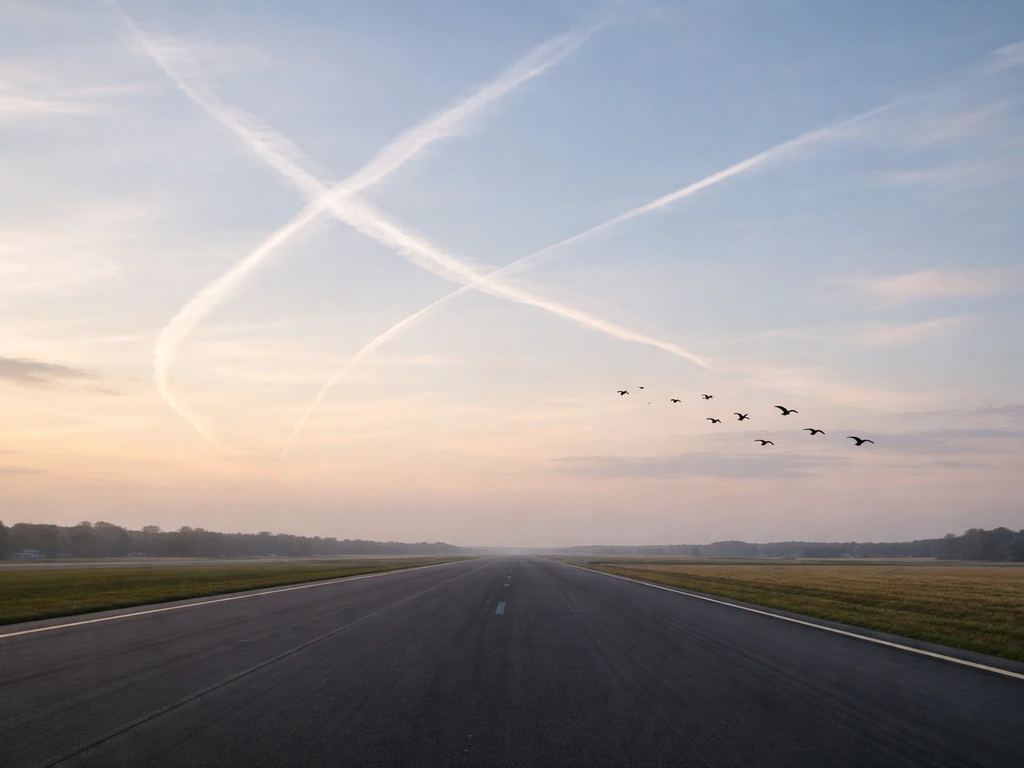
Birds don't collide with planes because they're confused or careless. They collide with planes because airports, approach corridors, and climb paths overlap almost perfectly with the airspace birds actually use. Understanding that overlap starts with understanding how birds fly and why they concentrate in certain zones at certain times.
Where birds spend most of their flight time
Most bird species do the bulk of their flying below 500 feet AGL (above ground level). Foraging flights, territorial patrols, and short commutes between roost and feeding sites almost all happen in the low-altitude band that aircraft pass through during takeoff and landing. This is exactly why the FAA reports that about 61% of bird strikes with fixed-wing civil aircraft occur during landing phases (descent, approach, and landing roll), and about 36% occur during takeoff run and climb. Only roughly 3% happen en route at cruise altitude. The numbers make biological sense: birds and planes share the same low airspace during the most critical and frequent phases of flight.
Migration, flocking, and the species that cause the most trouble
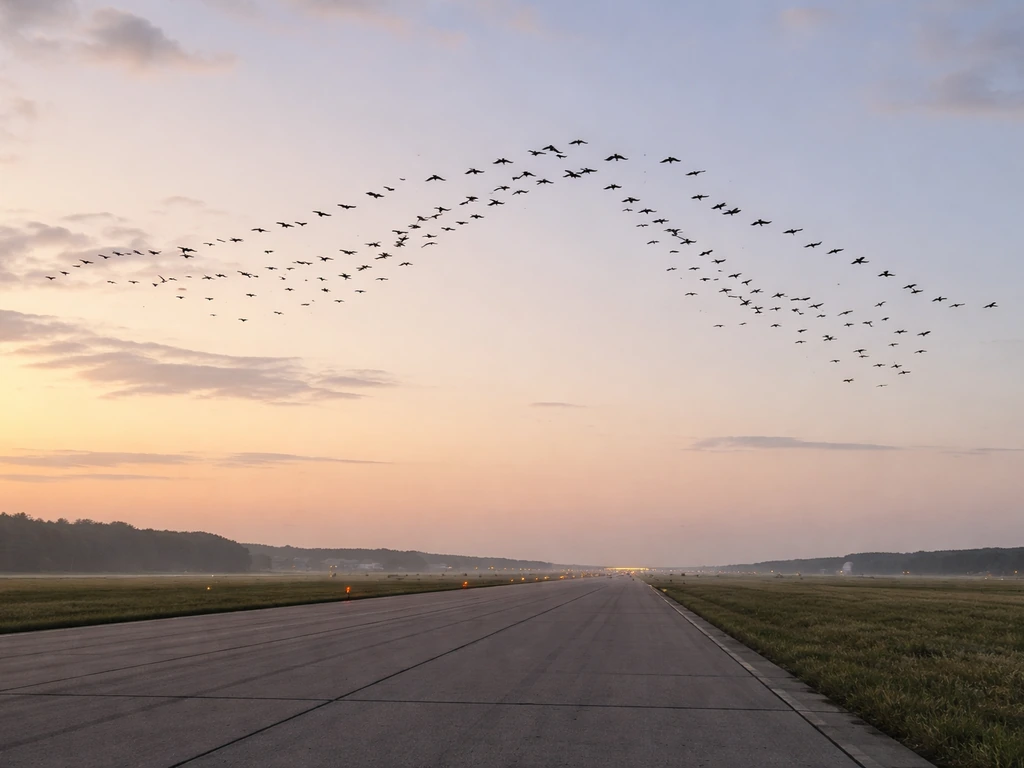
Migration dramatically increases strike risk twice a year, spring and fall, when billions of birds funnel through flyways that often cross major airports. Migratory birds travel at night as well as day, adding a low-visibility dimension that radar doesn't always catch in time. Flocking species compound the risk further: a single Canada goose striking an engine is serious, but a flock of starlings or blackbirds ingested into both engines simultaneously is catastrophic. Flocking behavior is an evolved antipredator strategy where individual birds maintain close spacing, so an aircraft flying into a flock has no chance of threading through it.
You might expect the most dangerous strikes to involve the largest birds, and in terms of damage per hit, that's true. But the most commonly struck species in the U.S. is actually the mourning dove, which accounts for about 11% of all birds identified to exact species in FAA strike records from 1990 to 2023. Mourning doves are abundant, low-flying, and common near open fields adjacent to runways. Large soaring birds like vultures and eagles cause disproportionate damage when struck because of their mass and the speed differential involved, but they're hit less frequently. Waterfowl, gulls, and raptors consistently rank among the most damaging species per strike event.
There's something worth thinking about here from a pure flight biology standpoint. To a bird, what's a plane is essentially a fast-moving predator or large object it has almost no evolutionary context for. Birds rely on visual detection and rapid evasive maneuvers, but a commercial jet on approach is traveling at 150+ knots. The reaction time required to avoid it simply exceeds what avian nervous systems evolved to handle at that closure speed.
What to do immediately after a bird strike
The steps you take in the first minutes after a bird strike depend on who you are: the pilot in command, a crew member, a passenger, or an airport operations staffer on the ground. Here's how each role breaks down.
If you're the pilot
- Declare the situation to ATC immediately. Use plain language: "Bird strike, [location], assessing damage." ATC can coordinate emergency services, clear the runway, and relay information to airport ops.
- Run the appropriate abnormal/emergency checklist for your aircraft type. Engine bird strikes may require shutdown procedures; windshield strikes may impair visibility.
- Assess controllability and decide: continue, return, or divert. Do not delay this decision waiting for more information than you have.
- After landing, notify your dispatcher, company ops, and airport operations. Preserve any physical evidence (feathers, remains) for the wildlife report.
- File FAA Form 5200-7 (Bird and Other Wildlife Strike Report). The FAA's Aeronautical Information Manual specifically urges pilots to report any bird or wildlife strike using this form. ICAO-standard reporting also applies to international operations.
If you're a cabin crew member
Your job is passenger management, not damage assessment. If you hear or feel an impact, report it to the flight deck immediately using the interphone. Follow the flight crew's direction. Do not speculate to passengers about what happened. If the flight deck initiates an emergency, move to your emergency stations and follow your airline's emergency procedures. After landing, you'll likely be asked to document what you observed for the airline's safety reporting system and potentially for an FAA or ICAO safety report, especially if the strike resulted in significant damage or a loss of essential services.
If you're a passenger
You will almost certainly hear or feel nothing during most bird strikes, particularly strikes to the fuselage or smaller airframe components. If you do feel a thud or see a flash near an engine, stay calm and follow crew instructions. You have no control over the technical outcome. What you can do: note the time, the phase of flight, and what you observed. After landing, you can report your observation to the airline's customer safety line or to the airport. Your account may be useful for the wildlife strike report. Beyond that, your role is to follow crew guidance.
How airlines and airports assess damage after a strike

Once the aircraft is safely on the ground, maintenance personnel perform what's called a post-strike inspection. The depth of that inspection depends on where the strike occurred and what systems may have been affected. Here's what typically gets checked and why.
| Aircraft Zone Struck | What's Inspected | Why It Matters |
|---|---|---|
| Engine (turbofan) | Fan blades, compressor stages, turbine blades, inlet lip, oil and fuel systems | Bird ingestion can cause blade damage, imbalance, or flame-out; even partial damage affects thrust and safety |
| Windshield / nose | Glass integrity, frame seal, radome, weather radar | Windshield fracture or radome damage affects visibility and navigation instrumentation |
| Leading edges (wings/tail) | Slat panels, fixed leading edge skins, de-icing ducts | Structural dents or cracks can propagate under flight loads; de-icing systems may be compromised |
| Fuselage skin | Visual inspection for dents, punctures, skin buckling | Pressurization integrity depends on fuselage skin condition |
| Pitot/static ports | Visual check for blockage or deformation | Blocked ports cause false airspeed/altitude readings, which are critical flight instruments |
For Part 139 certificated airports (commercial service airports), federal regulations under 14 CFR § 139.337 require wildlife hazard management programs, including wildlife hazard assessments and formal Wildlife Hazard Management Plans (WHMPs) where warranted. Post-strike data feeds directly into these plans. Airport operations staff are typically required to collect and report strike evidence, including bird remains for species identification, which is critical for refining deterrence strategies.
SKYbrary, which aligns with ICAO and EASA guidance, notes that reporting is specifically required after landing when a bird strike results in significant damage or loss or malfunction of an essential service. Airlines and airports both feed data into centralized safety systems: in the U.S., that's the FAA National Wildlife Strike Database; internationally, operators use ICAO-aligned safety reporting structures.
Emergency or not? How to read the situation
Not every bird strike is an emergency. Most aren't. But specific conditions should immediately push a crew toward declaring an emergency (MAYDAY or PAN-PAN) rather than treating the event as routine. Passengers and crew who understand these cues can mentally track what's happening and respond appropriately.
- Engine fire, flame-out, or loss of thrust after the impact: treat as an emergency. One engine inoperative on a twin requires immediate checklist action and likely a return or divert.
- Both engines affected (possible in flock strikes): this is a full emergency. The Miracle on the Hudson in 2009 was exactly this scenario, where dual engine failure after Canada goose ingestion forced an immediate water landing.
- Windshield penetration or severe cracking impairing pilot visibility: declare emergency, request priority landing.
- Hydraulic or flight control abnormality following impact to leading edge or empennage: declare and assess.
- Pressurization warning after fuselage impact: treat as emergency until proven otherwise.
- No physical symptoms, no instrument warnings, no crew announcement: likely a minor strike. Wait for crew communication.
The bird vs plane story behind the Miracle on the Hudson is the reference case everyone in aviation knows. Flight 1549 struck a flock of Canada geese at roughly 2,800 feet during climb out of LaGuardia. Both CFM56 engines ingested birds. Both engines lost thrust within seconds. The crew had less than three minutes to respond. That event became the defining example of how a routine departure can become a life-or-death emergency in one flock encounter, and it reshaped wildlife management standards at airports nationwide.
ATC also plays a role here. Per ICAO Doc 9137 (Airport Services Manual), ATC can advise pilots of observed wildlife activity and coordinate responses to wildlife hazard reports. If a bird strike is reported on final approach, tower can issue wildlife alerts to subsequent traffic and coordinate with airport ops. Pilots should report any strike to ATC, even if they assess the damage as minor, because the information protects other aircraft.
Prevention that actually works
Airport wildlife management is a legitimate science, and the most effective programs combine habitat modification, active deterrence, and operational awareness. The FAA's Advisory Circular AC 150/5200-33C specifically addresses hazardous wildlife attractants on or near airports, and AC 150/5200-32C provides the framework for wildlife strike reporting that feeds prevention efforts. When you understand what actually draws birds to airports, the prevention strategies make immediate sense.
Remove what attracts birds in the first place
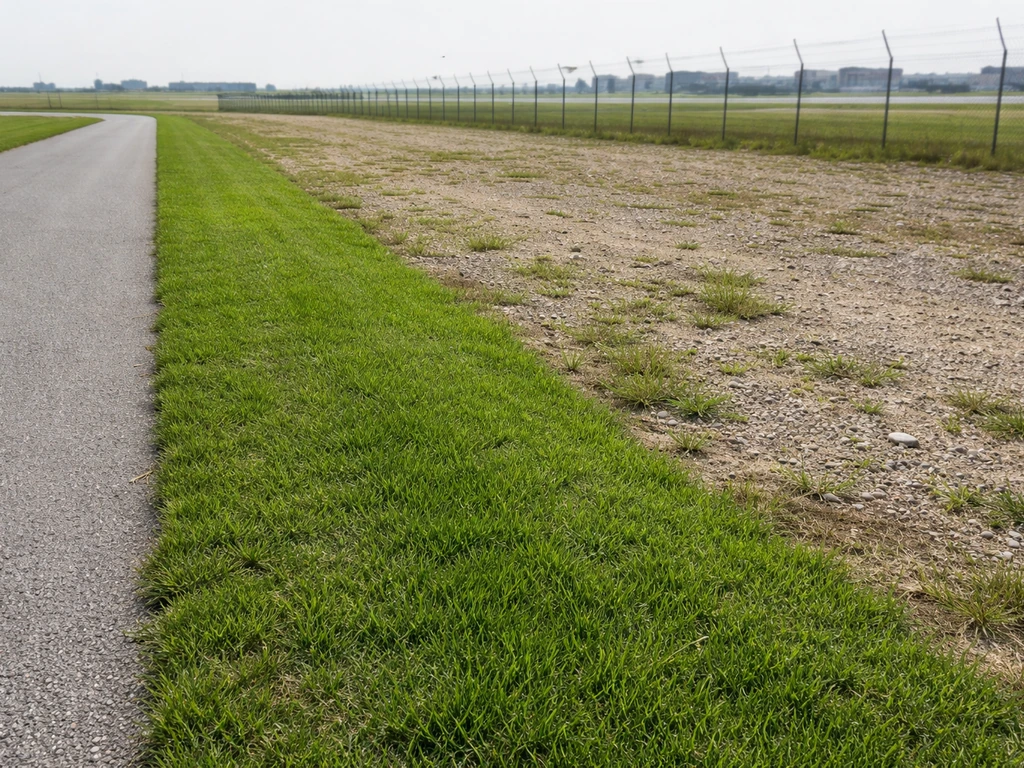
Airports are often unintentionally attractive to birds. Short mowed grass looks exactly like prime foraging habitat to American kestrels, meadowlarks, and ground-feeding shorebirds. Standing water attracts waterfowl and gulls. Dumpsters and food waste near terminals draw corvids, starlings, and gulls. The blank" rel="noopener noreferrer">FAA's guidance on hazardous attractants covers all of this: controlling grass height (taller grass, 6 to 14 inches, is less attractive to many foraging species), eliminating standing water, managing waste, and discouraging nesting on airport structures. These are not cosmetic measures. Habitat modification is the foundation of effective wildlife management.
Active deterrence methods
Active deterrence adds a second layer. Airports use a combination of pyrotechnics (wildlife crackers and shell crackers that produce loud reports), distress call broadcasts, laser systems, trained border collies to patrol runway areas, and in some cases permitted lethal removal of problem species. The effectiveness of each method depends heavily on the target species and the persistence of the program. Birds habituate quickly to static, predictable stimuli. A scare cannon firing at the same time every morning loses its effectiveness within days. Varying timing, sound types, and patrol patterns is essential.
Operational scheduling and coordination
Airports near major migration corridors sometimes coordinate departure and arrival schedules with peak migration windows, especially during dawn and dusk when bird activity is highest. ATC and airport ops share real-time wildlife sightings. Some airports use radar specifically designed to track bird movements (avian radar systems) to provide advance warning of flock activity in the approach and departure paths. Wildlife Hazard Management Plans, required under 14 CFR § 139.337 for applicable airports, integrate all of these tools into a documented, regularly reviewed strategy. If you're curious about whether a bird hit a plane today, those airports publish strike data that feeds the FAA's national database, making near-real-time awareness possible for safety professionals.
The biomechanics of impact: why some strikes are nothing and others are catastrophic
The physics of a bird strike are brutal and counterintuitive. A 4-pound Canada goose striking an aircraft at 150 knots generates an impact force equivalent to roughly 4,000 pounds. That's kinetic energy scaling with velocity squared, which means speed matters far more than bird mass. A small bird at high speed can cause more structural damage than a large bird at low speed, depending on impact location and aircraft design.
What parts of birds cause the most damage
Bird skulls are surprisingly light. Avian skulls are highly pneumatized (filled with air pockets) to reduce weight for flight, which means the skull itself compresses and fragments on impact rather than transferring load cleanly. The denser, more compact parts of a bird (the sternum, the keel, the musculature of the breast) are what penetrate windshields and deform leading edges. Large soaring birds like vultures and pelicans have exceptionally robust keels to anchor powerful flight muscles, which makes them particularly effective at causing penetrating damage on impact.
Why engine ingestion is in a different risk category
Turbofan engines are certified to continue operating after ingesting birds up to a specific size (per FAA and EASA certification standards). A single small bird, say a starling, entering a high-bypass turbofan usually causes fan blade damage but not flame-out. A large bird or multiple birds can exceed the engine's designed ingestion tolerance, shatter fan blades, and cause compressor stall or complete engine failure. The fan blade itself becomes a hazard: a fractured blade can puncture the engine nacelle and, in severe cases, reach the fuselage or fuel systems. This is why turbine engine inspections after any bird ingestion event are mandatory, not optional.
Birds' hollow bones, a key adaptation for reducing weight during flight, mean the structural density of a bird per unit volume is much lower than a comparably sized mammal. But at aircraft speeds, that lower density doesn't protect the aircraft. The energy transfer still occurs almost instantaneously. The bird's body doesn't have time to deform gradually; it behaves more like a fluid projectile. Engineers who design aircraft structures and bird-strike test standards actually use gelatin projectiles to simulate bird impacts in laboratory testing, because the fluid-like behavior at impact velocity is more representative than a rigid body.
There's a reason the phrase has become culturally embedded. The line "Is it a bird? Is it a plane?" from Superman mythology plays on the idea that birds and aircraft occupy the same visual and conceptual sky. In reality, they occupy the same physical airspace too, and that overlap has real consequences. The cultural joke and the engineering problem are rooted in the same truth: birds were the original rulers of low-altitude flight, and aircraft arrived into a sky that was already very well occupied.
The famous meaning behind "it's a bird, it's a plane" captures something true about how humans relate to things in the sky. We look up, we see movement, and we try to classify it. The problem for aviation is that by the time classification is possible at closing speeds above 200 knots, evasive action is already too late for both bird and aircraft.
Reporting: where the information goes and why it matters
FAA Form 5200-7 is the standard U.S. reporting form for bird and other wildlife strikes. It's used by pilots, airport operators, air traffic controllers, and airline maintenance staff. The form captures species (if known), location, phase of flight, damage level, and operational effect. This data flows into the FAA Wildlife Strike Database, which now covers 1990 through 2024 and is publicly accessible. Researchers, airport planners, and aircraft manufacturers use this database to identify high-risk species, high-risk airports, and seasonal patterns. The more completely strikes are reported, the better the prevention models become.
Internationally, ICAO Doc 9137 provides the framework. Airlines operating internationally are expected to report through their state's safety reporting system, which feeds into ICAO's centralized data. SKYbrary's guidance aligns with this: a strike causing significant damage or an essential service loss should be reported on standard safety reporting forms, and narrowly avoided events (a bird that passes through the engine zone without contact, for example) should still be documented. Near misses matter as much as actual strikes for building an accurate risk picture.
The animated shorthand of the "is it a bird, is it a plane" gif has become a way to express sudden recognition of something impressive in the sky, but the real recognition that matters in aviation safety is the post-strike report: the formal acknowledgment that a bird and an aircraft occupied the same point in space, what happened as a result, and what can be done to prevent the next one.
One last note worth making: the phrase translates across languages and cultures because the sky belongs to everyone. The Swahili expression for "this is a bird, not an aeroplane" reflects the same cross-cultural fascination with distinguishing biological flight from mechanical flight. And yet in practice, on approach to a busy airport at dusk during autumn migration, the distinction barely matters to a flock of geese turning toward a freshwater pond that happens to sit just off the runway threshold. Prevention, reporting, and a clear-headed response protocol are what bridge that gap.
If you want a clearer sense of what actually happens when a bird comes in front of an airplane in physical terms, the short answer is: physics wins, biology loses, and the aircraft absorbs the consequences. The practical answer is: report it, inspect it, learn from it, and build the wildlife management program that makes it less likely to happen again tomorrow. blank" rel="noopener noreferrer">FAA AIM guidance urges pilots to report any bird or other wildlife strike using FAA Form 5200-7 (Bird/Other Wildlife Strike Report).
FAQ
If it felt like a small hit and there was no warning light, is it still a serious bird hit plane crash event?
Not necessarily. In turbine aircraft, a strike can feel minor and still involve critical components, especially if the event occurred near an engine inlet or windshield. Crews still perform required inspections and may borescope engines even after “no obvious damage” reports, because damage can be internal or delayed (for example, fan blade fractures).
Do I need to report a bird hit plane crash if I only saw the bird and it looked like it missed the engine or aircraft?
Yes, reporting should still happen for “near misses.” If a bird passes through the engine zone, impacts the airframe but causes no visible damage, or is seen in the runway environment right before takeoff or landing, document it through the airline or airport process. Those entries help build a fuller risk picture, not just statistics of confirmed collisions.
What should I tell the crew after a bird hit plane crash if I cannot identify the bird species?
From a passenger perspective, do not try to identify the species on the spot unless you have a clear view. Instead, note concrete details you can observe, like time, runway direction, altitude phase (takeoff roll, approach, landing roll), and where you saw the strike (left or right wing, engine, nose). If you later see bird remains, notify the crew, because species identification typically depends on physical evidence.
As a passenger, what exact details matter most right after a bird hit plane crash?
Try not to delay reporting while “checking” your own symptoms or assuming maintenance will see it. You can provide immediate, actionable facts: when it happened, whether you heard impact noise, whether you noticed engine behavior (thrust changes, vibrations), and any flight guidance you received. This is more useful than guessing damage extent.
When should a crew treat a bird hit plane crash as an emergency instead of a routine event?
If you are the pilot or crew, the practical decision aid is whether the strike caused or is likely to cause loss of thrust, abnormal engine indications, control or structural irregularities, fire or smoke, or impairment of essential functions. When any of those are present, treat it as more than routine and follow your company emergency decision policy rather than waiting for deterioration.
If the tower already knows about a bird strike, should the crew still report it after a bird hit plane crash?
ATC wildlife alerts are meant to protect other aircraft, but your obligation to report does not disappear if ATC is already aware. If you confirm the event, report it through the proper channel (crew communications and company/airport procedures). Other pilots rely on the combination of your report and location/phase details to adjust their approach or climb profiles.
I found bird remains after a bird hit plane crash, can I pick them up and bring them to someone?
Do not touch or move anything you find near the aircraft or on the runway unless the airport has directed you. For ground evidence, leave remains where they are, note the approximate location, and alert airport or airline staff. This preserves chain-of-custody for species ID and prevents contamination that can reduce the value of the report.
Why do people think every bird hit plane crash is a full crash, and what’s actually typical?
The “bird hit plane crash” phrase can mislead people into thinking all events involve forced landings. Most strikes are handled through inspection and continued operations, and only a small subset lead to major engine or structural damage. The key is that reporting and inspection are the bridge between “no big drama” and “survivable emergency,” because the outcome is not predictable in the first seconds.
If I witness birds near the runway, how does that help prevent a future bird hit plane crash?
If you are at an airport and see birds active near maneuvering areas, report it through the airport’s wildlife hazard reporting process or the operations channel your role uses. The goal is to trigger deterrence adjustments and operational awareness before aircraft arrive, especially during dawn, dusk, and migration windows.
After a bird hit plane crash, should passengers expect anything additional to happen later (repairs, follow-up inspections)?
Yes. In the days after a strike, there can be additional maintenance actions beyond the initial checks, such as repeat borescope inspections, engine component review, or repairs depending on findings. Follow the airline or airport’s maintenance closure process and do not assume the story ends when the aircraft lands safely.
Next Articles

Bird Has Flown Meaning: Definition and How to Respond
Understand the bird has flown meaning, when it’s used, and how to reply with examples for real-life conversations.
Prefix Meaning Flight or Bird: Definition and Examples
Learn the flight or bird prefix meaning, origin, examples, and a checklist to decode new words and avoid look-alikes.
Flyer Meaning Bird: What It Says About Flight Ability
Clarifies flyer meaning for birds and explains which species fly well and why, plus a checklist to verify in context.