
The prefix you're looking for is avi-, and it comes straight from Latin avis, meaning 'bird.' It shows up in everyday words like aviation, aviary, and avian, and it can signal meanings tied to both birds as animals and the act of flight. Once you know where it comes from and what it looks like in a word, you can decode a surprisingly wide range of vocabulary in biology, science, and even everyday language.
Prefix Meaning Flight or Bird: Definition and Examples

Marcus Chen
6 Jun 2026
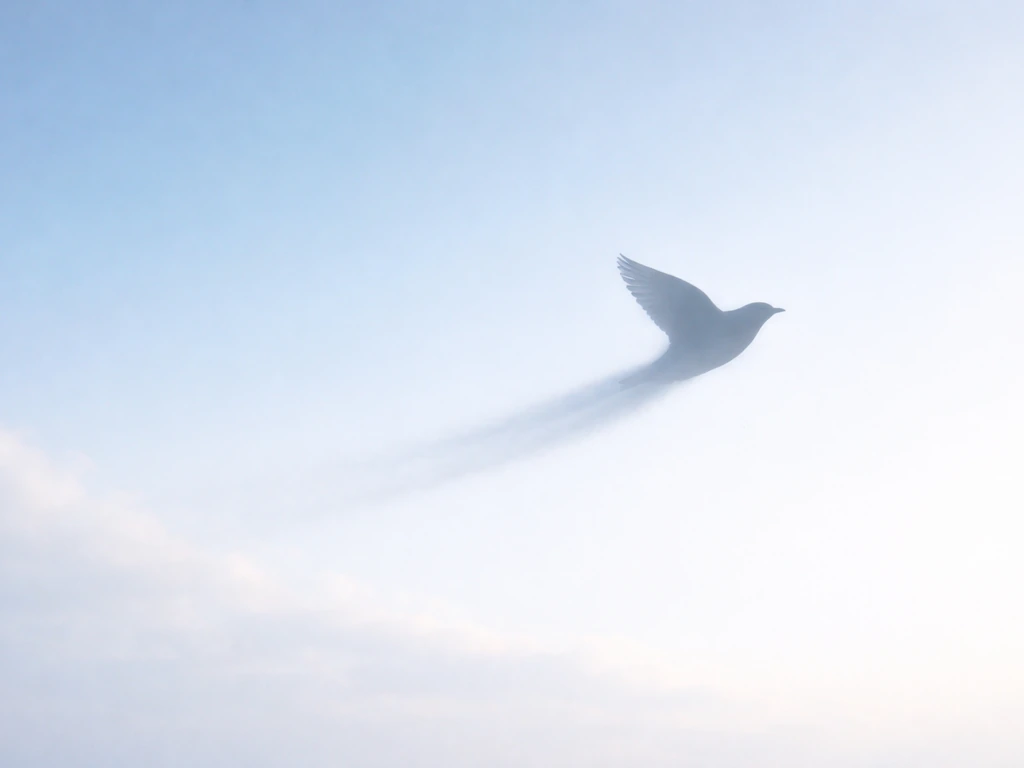
Where avi- comes from

The prefix avi- is a combining form borrowed directly from Latin avis, which simply meant 'bird.' Latin itself inherited the word from the Proto-Indo-European root *awi-, a prehistoric base word for 'bird' that linguists have reconstructed across many ancient language families. So when you see avi- at the front of a word, you're looking at something that has been connected to birds for thousands of years before English even existed.
The word aviation is a perfect case study. It was coined in 1863 by French writer Gabriel de La Landelle, who built it from a French neologism avier (meaning 'to fly') plus the suffix -ation. That French root came directly from Latin avis. So aviation literally started out as 'the bird-ing' or 'doing what birds do.' The connection between the mechanical act of flight and the biological fact of birds was baked in from the very beginning.
Common words that use avi-
Once you know the prefix, you start seeing it everywhere. Here are the most common words built on avi-, along with what the rest of each word contributes to the meaning:
| Word | Literal breakdown | What it means today |
|---|---|---|
| avian | avi- (bird) + -an (relating to) | Relating to or resembling birds (e.g., avian flu) |
| aviary | avi- (bird) + -arium (place) | An enclosure or large cage where birds are kept |
| aviation | avi- (bird) + -ation (process) | The practice of flying aircraft |
| aviator | avi- (bird) + -ator (one who does) | A pilot; one who flies aircraft |
| avifauna | avi- (bird) + fauna (animal life) | The bird species of a particular region or time period |
| aviculture | avi- (bird) + culture (rearing) | The keeping and breeding of birds |
| aviophobia | avi- (aviation) + -phobia (fear) | Fear of flying |
Notice how the prefix does slightly different work in each word. In avian and aviary, avi- points directly to birds as animals. In aviation and aviator, it gestures toward flight as the defining behavior of birds. Bird in flight meaning is often used as a phrase for symbolism, and it builds on the same core idea of birds and flight. In aviophobia, it has shifted one more step to mean fear of air travel specifically. The root stays the same; the context shapes the precise meaning.
How to spot avi- in a word (and avoid the traps)

The prefix almost always appears as avi- or av- right at the start of a word. The pronunciation anchors it: the 'a' in avi- is a long 'ay' sound, as in avian (ˈā-vē-ən). If you hear that 'ay-vee' opening, you're almost certainly looking at a Latin avis descendant.
That said, there are a few genuine look-alike traps worth knowing about. The word avenue starts with 'av' but has nothing to do with birds. It comes from Old French avenir, meaning 'to come to' or 'to arrive.' Similarly, the word ave (as in the devotional phrase 'Ave Maria') is Latin for 'hail' and is completely unrelated to avis. And the abbreviation AV or Ave that appears in street names is short for avenue, not aviation. The test is simple: check whether the word has any semantic connection to birds, flight, or animal life. If it doesn't, the 'av-' you're seeing is almost certainly a different root entirely.
What avi- means depends on context: biology vs metaphor
In biology and anatomy
In scientific and biological writing, avi- stays close to its literal meaning. If you ever run into the term flyer, its meaning depends on context, but it is often tied to something that flies or an advertising handout. Avian anatomy, avifauna surveys, avian physiology: these terms are precise and taxonomic. When a researcher talks about avifauna, they mean the specific birds found in a defined geographic region or geological period. When a vet describes an avian respiratory system, they mean a bird's actual lungs and air sacs. There is no metaphor here; avi- in biological writing is a technical shorthand for 'pertaining to class Aves,' the formal classification for birds.
In literature, culture, and everyday speech
Outside the lab, avi- words often take on broader or more poetic meanings. Aviation and aviator carry connotations of freedom, ambition, and the human dream of flight that have little to do with actual birds. In literature and film, the aviator is a romantic figure, someone who has conquered gravity. The word avian itself sometimes appears in metaphorical writing to describe anything that seems birdlike in quality: grace, fragility, or the appearance of flight. In contrast, the phrase "the bird has flown" is an idiom meaning that an opportunity has passed bird has flown meaning.
A bird in flight passenger meaning refers to the idea of a bird depicted while flying on a passenger seat, badge, or related label, where the symbol is used to suggest flight or movement. There is a long tradition of using bird-flight language to express something about the human condition, from ancient myth to modern song lyrics.
In the same poetic spirit, the image of a bird has flown deep purple connects these bird-flight ideas to vivid metaphor and mood. You can see echoes of this in expressions around flight as escape or aspiration, a theme that runs through a lot of the literature and media connected to birds and flight more broadly. People use the phrase "the bird has flown" to mean that a chance or opportunity has already passed bird has flown meaning.
Related roots that are easy to mix up
Several other prefixes and roots also mean 'bird' or relate to flight, and knowing the differences prevents real confusion when you hit an unfamiliar term.
| Root / Prefix | Language of origin | Core meaning | Example word |
|---|---|---|---|
| avi- | Latin (avis) | Bird; flight | avian, aviation, aviary |
| ornitho- / ornith- | Greek (ornis, ornithos) | Bird | ornithology, ornithologist |
| para- | Greek (para) | Beside, alongside, beyond | paragliding, parachute |
| aero- | Greek (aer) | Air, atmosphere | aerodynamics, aerobics |
The most important distinction is avi- versus ornitho-. Both mean 'bird,' but avi- comes from Latin and ornitho- comes from Greek. In practice, ornith- tends to appear in the names of scientific disciplines (ornithology is the study of birds) and species classifications, while avi- shows up more often in everyday vocabulary and terms that describe bird-related activities or conditions. If you see ornitho-, you're almost certainly in scientific territory. If you see avi-, you could be in science or in everyday language.
Para- is worth flagging because it appears in flight-related words like parachute and paragliding, but it does not mean 'bird' or 'flight' in those cases. It means 'protection from' or 'beside,' so a parachute is literally something that protects against a fall, not something that flies like a bird. Don't let the flight context fool you into thinking para- is a bird root.
A practical checklist for decoding any unfamiliar avi- word
When you run into a word you don't recognize that starts with avi- or av-, work through these steps in order:
- Check the first three to four letters. Does the word start with avi- or ave- or av-? If yes, continue. If it starts with ave and seems unrelated to birds or flight (like avenue), stop and look up a different root.
- Ask whether the word connects to birds or flight at all. If the definition or context involves animals, wings, flight, or bird keeping, avi- from Latin avis is almost certainly your root.
- Break off the prefix and look at the suffix. After avi-, what remains? A suffix like -an means 'relating to,' -arium or -ary means 'a place for,' -ation means 'a process,' -fauna refers to animal populations, and -phobia means 'fear of.' Combine the prefix meaning with the suffix meaning to get a working definition.
- Look up the etymology if you are still unsure. A good dictionary like Merriam-Webster or Etymonline will show you the word's language of origin and the Latin or Greek root. If the etymology says Latin avis, you have confirmed avi- is your prefix.
- Check the context. Is this biological or scientific writing? Then avi- almost certainly refers to birds as animals. Is it cultural, literary, or everyday language? Then it may be leaning toward flight as metaphor or the idea of aviation.
- If you see ornitho- instead of avi-, remember that both mean 'bird' but ornitho- is Greek. The word is still about birds; the ancestry is just different.
- If para- appears in a flight-related word, check whether 'alongside' or 'protection from' fits better than 'bird.' It almost always does.
That process works for virtually any avi- word you will ever encounter, whether it is a technical term in a biology paper or a word you stumbled across in a poem or news headline. The prefix is consistent, the Latin root is well-documented, and the logic of breaking a word into prefix plus suffix almost always gets you to an accurate working definition without needing to memorize anything beyond the core meaning: avi- means bird, and birds are defined by flight.
FAQ
Does the prefix always appear as avi-, or can it show up as av-?
In most common English words, it is avi- and it shows up at the beginning. You may also see av- in writing, but if the word is unrelated to birds or flying (for example, avenue), that av- is a different root.
If a word starts with avi-, does it always relate to birds themselves? (What about aviophobia.)
aviophobia is an exception in meaning, it is not fear of birds. It refers to fear of air travel or flying, so you should not assume every avi- word stays tied to birds as animals.
How does the meaning shift when avi- is used in scientific writing? (e.g., avian, avifauna.)
Yes, in biology avi- is usually treated as a technical marker. For example, avifauna refers to the bird population in a defined area or time period, and avian describes anatomical or physiological traits characteristic of birds.
What is the best quick method to tell avi- from look-alike prefixes like av- or Ave?
To avoid the look-alike trap, first test meaning, not spelling. If the word is about arrival or coming (avenue), or about greeting (Ave), it is not using the avis root. Only keep avi- meanings when the word links to birds, birdlike traits, or flying behavior.
What should I do when I see an unfamiliar word that starts with avi- or av-?
If you are unsure whether the word is using avi- or not, break it into prefix plus the rest, then check whether the whole word produces a bird or flight sense. If the result does not make coherent sense, stop and reconsider the root.
How can I tell the difference between avi- and ornitho- when both mean “bird”?
avi- and ornitho- overlap in meaning, both can mean “bird,” but they belong to different traditions. ornitho- is more common in technical field names and classification terms, while avi- is frequent in everyday words and conditions.
When avi- words are used poetically, are they still referring to real birds?
Sometimes avi- is used more loosely in metaphor, but you can still treat it as “birdlike” rather than literal. Words that describe grace, fragility, or an appearance of flight are extending the core bird and flight idea into imagery.
Why does para- appear in flight-related words, but not mean bird or flight? (e.g., parachute, paragliding.)
No, para- in parachute and paragliding does not come from the same bird or flight root. It means protection from or beside, so “flight” there is about the device’s function, not the prefix’s origin.
Is there a pronunciation clue that confirms I’m dealing with avi- (from Latin avis)?
The spelling clue is the pronunciation. avi- typically begins with a long “ay” sound, so when you hear an “ay-vee” start in words like avian, it is usually pointing to the Latin avis root.
Can spelling overlap ever be misleading when interpreting a prefix like avi-?
A word may contain avi- in spelling but not in etymology, so you should rely on meaning. The article’s best test is semantic connection: birds, birdlike traits, or flight related to birds. If it is about places or greetings, it is likely a different root.
Next Articles
Flyer Meaning Bird: What It Says About Flight Ability
Clarifies flyer meaning for birds and explains which species fly well and why, plus a checklist to verify in context.
Bird in Flight Meaning: Symbolism and Flight Facts
Understand bird in flight meaning in symbolism and art, plus basics of how birds fly to interpret posture and intent.

Bird Has Flown Deep Purple: Meaning and Flight Checks Today
Disambiguate bird has flown deep purple as real flight or metaphor, then verify with lift, wingbeat, and color checks.