The most natural Spanish translation of 'that bird is learning to fly' is 'ese pájaro está aprendiendo a volar.' That sentence uses the Spanish present progressive, which works almost identically to the English version: it tells you the action is happening right now, in progress, not just as a general habit. En español, puedes decir que el pájaro está volando para expresar que el pájaro está volando. If you need it quickly, that's your answer. Everything below helps you understand why it's built that way, how to say it out loud, and how to adjust it for different situations.
That bird is learning to fly in Spanish: grammar and phrases

Marcus Chen
20 Apr 2026
How to say 'that bird is learning to fly' in Spanish
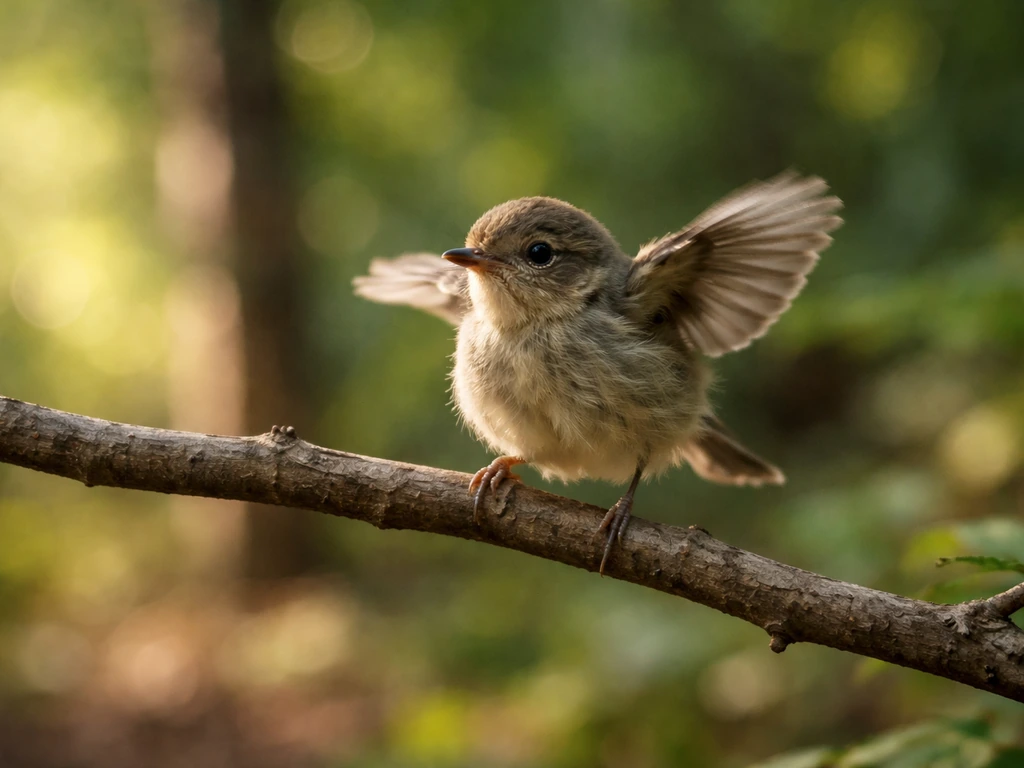
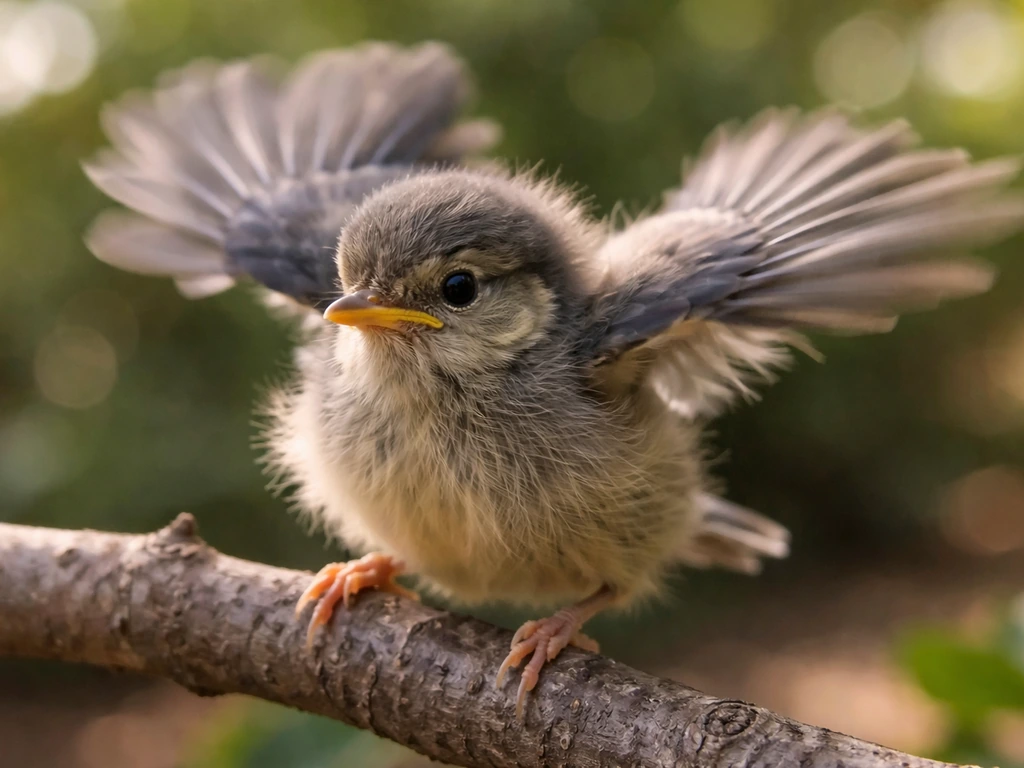
The go-to translation is: 'Ese pájaro está aprendiendo a volar.' Breaking it down: 'ese' means 'that' (for a masculine noun), 'pájaro' means bird, 'está' is the third-person singular present of 'estar' (to be), 'aprendiendo' is the gerund of 'aprender' (to learn), and 'a volar' means 'to fly.' The preposition 'a' is essential here, in Spanish you say 'aprender a + infinitive' to mean 'to learn to do something,' just like you'd say 'he's learning to swim' translates to 'está aprendiendo a nadar.'
This sentence fits perfectly for describing a real fledgling out on a branch, flapping awkwardly, building up wing strength before its first real flight. That messy, trial-and-error stage of learning is exactly the kind of ongoing action this structure was made for.
The grammar behind it: Spanish present progressive
Spanish uses a construction called 'estar + gerundio' (to be + gerund) to express an action currently in progress. The Real Academia Española describes this as a perífrasis durativa, meaning it frames the action as having duration at the moment of speaking. In everyday spoken Spanish, this is the standard way to say something is happening right now, it's not a formal or literary structure, it's what people actually use.
The gerund is formed by a simple rule: drop the infinitive ending and add the appropriate suffix. For -ar verbs, you add -ando. For -er and -ir verbs, you add -iendo. Both verbs in our sentence follow this exactly: 'volar' (to fly, an -ar verb) becomes 'volando,' and 'aprender' (to learn, an -er verb) becomes 'aprendiendo.' These two gerunds show up constantly in bird-related Spanish writing, so they're worth getting comfortable with.
| Infinitive | Verb type | Gerund | Meaning |
|---|---|---|---|
| aprender | -er verb | aprendiendo | learning |
| volar | -ar verb | volando | flying |
| practicar | -ar verb | practicando | practicing |
| intentar | -ar verb | intentando | trying |
| agitar | -ar verb | agitando | flapping |
The conjugated form of 'estar' carries the tense. In our sentence, 'está' is third-person singular present, so the whole phrase lands in the present progressive. If you wanted to say 'that bird was learning to fly' (past, in progress), you'd switch to the imperfect: 'ese pájaro estaba aprendiendo a volar.' The gerund stays the same; only 'estar' changes. In the present progressive, Spanish uses estar (present) + gerundio, and the gerund never changes across the progressive tenses The gerund stays the same.
Literal vs. natural: choosing the right phrasing for your context
The literal translation and the most natural translation are actually the same here, which is convenient. 'Ese pájaro está aprendiendo a volar' is both grammatically precise and completely idiomatic. That said, context can nudge you toward slight variations in tone or emphasis.
- Narration or caption (describing what you're watching): 'Ese pájaro está aprendiendo a volar.' Clean, direct, present-tense observation.
- Emphasizing the effort or struggle (the fledgling is really trying): 'Ese pájaro está intentando volar.' This shifts from 'learning' to 'trying,' which sometimes captures the messy reality of early flight attempts better.
- Story or book tone (slightly more literary): 'Ese pájaro aprende a volar.' This uses simple present instead of present progressive, which in Spanish can carry a more timeless or narrative quality, like describing a behavior rather than a specific moment.
- Highlighting the process of practice: 'Ese pájaro está practicando para volar.' More specific — the bird is practicing in order to fly, which works well when describing a fledgling doing repeated short hops or wing-flapping exercises.
For most everyday purposes, including captions, classroom sentences, or direct description, stick with 'Ese pájaro está aprendiendo a volar.' It's the cleanest match for the English original and sounds completely natural to a native speaker.
How to pronounce the Spanish sentence

Here's the sentence broken into syllables with approximate English-sound guides: 'Ese pájaro está aprendiendo a volar.' Phonetically: EH-seh PAH-hah-roh eh-STAH ah-pren-DYEN-doh ah boh-LAR.
- 'Ese' — EH-seh. Two clean syllables, 'e' as in 'bed,' soft 's.'
- 'Pájaro' — PAH-hah-roh. Stress on the first syllable. The 'j' is a soft guttural sound (like a gentle 'h' in English). Three syllables total.
- 'Está' — eh-STAH. Stress on the second syllable. The accent mark tells you where to land.
- 'Aprendiendo' — ah-pren-DYEN-doh. Five syllables. The stress falls on 'DYEN.' The 'ie' blends into a quick glide, almost like 'yen.'
- 'A volar' — ah boh-LAR. Simple and clean. Stress on the final syllable of 'volar.' The 'v' in Spanish sounds almost identical to a 'b,' so 'volar' sounds like 'boh-LAR.'
Said at natural speed, the full sentence flows like: 'EH-seh PAH-hah-roh eh-STAH ah-pren-DYEN-doh ah boh-LAR.' The biggest stumbling block for English speakers is usually 'aprendiendo', just take it slow, hit the 'DYEN' syllable, and you'll have it.
Adjusting for plural birds, feminine nouns, and specific species
Spanish nouns have gender, and the demonstrative 'ese/esa' and article have to agree with the noun. 'Pájaro' is masculine, so you use 'ese.' If you're talking about a specific bird species with a feminine name, you'd switch to 'esa.' Here's how the sentence changes across the most common variations:
| Scenario | Spanish sentence | Notes |
|---|---|---|
| One bird (default) | Ese pájaro está aprendiendo a volar. | Masculine singular; works for most generic 'bird' references. |
| Multiple birds | Esos pájaros están aprendiendo a volar. | 'Ese' → 'esos,' 'pájaro' → 'pájaros,' 'está' → 'están.' |
| Feminine species (e.g., una cigüeña, a stork) | Esa cigüeña está aprendiendo a volar. | 'Ese' → 'esa' to match feminine noun. |
| A specific bird you can see (that one, right there) | Ese pájaro de allí está aprendiendo a volar. | Add 'de allí' (over there) or 'ese de allí' for emphasis. |
| An eaglet / young eagle (águila, feminine) | Esa águila está aprendiendo a volar. | Águila is feminine; use 'esa.' |
| A fledgling sparrow (gorrión, masculine) | Ese gorrión está aprendiendo a volar. | Direct swap of 'pájaro' for the species name. |
One thing worth knowing: 'pájaro' refers to birds in general (especially smaller perching birds), while 'ave' is the broader biological term (it covers all birds, including large ones and birds of prey). For casual use, 'pájaro' works almost everywhere. If you're being more technical or describing a large bird, 'ave' fits better: 'Ese ave está aprendiendo a volar', though in practice many native speakers still default to 'pájaro' in conversation.
Related sentences to build on
Once you have the core structure down, it's easy to build related sentences for other flight-learning scenarios. These come up naturally when describing a young bird's early attempts at flight, from the first wing flaps to the first real glide. You can also connect these to broader descriptions of bird flight behavior, the kind of ongoing actions that describe motion across the sky.
| English | Spanish | Key grammar note |
|---|---|---|
| It's learning to fly. | Está aprendiendo a volar. | Drop the subject — Spanish allows this; 'está' implies 'it.' |
| The bird is practicing flying. | El pájaro está practicando el vuelo. | 'El vuelo' = the flight/flying (noun form). |
| The bird is trying to fly. | El pájaro está intentando volar. | Swap 'aprendiendo' for 'intentando' (trying). |
| The birds are learning to fly. | Los pájaros están aprendiendo a volar. | Plural: 'los pájaros,' 'están.' |
| The fledgling is learning to flap its wings. | El volantón está aprendiendo a agitar las alas. | 'Volantón' = fledgling; 'agitar las alas' = to flap wings. |
| That bird is already flying! | ¡Ese pájaro ya está volando! | Add 'ya' (already/now) for emphasis on the achievement. |
| The young eagle is learning to glide. | El águila joven está aprendiendo a planear. | 'Planear' = to glide, directly relevant to soaring flight. |
The sentence 'ese pájaro ya está volando' is a satisfying next step, it captures that moment when a fledgling graduates from practice to actual flight, which anyone who's watched a young bird's first real glide will recognize immediately. Spanish handles that shift beautifully with just one added word. Here, the Spanish equivalent of “the bird is flying” is “ese pájaro está volando.” the bird is flying in french.
If you're working on related bird-flight descriptions in Spanish, the same 'estar + gerundio' structure handles other kinds of aerial motion too. Describing how a bird glides across the sky or traces a path through the air uses the same progressive grammar, just with different verbs: 'planear' for gliding, 'volar' for flying, 'agitar' for flapping. If you want the quick comparison, see how “when the bird glides across the sky wuwa” uses the same progressive idea.
A bird flying in the sky is an example of an action described with the Spanish present progressive aerial motion. En español, esa idea se expresa con la misma estructura de presente progresivo: estar + gerundio A bird flying in the sky. If you want to verify whether a bird is flying in the sky is correct, compare it to the related Spanish present progressive patterns above a bird flying in the sky.
In Spanish, you can describe this with the same structure when the bird glides across the sky. The grammar stays the same; only the verb swaps out.
FAQ
Can I say “Ese pájaro está volar” instead of “Ese pájaro está aprendiendo a volar”?
Not in standard Spanish. After “estar” you need a gerund, so “está volando” is correct. If you want the learning idea, keep “aprendiendo a volar.”
What’s the difference between “Ese pájaro está aprendiendo a volar” and “Ese pájaro aprende a volar”?
“Está aprendiendo a volar” focuses on the action in progress right now. “Aprende a volar” sounds more general or habitual (the bird is in the process of learning as a concept, not necessarily in that exact moment).
How do I say “That bird is learning to fly” if I’m talking about someone else witnessing it?
In Spanish you usually still keep the same structure, just add the context. For example, “Mira, ese pájaro está aprendiendo a volar” or “En este momento, ese pájaro está aprendiendo a volar.”
How do I make it sound more natural when the bird is learning slowly or awkwardly?
Add an adverb like “todavía” (still) or “poco a poco” (little by little). Examples: “Ese pájaro todavía está aprendiendo a volar” or “Ese pájaro está aprendiendo a volar poco a poco.”
Do I need “a” with “aprender,” or can I say “aprendiendo volar”?
You need the “a” plus an infinitive: “aprendiendo a volar.” Without it, it sounds incorrect or at least unnatural to most speakers.
What demonstrative should I use, ese or este, for “that bird”?
“Ese” usually works for “that” when the bird is not close to you. If it is near you (or you want to emphasize closeness), use “este pájaro está aprendiendo a volar.”
How do I handle a mixed gender case, like “that bird” in a context where the bird’s name is feminine?
Spanish agreement follows the noun you choose. If you use “pájaro” (masculine), you use “ese.” If you switch to “ave” (feminine), you use “esa,” for example “Esa ave está aprendiendo a volar.”
Can I use “ya” in the sentence, like “That bird is already learning to fly”?
Yes, and placement matters. The most natural order is “Ese pájaro ya está aprendiendo a volar.” “Ya” conveys that it has reached the stage sooner than expected.
How do I say “That bird is learning to fly” in the past, but not finished?
Use the imperfect progressive with the same gerund. For past in-progress meaning: “Ese pájaro estaba aprendiendo a volar,” which implies the learning process was ongoing at that time.
Is “pájaro” always the right word, or should I use “ave”?
“Pájaro” is common for everyday bird talk, especially small birds. “Ave” is broader and more technical, and it can fit better for larger birds or more formal descriptions. If your context sounds scientific, “esa ave está aprendiendo a volar” is a safer choice.