
The most natural, correct way to say 'the bird is flying' in French is L'oiseau vole. Add a location and you get L'oiseau vole dans le ciel (the bird is flying in the sky) or L'oiseau vole dans l'air (the bird is flying in the air). Those three phrases will cover almost every situation you'll run into, and the rest of this guide explains exactly why they work and how to tweak them. If you want to say this in Spanish, the key idea is the same: use the present to express what is happening right now that bird is learning to fly in spanish.
The Bird Is Flying in French: Oiseau Vole dans le Ciel

Marcus Chen
2 May 2026
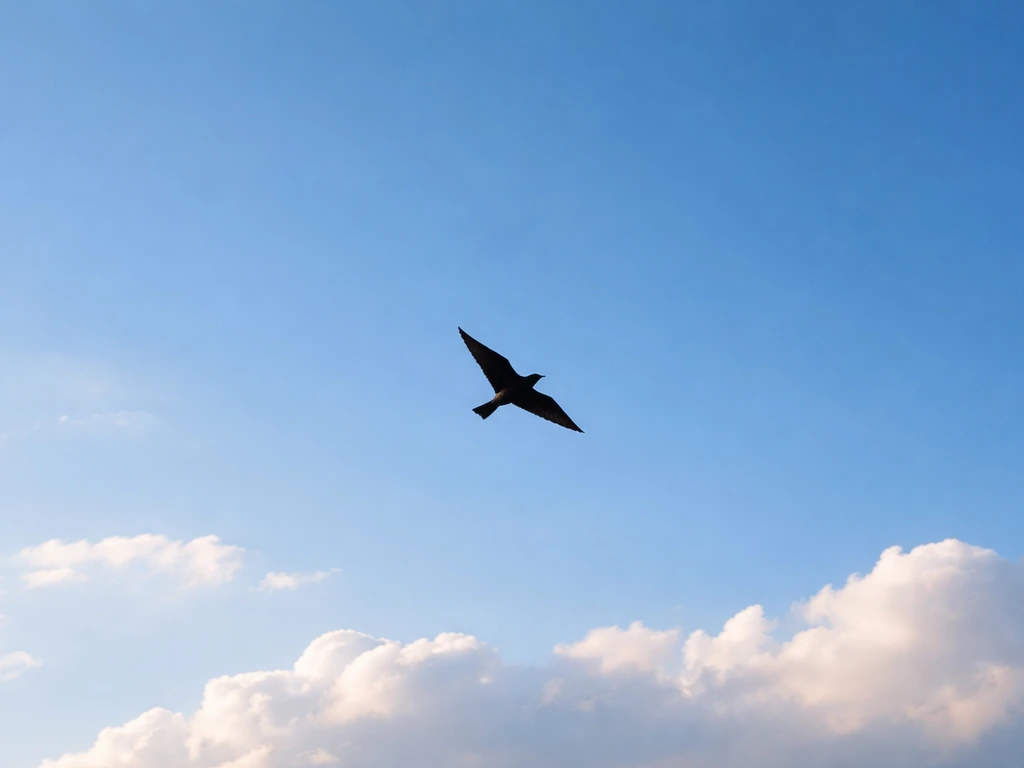
The core translation: 'the bird is flying'
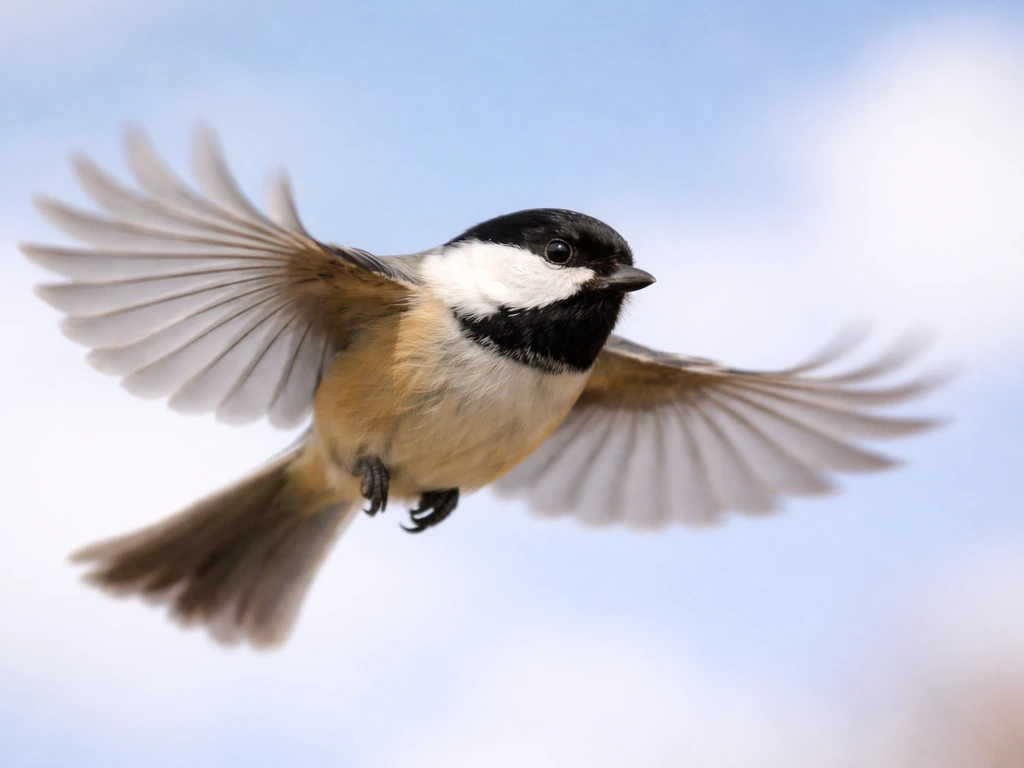
In French, 'the bird is flying' is L'oiseau vole. The verb voler means 'to fly,' and its third-person singular present form is vole. French doesn't have a separate continuous tense the way English does, so vole does double duty: it means both 'flies' and 'is flying' depending on context. You don't need to reach for any extra construction just to say the bird is currently in the air. L'oiseau vole handles it cleanly.
Adding 'in the sky' or 'in the air'
The French preposition for 'in' when you're talking about a physical space is dans. Pair it with the right article and you get the two most common location phrases:
- Dans le ciel — in the sky (ciel is masculine, so le ciel)
- Dans l'air — in the air (air is masculine too, but starts with a vowel, so le contracts to l')
That gives you: L'oiseau vole dans le ciel and L'oiseau vole dans l'air. Both are grammatically correct and sound natural to a native speaker. Dans le ciel is the more vivid, visual phrasing and the one you'll encounter most in writing and everyday speech. Dans l'air leans slightly more technical, closer to the atmospheric sense of 'airspace', which is actually how Larousse defines air: l'espace occupé par l'atmosphère au-dessus du sol, où se meuvent les oiseaux (the space occupied by the atmosphere above the ground where birds move). Either phrase works, but if you only remember one, go with dans le ciel.
Tense and nuance: how French handles 'is flying'
Here's the part that trips up English speakers. When you say 'the bird is flying,' you're using a present continuous tense to emphasize that the action is happening right now. French doesn't have a dedicated continuous tense, so the simple present (vole) covers both the habitual 'birds fly' and the in-progress 'the bird is flying. According to the Académie française definition of vol, the word relates to movement through the air by animals that fly or maintain themselves in the air, which supports using voler/vole for “is flying” in this kind of explanation blank" rel="noopener noreferrer">French doesn't have a dedicated continuous tense. ' For most sentences, that's all you need.
That said, if you genuinely want to stress the right-now, in-progress quality of the action, French does have a structure for it: être en train de + infinitive. It works like this:
- L'oiseau est en train de voler — The bird is (in the middle of) flying
- L'oiseau est en train de voler dans le ciel — The bird is flying in the sky (right now, as we watch)
This construction is roughly equivalent to the English '-ing' emphasis. Think of it as the French way of saying 'busy doing something' or 'in the middle of doing something.' It sounds slightly more emphatic than L'oiseau vole, which is neutral. In practice, native speakers use être en train de when they want to make that real-time quality explicit, for example, if someone asks what the bird is doing at this exact moment. For a general description or a sentence on a test, L'oiseau vole dans le ciel is perfectly correct and more common.
Gender, articles, and the grammar traps around 'oiseau'
Oiseau (bird) is a masculine noun in French. This matters because French article choice depends on gender. Here's what that looks like in practice:
| Form | French | English |
|---|---|---|
| Definite article (singular) | l'oiseau | the bird |
| Indefinite article (singular) | un oiseau | a bird |
| Definite article (plural) | les oiseaux | the birds |
| Indefinite article (plural) | des oiseaux | some birds / birds |
The biggest trap here is the elision. Because oiseau starts with a vowel, le drops its 'e' and becomes l', so it's always l'oiseau, never le oiseau. Writing or saying le oiseau is a classic learner mistake and one that native speakers will immediately notice. Similarly, the feminine article la never applies here: oiseau is masculine, full stop, confirmed by Larousse's dictionary entry. So it's never la oiseau or une oiseau.
The plural is worth knowing too. L'oiseau becomes les oiseaux in the plural, with the -x ending on oiseau (not -s). If you want to say 'the birds are flying in the sky,' you'd say Les oiseaux volent dans le ciel. The verb changes to volent (third-person plural present of voler), which is pronounced the same as vole in spoken French.
Example sentences to copy and adapt
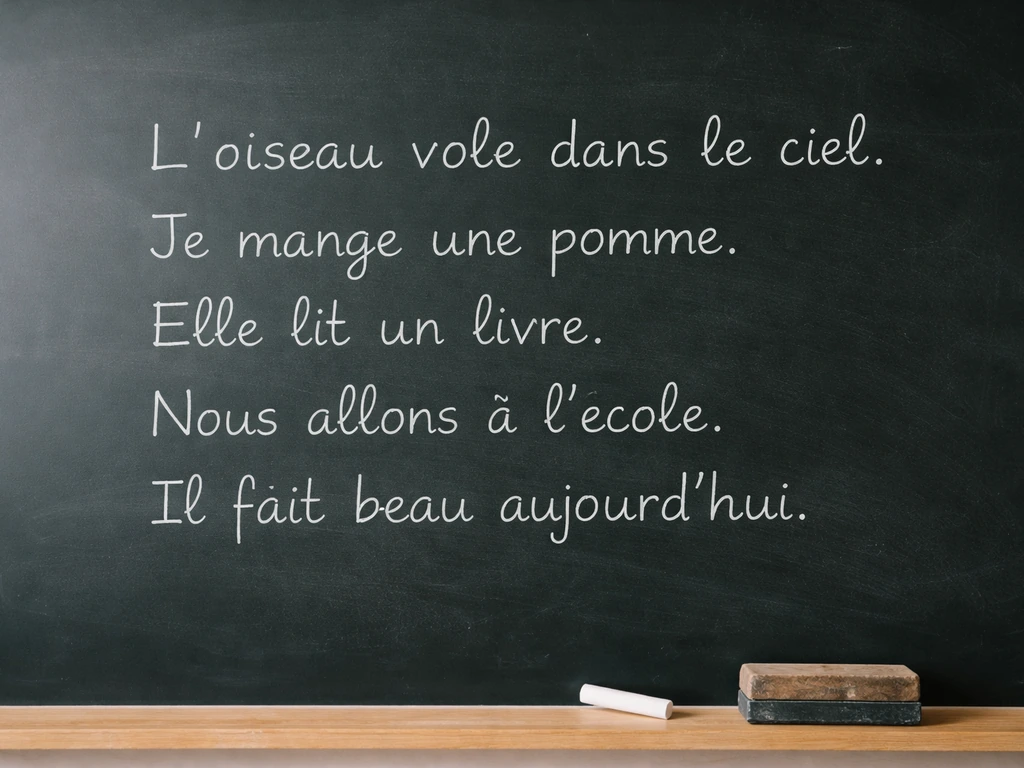
Here are ready-to-use sentences covering the main scenarios. Each one is correct and natural:
- L'oiseau vole. — The bird is flying. (Simple, neutral, works in any context.)
- L'oiseau vole dans le ciel. — The bird is flying in the sky. (Most common way to add location.)
- L'oiseau vole dans l'air. — The bird is flying in the air. (Slightly more technical; also correct.)
- L'oiseau est en train de voler dans le ciel. — The bird is flying in the sky right now. (Emphasizes the ongoing action.)
- Un oiseau vole dans le ciel. — A bird is flying in the sky. (Indefinite: 'a bird,' not 'the bird.')
- Les oiseaux volent dans le ciel. — The birds are flying in the sky. (Plural form.)
- L'oiseau vole haut dans le ciel. — The bird is flying high in the sky. (Add haut for 'high.')
- Regarde ! L'oiseau est en train de voler. — Look! The bird is flying (right now)! (Conversational, pointing out an in-progress action.)
Quick alternatives and variations
If you want to vary your phrasing or match a specific register, here are some options:
| French phrase | English meaning | When to use it |
|---|---|---|
| L'oiseau vole dans le ciel | The bird is flying in the sky | Standard, works everywhere |
| L'oiseau est en train de voler | The bird is (right now) flying | Stress real-time, ongoing action |
| L'oiseau prend son envol | The bird takes flight / takes off | More literary; describes the moment of departure |
| L'oiseau plane dans le ciel | The bird is gliding in the sky | Specifically gliding, not flapping — planer vs. voler |
| Un oiseau survole la forêt | A bird is flying over the forest | Survoler = to fly over a specific place |
| L'oiseau s'envole | The bird flies away / takes off | The moment it leaves; more dynamic than vole |
The difference between voler and planer is worth noting if you care about flight mechanics. Voler covers all powered flight, flapping included. Planer specifically means gliding, when the bird is soaring without flapping. If you're describing a hawk riding a thermal with wings outstretched, planer is the more precise word. This connects to the broader question of how birds move through the sky, a topic that comes up naturally when thinking about what it means when a bird glides across the sky, which involves a very different set of wing mechanics than active flapping flight. This connects to the broader question of how birds move through the sky, including what it means when the bird glides across the sky and how that differs from active flapping flight when a bird glides across the sky. If you want, you can also connect that idea to how to say when the bird glides across the sky in French when the bird glides across the sky wuwa.
Your quick grammar checklist
Before you write or say your sentence, run through these four checks:
- Article: Is it l'oiseau (with elision) or les oiseaux (plural)? Never le oiseau or la oiseau.
- Verb: Singular is vole, plural is volent. Both sound the same when spoken.
- Location: Use dans le ciel (in the sky) or dans l'air (in the air). Both need dans, not en or à.
- Emphasis: If you want to stress right-now, add est en train de before voler: L'oiseau est en train de voler dans le ciel.
That's really all you need. L'oiseau vole dans le ciel is correct, natural, and immediately understood by any French speaker. If someone challenges you on the tense, you can explain that French present tense covers ongoing actions without any extra construction. Être en train de is just the optional upgrade when you want to make the 'right now' quality explicit.
FAQ
Can I say “l’oiseau est en train de voler dans le ciel” instead of “l’oiseau vole dans le ciel”?
Yes. It emphasizes that the bird is actively doing it at that exact moment. Use être en train de + infinitive, and keep dans le ciel if you want the same location. In neutral narration, l’oiseau vole dans le ciel will sound more natural.
What’s the difference between “dans le ciel” and “sur le ciel” (or “à le ciel”)?
Sur and à do not work for “in the sky” the way dans does. For physical space above you, dans + article (dans le ciel) is the standard choice. à + ciel is not idiomatic, and sur le ciel tends to sound wrong or metaphorical.
Do I need to use “dans” if I’m talking about “in the air” as a general concept?
You can still use dans. Dans l’air is the natural “in the air” phrasing, and it aligns with the idea of airspace. If you mean a figurative sense like “in the atmosphere,” you might change wording, but for a flying bird, dans l’air is the go-to option.
How do I say it if there are multiple birds, “the birds are flying”?
Use the plural noun and matching verb: Les oiseaux volent dans le ciel. The article becomes les, oiseau becomes oiseaux, and the verb changes to the plural present form (volent).
Is “l’oiseau vole en l’air” or “en air” correct?
No. French uses dans for “in” with physical space here, so the idiomatic forms are dans le ciel and dans l’air. “En l’air” can exist in other meanings (for example, things “up in the air”), but it is not the standard way to say a bird is flying.
Can I make it sound more emphatic without using être en train de?
Yes, by adding an adverb or phrase that signals immediacy, for example en ce moment (right now). The core structure still stays l’oiseau vole..., the extra phrase does the emphasis.
What should I do if I accidentally write “le oiseau vole…”
Fix the elision. Because oiseau starts with a vowel, it must be l’oiseau, not le oiseau. Native speakers will notice le oiseau right away, so this is a high-impact correction.
How do I translate “the bird is flying” when it is a narration from a storybook or a caption?
Use the present as in l’oiseau vole dans le ciel. French commonly uses the simple present for vivid, immediate narration in captions and story descriptions, so you generally do not need a special continuous-tense structure.
If I want “that bird is flying” (not “the bird”), which word changes?
Switch the determiner to that/this, for example cet oiseau (that bird) or ce oiseau (same idea, masculine). Then keep the verb and location: Cet/ce oiseau vole dans le ciel, depending on the exact context.
Next Articles
That bird is learning to fly in Spanish: grammar and phrases
Natural Spanish translations for that bird is learning to fly: present progressive grammar, variants, and pronunciation.

Bird Has Flown Meaning: Definition and How to Respond
Understand the bird has flown meaning, when it’s used, and how to reply with examples for real-life conversations.
Prefix Meaning Flight or Bird: Definition and Examples
Learn the flight or bird prefix meaning, origin, examples, and a checklist to decode new words and avoid look-alikes.