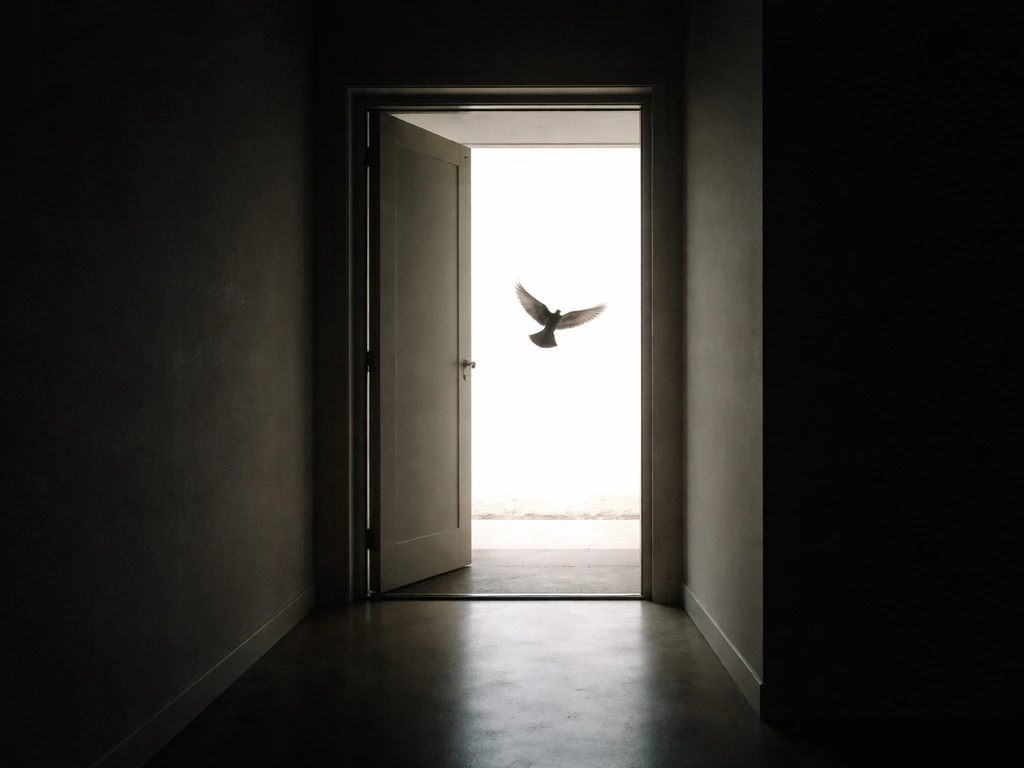
The bird moment people keep searching about in Flow (2024) is the secretary bird's final scene near the film's ending, where the wounded bird appears to rise or ascend in a way that feels unmistakably like a farewell, or possibly death, or possibly something more transcendent. If you watched the film and found yourself fixated on that moment, you are not alone, and the ambiguity is completely intentional. Here is a straight breakdown of what happens, what it likely means, and how to watch for the scene's own clues the next time you rewatch.
Flow Movie Meaning Bird: Ending Scene Explained
Marcus Chen
7 Apr 2026
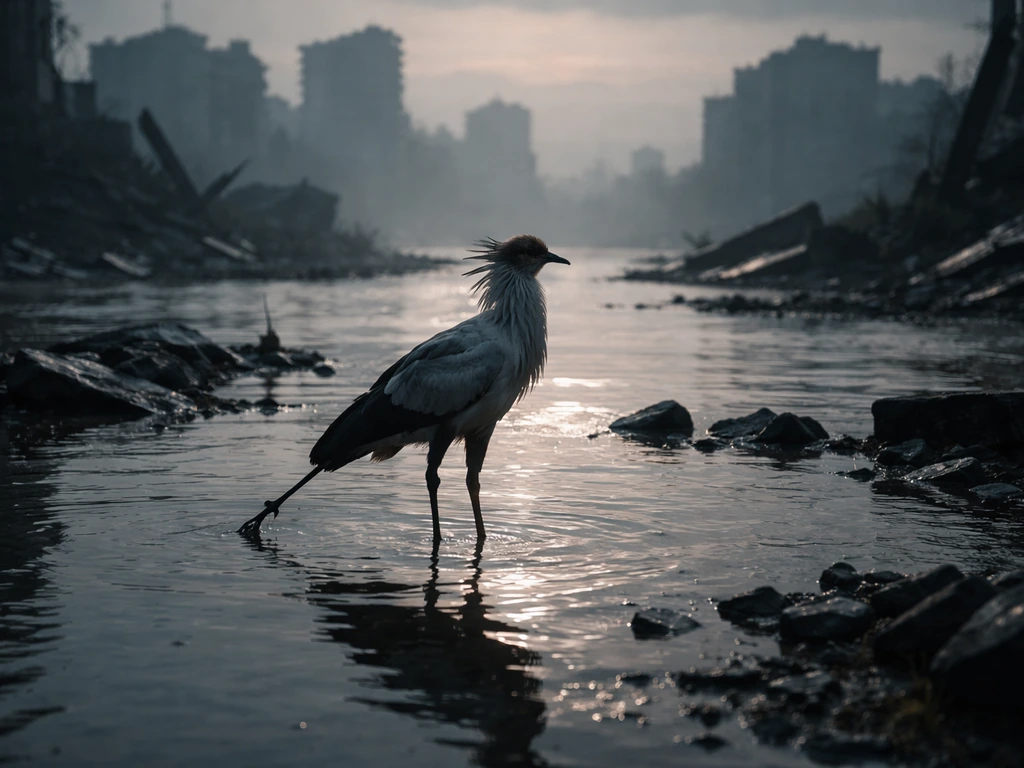
Which bird scene people are actually asking about
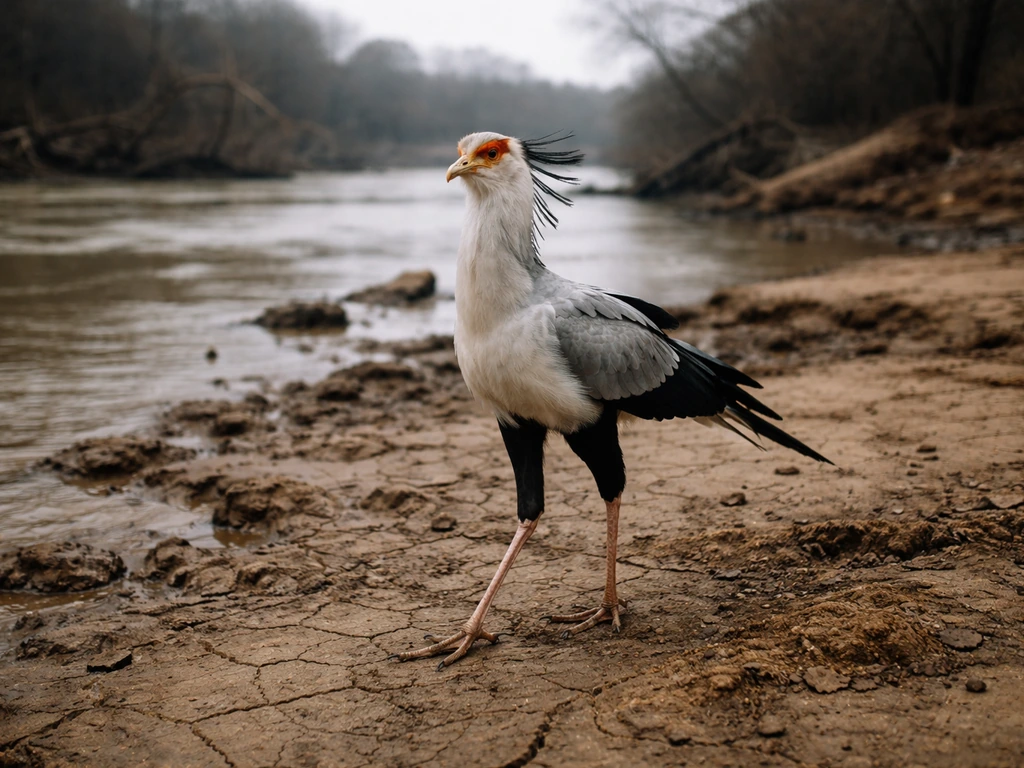
Flow is a wordless animated film by Latvian director Gints Zilbalodis. The story follows a cat navigating a post-apocalyptic flood, teaming up with a dog, a capybara, a lemur, and a secretary bird on a drifting sailboat. There are multiple moments involving the secretary bird throughout the film, including an early sequence where the cat goes overboard and must avoid the bird while beginning to sink. But the scene people are searching for is the one near the very end: the wounded secretary bird's apparent ascension or departure, which has been described alternately as death, rapture, transcendence, or symbolic release. That is the moment this article is focused on.
If you are trying to piece together the full arc of this bird's presence in the film, the complete story of the secretary bird in Flow covers every major appearance from the boat sequences through to the climax, which helps you see how the ending moment earns its emotional weight.
What Flow actually is, and why the bird is there at all
Flow is not a background-animal kind of film. Zilbalodis constructed the entire narrative around wordless emotional storytelling, what he has called "animal time," where the behavior and movement of each creature carries the weight that dialogue would in a conventional film. The secretary bird is not incidental scenery. It is an authored character with a clear narrative function within the story's survival and transition arc. Empire named the secretary bird among the central companion animals, and that framing matters: this creature is a plot agent, not a cameo.
The choice of a secretary bird specifically is also worth paying attention to. Secretary birds (Sagittarius serpentarius) are genuinely striking animals in real life: long-legged, semi-terrestrial raptors known more for walking and stomping prey than for constant aerial acrobatics. Their flight, when it does happen, tends toward soaring and undulating patterns rather than rapid wingbeat bursts, and during courtship flights they are known to soar high with undulating motion and calling. That natural flight profile, all glide and deliberate arc rather than frantic flapping, is exactly the kind of movement that reads on screen as purposeful, even spiritual.
What actually happens to the bird in the ending
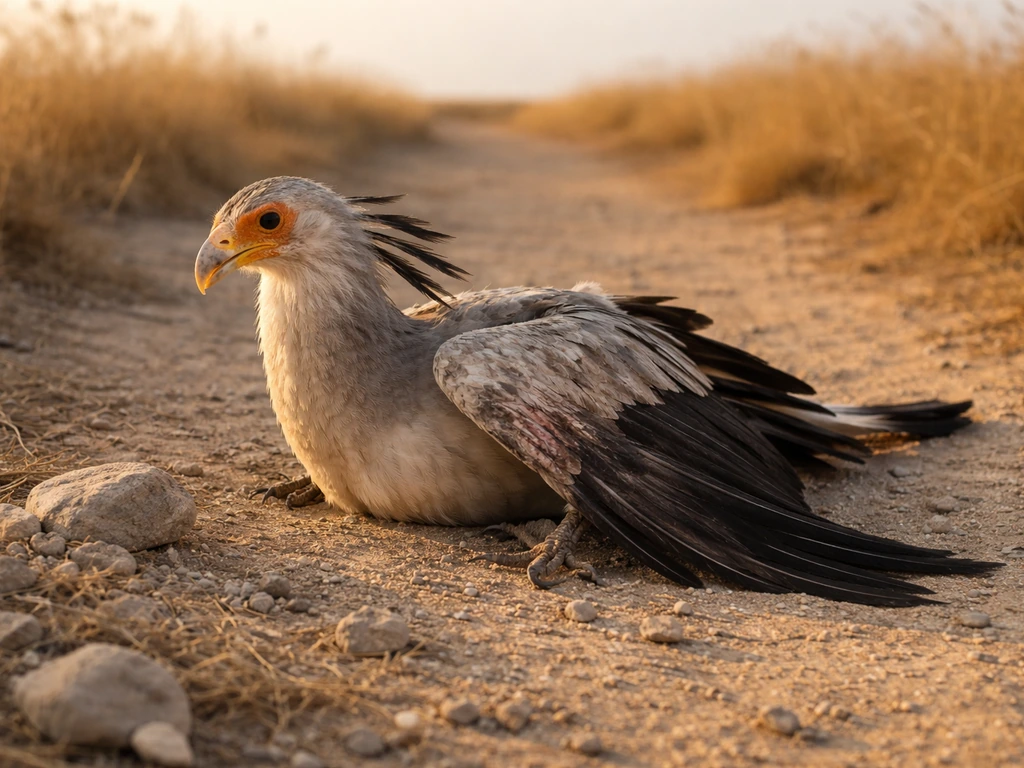
By the time the film reaches its final act, the secretary bird is injured, its wing broken or significantly compromised. In the ending sequence, the Criterion essay on the film describes the bird leading the cat into a transcendent realm, with both ascending toward a dark, rocky fortress. The bird functions as a guide pulling the cat (and the viewer) into the film's otherworldly final space. Then, in what Zilbalodis himself has described in interviews as the bird being "raptured to heaven by some divine force," the injured bird rises and departs.
The injured-wing detail is crucial here. A secretary bird with a broken wing cannot sustain powered flight. So when you see the bird ascending in this state, the animation is asking you to decide: is this a literal flight that defies injury, a metaphorical passage out of the physical world, or the cat's internal experience of the bird's death processed as something luminous? What exactly happened to the bird in Flow's animation unpacks this sequence beat by beat if you want a more granular walkthrough.
Symbolism vs literal biology: what the bird represents
Here is where the site's lens on bird biology actually helps decode the scene rather than just describe it. In real flight mechanics, there is a meaningful distinction between gliding (where a bird loses height relative to the surrounding air but stays aloft by trading altitude for forward motion) and soaring (where rising air currents allow a bird to gain or maintain height without flapping). Secretary birds in the wild lean heavily on soaring posture, and their behavior is often read through stance and flight attitude rather than wingbeat frequency alone.
What Zilbalodis stylizes in the ending is something that echoes real secretarybird "pendulum flight" behavior: at the peak of each pendulum arc, the bird closes its wings briefly before flicking them open again before the downward turn, producing a visible underwing flash. That brief wing-close at the apex, a moment of stillness before transition, maps perfectly onto the ending's visual grammar.
The bird pauses, hangs, and then goes somewhere the cat cannot follow. Whether that reads as death, divine passage, or earned release depends on you. If you have ever wondered why a bird appears to freeze suspended in the air before a directional change, that pendulum-flight apex is exactly what is happening, and the animation is drawing on that real behavior to make the moment feel both natural and otherworldly at the same time.
Symbolically, the bird has been read as a navigator throughout the story. MovieSense's analysis describes the secretary bird acting as a navigator whose final moment functions as a directional or transitional cue, aligned with the film's post-flood renewal imagery. That reading makes the bird's departure less like a death and more like a guide stepping back once the journey is complete, the way a lighthouse stops mattering once you are safely in port.
Why viewers interpret it so differently
Flow gives you no dialogue, no voiceover, and no explanatory title cards. Every interpretation is earned by watching behavior, which is exactly how animal communication works in real life. Here are the main theories circulating among viewers, and why each one holds up on its own terms:
- Death and passage: The bird's wing is broken, it cannot physically fly, and the ascension is its death rendered as something beautiful. This is the most literal reading and aligns with Zilbalodis's own framing of the scene as a rapture-like transition.
- The cat's internal processing: The ending may be filtered through the cat's perception rather than objective reality. The ascension is not what physically happens but how the cat experiences the loss of a companion, turning grief into transcendence.
- Divine or spiritual intervention: Some viewers take the "raptured to heaven" framing at face value and read the bird as literally being taken, not dying, but summoned. This interpretation is supported by the film's consistent use of flood-and-renewal symbolism.
- Earned rest and peace: Distractify summarizes one recurring viewer reading as the bird being granted rest after completing its role, less about death and more about a purposeful exit, a character whose function is finished and who is therefore released.
- Navigator stepping aside: MovieSense's reading frames the bird's departure as a directional handoff, the bird has guided the cat to the threshold of whatever the ending means, and now the cat must cross it alone.
Zilbalodis himself, in a Reddit AMA, addressed viewer questions about the bird's ending moment and pointed toward the themes of trust, connection, and the bird's injured condition as the interpretive frame, without closing down any single reading. That openness is the point. The film earns its ambiguity because it has built a consistent visual language all the way through, so the ending does not feel arbitrary, it feels earned and deliberately open.
Part of why audiences split so hard on this scene is that the secretary bird's behavior in the film has been inconsistent in ways that are meant to unsettle you. The bird shifts between threat and companion at different points, which mirrors something real: secretary birds in the wild are not domesticated or predictably social. Their behavioral ecology is built around independence and territorial stance.
When this bird chooses to accompany the cat, it is doing something outside its species-typical comfort zone, which makes its departure carry extra weight. You can read more about why the bird leaves the group in Flow for a deeper look at how the relational arc between the cat and the secretary bird builds toward that final separation.
How real secretary bird flight informs the scene's visual meaning
It is worth spending a moment on what the secretary bird's real flight actually looks like, because the animation is clearly drawing on it. In the wild, secretary birds are not aerial specialists. They spend most of their time walking, sometimes covering 20 to 30 kilometers a day on foot. When they do fly, it tends to be soaring on thermals with an undulating pattern, wings held in a distinct dihedral, body elongated. That elongated silhouette, all legs and tail and broad wings held wide, is exactly what makes the ending image so arresting. It does not look like a sparrow darting away. It looks like something large and deliberate choosing to rise.
The biology also supports why a broken wing reads as significant rather than incidental. For a species that primarily walks, a wing injury is not immediately fatal the way it might be for a species dependent on flight for every meal. The bird can still move, still function on some level. But it cannot soar.
So when it does appear to soar at the end, the animation is either defying physics for emotional effect or asking you to step out of the literal into something more interpretive. Both are valid cinematic choices. Understanding the difference between a bird floating in mid-air and the mechanics of actual soaring flight actually makes that visual choice land harder: you know it should not be possible, and that impossibility is the message.
How to watch the scene yourself and spot the clues
If you want to go back and verify any of this yourself, here is what to look for when you rewatch the ending sequence:
- Watch the wing: Before the ascension, look closely at how the bird holds its injured wing. If the animation shows it tucked or held asymmetrically, that is a consistent visual marker of injury that makes the subsequent flight physically implausible, which is a signal you are in symbolic territory.
- Watch the cat's point of view: The camera frequently adopts the cat's perspective. If the bird's ascension is shown through the cat's gaze rather than an objective wide shot, that is a cue the scene is filtered through the cat's experience rather than presented as objective fact.
- Watch for the pendulum-flight apex pause: Look for the moment where the bird seems to hang still before its final movement upward. That brief stillness before transition echoes real secretarybird pendulum flight behavior and is where the scene's emotional weight concentrates.
- Watch the light and environment: The Criterion essay specifically notes the bird leading into a "dark, rocky fortress," meaning the surrounding environment shifts at this moment. Notice whether the visual palette changes as the bird ascends, which would reinforce the transcendence reading over the literal-death reading.
- Watch what the cat does next: The cat's reaction immediately after the bird departs is arguably the most telling clue about what the film wants you to feel. Grief, relief, and acceptance are all distinct body-language reads, and Zilbalodis is careful with animal behavior throughout.
Flow is currently available to stream, and the ending sequence is in the film's final twenty minutes. Given that the whole film runs roughly 84 minutes and uses no dialogue, rewatching just the last act with these specific visual cues in mind takes less than half an hour and will likely change how the scene lands for you.
What the bird most likely means: a direct answer
The secretary bird in Flow's ending is most coherently read as a guide completing its function and exiting the story through a moment of transcendence that doubles as death. The injury is real within the film's internal logic, the flight that follows should be impossible, and that impossibility is the film's way of telling you something sacred is happening rather than something mechanical. Whether you frame that as literal death, divine passage, or the cat's internal experience of loss does not change the core: the bird has served as a navigational and emotional anchor through the flood, and its departure marks the threshold the cat must now cross alone, into whatever the post-flood world means.
The ambiguity is not a flaw or an omission. It is the entire point of a film that trusts animal behavior and visual language over exposition. Zilbalodis built a story where you have to watch the way a creature moves to understand what it feels, which is, when you think about it, exactly how bird behavior actually works in the natural world.
FAQ
Does the bird’s “ascension” happen while it’s still physically alive, or is the scene meant to be death immediately?
The film keeps it open, but the broken-wing detail suggests the bird cannot be “fine” in the literal sense. Treat the moment as either a transitional death or a rapture-like departure, not normal flight, because the ending’s visual language emphasizes separation from the cat rather than survival.
Why does the bird seem to pause or hover before changing direction in the ending?
That stop-and-go feeling matches how real birds can look at the top of an arc, where movement briefly compresses into near-stillness before a new phase. In the animation, this pause functions like a punctuation mark, giving the cat (and viewer) one last beat of recognition before the bird exits the physical space.
Is the secretary bird always a “guide,” or is it only the ending moment that matters?
It plays a navigational role throughout, but the guide function sharpens in the climax. Earlier appearances establish the bird as a relational anchor with shifting boundaries, so the final departure lands harder because it is not a random cameo, it is a culmination of the trust and separation pattern.
Could the ascension be the cat’s perception rather than something literally happening in the world of the film?
That interpretation is consistent with the film’s wordless style, where internal processing can be conveyed through animal behavior and how the cat follows. If you read it as the cat’s internal experience, the “impossible flight” becomes metaphorical rather than a physics problem.
What should I look for in the animation to decide between “gliding/soaring metaphor” versus “divine event”?
Watch whether the bird’s posture changes like real ascent cues (stable body angle, deliberate arc) versus a more ritual-like choreography (lingering, directional certainty, abrupt departure from the cat’s reach). The animation mixes biological echo and symbolic timing, so your choice hinges on how you weigh realism-like movement against the scene’s threshold-like staging.
Does the broken wing mean the bird dies off-screen, or is the departure the final outcome?
Within the film’s internal logic, the broken wing makes continued powered flight implausible, so the scene’s meaning is tied to the departure itself. The bird rises and goes somewhere the cat cannot follow, which most viewers take as the final outcome, even if the film does not label it as death.
Why does the ending feel “earned” even though the bird’s behavior earlier is inconsistent?
That inconsistency is a narrative tool. The bird shifting between threat and companionship mirrors real animals that are not reliably social, which makes the bonding moments feel risky and special. Because the film does not soften the relationship, the final separation reads as consequential, not sentimental.
Is it possible to miss the bird’s ending if I’m not watching closely, and what’s the best rewatch strategy?
Yes, because there are earlier bird beats that set expectations and the final sequence compresses meaning into movement. Rewatch the last twenty minutes focused on the bird’s body state (wing condition, posture changes, pauses) and its distance from the cat right before the departure, since those are the clearest “clue moments.”
How does secretary-bird biology actually relate to the specific animation cues in the ending?
The film leans on the species being more ground-oriented and using soaring-like, undulating arcs when it does fly. That makes the ending’s long, deliberate rise feel purposeful, and the wing compromise makes it emotionally charged, because the bird is acting “beyond” what you would expect from an injured flier.
If I want one “most likely” reading, what should I choose?
A practical default is: the bird’s departure is a guide-like threshold moment that doubles as death or transcendence. This interpretation fits the injured-wing constraint, the guide-and-separation pattern, and the scene’s intentional ambiguity without forcing a single literal answer.
Next Article
Bird Has Flown Meaning: Definition and How to Respond
Understand the bird has flown meaning, when it’s used, and how to reply with examples for real-life conversations.