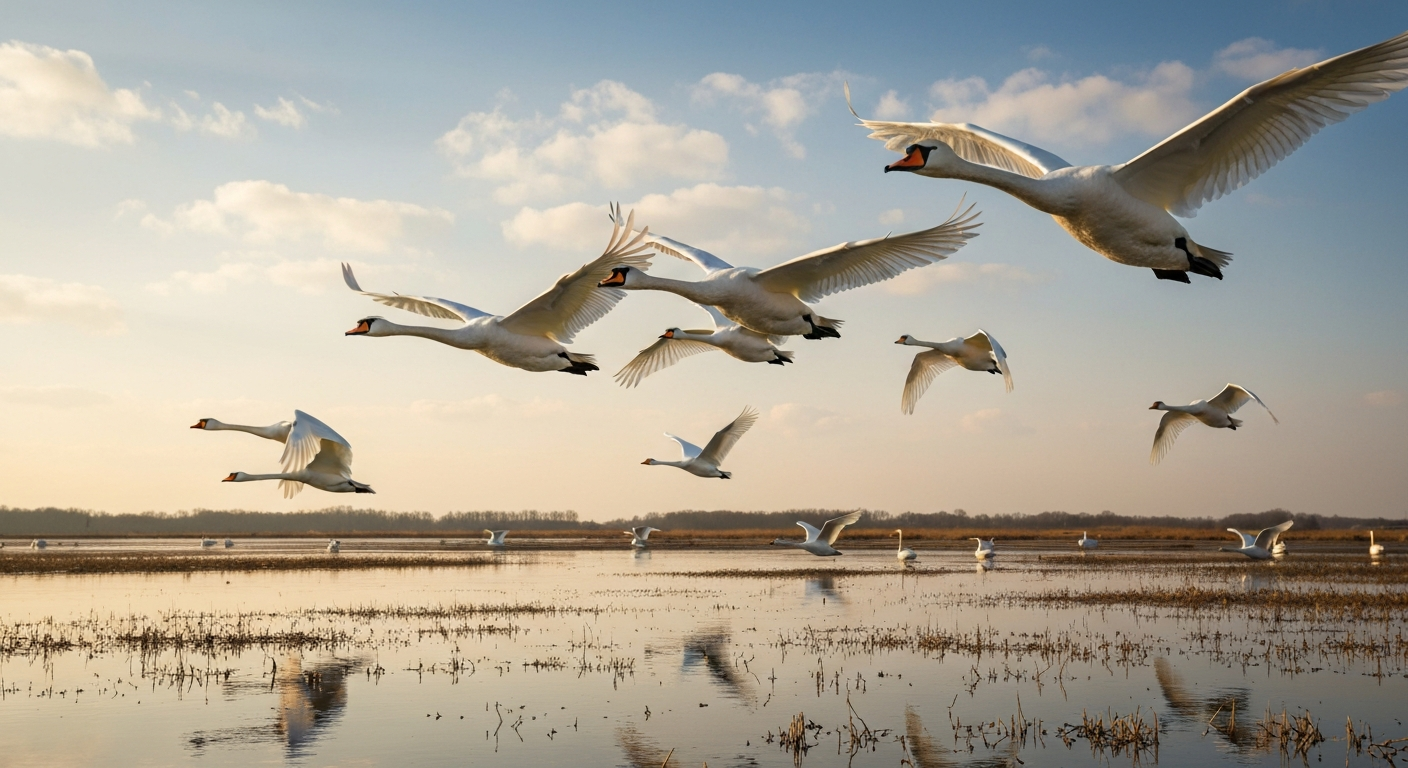
Yes, swans are flying birds. Every living species in the genus Cygnus is fully volant, meaning they can and do fly, often covering thousands of kilometres during seasonal migrations. The Mute Swan (Cygnus olor), Trumpeter Swan (C. buccinator), Whooper Swan (C. cygnus), Tundra Swan (C. columbianus), and Black Swan (C. atratus) all take to the air regularly, with wingspans that can exceed 2.5 metres and cruising speeds around 16 metres per second (roughly 58 km/h). Their large size makes takeoff demanding and spectacular, but once airborne, swans are powerful, efficient fliers capable of sustained long-distance travel.
Swan Is Flying Bird: How Swans Fly, Migrate, and Compare

Marcus Chen
12 Jul 2026
Do Swans Actually Fly? The Quick Answer
The confusion is understandable. Swans spend so much time gliding serenely on water that it is easy to assume flight is incidental to their lives. It is not. Swans are among the heaviest flying birds on Earth, and their biology is oriented around powered, sustained flight. Trumpeter Swans, for example, can weigh more than 11 kg and still climb clear of a lake and fly hundreds of kilometres in a single day. Whooper and Tundra Swans perform multi-continental migrations annually, using a combination of powered flapping and occasional gliding. The question is not really whether swans fly but how something that large manages to get off the ground at all, and that is where the biomechanics get fascinating.
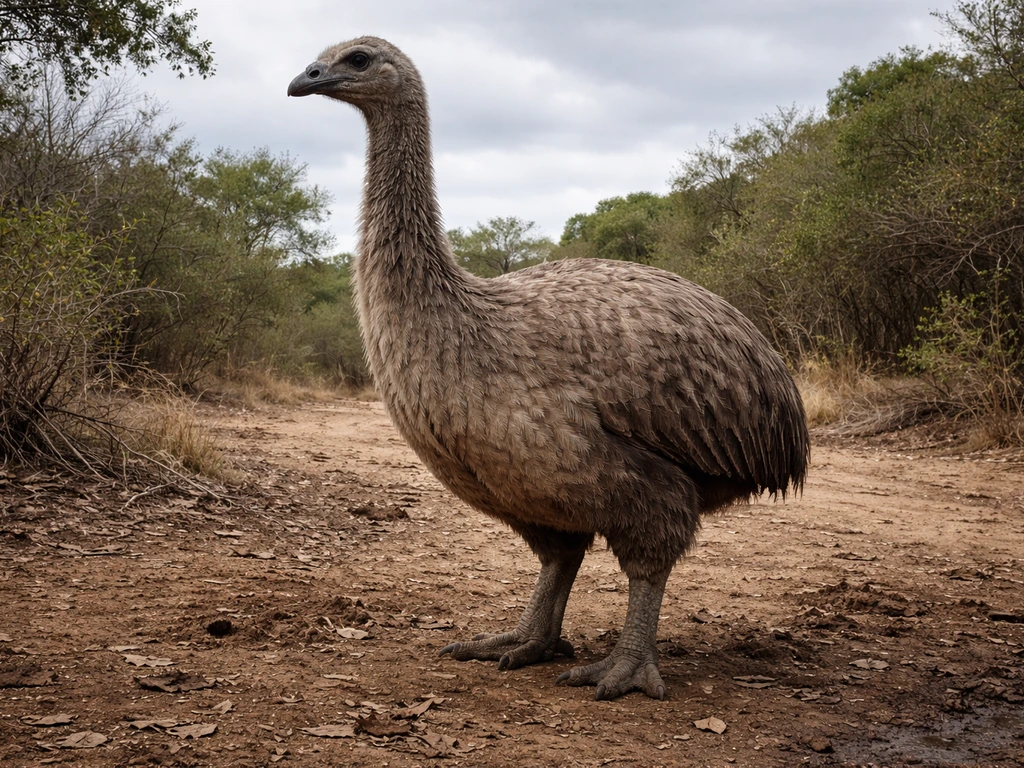
It is worth noting upfront what does not fly: extinct giant waterfowl like the elephant bird (Aepyornis) were completely flightless, and understanding why those birds lost flight actually helps clarify why swans retained and refined theirs. The short version is that swans never traded flight for a niche that rewarded staying grounded. Their migratory lifestyle, predator avoidance, and access to geographically dispersed wetland resources all keep aerial locomotion at the centre of their ecology.
Meet the Flying Swan Species
There are six to seven recognised species of true swans depending on taxonomy, and all of them fly. Here is a quick profile of the five most widely encountered.
Mute Swan (Cygnus olor)
The classic white swan of European parks and literature, the Mute Swan is deceptively powerful. Adults typically weigh 8 to 12 kg with wingspans of 2.0 to 2.5 metres. Despite its name, it is far from silent in the air: the wings produce a distinctive rhythmic throbbing that can be heard from a considerable distance, caused by the stiff primary feathers cutting through air at each downstroke. Mute Swans in northern and eastern Europe undertake genuine migratory movements, though many temperate populations are partially resident. They are assessed as Least Concern globally by IUCN/BirdLife.
Trumpeter Swan (Cygnus buccinator)
North America's largest native waterfowl and one of the heaviest flying birds on the continent, Trumpeter Swans average around 11.1 kg in adult mass, with wingspans reaching up to 3.1 metres (10 feet). They were driven close to extinction by hunting and habitat loss but have recovered substantially through conservation efforts. Their takeoff is among the most dramatic of any bird: they need roughly 100 metres of open water as a runway, flapping hard while running across the surface before finally becoming airborne.
Whooper Swan (Cygnus cygnus)
The Whooper Swan breeds across the Palearctic from Iceland and Scandinavia to eastern Russia and migrates to wintering grounds in the British Isles, western Europe, China, Japan, and Korea. It is a strong, high-altitude migrant. Flocks have been reported crossing the Atlantic at altitudes above 8,000 metres, making them one of the highest-flying birds recorded. Mass and wingspan are broadly similar to the Mute Swan. Their loud, bugling calls in flight are a memorable feature of autumn arrivals. For more detail on Whooper Swan flight behaviour and records of high-altitude crossings, see who bird fly.
Tundra (Whistling) Swan (Cygnus columbianus)
Smaller than the Trumpeter and Whooper, Tundra Swans typically weigh 5 to 7 kg with wingspans of 1.8 to 2.4 metres. They breed on Arctic tundra across North America and Siberia, then migrate to coastal wintering areas in the US, UK, and East Asia. Telemetry and GPS tracking data hosted on platforms like Movebank and by USGS document their precise flyways in detail, showing population-specific routes across the continent.
Black Swan (Cygnus atratus)
Native to Australia, the Black Swan is a strong flier and nomadic species that moves widely in response to rainfall and wetland availability rather than strict seasonal schedules. See when black bird fly for detailed information on Black Swan movement timing and nomadic behaviour. Its entirely black plumage with white flight feathers is striking in the air. Introduced populations exist in New Zealand, Europe, and elsewhere. Like other swans, it requires a running takeoff from water and flies in V or line formations during longer movements.
The Anatomy Behind Swan Flight
Flying when you weigh more than 10 kg is a serious engineering challenge, and swans solve it through an anatomy refined over millions of years of waterfowl evolution. Three systems do the heavy lifting: the skeleton, the wings, and the flight muscles.
A Skeleton Built for Both Water and Air
Avian skeletons are famously lightweight because many of the larger bones are pneumatised, meaning they are hollow and internally braced, connected to the respiratory system. Swans take this further than many birds: their long necks and proportionally large bodies demand structural economy. The fused clavicles (furcula, or wishbone) and keeled sternum anchor the enormous flight muscles while keeping the overall frame as light as possible relative to its size. Skeletal and morphometric studies of Anatidae, including comparative datasets published in The Auk, confirm that swan wing-bone proportions are consistent with strong powered flight rather than the bone reduction and fusion patterns seen in flightless lineages.
Wings: Shape and Scale
Swan wings are long and moderately narrow, a shape that produces high lift at the cost of needing enough airspeed to maintain it. The primary feathers are large, stiff, and slightly asymmetric, generating thrust on the downstroke. The secondary feathers form most of the inner wing surface that generates lift. When I watch a swan fold its wings back during a brief glide, the smooth arc of the wing surface is immediately recognisable as an aerofoil built for efficiency at sustained cruising speeds rather than the short bursts or hovering seen in smaller birds.
Pectoralis and Supracoracoideus: The Engine Room
In all flying birds, the pectoralis muscle drives the powerful downstroke, while the supracoracoideus (running through a pulley-like canal in the shoulder) pulls the wing back up for the recovery stroke. In birds generally, pectoralis mass averages around 15.5% of total body mass, though it varies considerably with flight style. For a sustained-flight migrant like a swan, these muscles are packed with oxidative (aerobic) fibres loaded with mitochondria, the cellular machinery that burns fat for energy over hours of continuous flapping. This is the same metabolic strategy used by marathon runners, and it allows swans to maintain powered flight for the kind of long-haul distances migration demands.
Aerodynamics and Biomechanics: How a 10 kg Bird Stays Airborne
Aspect Ratio and Wing Loading
Two numbers go a long way toward explaining how any bird flies: aspect ratio and wing loading. Aspect ratio is wingspan squared divided by wing area, essentially a measure of how long and narrow the wing is. High aspect ratio wings (think albatrosses) are efficient for gliding and cruising at speed. Wing loading is body weight divided by wing area, telling you how much mass each square metre of wing must support. Swans have relatively high wing loading for flying birds, with compiled values for Mute Swan around 1.7 g per square centimetre (approximately 17 kg per square metre). For comparison, a small passerine might have wing loading several times lower. High wing loading means swans must fly faster to generate enough lift, which is exactly why they cannot hover or take off vertically and why that 100-metre water runway is non-negotiable.
Lift, Drag, and the Aerofoil in Action
Like any aerofoil, a swan's wing generates lift by accelerating airflow over its curved upper surface, creating lower pressure above and higher pressure below. At the same time, the wing creates drag, which the swan must overcome with thrust from its flight muscles. Swans manage the lift-drag trade-off by flying at relatively high airspeeds where their wings operate efficiently. The long, tapering wing tip reduces induced drag (the drag associated with generating lift) compared with a shorter, broader wing, which is one reason swans can sustain powered flight for hours. When conditions allow, they will tuck into a shallow glide to recover energy before resuming flapping.
Wingbeat Kinematics and Takeoff: Getting a Heavy Bird Airborne
Wingbeat Frequency and Stroke Pattern
Larger birds flap more slowly than smaller ones, a well-documented scaling relationship in avian biomechanics. For Mute Swans in steady powered flight, compiled data from Pennycuick's observations report a wingbeat frequency of approximately 3.38 Hz, meaning just over three full wing strokes per second, at an equivalent airspeed of around 16.0 metres per second (about 58 km/h). Each downstroke is a forceful, coordinated pull by the pectoralis, sweeping the wing down and forward to generate both lift and thrust. The upstroke is more complex: the wing partially folds to reduce drag as the supracoracoideus resets it for the next power stroke.
The Run-on-Water Takeoff
Watching a Trumpeter Swan take off is one of the most viscerally impressive things in birding. Because their high wing loading demands significant airspeed before the wings can generate enough lift to support their body weight, they cannot simply leap skyward. Instead, they perform what biomechanists call flap-running: vigorously flapping their wings while simultaneously running across the water surface with their feet, using both leg thrust and aerodynamic force to accelerate. For large swans, this run can cover around 100 metres before the bird finally clears the surface. Mechanical analyses of waterfowl takeoff confirm that this coordinated use of leg thrust and pectoral flapping is the key mechanism: the legs contribute meaningful horizontal acceleration in the early phase before the wings alone can sustain the animal's weight. This is why swans are almost never found on small ponds, and why they will immediately assess whether a water body is long enough before committing to land.
Temporary Flightlessness During Molt
There is one period each year when swans genuinely cannot fly: the simultaneous molt of their primary flight feathers. Unlike many birds that replace primaries gradually, swans (like most waterfowl) drop all primaries at once, leaving them flightless for several weeks. Allometric analyses of flight feather molt in birds estimate the longest primary replacement period for a Mute Swan at around 57 days, with field observations recording approximately 63 days of flightlessness. During this window, swans congregate on large, safe water bodies, relying on aquatic escape rather than flight. Non-breeding birds typically molt first, followed by breeding adults after their cygnets are sufficiently grown.
How Swans Fly: Speed, Endurance, and Formation Flight
Cruising Speed and Endurance
At a cruising airspeed of around 16 m/s (58 km/h), swans are fast for their size, though not record-breakers in absolute terms. Their real advantage is endurance. Fuelled by subcutaneous fat accumulated before migration, and powered by aerobic flight muscles that burn lipids efficiently, swans can sustain powered flight for many hours. That said, their actual daily travel rates during migration are modest: review data on Tundra/Bewick's Swan migration ecology cite figures around 26 km per day for some populations, reflecting the fact that swans often stop to rest and feed rather than flying non-stop like some smaller long-distance migrants.
Flap-Glide Patterns
Swans primarily use a flap-glide pattern during sustained travel: a sequence of powered wingbeats followed by a brief wings-extended glide, then back to flapping. This intermittent strategy reduces the average power output required over a long flight. The glide phase recovers some energy and gives the flight muscles a momentary respite without losing significant altitude, particularly at the speeds large swans maintain. In strong tailwinds, swans may extend glide phases considerably, effectively surfing the air mass and reducing their own power expenditure.
V-Formation Flight and Aerodynamic Teamwork
Anyone who has watched a skein of swans cross an autumn sky has seen V or echelon formation flight. This is not coincidental. Birds positioned behind and to the side of a leading bird can exploit the upwash generated at the wingtip of the bird ahead, effectively getting a free boost in lift and a reduction in induced drag. Experimental work, most famously Portugal et al. (2014) demonstrating the mechanism in northern bald ibis, and earlier field studies on pelicans, confirmed that formation-flying birds time their wingbeats to maximise their time in upwash and minimise time in downwash, achieving measurable energy savings. For large, heavy swans making long migratory flights, even modest percentage reductions in power requirements translate to meaningful fuel savings and extended range. This kind of V-formation flight is a recurring theme across large migratory waterfowl, something worth exploring alongside other species that rely on the same aerodynamic principle.
Swan Flight Metrics by Species
| Species | Adult Mass (kg) | Wingspan (m) | Wing Loading (kg/m²) | Cruising Speed (approx.) | IUCN Status |
|---|---|---|---|---|---|
| Mute Swan (C. olor) | 8–12 | 2.0–2.5 | ~17 | ~58 km/h (16 m/s) | Least Concern |
| Trumpeter Swan (C. buccinator) | ~11.1 (mean) | 2.5–3.1 | ~17–20 (est.) | ~55–60 km/h (est.) | Least Concern |
| Whooper Swan (C. cygnus) | 8–12 | 2.0–2.7 | ~16–18 (est.) | ~55–65 km/h (est.) | Least Concern |
| Tundra Swan (C. columbianus) | 5–7 | 1.8–2.4 | ~14–16 (est.) | ~50–60 km/h (est.) | Least Concern |
| Black Swan (C. atratus) | 4–9 | 1.6–2.0 | ~13–16 (est.) | ~50–55 km/h (est.) | Least Concern |
Note: Wing loading values for Mute Swan are drawn from compiled avian morphometric data; values for other species are estimates based on scaling from published mass and wingspan data and should be treated as approximate.
When and Why Swans Take Off: Migration, Cues, and Fuel
Seasonal and Environmental Triggers
Swans do not simply fly when they feel like it. See the LSAT logical reasoning passage 'when a bird flies lsat' for practice applying concepts about the timing of bird flight. Migration is triggered by a convergence of environmental cues, internal physiology, and social behaviour. Photoperiod, the changing day length across seasons, is the primary proximate trigger, acting through the endocrine system to stimulate fat deposition and migratory restlessness. Temperature drops and the onset of ice cover on northern breeding and staging areas provide a secondary push, creating a hard deadline: stay too long and the water body freezes, cutting off feeding access. In autumn, flocks often delay departure until conditions force their hand, then move in large numbers on favourable wind systems.
Fuelling Up: The Role of Pre-Migration Fat
Before undertaking migration, swans undergo hyperphagia, a period of intensive feeding that builds up subcutaneous fat reserves. Fat is the fuel of choice for long-distance avian migration because it is energy-dense (roughly twice the energy per gram of carbohydrate) and light relative to its energy content. A well-fuelled swan may carry fat reserves representing 20 to 30% of its departure mass. These reserves are metabolised during flight, supplemented by staging stops along the flyway where birds rest and refuel at traditional wetland sites. Disruption of these staging sites, through drainage, development, or disturbance, can compromise a swan's ability to complete migration successfully.
Migration Routes and Timing
Swan flyways are well-documented through decades of ringing (banding) studies and, more recently, GPS satellite telemetry. Authoritative species accounts (e.g., Birds of the World, Cornell Lab of Ornithology) provide detailed summaries of swan migration routes and flight behaviour blank" rel="noopener noreferrer">Birds of the World — Cornell Lab of Ornithology. Whooper Swans in the East Atlantic flyway breed in Iceland and move south to Britain and Ireland in October and November, returning north from February onwards. The Tundra Swan population breeding in North America winters on the Atlantic and Pacific coasts of the US, with GPS tracking data from USGS and Movebank archives tracing routes across the Great Lakes and Great Plains. Siberian-breeding Whooper and Bewick's Swan populations follow flyways into China, Japan, and Korea. Common themes across these routes include reliance on large, traditional staging wetlands and a tendency to time flights to coincide with favourable tailwinds, reducing energy expenditure. For interactive maps showing where does bird fly, consult the GPS tracking archives and species flyway datasets referenced above.
Who Actually Flies: Age, Sex, and Social Factors
Not every swan in a given population is airborne at the same time. Cygnets (young of the year) make their first migratory flight with their parents in autumn, learning the route socially. Adult males and females both migrate, though males are generally heavier and may face greater energetic demands. As noted above, molting adults are temporarily grounded during midsummer, a particularly vulnerable period. In managed or urban populations of Mute Swans, some birds are pinioned (a wing-clipping procedure) to prevent flight, but these are artificially constrained individuals, not naturally flightless ones.
Swans vs. Large Flightless Birds: Why Some Birds Stopped Flying
Comparing swans to flightless giants is one of the most instructive exercises in avian flight science. The extinct elephant bird (Aepyornis maximus) of Madagascar was a massive ratite that may have weighed over 500 kg. It never flew, and its wings were vestigial. Why did the elephant bird lose flight while swans kept it? The answer lies in ecological context: on an island without mammalian predators, the energetic cost of maintaining large flight muscles and the structural demands of volancy were not offset by survival or reproductive benefits. Ground-foraging of abundant plant material was sufficient. Swans, by contrast, occupy migratory lifestyles where seasonal resources are geographically separated: Arctic breeding grounds offer long summer days and rich aquatic food but are inaccessible in winter. Flight is the only practical bridge between those seasonal worlds. This is a pattern worth looking at in depth when comparing volant and flightless birds: the presence or absence of flight almost always traces back to whether the ecological return on the energetic investment justifies keeping the wings.
Clearing Up Some Common Misconceptions
Not Every Flying Bird Looks the Same
One recurring confusion in bird flight discussions is the implicit assumption that flying birds share obvious external traits, such as colour, size, or behaviour. The idea that every bird that flies has some specific visible property (like being green) is a logical fallacy with no biological basis. For a concrete example of this fallacy, see the claim "every bird that flies is green" which illustrates how colour-based rules do not determine flight ability (link target id: 583630dc-3aeb-427e-897b-d73a52e09524). Swans are white (or black, in the case of C. atratus), enormous, and aquatic, yet are superb fliers. Flight capacity is determined by wing morphology, muscle mass, and skeletal architecture, not by plumage colour or habitat. Birds of radically different colours, sizes, and ecologies fly equally well.
Swans and Aircraft: Shared Principles, Very Different Machines
There is a useful analogy between swan flight and aircraft aerodynamics: both rely on aerofoil-shaped wings, lift-drag principles, and thrust. For a lyrical comparison of bird and aircraft flight, see when the iron bird flies. But the differences are as instructive as the similarities. Aircraft wings are rigid; swan wings are dynamically deformed with every wingbeat, with the primary feathers acting like adjustable control surfaces. Aircraft generate thrust from engines with constant power output; swans generate thrust from biological muscles with fatigue limits, aerobic ceilings, and fuel that must be metabolised in real time. Birdstrike incidents, where swans or other waterfowl collide with aircraft, are a serious aviation safety concern precisely because large birds like swans have dense, hard-boned bodies moving at high speeds, a combination that can cause catastrophic engine damage. The aerodynamic principles overlap, but the engineering contexts are entirely different.
Conservation and Human Impacts on Swan Flight
All living Cygnus species are currently assessed as Least Concern on the IUCN Red List, but that global status can mask significant regional pressures. See BirdLife DataZone, species factsheets / IUCN assessments for the IUCN/BirdLife species-level assessments and range maps confirming global Least Concern status for most Cygnus species BirdLife DataZone — species factsheets / IUCN assessments. Trumpeter Swans were genuinely brought to the brink of extinction in North America by the early 20th century, with populations reduced to fewer than 100 individuals before legal protection and reintroduction programmes reversed the decline. Today their numbers have recovered to tens of thousands. Mute Swan populations in Europe and North America face different pressures: in some regions they are considered invasive, competing with native waterfowl and aquatic vegetation, while in others they are legally protected. Lead poisoning from ingested fishing weights and shot remains a documented cause of mortality, affecting flight muscle function and overall condition before death. Collision with power lines and wind turbines is an increasing hazard for large, fast-flying birds like swans that travel at night and in poor visibility during migration. Preserving the staging wetlands that swans depend on for refuelling is arguably the most critical conservation lever: lose those stopover sites and the entire migratory system unravels, regardless of what happens at breeding or wintering grounds.
Watching Swans Fly: Practical Notes for Observers
If you want to observe swan flight rather than just read about it, timing and location matter. Autumn migration movements in the Northern Hemisphere (October through December for most temperate flyways) produce the most visible flights, with family groups and larger flocks moving on clear nights and mornings with favourable winds. Dawn and dusk departures and arrivals at staging wetlands are the best viewing windows. Listen for the deep, resonant wingbeat thrum of Mute Swans or the bugling calls of Whooper and Tundra Swans overhead. On large lakes and reservoirs in late summer, watch for molting swans grounded in flightless congregations: flocks of several hundred birds crowded onto a single water body are a striking sight and a good reminder of just how vulnerable even powerful fliers become when their primary feathers fall out simultaneously.
- Look for V and echelon formations at altitude during autumn and spring migration, often early morning or at dusk.
- A long, splashing run across water followed by laboured initial climb is the signature takeoff of large swans — Trumpeter and Whooper Swans especially.
- The audible wingbeat of a Mute Swan overhead is a reliable identification clue; no other regularly encountered bird produces quite the same low, rhythmic throbbing.
- Molting flocks on large lakes in July and August represent temporarily flightless adults; note the absence of fully extended primaries.
- GPS tracking datasets for Whooper and Tundra Swans are publicly available through USGS and Movebank and provide real-time or historical migration route data useful for planning observation trips.
FAQ
Are swans flying birds?
Short answer: Yes. Extant swans (genus Cygnus and the Black Swan C. atratus) are volant — they can fly. Species such as Mute Swan (C. olor), Trumpeter Swan (C. buccinator), Whooper Swan (C. cygnus) and Tundra/Bewick’s Swan (C. columbianus) regularly fly; many populations perform long-distance migrations and often travel in line or V‑formation (sources: Cornell Lab All About Birds; Birds of the World; BirdLife).
Which swan species commonly fly and which populations migrate?
Common volant species: Mute Swan, Trumpeter Swan, Tundra/Bewick’s Swan, Whooper Swan, and Black Swan. Migration patterns vary by species and population: tundra swans breed in Arctic/subarctic regions and migrate to temperate wintering areas; Whooper Swans migrate between northern Europe/Asia breeding grounds and temperate winters; many Trumpeter and Mute Swan populations are partially migratory depending on latitude and ice cover (sources: Birds of the World; BirdLife; USGS tracking datasets).
What anatomical features allow swans to fly?
Key anatomy: large wings with high aspect ratio for efficient cruising; relatively high wing loading (meaning they need higher speeds to generate lift); large pectoralis and supracoracoideus flight muscles (a substantial fraction of body mass) to produce required power; robust wing bones and broad primary feathers providing lift and control. These features combine to give strong power output but require more energy and space for takeoff compared with small birds (sources: comparative morphometrics, flight‑muscle literature).
How do biomechanics and wing metrics (wing loading, aspect ratio) affect swan flight?
Wing loading (body mass/wing area) in swans is relatively high among flying birds, so they fly at higher airspeeds to generate lift. Aspect ratio (wingspan²/wing area) for swans is moderate to high, favoring efficient steady cruising and gliding. High muscle power and low wingbeat frequency (≈3–4 Hz for large swans) produce strong, slow wingbeats that sustain heavy bodies in steady flight. Together these traits set their speed, climb ability and energetic cost (sources: Pennycuick; wing‑area compilations and Gill/NZ data).
What are the takeoff mechanics of swans, especially from water?
Large swans typically use a 'run‑on‑water' takeoff: vigorous, fast wingbeats while pushing with feet on water and sometimes running along the surface to build speed and lift. They need long open-water runways (tens to hundreds of metres for very large species like Trumpeter Swans) and produce powerful pectoral thrusts. On land, longer ground runs and steeper wingbeats are used. Molt or ice cover can limit takeoff ability (sources: All About Birds; biomechanical reviews on flap‑running).
What are typical flight behaviors — cruising speed, wingbeat kinematics, and formation flight?
Cruising speeds: large swans commonly cruise around 12–18 m·s⁻¹ (≈43–65 km·h⁻¹) in steady flight; observed wingbeat frequencies are low (≈3–4 Hz) with long stroke amplitudes. Flight patterns include sustained flapping, flap‑glide in variable conditions, and organized line or V‑formation during group migrations. Formation flight reduces induced drag via upwash exploitation and can provide measurable energy savings for individuals in the flock (sources: Pennycuick; Portugal et al. 2014; comparative flight studies).
Next Article
Can Elephant Bird Fly? Why It Was Flightless Explained
Can elephant bird fly? Learn why it was flightless, its wing and skeleton limits, and how it likely moved instead.