
There is no single "first bird to fly." That's not a cop-out answer, it's actually the most honest and useful place to start. Evolution doesn't flip a switch. There was no morning 150 million years ago when a creature woke up as a non-bird, took a running leap, and landed as the world's first bird. What we have instead is a rich, messy, and genuinely fascinating fossil record full of feathered dinosaurs that blur every line we try to draw. The question is worth asking, though, because chasing it takes you straight into some of the best biomechanics and evolutionary biology science has to offer. If you want a quick related check on how flight ability is judged for different birds, see does crane bird fly as another practical example.
What Was the First Bird to Fly? Fossil Evidence

Marcus Chen
18 Apr 2026
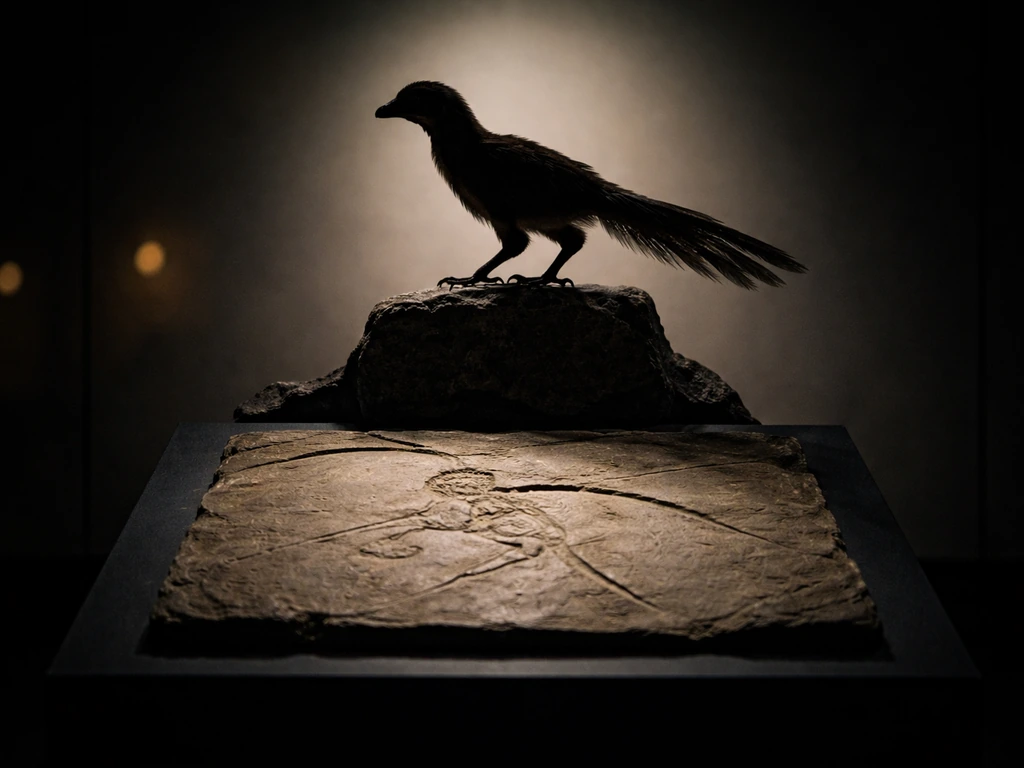
Why there's no single definitive "first bird"
The core problem is that "first bird" depends entirely on where you draw the boundary of the group called "birds." And that boundary keeps moving. Phylogenetic analyses, the statistical family trees scientists build from anatomical and genetic data, can shift a fossil from inside the bird lineage to outside it depending on which specimens are included in the analysis and how traits are coded. blank" rel="noopener noreferrer">Archaeopteryx, which has been called the "first bird" in textbooks for over 150 years, is the most famous example. A landmark 2011 paper in Nature showed that adding a single new Chinese fossil (Xiaotingia) to the analysis moved Archaeopteryx out of Avialae (the formal group containing birds) entirely and into Deinonychosauria, the same broad group as Velociraptor. That's not a fringe result, it was published in one of the world's top scientific journals, and the blank" rel="noopener noreferrer">Natural History Museum in London acknowledges that even Archaeopteryx's status as the "earliest bird" is not definitive.
National Geographic has reported the same tension: revisions of early avian family trees have repeatedly reshuffled which fossils fall inside or outside the "bird" group. Aurornis xui, a small Chinese feathered dinosaur announced in 2013, was initially positioned as potentially older than Archaeopteryx within Avialae, only for subsequent analyses to debate that placement too. The definition of "bird" is, in the words of researchers quoted by National Geographic, somewhat "arbitrary." That's not scientists throwing up their hands. It reflects the genuine biological reality that birds didn't emerge from a clean break, they are deeply nested within theropod dinosaurs, and the transition was gradual.
Defining "bird" vs "bird-like" and why it matters

Scientists use two different definitions of "bird," and which one you use changes the answer to the "first" question dramatically. The crown-group definition restricts "birds" (Aves) to the last common ancestor of all living bird species and all its descendants. Under this strict definition, fossils like Archaeopteryx don't qualify as birds at all, they're stem-group avialans, sitting on a branch leading toward birds without being birds themselves. The total-group or stem-group definition is broader and includes anything more closely related to modern birds than to their nearest non-bird relatives. Under this framing, Archaeopteryx and many other Jurassic and Cretaceous feathered dinosaurs get counted.
For practical purposes, most paleontologists use "Avialae" as the formal clade name for the group that includes modern birds and their closest fossil relatives. When someone asks "what was the first bird," they usually mean: what was the earliest member of Avialae capable of flight? But even that question runs into the Xiaotingia problem, the edges of Avialae itself shift with each new fossil and each new phylogenetic study. The honest answer is that Archaeopteryx and a handful of other Late Jurassic avialans are the strongest candidates, but no single one can be crowned definitively.
What "fly" means: powered flight vs gliding vs flapping
Before you can ask what the first bird to fly was, you need to nail down what "fly" means, because in biomechanics it isn't one thing. There are at least three distinct behaviors worth separating. Gliding is passive, an animal uses gravity and a wing-like surface to extend a fall or horizontal movement without generating thrust. Parachuting is similar but even more passive, essentially slowing a fall. Powered, flapping flight is the real deal: the animal generates both lift and thrust using muscular wingbeats, and it can sustain altitude and maneuver. Between those extremes sits a spectrum of intermediate behaviors, including shallow glides with some active flapping, burst-powered leaps, and assisted running takeoffs.
This distinction matters enormously for reading fossil evidence. A fossil can have feathered forelimbs without having been capable of powered flight. Whether the earliest bird-like animals, or specific candidates, could truly achieve powered flight is a question readers often summarize as can cuckoo bird fly. The 2013 study of Eosinopteryx, for example, found that its anatomy, including the absence of a bony sternum and a poorly developed proximal humerus, suggested little or no ability to produce the wingbeat cycle needed for sustained powered flight. Feathering and flight capability are not the same thing. Similarly, Microraptor, the four-winged dromaeosaurid, has been the subject of wind-tunnel studies showing it could glide effectively without needing a sophisticated modern wing morphology, but whether it could flap and generate powered thrust is a separate, still-debated question.
The top candidates from the fossil record
With those definitions in mind, here are the fossils that show up most often in serious discussions of earliest bird-like flight. Each comes with genuine evidence and genuine limitations.
Archaeopteryx lithographica
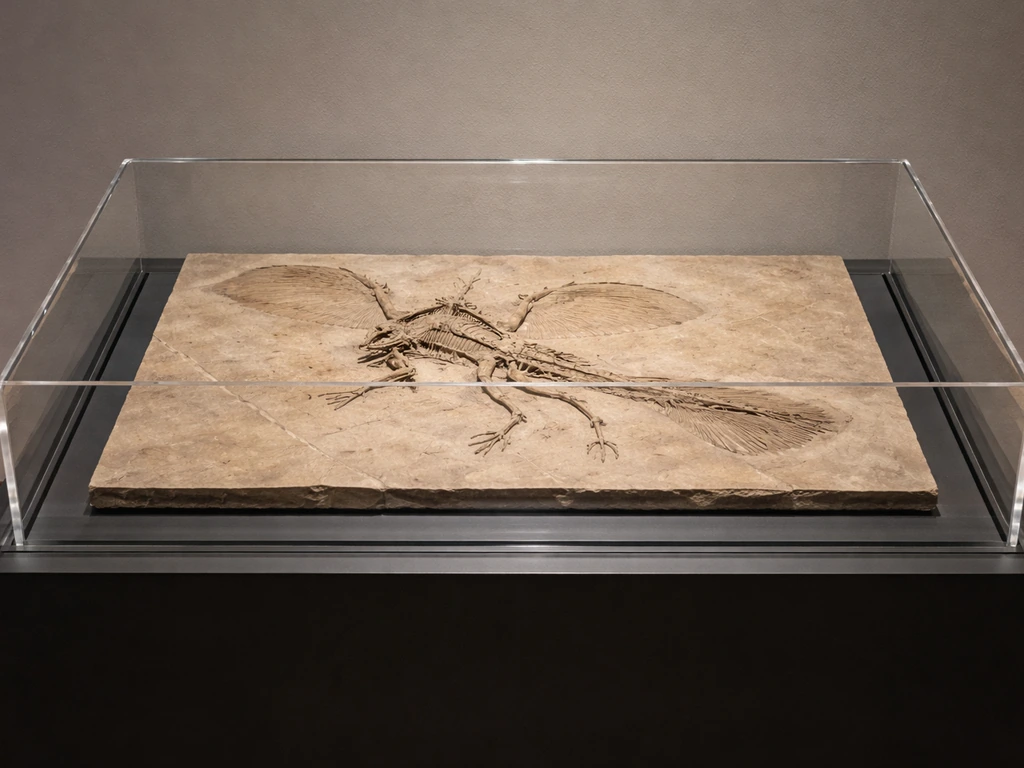
From the Late Jurassic of Bavaria (roughly 150 million years ago), Archaeopteryx is still the most intensively studied early avialan. It had asymmetric flight feathers, the hallmark of aerodynamic feathers in modern birds, and a 2018 Nature Communications study analyzed its wing bone geometry and found it consistent with active flapping flight mechanics, comparable to birds that use burst-powered flight like pheasants. A separate analysis of an isolated Archaeopteryx feather, published in Nature Communications in 2012 and followed up in Scientific Reports in 2020, identified asymmetric vane structure and curvature consistent with a primary covert from a functioning wing. So the evidence for at least some powered flight capability in Archaeopteryx is real. The limitation is phylogenetic: as noted above, analyses differ on whether it belongs inside Avialae at all.
Aurornis xui
Announced in 2013, Aurornis is a small feathered paravian from the Tiaojishan Formation of China, potentially older than Archaeopteryx. Some analyses place it as the most basal avialan known, which would technically make it a stronger candidate for "earliest bird", but its flight capability is much less certain than Archaeopteryx's. Its wing feathers and shoulder anatomy don't provide the same aerodynamic confidence that Archaeopteryx's wing bone geometry does. It may well be closer to the root of the avialan tree without being a good flier.
Xiaotingia zhengi
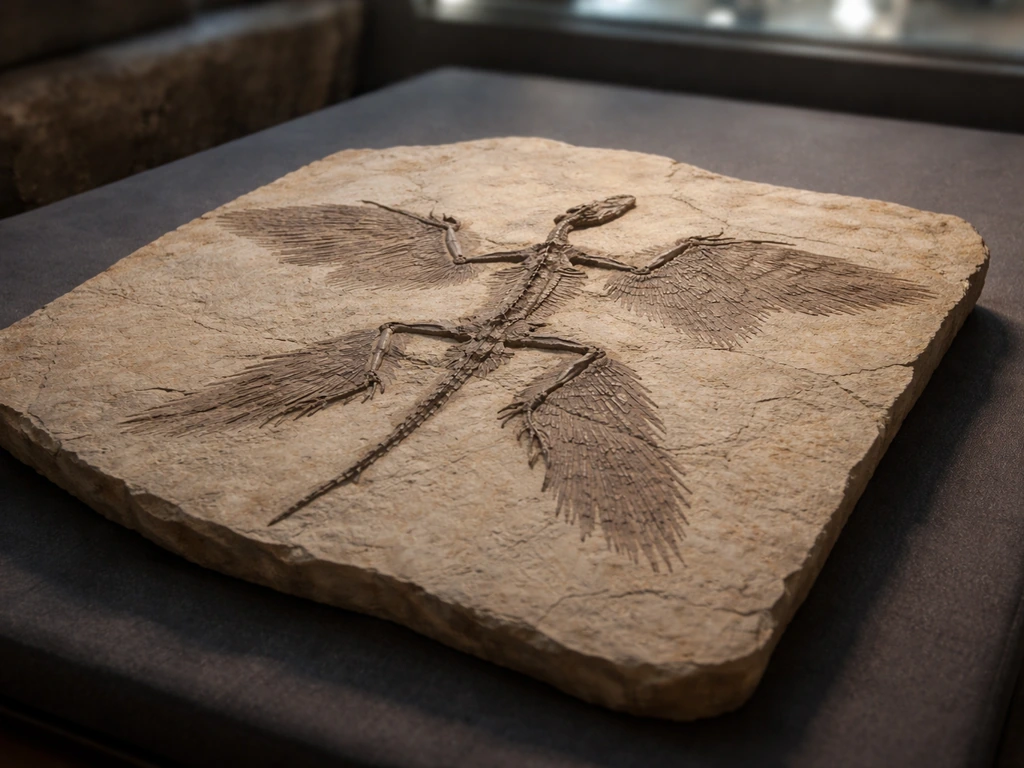
The fossil that famously shook up Archaeopteryx's crown, Xiaotingia is another Chinese paravian from roughly the same time period. Its significance is more about tree topology than flight capability, it was the taxon whose inclusion moved Archaeopteryx to a different part of the dinosaur family tree in the 2011 Nature study. As a candidate for "first flier," it's weaker than Archaeopteryx because direct evidence for powered flight in Xiaotingia is limited.
Microraptor gui
Microraptor is a four-winged dromaeosaurid from Early Cretaceous China. Most analyses don't place it inside Avialae, it's a close relative, not a bird under most definitions. But aerodynamically, it's one of the most-studied early feathered fliers. Wind-tunnel research published in Nature Communications demonstrated that it could produce effective glides using its four feathered limbs. Whether it could flap powerfully enough to achieve true sustained flight remains debated, with some researchers arguing its anatomy constrained powered takeoff. It's an essential comparison case even if it doesn't carry the "first bird" title.
| Fossil | Age (approx.) | Location | Inside Avialae? | Flight evidence strength |
|---|---|---|---|---|
| Archaeopteryx | ~150 mya (Late Jurassic) | Bavaria, Germany | Disputed (usually yes) | Strong — asymmetric feathers, wing bone geometry consistent with flapping |
| Aurornis xui | ~160 mya (Late Jurassic) | Liaoning, China | Yes (in some analyses) | Weak — limited aerodynamic data |
| Xiaotingia zhengi | ~160 mya (Late Jurassic) | Liaoning, China | Disputed (sometimes outside) | Weak — primarily a phylogenetic marker |
| Microraptor gui | ~125 mya (Early Cretaceous) | Liaoning, China | No (Dromaeosauridae) | Moderate — good glide evidence, powered flight debated |
| Eosinopteryx brevipenna | ~160 mya (Late Jurassic) | Liaoning, China | Debated | Weak — anatomy suggests limited flight ability |
What anatomy and feathers can (and can't) tell us about flight
The fossil record preserves bone and, in exceptional cases, feather impressions. Both carry real aerodynamic information, but neither is a clean read-out of flight behavior. Here's how to interpret the main lines of evidence.
Feather asymmetry is one of the best proxies for aerodynamic function. In modern flying birds, the leading vane of a primary flight feather is narrower than the trailing vane, which helps manage airflow during the wingbeat. Fossil feathers showing this asymmetry, as seen in Archaeopteryx primaries, are widely interpreted as evidence of aerodynamic role. However, a 2015 study in the Proceedings of the Royal Society looked at barb geometry across multiple paravians including Microraptor, Archaeopteryx, Sapeornis, and Confuciusornis, and found that none of them had the full modern trailing-vane geometry, raising questions about when truly modern-style flight feathers evolved. Feathers evolved in a transitional continuum, not a clean jump to modern form.
Shoulder and forelimb anatomy tells you about stroke mechanics. The key question is whether a taxon had the range of motion and muscle attachment geometry to complete a modern avian downstroke. A bony sternum with a prominent keel is where flight muscles anchor in modern birds, its absence in taxa like Eosinopteryx is a real red flag for powered flight. Wing bone proportions and cross-sectional geometry (the shape and wall thickness of the humerus, radius, and ulna) can also be compared against known fliers and non-fliers, which is exactly what the 2018 Archaeopteryx wing bone study did.
- Asymmetric primary feathers: supports aerodynamic use, but degree of asymmetry matters
- Bony sternal keel: strong indicator for flight muscle attachment; absence is limiting
- Wing bone geometry (cross-sectional shape and cortical thickness): can be compared to extant fliers
- Proximal humerus development: affects ability to produce wingbeat cycle
- Body mass and wing loading estimates: determines whether glide, burst flight, or sustained flight was plausible
- Hindlimb and toe structure: informs perching ability and tree-living vs ground-living lifestyle
What fossils can't tell you directly is muscle mass, exact stroke amplitude, or neuromuscular coordination. Biomechanical modeling can fill in some of those gaps by comparing bone geometry against living species with known flight styles, but every model carries assumptions. That's why you'll see papers reach different conclusions from the same fossils.
Competing origin-of-flight hypotheses and what evidence supports them
The question of how birds first flew has been argued for well over a century, and two main camps have dominated the debate, with a third hybrid view gaining traction more recently.
The trees-down (arboreal) hypothesis
This idea holds that the ancestors of birds were tree-climbers, and that flight evolved from gliding. A small feathered animal climbs a tree, leaps between branches, and gradually refines a glide into powered flight. It has intuitive aerodynamic appeal, gliding is energetically cheaper than jumping straight into flapping from the ground, and Microraptor's four-winged anatomy fits this framework well. The discovery of multiple early feathered paravians from forested paleoenvironments in China lent this view new support in the 2000s and 2010s. The curved toe claws of some early avialans are also cited as consistent with perching or branch-gripping.
The ground-up (cursorial) hypothesis
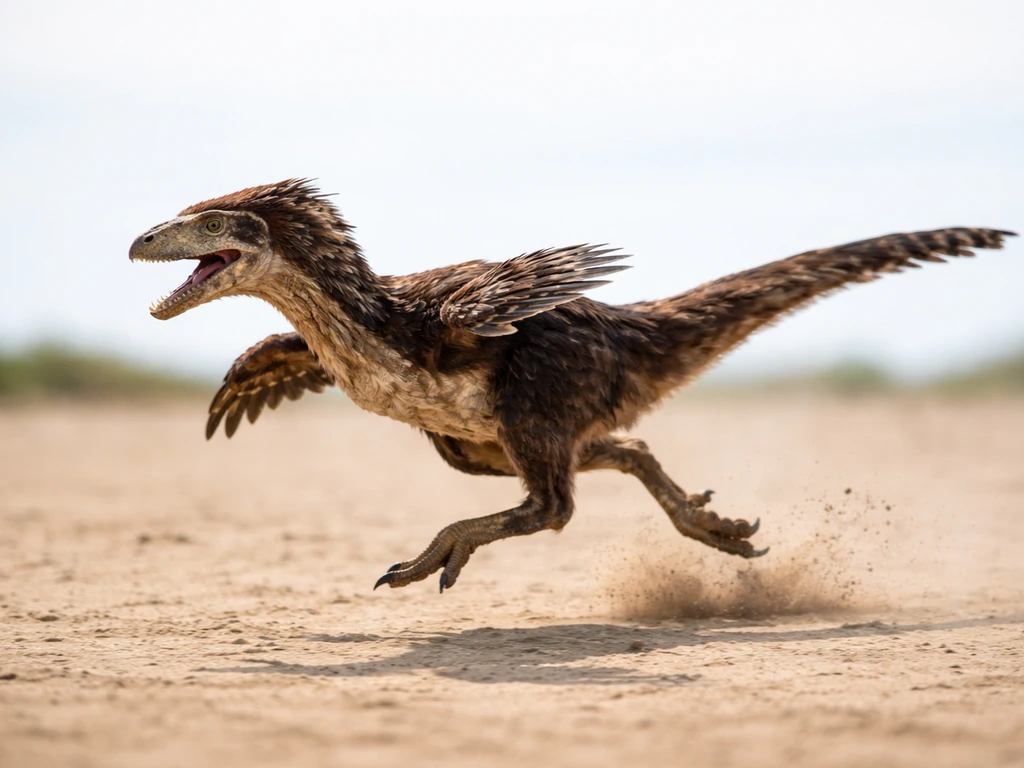
This view argues that flight evolved in fast-running ground animals that used their forelimbs to generate lift during rapid running or leaping. Proponents point to the bipedal, ground-running anatomy of most theropod dinosaurs as the baseline condition, and argue that proto-wings aided running and jumping before they were capable of sustained flight. Some biomechanical models of wing-assisted incline running (WAIR), where birds flap to help them run up steep inclines, are used to support a plausible functional intermediate stage. WAIR is observed in living birds like partridges and chukars, which makes it biologically real, not just hypothetical.
Hybrid and multi-stage models
Many researchers now favor a more nuanced picture where neither trees-down nor ground-up is wholly correct. The transition may have involved multiple lineages experimenting with different strategies, some gliding, some using wing-assisted running, some doing both depending on body size and habitat. The fact that multiple independent lineages (including some non-avialan paravians like Microraptor) evolved well-developed forelimb feathers suggests that aerodynamic forelimb use was advantageous in multiple ecological contexts, not just one "correct" evolutionary path.
The evidence that most directly bears on this debate includes: the paleoenvironmental context of fossil finds (were these animals in trees or on open ground?), foot and toe anatomy (claws shaped for gripping vs running), body mass and hindlimb proportions, and the aerodynamic modeling of intermediate forms. No single piece of evidence is decisive, which is why the debate continues. If you're interested in the range of flight strategies that evolved across different bird lineages, questions like which birds can fly backwards or which bird flies like a helicopter are great windows into how diverse avian flight mechanics became once powered flight was established. If you're also curious about reverse flight, the question "what bird fly backwards" is a related comparison point to how different wing control strategies show up across bird lineages which birds can fly backwards or what bird flies like a helicopter. This is one of those fun questions biology can't answer with a single fossil, but it does point you toward real studies of control, muscle function, and maneuvering in birds which birds can fly backwards. This is one of those fun questions biology can't answer with a single fossil, but it does point you toward real studies of control, muscle function, and maneuvering in birds which birds can fly backwards.
How to verify claims and keep researching
If you want to go deeper on any of this, and it's genuinely worth it, here's how to navigate the literature and avoid common dead ends.
Search terms that actually work
- "Avialae phylogeny" — finds the actual family tree debates rather than pop-sci summaries
- "Archaeopteryx flight capability" or "Archaeopteryx wing bone" — finds biomechanics papers
- "origin of avian flight" — broad but connects to both arboreal and cursorial hypothesis papers
- "paravian feathered dinosaurs" — finds the broader group including near-bird relatives
- "Xiaotingia Avialae" or "Aurornis avialan" — finds phylogenetic placement debates directly
- "Microraptor aerodynamics" — finds the wind-tunnel and glide modeling studies
- "wing-assisted incline running" or "WAIR birds" — finds behavioral evidence for ground-up flight origins
- "feather asymmetry fossil" or "flight feather evolution" — finds the barb geometry and vane studies
Key fossil sites and museums to look up
The Solnhofen limestone of Bavaria, Germany is where most Archaeopteryx specimens come from, several are on display in European museums including the Naturkundemuseum in Berlin and the Natural History Museum in London. The Yixian and Jiufotang Formations in Liaoning Province, China have produced Microraptor, Aurornis, Confuciusornis, and dozens of other feathered paravians. These are the two most productive fossil windows into early bird flight evolution.
How to evaluate a "first bird" claim
- Ask what definition of "bird" the claim uses: crown-group Aves, Avialae, or something informal?
- Check whether the fossil has been phylogenetically placed inside Avialae in a peer-reviewed analysis — and in how many independent analyses
- Look for direct aerodynamic evidence: asymmetric flight feathers, wing bone geometry, sternal keel, shoulder range of motion
- Check the age: is there a radiometric date, or is the age estimated from stratigraphy? Both are valid but have different uncertainties
- See whether the claim distinguishes between gliding and powered flapping flight — if it doesn't, treat it with skepticism
- Check whether competing placements (like the Xiaotingia effect on Archaeopteryx) have been addressed or ignored
Best accessible sources to start with
For peer-reviewed research, Google Scholar is free to search and many papers have open-access versions via PubMed Central or journal websites. Search for author names like Xu Xing (who has led many of the key Chinese fossil studies), Michael Pittman (biomechanics of early flight), and Michael Habib (wing bone geometry and flight mechanics). The Natural History Museum London's online dino-directory and the Smithsonian's dinosaur hall resources are both solid starting points for accessible overviews that cite primary sources. For the phylogenetic complexity, the open-access journal PeerJ has published several accessible phylogenetic analyses of paravians that include detailed discussion of why placements shift.
The short version: when someone tells you Archaeopteryx was the first bird to fly, they're not wrong in the popular sense, it's still the best-evidenced early candidate for true powered flight capability among Jurassic avialans. But the full picture is richer. The earliest avialan may be Aurornis or something we haven't found yet. Multiple lineages were experimenting with feathered flight around the same geological time. And the biomechanical evidence, from asymmetric feathers to wing bone cross-sections, is genuinely telling us something real about how these animals moved through the air 150 million years ago. That's the thread worth pulling. If you're curious about how people compare claims across famous flying-machines and ancient fliers, you can also look at did the boeing bird of prey ever fly as a related example.
FAQ
Which definition of “first bird to fly” is most useful, earliest evidence of flight or earliest powered flight?
If “first” means the earliest fossil evidence of any kind of bird-like flight behavior, the answer will often shift toward early avialans that show aerodynamic feathers. If “first” means the earliest fossil evidence of true powered, sustained flapping flight, the strongest recurring candidate remains Archaeopteryx, but even there the result depends on how you define birds and how you interpret wing-bone and feather mechanics.
Why can’t we tell from fossils alone whether the first bird could fly like a modern bird?
Fossils can show feathers and wing asymmetry, but they cannot directly record muscle size, nerve control, or how strongly an animal flapped. That means a taxon can look “flight capable” in one way (for example, having flight feathers) while still being uncertain or unlikely to perform powered takeoff or sustained flight.
Can the same fossil be considered the first bird in one study and not in another?
Yes, especially for analyses that treat “birds” as different clades (crown group vs broader stem-total group). A fossil can be counted as inside the bird lineage in one study and pushed outside in another if the coded traits and included specimens change, which is exactly what happened with Archaeopteryx once Xiaotingia entered some phylogenetic datasets.
What traits should I look for to decide whether a fossil likely had powered flight?
Look for traits tied to powered-flight mechanics, not just feathers. In practice, researchers focus on features like asymmetric primary feathers, sternum and keel presence (or absence), shoulder and wing-bone geometry that supports a forceful downstroke, and whether the anatomy matches models of thrust-generating motion.
Do wind-tunnel results on fossils prove they could flap with enough power for sustained flight?
Wind-tunnel and aerodynamic studies are most informative for gliding or passive aerodynamics, because they can test lift, drag, and control surfaces without proving sustained thrust. For powered flight, you need additional evidence that the anatomy could generate the repeated wingbeat cycle and takeoff forces, which is often harder to demonstrate from fossils.
If a dinosaur has feathers, does that automatically mean it was the first bird to fly?
One common mistake is assuming “feathers” automatically mean “flying.” Feathers can originate for insulation, display, or other functions, and even well-developed flight feathers can exist without the full set of structural requirements for sustained flapping. The article highlights this specifically with examples like Eosinopteryx, where feathered anatomy does not translate cleanly into powered flight.
How does where a fossil was found affect whether it’s a good candidate for early flight?
Even among “early bird” candidates, the geological and geographic context matters. If fossils come from forested versus open habitats, the most plausible intermediate behaviors (climb and glide, or run-and-flap) can differ. That is why paleoenvironment, not just morphology, is routinely used to evaluate competing scenarios.
Is the debate mainly about whether flight happened at all, or about how it first worked (glide vs powered)?
Not necessarily. “Flying” for the first bird question can mean gliding, parachuting, burst-powered leaps, or fully sustained powered flight. Many interpretations treat early evidence as a continuum of behaviors, so asking a yes-or-no question about “could it fly” may hide the key uncertainty about what level of performance is meant.
What’s the best way to evaluate claims that one species was the earliest flier?
A good next step is to compare how the candidate is classified across multiple phylogenetic trees and then compare its flight-related anatomy against the same biomechanical criteria (flight-feather asymmetry, sternum/keel status, wing-bone mechanics). If you only track “which species is older,” you can miss the boundary and mechanics problems that change the “first” claim.
Are there living animals that support the idea that early flight started as running and gliding?
If you mean which living animals are closest in behavior to the earliest plausible intermediate stage, wing-assisted incline running provides a useful modern analog. It is not the same as Jurassic flight, but it helps test whether forelimb use could plausibly assist takeoff or progression from ground movement to airborne gliding.