
The short answer: hummingbirds are the only birds that can genuinely fly backwards as a sustained, controlled flight mode. If you saw a small bird retreating from a flower or a feeder with its body still facing forward, that was almost certainly a hummingbird performing true reverse flight. A handful of other species, including the Acadian flycatcher, have been documented briefly going backwards, but those cases are rare exceptions rather than routine behavior. Everything else you might have seen (a bird braking hard, rolling inverted, or hovering and drifting) is a related but distinct maneuver. This guide will help you figure out exactly what you witnessed and why it happens.
What Bird Flies Backwards? Identification and Mechanics

Marcus Chen
5 Apr 2026
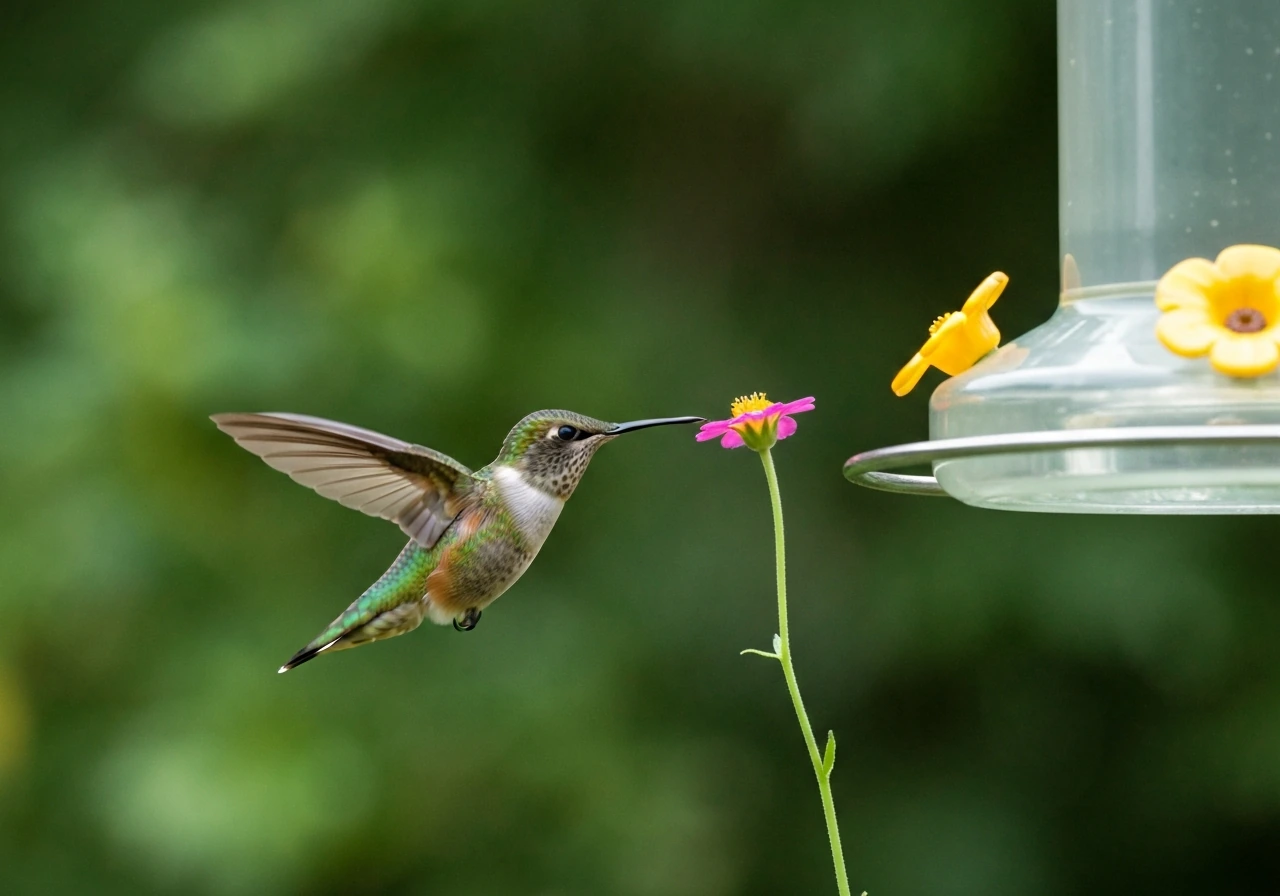
Why some birds can fly backwards
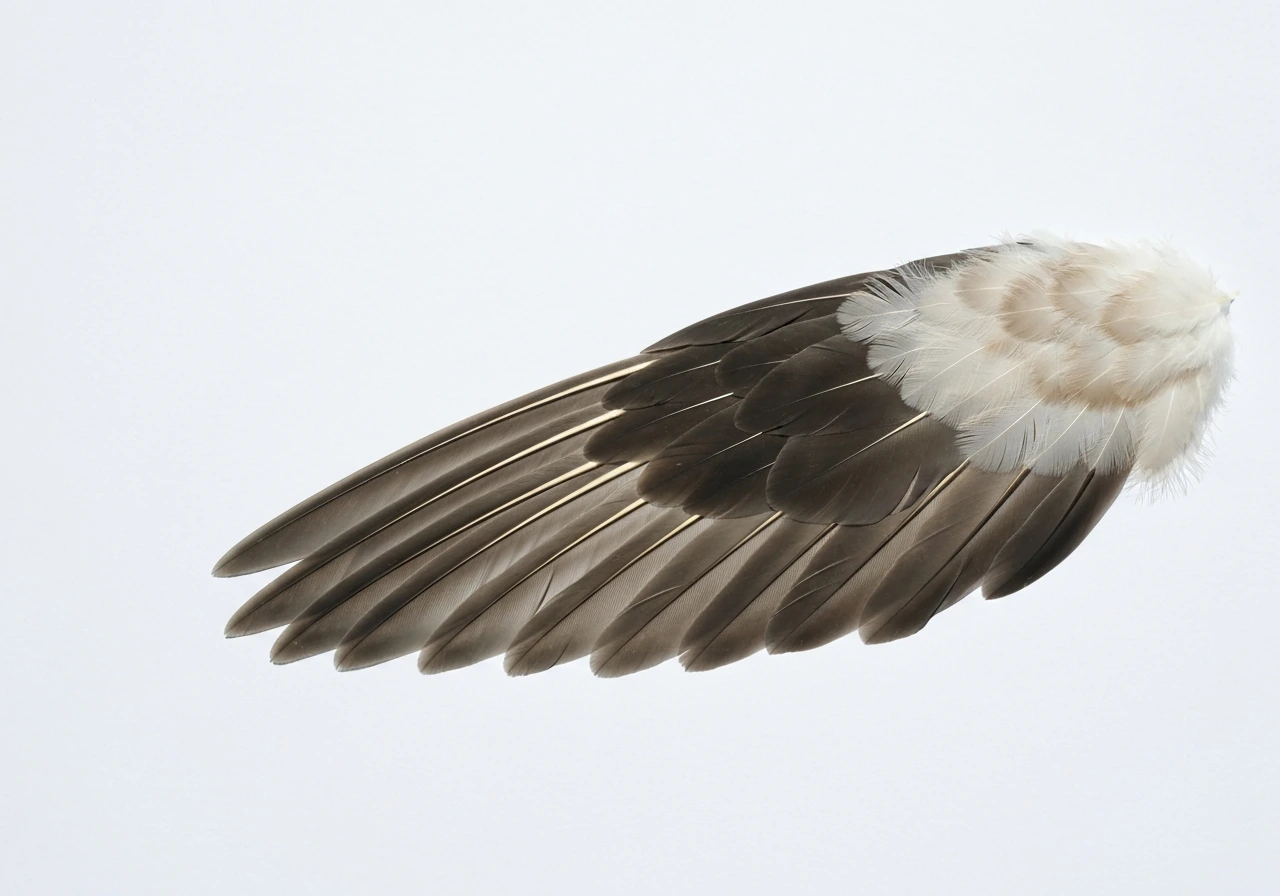
Most birds are built for one-directional power: their wings generate lift and thrust on the downstroke, and the geometry of the feathers is optimized for moving air backward and downward. Reversing that is mechanically expensive and, for most species, anatomically impossible to sustain. Hummingbirds are the outlier because they evolved a shoulder joint with an extraordinarily wide range of motion, allowing the wing to generate useful aerodynamic force on both the downstroke and the upstroke. That gives them control authority in every direction, not just forward.
It also helps to understand that which bird flies like a helicopter is actually a question with the same answer: hummingbirds. Their hovering mechanics are the foundation for backward flight. Because they can already hold perfectly still in the air by fine-tuning the angle and speed of each wing stroke, adding a rearward velocity component is just one more adjustment on top of a system that is already doing something remarkable.
Birds known for backward or reverse flight
Hummingbirds (family Trochilidae) are the definitive answer here. Anna's hummingbird (Calypte anna) has been studied in wind tunnels with high-speed video and respirometry equipment, and the research confirmed backward airspeeds of up to 4.5 meters per second. That is not a drift or a gust pushing a small bird around; that is active, controlled, sustained reverse translation. The full details on what bird can fly backwards go deeper into the species-level breakdown, but Anna's hummingbird is the one with the most rigorous experimental evidence.
The Acadian flycatcher (Empidonax virescens) is the other species with a formal documented case. A report published in The Auk, one of ornithology's oldest journals, describes an Acadian flycatcher performing backward flight. Secondary sources corroborate this, noting that the species can hover and has been observed briefly flying in reverse during close-in foraging maneuvers. This is a genuinely small Empidonax flycatcher, olive-green above with a pale eye ring, common in eastern North American forests during summer. The backward flight appears to be an occasional behavior during prey pursuit, not a regular mode.
Beyond those two, evidence becomes thin and anecdotal. Some sources gesture vaguely at other species, but the ornithological literature does not have the same quality of documentation. If you saw a bird other than a hummingbird or a small flycatcher, you most likely saw a braking maneuver, a hover, or an optical illusion caused by wind and camera angle.
Backward flight vs upside-down flight (and how to tell which you're seeing)
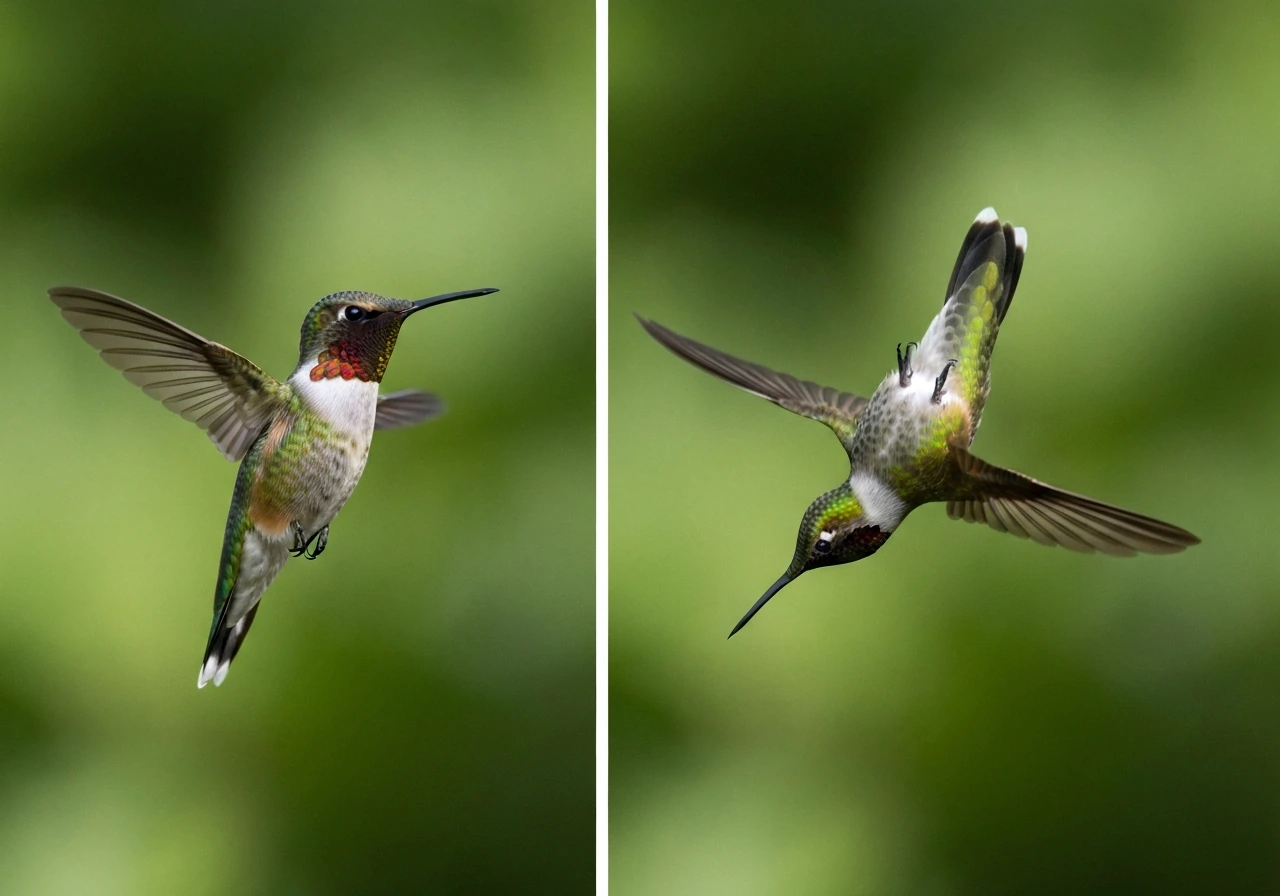
These two things get mixed up constantly, and it is easy to see why. When a hummingbird executes an escape maneuver, it can pitch its body dramatically, sometimes nearly inverting itself for a fraction of a second, while simultaneously translating in a direction that is not straightforwardly forward. To the human eye, especially at the speeds hummingbirds operate, this can look like the bird flipped upside down or flew backward when it actually did neither continuously.
Research into hummingbird escape maneuvers has documented extreme pitch, roll, and yaw rotations happening in fractions of a second. The body's inertia and the wing forces interact in complex ways during these events, a phenomenon sometimes called inertial coupling. The result is that a bird can appear to be doing something wild and physically impossible when it is actually executing a high-performance but physically legitimate turn or brake.
| Behavior | What it looks like | What's actually happening | Species most likely to do it |
|---|---|---|---|
| True backward flight | Bird moves rearward with body facing forward, continuously | Wing stroke angle adjusted to produce rearward thrust on both up and downstroke | Hummingbirds (primary), Acadian flycatcher (rare) |
| Upside-down flight | Bird appears briefly inverted | Extreme body pitch or roll during escape or territorial display | Hummingbirds during escape maneuvers |
| Hard braking | Bird rapidly decelerates and seems to lurch backward | Wings flared and pitched steeply to create drag, not reverse thrust | Many species (hawks, swallows, flycatchers) |
| Hover-drift | Bird appears to move slowly rearward while hovering | Wind displacement during hovering; not actively powered reverse flight | Hummingbirds, kestrels, terns |
The clearest way to separate true backward flight from the rest is duration and body orientation. If the bird's breast was clearly facing away from the direction of travel for more than a half-second, and it was not a gust of wind, you almost certainly saw a hummingbird in genuine reverse flight.
How backward flight works biomechanically (wings, tail, body pitch)
In forward flight, a bird's wing moves in a roughly elliptical path, with the downstroke doing the heavy aerodynamic lifting. In hummingbirds hovering, the wing traces a figure-eight on a nearly horizontal plane, generating lift on both strokes. To produce backward thrust, the hummingbird adjusts the pitch angle of its wing (the angle of attack relative to the air) differently across the stroke cycle, effectively redirecting the net aerodynamic force vector to point rearward instead of forward or straight up.
Three-dimensional kinematic studies tracking hummingbird wingbeats across a range of speeds (from hovering through 12 meters per second forward flight) show how dramatically the wing path and stroke plane shift with flight mode. Backward flight is a kinematically distinct mode, not just hovering with a little wind. The stroke plane tilts, the body pitches nose-up (which redirects the thrust vector), and the tail is often spread and depressed slightly to provide additional pitch control and stability.
Metabolic cost is surprisingly modest. The wind-tunnel respirometry work on Anna's hummingbirds found that the oxygen consumption during backward flight was lower than during fast forward flight and comparable to hovering in some conditions. In a wind-tunnel/mask respirometry study with high-speed video of Anna’s hummingbirds, oxygen uptake during sustained backward flight was similar to forward flight at the same airspeed and about 20% lower than hovering V̇O2. This makes sense: the bird is moving slowly and does not need to overcome much aerodynamic drag on its body. The wings are doing most of the work, and they are already spinning at 40 to 80 wingbeats per second depending on the species, so the marginal cost of redirecting thrust is lower than you might expect.
When backward flight happens in the wild (feeding, braking, maneuvering)
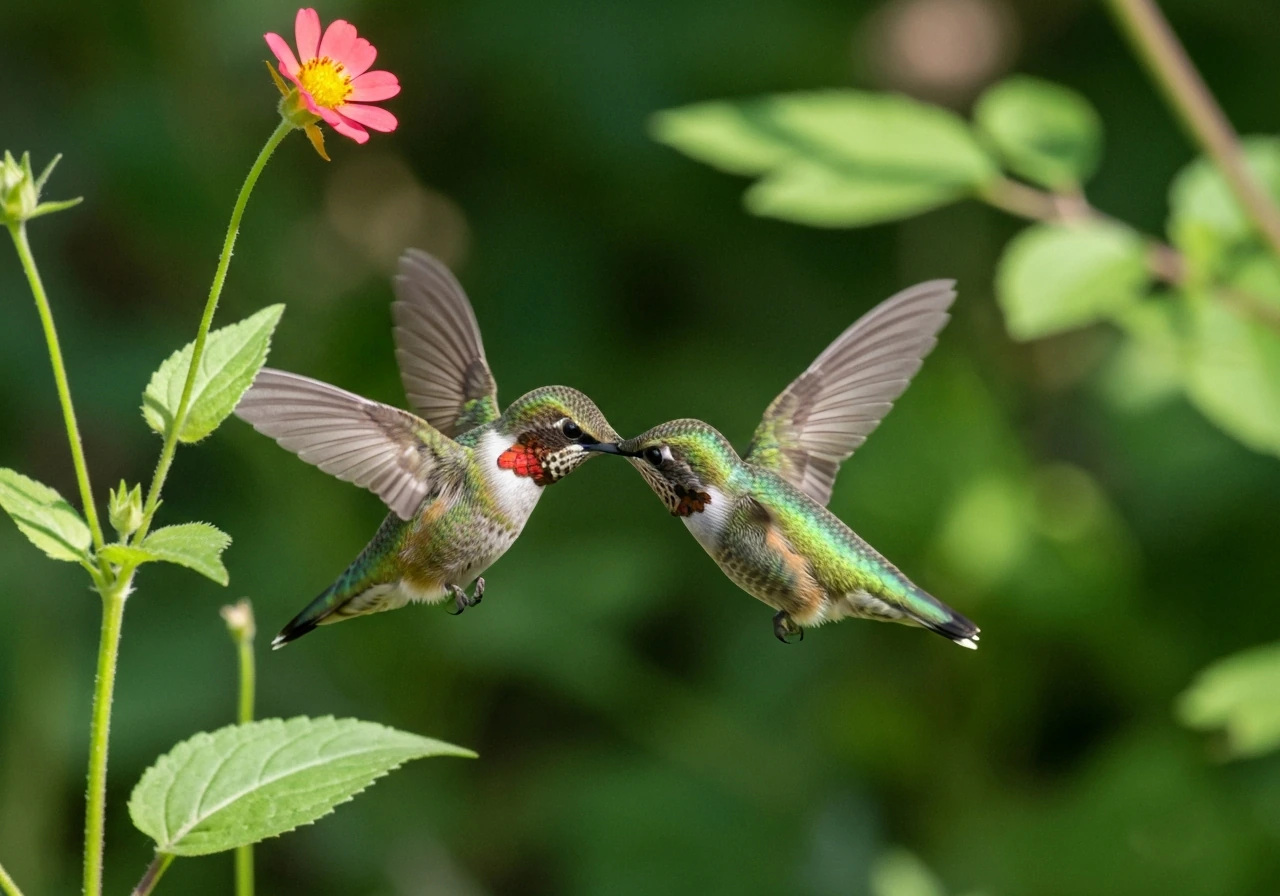
The most common context is feeding. Hummingbirds approach a flower or a feeder, hover briefly to drink, and then retreat backwards rather than turning around. This is energetically efficient: turning around means accelerating in a new direction, which costs energy and takes time. Backing straight out of a flower keeps the bird facing the food source (useful if there is competition) and avoids the aerodynamic cost of a full turn.
The second common context is territorial disputes. When two hummingbirds square off over a feeder, you will often see one bird performing short backward retreats or lateral sidesteps before pivoting to chase. The backward move functions as a kind of reset, keeping the bird in position without committing to a direction.
For the Acadian flycatcher, the documented case appears to have occurred during prey pursuit or close-quarters maneuvering near foliage, consistent with the species' known behavior of sallying out and then returning to a perch. The backward movement was brief and probably part of a correction during a sally flight rather than a sustained reverse transit.
It is also worth knowing that large, seemingly ungainly birds can pull off impressive short-range maneuvers when they need to. If you are curious whether birds like cranes fit into this picture at all, the answer is no for backward flight, but the question of does crane bird fly is itself interesting given how large-bodied they are and what aerodynamic constraints that imposes.
How to identify the bird you're noticing (behavior + habitat + cues)
Walk through these questions in order. They will get you to a confident identification or at least a confident short list in most cases.
- How big was it? Hummingbirds are tiny, 7 to 13 centimeters depending on species. If the bird was larger than a sparrow, you almost certainly did not see true backward flight.
- What color was it? Hummingbirds in North America often show an iridescent throat patch (gorget) that flashes red, pink, or purple in direct light. If the bird was drab olive-green with a pale eye ring and roughly sparrow-sized, consider Acadian flycatcher, especially if you were in a forested eastern watershed in spring or summer.
- Where were you? Hummingbirds are found across North and South America; in the eastern US, Ruby-throated hummingbirds are most common. Acadian flycatchers favor moist, shaded deciduous forest, often near streams, from May through August.
- What was the bird doing near? If it was near flowers, a feeder, or flowering vines, hummingbird. If it was hawking insects from a low perch in a forest understory, flycatcher.
- How long did the backward movement last? More than one full second of continuous rearward travel strongly suggests a hummingbird. A fraction of a second during an aerial maneuver could be almost any small bird braking or correcting.
One more thing worth considering: some birds that cannot fly backwards are still striking aerial performers. The cuckoo, for instance, has a curious flight style that surprises many observers. If you are not sure whether you were watching a cuckoo or a flycatcher, can cuckoo bird fly covers what their actual flight capabilities look like, which helps rule them out of the backward-flight category quickly.
Where to look for videos and confirm sightings today
The best starting point for video confirmation is the Macaulay Library at Cornell Lab of Ornithology. All About Birds includes a Ruby-throated Hummingbird media gallery with photos and videos that show hummingbird behavior captured on film blank" rel="noopener noreferrer">media gallery (photos/videos). You can search by species name and filter for video. For hummingbirds, look for clips tagged as 'foraging' or 'hovering' near flowers and watch for the retreat phase after feeding; that is where backward flight most commonly appears. <a data-article-id="F021867-FD6E-4F20-AC73-C3D9AB30C71D">Macaulay Library</a> also hosts documented Acadian flycatcher footage, which you can cross-reference against what you saw. To find it directly: search 'Acadian Flycatcher' in the Macaulay Library search bar and sort by video; the available video library at Macaulay is extensive and free to browse.
More practically: Cornell Lab runs live feeder cams and archived footage through All About Birds. The Panama Hummingbird Cam is a great example of a live cam that regularly captures tropical hummingbird species in real foraging conditions, including the backward retreat after flower visits. For North American species, the Cornell FeederWatch cam archives are worth browsing for Ruby-throated and Anna's hummingbird footage in feeder contexts.
If you want to go deeper into the science, search PubMed or Google Scholar for 'backward flight hummingbird kinematics' and look for the Anna's hummingbird wind-tunnel study. The full paper includes frame-by-frame kinematic diagrams that make it immediately clear how distinct backward flight is from hovering. Seeing those diagrams alongside a slow-motion video clip is probably the fastest way to train your eye to recognize what true reverse flight looks like compared to a braking maneuver or an escape roll.
For broader context on how bird flight evolved and what anatomical innovations made any of this possible, it helps to understand the evolutionary timeline. Considering what was the first bird to fly puts hummingbird specialization in perspective: the entire Trochilidae family represents roughly 65 million years of divergence from the earliest avian fliers, more than enough time to evolve a shoulder joint unlike anything else in the class.
Bottom line: if you saw a bird fly backwards and you are trying to confirm what it was, the answer is almost certainly a hummingbird. Watch for the post-feeding retreat, slow the video down if you have it, and compare the body orientation and wing angle to the Macaulay Library clips. If the bird was larger, olive-colored, and in a forest setting, pull up Acadian flycatcher footage and listen for the sharp 'WEET-sa' call that often accompanies their foraging sallies. Between the live cams, the Macaulay Library archive, and the published kinematics research, you have everything you need to make a confident call today.
FAQ
How can I tell if I saw true backward flight or just a dramatic turn or brake? (I only saw a few frames.)
Often you actually saw a brake or escape maneuver. Use this rule of thumb: true reverse flight keeps the bird’s breast facing away from the direction of travel (rearward-facing relative to motion) for longer than about half a second, and the wingbeats remain organized rather than irregular. If the bird briefly pitches or rolls while still mostly translating forward, it is usually not sustained backward flight.
If it was not a hummingbird, what other species could I realistically mistake for one that flies backwards?
Size and setting help, but the key is body orientation during the retreat. Hummingbirds are typically small, fast, and often in feeding context, then backing away from the flower or feeder while hovering. Acadian flycatchers are small, olive-brown and often in forest edges, but their reverse movement is reported as brief, tied to sallying near foliage. If the bird is clearly larger than a typical hummingbird and you are seeing a long, continuous retreat, re-check for camera angle or a forward escape sequence.
Can a bird look like it is flying backwards just because it is hovering or drifting?
If it was hovering, it is still possible to be reverse flight, because hummingbirds can redirect thrust without turning around. What matters is whether the direction of travel is rearward while the bird maintains control. Video tips: slow the clip to 0.25 to 0.5 speed, draw an imaginary line for the motion path, and watch whether the bird retreats while keeping consistent wingbeat timing and a stable rearward thrust direction.
What if the weather was windy, could that fool me into thinking a bird flew backwards?
Yes, gusts and wind can create the illusion of reverse movement, especially if the bird is near the camera or framed against a stationary background. A gust-driven illusion usually shows less deliberate, steady translation, and the bird’s orientation changes more erratically. True backward flight tends to look repeatable and purposeful, commonly right after a feeding hover, and often shows the bird holding or regaining position rather than being blown.
I saw a bird nearly invert itself, could that still be backward flight?
Hummingbirds and flycatchers are the main candidates, but you should also consider how the bird “starts” the maneuver. True reverse flight commonly begins immediately after a foraging hover or during a short territorial correction, then transitions into a controlled retreat. If you see the bird execute a forward approach, then a quick tumble or near-inversion during an angular chase, it may be an escape roll that only appears backward.
If the bird flew backwards while pitching nose-up, does that confirm it more than a flat-body retreat?
Sometimes yes, but the most useful cue is whether the bird’s feetless body orientation stays consistent with a rearward thrust. For hummingbirds, backward movement is often paired with a nose-up body pitch and wing stroke adjustments that keep control. If the bird’s tail and body are flaring and the wings maintain a tight, high-frequency rhythm, it is more consistent with controlled reverse flight than with being pushed by wind.
What wingbeat clues should I look for in slow-motion video?
Look for consistent wingbeat cadence and a repeatable retreat pattern. In true backward flight, the bird’s wing motion is kinematically distinct from hovering, with a noticeable change in stroke plane and aerodynamic force direction. If the wingbeats slow, become visibly irregular, or the bird drops or rotates while “moving backward,” it is more likely a braking/turning event.
Does seeing a bird fly backwards let me identify which hummingbird species it is?
If you are trying to identify the hummingbird species, backward flight alone usually cannot narrow it reliably, because multiple species use reverse retreats. Instead, combine flight mode with size, color, and context: Anna’s hummingbird is the one with the strongest wind-tunnel backward-flight evidence, but in the field you still need throat/head coloration (when visible) and your location and season.
I’m in eastern North America and saw an olive-green bird do something brief, could it be an Acadian flycatcher?
If the backward movement is extremely brief, a small Empidonax flycatcher is possible, but it is easy to misread other aerial maneuvers. Practical approach: confirm the bird’s silhouette from multiple angles if you can, note olive tones and habitat (forest setting), and listen for a characteristic flycatcher call if it vocalizes during sallies. Without those cues, treat Acadian flycatcher backward flight as a lower-confidence possibility.
What should I do right after filming to confirm what I saw?
The safest “next step” is to verify the motion direction relative to the bird’s breast and the background. If you have video, export or screen-record the clip and mark timestamps of the feeding hover, the retreat, and the moment the breast changes relative to motion. Then compare against labeled Macaulay clips for foraging or hovering, focusing on the post-feeding retreat phase rather than the approach.
Next Articles
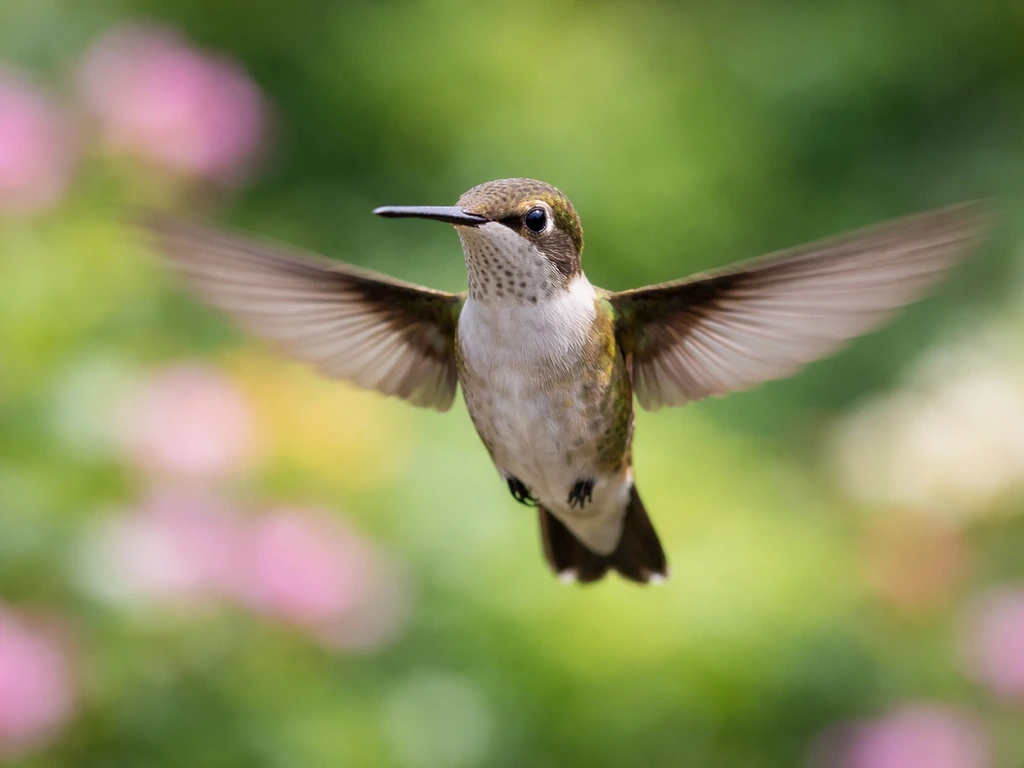
What Bird Can Fly Backwards, and How It Works
Learn which bird truly flies backward, what counts as reverse flight, and the biomechanics plus how to verify claims.
Bird Has Flown Meaning: Definition and How to Respond
Understand the bird has flown meaning, when it’s used, and how to reply with examples for real-life conversations.
Prefix Meaning Flight or Bird: Definition and Examples
Learn the flight or bird prefix meaning, origin, examples, and a checklist to decode new words and avoid look-alikes.