
Yes, the Boeing Bird of Prey flew. It completed 38 test flights between 1996 and 1999, all of them powered, full-scale, and airborne. This was not a tethered test, a ground taxi run, or a wind-tunnel model. Boeing kept the program classified for years and officially unveiled the aircraft on October 18, 2002, confirming the flight count and the timeline. The aircraft now sits in the National Museum of the United States Air Force, which is about as conclusive as it gets.
Did the Boeing Bird of Prey Ever Fly? Evidence and Checklist

Marcus Chen
1 May 2026
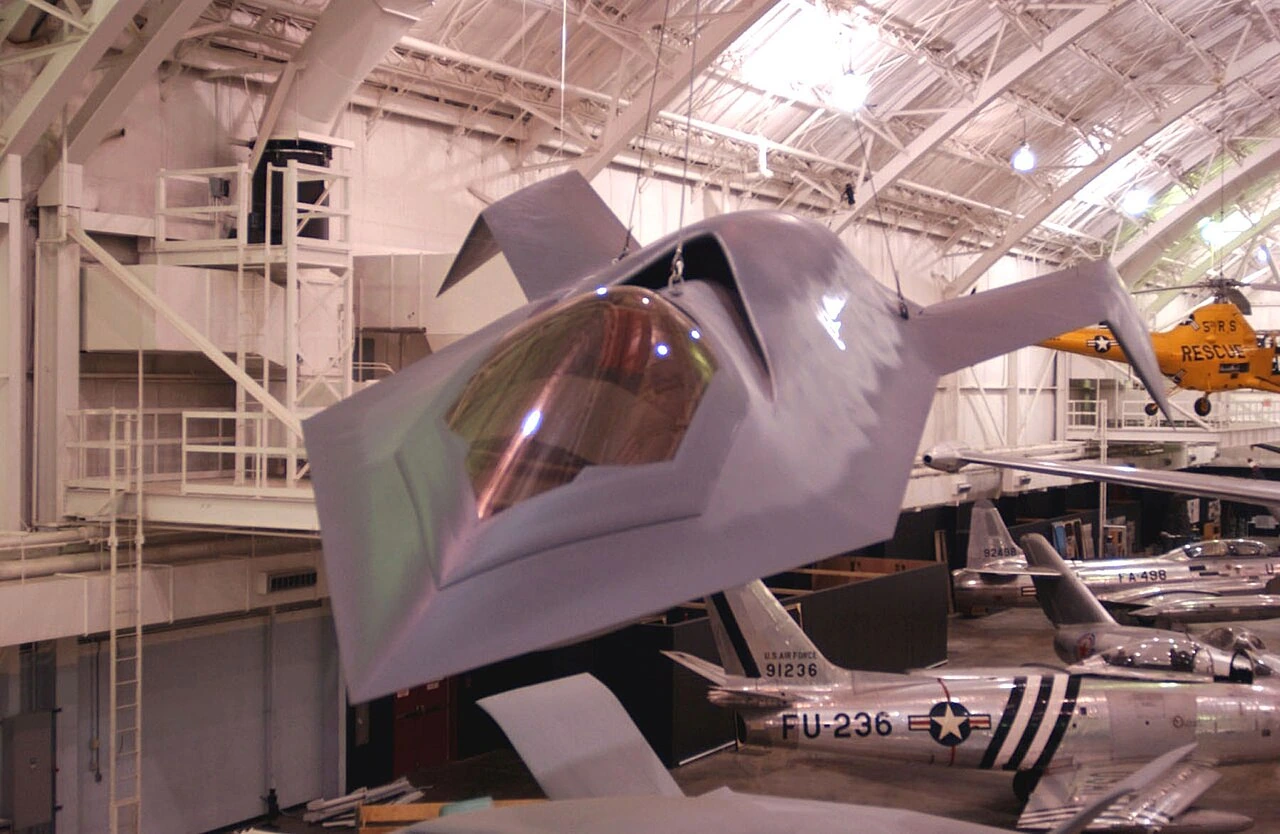
What the Boeing Bird of Prey actually is
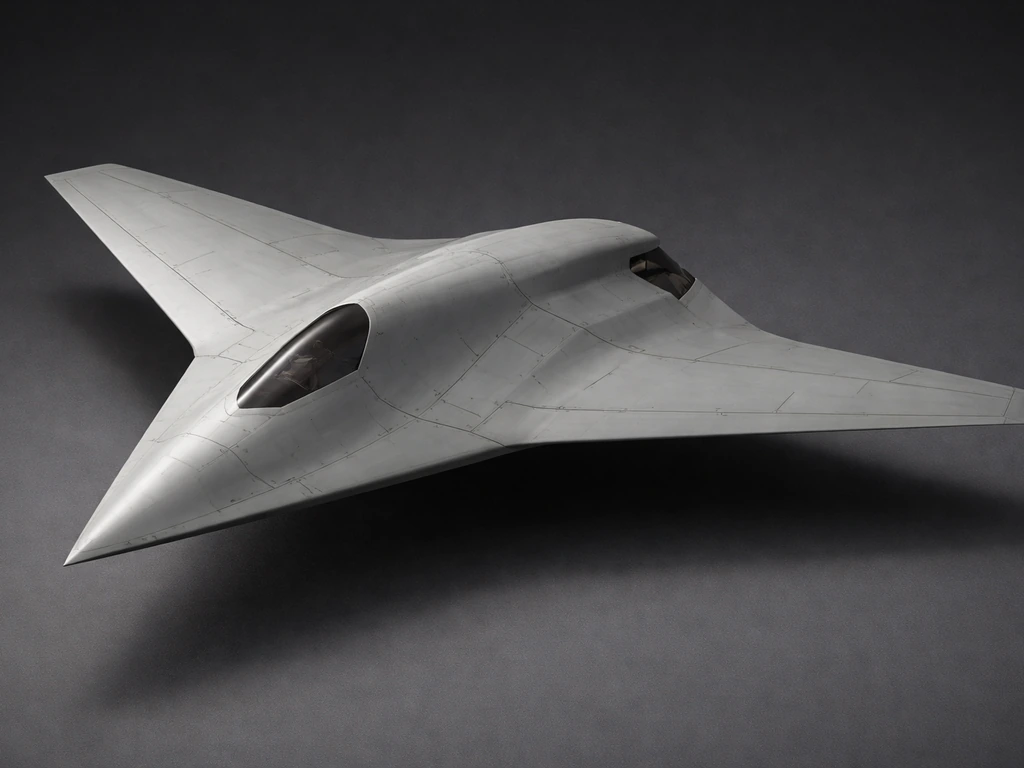
The Boeing Bird of Prey is a stealth technology demonstrator, officially designated the YF-118G. Boeing built and flew it under a classified program that ran from 1992 through 1999. Its purpose was not to be a combat aircraft or a production UAV. It was a testbed for two things: low-observable (stealth) technologies and rapid prototyping techniques. The idea was to figure out how to make an aircraft harder to see, both visually and on radar, while also learning how to build experimental designs quickly and cheaply.
The name 'Bird of Prey' is evocative, and you can see what Boeing was going for aesthetically. The aircraft has a swept, predatory silhouette that looks like a raptor mid-stoop. But Boeing's official documentation is clear: the name was not tied to any specific aerodynamic maneuver inspired by bird flight. The program was about stealth, not biomimicry. That said, the sleek, flattened fuselage and blended surfaces do echo what evolution produced in fast-flying raptors, where drag reduction and clean airflow over the body are survival advantages. It is the kind of convergence that happens when engineers and nature are solving the same problem.
The program timeline, from black project to museum piece
The Bird of Prey program started in 1992. For most of its life it was a black project, meaning it existed entirely outside public knowledge. Flight testing ran from 1996 to 1999, which is when the 38 flights happened. After 1999 the program wound down, and the aircraft sat classified for several more years. Boeing disclosed the program publicly on October 18, 2002, at which point the company released photos, a press statement, and basic program details. The Seattle Post-Intelligencer reported on the reveal the same day, and PBS NOVA later included a summary in its coverage of stealth aircraft development.
After declassification, the airframe was donated to the National Museum of the USAF at Wright-Patterson Air Force Base in Ohio, where it is on permanent display. The museum's official fact sheet reiterates the 38-flight count and describes the aircraft's role in testing stealth concepts, which makes it easy to cross-reference Boeing's original press release against an independent institutional source.
| Milestone | Date / Detail |
|---|---|
| Program begins | 1992 |
| First test flight | 1996 |
| Final test flight | 1999 |
| Total flights completed | 38 |
| Public disclosure | October 18, 2002 |
| Aircraft transferred to museum | After declassification |
| Official designation | YF-118G |
What the evidence actually shows

The evidence here is unusually strong for a classified program. Boeing's own MediaRoom press release from October 18, 2002 explicitly states the aircraft 'completed 38 test flights' as part of a flight-demonstration program. That is not hedge language. PBS NOVA corroborates the same number and the same 1996-to-1999 timeframe. The National Museum of the USAF fact sheet, which is also available as a PDF through the National Security Archive at George Washington University, repeats the flight count in the context of describing what the aircraft tested during its flight program. In its 38 flights, the Bird of Prey tested ways to make aircraft less observable to the eye and to radar.
On the photographic side, the aircraft's public identity is tied to the YF-118G designation in multiple image archives. Wikimedia Commons has a captioned photograph of the actual airframe labeled 'Boeing YF-118G Bird of Prey (cn 1),' and AirHistory.net has additional photos using consistent naming. The museum display photographs show the physical aircraft, not a mock-up or a scale model. This is the kind of evidence chain that is hard to fake: a consistent name and designation across a manufacturer's press release, a national museum's official documentation, a declassified government fact sheet, and independent photo archives all pointing to the same aircraft and the same flight record.
What 'ever fly' can mean, and which category this falls into
It is worth being precise about what kind of flying counts, because 'did it fly' can mean several different things depending on the program. The best way to answer that question is to look for the earliest documented flight of a real aircraft, then check whether it was truly the first to fly what was the first bird to fly. Here are the main categories:
- Wind-tunnel testing: a scale model tested in a controlled airflow environment. Not flight.
- Ground taxi runs: the aircraft moves under its own power on a runway but never leaves the ground. Not flight.
- Tethered or captive flight: the aircraft is lifted but physically restrained. Technically airborne but not free flight.
- Tethered hover testing: common in VTOL and UAV development. Not applicable to fixed-wing demonstrators like this one.
- Powered, untethered, full-scale flight: the aircraft takes off, flies, and lands freely under its own power. This is what 'ever fly' usually means.
The Boeing Bird of Prey falls into that last category. Boeing's press release explicitly uses the term 'flight-demonstration program' and gives a specific flight count of 38. PBS NOVA and the museum both describe flight testing, not ground testing or captive testing. There is no indication in any public source that the 38 flights were tethered or otherwise constrained. This was a real aircraft doing real flights.
How to verify this yourself

If you want to confirm this independently rather than just taking anyone's word for it, here is a straightforward process:
- Search Boeing's MediaRoom or Boeing's official news archive for the October 18, 2002 press release titled 'Boeing Unveils Bird of Prey Stealth Technology Demonstrator.' The flight count and program dates are in that document.
- Go to the National Museum of the USAF website and search for 'Boeing Bird of Prey' or 'YF-118G.' The fact sheet page describes the aircraft and its 38-flight testing program.
- Search the National Security Archive at GWU (nsarchive.gwu.edu) using the reference NSAEBB443 to find the declassified museum fact sheet PDF, which you can download and read directly.
- Search Wikimedia Commons for 'Boeing YF-118G Bird of Prey' to find the archival photograph tied to the specific airframe designation.
- Cross-check any third-party claims against these four sources. If a source says the aircraft never flew, that directly contradicts Boeing's own press release and two institutional sources. If a source says it flew hundreds of times or was a UAV, those claims are also unsupported.
- Use the designation YF-118G as a cross-reference anchor. Any source discussing the Boeing Bird of Prey stealth demonstrator should be consistent with that identifier.
Why the confusion persists
The biggest source of confusion is that 'Bird of Prey' is not a unique name. At least one completely separate drone concept, an Airbus-related modern interceptor concept, also uses the 'Bird of Prey' label. If you search broadly for 'Bird of Prey drone' or 'Bird of Prey aircraft,' you will get results mixing together multiple unrelated programs. Statements about whether one 'Bird of Prey' flew can get incorrectly applied to a different project with the same name. The fix is simple: always pin your search to 'Boeing Bird of Prey YF-118G' or 'Boeing stealth demonstrator 1992' to make sure you are looking at the right aircraft.
Another confusion source is the program's classified history. Because it was a black project for years, early internet discussions from before 2002 either had no information or speculated wildly. Some of that old speculation, including claims that the program never produced a flying aircraft, got cached and republished long after Boeing's official 2002 disclosure corrected the record. You will still find that outdated speculation if you dig into older forums or less-maintained web pages.
There is also a tendency to conflate 'stealth demonstrator' with 'UAV concept' because the aircraft looks futuristic and autonomous. The Bird of Prey was not a UAV. It was a crewed (or at minimum, conventionally piloted) fixed-wing testbed for stealth technology. Confusing it with autonomous bird-of-prey-inspired drone concepts is understandable given the name and the aesthetics, but the two categories are different programs entirely.
This site covers a lot of ground on how birds like falcons and hawks achieve the kind of agile, low-drag flight that engineers try to approximate in aircraft design, and that biomechanical conversation is genuinely interesting. This kind of agile, helicopter-like hover and maneuvering is why people sometimes search for which bird flies like a helicopter birds like falcons and hawks.
Some people also wonder what bird can fly backwards, but that type of maneuver is not what the Boeing Bird of Prey was designed to demonstrate. But the Boeing Bird of Prey was drawing on that inspiration mostly in name and shape, not in flight control architecture. It is different from the much rarer question of what bird can fly backward what bird fly backward.
The bottom line
The Boeing Bird of Prey (YF-118G) flew 38 times between 1996 and 1999. So, does the crane bird fly? A cuckoo bird is a real bird, and most species can fly between branches and over open areas cuckoo bird fly. In this case, it was the Boeing Bird of Prey that actually flew as a stealth test demonstrator.
This is confirmed by Boeing's own press release, the National Museum of the USAF, PBS NOVA, and a declassified government fact sheet. The aircraft is on public display.
If you encounter a claim that it never flew, that claim is wrong and easy to disprove using primary sources. If you encounter a claim about a different 'Bird of Prey' aircraft or drone, make sure you are not mixing up two unrelated programs that happen to share a name.
FAQ
How can I tell quickly that a claim is about Boeing’s YF-118G and not a different “Bird of Prey” project?
Check for the YF-118G designation or Boeing’s 1992 stealth demonstrator description. If a source only says “Bird of Prey drone” without the YF-118G, it is likely mixing in unrelated programs that share the same popular name.
Were the 38 flights free-flight sorties, or were they limited to captive, tethered, or instrumented runs?
The 38-flight figure is presented publicly as a flight demonstration program, not a captive or ground-only test. When verifying, treat “flight demonstration” language plus the 1996 to 1999 window as a key indicator that the aircraft was airborne during those tests.
Does “flew” mean it actually had an operational landing and takeoff sequence, or could it have been short hop testing?
Public disclosures emphasize airborne test flights as part of a stealth demonstrator program, which implies normal flight operations rather than purely stationary experiments. If you see wording like “taxi” or “rollout” instead of “test flights,” that is a red flag that someone is conflating ground trials with airborne sorties.
Was the Bird of Prey a drone or unmanned aircraft?
No. Despite the futuristic look and the stealth test focus, it is described as a stealth technology testbed, not a production UAV concept. If a claim attributes autonomous drone operations to it, it is probably transferring characteristics from other “Bird of Prey” projects.
What is the most reliable way to confirm the flight count without relying on forum posts or old speculation?
Use the 2002 Boeing disclosure as the starting point, then cross-check with the National Museum of the U.S. Air Force fact sheet for the same flight count and timeframe. Independent media coverage that repeats the same 1996 to 1999 window is also useful for sanity-checking.
Why did so many earlier internet discussions claim it never flew?
Before the 2002 public reveal, the program was classified, so early claims were often based on missing information and speculation. If you encounter older statements, prioritize later declassified or institutional materials over those cached discussions.
Can I verify the aircraft’s identity from photos to ensure I am looking at the real airframe?
Yes. Look for consistent labeling tied to the YF-118G identity (often including construction or serial-style identifiers) and museum display context showing the physical airframe on exhibit. A common mistake is treating concept art or similarly shaped mock-ups as the actual tested aircraft.
If the answer is yes, did Boeing ever imply a different “first flight” date than 1996?
The article’s public timeline places the flight testing from 1996 to 1999 and ties the 38 flights to that period. If a source quotes a different “first flight” date, verify whether it refers to the start of flight testing versus the broader program start in 1992.
Next Articles
What Was the First Bird to Fly? Fossil Evidence
Find the earliest birdlike flyers: fossil evidence, what counts as a bird and flight, and leading origin hypotheses.

What Bird Flies Backwards? Identification and Mechanics
Learn which birds fly backwards or upside down, how they do it, and how to identify them from behavior and setting.

What Bird Can Fly Backwards, and How It Works
Learn which bird truly flies backward, what counts as reverse flight, and the biomechanics plus how to verify claims.