
When you picture a little bird flying south for the winter, you are not just conjuring a nursery rhyme image. You are describing one of the most physically demanding, biologically precise journeys in the animal kingdom. A small songbird, often weighing less than half an ounce, navigates thousands of miles using the sun, the stars, the Earth's magnetic field, and a set of wings that have been refined by millions of years of evolution. This article breaks down what is actually happening when that little bird heads south: which species it likely is, why it goes, how its body powers the trip, and how you can watch it happen right now.
A Little Bird Flying South for Winter: Real Migration Explained

Marcus Chen
21 Apr 2026
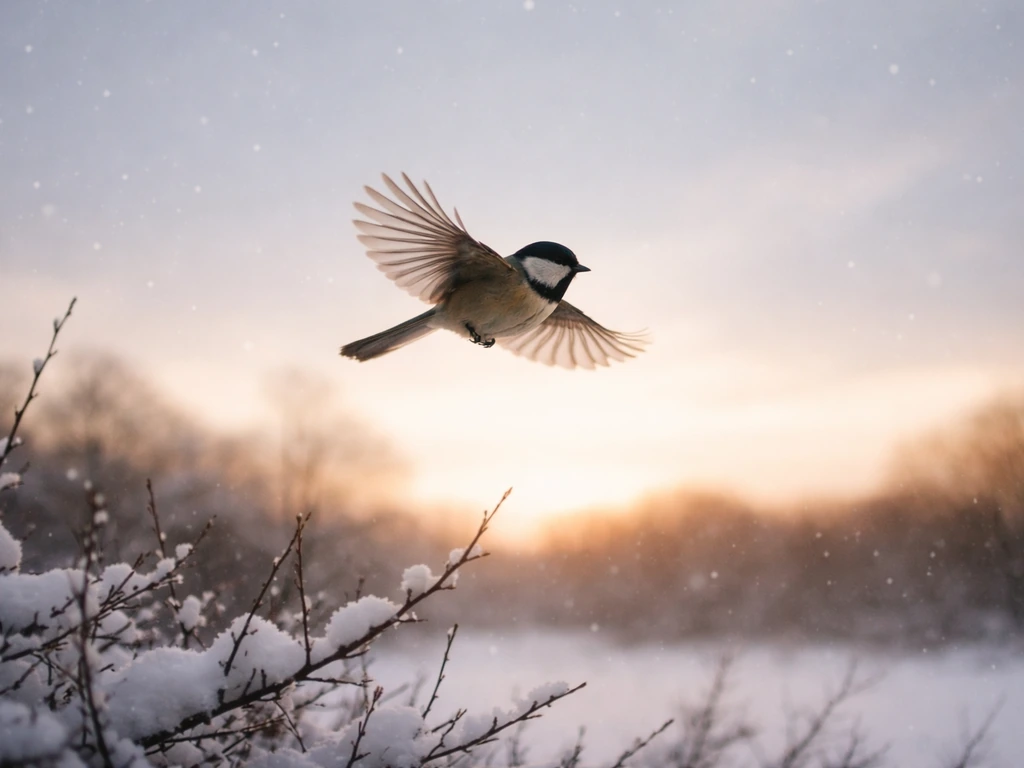
What "flying south for the winter" actually means biologically
The phrase is shorthand for a phenomenon called seasonal migration, and it is far more precise than the casual version suggests. Most small birds that migrate south are neotropical migrants: they breed in northern temperate regions (Canada, the northern United States) during spring and summer, then relocate to the tropics for the northern winter. They are not escaping cold for comfort. They are tracking food. Insects collapse in number as northern temperatures drop, and a bird that weighs 10 grams cannot survive on nothing. South means food. North means breeding territory, longer days, and a burst of insect abundance. The annual round trip is a solution to a resource availability problem, not a preference for warm weather.
It is also worth gently noting that "a little bird was flying south for the winter" appears in songs, poems, and children's stories as a kind of shorthand for autumn and seasonal change. That cultural resonance is real and worth honoring. But if you are here because you want to understand the actual biology behind that image, or because you spotted a small bird moving through your yard in October and want to know what it was doing and why, then the science is where the real payoff is. That is exactly what this article covers.
Which small birds actually make this journey
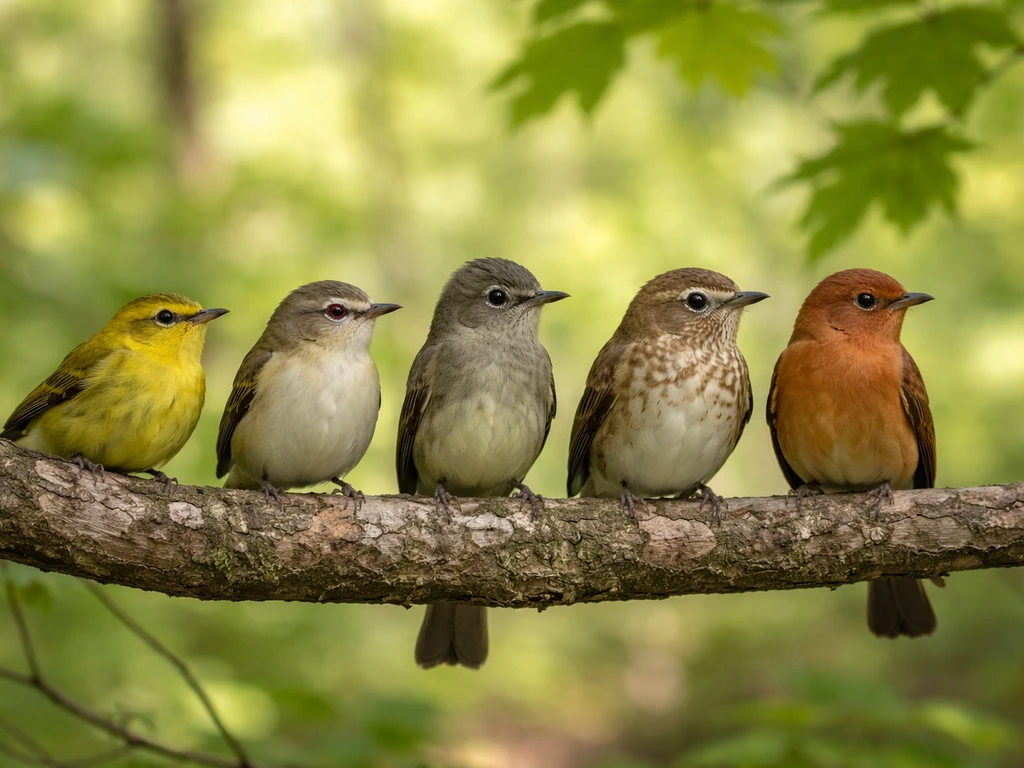
The most likely candidates for the "little bird flying south" scenario are wood warblers, vireos, flycatchers, thrushes, and tanagers. These are the core neotropical migrants of North America, and they are all small. Wood warblers in particular are the quintessential image: brightly colored, insectivorous, and often weighing between 8 and 14 grams. Species like the Blackpoll Warbler, the American Redstart, the Yellow Warbler, and the Black-and-white Warbler all breed across Canada and the northern United States and then head to Central and South America for the winter.
The Blackpoll Warbler is one of the most dramatic examples. It breeds in the boreal forests of Canada and Alaska, then migrates to northern South America, with some individuals making a non-stop over-water flight across the Atlantic from the northeastern United States to the Caribbean and beyond. American Redstarts show interesting variation: roughly a third of the global population winters in the Yucatan region, while others spread across the Caribbean and into South America. Even within a single species, "flying south" does not mean one destination. Some Black-and-white Warblers winter as far north as Florida or Baja California; others continue all the way to northern South America.
Beyond warblers, small migratory birds include Ruby-throated Hummingbirds (which cross the Gulf of Mexico), various sparrows, kinglets, and flycatchers. Most of them share the same ecological logic: they exploit northern breeding seasons and then follow insect abundance southward as temperatures drop.
Why birds migrate: the triggers, the fuel, and the timing
The decision to migrate is not made the morning a bird leaves. It is the result of weeks of physiological preparation driven primarily by changes in daylength, a cue called photoperiod. As days shorten in late summer and early autumn, light-sensitive cells in a bird's brain detect the shift and activate hormonal cascades that trigger a suite of physical changes. Gonads shrink, molts complete, and most importantly, the bird begins hyperphagia: aggressive, compulsive eating designed to load the body with fat.
Fat is the fuel. A non-migratory passerine typically carries a fat load of around 3 to 5 percent of its lean body weight. A short- to medium-distance migrant can push that to 10 to 25 percent. Long-distance migrants like the Blackpoll Warbler can reach fat loads of 40 to 100 percent of lean body weight before departure. That is an extraordinary physiological feat for a bird that normally weighs about 12 grams. The fat is deposited under the skin and around organs, and it is metabolized during flight at a rate that can sustain continuous flying for many hours or even days.
Temperature and food availability fine-tune the timing on top of the photoperiodic signal. A warm autumn with abundant insects may delay departure. A cold snap accelerates it. Inside the bird, a state called Zugunruhe (roughly "migratory restlessness") builds up as migration season approaches. Captive birds that cannot migrate still show this restlessness, hopping and orienting themselves in the direction they would fly if free. It is not random anxiety. It is a biologically programmed directional drive, regulated in part by a circadian oscillator separate from the one controlling daily activity. The bird knows it needs to go, and it knows which way.
The actual mechanics of flight during migration
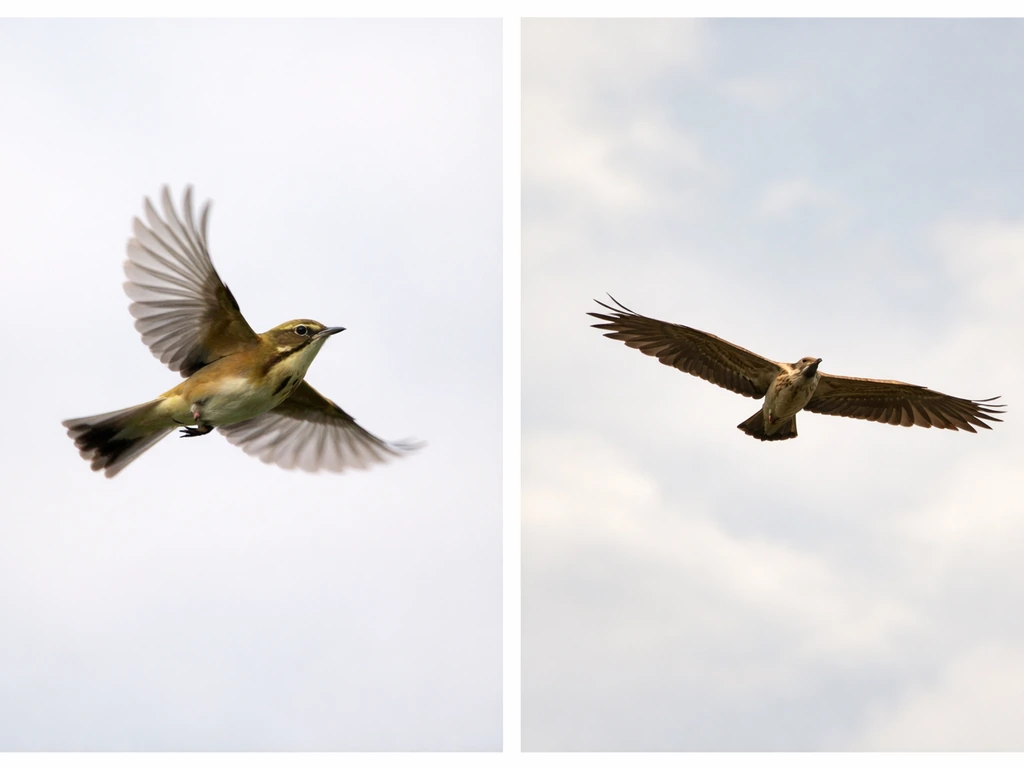
Small migratory birds are primarily continuous flappers. Unlike large soaring birds (hawks, storks, pelicans) that exploit thermals and updrafts to cover distance cheaply, most warblers and sparrows rely on powered flight: rapid, continuous wingbeats that generate both lift and thrust. This is energetically expensive, which is exactly why the fat loading is so extreme.
Wing shape matters enormously for the migration strategy a bird can use. Birds with longer, more pointed wings (higher aspect ratio) are better suited to sustained, efficient flapping flight over long distances. Birds with shorter, rounder wings are more maneuverable but burn more energy per mile. Research across 213 European bird species shows that wing morphology directly predicts how much fuel a bird accumulates before migration: birds that rely on continuous flapping load more fat than birds that can incorporate soaring or gliding into their flight. The body and its fuel tank are shaped by the wing architecture.
Some small birds do take advantage of terrain and atmospheric conditions. When a tailwind is available, migrants fly higher (often several thousand feet up), riding the favorable air to cover more distance per unit of energy. Into a headwind, they drop lower to avoid the worst of it. This altitude adjustment is a real-time energy management decision, not a fixed behavior. At night, migrants often fly at higher altitudes than during the day. Formation flight, when it occurs, can further reduce energy expenditure by letting trailing birds take advantage of the wake vortex of the bird ahead.
After a long migratory flight, a bird's body shows measurable changes. Fat stores are depleted, and metabolic rate drops temporarily as the bird rests and refuels at a stopover site. The recovery is rapid in favorable habitat with good food availability, but in degraded stopover habitat it can take much longer, with real consequences for whether the bird makes it to its wintering grounds in time to establish a territory.
How they know where to go: sun, stars, magnetic fields, and polarized light
Navigation in migratory birds is genuinely multi-layered, and researchers are still working out how the different systems interact. The short version is that birds use at least four compass systems, often in combination.
- Sun compass: during the day, birds use the position of the sun and their internal clock to determine direction. This is probably the dominant cue in clear daytime conditions.
- Star compass: at night, birds calibrate their directional sense using the rotation of the night sky around the celestial pole. Young birds learn the star pattern during their first summer.
- Magnetic sense: birds can detect the inclination and intensity of the Earth's magnetic field. This gives them a compass that works regardless of visibility and is thought to provide a map component as well as directional information.
- Polarized light: patterns of polarized light in the sky, especially at dusk and dawn, provide additional orientation information. Experimental work has shown that altering polarized light patterns at dusk shifts the orientation of migratory birds in predictable ways.
Young birds making their first migration often fly on an innate compass bearing for a genetically programmed duration. They do not know the destination in any conscious sense; they fly south-southwest for roughly X hours and stop. Adults that have made the trip before can use true navigation: comparing their current position to a remembered goal and correcting for drift. This is why experienced adults often arrive at wintering sites faster and in better condition than juveniles making the journey for the first time.
Stopovers are a critical part of the navigation and energy equation. Most small migrants do not fly non-stop from Canada to South America. They make a series of hops, resting and refueling for days at a time in habitat patches along the route. The Atlantic Flyway is one of the main corridors in North America: it runs from Greenland and Atlantic Canada south along the U.S. coast toward the Caribbean and South America. The Central and Mississippi Flyways funnel birds through the interior of the continent. The U.S. Fish & Wildlife Service describes four administrative migratory bird flyways in North America, including the Atlantic, Mississippi, Central, and Pacific flyways, which help guide management of migratory birds and habitat blank" rel="noopener noreferrer">the Atlantic Flyway. Knowing which flyway a bird uses gives you a strong prediction of where its stopovers will be. If you are curious about how small birds interact with others they encounter along the way, that social dimension of migration adds another layer to this already remarkable story. Some birds also meet other birds along the way at stopover sites, which can change what you notice while watching migration.
How to actually observe migration right now

Migration is happening in real time across much of North America through spring (roughly March through May) and fall (August through October). As of late April 2026, you are right in the middle of the spring push. Small songbirds that spent the winter in Central and South America are actively moving north through the United States right now, and many of the same species will reverse course starting in August. Here is how to catch it.
When and where to look
Dawn is the most productive time for watching small migrants. Many songbirds migrate at night (Zugunruhe in action) and then land at dawn to rest, feed, and stay hidden from predators. A wooded park, a forest edge near water, or a coastal shrub patch right after sunrise can hold extraordinary numbers of birds. The day after a cold front passes in fall, or after rain clears in spring, is often the best day of the year at a good stopover site. Rain and low overcast during migration can cause "fallouts": birds come down in large numbers and concentrate in whatever habitat is available, making observation easy.
Use eBird's Hotspot Explorer to find the top-ranked birding locations near you. These spots are ranked by the number of species observed and are spatially tied to specific habitats. Pulling up an eBird bar chart for a Hotspot will show you which migrants are typically present in which weeks, giving you a reliable forecast of what to expect before you even leave the house. Earlier migrants like Black-and-white Warblers and Louisiana Waterthrushes move through in early to mid spring; later migrants like Bay-breasted and Blackpoll Warblers peak closer to mid-May.
What to notice and record
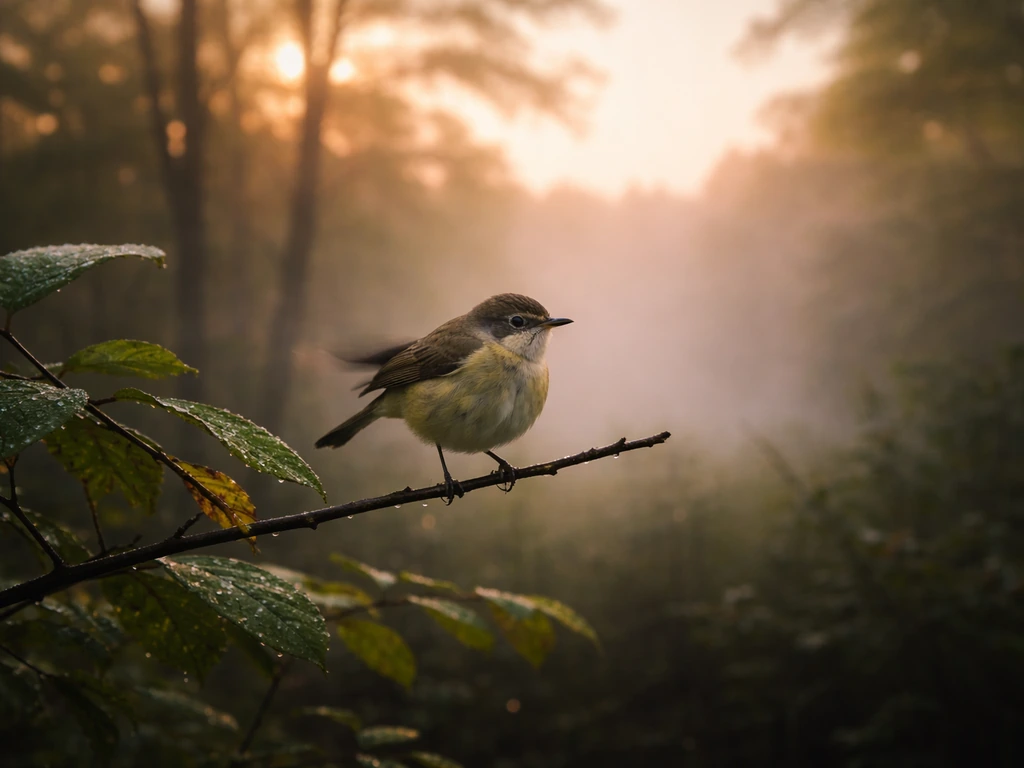
When you spot a small bird in migration, pay attention to more than just the species. Note the flight style: is it bounding (alternating flaps and glides with wings closed, common in finches and woodpeckers) or direct and level (more typical of thrushes and warblers)? Bats can also look like birds in flight, but you can tell the difference by watching how they fly and whether the “wings” are made of skin rather than feathers how to tell a bat from a bird when flying. Note the wing shape: short and rounded, or longer and more tapered? These observations connect directly to the flight mechanics described above. A Blackpoll Warbler's longer, more pointed wing is visible in the field and is part of why that species can sustain the long over-water flights it is famous for.
Listen as well as watch. Most songbirds call during migratory flight, especially at night. Short, simple chip notes or thin "seep" calls are the sound of migration in progress. Standing outside on a clear October night and listening to the sky above a city will reveal dozens of species passing overhead, invisible but audible. Flight calls can be used to identify species and index how many birds are moving on a given night.
Log everything in eBird. Your sightings contribute to a continent-wide dataset that researchers use to track migration timing, route shifts driven by climate change, and population trends. Citizen science observations have become one of the most powerful tools available for understanding bird migration at scale.
From your observation to species-level understanding
Once you have seen a migrant, the next step is connecting what you observed to the biology behind it. The Cornell Lab's All About Birds website gives you range maps showing exactly where a species breeds, where it winters, and which routes it takes. Cross-referencing those maps with eBird bar charts for your location tells you whether what you saw is a common passing migrant, a rarity, or a bird that might stay through the season.
For deeper understanding of what you watched, think about the flight style and wing shape together. A bird with short, rounded wings doing a bounding flight pattern is built for maneuverability in dense vegetation; it pays a higher energy cost per mile and loads proportionally less fat before migration. A bird with longer wings doing a direct, level flight is optimized for sustained travel. These are not random variations. They are evolutionary tradeoffs between the demands of the breeding habitat, the migration distance, and the wintering habitat. The wing you see in the field is a record of millions of years of natural selection.
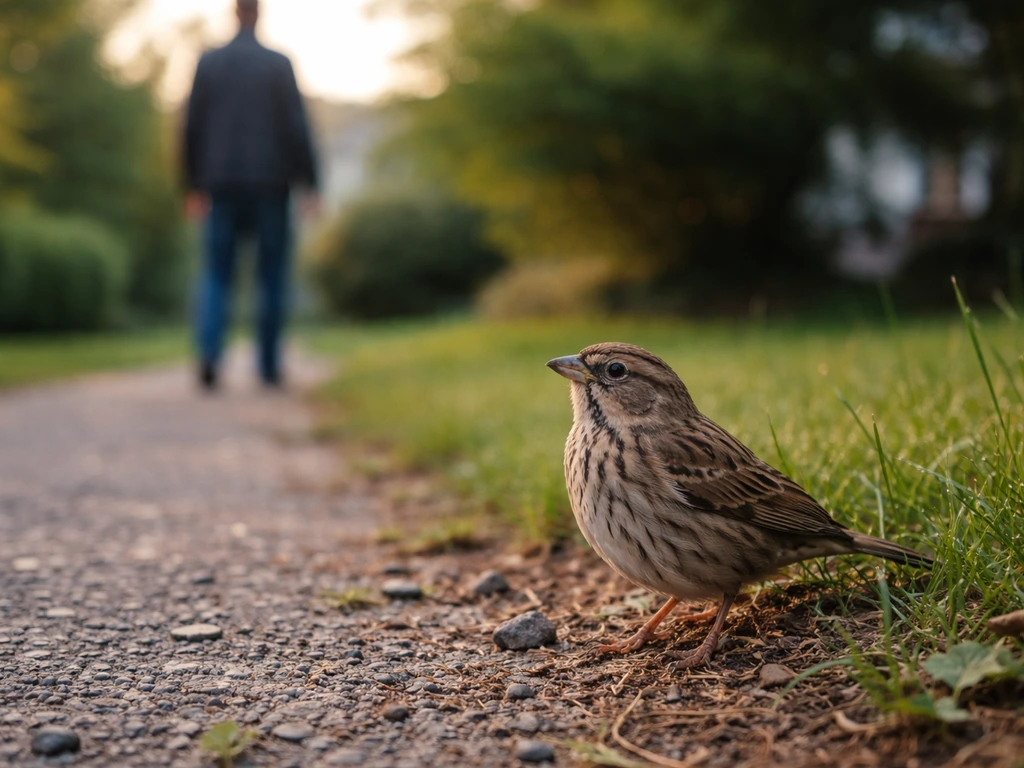
If the bird you saw was not flying away when you approached, that is a different and interesting situation worth understanding on its own terms. It often signals exhaustion from a long migratory flight, a condition called "fallout fatigue," and it is an important field cue that the bird needs undisturbed time to rest and refuel rather than repeated flushing by observers. If you want the common Reddit explanations for why a bird may freeze or stay put instead of flying away, see this related thread bird not flying away when you approached. The same is true if a bird seems unusually tame or approachable during migration: give it space. If you approach a migrant carefully, many birds will tolerate you without bolting, because repeated flushing wastes energy and disrupts their route decisions migrant birds tolerate careful approaches without immediately flying away.
The phrase "a little bird was flying south for the winter" compresses an astonishing amount of biology into nine words. If you are curious about the directional sense of that journey, remember that northbound spring migration is the related counterpoint to a bird is flying towards north and offers another way to see the same systems at work. or compare it with how a bird is flying directly toward a stationary. If you are curious about the directional sense of that journey, remember that eastbound flight is a related counterpoint to a bird is flying towards north and offers another way to see the same systems at work a bird is flying due east. The bird is running on fat it spent weeks accumulating. It is navigating by the sun, the stars, blank" rel="noopener noreferrer">polarized light, and the magnetic field simultaneously. It is making real-time decisions about altitude based on wind speed. It left because the days got shorter and its hormones told it to go. And it will come back, to roughly the same breeding territory, when the days lengthen again in spring. That is not a fairy tale. That is physics, chemistry, and evolutionary biology working together every autumn across billions of individual birds. Knowing what to look for, and where and when to look, puts you in direct contact with one of the most extraordinary recurring events on the planet.
| Species | Breeding Range | Typical Wintering Range | One-way Distance (approx.) | Flight Style |
|---|---|---|---|---|
| Blackpoll Warbler | Boreal Canada and Alaska | Northern South America | Up to 5,000+ miles | Direct, sustained flapping; long over-water flights |
| American Redstart | Canada and northern US | Caribbean, Yucatan, northern South America | 1,500 to 4,000 miles | Active flapping, agile; uses forest interior |
| Black-and-white Warbler | Eastern North America | Florida to northern South America | 500 to 3,500 miles | Creeping flight style; earlier spring migrant |
| Ruby-throated Hummingbird | Eastern North America | Central America | 1,200 to 2,000 miles | Rapid wingbeat; crosses Gulf of Mexico |
| Yellow Warbler | Across North America | Central America to northern South America | 1,000 to 4,000 miles | Direct flapping; one of the most widespread migrants |
Your practical next steps
- Open eBird's Explore tab, search for Hotspots near your location, and check the bar charts to see which small migrants are moving through right now in late April.
- Visit a forested park, forest edge, or coastal shrub patch at dawn, especially the morning after rain clears or a front passes.
- When you spot a small bird, note its wing shape (rounded vs. tapered), its flight style (bounding vs. direct), and any calls you hear.
- Log your sightings in eBird to contribute to migration tracking and get automatic species identification help.
- Look up your observed species on All About Birds to see its full range map, migration timing, and natural history notes.
- On a clear night, stand outside and listen for the thin chip notes and seep calls of migrants passing overhead in the dark.
- If a bird seems unusually tame or reluctant to fly, leave it alone. It is likely exhausted from a long flight and needs rest.
FAQ
How can I tell if a small bird I see in late September is actually migrating, or just wandering locally?
Look for behavior patterns, migrants often show sudden increases in movement around dawn, and many are visibly lean but still actively foraging. Residents usually move steadily around known territories. If the bird appears after a weather change (cold front in fall, rain clearing in spring) and you see several species concentrating in the same habitat patch, that strongly suggests true migration.
What time of day is best if the birding event is during daylight only?
Daytime can still work, but focus on early morning right after sunrise and late afternoon before sunset, since many birds land to feed and rest. Midday is often quieter unless there is a “fallout” from overcast or rain that pushes birds to drop into accessible cover.
Do all “flying south for the winter” birds go to the tropics?
No. Some species winter relatively closer to their breeding areas, for example in the southern United States or even on coasts rather than far into Central and South America. Even within one species, destinations can vary by individual and year depending on food availability, weather, and competition at stopover sites.
Why do some birds seem to fly south during the day, even though many migrate at night?
Night migration is common for small songbirds, but birds may shift to daytime when conditions are poor at night (heavy rain, strong winds) or when they need to refuel quickly. Also, you might be seeing species that naturally make more daytime movement, or individuals that are traveling shorter distances between stopovers.
How do wind and weather affect when the birds leave and how far they can go?
After a cold snap or a day with clearing skies, birds often depart and travel more efficiently. Tailwinds can make birds move faster and sometimes at higher altitudes, which can reduce the number you see on the ground. Strong headwinds tend to increase stopovers because flying conditions are less favorable, so you may observe more birds lingering at local feeding areas.
What should I do if I see a migrant bird exhausted and not flying away?
Give it distance and avoid repeated flushing, repeated disturbance can delay refueling and reduce its chance of completing the journey. Keep noise low, give the bird a quiet corridor to move into cover if it regains strength, and if it is in immediate danger (on a road or tangled in a window), contact a local wildlife rehabilitator for next steps.
Is it safe to put out bird feeders during migration season?
Feeders can help, but place them where birds can quickly access cover and reduce hazards like cats. Use clean feeders, because disease spreads more easily when many birds crowd into one spot. Also, avoid leaving spilled seed that attracts rodents and creates a messy feeding station.
Why do juveniles sometimes arrive later and in worse condition than adults?
First-time migrants often rely more on inherited directional cues and less on experience-based correction, so they can make inefficient decisions about stopover locations and timing. Adults that have completed the route before generally navigate and schedule refueling more precisely, which shows up as better body condition on arrival.
How can I estimate which “flyway” a migrant is using from where I live?
Use your region as the first clue. Coastal areas along the Atlantic typically align with the Atlantic Flyway, while interior regions connect more often to the Central or Mississippi Flyways. If you combine that with what species you see (and when), you can refine expectations for likely stopover spots and the direction birds will be moving on subsequent days.
What field clues help confirm the species or group of a flying bird I can only partially see?
Wing shape and flight style are key. Pointed, longer wings often indicate birds built for sustained flapping, while shorter rounder wings often match more maneuverable, stop-and-go movement in vegetation. Sound can also help, during migration look for simple chip notes or thin calls, and note whether the bird is calling continuously or in brief bursts.
Next Articles
Bird Not Flying Away When Approached: What to Do Now
Step-by-step fixes for a bird that stays put when approached: check injury vs young vs guarding, ensure safe shelter

Some Birds Were Flying and Met a Bird: What Likely Happened
Identify what caused birds to converge, assess injury safely, and learn flight biomechanics behind midair encounters.

Bird Has Flown Meaning: Definition and How to Respond
Understand the bird has flown meaning, when it’s used, and how to reply with examples for real-life conversations.