
If a bird isn't flying away when you approach, your first job is to figure out why, because the answer changes everything about what you should do next. Sometimes it's injured and genuinely can't fly. Sometimes it's a fledgling still learning the mechanics of flight. Sometimes it's a parent bird standing guard over a nest. And occasionally it's simply a bird that's spent enough time around humans to stop treating you as a threat. Each situation calls for a completely different response, so resist the urge to immediately pick it up or shoo it away.
Bird Not Flying Away When Approached: What to Do Now

Marcus Chen
8 Apr 2026
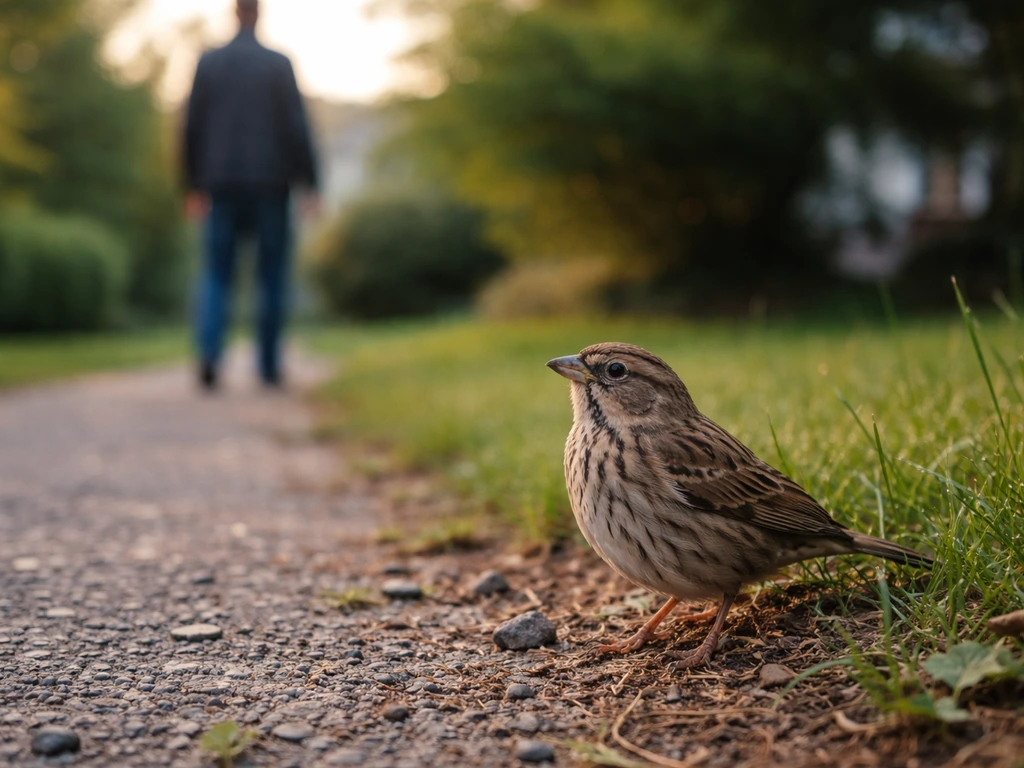
Quick safety check: why is this bird still sitting there?
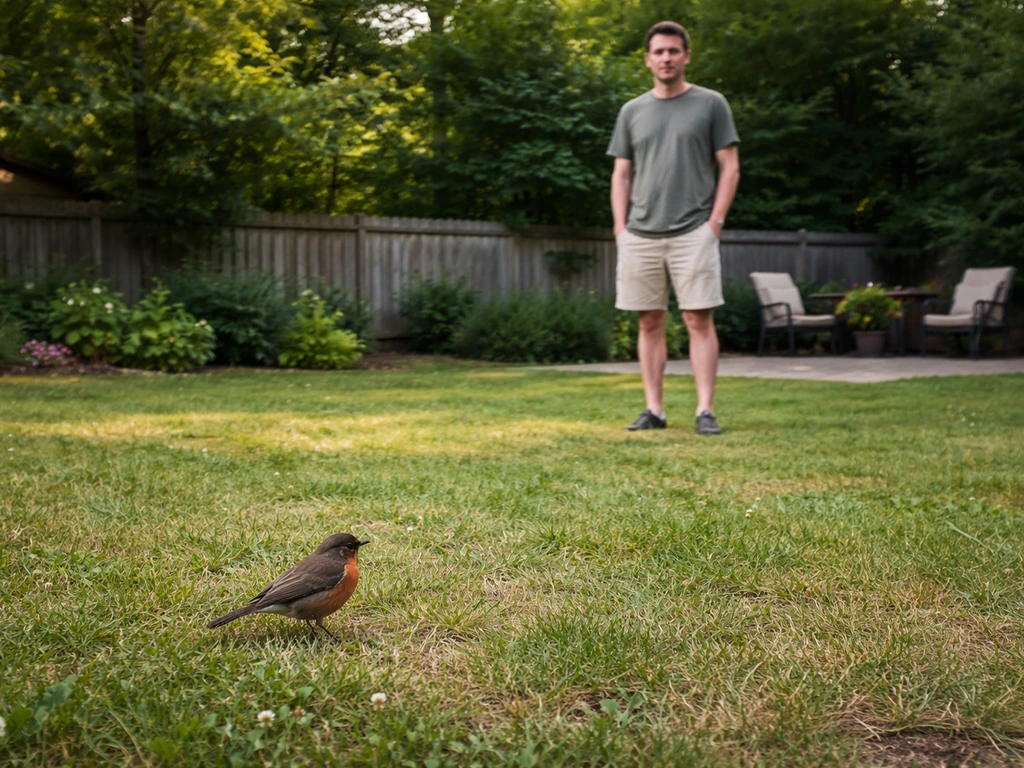
The first thing to do is step back, literally. Give yourself about 10 to 15 feet of distance and just watch for 60 seconds. A bird that stays put while you're nearby is already behaving outside the norm for most wild birds, whose entire survival strategy is built around rapid threat detection and the ability to lift off fast. When that behavior is absent, something is happening.
The most important safety question isn't about you, it's about the bird. Start by scanning for these red flags without getting any closer: visible blood or open wounds, a wing hanging lower than the other, a drooping tail that suggests the bird can't balance properly, any tilting of the head to one side, or legs that aren't supporting the bird's weight. According to Tucson Wildlife Center, any bird showing these signs, including one that simply hasn't flown after a full hour of opportunity, needs emergency medical attention. If you see any of these things, skip ahead to the wildlife rehab section below. If you don't see them, keep reading, because the situation may be far more benign.
Read what the bird is actually doing
Behavior is your best diagnostic tool here. There are three main scenarios that explain why a bird stays grounded near a human, and the bird itself will usually tell you which one it is if you watch closely enough.
Injury
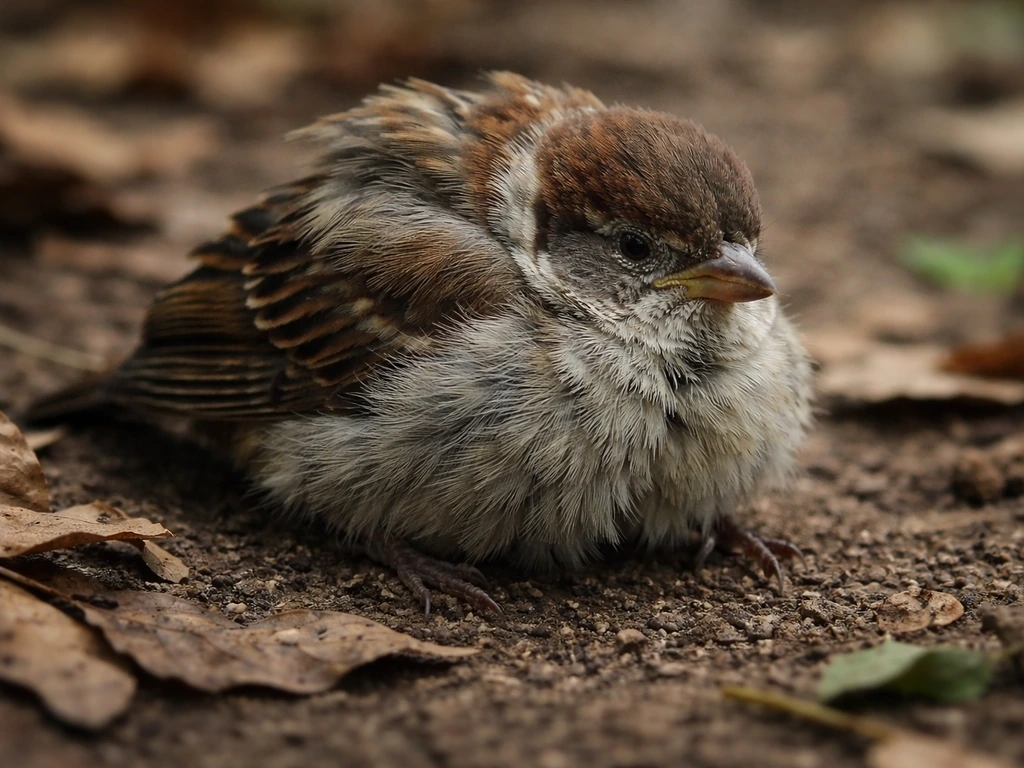
An injured bird tends to look uncomfortable. It may be hunched with feathers fluffed out, which is a physiological response to stress and pain. It may try to move away from you but can only hop or stumble, which tells you flight isn't a functional option right now.
Window strikes are a very common cause of this, and the American Bird Conservancy is clear that even a bird that appears to recover and briefly fly after a window strike can have internal injuries that prove fatal later. In an r/Ornithology discussion about window strikes, commenters also note that some birds may fly away and then die later from internal injuries, which is why preventing further strikes is so important internal injuries that can prove fatal later.
Don't be fooled by a bird that makes one short hop or flutters a few feet. That's not the same as a healthy, capable liftoff.
Nest guarding or parenting
Parent birds, especially during nesting season from roughly March through August, will sometimes hold their ground near a nest or a chick on the ground rather than fly off. Killdeer are famous for this: they perform an elaborate broken-wing display to lead you away from the nest, dragging one wing as if injured to redirect your attention. Other species simply stand their ground or move slowly, because flying away would expose the nest location. If you notice the bird doing repeated calls, short distraction flights, or acting agitated without looking physically impaired, look around for a nest or a chick nearby. If that's the case, the right move is simply to walk away.
Fledglings and nestlings
A bird on the ground that looks young, with a short tail, fuzzy patches of down mixed into its feathers, or a disproportionately large beak, is probably a fledgling. Fledglings leave the nest before they're fully capable of sustained flight, and that's completely normal. They spend several days on the ground or in low shrubs while their flight feathers finish growing and their flight muscles strengthen.
Wildlife guidance from the Oklahoma Department of Wildlife Conservation makes the point directly: young birds generally don't need your help unless there's a clear sign of injury like a broken wing. The parents are almost always nearby, still feeding and watching over the chick. The best thing you can do is leave it alone.
American Bird Conservancy guidance notes that fledgling-stage baby birds are generally best left alone unless they are injured or in direct danger, such as from a road or an outdoor cat I Found an Injured Bird.
Habituation to humans
Some birds, particularly pigeons, house sparrows, Canada geese, and certain park ducks, have been fed by humans so regularly that they've simply stopped treating people as threats. This is habituation, and while it might feel like a charming interaction, it often signals that the bird has lost some of the wariness that keeps wild birds alive. If the bird looks alert, healthy, and is watching you without any signs of physical distress, this is likely what you're seeing. No intervention needed, but also no feeding.
How to approach without making things worse
If you've decided the bird may need help and you need to get a closer look, your approach matters more than most people realize. Birds process visual information very differently from mammals, and understanding a bit of that biology helps you move in a way that's less threatening.
- Keep your distance at first: 10 to 15 feet is a good starting point. Move closer in slow increments, pausing for 10 to 15 seconds each time to let the bird adjust to your presence.
- Lower your profile: crouching or kneeling reduces your apparent size dramatically. Standing upright over a small bird signals predator, not helper.
- Avoid direct eye contact: many birds interpret direct frontal staring as a threat. Approach at a slight angle rather than head-on, which feels less confrontational to the bird.
- Minimize noise: speak quietly if at all, keep any nearby children or pets well back, and turn off any music or loud devices.
- Be mindful of light: if you're between the bird and the sun, your shadow falling across it can trigger a panic response. Try to keep the sun behind the bird when possible.
- Move smoothly: sudden movements, reaching out fast, or jerky gestures trigger the bird's startle reflex. Slow, deliberate movement is far less alarming.
Assessing whether the bird can actually fly
Flight is a biomechanically demanding activity. For a bird to lift off, it needs intact primary and secondary flight feathers generating the right surface area and wing loading for its body mass, functional pectoral muscles (which make up roughly 15 to 25 percent of a bird's total body weight in strong fliers), proper skeletal structure across the furcula (wishbone), coracoid, and wing bones, and enough balance and coordination to control the wing stroke cycle. Any disruption to that system, from a fractured ulna to missing primary feathers to neurological damage from a head strike, will ground the bird just as surely as clipping its wings.
When you assess a grounded bird, look for these specific physical clues from a safe distance before touching anything:
| What you observe | Likely cause | What it means for you |
|---|---|---|
| One wing drooping lower than the other | Fracture or dislocation of wing bones | Needs wildlife rehab, do not try to splint at home |
| Missing or bent primary flight feathers | Feather damage, molt, or predator attack | May be temporary; call rehab for guidance |
| Bird hopping but not attempting flight | Leg injury, neurological issue, or severe exhaustion | Needs assessment; keep it contained and calm |
| Bird attempting to fly but falling back down | Muscle weakness, pectoral injury, or feather loss | Needs rehab; flight mechanics are compromised |
| Bird sitting still, eyes partially closed | Illness, poisoning, or severe shock | Urgent, treat as emergency |
| Young bird with short tail and patchy down | Normal fledgling; flight feathers still developing | Leave alone unless clearly injured |
It's worth knowing that wing loading, the ratio of body weight to wing area, varies a lot across species. A bird like a swift has extremely high wing loading and needs speed and open air to generate lift, which means even a small reduction in wing area can make it completely unable to take off from the ground. A crow or a pigeon, with more moderate wing loading, might still manage short hops or flutter-flights even with some damage. So a bird that seems "almost" able to fly might still be in serious trouble depending on the species.
If you're ever watching birds in the field and find yourself tracking flight angles or trajectories, you might enjoy thinking through what happens when a bird is flying directly toward a stationary bird-watcher, since the approach geometry actually tells you a lot about the bird's aerodynamic control and intent.
How to actually help without causing more harm
Here's the uncomfortable truth: well-meaning people cause real harm to injured birds every year by trying to help in ways that stress the bird further or delay proper treatment. The single most useful thing you can do for an injured adult bird is to contain it safely, keep it quiet and dark, and get it to a licensed wildlife rehabilitator as fast as possible. Liberty Wildlife puts it plainly: if an adult bird on the ground isn't flying away when you approach, you can reasonably assume it needs help.
Safe containment
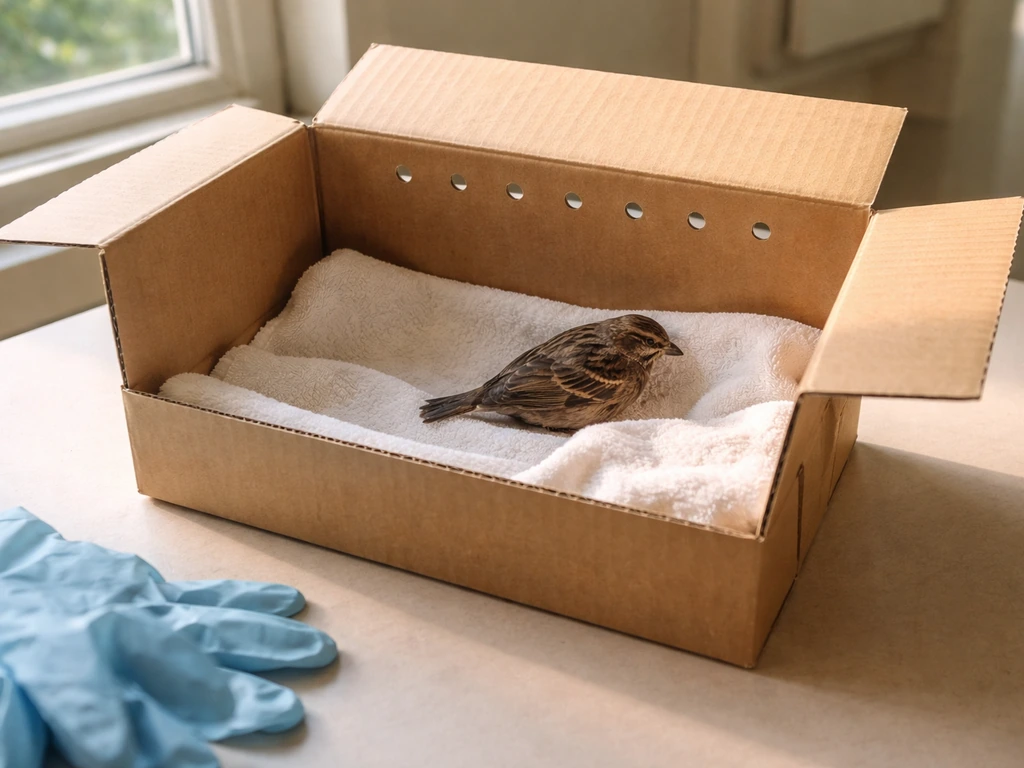
Use a cardboard box with air holes punched in the top. Line it with a soft cloth or paper towels, not slippery newspaper. If you need to pick the bird up, wear gloves if you have them, then gently drape a light towel or cloth over the bird and scoop it up with both hands, supporting the body and keeping the wings lightly against its sides. Do not hold the bird upside down. Do not squeeze. Place it in the box and put the lid on. A dark, enclosed space actually calms most birds because it reduces visual stimulation and mimics being tucked away safely.
Shelter and temperature
Keep the box somewhere quiet, away from pets, children, and loud noise. Room temperature is fine for most species. Do not put the box in direct sunlight or in a car with the heat running, and don't try to warm a sick bird with a heat lamp unless a rehabilitator specifically tells you to. Do not attempt to give the bird food or water. Birds have very specific dietary needs and giving the wrong food can worsen their condition, and a bird in shock can aspirate water easily.
Relocation: when it's okay and when it isn't
The only appropriate relocation you should do on your own is moving a bird a few feet out of immediate danger, for example off a road or away from a cat. Don't carry it to a different yard, a park, or a wooded area on the assumption that it will be safer there. You may be removing it from the area where its mate, nest, or food source is located. For fledglings specifically, if the bird is in immediate danger, you can gently move it to a nearby shrub or low branch within the same general area. The parents will still find it.
When to call wildlife rehab, and when it's urgent
Wildlife Illinois makes this clear: don't try to handle or treat sick, injured, or orphaned wildlife yourself. Call a licensed wildlife rehabilitator. In the US, you can find your nearest licensed rehabilitator through the National Wildlife Rehabilitators Association (NWRA) or the Wildlife Rehabilitators Association directory, or by calling your state's fish and wildlife agency. Many areas also have emergency wildlife hotlines.
Call immediately if you observe any of the following:
- Visible blood, open wounds, or exposed bone
- A wing that hangs at an unnatural angle or drags on the ground
- The bird is lying on its side and cannot right itself
- Head tilting or circling, which can indicate neurological damage
- The bird is cold to the touch and unresponsive
- Seizure-like trembling or muscle spasms
- Any bird that has been caught by a cat, even if it looks uninjured (cat bacteria are highly toxic to birds and require antibiotic treatment within hours)
- A bird that has not moved or flown after more than one hour despite no obvious external cause
Some online communities, including the discussions you'll find if you search bird not flying away when approached on Reddit, have useful real-world accounts from people who've dealt with exactly this situation. Reading those threads can help you recognize patterns, but they're not a substitute for professional assessment when an injury is involved.
For window-strike birds specifically: if the bird is stunned but shows no obvious injury, place it in a ventilated box in a quiet spot for up to two hours. If it has not fully recovered and flown away on its own within that window, treat it as injured and call rehab. If it does fly away, watch it for a few minutes to confirm the flight looks controlled and strong, not erratic.
Preventing repeat situations and protecting the bird afterward
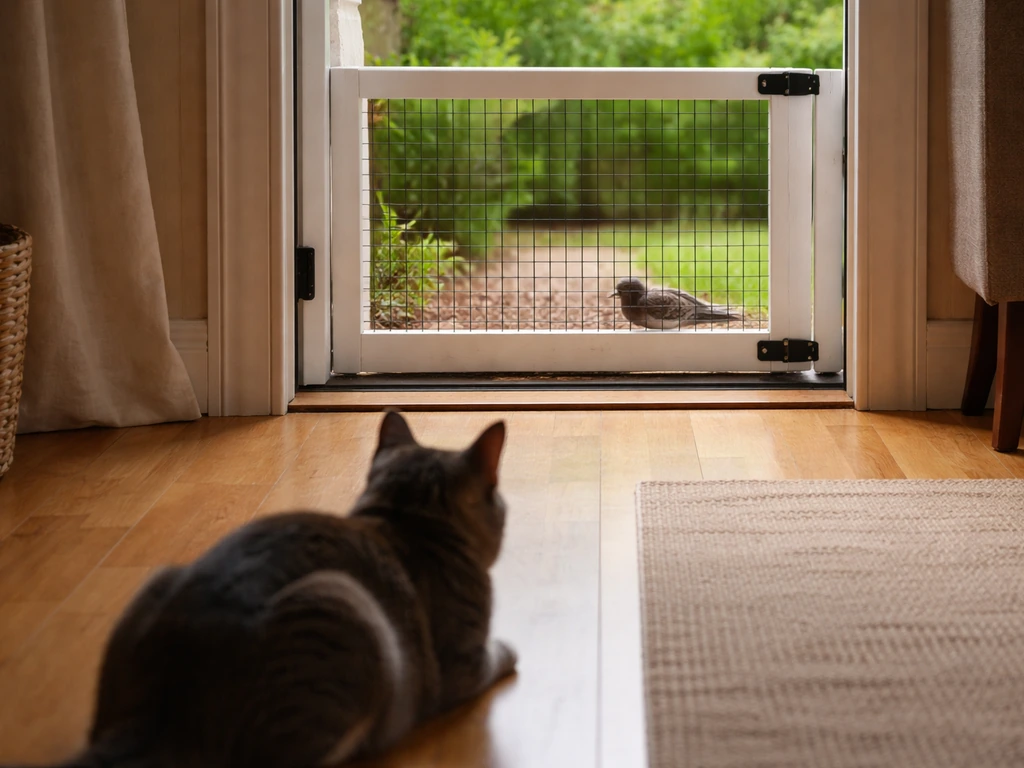
Once you've handled the immediate situation, there are straightforward steps to reduce the chance it happens again in the same spot, and to protect any bird that's recovering or waiting for help.
Keep pets and people away
If the bird is in your yard, keep cats and dogs indoors until the situation is resolved. Even a dog sniffing around a grounded bird causes significant physiological stress, and a cat can cause fatal injury with a single swipe. If children are nearby, take a moment to explain what's happening: kids who understand why they need to stay back are generally very cooperative, and it's a genuinely good learning experience about wildlife.
Address window strike hazards
If you've had multiple birds hit the same window, that window is likely creating a reflection that birds can't distinguish from open sky or vegetation. Applying window collision deterrent tape, decals (spaced no more than 2 inches apart vertically and 4 inches apart horizontally), or external screens can dramatically reduce strikes. The American Bird Conservancy estimates up to 1 billion birds die from window strikes in the US annually, so this is worth taking seriously.
Don't habituate birds to humans
If the bird you encountered was simply unafraid of humans due to habituation, the kindest long-term response is to stop any supplemental feeding that's been drawing it close to your home or public area. It's also worth remembering that birds evolved their flight behavior over millions of years as a predator-avoidance strategy. A little bird flying south for the winter is operating on ancient instincts tied to survival, and a bird that loses its wariness around humans is losing a critical survival tool.
Think about what drew the bird to this spot in the first place
Grounded birds that aren't injured or nesting often ended up on the ground because something disrupted their normal flight behavior. Weather events, especially sudden cold snaps, high winds, or fog, can force birds down unexpectedly. Ground predators can pin a bird in a corner. Exhaustion during migration is real too.
If the situation seems weather or season-related, it helps to understand general patterns of how birds navigate, including how directional flight is oriented. For instance, birds moving in a straight line in a specific compass direction are almost always on migratory routes, and understanding that a bird flying towards north in spring is following deeply ingrained magnetic and star-based navigation cues, not wandering randomly, changes how you interpret what you're seeing.
After the bird is gone
If you handed the bird off to a rehabilitator, many facilities will give you updates on the bird's progress if you ask. If the bird recovered on its own, consider documenting what you observed, species, behavior, estimated age, and any environmental factors. Apps like eBird or iNaturalist let you log observations and contribute to datasets that help researchers understand exactly these kinds of grounding events at a population level.
Migration encounters in particular can be surprising. Sometimes some birds were flying and met a bird grounded unexpectedly, and the interaction between a healthy flying group and a grounded individual can actually tell researchers a lot about social dynamics and how birds communicate distress within a flock. Your observation might be more scientifically valuable than you'd expect.
Putting it all together: quick-reference scenarios
To make this easy to act on, here's how the decision tree plays out across the most common situations you're likely to encounter:
| Scenario | What you're probably seeing | What to do |
|---|---|---|
| Adult bird on ground, no obvious injury, flies away when you get within 3 feet | Healthy bird, foraging or resting | Nothing. Leave it alone. |
| Adult bird on ground, approaches you or doesn't move as you get close | Habituation, or possible injury | Watch for 1 hour. If still grounded, call rehab. |
| Bird hit a window, stunned but upright | Concussion from window strike | Box it, quiet and dark, wait 2 hours. If not recovered, call rehab. |
| Bird with drooping wing, blood, or unable to stand | Injury requiring medical care | Contain safely, call rehab immediately. |
| Small fluffy bird with short tail on ground, no injury signs | Normal fledgling | Leave it. Keep pets away. Parents are nearby. |
| Bird doing broken-wing display or standing guard near nest | Parent bird protecting nest or chick | Back away, give wide berth, do not disturb. |
| Bird caught by a cat, even if it looks fine | Puncture wounds and bacterial exposure | Call rehab immediately, time-sensitive. |
The underlying thread through all of this is respecting that flight, or the absence of it, is a precise biological signal. When a bird that evolved to escape threats by air is sitting still while you walk toward it, it's telling you something important. Your job is to read that signal accurately, respond calmly, and get professional help when the situation calls for it. Most of the time, the best help you can offer is getting out of the way. When it isn't, knowing what to look for and who to call makes all the difference.
It's also worth appreciating just how much we understand about avian flight mechanics and navigation when we see something as simple as a bird holding its position. The same principles that explain why a bird flying due east can maintain a perfectly straight heading at speed, even in crosswinds, are the same principles that tell you something has gone wrong when that precise aerodynamic machinery is sitting motionless on the ground in front of you.
And if you've ever found yourself curious about how to identify what you're looking at in the first place, especially in low-light conditions or at a distance, knowing how to tell a bat from a bird when flying is a genuinely useful skill for anyone who spends time outdoors watching the sky, particularly at dusk when both are active and grounded animals may be harder to spot.
Finally, for anyone thinking about the geometry of flight encounters, whether you're the one approaching or the bird is coming toward you, understanding what changes when a bird is flying directly toward a stationary observer versus moving away gives you a much richer sense of how birds use space and read their environment. A bird's decision to stay put rather than fly toward or away from you is never random. It always means something.
FAQ
What if the bird lets me get close but doesn’t look injured, should I still call a wildlife rehabilitator?
Yes, if it remains grounded for more than about an hour while you can safely observe from a distance (especially if it cannot hop away or flutter into normal flight). Adults that do not fly off when approached often have internal injuries or neurological effects that are not obvious from the outside, and waiting longer than necessary can reduce survival chances.
Can I scare the bird into flying away by making loud noises or waving my arms?
Avoid aggressive shooing. Sudden noise and fast movement increase panic, can cause a stronger flight attempt that worsens injuries, and may delay treatment. Instead, back away slowly to reduce threat and let the bird decide, then contact rehab if it does not resolve.
How do I tell the difference between a fledgling that should be left alone and one that needs help?
Use the “clear injury” rule. Fledglings often have short tails and fuzzy down and still appear alert. If you see a limp, a crooked posture, a wing that hangs, blood, or the bird cannot support itself, that points to injury. Also, if the bird keeps trying to move away but keeps falling over or dragging itself, treat it as needing help.
If I find a bird on the roadside, is it okay to move it to the shoulder to make it safer?
Only move it a short distance out of immediate danger, and do so minimally (a few feet). Do not carry it to another area, because you may separate it from its mate or nest, especially for species that rely on nearby partners. If possible, return to your “safe distance, quiet watch” approach first and call rehab if it is not able to escape.
What should I do if the bird is near my pets and I cannot keep them inside?
Block access immediately. Use doors, baby gates, or crate the pets in another room, and keep the grounded bird out of view if you can. Stress from sniffing and chasing can worsen shock and breathing issues, so even short exposure matters.
How long can I keep an adult bird in a box if I’m waiting for a rehabilitator to arrive?
Aim for the shortest time possible, but keep it contained and dark until help takes over. If you are transporting, avoid extended stops in direct sun or a heated car. If the bird’s condition worsens while waiting, prioritize contacting emergency wildlife services or an on-call rehab provider.
Is it ever okay to give water to a bird I’ve found grounded?
No. Do not offer food or water. Birds can aspirate fluid, and incorrect feeding can worsen shock or gastrointestinal problems. If dehydration or illness is suspected, that is part of what rehab and veterinary teams need to assess.
For a bird hit by a window, when should I stop “waiting it out” and treat it as injured?
Use recovery behavior, not just responsiveness. If it has not regained controlled flight and flown away on its own within about two hours in a quiet, ventilated container, treat it as injured and call rehab. If it flies but appears uncoordinated, erratic, or unable to perch normally afterward, still call.
What’s the safest way to pick up a bird, and how can I avoid making injuries worse?
Support the body and keep the wings gently held to the sides, do not squeeze, and do not hold it upside down. Use a soft towel for a controlled scoop, then place it into the ventilated box with a secure lid. If the bird is very active or you cannot contain it safely, stop and call for guidance instead of risking a drop.
If the bird seems habituated and calm around humans, should I try to train it to stay away?
Do not feed it to “teach” it. The practical fix is to stop supplemental feeding that brings it close and remove attractants like spilled food, unsecured trash, or accessible feeders near the area. If it keeps approaching people repeatedly, report the situation to local wildlife or animal control so it can be assessed for broader habituation issues.
What should I document so a rehabilitator can help faster?
Note the species (or best guess), exact location, time you first noticed it, whether it walked or hopped, breathing status, any visible asymmetry (wing or tail position), and what you observed from a safe distance before touching. Also record weather conditions (wind, fog, recent cold snap) because some grounding events are tied to those factors.