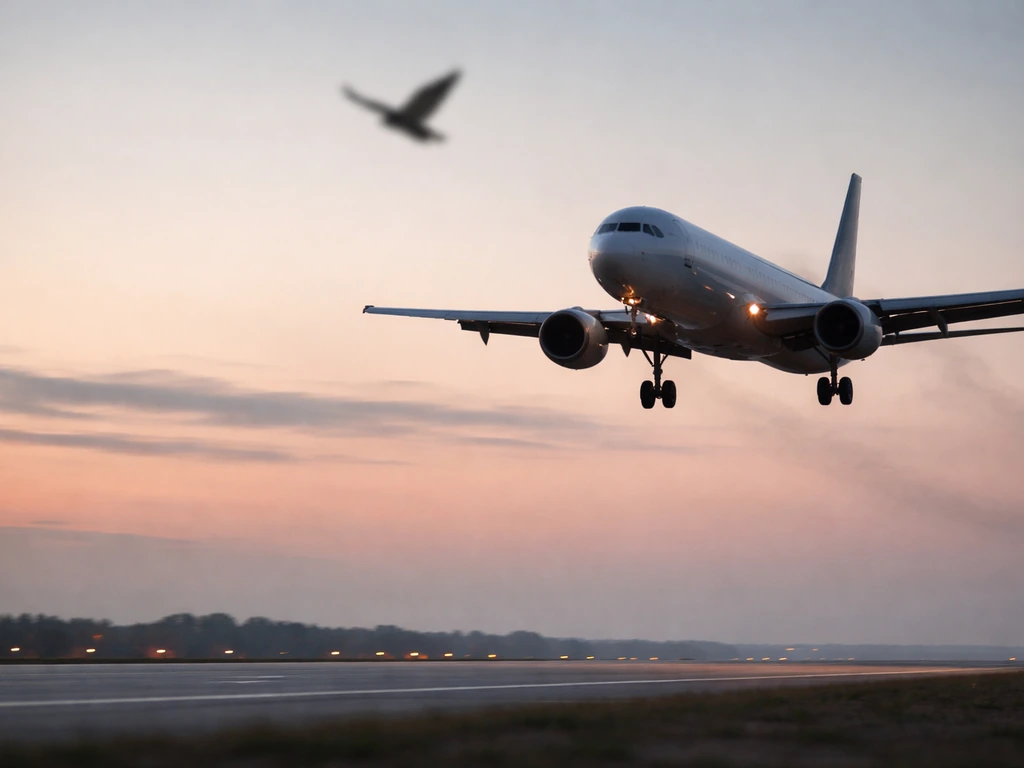
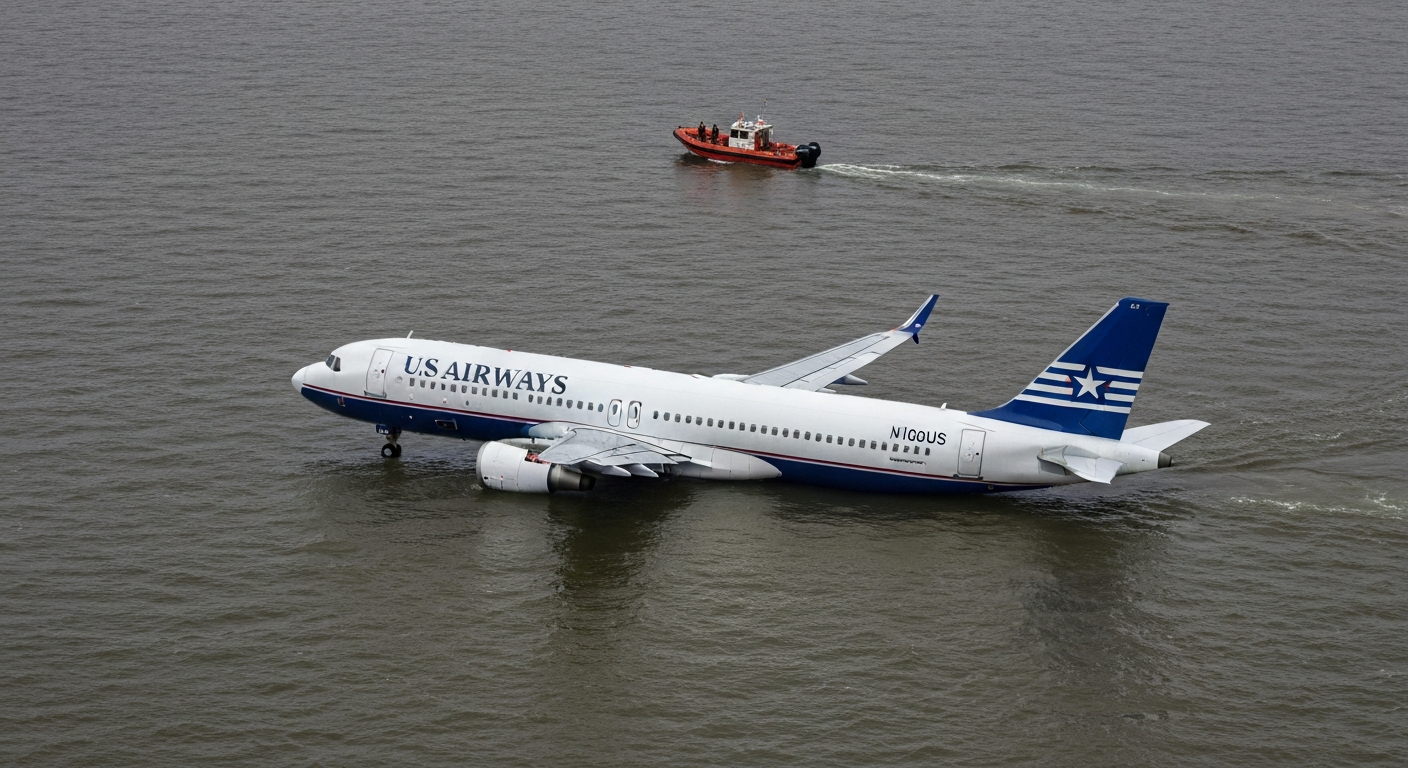
On January 15, 2009, a flock of Canada geese flew into both engines of US Airways Flight 1549 roughly 90 seconds after takeoff from LaGuardia Airport, knocking out all thrust. Captain Chesley 'Sully' Sullenberger and First Officer Jeffrey Skiles ditched the Airbus A320 into the Hudson River 208 seconds after the bird strike, and all 155 people on board survived. That event, quickly nicknamed the Miracle on the Hudson, is the single most consequential bird-aircraft collision in commercial aviation history, and it permanently changed how engineers, biologists, regulators, and pilots think about the hazard that birds represent to flight.
Bird vs Plane: Miracle on the Hudson, Science of Strikes

Marcus Chen
4 Aug 2026
Why the Miracle on the Hudson Still Matters
Aviation safety is built on a relentless accumulation of hard lessons, and Flight 1549 delivered one of the clearest. A species that weighs roughly 8 to 14 pounds (3.6 to 6.4 kg) and flies at under 50 mph was able to destroy both engines of a modern commercial jet. That should feel astonishing, and it is. The physics of it, as we will work through below, explain why. But the cultural resonance of the story goes deeper than physics. The phrase 'it's a bird, it's a plane' had existed in popular imagination since the 1940s as a playful shorthand for the impossibly heroic, a distinction between nature and machine. Flight 1549 collapsed that distinction dramatically: the bird and the plane were, for a terrifying three and a half minutes, the same story. The outcome was not miraculous in a supernatural sense but rather the product of extraordinary crew training, sound aerodynamics, and a large, cold, blessedly flat body of water. Understanding what actually happened, biomechanically and operationally, is the starting point for understanding how bird strikes work and why managing them is one of aviation's most active safety disciplines.
US Airways Flight 1549: What Happened, Minute by Minute
The NTSB's final accident report, NTSB/AAR-10/03, adopted May 4, 2010, is the definitive factual record. Here is a clear summary drawn from that report.
Flight 1549 was a routine scheduled service from LaGuardia Airport (LGA) in New York to Charlotte Douglas International Airport in North Carolina. The aircraft was an Airbus A320-214, registration N106US, powered by two CFM56-5B4/P turbofan engines. Captain Sullenberger, 57, had accumulated approximately 19,663 flight hours. First Officer Skiles, 49, was completing his first line flights on the A320 type after recent training.
- 15: 25:51 local time — Flight 1549 takes off from Runway 4 at LaGuardia Airport. Climb is normal. Gear is retracted.
- 15: 27:11 — At approximately 2,818 feet above ground level and climbing through roughly 230 knots indicated airspeed, the aircraft enters a flock of Canada geese (Branta canadensis). The flight data recorder (FDR) registers immediate abnormalities in both engines.
- 15: 27:13 — The cockpit voice recorder (CVR) captures the sound of thumping and multiple bird impacts. Both engine N1 (fan speed) values begin dropping within seconds.
- 15: 27:32 — Captain Sullenberger takes over control from First Officer Skiles. He announces 'My aircraft.' Engine thrust is essentially zero in both engines.
- 15: 27:46 — Sullenberger tells New York TRACON: 'Hit birds. We've lost thrust in both engines. We're turning back towards LaGuardia.'
- 15: 28:05 — Controller offers Runway 13 at LaGuardia for the return. Sullenberger evaluates glide range and determines LGA is not achievable without risk of impacting densely populated areas.
- 15: 28:50 — Sullenberger considers Teterboro Airport in New Jersey as an alternative but determines the glide path is also marginal.
- 15: 29:25 — Sullenberger announces to controller: 'We're gonna be in the Hudson.' Controllers clear airspace. Flight attendants begin emergency commands.
- 15: 30:43 — First Officer Skiles completes engine restart checklist; neither engine restarts.
- 15: 30:43 to 15:30:48 — The crew deploys the Auxiliary Power Unit (APU), restoring electrical power. Sullenberger extends the flaps to the approach configuration.
- 15: 30:48 — Impact with the Hudson River surface at approximately 125 knots (144 mph) and a 9.8-degree nose-up pitch. The aircraft remains largely intact. The fuselage stays above water.
- 15: 31 onward — All 150 passengers and 5 crew members are evacuated onto the wings, slide-rafts, and rescue boats from the New York Waterway ferry service. All 155 people survive. Several passengers sustain minor injuries.
The NTSB determined the probable cause as the ingestion of Canada geese into both engines, resulting in a loss of thrust, combined with the crew's decision to ditch in the Hudson River. The report also identified gaps between the engine's bird-ingestion certification standards and the actual multi-bird, large-mass ingestion event. CFM56-5B4 engines are certified under 14 CFR §33.76, which requires engines to survive ingestion of specific bird masses at prescribed velocities, but the simultaneous ingestion of multiple large Canada geese at the conditions encountered by Flight 1549 exceeded those certification test parameters. This distinction is central to the post-accident regulatory discussion that followed.
How Bird Strikes Happen: Flight Dynamics and the Collision Window
A bird strike is not a rare, freakish event. The FAA's National Wildlife Strike Database (NWSD), covering 1990 through 2024, has accumulated well over 280,000 reported wildlife strike events for US civil aviation, and birds account for the vast majority. The FAA's report 'Wildlife Strikes to Civil Aircraft in the United States, 1990–2024, FAA' (from the National Wildlife Strike Database) is the authoritative US source for strike statistics, species breakdowns, and temporal trends blank" rel="noopener noreferrer">Wildlife Strikes to Civil Aircraft in the United States, 1990–2024 — FAA. The actual number is higher still, since reporting is voluntary for most operators and strike events are widely under-reported, with studies estimating that only 20 to 40 percent of strikes are logged.
The exposure window, meaning the phase of flight when a strike is most likely, is strongly concentrated in the low-altitude environment. Roughly 74 percent of damaging strikes recorded in NWSD data occur during approach, landing roll, takeoff roll, or initial climb, all phases when the aircraft is below 500 feet. This matches where birds spend most of their time. The airspace below 2,000 feet above ground level is simultaneously the most densely occupied by avian traffic and the most dangerous for an aircraft to lose power in, because there is no time or altitude margin to restart engines or select an alternative landing site.
There are three broad collision geometries. Head-on collisions occur when birds are flying toward the aircraft on approximately opposite headings. Overtaking collisions occur when the aircraft catches birds flying in roughly the same direction. Lateral or crossing collisions happen when birds cross the flight path at an angle. Head-on encounters produce the highest relative impact velocities and therefore the most energy. A Canada goose weighing 10 pounds (4.5 kg) flying at 40 mph toward an aircraft climbing at 200 knots (230 mph) produces a combined closing speed of around 270 mph and an impact energy that is orders of magnitude greater than what an unsuspecting observer might expect from a bird.
Flocking behavior compounds the hazard dramatically. Many of the most dangerous strike species, Canada geese, snow geese, European starlings, gulls, are highly gregarious. A single bird triggers an individual collision event. A flock creates the possibility of multiple simultaneous ingestion events in both engines, which is precisely what happened on Flight 1549. The aerodynamic challenge of avoiding a flock is also different: a pilot can sometimes maneuver to avoid a large, visible single bird, but a flock of geese in close formation moving at 40 to 60 mph may subtend an angular area larger than the aircraft's ability to evade at normal closing speeds.
The Physics of Impact: How Birds Damage Aircraft
The energy delivered in a bird strike is calculated from the classic kinetic energy formula: KE = (1/2) × m × v², where m is the combined mass equivalent of the bird and aircraft closing speeds, and v is the relative velocity. Because velocity is squared, speed matters far more than mass. A 4-pound (1.8 kg) bird at 300 knots (345 mph) delivers roughly 28,000 ft-lbs of energy, comparable to a rifle bullet from a large-caliber weapon. A 10-pound Canada goose at 200 knots delivers around 38,000 ft-lbs. These are not theoretical: they are the engineering loads that aircraft structures must be designed to survive.
Finite-element simulation studies, including work using LS-DYNA explicit crash code, model the bird as a soft-body projectile that behaves hydrodynamically on initial contact, meaning it flows and deforms like a fluid before the full impulse transfers to the target structure. This is why bird strikes don't simply punch a clean hole: they spread energy across a wide contact zone, deforming fan blades through bending and tearing, cracking windshields through radial fracture patterns, and denting leading edges through plastic deformation. Research published on windshield bird-impact resistance shows that current certification standards under CS-25/FAR-25 require windshields to survive a 4-pound (1.8 kg) bird at cruise speed, but multi-impact events and heavier birds can exceed those assumptions.
NASA Glenn Research Center ingestion simulation studies, including NASA/TM-2013-217904, have compared rotating versus non-rotating fan tests to reproduce realistic ingestion damage. The rotating fan introduces centrifugal stiffening that meaningfully changes blade response compared to static bench tests, which is why certification methods have evolved to account for dynamic effects. These simulations inform both the design of fan blades and the revision of certification protocols after events like Flight 1549 revealed gaps between bench tests and real-world multi-bird ingestion.
Damage Pathways: Which Aircraft Components Break and How
Engine Ingestion
The jet engine is the most catastrophically affected component. A modern high-bypass turbofan like the CFM56 draws in enormous quantities of air through a wide intake fan, and any large object entering that intake travels through the fan stage at tremendous speed. Fan blades are engineered to tolerate limited bird mass, certified to the standards in 14 CFR §33.76 and FAA AC 33.76-1B, which prescribe specific bird masses (ranging from small, around 1.15 lbs, for single-bird flocking tests up to 8 lbs or more for large single birds depending on engine size) at defined velocity conditions. When the ingested bird mass exceeds those parameters, blades can fracture, shed fragments, and trigger cascading damage through the compressor and turbine stages. On Flight 1549, post-accident engine teardowns found extensive fan blade damage, core damage, and evidence consistent with multiple large-bird ingestion events. Both engines lost all meaningful thrust within seconds.
Windshield and Cockpit Penetration
Windshield strikes are particularly alarming because the flight crew sits directly behind them. Certification requires aircraft windshields to survive a 4-pound (1.8 kg) bird at the maximum operating speed without penetration, though the standard allows cracking provided structural integrity is maintained. In practice, larger birds at high speeds have cracked and partially penetrated windshields, incapacitating crew members in documented cases. The hydrodynamic spreading of impact energy across the glass produces radial and circumferential crack patterns. Research into simultaneous multiple-bird impact on windshields has highlighted that existing certification rules were written with single-impact scenarios in mind.
Radomes, Leading Edges, and Control Surfaces
The nose radome, which houses weather radar, is a fiberglass or composite structure not required to meet the same bird-strike standards as structural airframe components. Radome strikes are common, frequently destructive to radar functionality, and occasionally compromise structural integrity. Wing and tail leading edges, typically thin aluminum or composite structures, can be dented or punctured by large birds, potentially affecting lift and control authority depending on the location and severity. Control surface hinge lines and actuator fairings have been damaged by bird impacts in documented incidents, though catastrophic control loss from a single strike is rare given redundant hydraulic systems in modern commercial jets.
| Component | Typical Bird Mass Threat | Mechanism of Damage | Operational Consequence |
|---|---|---|---|
| Turbofan engine fan/core | Large birds (>4 lbs), flocks | Blade fracture, fragment cascade through compressor/turbine | Partial to total thrust loss; potential uncontained failure |
| Windshield | Medium to large birds (>1.5 lbs) at cruise speed | Hydrodynamic spread, radial fracture, potential penetration | Crew incapacitation risk; loss of forward visibility |
| Nose radome | Small to medium birds | Puncture or crush of composite structure | Loss of weather radar; minor aerodynamic drag change |
| Wing/tail leading edges | Medium to large birds | Denting, puncture of thin skin | Aerodynamic degradation; rarely structural failure |
| Propeller (turboprop/GA) | Any bird | Direct blade impact, imbalance | Vibration, reduced performance, possible engine shutdown |
| Control surfaces/actuator fairings | Medium to large birds | Dent, crack, actuator damage | Reduced or asymmetric control authority in severe cases |
Which Birds Are Most Dangerous: Species Profiles, Flock Dynamics, and Seasonal Risk
Not all birds present equal hazard. The FAA's NWSD data, combined with peer-reviewed hazard-scoring studies (including analyses of military aviation hazard quantification published in journals such as PLOS ONE), consistently identify a relatively small set of species responsible for the most damaging strikes. The key variables are body mass, tendency to flock, flight altitude, and overlap with airport environments. A strike from a 0.1-pound house sparrow is a nuisance; a strike from a 12-pound Canada goose at 200 knots is potentially catastrophic.
| Species | Typical Mass (lbs) | Flocking Behavior | Primary Hazard Phase | Seasonal Risk Peak |
|---|---|---|---|---|
| Canada goose (Branta canadensis) | 8–14 | Family and flock groups, V-formation at altitude | Climb and approach | Spring/fall migration; year-round resident populations near airports |
| Snow goose (Anser caerulescens) | 5–7 | Very large migrating flocks (thousands) | Climb and approach | Spring and fall migration corridors |
| Turkey vulture (Cathartes aura) | 3–5 | Loose thermal-soaring groups ('kettles') | Climb, en route up to 5,000 ft | Spring through fall; warm thermic days |
| Herring/Ring-billed gull (Larus spp.) | 1.5–3 | Large congregating flocks near landfills/water | All low-altitude phases | Year-round near coasts and inland water |
| White pelican (Pelecanus erythrorhynchos) | 10–17 | Formation flight in V or J groups | Climb and approach | Migration seasons |
| European starling (Sturnus vulgaris) | 0.2–0.25 | Enormous murmurations (tens of thousands) | Takeoff and climb | Fall and winter roost movements |
| Sandhill crane (Antigone canadensis) | 8–10 | Migration flocks, formation flight | Climb and approach | Spring and fall migration |
| American white ibis / herons (large waders) | 2–5 | Small flocks, erratic low-altitude flight | Approach and landing | Year-round in southeastern US |
Canada geese deserve special attention not just because of Flight 1549 but because of a behavioral shift that has fundamentally changed the hazard landscape in North America. The resident (non-migratory) Canada goose population has expanded dramatically since the 1970s, when wildlife managers re-established resident populations. These birds don't migrate, they live near suburban ponds, parks, golf courses, and airport perimeters year-round. The FAA NWSD data reflect this: Canada geese consistently rank among the top species in terms of costly and damaging strikes. Their large mass (often exceeding the 8-pound single large-bird certification standard), tendency to fly in family groups during takeoff and approach hours, and preference for grassy open areas immediately adjacent to runways create a near-perfect threat profile.
Starlings present a different kind of problem. Individually, a European starling weighing barely a quarter of a pound is not structurally threatening. But starlings form murmurations, some of the most aerodynamically complex collective behaviors in the animal kingdom, involving synchronized, rolling flock movements that can contain tens of thousands of birds. A murmuration crossing a departure corridor can result in dozens of simultaneous ingestion events. Historically, one of the deadliest bird-strike accidents on record, the 1960 Eastern Air Lines Electra crash at Boston that killed 62 people, involved a starling flock that caused three engine failures simultaneously.
Seasonal risk patterns follow migration biology. Two major peaks occur in spring (April through May) and fall (August through November) as billions of North American songbirds, waterfowl, and shorebirds move along the continent's major flyways. The Atlantic, Mississippi, Central, and Pacific flyways in the US each have characteristic species assemblages and high-density movement corridors. Fall migration produces the largest absolute bird volumes. Many species also conduct nocturnal migration, meaning radar tools rather than visual observation are the only reliable way to assess night-sky bird density. Cornell Lab's BirdCast system, which uses NEXRAD weather radar to track bird migration in near-real-time, has shown individual nights during peak fall migration when over 500 million birds are simultaneously in flight over North America.
Environmental and Situational Risk Factors
Airport geography matters enormously. Airports built near wetlands, rivers, estuaries, landfills, agricultural fields, or urban parks sit inside the core foraging and roosting habitats of the most hazardous species. LaGuardia Airport, where Flight 1549 departed, sits on a peninsula surrounded by water, adjacent to Flushing Bay and the East River, with Jamaica Bay Wildlife Refuge just miles away. It is, from a bird-hazard perspective, a challenging location. The same is true of Chicago O'Hare (adjacent to agricultural land and suburban forest preserves), San Francisco International (on San Francisco Bay), and many other major hubs.
Weather influences risk in several ways. Low ceilings and reduced visibility can push birds into flight corridors at lower altitudes than normal and can prevent birds from seeing or avoiding aircraft. Fog specifically causes birds to fly lower and denser. Wind direction can concentrate migrants along ridge lines or river valleys that happen to align with departure corridors. Thermal activity in summer afternoons lifts vultures and raptors to altitudes that overlap with climbing commercial traffic, sometimes up to 5,000 or even 10,000 feet above ground level, well above the typical low-altitude strike zone.
Time of day creates predictable risk windows. Dawn and dusk are peak bird activity periods for most species, and they correspond closely with high-traffic airport hours. Early morning departure banks often coincide with the first light burst of bird foraging activity. Evening arrivals coincide with pre-roost massing behavior in species like starlings and blackbirds. These temporal overlaps are not coincidental: both commercial aviation and bird activity are concentrated at the same hours for reasons entirely unrelated to each other.
Habitat on and immediately around airports acts as a major attractant. Grass turf management on runway safety areas has historically favored the kind of short, dense grass that makes excellent foraging habitat for Canada geese, gulls, and shorebirds. Stormwater detention ponds, required for airport drainage under environmental regulations, are ideal roosting and bathing sites. Uncovered garbage facilities near airports draw gulls and corvids. These attractants are not inevitable, and reducing them is a primary tool of modern airport wildlife management.
Airport Wildlife Management: How Airports Actually Reduce the Risk
Airport wildlife management (AWM) is a structured discipline, governed in the US by FAA regulations at 14 CFR §139.337 (which requires Part 139 certificated airports to conduct a Wildlife Hazard Assessment when triggering events occur) and guided operationally by the FAA/USDA manual 'Wildlife Hazard Management at Airports' (second edition, July 2005), widely considered the primary reference for US practitioners. Internationally, ICAO Doc 9137 Part 3 (Airport Services Manual: Wildlife Hazard Management) provides the global framework. Transport Canada’s Bird Strike Information System (BSIS) and the ATSB dashboards maintain national bird/wildlife strike reporting systems and species guidance used for national trend analyses and species‑specific advisories. Both Transport Canada's guidance and the Australian Transport Safety Bureau (ATSB) publish national-level equivalents.
Habitat Modification
Removing what attracts birds is the most durable long-term strategy. This means managing grass height on airfield turf to be less appealing to geese (taller grass of 6 to 12 inches is less preferred by grazing geese than short, closely mown turf), covering or draining stormwater ponds where feasible, removing berry-producing ornamental plants from airport property, relocating or screening garbage disposal areas, and working with neighboring land managers to reduce attractants within a 5-mile radius of the airport (the radius specified in AC 150/5200-33B for hazardous wildlife attractant guidance). These measures don't eliminate birds but can substantially reduce the density of the highest-hazard species near runways.
Harassment and Dispersal
Active dispersal involves physically moving birds away from the aircraft operating area. Tools range from pyrotechnic devices (propane cannons, starter pistols with shell crackers, screamers) to vehicle-based patrols, recorded distress calls and alarm calls played through directional speakers, trained birds of prey used as falconry deterrents, and border collies, whose instinctive herding behavior is exceptionally effective at moving geese off grass areas. The key operational reality is that birds habituate to non-lethal deterrents over time if the same method is used repeatedly without consequence. Effective programs rotate methods and pair them with occasional lethal reinforcement to maintain conditioned avoidance.
Lethal Removal and Population Control
Where hazardous species cannot be adequately controlled by non-lethal means, lethal removal is authorized under FAA guidance and applicable wildlife law. For Canada geese specifically, the US Department of Agriculture's APHIS Wildlife Services program conducts permitted nest oiling (preventing hatching by coating eggs with food-grade corn oil) and adult roundups during the flightless molting period in summer, when geese temporarily cannot fly. These programs have meaningfully reduced resident goose populations at some airports. Sharp-shooting of individual birds in the airport security zone is also used during high-risk periods.
Monitoring, Radar, and Technological Tools
Modern airports increasingly use avian radar systems to detect bird activity in real time. DeTect's MERLIN radar and similar Accipiter systems can identify, track, and characterize bird flocks within the airport environment, providing wildlife control staff with location and density data before strikes occur. These systems operate continuously, which is something that human observers on patrol cannot do. The FAA's Avian Hazard Advisory System (AHAS) integrates NWSD historical data, NEXRAD radar bird-detection, and seasonal migration models to produce operational risk products, particularly useful for military aviation scheduling. BirdCast, developed by Cornell Lab of Ornithology in partnership with Colorado State University and UMass Amherst, provides publicly accessible night-by-night migration forecasts at the state level using NEXRAD data, and has demonstrated extraordinary predictive skill for migration density. Research using machine-learning classification, including datasets like AirBirds developed for real-world airport environments, is advancing automated bird detection from camera and radar feeds, though false-alarm rates and species classification accuracy remain active research challenges.
Policy, Reporting, and the Data Loop
Strike reporting is the foundation of the entire system. In the US, pilots, airlines, and airports are encouraged (and in certain circumstances required) to file strike reports with the FAA NWSD. This database now spans over three decades and provides the epidemiological basis for hazard rankings, species advisories, and regulatory decisions. The post-Flight 1549 NTSB recommendations accelerated action on several fronts: updated engine certification standards, improved crew training for dual-engine failure scenarios at low altitude, and enhanced wildlife management requirements near major airports. The NTSB explicitly called for revisiting the certification gap between test conditions in 14 CFR §33.76 and real-world large-flock ingestion events, a recommendation that led to ongoing rulemaking discussions.
- Wildlife Hazard Assessment (WHA): Required by 14 CFR §139.337 after triggering events such as a damaging strike, a strike causing aircraft damage, or the establishment of a new airport near bird habitat. Involves systematic surveys of wildlife species, numbers, and behaviors on and around the airport.
- Wildlife Hazard Management Plan (WHMP): The operational document that translates WHA findings into specific, approved control measures, responsibilities, and review schedules.
- Part 139 Compliance: All certificated commercial airports in the US must maintain an approved WHMP and document their wildlife management activities.
- ICAO Standards (Doc 9137): The international framework requiring member states to establish national bird-strike reporting systems and airport-level WHMPs.
- Species Hazard Ranking: Priority species are identified using mass, flocking tendency, strike frequency, and habitat overlap scores. Large waterfowl consistently top these rankings worldwide.
What the Miracle on the Hudson Changed (and What Still Needs Changing)
Flight 1549's outcome was extraordinary not just because everyone survived but because it revealed, in real time, the limits of the engineering assumptions embedded in aircraft certification. The CFM56-5B4 engines on the A320 were certified to survive prescribed bird-ingestion test conditions, and they did survive those conditions in bench testing. What they could not survive was the ingestion of multiple large Canada geese simultaneously, a scenario that was physically possible given the size of resident goose populations near airports but that was not represented in certification test protocols at the time. The NTSB's recommendation to revisit 14 CFR §33.76 was not a criticism of negligence: it was a recognition that the real world had moved faster than the regulatory standard.
The cultural afterlife of the Miracle on the Hudson is inseparable from its technical lessons. When people ask what happens when a bird hits a plane, they are usually picturing something minor, a smudge on the fuselage. If you’re wondering what if a bird comes in front of an airplane, see a concise overview that explains likely outcomes and pilot options in that scenario. Flight 1549 answered that question in the most vivid possible terms: under the right conditions, the right species, the right flock geometry, the right phase of flight, a bird can take down a commercial jet. The survival of all 155 people was the result of extraordinary human performance, but the event itself was not extraordinary. Bird strikes happen thousands of times per year in the US alone. The Miracle on the Hudson is the most famous one. For a memorable visual, see the 'Is it a bird? See the famous 'is it a bird is it a plane' quote as a cultural reference tied to Flight 1549 is it a bird is it a plane quote. See the Swahili phrase for 'This is a bird, not an aeroplane' for a linguistic comparison. Is it a plane?' GIF that captures the dramatic moment of the bird strike Is it a bird? Is it a plane? GIF. It is not the last one. Some writers summarize the collision perspective succinctly as "to a bird, what's a plane?" to a bird what's a plane. See the bird hit plane crash explainer for a technical overview of how and why such collisions can disable aircraft.
For anyone reading breaking news about a bird strike on a given day, or trying to understand why aircraft make the approaches and departures they do near wetlands and coastlines, the story of Flight 1549 is the best single case study available. For context when you read about a 'bird hit plane today', Flight 1549 offers the most relevant historical case study. It concentrates every relevant variable into a three-and-a-half-minute sequence: the biology of a large, common flocking species; the physics of kinetic energy transfer; the limits of engineering certification; the performance of trained crews under extreme pressure; and the role of geography in both creating and resolving the emergency. Bird flight science and aviation safety, two fields that rarely share the same sentence, turned out to be inseparably linked on that January afternoon over the Hudson River.
FAQ
What primary research questions must be answered to write an accurate NTSB case summary of US Airways Flight 1549 ('Miracle on the Hudson')?
• What are the factual sequence-of-events, timeline, and positions from the NTSB final report (NTSB/AAR-10/03)? • What were the Flight Data Recorder (FDR) and Cockpit Voice Recorder (CVR) transcripts and key crew interviews? • What damage was observed on engines, airframe, and systems (photographs, lab analyses)? • How did the engine manufacturer’s certification tests compare to the damage seen (CFM56-5B4 test records cited in the NTSB report)? • What probable cause, contributing factors, and NTSB recommendations were issued? Primary sources: NTSB final report, FDR/CVR appendices, NTSB safety recommendations, and supporting NTSB-documented lab/forensics evidence.
Which regulatory and certification sources are required to explain how engines and windshields are tested for bird ingestion and impacts?
• Applicable regulations: 14 CFR §33.76 (bird ingestion) and FAR/CS-25 windshield/structure certification limits. • FAA Advisory Circulars: AC 33.76-1B and related FAA certification guidance and rulemaking history. • Engine certification test reports and manufacturer test data (e.g., CFM56 program documents) and NTSB comparisons. • ICAO/CS‑25 equivalents for international context. Source categories: federal regulations (e-CFR/FAA), AC documents, manufacturer test reports, and ICAO certification guidance.
What biomechanical and engineering research questions must be addressed to explain how birds damage aircraft (engines, windshields, control surfaces)?
• What is the transferred energy (½mv²) spectrum for relevant bird mass and typical strike velocities (takeoff/climb, landing, cruise)? • How do impact dynamics differ for rotating vs. non-rotating fans (rotational inertia effects)? • What are failure modes for fan blades, spinners, fan cases, and core components under multi-bird ingestion? • How do windshield materials, lamination layers, and geometries respond to multi-impact loading and simultaneous strikes? • What finite-element (LS-DYNA) and full-scale test results exist for fan, windshield, and control-surface impacts? Source categories: peer-reviewed FE simulation studies, NASA technical reports, full-scale test reports, and materials/mechanics literature.
What specific data and sources are needed to identify which species, flocking behaviors, and seasons raise bird-strike risk?
• Species-specific strike frequency and severity statistics from the FAA National Wildlife Strike Database (NWSD) and national databases (Transport Canada, ATSB). • Studies and reports ranking species hazard (Canada goose, gulls, vultures, waterfowl, raptors), including peer-reviewed hazard scoring literature. • Seasonal and migratory timing from radar ornithology sources (NEXRAD-derived BirdCast) and local migration studies. • Behavioral ecology sources on flocking, roosting, and attraction to habitats near airports (wetlands, landfills, agricultural fields). Source categories: NWSD reports, national strike databases, peer-reviewed ecology and hazard-ranking studies, and radar-origination migration analyses.
What airport wildlife-management and operational mitigation research questions are required?
• What are the required procedures for Wildlife Hazard Assessments (WHA) and Wildlife Hazard Management Plans (WHMP) at Part 139 airports (triggering events, data inputs)? • What habitat modification, active dispersal (pyrotechnics, falconry), and exclusion tactics are recommended and what is the evidence of their effectiveness? • How do avian-radar systems (DeTect MERLIN, Accipiter) and AHAS products perform in operational settings (detection rates, false alarms)? • What are legal/operational constraints (wildlife protection laws, local land use) affecting mitigation? Source categories: FAA/USDA Wildlife Hazard Management manual, AC 150-series guidance, ICAO Doc 9137, case studies, and avian-radar performance literature.
Which engineering and design mitigation topics and sources are needed to explain aircraft design responses to bird strikes?
• Certification limits and test standards for engines, nacelles, windshields, and structures (regulations and ACs). • Research on redesign approaches (improved windshield laminates, fan-blade materials, inlet/leading-edge reinforcement) and trade-offs (weight, performance). • Studies and technical reports on multi-bird and large-bird ingestion, and any recent amendments to certification practice. Source categories: regulatory docs, NASA/industry technical reports, peer-reviewed engineering papers, manufacturer white papers, and certification amendment records.