
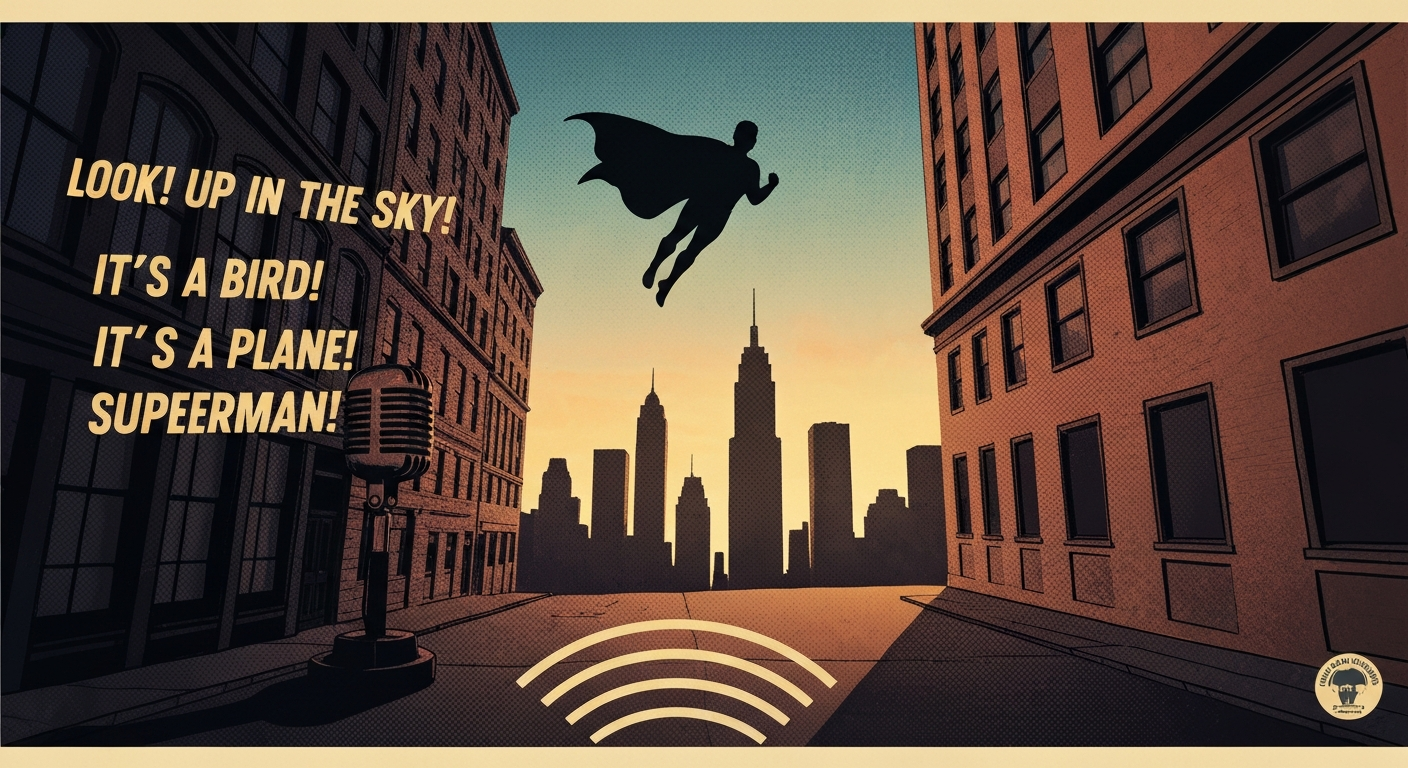
The authoritative wording of the line is: "Look! Up in the sky! It's a bird! It's a plane! It's Superman!" That call-and-response sequence debuted on The Adventures of Superman radio series on February 12, 1940, and has been reused, misquoted, translated, and memed ever since. The shorter question form most people actually say, "Is it a bird? Is it a plane? No, it's Superman!", is a common variant, not the original, though it is now so widespread that it has earned its own cultural authority.
Is It a Bird Is It a Plane Quote: Origin, Variants, Impact

Marcus Chen
23 Jul 2026
What the phrase is and why it still matters
Few lines in popular culture sit at the intersection of flight, wonder, and spectacle quite like this one. At its core, the phrase captures a very real moment of confusion: something is moving fast through the sky, and the human eye is not immediately sure what it is. Is it alive? Is it a machine? That instant of recognition, or misrecognition, is genuinely relatable, especially to anyone who has ever watched a large raptor banking over a field and momentarily questioned what they were seeing. The line also matters because it has outlived its original context. Whether you encounter it in a headline, a meme, a classroom, or a dubbed cartoon, it carries a shorthand meaning about something surprising and extraordinary appearing overhead. For a site dedicated to bird flight science, the phrase is a natural entry point: it places birds and aircraft in direct comparison, which turns out to be a scientifically rich comparison worth taking seriously.
Origin and authoritative wording: tracing the line to its source
The Adventures of Superman radio serial introduced the now-iconic opening on its first syndicated broadcast on February 12, 1940. The exact canonical wording, reproduced in published radio script collections and archival transcripts, is: "Look! Up in the sky! It's a bird! It's a plane! It's Superman!" This is not a question, it is a series of excited declarative shouts from unnamed bystanders, building in certainty until the final identification. The format is a rhetorical device called a hypophora, where apparent alternatives are raised and then resolved. Fleischer Studios locked the line into visual culture when their theatrical Superman cartoon debuted on September 26, 1941, using the same narration over animation of a figure soaring above a city skyline. Published archives, including script volumes and documentary materials from "Look, Up in the Sky: The Amazing Story of Superman," reproduce the line consistently and attribute it to those radio origins. The 1966 Broadway musical It's a Bird... It's a Plane... It's Superman took the sequence directly as its official title and marketing identity, cementing the phrase in American cultural vocabulary well beyond the comics audience. See Wikipedia, It's a Bird... It's a Plane... It's Superman (Broadway musical entry noting official title) for confirmation that the 1966 Broadway musical used the bird/plane/Superman sequence as its official title and marketing blank" rel="noopener noreferrer">Wikipedia — It's a Bird... It's a Plane... It's Superman (Broadway musical entry noting official title).
How the phrase traveled: comics, radio, film, and advertising
The radio serial was the phrase's launch vehicle, reaching national audiences in the early 1940s when radio was the dominant mass medium. From there, the Fleischer animated shorts carried it into movie theaters. Television picked it up in the 1950s Adventures of Superman series with George Reeves, and the 1978 feature film with Christopher Reeve used it again in its marketing and cultural positioning. Advertising agencies noticed the template almost immediately: the three-part build (wrong guess, wrong guess, correct reveal) is an efficient persuasion structure, and it has been used in product launches, political campaigns, and sports coverage ever since. The phrase crossed into everyday idiom, newspaper headlines routinely deploy the "Is it a bird? Is it a plane?" construction to signal that something unexpected or impressive has appeared, whether it is a new technology, an athlete, or a corporate merger.
Common misquotes and what people actually remember
Memory compresses and reshapes familiar phrases, and this one is no exception. The most documented misquote pattern is the conversion of the original declarative shouts into questions: "Is it a bird? Is it a plane? No, it's Superman!" This version omits the opening "Look! Up in the sky!" entirely and reframes the bystanders' confusion as interrogative rather than exclamatory. It is so widely used that it now functions as an accepted variant in headlines, merchandise, and casual speech. A second common variant uses ellipses to suggest trailing-off uncertainty: "It's a bird... it's a plane... it's Superman." A third pattern, especially dominant in memes and social media, replaces "Superman" with a topical noun for comedic effect. None of these are errors in a practical sense, language evolves through use, but if you are quoting the line in an academic, journalistic, or educational context and want the original wording, the correct form is the declarative radio version.
| Version | Form | Origin / Context |
|---|---|---|
| Look! Up in the sky! It's a bird! It's a plane! It's Superman! | Declarative shouts | 1940 radio serial — canonical original |
| Is it a bird? Is it a plane? No — it's Superman! | Interrogative variant | Post-radio adaptation; dominant in print and speech |
| It's a bird... it's a plane... it's Superman | Ellipsis/trailing variant | Comics, merchandise, casual written use |
| Is it a bird? Is it a plane? No — it's [X]! | Meme/fill-in template | Internet culture; replaces Superman with topical noun |
International translations and notable versions, including Swahili
The phrase has been rendered into dozens of languages for dubbed and translated Superman media. Spanish-language film press and promotional copy commonly use: "¿Es un pájaro? For example, Spanish film press frequently quotes the phrase exactly as “¿Es un pájaro? ¿Es un avión? ¡No, es Superman!”.". ¿Es un avión? ¡No, es Superman!", preserving the question structure of the widely circulated English variant rather than the declarative radio original. French film listings and reviews render it as: "C'est un oiseau ? C'est un avion ? Non, c'est Superman!" The French version stays close to the declarative spirit while adapting naturally to French syntax. These translations follow the logic of the interrogative variant rather than the 1940 radio original, which suggests that the question-form version was the one most widely exported through film and television dubbing.
Regarding Swahili: a closely related article on this site explores the phrase "this is a bird, not an aeroplane" in Swahili in dedicated detail, and that piece is worth reading alongside this one. See also the dedicated piece titled "this is a bird not an aeroplane in Swahili" for a detailed Swahili rendering and discussion. For context here, Swahili constructs identification sentences using the copular structure "Hii ni..." ("This is..."), so a direct working translation of the exclamatory original would approximate: "Angalia! Juu angani! Ni ndege! Ni ndege wa anga! Ni Superman!", noting that Swahili uses "ndege" for both biological birds and aircraft (the word for airplane is more precisely "ndege wa anga" or "eropleni"), which creates an interesting linguistic ambiguity that does not exist in English. No officially published or dubbed Swahili rendering of the canonical line has been verified in major subtitle or archive records, so any Swahili version currently in circulation should be treated as a working translation rather than an authoritative one.
| Language | Rendered Phrase | Notes |
|---|---|---|
| English (canonical) | Look! Up in the sky! It's a bird! It's a plane! It's Superman! | 1940 radio original |
| English (variant) | Is it a bird? Is it a plane? No — it's Superman! | Dominant modern form |
| Spanish | ¿Es un pájaro? ¿Es un avión? ¡No, es Superman! | Used in film press and promotional copy |
| French | C'est un oiseau ? C'est un avion ? Non, c'est Superman ! | Used in French film listings and reviews |
| Swahili (working) | Angalia! Juu angani! Ni ndege! Ni eropleni! Ni Superman! | No officially published rendering confirmed; see Swahili-specific article |
What the phrase actually means: literal, rhetorical, and idiomatic senses
On its literal face, the line describes a visual identification problem: an object is moving fast enough and at a distance sufficient that trained adult eyes cannot immediately categorize it. That is genuinely how our visual system works. At distance and speed, silhouette and motion pattern are the primary cues, and birds and small aircraft can share both. The rhetorical structure, two wrong guesses followed by a triumphant correct answer, is the hypophora form used in oratory and advertising to build anticipation and make the final reveal feel earned. The idiomatic use has drifted furthest from the original: today "is it a bird, is it a plane" in a headline or conversation almost always signals "this thing is so impressive or unusual that it defies easy categorization," with the Superman identification replaced by whatever the writer wants to emphasize. It has become a template for announcing the extraordinary.
Cultural life today: memes, GIFs, and how to use them responsibly
The phrase has become one of the more durable meme templates on the internet. Documented variants on meme archives replace "Superman" with topical figures, animals, or absurdist nouns, following the same three-beat comedic rhythm. The format works because the setup is universally recognized and the punchline slot is open. On GIF platforms like GIPHY and Tenor, searching "it's a bird it's a plane" returns animated clips from various Superman adaptations, all of which carry existing intellectual property from DC Comics and Warner Bros. If you want to find such animated clips quickly, try searching for "is it a bird is it a plane gif" on major GIF platforms to see a range of licensed and user-created variations.
Using these GIFs responsibly requires understanding a few practical points. GIPHY's own terms of service state clearly that the platform does not grant unlimited rights to third-party content, it facilitates embedding and sharing under platform terms, but commercial or modified use may require separate licensing from the IP owner. The U.S. Copyright Office's Fair Use Index is the authoritative public resource for assessing whether a particular reuse might qualify as fair use, but fair-use outcomes are always fact-specific and never automatic. For editorial and educational use, embedding via the platform's native embed tool (rather than downloading and rehosting) is the safer practice, as it keeps the content within the licensing chain the platform has established.
- Embed GIFs using the platform's native embed code rather than downloading and rehosting the file
- Always include descriptive alt text (example: "Animated clip of crowd looking skyward with text 'It's a bird! It's a plane!'") for accessibility and SEO
- For commercial uses, check directly with the IP holder (DC Comics / Warner Bros.) rather than relying on platform terms
- For editorial or educational uses, the U.S. Copyright Office Fair Use Index provides case-based guidance on defensible reuse
- Credit the specific adaptation (1941 Fleischer cartoon, 1978 film, etc.) rather than attributing vaguely to 'Superman'
Birds versus airplanes: what the biomechanics actually look like
The phrase places birds and aircraft in a direct visual comparison, which turns out to be scientifically instructive. Birds generate lift and thrust simultaneously through flapping wing kinematics, using leading-edge vortices, dynamic wing morphing, and tail adjustments that no fixed-wing aircraft can replicate. A bird's wing is not a rigid structure: it changes shape, area, and angle throughout a single wingbeat cycle, allowing precision control at low speeds that would stall a conventional airfoil. Wingbeat frequency, amplitude, and the bird's ability to switch between flapping, bounding, and soaring flight modes determine how much energy it expends and how maneuverable it is. A common swift, for example, can reach over 100 km/h in level flight using a body weighing around 40 grams, an energy efficiency that aircraft engineers still study seriously.
Fixed-wing aircraft, by contrast, separate lift (generated by the wings) from thrust (generated by engines), and control surfaces (ailerons, elevators, rudder) are discrete mechanical structures rather than continuously morphing tissue. The advantage of the aircraft design is consistency and scalability: a Boeing 737 can carry 150 passengers at 900 km/h because its rigid aluminum wing is optimized for a narrow speed range and altitude band. The advantage of the bird wing is adaptability: a barn owl can fly silently at stall speed through a cluttered barn in complete darkness, adjusting wing profile with every wingbeat. These are different engineering solutions to the same physical problem of sustained flight, and exploring the anatomy of avian wings and the underlying mechanics of bird flight reveals just how sophisticated the biological solution is.
| Feature | Bird wing | Fixed-wing aircraft |
|---|---|---|
| Lift generation | Flapping kinematics, leading-edge vortices, dynamic morphing | Fixed airfoil shape, constant chord |
| Thrust generation | Same wing structure as lift (combined) | Separate engine (jet or propeller) |
| Speed range | Wide — same wing handles hovering to fast flight in some species | Narrow — optimized for cruise speed |
| Control | Continuous wing/tail morphing, feather adjustment | Discrete control surfaces (ailerons, elevators, rudder) |
| Energy efficiency at low speed | Very high in many species | Poor — fixed-wing aircraft stall below minimum speed |
| Noise profile | Near-silent in owls, highly variable | Engine and airframe noise significant at all speeds |
It is also worth noting that not all birds fly. Ostriches, penguins, and kiwis have wings that evolution repurposed for other functions entirely, which raises its own fascinating questions about the relationship between wing anatomy and function. Understanding why some birds gave up flight is as illuminating as understanding how flying birds achieve what they do.
Bird strikes and aviation safety: what the evidence shows
Bird strikes are not rare events. See the related item titled "bird hit plane today" (29f84584-992b-4ef1-bca5-afd2da3a9e30) for a recent incident case study. The FAA's Wildlife Strike Database records tens of thousands of reported strikes per year in the United States alone, and global aviation bodies estimate that the true number is higher because many minor strikes go unreported. The vast majority of strikes cause no significant damage, a single small songbird hitting a fuselage leaves little trace. The serious risk comes from large birds, flocking species, or birds ingested into jet engines. Engines are certified to withstand ingestion of a single medium-sized bird under FAA certification standards (FAR Part 33), but multiple large birds or a dense flock can overwhelm that tolerance. For practical guidance on scenarios where a bird flies directly into an aircraft's path, see our guide on what if a bird comes in front of an airplane.
Airports mitigate bird strike risk through a combination of habitat management (removing standing water, tall grass, and food sources that attract birds), active deterrence (pyrotechnics, trained raptors, acoustic devices), radar-based bird detection systems at high-risk airports, and coordination with wildlife biologists who track local migration patterns. Aircraft design has also responded: engine inlet design, windshield certification standards (tested against bird-projectile impacts), and landing gear pod geometry all reflect awareness of bird-strike scenarios. The greatest risk periods are during takeoff and landing, when aircraft are at low altitude and low speed, and when birds are most active near airports.
Case study: Miracle on the Hudson
On January 15, 2009, US Airways Flight 1549 struck a flock of Canada geese (Branta canadensis) shortly after takeoff from LaGuardia Airport in New York. The collision occurred at approximately 2,900 feet altitude, roughly 90 seconds into the flight. Both CFM56-5B engines ingested multiple geese and lost thrust almost simultaneously. Captain Chesley Sullenberger and First Officer Jeffrey Skiles had no viable airport for an emergency landing within gliding range and executed a controlled ditching on the Hudson River. All 155 people aboard survived. For a detailed account of a bird hit plane crash and its aftermath, see the Miracle on the Hudson case study.
The NTSB investigation identified Canada geese as the species involved based on feather and tissue evidence recovered from the engines. The geese were a migratory flock, not a resident airport population, which highlighted a gap in wildlife hazard management: airport-based deterrence programs address resident wildlife but have limited effect on high-altitude migratory flocks moving through en route airspace. The incident directly accelerated changes in FAA wildlife strike reporting requirements, led to expanded culling programs for resident Canada geese near major New York airports, and prompted a reassessment of engine bird-ingestion certification standards for flocking large birds. It also reinforced the value of crew training for dual-engine failure at low altitude, a scenario that had been considered extremely rare.
What pilots and passengers should do if a bird appears near an aircraft
For pilots, the guidance from aviation authorities is clear and consistent. During taxi, takeoff roll, or approach, a bird or flock sighted on or near the runway should be reported to air traffic control immediately, which may trigger a delay or runway change while airport wildlife personnel respond. If a strike occurs in flight, the priority sequence is: maintain aircraft control first, assess engine and system status, declare an emergency with ATC if any system is affected, and follow the aircraft's emergency procedures checklist for the specific condition (single engine failure, dual engine failure, windshield damage, etc.). Pilots should file a wildlife strike report with the FAA after any confirmed or suspected strike, this feeds the national database that informs future safety improvements.
For passengers, the practical guidance is simpler: follow crew instructions without delay, keep seatbelts fastened at all times when seated (sudden bird strike events can cause rapid aircraft movement), and understand that an unusual sound or brief shudder shortly after takeoff may prompt crew action, this is not necessarily a catastrophic event, but crew need clear aisles and passenger compliance to manage it efficiently. Passengers who observe a bird strike through a window should inform a flight attendant calmly and promptly.
- Pilot: report any bird or flock sighted on or near the runway to ATC before or during takeoff
- Pilot: if a strike occurs, prioritize aircraft control, then assess systems, then communicate with ATC
- Pilot: declare an emergency if any engine, flight control, or sensor system is affected
- Pilot: follow the aircraft's emergency checklist for the specific condition; do not improvise
- Pilot: file an FAA Wildlife Strike Report after every confirmed or suspected strike
- Passenger: keep seatbelt fastened whenever seated, especially during takeoff and landing
- Passenger: follow all crew instructions immediately and without delay during any emergency
- Passenger: if you observe a strike through a window, notify a flight attendant calmly
Writing and teaching tips: using the quote well
If you are using the phrase in journalism, academic writing, or classroom instruction, a few practical points will serve you well. For the original wording, use the declarative radio form: "Look! Up in the sky! It's a bird! It's a plane! It's Superman!" and attribute it to The Adventures of Superman radio serial (first broadcast February 12, 1940). If you are using the modern question variant, "Is it a bird? Is it a plane? No, it's Superman!", acknowledge that it is a widely used variant rather than the original. This distinction matters in educational contexts where source precision is expected.
For translation work, the Spanish ("¿Es un pájaro? ¿Es un avión? ¡No, es Superman!") and French ("C'est un oiseau ? C'est un avion ? Non, c'est Superman !") versions are documented in published media and are reliable references. For Swahili and other languages where no officially published rendering exists, present the translation as a working version and note the linguistic particulars, the Swahili double-meaning of "ndege" for both bird and aircraft is itself a productive teaching point about how language and culture shape the way we categorize flying things. In media literacy or copyright education, the GIF and meme usage of this phrase offers a concrete case study for discussing fair use, platform licensing, and attribution, topics that matter beyond the Superman context.
Quick links and where to go next
The phrase "Is it a bird? Is it a plane?" opens into a surprisingly wide set of real questions. If the biomechanics comparison caught your attention, the sections on wing anatomy and the mechanics of bird flight on this site go considerably deeper into how feathers, bones, and muscle work together to produce the flight you see from the ground. If you are curious about birds that gave up flight entirely, the flightless birds section examines the evolutionary pressures that make wings optional. For more on the cultural dimension of the phrase, the companion piece on what "it's a bird it's a plane" means as an idiom traces how the line has functioned as a metaphor across different decades and media. The Miracle on the Hudson deserves more space than a case study paragraph can give it, and the dedicated bird-versus-plane piece on this site covers the biomechanical and safety dimensions of bird-aircraft encounters in full. And if you have ever genuinely wondered what the experience of flight looks like from a bird's perspective, the piece on what a plane looks like to a bird approaches that question from both perceptual biology and practical aviation safety angles.
FAQ
What is the authoritative origin and exact wording of the line “Is it a bird? Is it a plane?”?
The line traces to The Adventures of Superman radio opening (debut 1940) and was cemented visually by the 1941 Fleischer theatrical cartoons. The canonical opening is typically given as: “Look! Up in the sky! It’s a bird! It’s a plane! It’s Superman!” Published radio scripts and documentary transcripts reproduce that wording; shorter hypophora variants (“Is it a bird? Is it a plane? No — it’s Superman!”) are later popular adaptations for headlines and merchandise.
Why do I often see shortened or different versions of the line?
Shortened/question forms (e.g., “Is it a bird? Is it a plane? No — it’s Superman!”), ellipses (“It’s a bird... it’s a plane... it’s Superman”), and humorous substitutions grew from editorial convenience and meme culture. These are not the original radio wording but are culturally accepted variants used for punch, brevity, or parody.
What are common misquotes and international translations (including Swahili)?
Common English misquotes: omission of “Look!”/“Up in the sky,” reordered question form, punctuation changes, or replacing “Superman” with topical nouns. Spanish: “¿Es un pájaro? ¿Es un avión? ¡No, es Superman!” French: “C’est un oiseau ? C’est un avion ? Non, c’est Superman !” Reliable, published/dubbed Swahili renderings with authoritative provenance were not found in standard archives during this search; a literal translation would be “Je, ni ndege? Je, ni ndege ya angani? Hapana — ni Superman!” but any published dub/subtitle should be cited before using as authoritative.
How is the phrase used in culture and metaphor (memes, headlines, teaching)?
Uses include: - Meme template: swap in humorous or topical subjects for 'Superman'. - Headlines: evoke surprise/scale (often playfully). - Teaching/writing: as a rhetorical device to highlight misidentification or to introduce comparative topics (e.g., bird vs. plane). In visual culture it signals recognition, reveal, or comedic misdirection.
What are best practices for using GIFs or clips that reference the phrase?
- Prefer platform embeds (GIPHY/Tenor) to respect hosting/licensing. - Check platform terms: embeds do not necessarily clear third‑party IP for commercial use. - For commercial/derivative uses, obtain license or permission from copyright owners. - Credit sources when practical and follow DMCA/ takedown rules. - For public‑facing educational uses, document fair‑use rationale and minimize copyrighted clip length; consider linking to official trailers or public‑domain materials.
Brief primer: how does bird flight differ from airplane flight (biomechanics and anatomy)?
Bird flight: powered by flapping wings that generate both lift and thrust through wingbeat kinematics, wing morphing, tail steering, and unsteady aerodynamics (leading‑edge vortices, wingtip vortices). Airplanes: separate propulsion (engines) and fixed wing lift, control via fixed surfaces (ailerons, rudder, elevator) and rely on steady airflow. Birds are more agile at low Reynolds numbers and use musculoskeletal adaptations (keel, flexible feathers) for maneuvering; airplanes trade maneuverability for predictable, sustained lift and speed. For in‑depth reading, see pages on wing anatomy, flight mechanics, and comparisons with flightless birds.
Next Articles
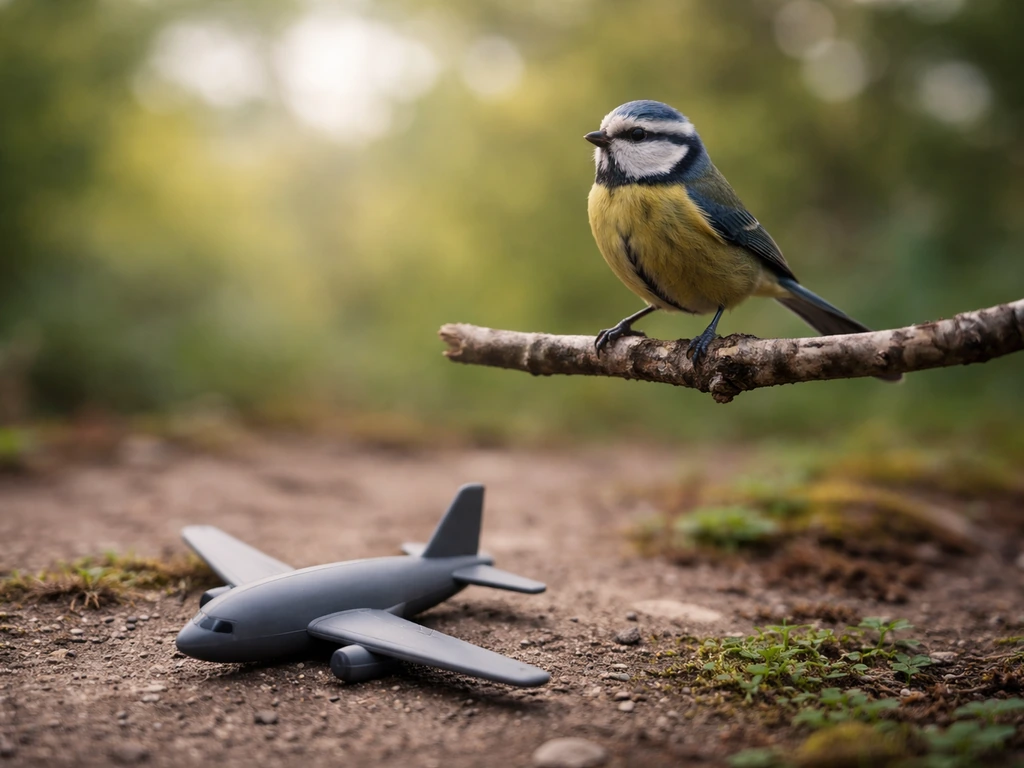
This Is a Bird, Not an Aeroplane in Swahili: Exact Phrases
Swahili exact phrases for this is a bird not an aeroplane, with natural examples, pronunciation, and term choices.

Bird Hit Plane Today: What Happens Next and What to Do
Know what happens after a bird hit plane today, who to notify, what to inspect, safety steps, and prevention science.
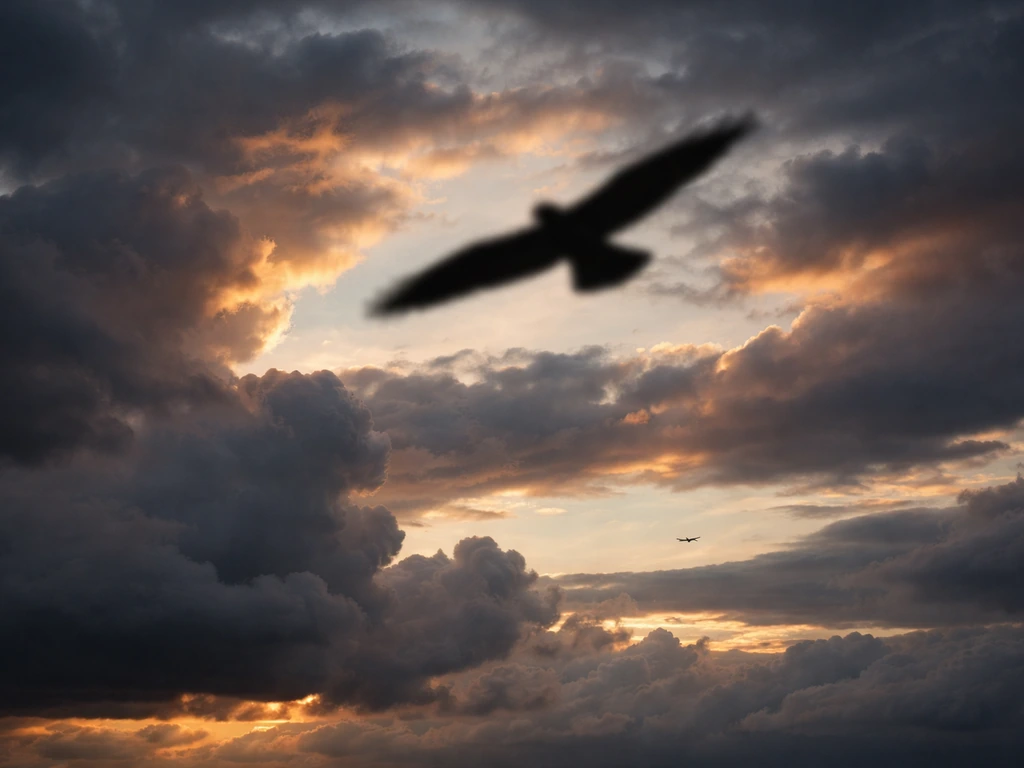
Is It a Bird or a Plane GIF: How to Identify It and Recreate It
Identify the is it a bird or a plane GIF with reverse search, key queries, reality checks, and steps to recreate it.