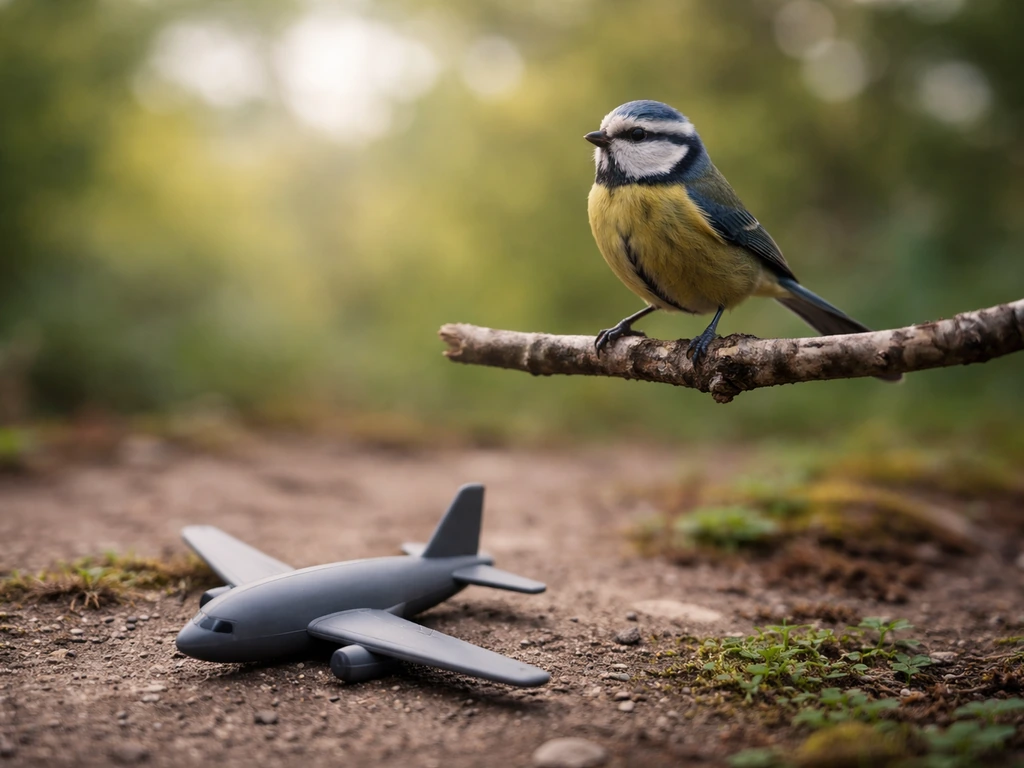
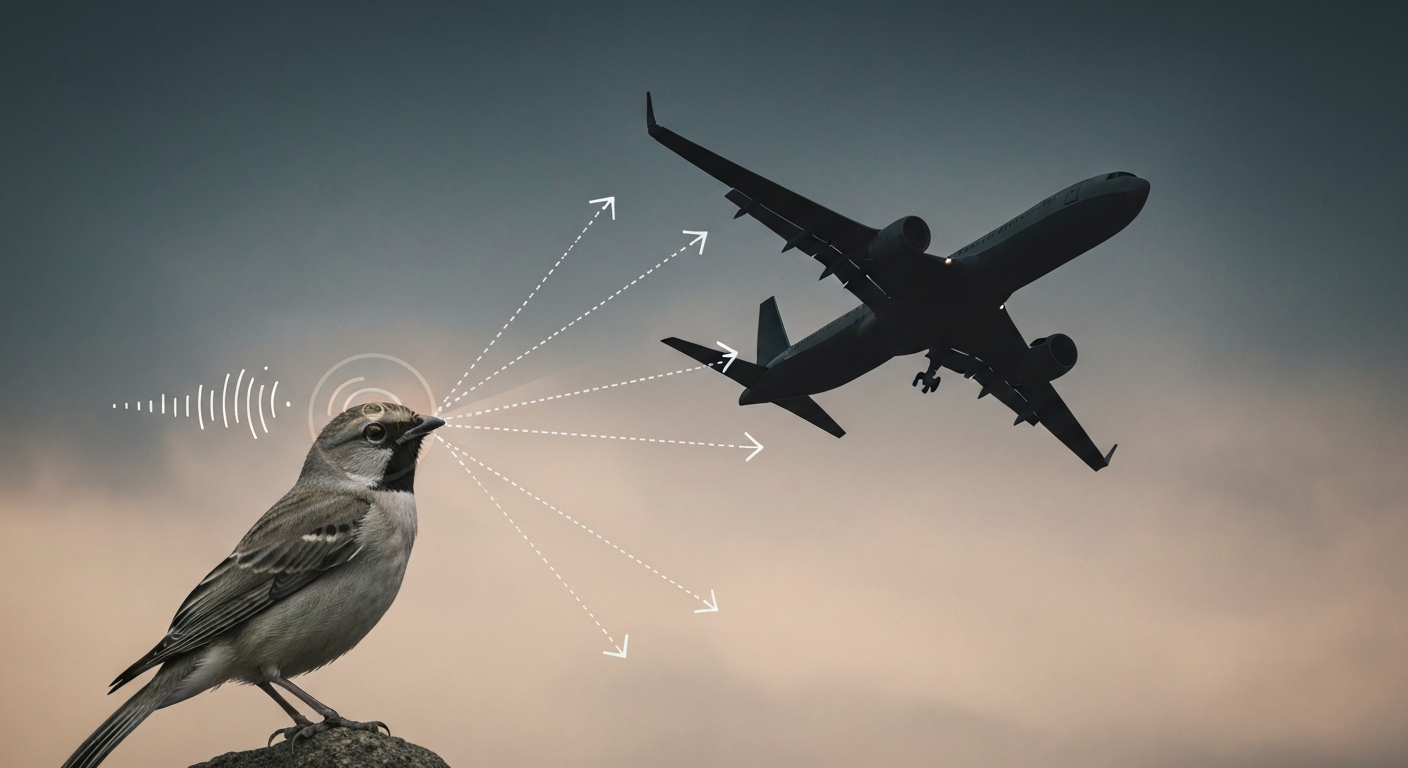
To a bird, a plane is most likely a fast-moving, noisy, unfamiliar object that triggers the same ancient threat-detection machinery that evolved to spot hawks and eagles. Whether a bird flees from it, ignores it, or collides with it depends on a surprisingly rich set of variables: how sharp its vision is, how quickly it processes motion, how loud the aircraft sounds at that moment, and whether its brain classifies the approaching shape as dangerous or irrelevant. Most birds do not perceive a plane the way we perceive a bird in the sky. They perceive it in fractions of a second, through a nervous system tuned for survival, not taxonomy.
To a Bird What's a Plane: How Birds Perceive and React, Risks & Mitigation

Marcus Chen
7 Aug 2026
Why this question matters more than it sounds
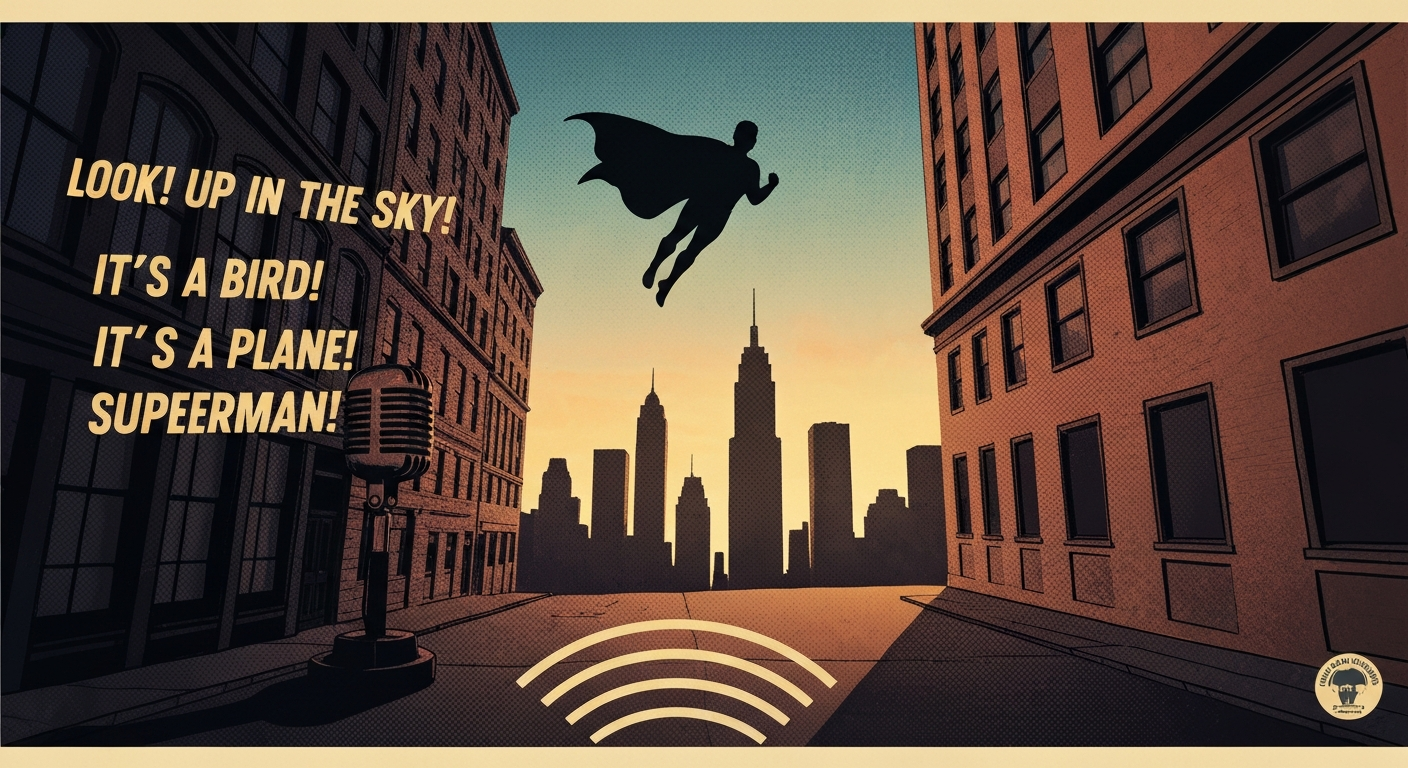
The phrase 'to a bird, what's a plane' sounds playful, and there's a cultural echo in it too, the famous 'It's a bird! It's a plane!' exclamation from Superman lore captures how humans misidentify fast-moving objects at a distance. But the biological version of the question is genuinely serious. Every year, thousands of bird-aircraft collisions (called birdstrikes) are reported to aviation authorities around the world. The FAA's National Wildlife Strike Database, which has tracked civil aircraft strikes in the United States since 1990, documents hundreds of thousands of cumulative wildlife strikes and acknowledges the database is still a significant undercount because reporting remains partly voluntary. Understanding how birds sense, interpret, and react to aircraft is the foundation for making flight safer for both species. For up-to-the-minute reports and recent incidents, see our bird hit plane today feed for current birdstrike reports and updates.
How birds see the world, and what a plane looks like inside that vision
Bird vision is not simply 'better' than human vision. It's different in ways that matter enormously for how a plane registers as a threat. Start with spatial acuity: the sharpness of detail a retina can resolve. Diurnal raptors sit at the extreme end of the vertebrate range. Psychophysical measurements on species like Harris's hawks show achromatic spatial resolution that exceeds most other birds, and some raptors hold records for the highest measured visual acuity in any vertebrate. A peregrine falcon scanning a sky doesn't just see a distant object, it resolves its shape, its edges, its trajectory, at a range that would leave the object invisible to human eyes.
Field of view matters just as much as acuity. Most birds have eyes positioned on the sides of their heads, giving them panoramic fields of view, sometimes spanning 300 degrees or more, at the cost of a narrower binocular overlap zone in front. This means a bird is rarely truly blind to an approaching object from any direction, but it gets the best depth and motion information only from a narrow frontal cone. A plane approaching from an oblique angle might register in wide monocular vision first, with the foveal, high-resolution view coming only when the bird turns to look directly at it.
Then there's temporal resolution: how fast the visual system can sample changing information. This is measured as critical flicker-fusion frequency (CFF), and the numbers for raptors are striking. Measured CFF in peregrine falcons reaches approximately 129 Hz, in saker falcons around 102 Hz, and in Harris's hawks around 81 Hz. For comparison, human CFF sits around 60 Hz under bright conditions. A fast-moving aircraft that appears as a blur to us could theoretically present distinct, resolvable motion frames to a raptor's visual system, though whether that higher frame rate helps or hurts threat assessment for a novel object like an aircraft is a genuinely interesting open question.
Hearing, vibration, and infrasound: what birds hear coming
Most birds have a hearing range broadly similar to ours, best sensitivity roughly between 1 and 8 kHz, but the extremes of that range and some specialized low-frequency sensitivity set them apart in ways relevant to aircraft detection. Behavioral audiograms for pigeons and domestic chickens, measured using standard psychoacoustic methods, show sensitivity down into the very low frequency range, including some measurable response into the tens of hertz. Comprehensive reviews of avian hearing confirm that while the 1–8 kHz range covers the core of most birds' sensitivity, species like barn owls have extraordinary directional localization, and some birds, including pigeons, show enhanced sensitivity to infrasound and very low frequencies.
Aircraft generate noise across a wide spectrum. Jet engines produce intense sound in the mid and high frequencies, but large aircraft also create substantial low-frequency and infrasonic signatures from turbine harmonics, airframe vibration, and pressure waves at altitude. A bird on the ground near an airport hears a very different soundscape from a bird in midflight at 3,000 feet encountering a climbing commercial jet. The directional, temporal, and frequency content of that acoustic signal all influence whether the bird associates it with a threat and which direction it thinks the threat is coming from.
Infrasound sensitivity is particularly intriguing. Some researchers have hypothesized that birds use infrasound for navigation and for detecting distant atmospheric events. If birds do routinely monitor infrasonic frequencies, large aircraft, which produce significant low-frequency pressure waves, could theoretically be detectable acoustically at ranges well beyond where visual looming signals become significant. Whether birds actually use this information in real-time threat assessment near airports is not yet fully established, but the sensory hardware to do so appears to exist in at least some species.
Motion cues and optic flow: the geometry of 'something is coming'
When an object approaches a bird on a collision course, its image on the bird's retina expands. The rate of that expansion, and especially the acceleration of expansion, carries powerful information about how quickly the object will arrive. This is optic flow, and the neural machinery to extract it is ancient and deeply conserved across vertebrates. In pigeons, specific neurons in the nucleus rotundus, a key hub in the tectofugal visual pathway, respond selectively to looming stimuli, computing what researchers call optical variables including tau (τ), which encodes time-to-collision, and eta (η), which tracks the rate of image expansion. Behavioral and neurophysiological work (Looming responses of telencephalic neurons in the pigeon are modulated by optic flow, Brain Research) demonstrates looming-sensitive neurons in pigeons' tectofugal pathway are modulated by optic flow and angular expansion dynamics, supporting time‑to‑collision computations Looming-sensitive neurons in pigeons' tectofugal pathway show modulation by optic flow and angular expansion dynamics.. These neurons are not doing abstract geometry. They are doing real-time collision prediction, and the output influences motor decisions in milliseconds.
Optic flow also gives birds information about their own movement through space, the movement of the environment around them, and the trajectory of other moving objects. For a bird in flight, all of these streams run simultaneously. A plane moving through a bird's visual field at high speed creates a distinctive optic flow signature: rapid angular displacement across the visual field, a bright or reflective body, and a contrail or engine exhaust plume that may extend the visual footprint. Whether this signature triggers the same escape circuit as a diving hawk depends on prior experience, contrast against the sky, and the bird's current behavioral state.
Detection distances, thresholds, and the clock before a collision
Detection distance is not the same as reaction distance, and neither is the same as the distance at which a bird can actually escape. Research into anti-predator responses shows that birds can respond to approaching objects when the object's angular size is as small as roughly 1.6 to 3.4 degrees in high-contrast, anti-predator contexts, though the threshold shifts upward significantly in foraging or low-vigilance contexts. A commercial aircraft at typical approach speed (around 250 km/h or roughly 70 m/s on final approach) covers the last few hundred meters in only a few seconds. For a bird to detect, classify, decide, and execute an evasive maneuver in that window requires nearly everything to go right.
Flight initiation distance (FID), the distance at which a bird actually starts fleeing from an approaching threat, has been extensively studied. A 2024 meta-analysis published in Animal Behaviour synthesized FID measurements across approximately 99 species and found that flock size, body size, species ecology, and contextual factors all systematically influence when birds commit to escape. Larger flocks tend to show reduced individual vigilance and delayed takeoff decisions, which is one reason flocking species create disproportionate birdstrike risk: when the flock finally does react, it may launch hundreds of birds simultaneously into the path of an aircraft.
| Variable | Effect on detection or evasion | Relevant context |
|---|---|---|
| Angular size threshold | ~1.6–3.4° triggers response in alert birds; higher threshold when distracted | Approach angle, contrast, light level |
| Aircraft approach speed | ~70 m/s on final approach leaves 3–4 seconds from 200 m | Critical window shrinks at higher speeds |
| Flicker-fusion frequency | Raptors (~129 Hz) resolve motion far better than pigeons or waterfowl | Species-dependent, higher CFF = faster motion detection |
| Flock size | Larger flocks delay individual escape response (reduced vigilance) | Geese, gulls, starlings especially relevant |
| Behavioral state | Foraging, nesting, moulting birds show reduced FID and escape performance | Contextual distraction lowers effective response |
| Light level | Low light (dawn, dusk, night) degrades visual threat detection significantly | Many migrations occur at night |
How silhouette, size, and speed shape what a bird 'decides' a plane is
Aircraft do not look like predators. Their silhouettes, long fuselages, swept wings, no flapping motion, don't match the innate and learned templates most birds use to classify aerial threats. A raptor's silhouette, with its relatively short neck, broad wings, and characteristic flap-glide rhythm, trips predator-detection circuits that have been refined over millions of years. A Boeing 737 on approach produces a very different angular profile: a T-shaped or cruciform silhouette, moving fast, without biological motion cues. For birds with no prior exposure to aircraft, this novelty may actually delay threat response because the object doesn't match anything in the bird's threat library.
Contrast also plays a large role. Against a clear blue sky, a white or silver aircraft may produce relatively low contrast, especially at angles where sunlight washes out edges. Against an overcast sky, the situation reverses. The reflective surfaces of an aircraft can produce sudden glints that mimic the flash of a rival's wing or a predator's eye, but these are inconsistent and unpredictable. Background masking matters too: an aircraft descending over a complex visual background (trees, buildings, terrain) is harder for a bird to track than one silhouetted cleanly against open sky. All of this means threat perception varies enormously with the geometry of any specific encounter.
Speed itself is a cue. The fastest bird in level flight (common swift, around 110–170 km/h) and even the fastest diving raptor (peregrine falcon, exceeding 300 km/h in a stoop) are slower than most aircraft in most phases of flight. The rate of angular expansion an aircraft creates, from the bird's perspective, can be extraordinary, collapsing from a small dot to a full-windshield threat in a second or less. This extreme rate of expansion should, in principle, trigger strong looming responses. The problem is that by the time expansion becomes unambiguous, the time-to-collision is already critically short.
How birds think about threats: assessment, habituation, and the hazard of surprise
Bird threat response is not purely reflexive. It involves rapid cognitive processing: Is this object actually directed at me? Is it accelerating toward my position? Have I seen this before, and did it hurt me? Habituation is one of the most practically important phenomena in airport wildlife management. Birds that live near airports, herring gulls, Canada geese, starlings, are exposed to aircraft repeatedly without being harmed. Over time, their flight initiation distances shrink. They stop treating aircraft as threats and start treating them as background noise. This habituation is adaptive in the sense that constant fleeing wastes energy, but it creates obvious collision risk.
Surprise is the most dangerous scenario. A bird that is foraging with its head down, or attending to a mate or rival, may not track an approaching aircraft at all until the looming signal crosses the maximum threshold, at which point the escape decision must be made with almost no time margin. Juvenile birds, birds in moult (with degraded flight feathers), and birds in strong crosswinds may have physically reduced escape performance even when they do respond in time. Night-migrating birds present a special case: they are navigating in low light, often fatigued, and not in a posture of active threat scanning when they encounter aircraft at altitude.
Species by species: why a peregrine and a Canada goose react completely differently
The variation in how different birds respond to aircraft is one of the most fascinating parts of this topic, and one of the most practically important for aviation safety. Here's how several key groups differ:
Raptors
Raptors, especially falcons and hawks, have the visual and cognitive hardware to detect, track, and classify approaching objects at long range. Their high spatial acuity and critical flicker-fusion frequencies mean they are processing fine-grained motion information that most other birds miss. In practice, raptors near airports typically perform directed avoidance maneuvers: sharp turns, rapid altitude changes, or targeted dives away from the approaching aircraft. Peregrines in particular seem to read aircraft trajectories well, likely because their entire predatory toolkit is built around reading fast-moving objects on predicted intercept courses. That said, raptors are also drawn to airports by the concentration of prey species that airports attract, so encounter frequency is high.
Gulls
Gulls are among the most problematic species at airports because they combine large body mass (herring gulls average around 1 kg), strong habituation to human disturbance, and flocking behavior. A habituated gull may simply not initiate escape until an aircraft is very close, and when a flock finally does flush, it can fill the airspace near a runway with dozens of birds simultaneously. The combination of mass and surprise makes a habituated gull flock a genuine safety concern even for larger aircraft.
Swifts
Common swifts (Apus apus) spend virtually their entire lives airborne and are extraordinarily maneuverable at speed. Their reaction times and agility in three-dimensional airspace are exceptional. Swifts are small (around 40–50 g), which reduces the damage potential of an individual strike, and their aerial agility means they tend to avoid large aircraft effectively in most encounter scenarios. However, they do strike aircraft at altitude when visibility is poor or when they are feeding in swarms and not individually tracking all objects in their airspace.
Waterfowl, geese, and the Miracle on the Hudson
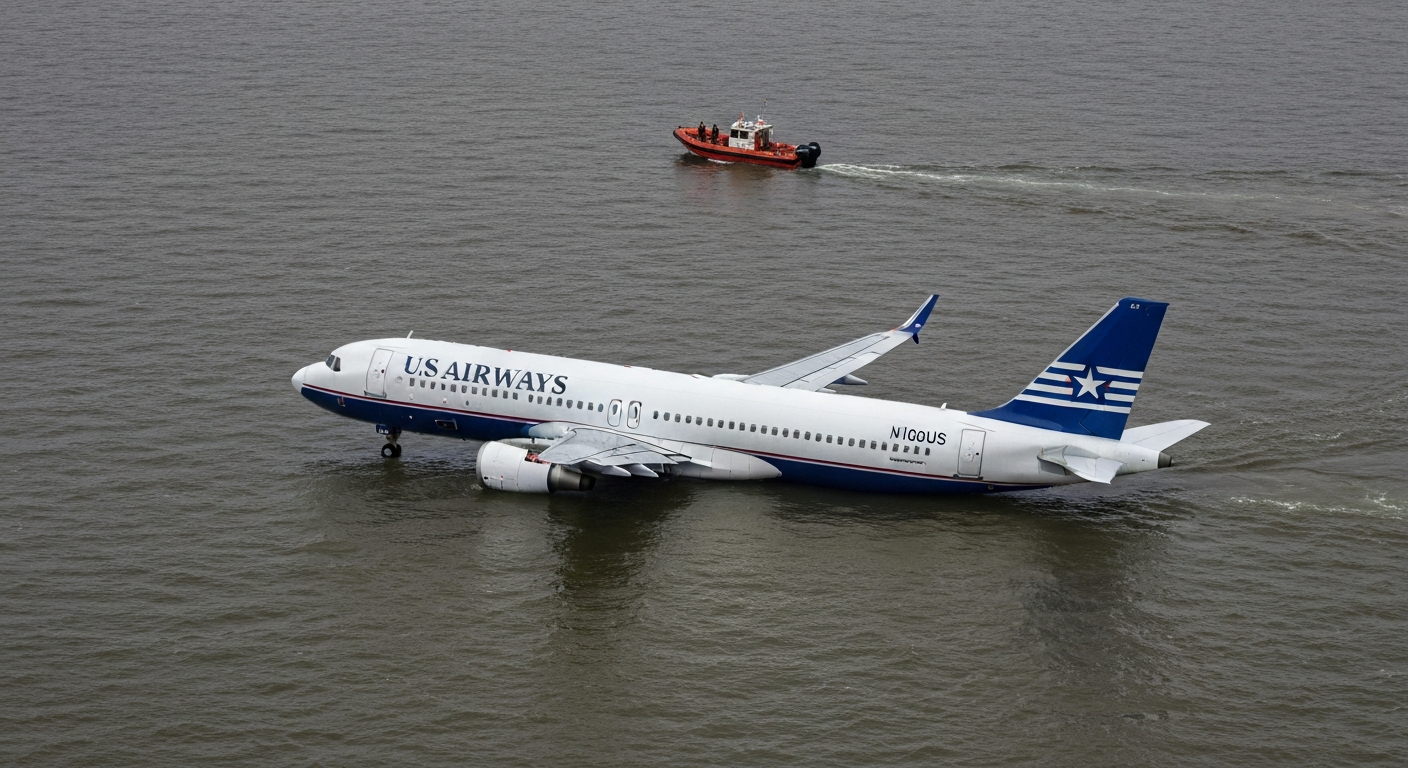
Canada geese (Branta canadensis) represent the classic catastrophic birdstrike risk. They are large (3 to 6 kg each), they flock, they migrate at altitudes that overlap with climb and approach corridors, and they are habituated to suburban and airport environments across much of North America. The NTSB's accident report for US Airways Flight 1549 (AAR-10/03) concluded that on January 15, 2009, the aircraft ingested a flock of Canada geese shortly after takeoff from LaGuardia, causing an almost total loss of thrust in both engines. For a concise account of the bird hit plane crash involving Flight 1549, see the NTSB accident report and related analyses. The NTSB's full accident report (NTSB AAR‑10/03, Loss of Thrust in Both Engines After Encountering a Flock of Birds and Subsequent Ditching on the Hudson River (US Airways Flight 1549, 2009)) concluded that ingestion of a flock of Canada geese caused an almost total loss of thrust in both engines blank" rel="noopener noreferrer">NTSB AAR‑10/03 — Loss of Thrust in Both Engines After Encountering a Flock of Birds and Subsequent Ditching on the Hudson River (US Airways Flight 1549, 2009). Captain Chesley Sullenberger's decision to ditch on the Hudson River saved all 155 people on board. This incident led directly to revisions in engine bird-ingestion certification discussions and renewed attention to wildlife hazard management at airports. The event is often described as the 'Miracle on the Hudson,' and the bird-aircraft collision aspect of that story is explored in more depth alongside related birdstrike data.
Aircraft engine airworthiness certification historically required ingestion testing with a single large bird of approximately 4 lb (about 1.8 kg), but the Canada geese involved in Flight 1549 significantly exceeded that threshold individually and were encountered as a flock. Current FAA and EASA certification requirements vary by engine inlet area and operating conditions and have been updated since 2009, but regulators and researchers continue to debate whether certification test cases fully represent the real-world distribution of strike events recorded in databases like the FAA's National Wildlife Strike Database.
Flightless birds
Ostriches, emus, and other flightless birds present a completely different risk profile: ground-based collisions with aircraft, particularly on airstrips in areas where these species roam. An ostrich weighing 100 kg or more on a runway is an enormous obstacle. These birds have no aerial escape option and their threat-response behavior is tuned to ground-level predators: running, erratic directional changes, and sometimes aggressive display. The collision physics when a large flightless bird meets an aircraft's landing gear or fuselage at taxi or takeoff speed can be severe for both the bird and the aircraft. The evolution of flightlessness, and what it reveals about the trade-offs in bird locomotion, is a broader topic the wing anatomy and evolutionary flight sections of this site explore in detail.
The real cost: birdstrike data, collision mechanics, and what the numbers say
Impact energy scales with mass and velocity squared (E = ½mv²), which is why a large, slow bird and a small, fast bird can produce comparable structural damage under certain conditions, and why engine ingestion of multiple large birds simultaneously is catastrophically more dangerous than ingestion of small ones. A single Canada goose at 6 kg, ingested into a turbofan at approach speed, delivers energy in the range of tens of kilojoules, enough to crack or shed fan blades and cause thrust loss or uncontained failure.
The FAA's cumulative strike database (covering 1990 through 2024) documents hundreds of thousands of reported wildlife strikes in the United States alone, with the strong caveat that voluntary reporting systems systematically undercount minor events. The vast majority of strikes cause no substantial damage, but a meaningful fraction damage engines, windshields, or airframes, and a small number result in accidents. ICAO's Bird Strike Information System (IBIS) and guidance in Airport Services Manual Doc 9137 Part 3 provide the international framework for standardized reporting and airport wildlife hazard management, but data quality varies significantly by country.
What airports and engineers actually do about it
Evidence-based mitigation operates on several levels simultaneously. Habitat management is the most fundamental: removing standing water, cutting grass to less attractive foraging heights, and eliminating food sources that concentrate birds near runways. Many airports maintain trained falconry programs or deploy pyrotechnics and distress calls to actively displace birds, these work best when used consistently and rotated so birds don't habituate to the deterrent itself, which ironically echoes the same habituation problem that makes resident birds so dangerous in the first place.
Detection technology includes radar systems (such as eBird-connected avian radar platforms and the Merlin Bird Radar used at some major airports) that track bird movements in real time and alert controllers to flocking activity on or near approach corridors. Aircraft design addresses the problem through engine certification testing, bird-resistant windshields (tested to withstand a 4 lb bird impact at approach speed), and leading-edge structural reinforcement. None of these solutions is individually sufficient; the evidence points consistently toward layered, adaptive management that combines habitat control, active deterrence, and real-time detection.
- Habitat management: reduce standing water, maintain short grass, eliminate food attractants near runways
- Active deterrence: trained falconry, pyrotechnics, distress calls — rotated to prevent habituation
- Avian radar: real-time tracking of bird flocks near approach and departure corridors
- Wildlife strike reporting: FAA NWSD (USA) and ICAO IBIS (international) to monitor trends and identify high-risk species
- Aircraft design: bird-resistant windshields, engine certification ingestion tests, reinforced leading edges
- Population management: licensed lethal control of high-risk species (e.g., Canada geese) as a last-resort tool at some airports
'It's a bird! It's a plane!', the cultural echo of mistaken identity
The phrase 'It's a bird! It's a plane! It's Superman!' first appeared in the Superman radio serial in 1940 and was popularized through comic books, television, and the 1978 Christopher Reeve film. It works as a cultural shorthand precisely because it encapsulates a real perceptual problem: at a distance, fast-moving objects in the sky are genuinely ambiguous. Before commercial aviation made aircraft a constant presence in urban skies, a fast-moving silhouette overhead was most likely a large bird. The phrase captures the moment of cognitive reclassification, bird to plane to something else entirely, and it has become one of the most recognizable opening lines in pop culture. The meaning and origins of that quote, and how it reflects both human and animal perceptual limits, is worth exploring on its own terms. For the origins and exact wording of the iconic "It's a bird! For readers curious about linguistic echoes, the Swahili translation of 'this is a bird not an aeroplane' captures the same playful misidentification. It's a plane!" quote, see the is it a bird is it a plane quote article It's a bird! It's a plane! quote. See the concise entry on it's a bird it's a plane meaning for a short explanation of the phrase's cultural origin and significance.
The metaphor runs deeper than its pop culture surface suggests. Humans and birds share the same basic challenge when looking at moving objects in the sky: we classify them first by size, then by motion pattern (flapping versus gliding versus powered flight), and finally by contextual cues like sound and approach direction. The reason the 'It's a bird! It's a plane!' misidentification is funny is that both categories are plausible at first glance. The reason the question 'to a bird, what's a plane?' is scientifically interesting is that the bird's classification system, evolved to distinguish predators, prey, rivals, and mates, has no pre-built category for a 70-ton aluminum tube moving at 250 km/h. The plane falls into whatever bin the bird's brain assigns it, and that assignment, made in milliseconds, can determine whether everyone lands safely.
Putting it together: the answer to a deceptively simple question
To a bird, a plane is almost certainly not recognized as a plane. Depending on the species, its distance and approach angle, the bird's behavioral state, and the acoustic and visual environment of the encounter, the aircraft is processed as some combination of: a rapidly expanding looming threat (if close and fast), a large unfamiliar silhouette of uncertain classification (if distant and high), or effectively invisible background noise (if the bird is habituated and distracted). For a concise practical summary of immediate outcomes and pilot responses to the specific scenario 'what if a bird comes in front of an airplane', see the focused guidance below. The sensory machinery birds use to assess it, high-acuity, high-temporal-resolution vision; looming-detector circuits in the midbrain; low-frequency acoustic sensitivity, is ancient, sophisticated, and superbly tuned for the biological world it evolved in. Aircraft are simply outside the scope of what that machinery was built for, and that mismatch is what makes the bird-plane encounter so scientifically interesting and, in certain circumstances, so dangerous.
FAQ
How do birds sense airplanes visually—what visual cues matter?
Birds detect aircraft primarily through optical cues: contrast, silhouette, angular size and angular expansion (looming). High spatial acuity species (diurnal raptors) can resolve small, distant objects; many birds also have very high temporal resolution (flicker‑fusion rates well above humans) so they sample fast motion finely. Looming or rapidly increasing angular size and angular velocity are computed by midbrain/tectal circuits and act as fast warning triggers; detection thresholds depend on species, light level, background contrast and behaviour (foraging vs. vigilance).
Can birds hear airplanes, and does acoustic detection help avoidance?
Yes, most birds have best hearing sensitivity roughly in the 1–8 kHz band (similar to humans), with some species able to detect lower frequencies. Aircraft generate broadband noise including low‑frequency components; however, at typical operational distances sound levels and masking (wind, habitat noise) often make acoustic detection less reliable than visual looming. Species with special low‑frequency sensitivity or good sound‑localization (e.g., owls) may use acoustic cues more effectively in low light, but overall vision/optic‑flow and looming cues are primary for rapid escapes in daylight.
What neural circuits trigger fast escape responses to approaching objects?
Birds use retinal, tectal (optic tectum/superior colliculus analogue) and thalamic/rotundus pathways to detect expanding images and optic‑flow. Looming‑sensitive neurons compute optical variables related to time‑to‑collision (τ/eta); when angular expansion or velocity crosses species‑specific thresholds these circuits trigger defensive motor programs (takeoff, maneuver, freeze). These pathways produce extremely fast reactions compared with slower cortical processing.
Which species are most likely to detect and avoid aircraft, and which are most at risk?
Diurnal raptors and species with high visual acuity and temporal resolution detect and often perform directed avoidance. Solitary, agile birds can usually dodge. Flocking species (geese, gulls, starlings) pose higher strike risk because coordinated takeoff or dense flocks can place many birds in an aircraft’s path; large heavy birds (geese, swans) present more damage potential when collisions occur. Flightless birds near airfields are risky locally. Juveniles, moulting birds, and distracted foragers have reduced detection/escape performance and higher collision probability.
How do speed and silhouette of an aircraft change a bird’s threat perception?
Relative speed increases angular expansion rate—fast aircraft produce rapid looming that shortens time‑to‑collision and can overwhelm escape timing. A small, low‑contrast silhouette (e.g., high altitude, sun‑glare background) may fall below detection thresholds until too late. Conversely, large, high‑contrast silhouettes or low approach angles produce stronger optical cues and earlier detection, but high speed can still reduce reaction margin.
What typical avoidance maneuvers do birds use when they detect an approaching aircraft?
Common responses: immediate takeoff and climb, lateral swerve or banking turn, rapid descent in some shorebirds, tight flocking maneuvers (collective turns) and freezing or crouching in some ground‑feeding species. The chosen maneuver depends on species’ flight biomechanics: wing loading and turn radius limit how sharply they can change course; flocking dynamics can delay or synchronize response and sometimes increase collision exposure.