
A bird will soar when three things align: the right body, the right wings, and the right air. That sounds simple, but each of those conditions has real, measurable requirements. If you're here wondering whether a specific bird can soar, what makes soaring happen, or how to recognize it when you see it, you're in the right place. This guide walks through the science and gives you practical, field-ready answers.
A Bird Will Soar: How to Spot, Support, and Understand Soaring

Marcus Chen
9 Apr 2026
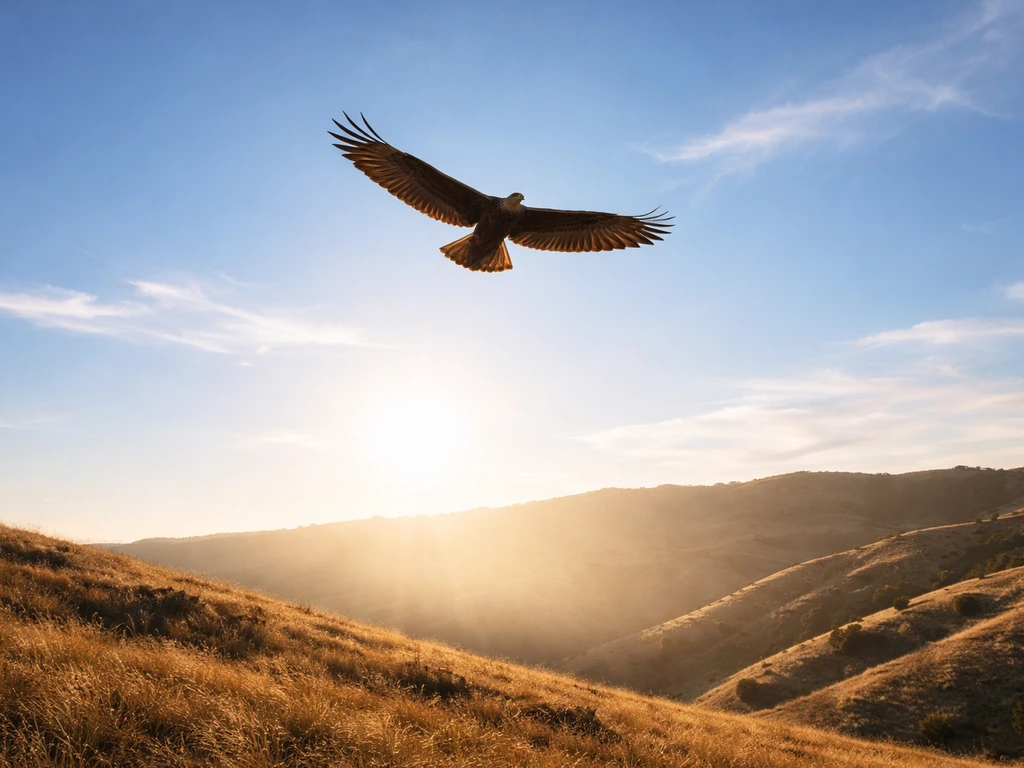
What 'a bird will soar' actually means
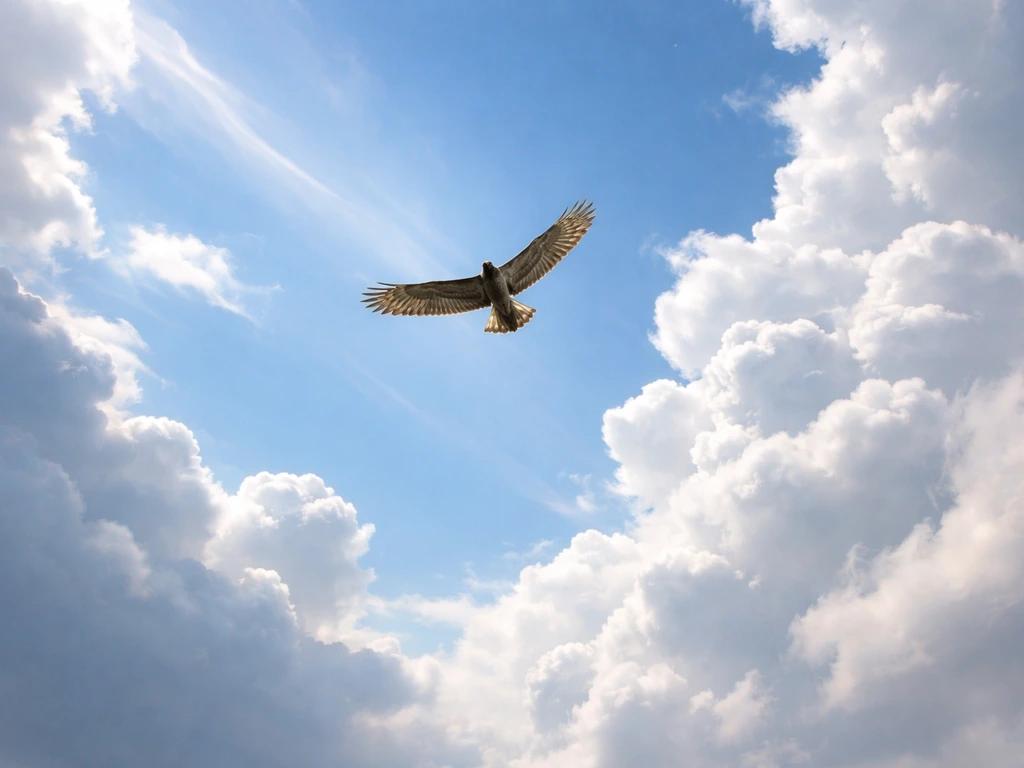
The word 'soaring' gets used loosely, so let's pin it down. In ornithology, soaring means sustained flight in rising air, where a bird gains or at least maintains altitude without flapping. Britannica explains that soaring depends on mechanisms beyond simple flapping, including sustained flight supported by rising air currents or wind, typically with initial elevation provided by flapping [sustained flight supported by air currents or wind](https://www. britannica.
com/science/soaring). That's different from gliding, which is unpowered descent through still air with fixed wings. The key distinction: gliding always loses altitude over time, while soaring can hold or gain it because the bird is riding an updraft. Think of a hawk circling lazily over a field on a hot afternoon.
It isn't flapping. It's riding a column of warm rising air called a thermal, and the thermal is doing the work.
The phrase itself carries cultural weight too. If you've encountered it in a poem, a lyric, or a metaphor, you might be curious about what it signals beyond the literal. The flying bird meaning in language and culture runs deep, but this article focuses on the real, physical act: what biology and physics make it possible, and how you can reliably see it happen.
Wing mechanics and aerodynamics: why soaring works
Soaring is essentially gliding powered by available lift from rising air. To understand it, you need to understand four aerodynamic concepts: lift, drag, aspect ratio, and wing loading. None of them are hard once you see how they connect.
Lift and angle of attack
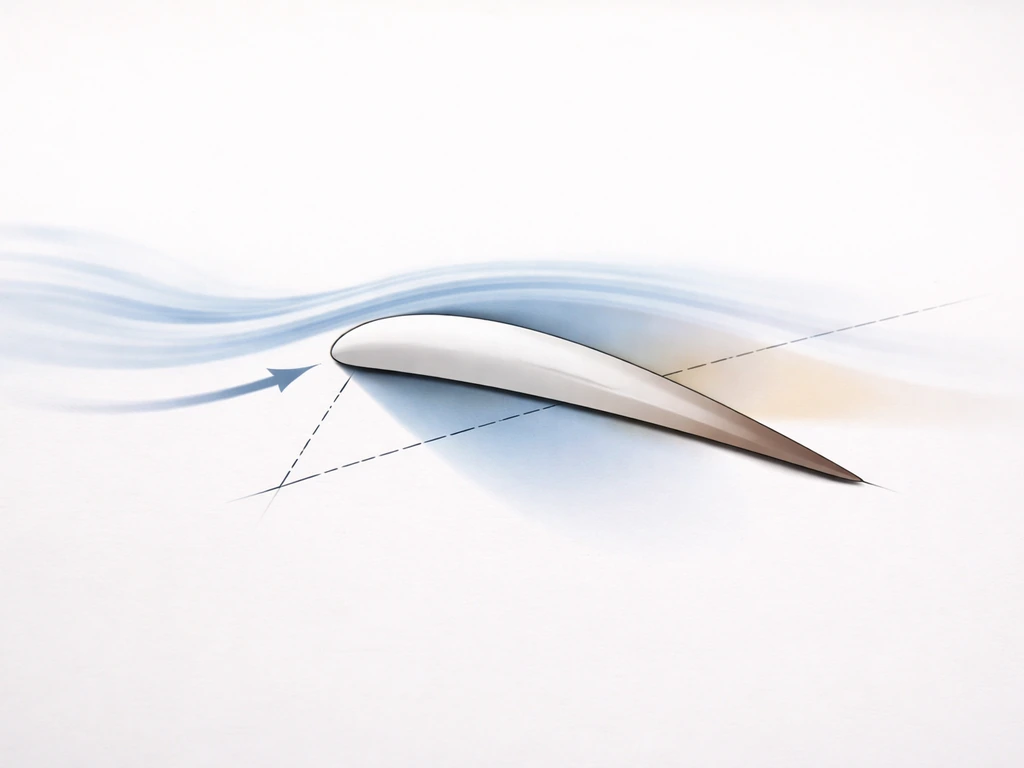
Lift is generated by a wing's geometry and its angle relative to the incoming airflow, what engineers call the angle of attack. A bird's wing is curved on top and flatter beneath, and as air flows faster over the top surface, a pressure difference develops that pushes the wing upward. The bird doesn't need to flap to produce this lift as long as air is moving over the wing at the right angle. In a thermal, the rising air itself does this continuously, which is why a soaring bird can circle for minutes without a single wingbeat.
Drag: the two types that matter
There are two drag types that matter here. Induced drag is the drag created as a byproduct of producing lift: long, narrow wings reduce it because they generate smaller, less powerful tip vortices, those swirling air masses that bleed energy off the wingtips. Parasitic drag (sometimes called profile drag) is everything else: friction, shape drag, the resistance of the body moving through air. Soaring birds minimize both, and the lift-to-drag ratio is the real scorecard. A high ratio means the bird travels far for every unit of altitude lost, which is exactly what you want when you're riding a thermal.
Aspect ratio and wing loading
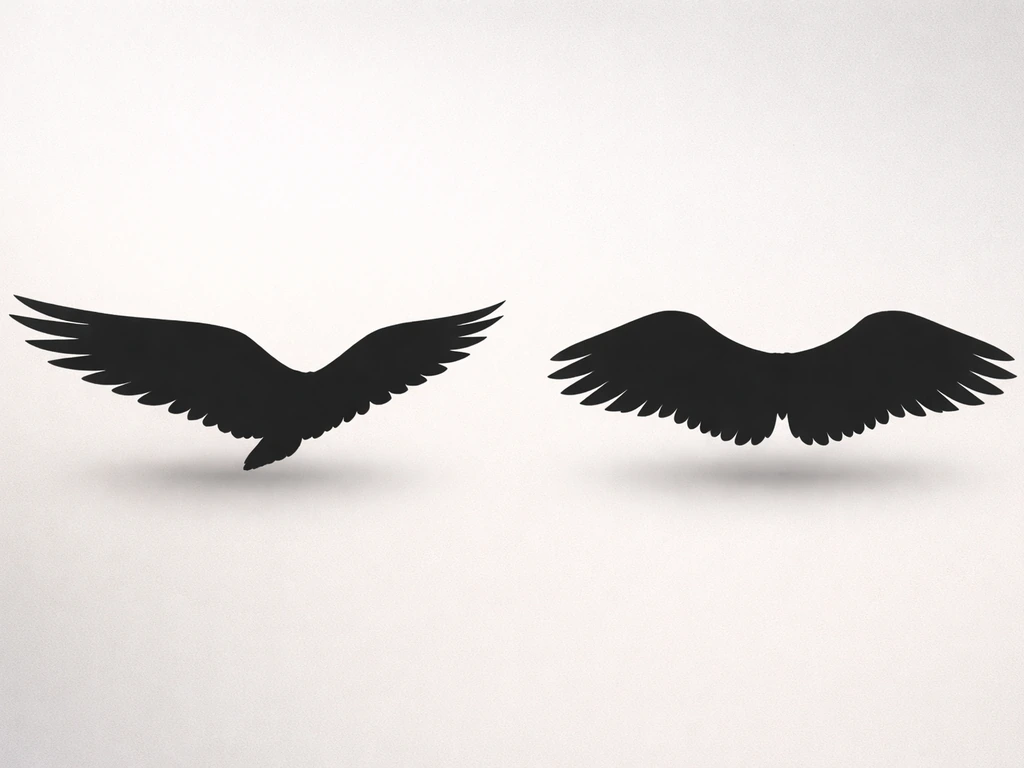
Aspect ratio is wingspan squared divided by wing area, basically a measure of how long and narrow a wing is. High aspect ratio wings dramatically reduce induced drag, which is why birds like albatrosses have those impossibly long, narrow wings. Wing loading is body weight divided by wing area. Lower wing loading means a slower sink rate and an easier time staying aloft in gentle thermals, which is why lighter birds with large wings can soar in conditions that would ground a heavier species. These two numbers together predict soaring ability better than almost any other measurement.
Birds also actively morph their wings mid-flight, adjusting feather spread, camber, and the angle of individual feathers to optimize aerodynamic performance across different speeds and conditions. Wingtip slotting (the spread 'fingers' you see on soaring hawks and eagles) reduces induced drag at low speeds, the same principle behind winglets on commercial aircraft. The leading-edge flow and the way separated tip feathers handle airflow also delay stall, letting the bird fly at steeper angles of attack without losing lift suddenly.
The biological checklist: can this bird actually soar?
Aerodynamics tells you what's possible. Biology tells you whether a specific bird can deliver it. There's a short checklist worth running through.
- Wing and feather anatomy: long, broad, or high-aspect wings in good feather condition are the foundation. Broken, missing, or waterlogged feathers compromise lift and increase drag immediately.
- Skeletal structure: soaring birds often have structural adaptations for holding wings extended without constant muscle effort. Some species have a locking mechanism in the shoulder joint that reduces muscle tension during long soaring bouts.
- Muscle power vs passive energy: soaring is passive compared to flapping. A bird in poor condition can still soar if conditions are good, because it isn't working hard. But it needs the muscular baseline to launch, steer, and land safely.
- Sensory and balance control: the vestibular system (inner ear) and proposed hip-localized balance sensing help birds make constant micro-adjustments to wing angle and body position in turbulent air. A bird with an inner-ear injury may struggle to maintain stable soaring posture.
- Body weight and fat reserves: an underweight bird may lack the momentum to launch and climb to usable thermals. An overweight bird (common in captive or hand-fed birds) has higher wing loading and needs stronger thermals to compensate.
It's also worth remembering that not every bird is built for soaring. Flightless birds, like ostriches, emus, and penguins, have evolved reduced or modified wings and the absence of functional flight anatomy entirely. They don't follow soaring mechanics at all; evolution traded flight for other advantages, and no amount of good weather will change that. This is a useful reminder that 'a bird will soar' is a conditional statement, not a universal one.
What triggers soaring: behavior and environment
Even a perfectly healthy hawk won't soar in flat, still, cold air. Soaring is triggered by a combination of environmental conditions and behavioral readiness. Here's what to look for.
Thermals: the main engine
Thermals form when the sun heats uneven ground surfaces, dark soil, asphalt, or south-facing slopes, and the warm air rises in columns or bubbles. They typically develop mid-morning as the ground heats up (usually after 9 or 10 a.m. on clear days) and peak in the early afternoon. High humidity reduces thermal strength because moist air is less buoyant than dry air. Clear, sunny days with light wind and warm temperatures are prime soaring conditions. You'll often see cumulus clouds forming at the tops of active thermals, which are essentially visual markers of rising air.
Slope lift and dynamic soaring
Slope lift (also called orographic lift) happens when wind hits a hillside, cliff, or ridgeline and gets deflected upward. Birds like ravens and red-tailed hawks exploit this constantly along ridge systems. Dynamic soaring, used most dramatically by albatrosses over open ocean, extracts energy from wind shear: the difference in wind speed between the wave surface and higher altitudes. The bird dives into slower air near the wave, turns into faster upper-air wind, gains energy, and repeats. It's one of the most energetically efficient flight modes known in any animal.
Behavioral sequence leading to soaring
Birds don't just leap into soaring. There's usually a behavioral sequence. A bird perched in morning sun is often thermoregulating and waiting for thermals to develop. As conditions warm, you may see it stretch wings, adopt an alert posture, and then launch and climb with initial flapping until it finds a thermal.
Once in rising air, it locks wings, begins circling tightly to stay inside the thermal column, and may spiral upward hundreds of meters before gliding off toward a distant destination or another thermal. Circling with extended wings and no (or minimal) wingbeats is the clearest field signature of active thermal soaring. Turbulence near terrain edges can also provide supplemental lift that extends soaring bouts when main thermals are weak.
How to safely observe and encourage soaring
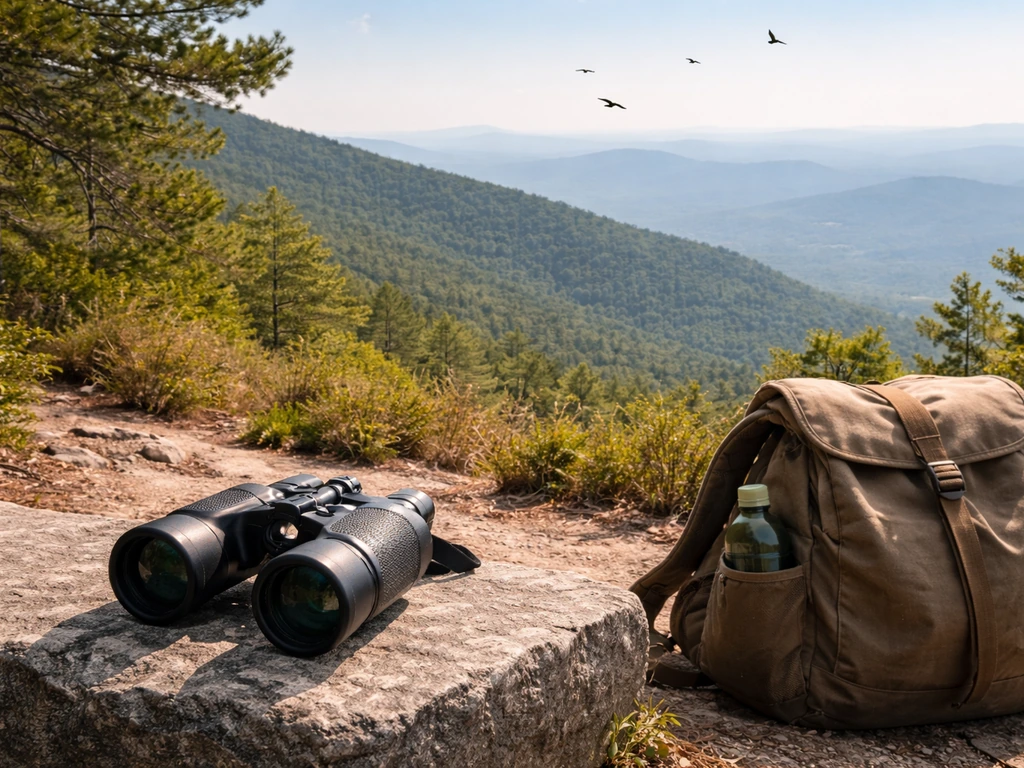
If you want to watch soaring birds, the single best thing you can do is pick the right place and time, then stay quiet and still. Here's a practical field setup.
- Choose a location with open terrain and thermal-generating surfaces: ridge systems, south-facing slopes, plowed fields, or rooftops near open land. Hawks, vultures, and eagles favor these areas.
- Arrive mid-morning on a clear, warm, low-humidity day. Thermal soaring typically begins between 9 a.m. and 11 a.m. and peaks around 1 to 3 p.m. Overcast or cold days suppress thermals significantly.
- Use binoculars or a spotting scope and find a vantage point with a wide sky view. You're looking for birds circling at altitude with wings extended and minimal wingbeats.
- Look for wing posture as the first field mark: soaring birds hold wings flat or slightly angled upward (a dihedral), often with splayed wingtips. Compare this to flapping birds, which show regular, rhythmic wingbeats.
- If you're watching from a ridge with slope lift, you may see birds soaring much lower, just above the slope, using the upwash from the hillside rather than a thermal.
- Maintain respectful distance. Ethical birdwatching means staying far enough away that the bird shows no stress response: no alarm calls, no posture changes, no sudden flushing. Back away immediately if the bird reacts to your presence.
- Avoid approaching nest sites entirely. Disturbance at or near a nest can cause abandonment or injury risk to chicks, and it's prohibited under wildlife protection laws in most jurisdictions.
For readers who want to go deeper on what flight behavior looks and feels like from a cultural and experiential angle, the fly like a bird meaning touches on why humans have always been fascinated by watching birds do exactly this.
If you're working with a bird in a training or rehabilitation context, the same environmental rules apply: thermals, slope lift, and a clear launch site matter. Young birds or birds recovering from injury may need to practice launching and initial climbing before they can sustain full thermal soaring. Don't rush this process; premature forced soaring attempts in poor conditions can exhaust a bird that isn't ready.
Species comparison: who soars, who flaps, and who can't fly at all
Not all birds soar equally, and the differences come down to wing morphology, body mass, and lifestyle. Here's how major flight strategies compare across bird types.
| Bird type / Example | Wing shape | Primary flight mode | Soaring ability | Key adaptation |
|---|---|---|---|---|
| Large soaring raptors (e.g., Golden Eagle) | Broad, slotted wingtips, moderate aspect ratio | Thermal soaring, slope soaring | Excellent | Wingtip slots reduce induced drag at low speeds |
| Seabirds / Albatross | Very long, narrow, high aspect ratio | Dynamic soaring, slope soaring over ocean | Exceptional (covers thousands of km) | Shoulder locking mechanism reduces muscle fatigue |
| Vultures (e.g., Turkey Vulture) | Broad wings, dihedral posture | Thermal soaring | Excellent | Low wing loading, dihedral improves roll stability |
| Medium passerines (e.g., Starling) | Short, rounded wings | Flapping with brief glides | Limited | Wing shape optimized for maneuverability, not soaring |
| Hummingbirds | Short, stiff wings | Near-continuous flapping (hover) | Essentially none | Extremely high wingbeat frequency, no soaring morphology |
| Flightless birds (e.g., Ostrich, Penguin) | Reduced or flipper-like wings | None (terrestrial or aquatic) | Zero | Wings evolved away from flight function entirely |
The albatross deserves a special mention. It can cover enormous ocean distances with almost no flapping by exploiting dynamic soaring, diving toward the wave surface into slower air and pulling up into faster upper winds repeatedly. It's one of the most refined soaring systems in the natural world, and it's built on a wing-locking skeletal adaptation that essentially removes the need for sustained muscle effort during flight. You can read more about the symbolic and literal weight of birds in the sky in the the bird flies in the sky meaning, which explores how different cultures have interpreted this kind of effortless movement.
The difference between a soaring specialist and a flapping-dominant bird isn't just about energy efficiency. It's about ecological niche. Soaring birds tend to cover large territories, hunt from altitude, or migrate vast distances. Flapping-dominant birds are often more maneuverable in dense vegetation, able to burst-fly away from predators, or built for sustained hovering near food sources. Evolution doesn't favor one over the other universally; it favors what works in a given environment.
Why a bird might not soar: troubleshooting guide
If you're watching a bird that you'd expect to soar and it isn't, or if a bird in a training or rehab context refuses to engage in soaring behavior, here's a structured way to diagnose what's going wrong.
Environmental mismatches
This is the most common cause. Thermals require warm, sunny, dry conditions. If it's overcast, cold, humid, or early morning, there simply may be no usable rising air. Wind direction matters too: headwinds aid soaring by increasing airspeed over the wing, but strong, turbulent, or cross-slope winds can make it impossible to maintain stable soaring posture. Check the weather first. A bird that won't soar on a cold foggy morning may soar perfectly well at noon the same day.
Injury or health issues
- Wing or feather damage: check for broken primary feathers, asymmetrical wing carriage, or drooping at rest. Even a single missing primary can significantly reduce lift and increase drag.
- Vestibular injury: a bird that tilts its head abnormally, circles involuntarily, or loses altitude unexpectedly during flight may have an inner-ear problem affecting balance control.
- Respiratory illness: birds with respiratory infections breathe harder at rest and tire quickly in flight. Soaring requires less effort than flapping, but the bird still needs to launch, steer, and manage turbulence.
- Nutritional status: underweight birds lack the energy reserves to sustain even passive soaring in marginal conditions. Overweight captive or hand-fed birds may have too high a wing loading for gentle thermals.
Age and experience
Young birds, particularly juveniles in their first season, often show poor soaring efficiency even with perfectly healthy bodies. They haven't yet learned to locate and center thermals efficiently, to read slope lift patterns, or to time their launches. Juvenile raptors frequently flap more than adults in identical conditions. This is normal, and it improves with experience over months to years.
Misidentifying the flight type
Sometimes the bird is soaring and you're not recognizing it as such. Soaring can look like very slow, almost lazy flight when the bird is well inside a thermal and barely moving relative to the ground. What helps: look for extended, locked wings (not folded or actively flapping), a gradual spiral or gliding path, and altitude maintenance or gain without effort. Confused about what you're seeing?
Accelerometry and biotelemetry research can distinguish thermal soaring from slope soaring from flapping by measuring heave and turning patterns, but for field observers, the simplest check is to ask: is the bird gaining or holding altitude without flapping? If yes, it's soaring. If it's descending steadily with fixed wings, it's gliding. If the wings are moving rhythmically, it's flapping.
One more thing worth checking: your own position. Observers who approach too closely can cause a bird to break out of a thermal prematurely or switch to evasive flapping. If you notice a bird that was soaring suddenly begin to flap and move away, you may have entered its comfort zone. Step back, reduce your profile, and give it space. This also applies in dreams and metaphor: if you've ever wondered about the meaning of dreams flying like a bird, the sensation of effortless ascent maps pretty directly onto what thermal soaring actually feels like from inside the bird's perspective.
Quick diagnostic checklist
- Check weather: sunny, warm, low humidity, light wind? If not, wait for better conditions.
- Check the bird's feathers: are all primaries intact and symmetrical?
- Check wing posture at rest: drooping, asymmetrical, or held awkwardly suggests injury.
- Check body condition: is the bird's weight appropriate for its species? (Keel bone should be felt but not prominent.)
- Check behavior: is the bird alert, responsive, and launching cleanly? Lethargy or reluctance to launch suggests health issues.
- Check your location: are you near terrain that generates slope lift or thermal-producing surfaces? Flat, cool, shaded ground won't help.
- Check the time of day: mid-morning to mid-afternoon is prime thermal soaring time in most temperate regions.
The phrase 'a bird will soar' is ultimately a promise that conditions make possible. It isn't guaranteed by species alone or by good intentions. But when the body is healthy, the wings are right, and the air is rising, the physics almost take over. Watching that happen, even once, is enough to understand why writers from Mariah Carey to ancient poets have reached for it as a metaphor for something beyond ordinary effort.
If you're curious how that metaphor has been used in music specifically, the fly like a bird Mariah Carey meaning unpacks it well alongside the biology. And for a broader look at the symbolic registers birds occupy in language and story, may the bird of paradise fly up your offers a useful, if more whimsical, cultural counterpoint.
For now, if you're heading out to watch birds today, pick a warm clear afternoon, find a ridge or an open field, bring binoculars, and look for the circling. That's where the soaring is.
FAQ
If I see a bird gaining altitude, does that automatically mean it is soaring?
In most cases, soaring starts only after the bird finds usable rising air, so you will often see an initial flapping burst during the climb, then a transition to locked, extended wings once it is centered in a thermal. A bird that never stops flapping is likely not in sustained soaring, even if it is gaining altitude.
How can I tell the difference between soaring, gliding, and slow flapping from far away?
Wing beats are the key field cue, but use context. A bird can glide after leaving a thermal, so look for sustained altitude maintenance or gain, repeated circling at roughly constant radius, and minimal wing motion. If the bird is straight-lining downward with fixed wings, that is gliding rather than soaring.
Can birds still soar on cloudy or hazy days?
Yes, but you must look for the right lift mechanism. Overcast days may still produce weak or patchy thermals later in the day, while ridges and cliffs can provide consistent slope lift when winds persist. If you are only watching open fields, you may miss soaring that is happening along terrain edges.
What weather pattern should I avoid if my goal is to spot thermals quickly?
Thermals are often weaker in very humid conditions, and the air can feel “thick” to you even before you can see good cues like cumulus clouds. If you want the best odds, prioritize clear openings, warm south-facing slopes (in the Northern Hemisphere), and late morning into early afternoon, when buoyant columns are most reliable.
How does wind direction affect whether a bird can maintain soaring posture?
Direction matters, not just speed. Headwinds can help by increasing relative airflow over the wings, but strong crosswinds and highly turbulent gusts can disrupt stable circling and push birds to switch back to maneuvering and flapping. For watching, seek light winds that allow smooth, repeatable turns.
Why does a soaring bird sometimes start flapping again after circling for a while?
Often, yes. If a bird is having trouble or the thermal is weakening, it may widen its turn, drift to a new updraft, or briefly resume flapping to re-enter lift. A gradual change in behavior can mean the bird is actively searching for the thermal rather than “giving up” immediately.
What mistakes do viewers commonly make that prevent birds from soaring longer?
Observing from too close can matter even if you are quiet. Birds may break out of a thermal early, then reposition into safer air, which can look like “no longer soaring.” A practical fix is to increase distance, avoid sudden movement, and keep your line of sight steady without approaching.
Do young birds soar differently than adults, even in the same weather?
Yes. Juveniles often circle less tightly, show more wing motion, and can be slower to center in the strongest part of a thermal. Expect more “messy” soaring patterns (wider turns, intermittent flaps) during their first season, even when conditions are ideal.
Can I confirm soaring type without specialized equipment?
You can, but only in a limited, safety-focused way. When tracking by measurement, researchers use sensors to quantify heave, turning rate, and motion patterns, which helps separate thermal circling from ridge-following. For casual fieldwork, a usable shortcut is: circling near the ground with altitude maintenance usually indicates thermal soaring, while along-ridge movement under steady wind is more consistent with slope lift.
What if I can’t see wing beats clearly, but I’m pretty sure it’s not just gliding?
Sometimes the bird is soaring but you are misled by scale. At distance, wing motion is hard to see, so rely on the “effort signature”: locked wings plus no rhythmic flapping, combined with altitude hold or gain. Also check for circling behavior, because true thermal soaring usually includes repeated turns.
Does having the “right” body and wings guarantee soaring in the wild?
Not exactly. Wing loading and aspect ratio are strong predictors of potential, but real performance depends on the immediate environment and the bird’s condition. A bird may have the “right” wings yet still fail to soar if lift is absent, if it is injured, or if it has not yet learned efficient thermal targeting.
Next Articles

Bird Has Flown Meaning: Definition and How to Respond
Understand the bird has flown meaning, when it’s used, and how to reply with examples for real-life conversations.
Prefix Meaning Flight or Bird: Definition and Examples
Learn the flight or bird prefix meaning, origin, examples, and a checklist to decode new words and avoid look-alikes.
Flyer Meaning Bird: What It Says About Flight Ability
Clarifies flyer meaning for birds and explains which species fly well and why, plus a checklist to verify in context.