
The short answer: Rüppell's griffon vulture holds the verified altitude record at 37,000 feet (11,278 meters), which is cruising altitude for a commercial jet. Bar-headed geese regularly cross the Himalayas above 29,000 feet. Common cranes, whooper swans, and several raptor species routinely soar well above 10,000 feet. Whether any of these birds are flying above the clouds near you today depends on one thing local conditions: specifically, where the cloud ceiling sits right now in your area. The good news is you can check that in about 60 seconds, and this guide will show you exactly what to look for, which birds to expect, and how to find them.
Which Bird Can Fly Above the Clouds? Top High Soarers

Marcus Chen
22 Mar 2026
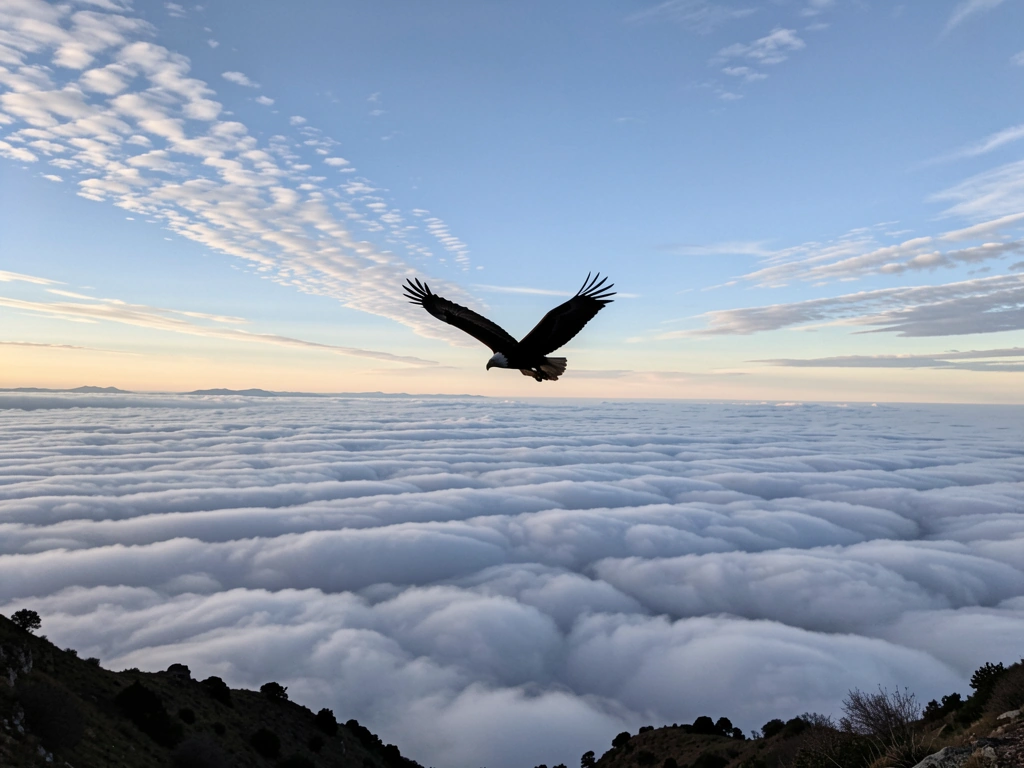
Real answer: which birds can actually fly above the clouds
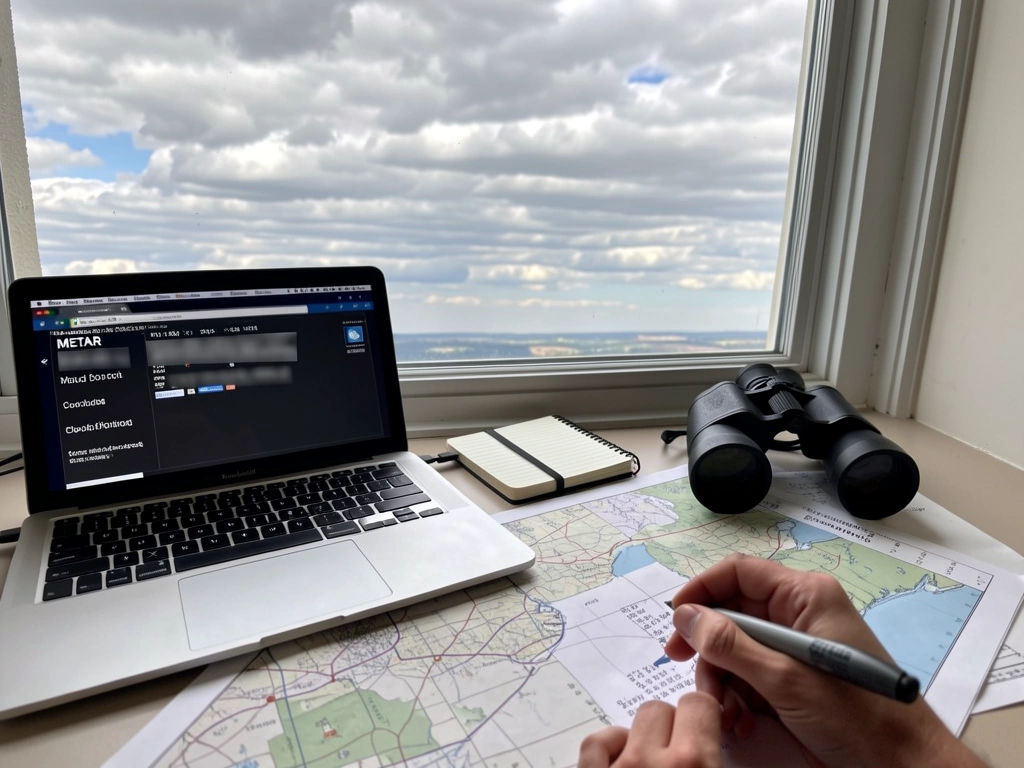
That said, some birds are genuinely built for extreme altitude in ways others simply are not. These are the ones most likely to be flying above any reasonable cloud ceiling you'd encounter: flying above any reasonable cloud ceiling you'd encounter bird is flying.
That said, some birds are genuinely built for extreme altitude in ways others simply are not. These are the ones most likely to be flying above any reasonable cloud ceiling you'd encounter:
- Rüppell's griffon vulture (Gyps rueppelli): documented at 37,000 feet over West Africa; the altitude record holder among birds
- Bar-headed goose (Anser indicus): routinely crosses the Himalayas at 20,000 to 29,000 feet during migration; physiologically the most studied high-altitude bird
- Common crane (Grus grus): confirmed migrations over the Himalayas at 16,000 to 20,000 feet
- Whooper swan (Cygnus cygnus): tracked by radar at 27,000 feet during migration over Northern Europe and the North Atlantic
- Andean condor (Vultur gryphus): regularly soars above 15,000 feet using Andean ridge thermals
- Golden eagle (Aquila chrysaetos) and Steppe eagle (Aquila nipalensis): recorded at 20,000+ feet during migration
- Alpine swift (Tachymarptis melba): hunts insects above cloud level in mountain environments, often above 10,000 feet
- Black-necked crane (Grus nigricollis): migrates across high Himalayan passes regularly above 16,000 feet
If you live in North America, Europe, or East Asia and want a practical shortlist of birds you might actually see above a typical cloud layer on a good soaring day, focus on large raptors (eagles, vultures, ospreys), migrating geese during spring and fall, and swifts in mountain regions. These are the birds most likely to be overhead and above a broken cloud deck when conditions are right.
How high birds actually fly: typical vs. record heights
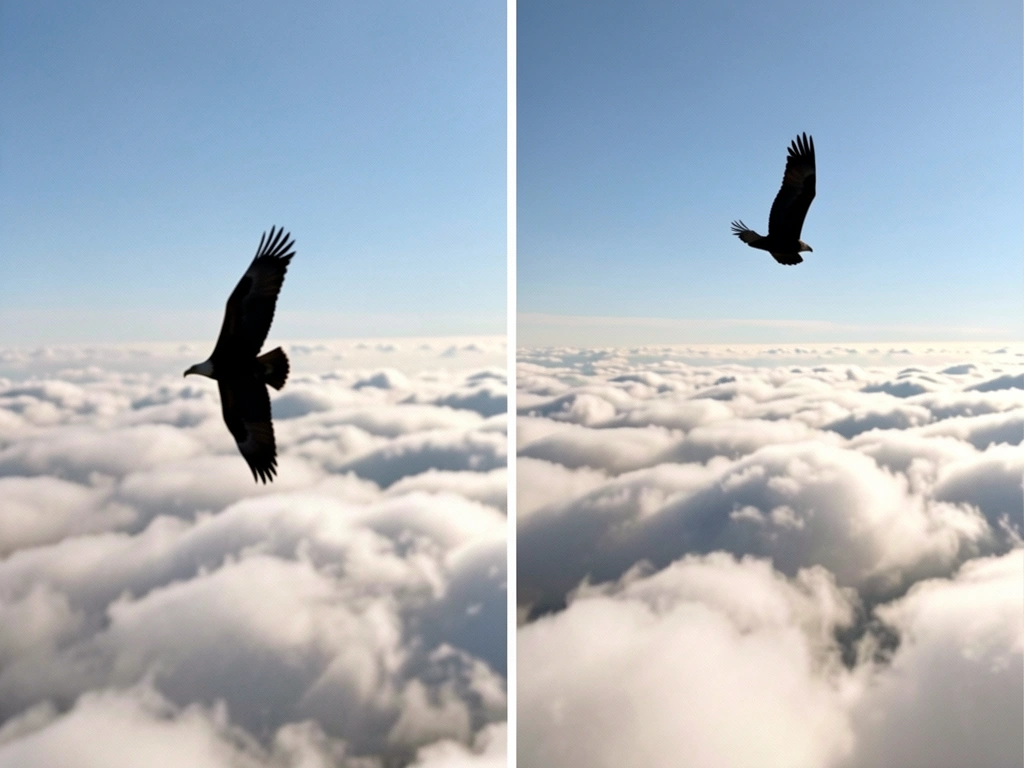
Most birds fly low, usually under 500 feet during routine foraging. Migration changes everything. When birds are crossing terrain, escaping weather, or riding favorable winds, they climb dramatically. Here's a practical breakdown of typical altitude ranges you should know:
| Bird / Group | Typical Flight Altitude | Confirmed Maximum |
|---|---|---|
| Rüppell's griffon vulture | 3,000–15,000 ft soaring | 37,000 ft (verified) |
| Bar-headed goose | 15,000–20,000 ft (migration) | ~29,000 ft |
| Whooper swan | 8,000–16,000 ft (migration) | 27,000 ft |
| Common crane | 3,000–10,000 ft (migration) | ~20,000 ft |
| Golden eagle | 2,000–10,000 ft soaring | ~20,000 ft |
| Andean condor | 5,000–15,000 ft soaring | ~18,000 ft |
| Alpine swift | 2,000–8,000 ft hunting | ~10,000 ft |
| Red-tailed hawk (common raptor) | 1,000–5,000 ft soaring | ~8,000 ft |
For context, cloud ceilings in the U.S. on a typical fair-weather day with cumulus development run between 3,000 and 8,000 feet AGL (above ground level). That means a golden eagle or any large soaring raptor on a good thermal day has a realistic chance of being above the cloud base, especially in the afternoon when thermals peak. The Rüppell's vulture and bar-headed goose records are extraordinary edge cases, but they illustrate what bird physiology can actually handle.
Why some birds can do this: the physiology behind high-altitude flight
Flying at altitude is hard. The air is thin, cold, and low in oxygen. A human at 20,000 feet without supplemental oxygen loses coordination within minutes. Birds that routinely cross those heights have evolved specific physiological solutions that we've only recently started to fully understand.
Hemoglobin with a high oxygen affinity
Bar-headed geese have a modified hemoglobin that binds oxygen more efficiently at low partial pressures. A single amino acid substitution in their alpha-hemoglobin chain is enough to give their blood a measurable advantage at altitude. Rüppell's griffon vulture has a similar adaptation in its gamma-hemoglobin subunit. This is not a minor tweak: it's the difference between functional flight and collapse at 20,000 feet.
Parabronchial lungs and air sacs
Bird lungs don't work like mammal lungs. Instead of breathing in and out of the same space, birds move air unidirectionally through a system of air sacs and parabronchi. This means fresh, oxygenated air is always moving across the gas-exchange surface, even during exhalation. There's no "dead air" sitting in the lungs. At altitude, where each breath delivers less oxygen, this efficiency becomes critical. It's roughly equivalent to a mammal getting double the oxygen yield per breath.
Wing loading and soaring strategies
High-altitude birds tend to have low wing loading (a lot of wing surface area relative to body weight), which lets them generate lift even in thin air. Large soaring birds like vultures and condors exploit thermals: columns of rising warm air that can lift them thousands of feet with almost no active flapping. Albatrosses and other seabirds use a different strategy called dynamic soaring, where they extract energy from wind speed gradients just above wave surfaces, essentially banking energy from the environment rather than burning muscle. Both strategies minimize oxygen cost, which is exactly what you need when the air is thin.
Temperature tolerance and metabolic rate
At 20,000 feet, temperatures typically run around -20°C to -30°C (-4°F to -22°F). High-altitude migrating birds regulate body temperature efficiently through dense plumage and metabolic heat, and they often choose to climb during daylight hours when solar radiation adds warmth. Bar-headed geese have been observed descending into valleys at night and reclimbing during the day, essentially using terrain to manage their thermal budget.
Best places and conditions to see high-flying birds
Knowing which birds can fly high is one thing. Putting yourself in a position to actually see them is another. Location and timing matter enormously here.
Weather conditions that matter most
You want a day when the cloud ceiling is high and broken (not solid overcast), and thermals are developing. The ideal window is a sunny to partly cloudy day with a high ceiling, typically above 5,000 feet, in the late morning to mid-afternoon when thermals are strongest. Avoid days with solid overcast (OVC) or low ceilings: soaring birds can't use thermals that don't build, and they stay low or grounded. You can check the current cloud ceiling at your local airport by pulling up a METAR on AviationWeather.gov. Look for the sky condition codes: SCT (scattered) or BKN (broken) followed by a number tells you the cloud base in hundreds of feet. For example, BKN050 means a broken layer at 5,000 feet AGL. That's your ceiling. Birds riding thermals on a day like that can easily punch above it.
Locations where you're most likely to see them
- Mountain ridgelines and passes: updrafts and ridge lift concentrate soaring raptors; classic spots include the Appalachian ridge in eastern North America (Hawk Mountain in Pennsylvania being a premier example), the Pyrenees, and the Himalayas
- Coastal cliffs and headlands: updrafts along sea cliffs keep birds aloft with minimal effort; albatrosses, gannets, and large gulls use these regularly
- Open grasslands and agricultural areas: ground heats unevenly and generates strong thermals; vultures, eagles, and buteos concentrate here during warm afternoons
- River valleys during migration: geese and cranes funnel through valleys using prevailing winds; look up during spring and fall migration windows
- Volcanic peaks and plateau edges: updrafts along escarpments can send condors and large eagles very high in short order
Timing your observation
Thermals don't really get going until mid-morning, roughly 10 AM to 2 PM local time, and they peak in the early afternoon before the surface cools. This is your prime window for seeing soaring birds reach high altitudes. During migration season (March through May for spring, August through November for fall in the Northern Hemisphere), the volume of birds passing over increases sharply. Setting up at a ridgeline hawk-watch site on a clear afternoon during peak migration weeks is probably the single most reliable way to see birds reach high altitudes above cloud level.
How to identify them from the ground
When a bird is a tiny speck above scattered clouds, field marks like color and beak shape become useless. What you can use are size, silhouette, wing posture, and flight behavior. These are the cues that actually work at altitude. For a quick comparison on the wing and tail pattern, also consider a bird with white tail when flying.
Wing posture and soaring style
- Flat wings held horizontal: eagles (golden, bald) often hold their wings flat or slightly bowed; they tend to soar in wide circles
- Wings in a shallow V (dihedral): turkey vultures are the classic example in North America; they rock side to side while soaring, almost never flap, and tilt noticeably in wind
- Long, narrow, straight wings: albatrosses, gannets, and swifts; these birds bank steeply and glide at speed rather than circling slowly
- Broad, fingered wing tips: large buteos and condors; the spread primary feathers at the wingtip are visible even at distance and reduce induced drag during soaring
- Rapid shallow flaps between glides: swifts and falcons; these birds alternate bursts of flapping with glide phases and move across the sky rather than circling
Practical tools to confirm what you're seeing
Binoculars in the 8x42 or 10x42 range are your most important tool. A spotting scope helps if you have one. For species confirmation, Merlin Bird ID (Cornell Lab) is excellent: use the "Sound ID" feature if the bird calls, or the photo ID if you can get a shot. eBird's explore map will show you which species have been reported recently in your area, which narrows your candidates before you even step outside. Local birding groups and hawk-watch counts (many post daily totals online) are also invaluable for real-time data on what's moving through and at what altitudes.
Regional species to focus on
| Region | Most Likely High-Altitude Species |
|---|---|
| Eastern North America | Turkey vulture, golden eagle, bald eagle, broad-winged hawk (migration) |
| Western North America | California condor, golden eagle, Swainson's hawk, prairie falcon |
| Europe / Mediterranean | Griffon vulture, black stork, common crane, white stork (migration) |
| South America (Andes) | Andean condor, black-and-chestnut eagle |
| South Asia / Himalayas | Bar-headed goose, lammergeier, Himalayan griffon, steppe eagle |
| Sub-Saharan Africa | Rüppell's griffon vulture, lappet-faced vulture, martial eagle |
| Oceanic / Coastal (global) | Wandering albatross, northern royal albatross, northern gannet |
Safety, ethics, and when to call in the experts
Most of the birds in this guide are legally protected, and for good reason. Before we get into when to contact experts, here are the baseline rules for responsible observation of high-flying birds.
Observation ethics
- Stay at least 300 feet from active raptor nests; closer than that causes stress, nest abandonment, and sometimes chick death
- Never play bird calls repeatedly near nesting areas to attract birds; it disrupts breeding behavior
- Don't use drones to follow or photograph high-flying birds; it constitutes harassment under the Migratory Bird Treaty Act in the U.S. and equivalent laws elsewhere
- If you are at a hawk-watch site with a crowd, keep movement and noise low, especially during active migration flights
- Log your sightings on eBird: citizen science data on altitude and behavior genuinely helps researchers
If you find an injured bird
Large raptors (eagles, vultures, condors) and migratory waterbirds occasionally come down injured from altitude, sometimes from wire strikes, collisions with aircraft or structures, or exhaustion during migration. If you find a large bird grounded and unable to fly, do not attempt to handle it yourself. Raptors have powerful talons that can cause serious injury even when the bird is weak. The right steps are to keep people and pets away, note the exact location, and call a licensed wildlife rehabilitator immediately. In the U.S., the Wildlife Rehabilitators Network and state fish and wildlife agencies can connect you to licensed help within your county. For vultures or condors specifically, contact your nearest raptor center or the Peregrine Fund: these birds may be carrying tracking tags that need to be reported.
Safety for observers
If you're heading to a ridgeline, mountain pass, or coastal cliff to observe high-flying birds, standard outdoor safety applies: check weather before you go (conditions change fast at altitude), bring water and sun protection (you'll be looking up for long periods in open terrain), and let someone know your plan. Hawk-watch sites in fall migration can also get cold quickly even on sunny days, so dress in layers.
Your checklist for right now: next steps today
Here's the practical sequence if you want to go from reading this to actually having a shot at seeing a bird fly above the clouds today or this week:
- Check the cloud ceiling at your nearest airport: go to aviationweather.gov, enter your airport code in the METAR search, and look for BKN or SCT codes followed by altitude in hundreds of feet. BKN050 = 5,000 ft ceiling. Write that number down.
- Check the forecast thermals: a sunny afternoon with temperatures rising through midday means thermals will build. Look for a forecast high above 60°F (15°C) and at least partial sun. That's your soaring window.
- Identify your regional species candidates: use the table in this article or open eBird's Explore map, enter your county, and filter by recent sightings. This tells you exactly which large soaring birds have been reported near you in the last 30 days.
- Find a local hawk-watch or open ridgeline: search Hawk Migration Association of North America (HMANA) for your nearest site if you're in North America. European readers can check the Raptor Watch network. Coastal readers: find the nearest headland with a sea view.
- Gear up: 8x42 binoculars minimum, Merlin app installed and updated, comfortable clothes for standing and looking up for 1 to 2 hours. A folding chair or blanket for lying on your back makes high-angle observation much easier.
- Go between 10 AM and 2 PM local time on your best-weather day this week. Position yourself with the sun at your back so you're not squinting into light.
- Log what you see on eBird: even if you can't confirm species, noting large soaring birds at high altitude contributes to migration data that researchers actually use.
- If you see something you can't identify, photograph it (even a phone shot of a silhouette helps), upload it to Merlin or iNaturalist, and post it to your local birding group on Facebook or a birding forum. The community is fast and helpful.
The birds are genuinely up there. On the right day at the right spot, watching a golden eagle or a kettle of broad-winged hawks spiral through and above a cloud deck is one of the most striking things you can see without any equipment beyond your own eyes and a bit of patience. If you happen to spot the bird is flying above the house, use the same cloud-base guidance to confirm it is truly above the cloud layer. You just need to know when and where to look, and now you do.
FAQ
How can I tell if a bird will actually be visible above the cloud layer, not just theoretically above it?
If you are chasing “above the clouds,” start by reading the ceiling in feet AGL from METAR, then think in terms of visibility, not just the number. Even when the ceiling is high, heavy haze can hide the bird once it climbs, so pick days with good visibility (often 6 miles or more) and a broken or scattered layer, not solid overcast.
Do SCT and BKN cloud conditions change which birds I should expect to see?
For scattered clouds (SCT), a bird can be visible both above and within the layer, so target the gaps and look for vertical spiraling on thermal days. For broken clouds (BKN), the sky has fewer clear holes, so you should watch where the bird crosses the cloud edge, then track it as it rides lift upward above the deck.
What should I do if the forecast is solid overcast (OVC), can I still see birds above clouds?
On an overcast day (OVC), even high flyers usually lose access to strong thermals, so sightings tend to be lower and harder to identify. If you must go, shift expectations toward fast fliers that can use wind or coastal updrafts, and plan for shorter viewing windows until the cloud breaks.
When the bird is too far to identify by color, what field signs actually work at altitude?
If you see only a few birds as specks, focus on behavior cues that stay visible at distance: slow, banking circling suggests thermal soaring, while straight, level, fast flight suggests transit. Size cues can help too, for example, vultures and large geese tend to look bulkier with broader, more splayed wing posture when gliding.
What time of day is most likely to produce birds crossing above the cloud base?
Timing matters more than most people expect. Thermals usually peak after late morning, roughly 10 AM to mid-afternoon local time, and many migrants may shift altitude as daylight warms the landscape. If you start at 9 AM and nothing happens, don’t give up too early, but also avoid waiting past mid-afternoon when surface cooling begins.
What magnification setup is best for tracking birds above scattered clouds without losing them?
Binoculars help you confirm silhouette and wing posture, but a spotting scope makes a big difference once birds are tiny and distant above a deck. A common mistake is using high magnification too early, which makes tracking harder; instead, use binoculars first to “find” the flight path, then bring the scope on the moment the bird turns or spirals.
How should I use eBird or local reports differently when I’m specifically looking for altitude above the clouds?
Avoid relying on “reported recently” maps alone, because a species can be present in your region but not at the altitude you care about. Use them to narrow contenders, then confirm with a hawk-watch count, local group notes, or day-of observations that mention soaring behavior or high passes.
What’s the safest way to respond if I find a high-altitude bird that’s grounded?
If a bird crashes or lands, keep a safe buffer and do not try to move it, even if it looks small or weakened. Raptors can injure people with talons, and vultures or condors may require specific reporting if they have tracking tags. Call a licensed wildlife rehabilitator or your state agency promptly, and note location, time, and any visible leg bands or tags.
How does wind affect whether birds end up above the cloud base?
Wind can either help soaring or trap birds below the layer. If winds are very strong or shifting, birds may ride them without needing thermals, but they may also stay lower to stay sheltered from turbulence. When you check weather, prioritize a steady, workable wind profile and watch for smooth, controlled circling rather than chaotic flapping.
Are there times of day when visibility makes “above the clouds” sightings much less likely, even if conditions look good?
Altitude visibility is often worse at dawn and late evening, even with clear skies, because of low cloud remnants, mist, and glare. If you want the highest chance of seeing a clean cloud deck boundary, aim for daylight hours with rising thermals and reduce distractions by choosing a position where the sun is not directly in your line of sight.
Next Articles

Which Bird Can Fly Over Mount Everest? The Definitive Answer
Definitive answer on which birds can fly at or above Everest altitude, with how to verify high-altitude records.
The Bird Is Flying Above the House: What to Do Today
Step-by-step actions to deter a bird flying above your house, identify causes, and handle nests safely without harm.

Bird Is Bored of Flying: Fix It With Checks and Training
Diagnose why your bird is bored of flying, check health and stress, then use enrichment and safe flight training steps.