If your bird has suddenly stopped wanting to fly, lands after two seconds, or just sits there when you know they used to zoom around, something has changed. The good news: most of the time, this is fixable. The tricky part is figuring out whether you're dealing with a behavioral issue (boredom, fear, routine disruption) or a health issue (pain, respiratory trouble, injury) before you start changing anything. This guide walks you through exactly that, in order, starting today.
Bird Is Bored of Flying: Fix It With Checks and Training

Marcus Chen
22 Mar 2026
What 'bored of flying' usually actually means
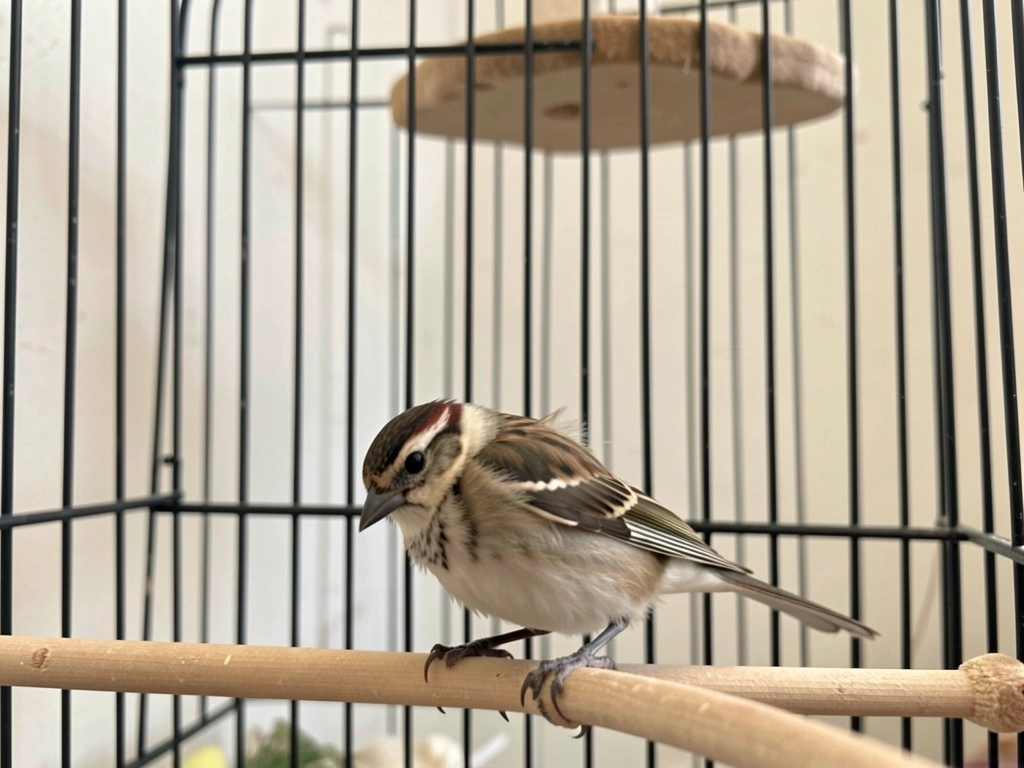
Birds don't get bored of flying the way a person gets tired of their commute. Flight is instinct. When a bird stops wanting to fly, something is making it less appealing or more difficult than staying put. The phrase 'bored of flying' is usually a human interpretation of behaviors like: landing almost immediately after takeoff, refusing to leave the cage or a favorite perch, flying only short distances and then stopping, hiding in a corner or low in the cage, or only flying when startled rather than voluntarily. Each of these has a different root cause, and they don't all get the same fix.
The most important split to make right away is behavioral vs. physical. A bird that's scared, overstimulated, under-stimulated, or in a disrupted routine will often look identical to a bird that's in pain or struggling with a respiratory issue. You need to rule out the health side first, because starting a flight enrichment program with a bird that has a wing injury or is fighting an infection will make things worse.
Health and stress checks to do before changing anything
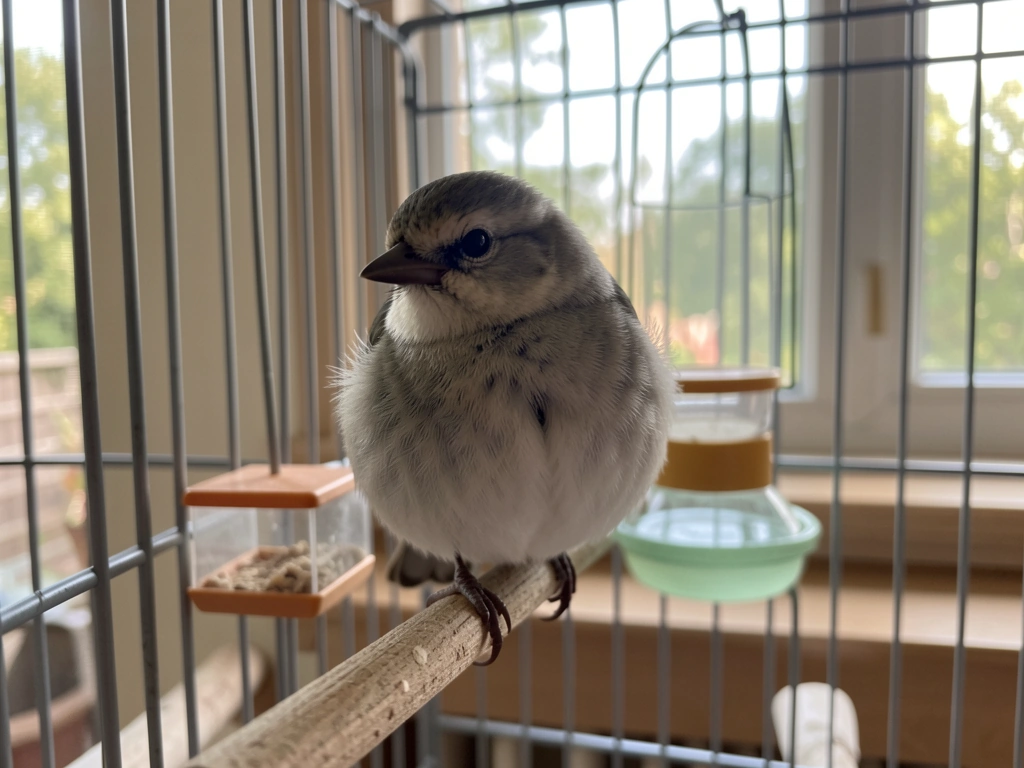
Birds are masters at hiding illness. This is an evolutionary survival strategy: show weakness in the wild and you become a target. By the time a bird looks obviously sick, the problem has often been developing for a while. So your first job is a careful, calm observation session before you touch anything or try any new training.
Watch before you touch
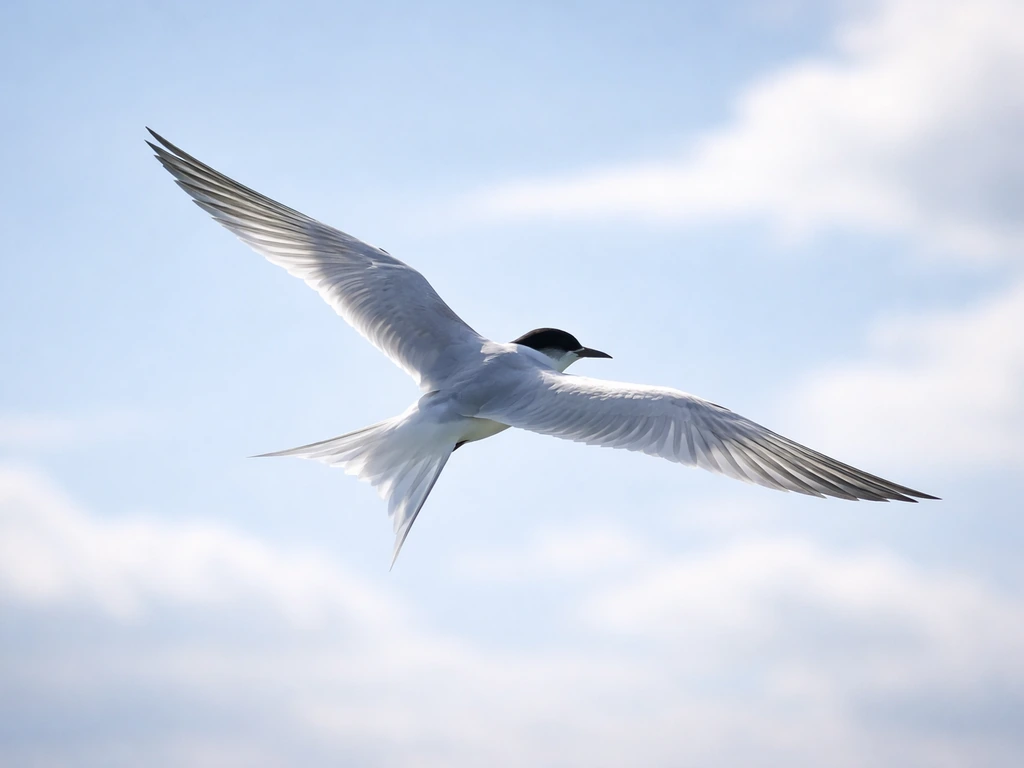
Sit near the bird's space without making a big deal of it. You want to see how they behave when they think no one is watching. Look for posture first: a bird that is ruffled up, puffed out, or holding one wing slightly lower than the other is signaling discomfort. A tail that looks rough and unkempt (sometimes described as looking like a 'pipe cleaner') is a known pain indicator. A bird with a white tail when flying is a useful detail to note while you observe flight behavior and posture. Ruffled feathers combined with reluctance to move a limb point toward something physical, not behavioral.
Watch breathing closely. There should be no open-mouth breathing at rest, and after brief activity or mild stress, open-mouth breathing should resolve quickly. Prolonged open-mouth breathing after play or handling is not normal. Any panting, wheezing, or labored breathing at rest is a red flag that warrants a vet call, not a training session.
Quick at-home physical check
With the bird gently but securely held (wrap loosely in a small towel if needed to reduce stress), run through this short check. Feel along the keel bone, the ridge that runs down the center of the chest between the pectoral muscles. It should be distinctly palpable but not sharp like a blade. A keel that feels very prominent indicates weight loss. According to avian veterinary guidance, if a bird loses weight for three consecutive days or drops around 10 percent of its body weight over any period, that warrants evaluation. If you have a scale and have been tracking weight, check those numbers now.
Check the wings gently. Support the full wing at each joint (shoulder, elbow, wrist) rather than pulling on the wingtip, and slowly extend each wing to a natural open position. Watch the bird's face and posture for any reaction to palpation. Flinching, biting, vocalizing in distress, or refusing to extend a wing all suggest pain in that area. Do the same for the legs: check each foot and leg for swelling, hot spots, or any favoring. A bird that's protecting one leg or one wing is almost certainly experiencing discomfort there.
Also look at the face: check for any discharge or crusting around the nostrils, eyes, or mouth. Look inside the beak if the bird will allow it, and check that the inside of the mouth looks a normal healthy pink rather than pale or discolored. Any discharge, crusting, or color change is a reason to contact an avian vet within 24 hours.
Stop immediately and call a vet if you see any of these
- Sitting on the bottom of the cage for an extended period
- Extreme weakness, lethargy, or unresponsiveness
- Breathing with the tail bobbing noticeably up and down (a sign of respiratory effort)
- Open-mouth breathing that doesn't resolve within a minute or two of rest
- Wings drooping at the sides without being held up at all
- Lameness, dragging a leg or wing, or refusing to perch
- Wet or matted feathers around the face or head
- Sudden, severe change in behavior with no obvious environmental cause
If none of those apply and your bird passes the basic physical check, you can move forward with the enrichment and behavioral work below. If you are even slightly unsure, a quick call to an avian vet for a phone consult is always worth it before you start.
Environmental enrichment to give your bird reasons to move
A lot of birds that appear 'bored of flying' are actually just under-stimulated overall. They have no compelling reason to go anywhere because everything they need is right where they are sitting. If you increase how interesting and rewarding the bird's environment is, you often see more spontaneous movement, which rebuilds the habit and confidence needed for longer flights.
Set up foraging opportunities
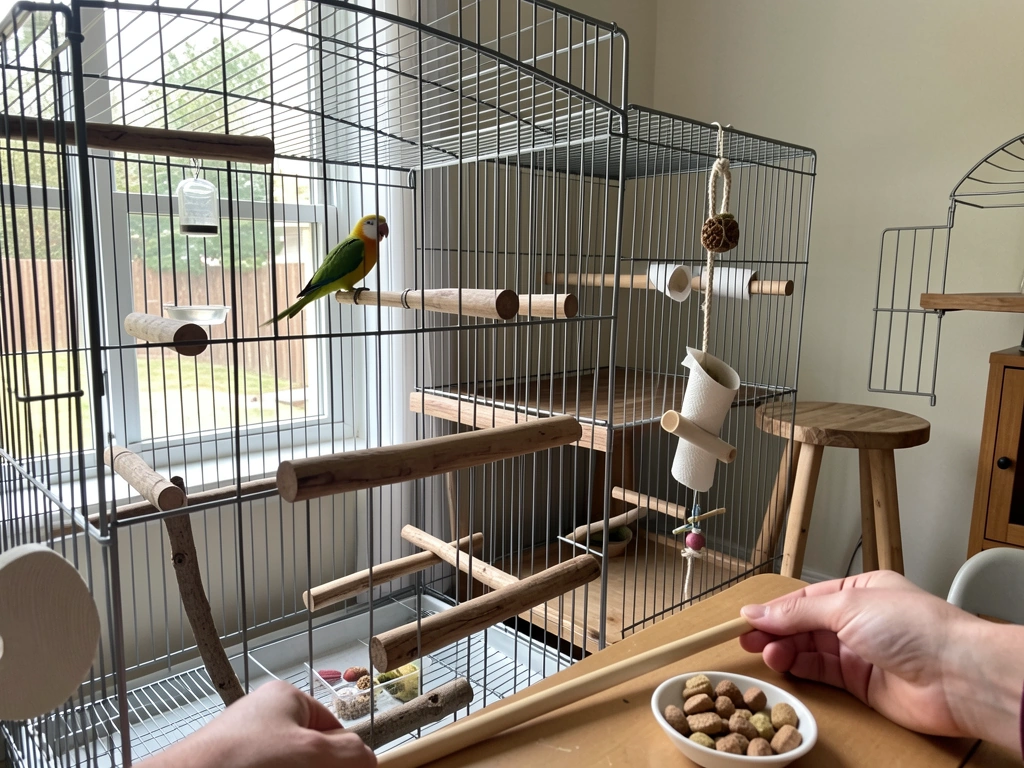
In the wild, birds spend a significant portion of their day working for food. In a cage with a full bowl, there is no 'work' involved at all. Replace or supplement the food bowl with foraging setups: wrap treats in paper or palm leaves, hide pieces of food inside foraging toys, stuff pellets into a rolled-up piece of paper towel, or tuck fruit into the cage bars. The bird should have to move, problem-solve, and explore to eat. This alone often increases overall activity levels noticeably within a few days. Just make sure any foraging toy you introduce is free of small detachable parts that could cause entrapment, and avoid anything made from potentially toxic materials.
Create a more interesting physical space
Perch variety matters more than most people realize. A cage full of identical round dowel perches at the same height gives a bird nowhere interesting to go. Add perches at different heights and diameters (natural wood branches like manzanita, java wood, or rope perches work well), climbing nets or ladders, and foraging stations at different levels so the bird has a reason to travel vertically as well as horizontally. If you have a play gym or tabletop stand outside the cage, position it in a spot with visual interest: near a window with a bird feeder outside is a classic choice. Visual stimulation counts as enrichment too.
Routine matters as much as the physical setup. Birds are highly sensitive to changes in daily schedule, and a disrupted routine (new work hours, a moved cage, a new person or pet in the home) is one of the most common triggers for behavioral withdrawal including reduced flight. If you notice the bird is flying above the tree instead of returning to preferred perches, that can also point to a stress or health issue to investigate. Try to keep feeding, out-of-cage time, and interaction happening at predictable times each day. Predictability reduces background stress, and a less stressed bird is a more active one.
Safe, structured flight practice (and what to do if your bird won't yet)
Once you're confident this isn't a health issue, you can start rebuilding flight confidence in short, positive sessions. The goal is not to force the bird to fly more but to make flying feel easy, safe, and rewarding so the bird chooses to do it.
How to run a flight session
- Keep sessions short, around 10 to 15 minutes maximum. End before the bird gets tired or frustrated, always on a positive note.
- Start with recall from very short distances, essentially just across the room. Stand close, hold out your hand or a target stick, and reward the bird immediately when it comes to you.
- Use a high-value treat the bird only gets during training sessions. This keeps motivation high. The moment the treat becomes ordinary, it loses its power.
- Gradually increase distance over multiple sessions, only moving farther apart when the bird is flying to you eagerly and without hesitation at the current distance.
- If the bird hesitates or refuses, shorten the distance back to the last successful point. Never push past the bird's comfort level in a single session.
- After the session, give the bird quiet time to rest. Flight is genuinely physically demanding, and recovery time is part of the program.
Target training is one of the most effective tools for rebuilding flight willingness. Teach the bird to touch a target stick (a chopstick or wooden dowel works fine) with its beak in exchange for a treat. Once the bird understands the game, you can hold the target at gradually increasing distances to encourage movement and eventually short flights. The key is that the bird is always choosing to move toward something rewarding rather than being chased or pressured.
If flying is currently unsafe or the bird is very reluctant
If your bird is clipped, older, recovering from something, or simply too fearful right now to fly safely, don't force it. If wing clipping is being considered, Best Friends Animal Society recommends treating it as blank" rel="noopener noreferrer">case-by-case and having an avian-experienced veterinarian handle routine grooming needs. Climbing, stepping up, walking between perches, and foraging-based movement are all valid alternatives that maintain physical and mental activity without the risk of crash-landing. A heavily clipped bird that falls and hits the keel bone or beak can develop fear associations with movement that are much harder to undo, so working within the bird's current physical capabilities is always the smarter starting point.
Behavioral signs to track over the next few days
Once you start making changes, you need a way to know whether things are improving, staying the same, or getting worse. Don't rely on gut feeling: write things down. Each day for the next week, note the following.
- How many times the bird flew voluntarily (not just when startled)
- How far and for how long each flight lasted
- Posture at rest: puffed, alert, or somewhere in between
- Breathing quality: any open-mouth breathing or audible sounds
- Appetite and interest in foraging activities
- Engagement with toys or enrichment items
- Vocalizations: more or less than usual, or any changes in type
If you see steady improvement across these markers over five to seven days, you're on the right track. If things plateau or any health-related signs appear (breathing changes, appetite drop, posture worsening), stop the training program and contact your avian vet. A sudden behavior change, especially one that comes out of nowhere, is always worth a professional opinion even if you can't pinpoint a cause.
Troubleshooting the most common causes
If your bird passed the health check but still isn't responding to enrichment and training after a week, use this table to cross-reference the most likely culprits.
| Possible cause | Signs that point to it | What to try first |
|---|---|---|
| Fear or past crash-landing | Hesitates at the edge of perch, watches landing spots carefully, won't fly to new locations | Shorten flight distances dramatically; rebuild from step-ups only; check for hazards in the flight path |
| Wing clip too severe | Bird drops fast, flaps hard but gains no lift, lands hard | Pause flight training; allow feathers to grow; switch to climbing and foraging enrichment in the meantime |
| Perch discomfort or pain | Shifts weight frequently, grips unevenly, avoids certain perches | Replace all dowel perches with varied-diameter natural wood or rope; check feet for bumblefoot (swollen, red, or crusty footpads) |
| Dietary fatigue or deficiency | Dull feathers, low energy, not interested in treats | Review diet for nutritional completeness; introduce variety; consult an avian vet if you suspect a specific deficiency |
| Routine disruption | Behavior change coincided with a schedule change, new pet, or moved cage | Re-establish predictable daily schedule; return cage to original position if possible; allow adjustment time |
| Overstimulation or too much out-of-cage chaos | Bird retreats and hides, flies to get away rather than to explore | Reduce noise and activity near the bird's space; give the bird a defined 'safe' perch it can always retreat to |
| Understimulation or boredom | Bird sits still for long periods, feather-destructive behavior, seems lethargic but health checks are clear | Increase foraging complexity; rotate toys weekly; add out-of-cage supervised exploration time |
Fear deserves a special mention here because it's easy to misread as laziness or disinterest. Birds use flight to escape frightening situations, and when a bird has experienced pain from a hard landing or has been startled badly during flight, it can develop a real aversion to flying. That fear-driven refusal looks exactly like a bird that 'doesn't want to fly,' but pushing through it without addressing the underlying fear will just make the association worse. Some birds simply are not adapted to long-distance flight, which can limit how high they can fly in the real world which bird can fly over mount everest. Slow, positive, short sessions with plenty of reward are the only way through this.
When to stop doing this yourself and get professional help
There is a clear line between a behavioral training challenge and a situation that needs professional eyes. Call your avian vet, not tomorrow but today, if you observe any of the emergency red flags listed earlier in this article. Also contact a vet if the bird has not improved at all after seven to ten days of consistent enrichment and short positive training sessions, if appetite has dropped noticeably, or if the bird is losing weight.
An avian vet can do a proper physical examination including wing range-of-motion assessment, keel palpation, and respiratory evaluation in a way that a home check simply cannot replicate. They can also run bloodwork or imaging if something structural or systemic is suspected. This is especially important if your bird is older, has not had a wellness exam in more than a year, or if the change in flight behavior came on suddenly rather than gradually.
If the health check comes back clear but the bird still won't engage with training, an experienced bird trainer (specifically one who uses positive reinforcement methods) is worth consulting. A trainer can observe body language in real time and catch things you might miss because you're too close to the situation. Look for someone with specific experience in parrot or companion bird behavior rather than a general dog-and-cat trainer.
Your action checklist for today
- Do the observation and at-home health check right now, before changing anything.
- If any emergency signs are present, call your avian vet immediately.
- If the bird passes the health check, set up at least one new foraging opportunity today.
- Check all perches and replace any that are uniform dowels with varied natural wood options.
- Start a simple daily log: posture, breathing, voluntary flight, appetite.
- Run one short (10-minute) positive training or recall session today, starting at a very short distance.
- Plan to reassess after seven days using your log. If things aren't improving, book a vet appointment.
FAQ
Can I treat my bird with training if it looks normal otherwise?
No. Even if the behavior looks like “boredom,” weight loss, changes in breathing, and one-sided favoring (one wing or one leg protected) can start subtly. If you notice any of those, pause training and book an avian vet review before adjusting flight enrichment.
What breathing signs should make me stop and call a vet immediately?
Yes. If open-mouth breathing persists beyond mild activity and calm recovery, or you see wheezing, clicking, or labored breathing at rest, treat it as a health issue rather than a motivation issue and seek an avian vet promptly.
How often should I weigh my bird, and what counts as a concerning change?
If you have a scale, aim to record weight at the same time each day (for example, morning, after toileting) and compare day-to-day. A single “low” reading can happen, but three consecutive days down or an approximate 10% drop over time is a reason to get an evaluation.
Is it safe to repeat the wing and body checks if my bird resists?
Avoid it. The most useful checks are calm observation and gentle palpation, wing support at the joints, and visual assessment. If the bird flinches strongly, bites, or refuses to extend one side, stop and get professional input rather than trying again later the same day.
My bird is startled easily, does that change how I should rebuild flight?
Yes. A big stressor is trying to “make” the bird fly when it is already associating movement with a scare (hard landing, a sudden startle, or a fall). In that situation, keep sessions short, use rewards, and consider that the next step may be treating fear rather than increasing flight demands.
What should I do if my bird is clipped or not ready for flight yet?
Start by expanding movement without flight, such as climbing between perches, stepping up, or foraging at different heights. This protects against crash-landing and can rebuild confidence, especially for older birds, clipped birds, and birds recovering from any incident.
How do I know whether new toys are helping or making my bird more stressed?
Don’t just “add toys.” Introduce one change at a time and observe. New foraging items can also increase stress for some birds, so if you see hiding, ruffled posture, or appetite changes after an enrichment change, remove the item and reassess.
Why might perches and foraging still not increase movement?
Rotate and vary perches and food work. Identical perches and a full bowl can reduce the “reason to travel,” so adjust at least two variables, height and task, for example new branch shapes plus foraging at upper levels.
What common setup mistake causes a bird to refuse cage-to-perch flights?
Some birds are cautious about leaving the cage due to access barriers. Check that landing zones are safe and within reach of their preferred paths, and avoid placing temptations too high or too far in a way that forces risky leaps while fear is present.
If I record daily progress, when exactly should I change course?
Yes, and it helps avoid false conclusions. If you see improvement in multiple markers within five to seven days, continue gently. If there is plateauing, worsening posture, breathing changes, or appetite drops, stop the program and contact an avian vet.
My bird is not improving after a week, should I keep trying at home?
If no improvement occurs after seven to ten days of consistent, positive-enforcement sessions, assume there is either an unrecognized physical issue or a fear association you are not addressing well. At that point, consult an avian-experienced trainer or your avian vet for the next diagnostic and behavior plan.
What safety rules should I follow when building foraging toys?
Safety steps matter. Use foraging items that cannot detach into small pieces, and keep anything above floor level from falling into crevices where feet can get trapped. Also avoid toxic materials like certain woods, untreated dyes, and unknown plant materials.