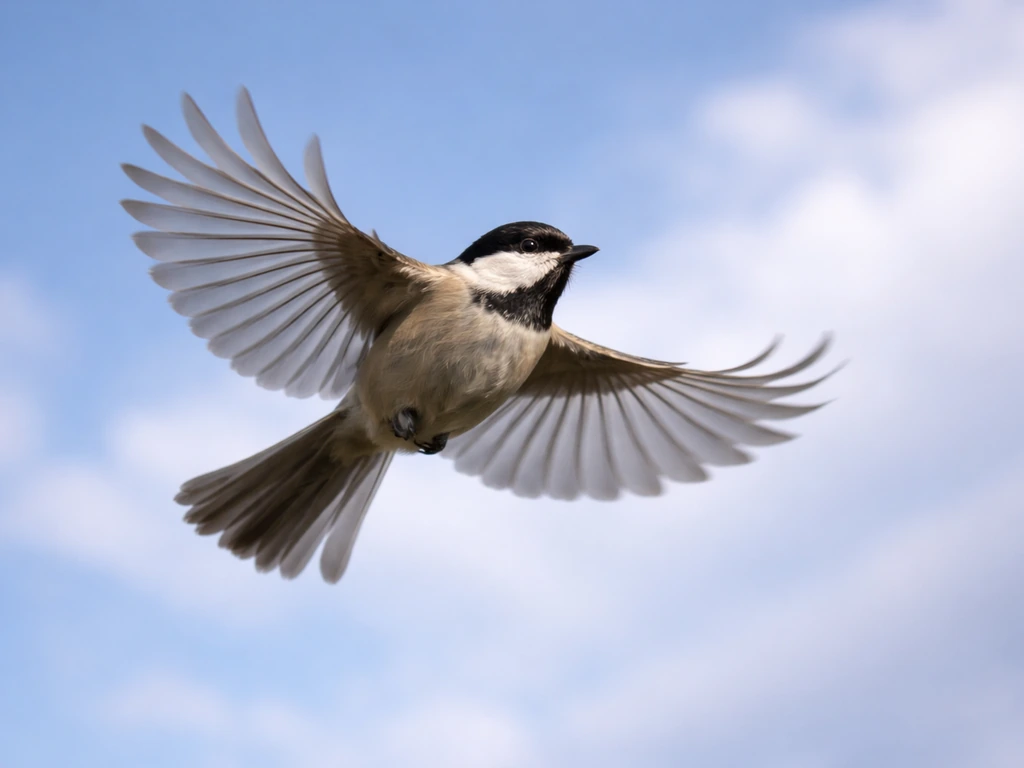
Dreaming about flying like a bird almost always points to one of a few core emotional states: a desire for freedom or escape, a surge of confidence and ambition, or anxiety about losing control. May the bird of paradise fly up your dreams, but it is more useful to compare the dream's tone and emotion to see whether it points to freedom, ambition, or anxiety.
Meaning of Dreams Flying Like a Bird: Practical Guide

Marcus Chen
14 May 2026

Which one applies to you depends almost entirely on how the dream felt and what was happening in it. The good news is that the details you remember, even small ones, are enough to decode a fairly specific meaning for your dream today. Many people search for the flying bird meaning behind these dreams, and the answer usually comes down to the emotions you felt during flight.
What 'flying like a bird' dreams usually symbolize

Flying dreams are among the most common dream experiences reported across cultures and age groups. When that flying takes on a distinctly bird-like quality, where you are flapping wings, soaring on thermals, or looking down from a great height with the lightness of a bird in flight, the symbolism becomes more specific. Birds in motion represent a kind of effortless mastery over physical limits. Dreaming you share that mastery usually reflects something you want or are processing emotionally: freedom from a constraint, a feeling of rising above a problem, or a sense that you have finally found your stride in some area of life.
Modern dream research leans heavily on what researchers call the continuity hypothesis: the idea that dream content mirrors our waking emotional preoccupations rather than predicting the future or delivering coded messages. In other words, your flying-like-a-bird dream is most likely your sleeping brain rehearsing or replaying feelings that are already present in your waking life. A complementary framework, Threat Simulation Theory, adds that dreams may also function as a safe rehearsal space for coping with challenges.
A study of typical dream themes also notes that while threat simulation accounts for threats, many of the most prevalent themes are not threatening and can be positive, such as flying Threat Simulation Theory. Together, these ideas suggest that a bird-flight dream is your mind either celebrating a sense of freedom it craves, or practicing what it would feel like to rise above a real pressure you're facing.
The most frequently reported emotional tone in flying dreams is positive: exhilaration, lightness, confidence, and a sense of perspective. That tracks neatly with what bird flight actually looks like from a biomechanics standpoint. A soaring bird, say a red-tailed hawk riding a thermal, expends almost no energy while covering enormous ground and seeing everything below with clarity. Your dreaming brain borrows that image when it wants to express a feeling of effortless competence or elevated perspective.
How the details change the meaning
Two people can dream about flying like a bird and walk away with completely opposite meanings. The difference lives in the details. Here are the most important variables to consider.
Freedom vs. fear
If the flight felt joyful, easy, and expansive, the dream is almost certainly reflecting a desire for or experience of freedom, independence, or confidence. If the flight felt frightening, unstable, or like you might fall, the same imagery flips to signal anxiety, a fear of overreaching, or worry about a situation that feels out of your depth. Pay close attention to the dominant emotion because that single variable outweighs almost every other detail.
Control vs. struggle
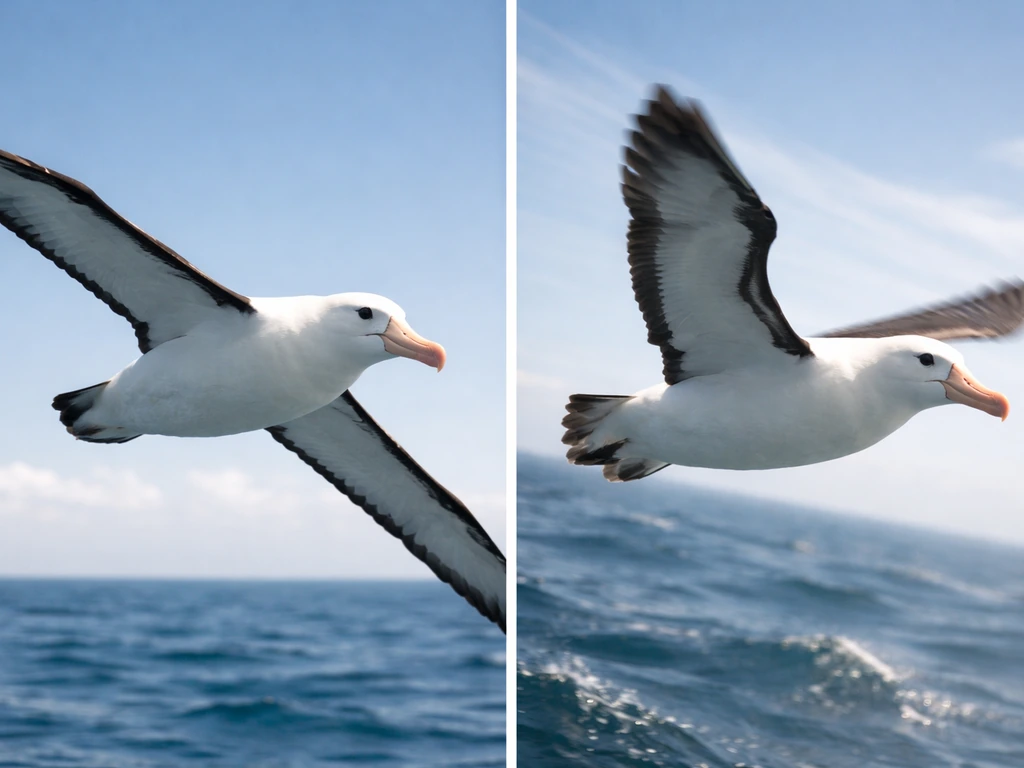
Were you gliding and steering easily, the way a large soaring bird like an albatross covers miles with minimal effort? Or were you flapping furiously just to stay airborne, struggling to gain height, or constantly at risk of losing altitude? Easy, controlled flight points toward confidence and capability. Struggling flight, especially if you keep sinking or can't reach where you want to go, more often reflects effort without reward, a sense of working hard but not quite breaking through in some area of your waking life.
Setting, weather, and lighting
A bright, sunny sky with clear visibility amplifies the positive reading. Dark or stormy skies, fog, or being chased while flying all pull the interpretation toward threat, stress, or unresolved conflict. Flying over familiar places versus unknown landscapes also matters: familiar settings often connect the dream to a specific real-life situation, while vast unknown terrain can point to big life changes or uncertainty about the future.
Flapping vs. soaring, and whether you have bird-like features
If you were actively flapping wings, the dream may be emphasizing effort and striving. If you were soaring, arms out or wings spread without much movement, it leans more toward natural ease, acceptance, or flow. Dreams where you actually have feathers, wings, or a beak often suggest a stronger identification with the qualities birds represent: freedom, perspective, migration between worlds, or a connection to nature and instinct. These are worth noting because they deepen the symbolic layer.
Who or what else was present
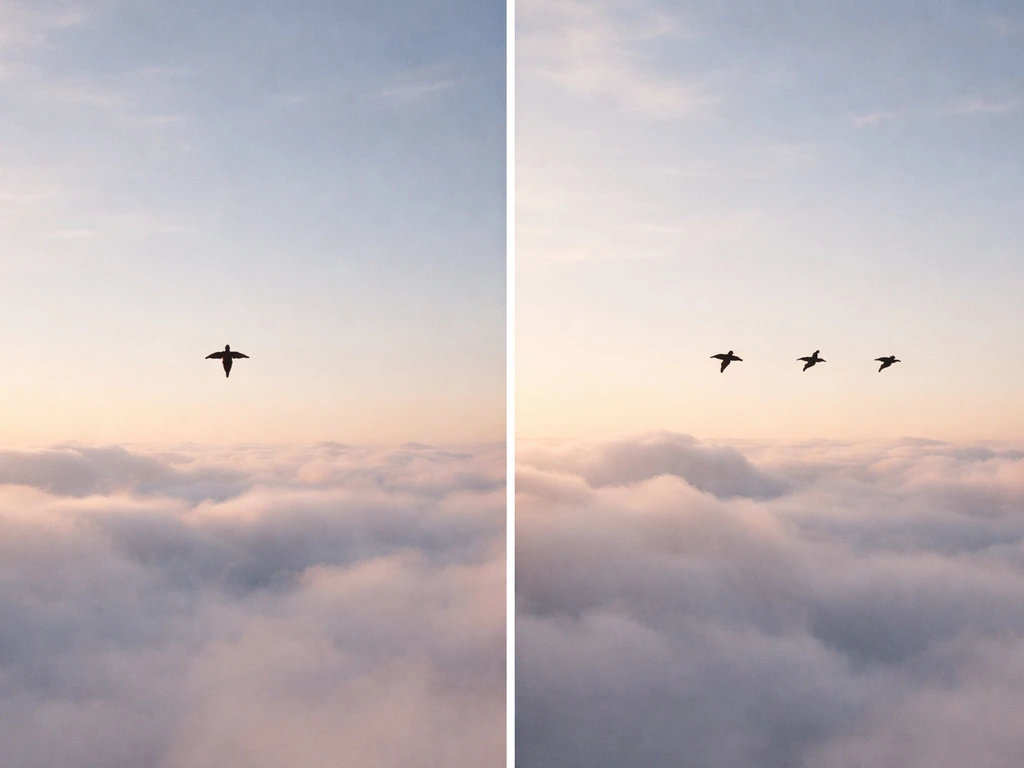
Flying alone usually signals personal ambition, independence, or a desire to escape. Flying with others suggests shared aspiration or a longing for connection at a higher level. Being chased by something while flying links back to Threat Simulation Theory: your brain is rehearsing a coping response to a real stressor. Being observed from the ground, or feeling watched while you fly, can reflect self-consciousness or a concern about how others perceive your progress or confidence.
Real-life triggers: what usually causes this dream
Flying-like-a-bird dreams don't appear randomly. They tend to cluster around specific life situations. Recognizing your trigger is often the fastest way to understand what the dream is telling you.
| Life situation | How it typically shows up in the dream |
|---|---|
| Feeling trapped or constrained (job, relationship, routine) | Joyful escape into open sky, flying away from a known place |
| New confidence or a recent win | Effortless soaring, high altitude, clear visibility |
| Ambition and goal-chasing | Flying toward something specific, trying to gain height |
| Stress overload or burnout | Struggling to stay airborne, turbulent or stormy flight |
| Desire for independence | Flying alone, away from crowds or familiar people |
| Fear of failure or overreaching | Unstable flight, fear of falling, inability to control direction |
| Major life transition (new job, move, relationship change) | Flying over unknown landscape, uncertain terrain below |
The emotional continuity between waking life and dream content is well-supported in research: what you feel most intensely or most unresolved during the day tends to surface at night. If you have been craving more autonomy at work, dreaming of gliding like a hawk makes complete sense. If you have been anxious about taking a risk, the struggling-to-fly version of the dream is your mind working through that tension in a low-stakes simulation.
A quick self-check: questions to decode your specific dream right now
The sooner you run through these questions after waking, the better your recall will be. Grab your phone or a notepad and answer honestly, even if your memories are hazy.
- What was the dominant emotion during the dream? (Joy, fear, peace, panic, exhilaration, frustration?)
- Were you in control of the flight, or struggling to maintain it?
- Were you soaring effortlessly or actively flapping and working hard?
- What did the sky look like? (Clear, stormy, dark, bright, foggy?)
- Were you flying toward something, away from something, or just being airborne?
- Were you alone, or were others present? Who were they?
- Did you have visible wings, feathers, or bird-like features, or did you just fly without explanation?
- Where were you flying over? (A familiar place, somewhere unknown, an open landscape, a city?)
- What is the most pressing emotional situation in your waking life right now?
- Does the feeling in the dream match something you felt yesterday or this week?
That last question is often the most revealing. If you felt the same lightness in the dream that you felt when you got some good news, or the same panic you felt during a difficult conversation, the connection is usually direct. Trust the emotional match more than any symbolic dictionary definition.
How to journal your dreams and spot patterns over time

A single flying dream is interesting. A recurring one is telling you something important. Keeping even a basic dream journal transforms vague impressions into useful data about your own emotional life.
Setting up the habit
Keep something to write on within reach of your bed. The moment you wake, before you check your phone or speak to anyone, write down whatever you remember. Don't edit or analyze yet. Just capture: the setting, the feeling, the key images, whether the dream felt positive or threatening, and any people or creatures present. Even three sentences is enough. Do this for two to four weeks and you'll have something genuinely useful to work with.
What to track for flying dreams specifically
- Flight quality: effortless or effortful, high or low altitude
- Emotional tone: a one-word label works (joyful, anxious, peaceful, panicked)
- Sky conditions and setting
- Whether the dream ended positively or in distress
- What was happening in your waking life that day or the day before
- Any repeated symbols: the same location, the same observer, the same obstacle
Over time, patterns become obvious. You might notice that struggling-to-fly dreams appear every time a particular deadline approaches, or that soaring dreams cluster around weekends when you feel more in control. That correlation is the real insight. The dream isn't predicting anything; it's reflecting your internal emotional weather with surprising precision.
Looking for recurring symbols
If a specific element keeps appearing, a particular bird species, a recurring height you reach before stalling, the same person watching from below, treat it as significant. Recurring symbols in dreams tend to represent unresolved or ongoing emotional themes rather than one-off concerns. In the context of bird flight, recurring soaring might signal a persistent longing for more autonomy. Recurring struggling might point to a chronic stressor you haven't addressed directly.
What to actually do with the insight
Interpreting a dream is only useful if you do something with it. Once you have a reasonable read on what your flying-like-a-bird dream was reflecting, here's how to put that understanding to work.
- Name the area of life the dream is pointing to. Is it your career, a relationship, a creative project, your sense of personal freedom? Get specific.
- Ask yourself what you would do if you felt as free or capable as you did in the dream. That answer is often a clue about what you actually want but haven't acted on.
- If the dream reflected freedom or ambition, look for one concrete step you can take this week in that direction. Dreams that express longing can be a prompt to stop waiting.
- If the dream reflected struggle or fear, identify the real-world stressor it's mirroring. Naming it clearly often reduces its emotional grip, even before you've solved it.
- If the dream felt inspiring or expansive, use it. Athletes and creative professionals regularly draw on positive emotional states from any source, including dreams, as motivational fuel.
- Don't over-interpret a single dream. One instance is a data point. A pattern of similar dreams is a signal worth acting on.
The idea that the phrase 'fly like a bird' carries weight beyond literal flight shows up across literature, music, and everyday expression. That cultural resonance exists because the image genuinely captures something we feel: a wish to transcend current limits and see things from a higher vantage point. If you are wondering about the fly-like-a-bird Mariah Carey meaning, it can help to see how the same themes of freedom and perspective show up in lyrics and personal interpretation dream meaning. Your dream is borrowing from that same deep well. The practical question is: what limit do you want to transcend right now, and what's actually stopping you?
When to take it seriously vs. treat it as a metaphor
Most flying-like-a-bird dreams are benign and even pleasant. But there are situations where they deserve more than casual interpretation.
Treat it as a useful metaphor when:
- The dream was predominantly positive or neutral
- You wake feeling refreshed, inspired, or curious rather than distressed
- The dream occurred once or twice, not repeatedly
- The emotional content maps clearly to something ongoing but manageable in your waking life
- You can identify a likely real-world trigger without much difficulty
Take it more seriously when:
- The flying dream is actually a nightmare: you're terrified, falling, being chased, or in danger while airborne
- You wake in distress repeatedly from versions of this dream
- The dream is disrupting your sleep quality over multiple nights or weeks
- The emotional intensity feels disproportionate to anything you can identify in waking life
- You're experiencing significant anxiety, depression, or trauma that may be surfacing through the dream
Recurring nightmares involving flight and falling or pursuit have been studied through the lens of Threat Simulation Theory, which suggests the dreaming brain sometimes gets stuck in a loop of rehearsing a threat it can't resolve during waking hours. If that description fits your experience, the right move is to talk to a mental health professional, not to interpret your way out of it alone. A therapist who works with sleep or anxiety can help you address the underlying source rather than just decoding the imagery.
One thing to set aside entirely: the idea that flying-like-a-bird dreams are literal omens or predictions. They're not. Dream content follows emotional logic, not prophetic logic. The dream reflects where your mind already is, not where your life is headed. That framing is actually more empowering, because it means the insight belongs to you and points to choices you can make right now, not events you have to wait for.
FAQ
What if I can’t remember how the dream felt, only the scene of flying like a bird?
Scene details can help, but when emotion is unclear, prioritize stability markers: easy, controlled gliding usually points to confidence or a sense of “I can handle this,” while struggling, stalling, or losing altitude points to pressure and fear of not meeting expectations. If the emotion truly won’t come back, use your waking context instead, ask what you were craving (freedom, progress, safety) in the 24 to 72 hours before the dream.
Do these dreams always mean “freedom” or “escape”?
Not necessarily. Bird-like flight can also reflect responsibility or high standards. For example, if you were flying confidently but feeling “on display” or judged from below, the theme may be proving yourself, meeting expectations, or managing how others see your progress, not simply wanting out.
What does it mean if I fly but I’m not happy or I feel numb?
A neutral or numb tone often signals emotional processing rather than celebration. If you flew while feeling detached, rehearsing, or watching from a distance, it can point to “coping” or stepping back from a problem to gain perspective, similar to emotional regulation rather than desire to escape.
Why do I sometimes fly upward and other times I drop or can’t stay airborne?
Direction and control usually track effort and certainty. Going upward smoothly often matches growing confidence or a problem easing. Dropping, repeated falls, or being unable to maintain altitude often mirrors an unresolved fear of regression, losing footing, or failing during an important moment. The key is whether the falling felt sudden (surprise stress) or gradual (burnout or creeping doubt).
Does being chased while flying always mean threat or danger is coming?
No, it does not predict events. Chasing in a flight dream more commonly reflects your mind running a “what if” scenario for a real stressor, like an upcoming deadline, conflict, or criticism. A useful next step is to identify what in waking life feels like the pursuer, then name the specific response you wish you had (more control, protection, clarity).
How should I interpret flying alone versus flying with others if I want both independence and connection?
Try matching the “teamwork style” to the meaning. Flying with others but keeping distance often points to autonomy with selective support, while flying in sync suggests shared goals and emotional alignment. If you feel constrained while flying with someone, the dream can be highlighting the tension between your need for space and your responsibility to the group.
What if the flying dream is recurring, but the emotions change from night to night?
Recurrence means the theme stays active, not that it has one fixed meaning. Use pattern rules: recurring imagery anchors the subject (autonomy, performance, anxiety), while the fluctuating emotions show which part of that subject is most activated right now. Update your interpretation each week based on current triggers and dominant feelings, not just the first read.
Is it a bad sign if I have a flight nightmare like falling, pursuit, or being unable to breathe?
It can still be benign, but multiple distressing flight nightmares, especially if they wake you up frightened, can indicate ongoing anxiety or sleep disruption. If you notice avoidance, daytime panic, or frequent restless sleep, consider discussing sleep and anxiety with a mental health professional instead of relying on interpretation alone.
What should I write in my dream journal if I’m trying to find the “trigger” faster?
Beyond setting and plot, log three practical items: (1) the strongest feeling (one word is enough), (2) the last major interaction or decision you made that day, and (3) the one limit you felt (time pressure, capability doubt, social scrutiny, need for autonomy). This makes patterns show up faster than noting every small detail.
Can I use dream interpretation to make real decisions, or is that overreaching?
You can use it as a decision aid, not as a directive. Translate the dream into a choice question: “What boundary do I need?” “What risk am I avoiding?” “What support do I want?” If the dream suggests action, keep it grounded, pick one small experiment you can do in the next week rather than making a major life move based on symbolism alone.
What if I read a lot about dream meanings and feel confused or anxious about getting the “wrong” interpretation?
That’s common, and it can become counterproductive. Return to the continuity principle, let your lived emotion and waking context do the heavy lifting. If you catch yourself spiraling, stop decoding for that night, document only the basics, and wait until you can compare with waking triggers in the following days.