
Yes, lightning can absolutely strike a flying bird. It does not happen often, and most birds instinctively avoid flying during severe storms, but when the conditions align, a bird in the air is a legitimate target for a lightning strike. Feathers offer no meaningful protection, altitude and wet plumage increase risk, and documented cases, including whooping cranes and griffon vultures, confirm that birds do die this way. Historical bird-banding literature and related observational work show that marked birds are systematically tracked under controlled conditions, supporting the plausibility of documented events involving tagged individuals documented cases, including whooping cranes and griffon vultures, confirm that birds do die this way. The honest answer is that it is rare but real, and understanding why helps you think more clearly about both bird behavior and your own safety during thunderstorms.
Can Lightning Strike a Flying Bird? What to Know and Do

Yes or No, and How Likely Is It?
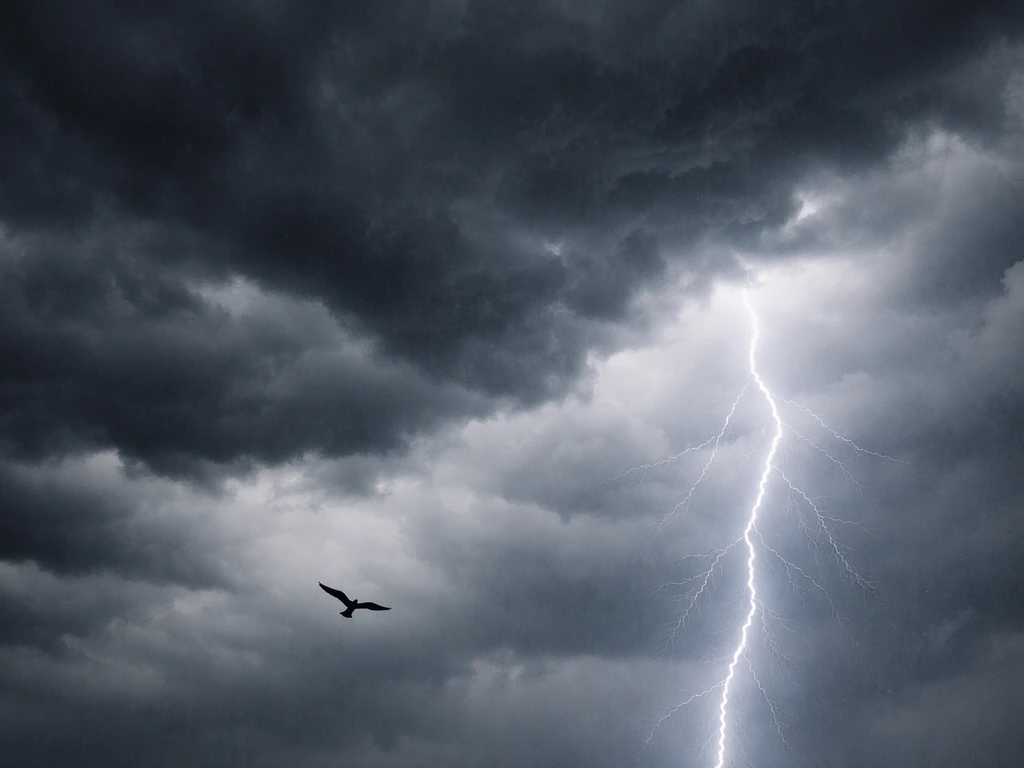
Yes, a flying bird can be struck by lightning. The more nuanced question is how often it actually happens, and there the honest answer is: we do not have a reliable count. No centralized database tracks in-flight lightning strikes on wild birds the way aviation authorities track aircraft incidents. What we do have are documented cases, anecdotal field observations, and the straightforward physics that confirm it is possible. Researchers have recorded whooping cranes killed by lightning in Florida and have published postmortem examinations on griffon vultures where lightning was the most plausible cause of death. A historical note in the journal Nature even describes a bird reacting during a lightning event while airborne.
For comparison, NOAA puts the odds of a person being struck by lightning in a given year at less than one in a million. Birds face a broadly similar rarity, but the math shifts a bit depending on species behavior. Migratory birds sometimes fly at night or during transitional weather, large soaring birds like vultures and eagles ride thermals into the lower reaches of storm cloud systems, and shorebirds sometimes continue flying as storms approach coastlines. So while the baseline risk is low, certain birds in certain situations face meaningfully higher exposure than others.
The Physics of Lightning Hitting Something in the Air
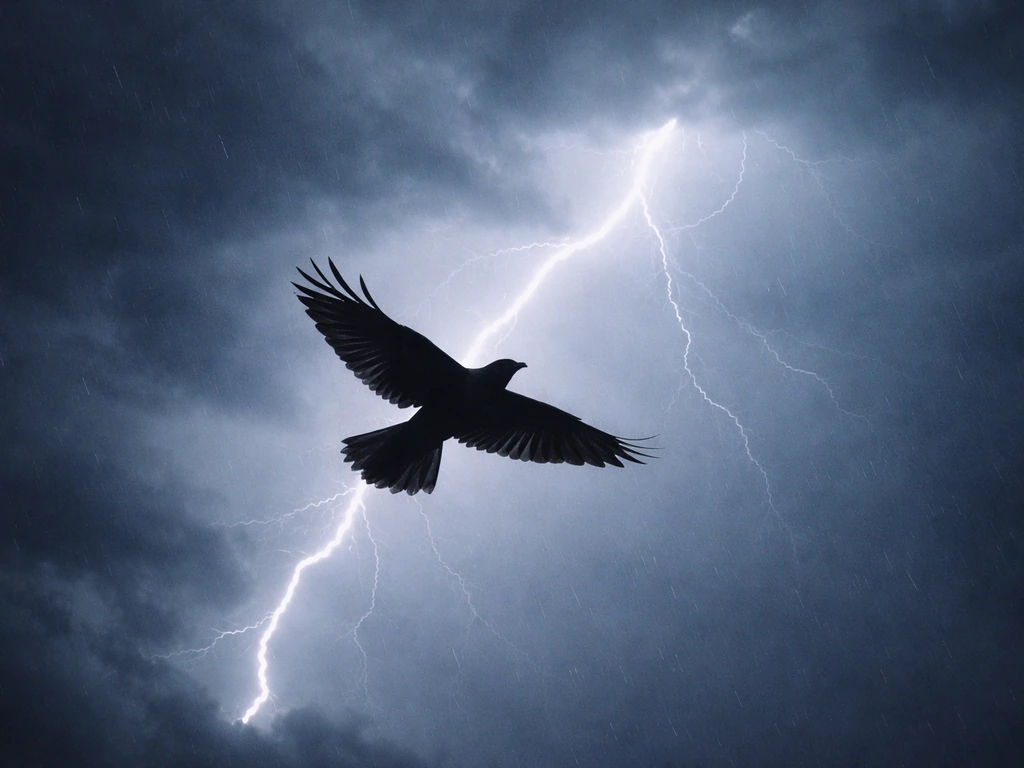
Lightning does not just hunt for the tallest thing on the ground. It follows the path of least electrical resistance between a charged cloud and a region of opposite charge, whether that is the ground, another cloud, or anything in between. The process starts with a stepped leader, an invisible channel of ionized air extending downward from the cloud in stages. As that leader approaches, taller or more conductive objects below (or in the path) send up their own channels called streamers or upward connecting leaders. When a streamer and a stepped leader connect, the main return stroke fires, and that is the flash you see. The entire sequence happens in fractions of a second.
A bird flying at mid-altitude, say a few hundred to a few thousand feet, can sit right in the zone where these upward streamers originate or where the stepped leader is completing its path. NASA research on lightning attachment to aircraft uses the same basic geometry: an airborne conductive object inside a strong electric field can trigger or complete a discharge. A large bird with wet feathers, wings extended, gliding through a storm's electrical field is not physically different from any other conductive object in that space. It is smaller than an aircraft and therefore a less probable target, but the mechanism is identical.
Wet plumage is a meaningful factor here. Rain-soaked feathers are significantly more conductive than dry ones, which is why USGS notes that moisture increases conductivity in birds exposed to electrical hazards. A soaking wet raptor with wings spread is more electrically attractive than a dry songbird tucked into a shrub. Wing posture matters too: a bird mid-flap or soaring with wings fully extended presents a larger conductive surface area than a bird perched with wings folded.
One more thing worth knowing: NOAA documents that lightning can strike 10 to 15 miles from the center of a thunderstorm, sometimes in areas where skies look partly clear. These so-called bolts from the blue are especially dangerous because neither humans nor birds have much behavioral warning before the strike. A migratory bird flying ahead of a storm system could be struck even without being inside the visible cloud mass.
What Actually Happens to a Bird That Gets Hit
The outcomes range from instant death to stunned-but-recoverable, and the determining factors are how directly the bird is in the discharge path and how much current passes through its body. If you are wondering about reaction force during impacts, that is a separate physics question from how lightning affects a bird, but both come down to forces and the body’s response to them. The Merck Veterinary Manual is direct about this: lightning strike typically causes death or serious injury, with death often resulting from cardiac arrest or respiratory arrest. In animals, ventricular fibrillation, where the heart loses its coordinated rhythm and effectively stops pumping, is a primary kill mechanism. Neurological injury is also common, with research published in the journal Neurology finding that most lightning-related neurological damage targets the central nervous system rather than peripheral nerves.
For birds specifically, there is an additional mortality pathway that does not apply to land animals: aspiration. Research on whooping cranes struck by lightning in Florida found that birds stunned mid-flight or while near water can inhale water as they fall unconscious, drowning even if the electrical injury alone would not have been fatal. A bird that survives the initial strike may show signs including drooping wings, inability to stand, disorientation, labored breathing, or visible burns around the entry and exit points of the current.
Behaviorally, a bird that survives may be grounded for hours or days, confused and unable to fly. The neurological disruption can mimic what you see in window-strike victims: the bird sits motionless, eyes partially closed, and does not respond normally to nearby movement. Unlike a window-strike bird that may recover in 15 to 20 minutes, a lightning-stunned bird is likely dealing with more systemic injury and needs professional care rather than just a quiet box and time.
When the Risk Goes Up: Storms, Altitude, and Bird Behavior
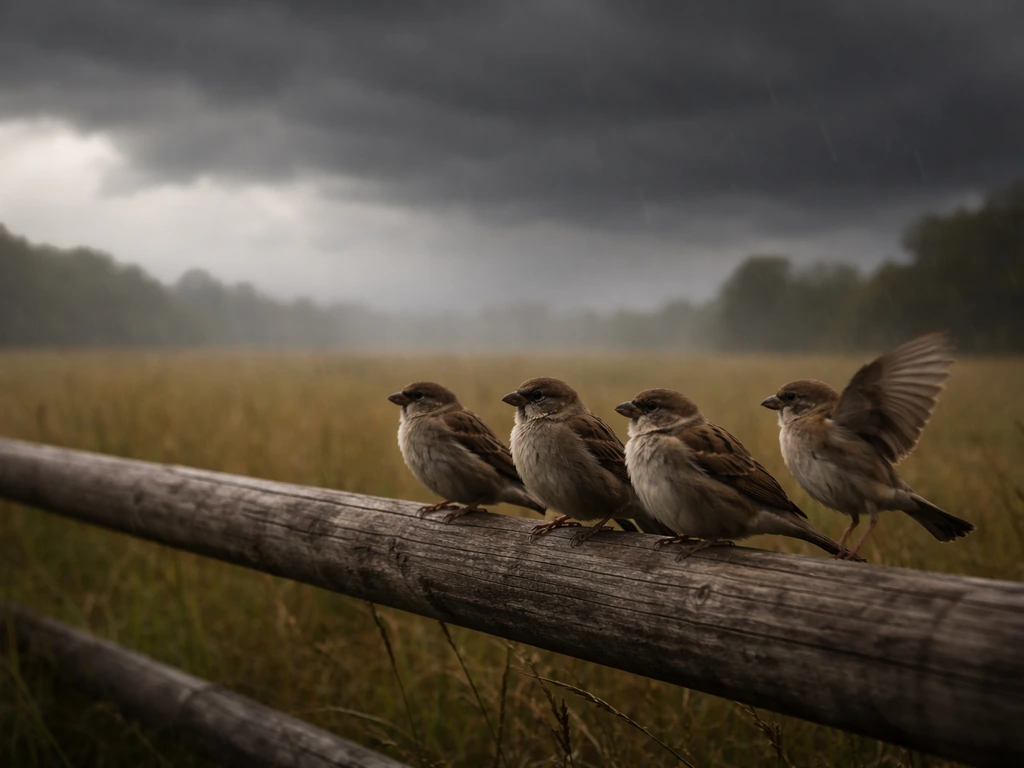
Most birds are smart about storms and have evolved behavioral responses that happen to reduce their lightning exposure. Audubon and BirdNote both note that many birds stop flying during rain and storms to conserve energy, roosting in sheltered spots until conditions improve. This is not a conscious lightning-avoidance strategy, it is an energy-budget decision, but it has the convenient side effect of keeping them out of the air when strike risk is highest. In other words, a bird decides when to fly or rest based on its energy needs, which is why conserving energy during storms can keep it out of the highest lightning-risk air.
That said, several scenarios push birds into higher-risk situations:
- Migratory birds flying at night often use altitude bands from a few hundred to several thousand feet, depending on wind conditions. Radar studies confirm birds use multiple altitude layers tied to weather patterns, which can position them inside storm electrical fields during transitional weather.
- Large soaring birds like vultures, hawks, and eagles ride thermals that can carry them high enough to be near or inside storm cloud bases, sometimes before the bird can descend to safety.
- Shorebirds and seabirds often continue flying as coastal storms approach, particularly during migration when the drive to move overrides storm avoidance.
- Flocking birds present an interesting edge case: a tight flock has more collective conductive mass and could theoretically be more attractive to a discharge, though individual birds in a flock also reduce their own exposure somewhat by being surrounded by other birds.
- Birds flushed from cover by human activity or predators during an approaching storm may find themselves airborne precisely when they should not be.
The timing within a storm matters too. NWS data shows that people are frequently struck near the beginning and end of storms, not just during peak activity, because that is when they assume the danger has passed. Birds resuming flight as a storm appears to be winding down face the same risk window.
If You Find an Injured Bird After a Thunderstorm
Finding a grounded bird after a storm, especially one that is disoriented, unable to fly, or visibly injured, warrants the same response regardless of whether lightning or another cause is suspected. Here is what to do, drawn from Audubon and the Tufts Wildlife Clinic guidelines:
- Do not give the bird food or water. This seems counterintuitive but is important: an injured or stunned bird may aspirate liquids, and feeding it the wrong thing can cause additional harm.
- Place it somewhere quiet and dark. If you can safely pick it up (use a towel or gloves to avoid injury from talons or beak), put it in a ventilated cardboard box lined with a soft cloth. Keep it away from pets, children, and noise.
- Keep it warm. A bird in shock loses body temperature quickly. A heating pad set to low under half the box, or a warm water bottle wrapped in a towel placed nearby, can help.
- Contact a licensed wildlife rehabilitator immediately. The National Wildlife Rehabilitators Association and your state fish and wildlife agency can point you to the nearest licensed rehab facility. Do not attempt to treat the bird yourself beyond stabilization.
- Note the location and circumstances. Where you found it, what the weather was like, whether it had visible burns or was near a tree that appeared struck, all of this is useful information for the rehabilitator.
- Look for urgent signs that require faster action: obvious bleeding, an open wound, a severely drooping or deformed wing, inability to hold the head upright, or labored breathing. These are red flags that the bird needs professional care within hours, not days.
If you cannot reach a rehabilitator immediately, keep the bird contained, quiet, and warm while you keep trying. Do not release it just because it seems calmer, neurological symptoms can fluctuate, and a bird that appears to be recovering may relapse.
Practical Safety Steps for People Outside During Storms
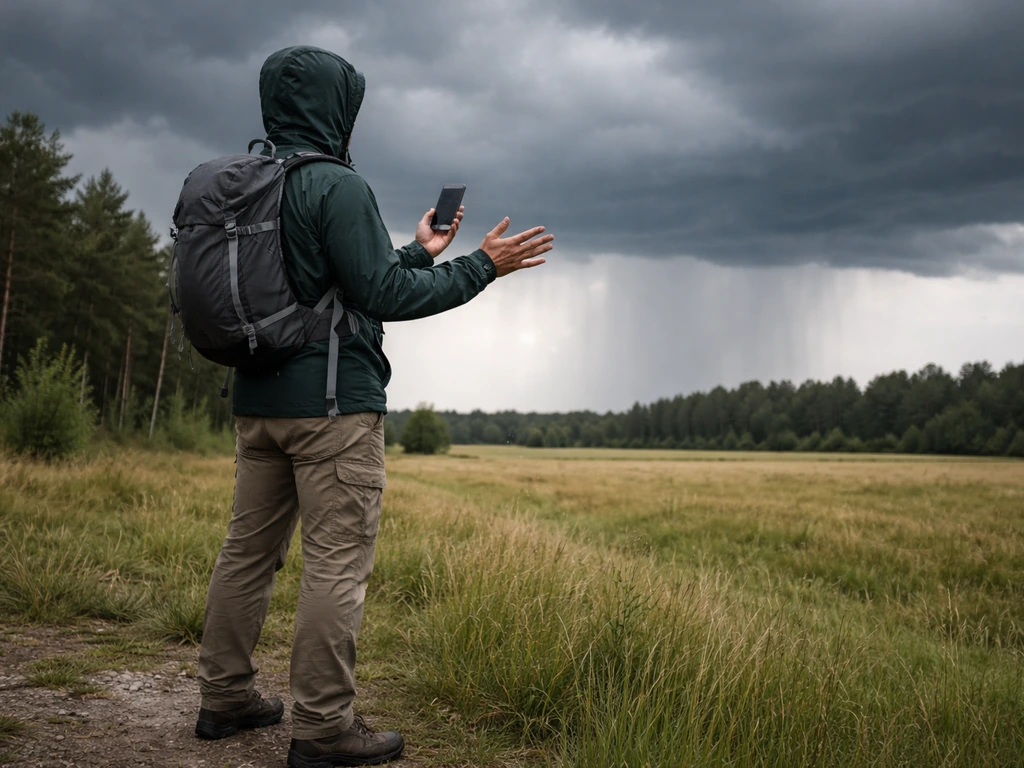
If you are a birder, hiker, or anyone who spends time outdoors, the lightning risk to birds is a useful reminder that you face the same basic physics. Here is the practical guidance:
- Use the thunder rule: if you can hear thunder, lightning is within about 10 miles of you. NWS confirms that thunder is generally audible up to 10 miles from the strike. That is close enough to be dangerous. Head for shelter immediately.
- Do not wait for the storm to be overhead. NOAA is explicit that lightning can strike 10 to 15 miles from the storm center. Clear skies above you do not mean you are safe if a storm is visible on the horizon.
- Seek solid shelter: a substantial building or a hard-topped vehicle with windows fully closed. Open shelters, pavilions, and trees do not protect you and can make things worse.
- Stay sheltered until the storm has fully passed. NWS data shows a disproportionate number of strikes happen when people come out too early. Wait at least 30 minutes after the last thunder before resuming outdoor activities.
- If you are birding in open terrain, marshes, or on ridgelines when a storm approaches, do not assume your binoculars or tripod are the main hazard. Your position and exposure matter far more. Get low, move away from water, and get to shelter.
- For pilots flying near birds or in areas with migratory flyways: thunderstorm avoidance is standard protocol for the same physical reasons that affect birds. NOAA/NSSL research confirms that aircraft flying through strong electrical fields can trigger lightning attachment, and a bird in the same field is subject to the same mechanism at a smaller scale.
Myths Worth Correcting
A few persistent misconceptions come up whenever this topic is discussed, and they are worth addressing directly.
Myth: Feathers protect birds from lightning
They do not. Feathers are made of keratin and are poor insulators under the kind of energy a lightning strike delivers. Dry feathers have some resistive properties, but wet feathers are substantially more conductive, and even dry feathers provide no meaningful protection against a discharge that can carry 300 million volts. NOAA's JetStream materials confirm that lightning can strike any object in its path, not just metal ones.
Myth: Lightning only strikes things on the ground
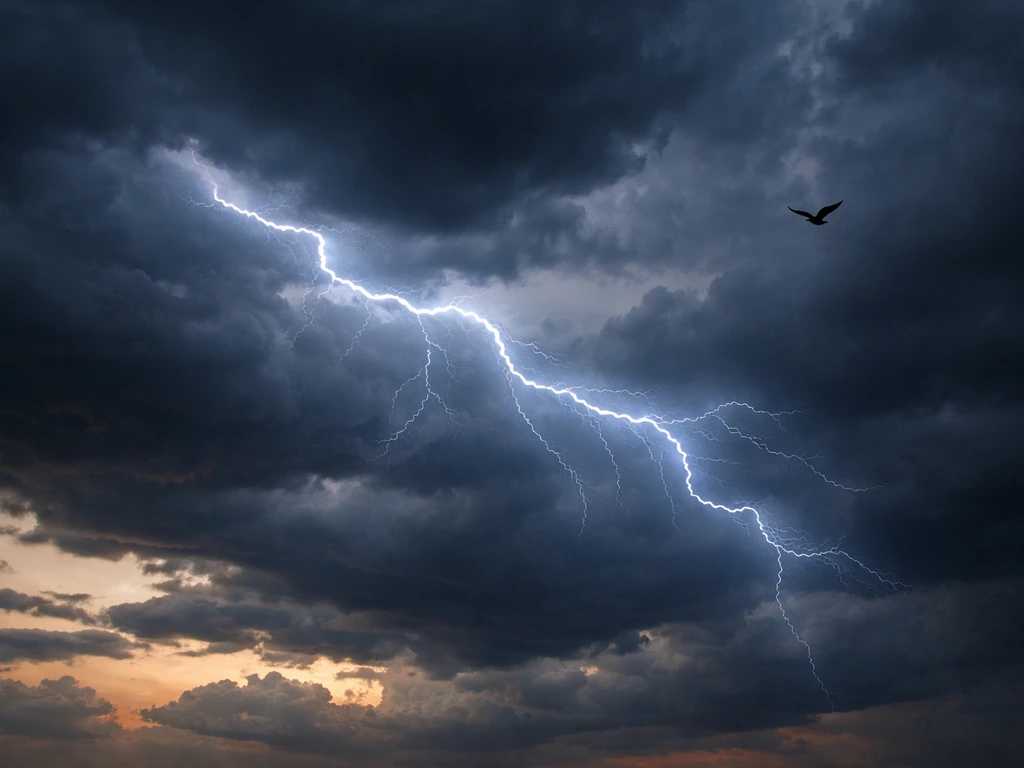
This is the most consequential misconception. Lightning discharges between regions of opposite charge, and those regions can both be airborne. Cloud-to-cloud lightning is common, and the stepped leader that initiates a cloud-to-ground strike travels through open air at altitude before finding its attachment point. An object in that air, bird, aircraft, or anything else, can become part of that path. NASA research on aircraft lightning specifically uses the concept of attachment zones for airborne conductive objects, confirming that being in the air offers no inherent protection.
Myth: Birds always sense storms coming and take shelter in time
Birds do have impressive storm-sensing abilities, including sensitivity to barometric pressure and infrasound, and many species do alter behavior ahead of storms. But bolts from the blue, those strikes that occur 10 to 15 miles from the main storm, can arrive with no warning that any bird's senses would detect. A bird flying in apparently calm air ahead of a distant storm has no behavioral cue to respond to before a strike. This is the same challenge humans face: the strike that catches you off guard is not the one during peak storm activity but the one at the margins.
Myth: Lightning strikes to birds are so rare they are not worth thinking about
The rarity argument is used to dismiss the question, but documented cases of lightning-killed birds exist in peer-reviewed literature, and the physics make the mechanism completely ordinary. More importantly, the discussion of lightning risk to birds is a useful vehicle for understanding lightning behavior generally, which absolutely is worth thinking about if you spend time outdoors. That broader way of thinking connects to ideas in philosophy about the drive to act even under uncertainty will to power fly bird. The same principles that explain why a soaring vulture can be struck also explain why you should not stand on a ridgeline in a storm.
The Bigger Picture: Bird Flight and Electrical Exposure
Birds in flight are dynamic physical objects moving through an environment that includes powerful electrical fields during storms. Their size, altitude, wing position, wetness, and the type of flight they are doing all interact with those fields in ways that are genuinely interesting from a biomechanics perspective. A soaring raptor with a two-meter wingspan fully extended is a very different electrical object than a sparrow tucked into a hedge. The energy a flying bird possesses, its kinetic and potential energy as it moves through three-dimensional space, also determines what happens on impact with the ground if it is struck mid-flight. The form of energy possessed by a flying bird is a mix of kinetic and potential energy as it moves through three-dimensional space the energy possessed by a flying bird is. Kinetic and potential energy are types of energy that matter when a bird is moving through space and lightning strikes mid-flight The energy a flying bird possesses. These are the kinds of connections between physics and avian biology that make bird flight endlessly worth studying. To make the bird flight formula feel concrete, you can plug in a specific flight duration, storm-distance buffer, and an estimated strike probability and see how the risk changes bird flight endlessly worth studying.
The short version: yes, birds can be struck by lightning in flight, it is rare but documented, feathers and instinct offer imperfect protection, and the same principles that apply to birds apply to you. The Weather Guys from the University of Wisconsin-Madison SSEC explains that birds generally avoid flying in thunderstorms and outlines the lightning risk pathways that can lead to birds being struck birds generally avoid flying during severe storms. If you find an injured bird after a storm, get it to a rehabilitator. If you are the one outside in the storm, get to shelter before the thunder stops feeling theoretical.
FAQ
If the bird is not inside the visible thundercloud, can lightning still strike it?
Yes. Lightning that occurs “between” the main storm and the ground can still reach a bird that is airborne, including when skies look mostly clear. The key practical cue is not cloud cover, it is thunder and the storm’s distance, because strikes can happen well outside the densest cloud area.
How can I tell if it is still risky once the rain starts to ease or the bird seems to be flying normally?
Do not rely on the bird’s behavior alone. A bird can look calm, continue soaring, or resume flight after rain even when electrical risk remains. For humans and birds, the safest rule is to seek shelter when thunder is audible (or when a storm is close enough that lightning is likely), regardless of whether conditions seem “improving.”
Does a bird’s wing position or posture change the odds of being struck?
Feathers are not a reliable shield, and wing position matters. A bird with wings spread is presenting a larger conductive surface and greater electrical coupling to the surrounding field than a bird with wings folded or perched under cover. This is one reason the same storm can produce different outcomes for different flight postures and species.
If an injured bird seems to recover after a few minutes, should I still get help?
After a strike, treat the bird as potentially unstable even if it initially improves. Neurological and respiratory effects can fluctuate, so keep the bird quiet and contained and continue seeking professional help rather than assuming the danger is over.
Are some kinds of birds more likely to be struck while flying than others?
Yes, but focus on what makes a bird vulnerable, not just what it was doing at takeoff. Birds can be killed during high-risk moments such as soaring near storm systems, moving through wet conditions, or continuing flight as storms approach coastlines. The takeaway is that “rare overall” does not mean “rare for every species and scenario.”
Why would a flying bird be more likely to die if it is near water during a lightning event?
Yes. If the bird is in or near water during or right after the incident, aspiration can become a major cause of death. A bird that falls into shallow water or is swept near shore during a thunderstorm can inhale water after being stunned, even if the electrical injury alone might not have been fatal.
What is the safest way to help a grounded bird I suspect was hit by lightning?
Use a cautious, low-stress approach. If you must handle a bird, avoid chasing or forcing it to move, do not give food or water, and keep it warm and in a dark quiet container while you contact a wildlife rehabilitator. Also keep people and pets away, because even after the storm, the bird may be disoriented and could panic or injure itself.
What clues should I look for to judge whether lightning is the cause versus something else?
If you are trying to decide whether “lightning” is the likely cause, look for consistent signs after storms: visible entry and exit burns, drooping wings, disorientation, labored breathing, and inability to stand or fly. Still, do not rule out other trauma like window strikes, predation, or exhaustion, so professional assessment matters.
If I miss it during the storm, when and where should I look afterward for lightning-stunned birds?
Sometimes you may not find a bird immediately after a strike, especially if it falls far from shore or into vegetation. If you are doing bird-friendly storm monitoring, prioritize checking for grounded birds after lightning activity stops, and expand the search area to include perches, trails, and sheltered spots where a bird might be hiding after being stunned.
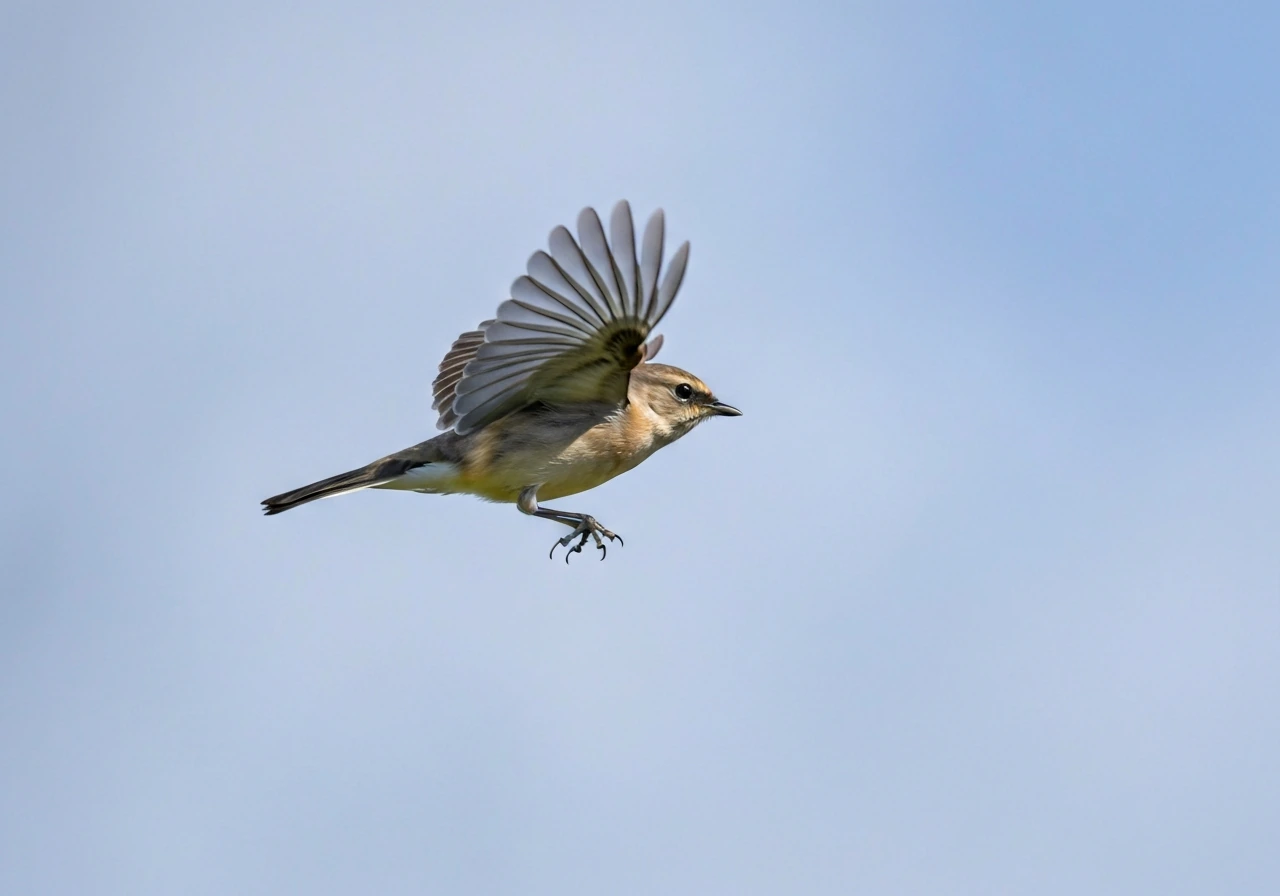
A flying bird uses stored chemical energy from food, converted by muscles into mechanical work for lift and kinetic moti

Understand the bird has flown meaning, when it’s used, and how to reply with examples for real-life conversations.
Learn the flight or bird prefix meaning, origin, examples, and a checklist to decode new words and avoid look-alikes.