
A bird flying through the air has both gravitational potential energy and kinetic energy at the same time. It has potential energy because it's up off the ground (height above a reference point stores energy due to gravity), and it has kinetic energy because it's moving. The real question isn't which one "exists", it's which one dominates at a given moment. That depends on how high the bird is and how fast it's going, and you can actually work it out with a simple ratio.
Is a Bird Flying Potential or Kinetic Energy? Explained

Marcus Chen
25 Jun 2026

Both energies are present, here's what each one actually means
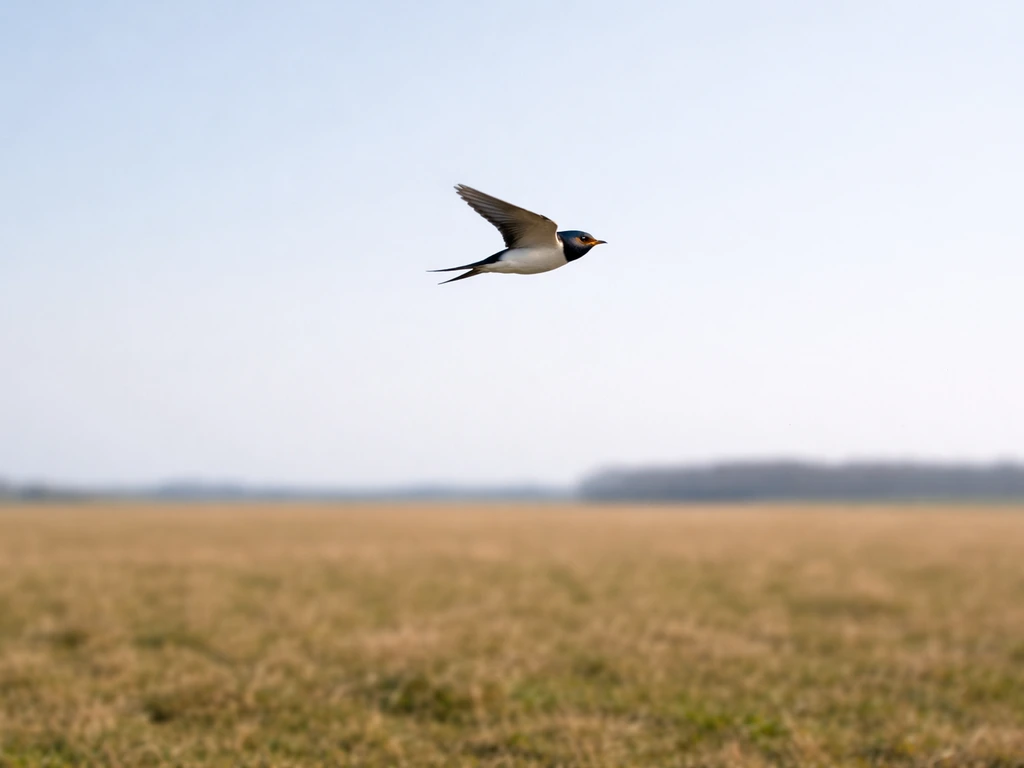
Gravitational potential energy (PE) is the energy stored in an object by virtue of its position above some reference level, usually the ground. The formula is PE = mgh, where m is mass, g is gravitational acceleration (9.8 m/s²), and h is height. A sparrow sitting on a branch 5 meters up has more gravitational PE than the same sparrow sitting on the pavement. Kinetic energy (KE) is the energy of motion: KE = ½mv², where v is the bird's speed. The faster it moves, the more kinetic energy it carries, and crucially, the direction of motion doesn't matter for this calculation, only the speed.
Now here's the part that trips people up: when a bird is flying, both quantities are real and measurable at the same instant. A peregrine falcon diving at 60 m/s at a height of 200 meters above a river valley holds an enormous amount of both. The flight isn't "just" one or the other, it's a constantly shifting balance. On top of these two mechanical energies, the bird is also burning metabolic (chemical) energy stored in muscle tissue to power its wingbeats. That metabolic energy gets converted into mechanical power, which is what actually sustains flight against drag and gravity. Biomechanics researchers measure this efficiency as mechanical power output divided by metabolic power input. So when you ask "what kind of energy does a flying bird have," the complete answer includes PE, KE, and the chemical energy being consumed, but for the physics classroom version of the question, PE and KE are the main focus.
How to tell which one dominates: the height-speed comparison
Because mass appears in both formulas and cancels when you take the ratio, dominance between PE and KE comes down to just height and speed. The ratio is: PE/KE = (mgh) / (½mv²) = 2gh / v². If this ratio is greater than 1, potential energy dominates. If it's less than 1, kinetic energy dominates. If it's close to 1, they're roughly equal. You don't need to know the bird's mass at all.
The practical rule: a bird flying high and slowly (a thermal-soaring vulture at 300 meters, barely flapping) is dominated by gravitational PE. A bird flying low and fast (a swift skimming rooftops at 40 m/s) is dominated by KE. Most birds in everyday cruising flight sit somewhere in between, and the balance shifts continuously as they climb, dive, turn, and slow down.
Energy shifts at every stage of flight
Takeoff
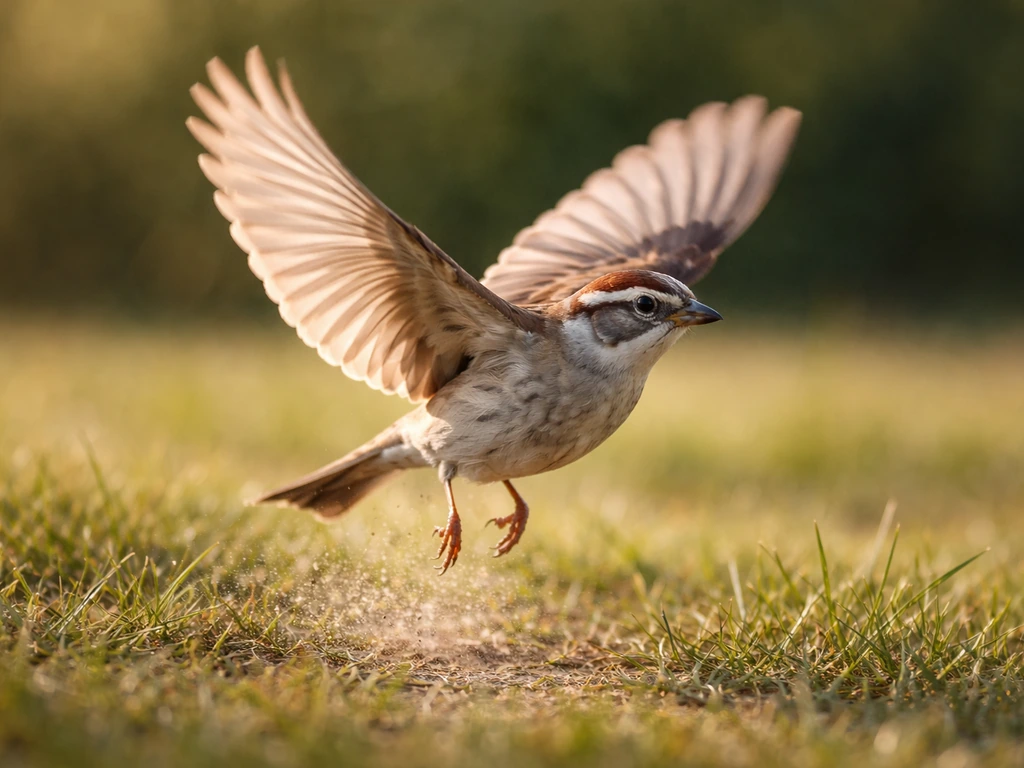
Takeoff is the most metabolically expensive phase of flight. The bird starts from rest (zero KE) at low height (low PE) and has to simultaneously gain speed and gain altitude. Both KE and PE are increasing at the same time, which means muscles are doing a huge amount of work in a very short period. The energy source is entirely metabolic, chemical energy from muscle, being converted into both mechanical forms at once. In birds that use a running start or drop from a perch, they're essentially borrowing a little initial KE (from running) or a little initial PE (from height) to reduce the muscular cost of getting airborne.
Cruising
During level, steady cruising, a bird maintains roughly constant height and roughly constant speed. In an idealized physics model, PE and KE would both be constant. In reality, the bird is burning metabolic energy continuously to overcome aerodynamic drag, and its wingbeats produce small oscillations in both height and speed with every stroke cycle. Researchers describe total mechanical power requirements using U-shaped power curves: at very low speeds, induced power (the cost of generating lift) dominates; at very high speeds, parasite drag power dominates; there's an optimal cruising speed in between. At typical cruising altitudes and speeds for most songbirds (say, 10–20 meters up, 10–15 m/s), PE and KE are often comparable, with KE holding a slight edge.
Banking and turning
When a bird banks into a turn, it's changing the direction of its velocity but not necessarily its speed or height significantly. Since KE depends only on speed (not direction), a banked turn at constant speed and altitude changes neither PE nor KE in theory, but real birds often lose a little altitude through turns due to the increased induced drag from tilting their lift vector. That slight altitude loss converts a tiny amount of PE into KE (or covers some drag losses). Flapping during a turn adds more metabolic energy input to compensate.
Landing
Landing is essentially the reverse of takeoff. The bird descends (PE decreases) and slows down (KE decreases). Both energies are being shed rather than gained. Some of the PE converts to KE during the descent, but then that KE has to be dissipated, through aerodynamic drag, by spreading wings to increase drag deliberately, and through the physical absorption of impact on landing. A bird doesn't bounce off a branch the way a ball bounces off a floor; muscles and tendons absorb and dissipate that remaining KE. Interestingly, research on bird takeoff and landing shows that birds actively repurpose the roles of lift and drag during these phases in ways that differ from level flight, drag becomes partly useful during landing deceleration rather than purely an obstacle.
Real numbers: comparing PE and KE for actual flight scenarios
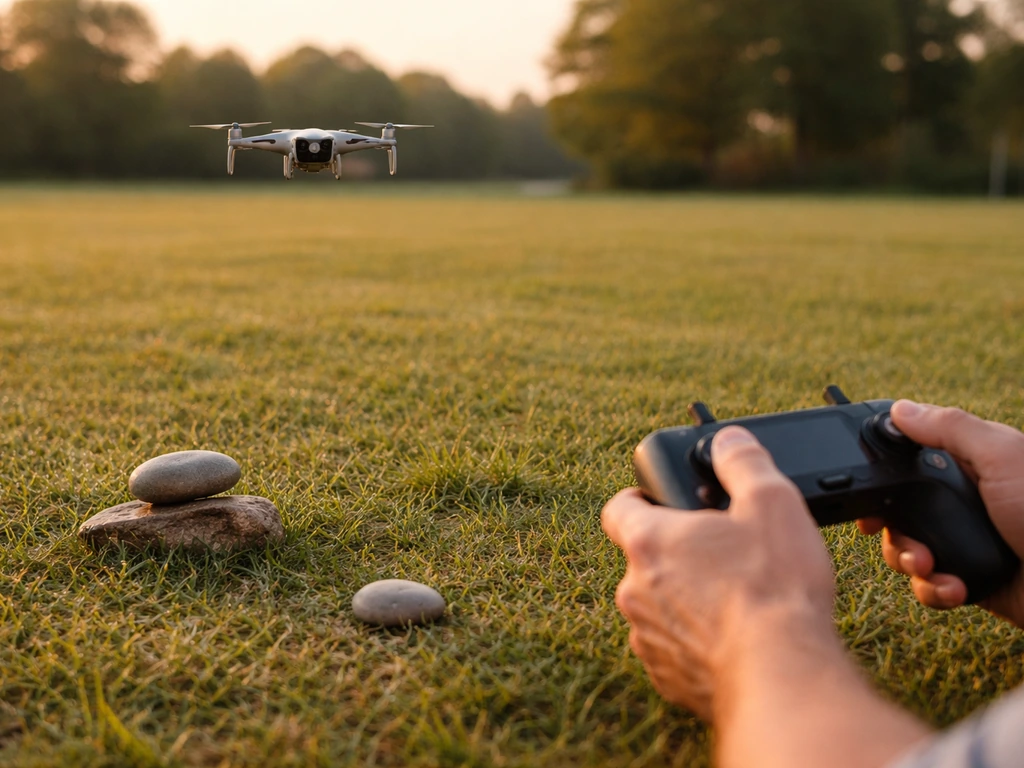
Let's run the ratio PE/KE = 2gh/v² across a few realistic scenarios. Remember, mass cancels so you just need height (in meters) and speed (in m/s).
| Scenario | Height (h) | Speed (v) | PE/KE ratio | Which dominates? |
|---|---|---|---|---|
| Small songbird, low and fast (swift over rooftops) | 5 m | 20 m/s | 2 × 9.8 × 5 / 400 ≈ 0.25 | KE dominates (~4× larger) |
| Typical songbird cruising | 10 m | 15 m/s | 2 × 9.8 × 10 / 225 ≈ 0.87 | Nearly equal, KE slightly larger |
| Shorebird at moderate altitude | 10 m | 25 m/s | 2 × 9.8 × 10 / 625 ≈ 0.31 | KE dominates (~3× larger) |
| Soaring vulture, high and slow | 30 m | 10 m/s | 2 × 9.8 × 30 / 100 ≈ 5.88 | PE dominates (~6× larger) |
| Falcon in a steep dive | 200 m | 60 m/s | 2 × 9.8 × 200 / 3600 ≈ 1.09 | Nearly equal, slight PE edge |
A few things stand out from these numbers. First, the dominance can flip dramatically with modest changes in speed. Second, a high-altitude soaring bird really is PE-dominated in a meaningful way, that stored height is the bird's energy bank that it spends during a glide. Third, a diving falcon at 200 meters and 60 m/s ends up with PE and KE nearly matched, which is a useful reminder that "falling fast" doesn't automatically mean KE dominates. The height is still contributing enormously.
Misconceptions worth clearing up
"A flying bird only has kinetic energy"
This is the most common mistake, and it comes from associating "flying" with "moving" and moving with kinetic energy. But any object above the ground has gravitational potential energy by definition, whether it's moving or not. Lightning can strike objects in the air, so even a flying bird may be a target gravitational potential energy. Height stores energy. A bird hovering perfectly still (like a kestrel wind-hovering) has PE but zero translational KE. A bird in flight has both. The word "flying" doesn't tell you anything about which one is larger.
"Gliding is purely potential energy converting to kinetic energy"
Gliding is close to this, but not exactly. In a glide, a bird loses altitude (PE decreases) and that energy is used partly to maintain airspeed (KE stays roughly constant) and partly to overcome aerodynamic drag (energy is dissipated into the surrounding air as heat and turbulence). Classic gliding flight is described as drawing energy to blank" rel="noopener noreferrer">overcome aerodynamic drag as altitude (gravitational potential energy) is lost, with additional energy often available from rising air currents in soaring and thermals. So PE is being converted both into KE and into heat via drag losses. If a gliding bird also drops speed, even more PE is being lost to drag than gained as KE. The takeaway: gliding is a conversion process involving both mechanical energy forms plus dissipation, not a clean PE-to-KE swap.
Confusing mechanical energy with metabolic energy
PE and KE are mechanical energies, they describe the bird's physical state. Metabolic energy is chemical energy stored in the bird's body and burned by muscles. These are connected but distinct. A bird can increase its mechanical energy (climb higher, fly faster) only by inputting metabolic energy through muscle work. Researchers separate these carefully: mechanical power output (the rate of doing aerodynamic and inertial work) divided by metabolic power input gives efficiency. Treating "flying" as purely a PE/KE problem ignores the continuous chemical energy supply that makes powered flight possible at all.
Assuming PE always equals KE during flight
In a frictionless pendulum or a simple projectile problem, you can set mgh = ½mv² at specific points to find speed at a given height. Reaction forces on a flying bird come from how its wings and body generate lift and control drag as it accelerates through the air mgh = ½mv². Some students carry that habit into flight problems and assume PE and KE must always be equal in flight. They don't have to be, and usually aren't. The total mechanical energy (PE + KE) would only be conserved if gravity were the only force doing work. In real bird flight, muscles add energy and drag removes it constantly, so you can't assume any fixed relationship between the two at a given instant.
How to use this when studying bird flight
If you're working through a problem or watching a bird and want to reason about its energy state, here's a practical approach. First, pick your reference level (usually the ground directly below the bird) and note the bird's height. Second, estimate or look up its speed. Third, compute 2gh/v² to get the PE/KE ratio. Using that same ratio tells you whether a bird flying in the sky has more gravitational potential energy or kinetic energy at that moment PE/KE ratio. Greater than 1 means PE dominates; less than 1 means KE dominates. Fourth, track how that ratio changes: if the bird is climbing, PE is growing; if it's accelerating, KE is growing; if it's gliding downward at constant speed, PE is converting to cover drag losses.
For deeper work in avian biomechanics, you'll want to layer in metabolic power and aerodynamic efficiency, since those govern what the bird can actually sustain. The mechanical PE/KE framework is the entry point, it tells you the bird's current energy snapshot. Some bird flight research is framed through the idea of a will to power, where survival favors continual effort and control of movement. The metabolic and aerodynamic framework tells you how it got there and how long it can maintain it. These two layers complement each other well, and understanding both is what separates a surface-level "flying = kinetic energy" answer from a genuinely informed one.
This same reasoning applies when comparing flight styles across species. A soaring albatross banking on updrafts is working mostly within the PE domain, spending altitude like currency to cover long distances. A hummingbird hovering at flower height is burning metabolic energy furiously to generate KE in its wingtips while its gravitational PE barely changes at all. The energy story is different for every bird, every moment, and every wing shape, which is exactly what makes avian flight such a rich subject to dig into.
FAQ
If a bird is hovering with almost no forward motion, does it still have gravitational potential energy?
Yes. If a bird is at some height h above your chosen reference, it has gravitational potential energy mgh even if its horizontal speed is zero. Hovering or wind-hovering means KE from translational motion is near zero, but the bird still spends metabolic energy to counteract gravity and maintain position.
Does banking into a turn change whether a bird has more potential energy or kinetic energy?
For the PE/KE comparison in your setup, you can use speed (a scalar) rather than velocity. Turning and banking change the direction of motion, but kinetic energy depends on the magnitude of speed (½mv²). However, in real turns the bird often loses some height because the banking increases induced drag, which changes PE slightly.
How should I choose the height reference (ground, sea level, or something else) when calculating PE/KE for a flying bird?
Use your height measured above the same reference point consistently, then plug into 2gh/v². If the bird’s height is changing rapidly, you might compute the ratio using instantaneous values at that moment. Be cautious about mixing “altitude above sea level” with “height above ground,” because the reference choice shifts h and therefore the ratio.
Can the PE/KE ratio tell me if the bird’s total mechanical energy is increasing or decreasing?
The PE/KE ratio alone does not tell you whether the bird is gaining or losing total mechanical energy, because muscles add energy and drag removes it continuously. A bird can be KE-dominant at one instant while still losing total mechanical energy if drag losses outweigh muscle input, or vice versa.
Does the PE versus KE idea work the same way for gliding versus flapping flight?
“Flying” can include powered flight, gliding, and hovering. In each case PE and KE can be compared the same way, but the interpretation differs: in gliding, PE decreases while some energy goes into maintaining airspeed and much is dissipated by drag as heat and turbulence. In powered flight, muscles can offset those losses, so the ratio may stay steadier than you might expect.
Why is it wrong to assume PE and KE should always be equal during flight?
A common mistake is to assume total mechanical energy PE + KE is conserved during flight. That would only be valid if gravity were the only force doing work and there were no dissipative forces. For birds, drag and thrust from muscles break that assumption, so PE and KE need not follow any fixed relation like PE = KE at all times.
How sensitive is the PE/KE dominance to errors in the bird’s speed or height estimates?
You can do a quick sanity check with order-of-magnitude numbers: KE grows with v², PE grows with h. If you double speed, KE becomes four times larger, so PE/KE drops by a factor of four. If you double height, PE doubles so PE/KE doubles, meaning height changes matter linearly while speed changes matter quadratically.
If PE/KE says kinetic energy dominates, does that mean the bird is consuming less metabolic energy?
Metabolic (chemical) energy can dominate the story of “what powers flight,” but it is not the same as PE or KE. The bird’s muscles supply the mechanical power needed to overcome drag and gravity. Even if PE/KE suggests one mechanical form is larger, the bird may still be consuming chemical energy at a high rate to keep speed and altitude from changing.
When estimating PE/KE from observations, should I use airspeed or ground speed?
To estimate PE/KE in the field, measure or approximate speed and height at the same moment. Speed is often the hardest input, so use consistent units, and remember that “speed relative to the air” is what matters for aerodynamic drag, not just ground speed. If wind is strong, ground speed can mislead you about how KE compares to PE.
What happens to the PE/KE comparison for very slow flight or near-hover conditions?
At very low speeds or near hovering, KE can be small while PE can still be significant, so PE/KE may exceed 1 even though the bird is “barely moving.” However, real low-speed flight has strong induced-drag effects, meaning the bird’s required power rises even if KE seems small, so mechanical-energy dominance does not equal energy cost efficiency.
Next Articles
Give a Numerical Example for the Bird Flight Formula
Step-by-step numerical example for bird flight formula, with inputs, units, lift calculation, interpretation, and troubl
Can Lightning Strike a Flying Bird? What to Know and Do
Yes, lightning can strike flying birds. Learn how it happens, what outcomes look like, and what to do in storms.

What Type of Energy Is a Flying Bird? Chemical to Kinetic
A flying bird uses stored chemical energy from food, converted by muscles into mechanical work for lift and kinetic moti