
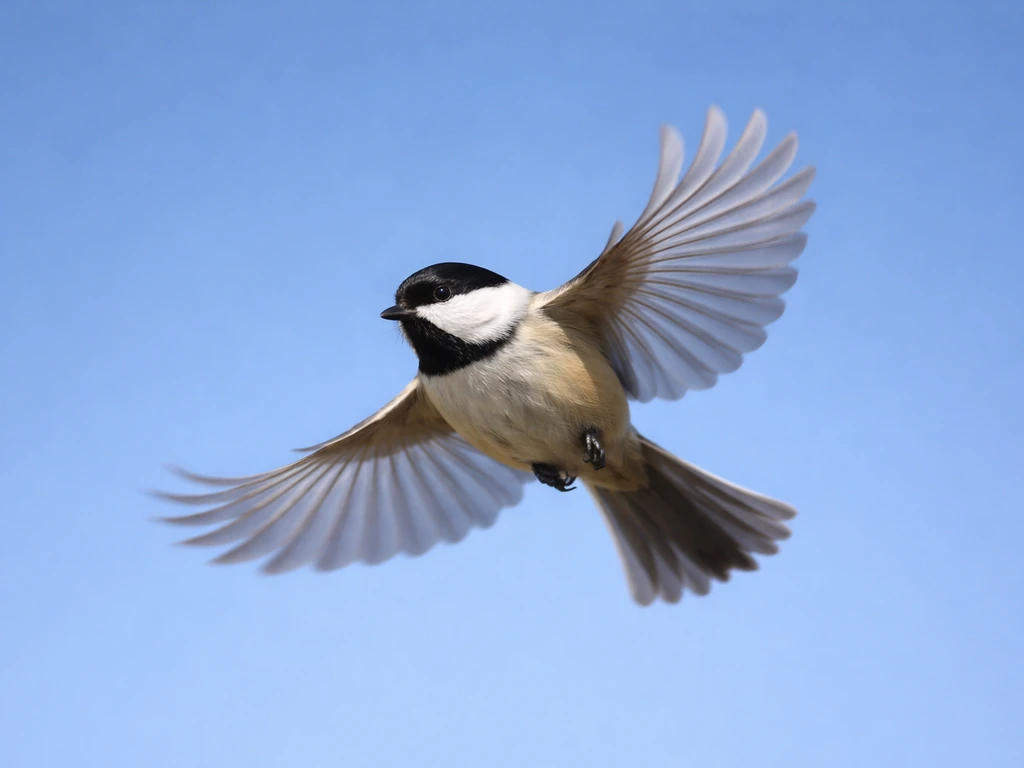
The flying of a bird is an example of locomotion, specifically a form of animal movement powered by biological structures and aerodynamic forces. A bird flying in the sky is also an example of locomotion, specifically biological locomotion. In most school and competitive exam contexts, it also fits under the broader label of a biological process or a natural phenomenon, but the most precise and commonly expected answer is locomotion or animal movement. Bird flight is an active, instinct-driven behavior that uses lift and thrust to move a bird through the air, and it is enabled by specialized anatomy: wings, flight feathers, and powerful chest muscles anchored to a keeled sternum.
Flying of Bird Is an Example of What in Biology?

Marcus Chen
7 Jul 2026
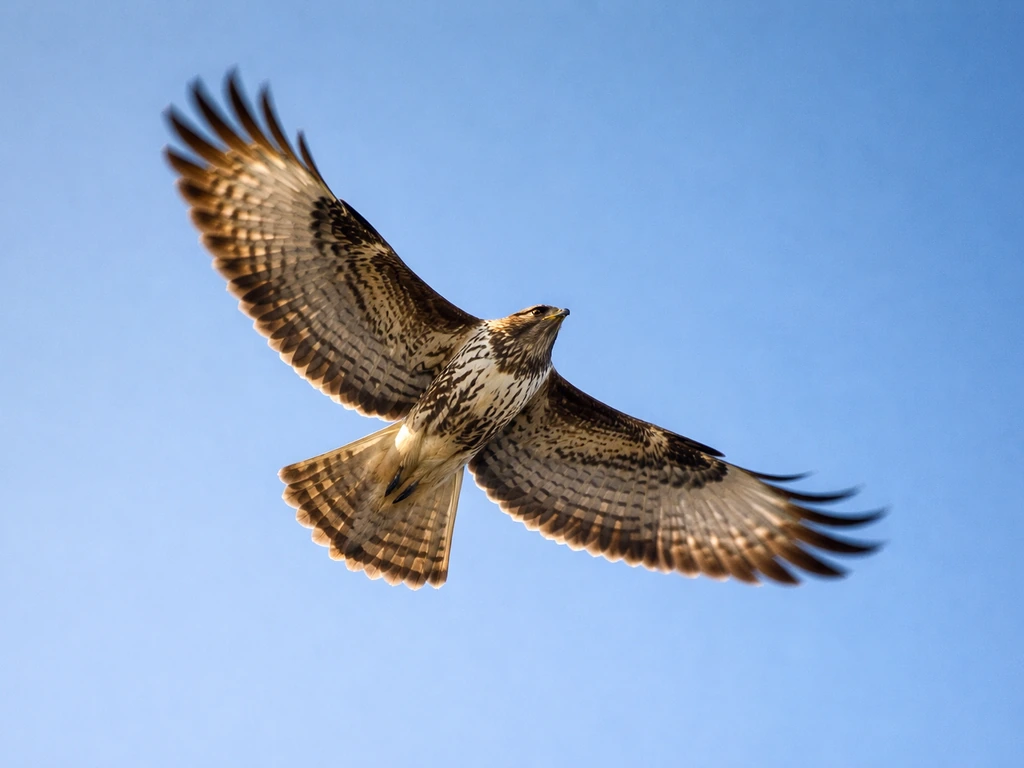
What category does bird flight fall under?
When an exam or textbook prompt says "the flying of a bird is an example of _", the answer most biology and science curricula are looking for is locomotion, animal movement, or a biological process. Here is why that distinction matters: a "natural phenomenon" is a broad category that covers observable events not made by humans, like lightning, rainfall, or earthquakes. Bird flight technically qualifies as observable and non-man-made, but school biology questions are usually more specific. They classify it as organism locomotion because a living creature is actively using its body to propel itself from one place to another.
Biology Online defines locomotion as the movement of whole organisms to propel themselves through their environment, and it explicitly lists bird flight as a textbook example. Wikipedia frames biological locomotion the same way. So if your exam gives you options like "a chemical reaction," "a natural phenomenon," "locomotion," and "a physical change," the answer is locomotion. If the choices are broader, "biological process" or "animal behavior" are both defensible and correct.
| Classification Label | Does bird flight fit? | Why / Why not |
|---|---|---|
| Locomotion / Animal movement | Yes (best fit) | A bird actively uses its body to travel through the air from one location to another |
| Biological process | Yes | Flight is enabled and controlled by living anatomy: muscles, bones, feathers, nervous system |
| Natural phenomenon | Technically yes, but too broad | Covers non-living events like lightning; school biology expects a more specific answer |
| Instinctive behavior | Yes | Birds are born with the neural wiring and physical capacity to fly without being taught |
| Physical/chemical change | No | No change in matter or chemical composition occurs; it is mechanical movement |
Bird flight as a biological behavior: instinct meets control
Flight in birds is not a reflex in the simplest sense, but it is deeply instinctive. Young birds hatch with the neural architecture needed to coordinate wing beats, even before they have had any practice. What develops through fledging is muscle strength, coordination, and learned refinements like reading wind currents or landing precisely on a branch. The core drive to fly, and the basic motor pattern to do it, is wired in. This makes bird flight a behavioral trait that is both inherited and environmentally shaped, which is exactly how most animal locomotion works.
This combination of instinct and learned skill makes bird flight more sophisticated than simple reflex movement. A pigeon does not consciously calculate Bernoulli's principle every time it launches off a ledge, but its nervous system and musculature execute a highly coordinated sequence of wing positions, body angles, and tail adjustments that would impress any aeronautical engineer. Cornell Lab classifies bird flight modes (soaring, gliding, hovering, swooping) as distinct ways birds can fly, which reinforces that flight is a flexible, context-driven behavior, not a single fixed action. Bird migration, for instance, is a behavior built almost entirely around this locomotor capability, and it is worth noting that the two topics are closely connected.
How birds actually generate lift and thrust
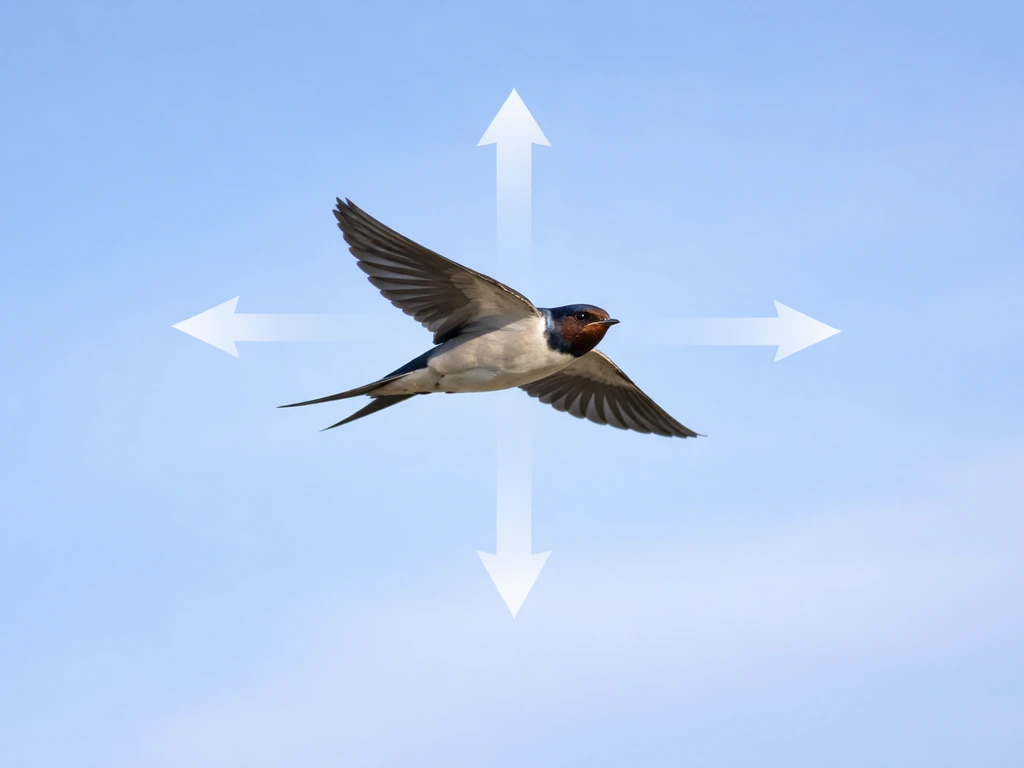
The same four forces that act on an airplane act on a bird: lift, thrust, drag, and weight. Birds generate lift by moving air faster over the curved top of their wings than underneath. Faster airflow means lower pressure on top, and the pressure difference pushes the wing upward. This is the same principle NASA and the Smithsonian use to explain airfoil lift at a beginner level: shape plus airspeed creates a pressure gradient, and that gradient is what keeps a 10-pound pelican airborne. Birds also adjust their angle of attack (the tilt of the wing relative to oncoming air) to increase or decrease lift depending on what the moment demands.
Thrust is different from lift. It is the forward force that keeps the bird moving through the air. Birds generate thrust by pushing backward and downward on the air with their wing beats. The Smithsonian puts it simply: by pushing on the air, birds generate both lift and thrust. Drag is the resistance the bird's body and wings create as they move forward, and reducing drag is a major reason bird bodies are streamlined and wing feathers are so precisely arranged. A peer-reviewed study measuring aerodynamic forces during bird takeoff and landing found that lift largely counteracts body weight while thrust and drag manage horizontal motion, which confirms the four-force model holds at every phase of flight.
Wing anatomy and motion: beats, feathers, and balance
A bird wing is not a flat surface. It is a morphing structure built on bones that mirror the human arm: humerus, radius and ulna, and a fused wrist-hand structure called the carpometacarpus. Research on pigeons has shown that birds couple three-dimensional elbow and wrist movements simultaneously to morph wing shape mid-flight. This is why a bird can go from a tight fold during a dive to a fully extended soaring position in under a second. The skeleton provides the scaffold; the muscles and feathers do the aerodynamic work.
Feathers are divided into two functionally distinct groups when it comes to flight. The primary feathers attach to the hand bones at the outer wing and are the ones responsible for generating thrust. When a bird flaps, the primaries rotate and push air backward, driving the bird forward. The secondary feathers attach further up the inner wing and overlap to form the classic curved airfoil shape that generates lift. OpenStax notes that wing feathers are also flexible enough to separate as air moves through them, which reduces drag during the upstroke. OpenStax explains that bird feathers and wing and body adaptations enable flight by providing the lift and thrust necessary to become airborne, while wing structure helps reduce drag. The large flight muscles attach to the keeled sternum and provide the power for all of this movement.
- Primary feathers (outer wing, attached to hand bones): generate forward thrust by rotating during the downstroke
- Secondary feathers (inner wing): overlap to create the airfoil curve that produces lift
- Alula (small feathers at the wrist joint): act like leading-edge slats on a plane, preventing stall at low speeds
- Tail feathers: used for steering, braking, and stability control
- Keeled sternum: anchors the large pectoral muscles that power the downstroke
The wing beat itself has two phases. The downstroke is the power phase: it generates most of the lift and thrust. The upstroke is the recovery phase: the wing partially folds to reduce drag as it swings back up. In flapping flight, this cycle repeats many times per second. Hummingbirds beat their wings up to 80 times per second and can even generate lift on the upstroke, which is why they can hover. A red-tailed hawk, by contrast, flaps far less frequently and relies on extended soaring to cover ground efficiently.
Flapping vs. gliding vs. soaring: they are not all the same thing
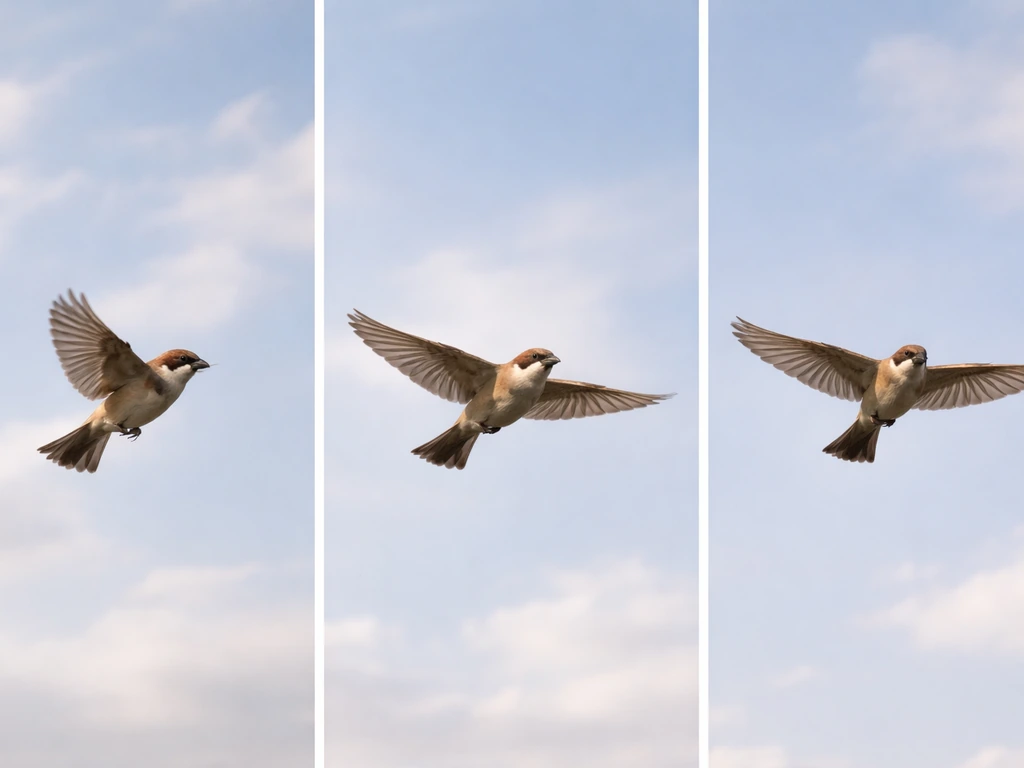
One common confusion in exam answers is treating all bird flight as a single category. There are actually distinct flight modes, and they work differently. Flapping flight is active locomotion: the bird continuously beats its wings to generate thrust and lift. Gliding is unpowered: the bird extends its wings and uses gravity (losing altitude slowly) to maintain forward motion, with no active thrust generation. Soaring is a special case where birds exploit rising columns of warm air (thermals) or wind deflected upward by cliffs and hills to gain altitude without flapping. Soaring requires no engine and no fuel, just the right wing shape and the ability to find rising air.
For exam purposes, "the flying of a bird" typically refers to flapping flight, which is the most common and most studied form. But it is worth knowing the distinction because a flying bird and a gliding bird are using different force balances. In a glide, thrust is effectively zero and the bird trades potential energy (height) for forward motion. In flapping flight, the bird is constantly generating both lift and thrust through active muscle work.
Why some birds cannot fly at all
Not every bird flies, and this matters for accurate classification. Ostriches, emus, cassowaries, rheas, and kiwis are ratites: flightless birds whose wings have reduced over evolutionary time into structures too small and weak to generate the lift needed to get airborne. Their keels are reduced or absent, meaning there is no large anchor for powerful flight muscles. Penguins took a different evolutionary path: their wings became rigid, dense flippers optimized for underwater swimming rather than aerial flight. The bone structure that would allow a penguin wing to fold and morph for aerial flight is essentially fused and locked.
Live Science attributes flightlessness broadly to anatomical changes: shorter or weaker wing bones, different leg development, and reduced flight musculature. For large penguins, the energetic cost of generating enough lift to overcome their body mass would be enormous, and evolution favored the more useful adaptation of efficient swimming instead. This is a useful reminder that "flying of a bird" as a classification applies to most but not all birds. If your exam asks about locomotion in birds generally, it is accurate to note that the primary locomotor mode varies by species.
There is also a connection here to how we compare bird wings to other animals' wings. The wings of birds and butterflies, for example, are a classic case study in convergent evolution: two very different structures that perform a similar function but evolved independently. That comparison sheds more light on why flight as locomotion is such a powerful evolutionary solution across species.
How to use this on a homework question or exam

If a question says "the flying of a bird is an example of" with no other context, write: locomotion (or animal movement/biological locomotion). If the question asks you to explain why, say: because a bird uses specialized anatomy, including wings, flight feathers, and flight muscles, to actively generate lift and thrust, propelling its body through the air from one location to another. That answer hits the key terms any biology or science marker will be looking for.
- Start with the label: locomotion or biological locomotion is the primary exam answer
- Add the mechanism: lift (from wing shape and airflow) plus thrust (from wing beats) plus drag management
- Name the structures: primary feathers for thrust, secondary feathers for lift, keeled sternum and pectoral muscles for power
- Note the behavior angle: flight is an instinct-driven behavior refined through practice, not purely a reflex
- Add nuance if needed: distinguish flapping (active) from gliding (passive/unpowered) and mention flightless birds to show you understand the full picture
The deeper you go into the science, the more satisfying the answer becomes. Bird flight is one of those topics where a simple exam label (locomotion) opens up into an entire world of aerodynamics, evolutionary biology, and biomechanics. The classification is correct and defensible, and the science behind it is genuinely fascinating once you start pulling on the thread.
FAQ
If the multiple-choice options include “natural phenomenon” as well as “locomotion,” which one should I pick for an exam question?
Choose locomotion (or animal movement/biological locomotion). “Natural phenomenon” is broader and includes events like rain or earthquakes, while bird flight specifically involves an organism using its body to propel itself through its environment.
Does “flying of a bird” mean gliding as well, or only flapping flight?
In most school exam prompts, it means flapping flight, because that is the most common and directly powered mode. Gliding is still locomotion, but it is unpowered and the force balance differs (thrust is effectively near zero).
Is bird flight a reflex or a learned behavior?
It is best described as instinctive in its core coordination, but also partly refined by experience. Young birds have the neural wiring to coordinate wing beats, while skills like adjusting to winds and landing improve during fledging.
What if the question asks for “type of locomotion” rather than just “locomotion”?
Answer with organism locomotion in an aerial medium (movement through air). You can add that it relies on aerodynamic lift and thrust produced by wing beats and specialized anatomy if the exam expects explanation.
How should I answer if the choices include “physical change” or “chemical reaction”?
Those are incorrect classifications for bird flight. The flight is not about a new substance forming (chemical reaction) or matter changing state in a basic way (physical change). It is motion of a whole living organism powered by biological structures.
Are flightless birds like ostriches still “examples” of locomotion in biology questions?
Yes, they are examples of locomotion, but not flight. Their movement mode is terrestrial running, and their anatomy lacks the keel and flight muscles needed for airborne lift generation.
What is the most common mistake students make with “the flying of a bird” questions?
Treating all bird flight as one uniform action. Exams may reward noting different modes (flapping, gliding, soaring) because each one uses a different balance of lift, thrust, drag, and weight.
If the prompt asks for a one-sentence justification, what should it include?
Mention that the bird actively uses specialized body parts, wings and flight feathers plus chest muscles, to generate lift and thrust so it can move from one place to another through the air. This directly matches the expected biology terminology.
Next Articles
A Bird Flying in the Sky Is an Example of Powered Flight
A bird flying overhead is an example of powered flight, using wing lift, thrust, and aerodynamics to stay airborne.
Flying Bird Is an Example of What in Bird Flight Science
Clarifies what a flying bird exemplifies in avian flight science: wing-powered locomotion, lift, thrust, and flight beha
Movement of turkey bird is called what Here is the term
The movement of a turkey bird is called strutting, plus walking and display behaviors like tail-fanning