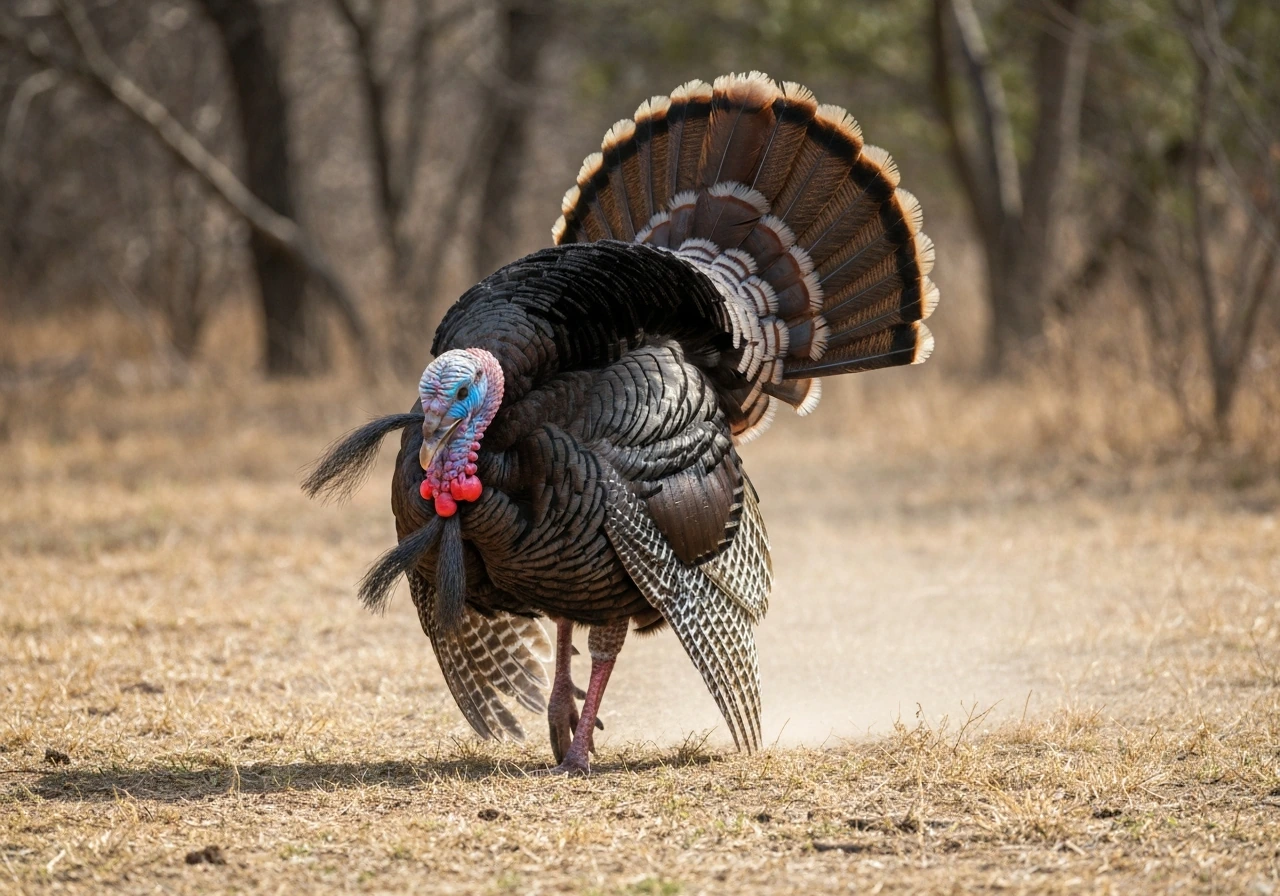
The movement of a turkey bird, specifically the signature ground display of a male wild turkey, is called strutting. PBS Nature’s fact sheet describes that male wild turkeys fluff and fan their tail feathers and drag their wings as they strut, a behavior commonly referred to as blank" rel="noopener noreferrer">strutting. That's the word you'll find in every field guide, wildlife federation resource, and behavior study. It describes the full coordinated display: puffed feathers, fanned tail held vertical, wings dropped so the primary feathers drag along the ground, and a series of quick, deliberate steps. Beyond that display, turkeys also walk, run, scratch, peck, and yes, fly short distances. Each of those movements has its own name, and knowing which one you're watching makes all the difference.
Movement of turkey bird is called what Here is the term

Strutting is the term you're looking for
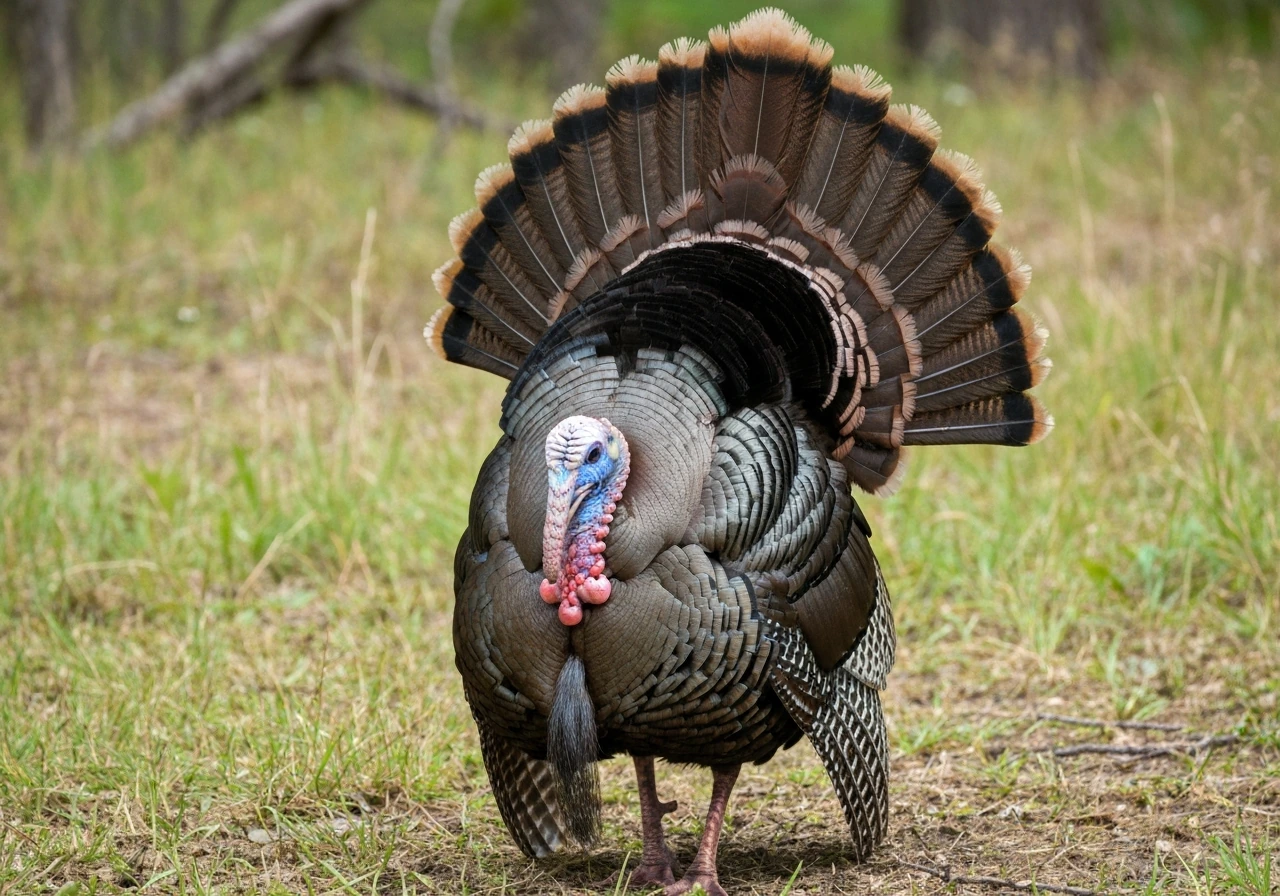
The National Wild Turkey Federation is pretty direct about this: the word "strut" is the accepted term for the courtship display of the wild turkey. It's not just a casual nickname, it's the standard behavioral label used by ornithologists, wildlife managers, and birding guides alike. When you see a male turkey (called a tom or gobbler) puff himself up into that unmistakable rounded silhouette, fan his tail into a wide semicircle, drop his wings until the primary feathers scrape the dirt, and take those slow, almost theatrical steps, that entire sequence is the strut.
The strut isn't just about looking impressive, though it certainly does that. It's a courtship display aimed at hens, but it also carries a dominance signal directed at other males. The NWTF notes that the strut includes sound components too: a low "huff" or spitting sound, a deep drumming resonance from the chest, and the audible rattling of wing feathers dragging across the ground. So when someone asks what the movement of a turkey bird is called, strutting is the correct, complete answer, and it's a whole-body performance, not just a walking style.
How to think about "movement" in birds: walking, flying, and displaying
Birds don't have just one kind of movement, and this is worth clarifying because the word "movement" in a search box could mean several different things. For most bird species, movement falls into a few broad categories: ground locomotion (walking, running, hopping), aerial locomotion (flapping flight, gliding, soaring), and behavioral displays (which often involve movement but serve a communicative purpose rather than getting from A to B). Turkeys are interesting because they're one of the few birds where the display movement is arguably more famous than the flying.
Field guides like Audubon's treat turkeys primarily as ground birds that walk and run for daily movement, with flight reserved for specific purposes like roosting or escaping predators. This is different from, say, a migratory songbird where sustained aerial movement is the defining locomotion. Bird migration, for instance, represents a whole other category of movement, long-distance, seasonal, and navigational, that turkeys simply don't participate in the same way. Understanding which type of movement you're asking about helps land on the right term every time.
The turkey's full behavioral vocabulary
Beyond the strut, turkeys have a rich repertoire of behaviors that each deserve their own label. If you're watching a turkey and trying to name what you're seeing, here's a breakdown of the major ones.
Strutting (courtship and dominance display)
As covered above, this is the full-body courtship display. It's most common in spring during breeding season, though toms can strut at other times too, particularly when asserting dominance. The posture is hard to miss: the bird looks almost spherical, the tail fans straight up into a wide arc, the wings hang low with primary feathers touching the ground, and the caruncles (those fleshy bits on the head and neck) flush bright red and blue. The bird takes quick, deliberate steps while shaking slightly and producing those low chest sounds. The guide also describes the strutting sounds as including a “chump sound” followed by a low hum blank" rel="noopener noreferrer">chump sound followed by a low hum.
Gobbling (vocal display)
Gobbling is technically a sound rather than a physical movement, but it's so closely associated with the strut that the two are worth mentioning together. The gobble is a long, resonant call produced primarily by toms, especially in spring. It announces presence, attracts hens, and signals status to rival males. It's distinct from the spitting-and-drumming sounds that happen during the strut itself, gobbling is loud and carries a long distance, while the drumming is close-range and felt almost as much as heard.
Scratching and pecking (foraging movement)
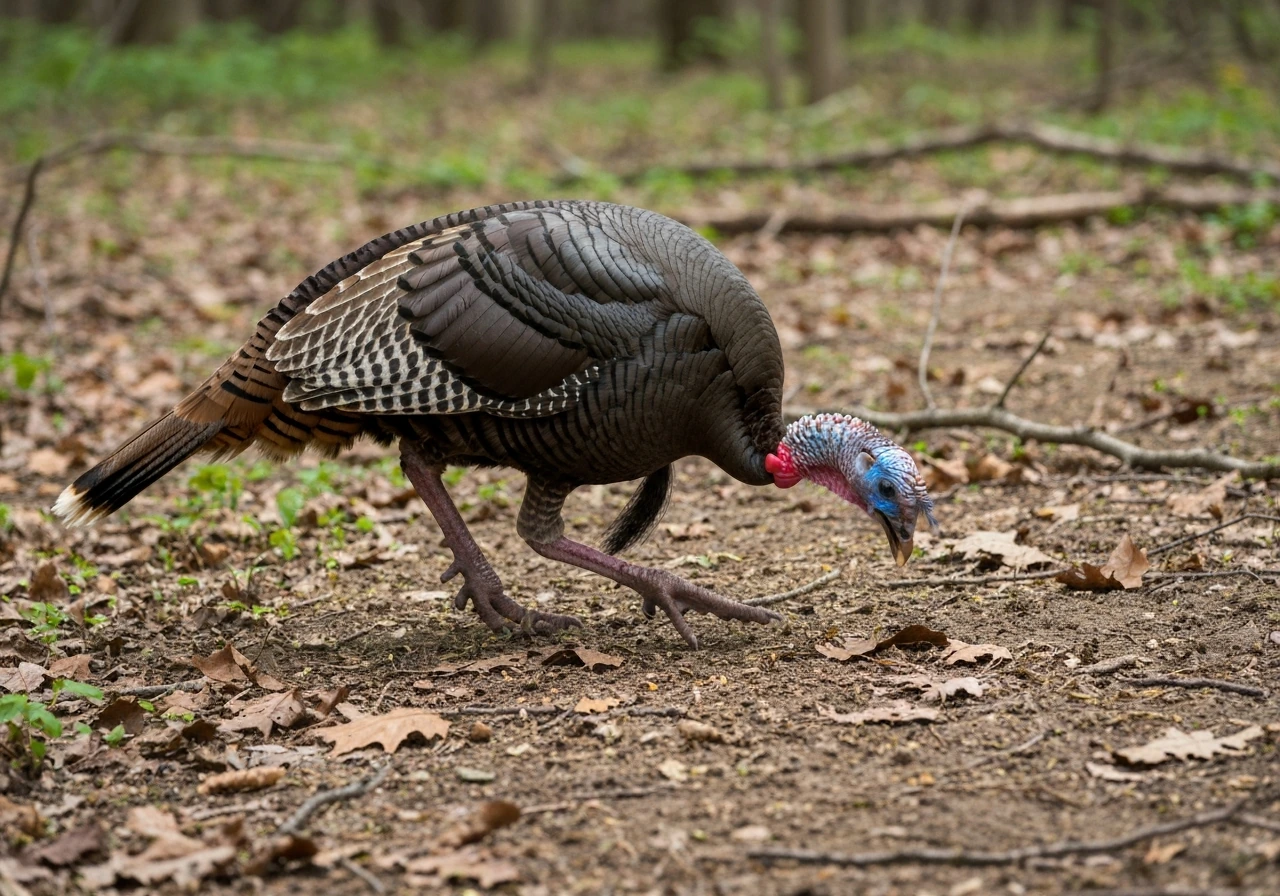
Turkeys spend a large chunk of their day in foraging mode: scratching through leaf litter with their feet to uncover insects, seeds, and acorns, then pecking at whatever they find. This is purely functional locomotion, not display behavior. The movement looks deliberate and methodical, a few scratches with one foot, a peck or two, a few steps forward, repeat. If you're watching a turkey moving through the woods and it's not puffed up or displaying, this is almost certainly what you're seeing.
Wing flapping and wing displays
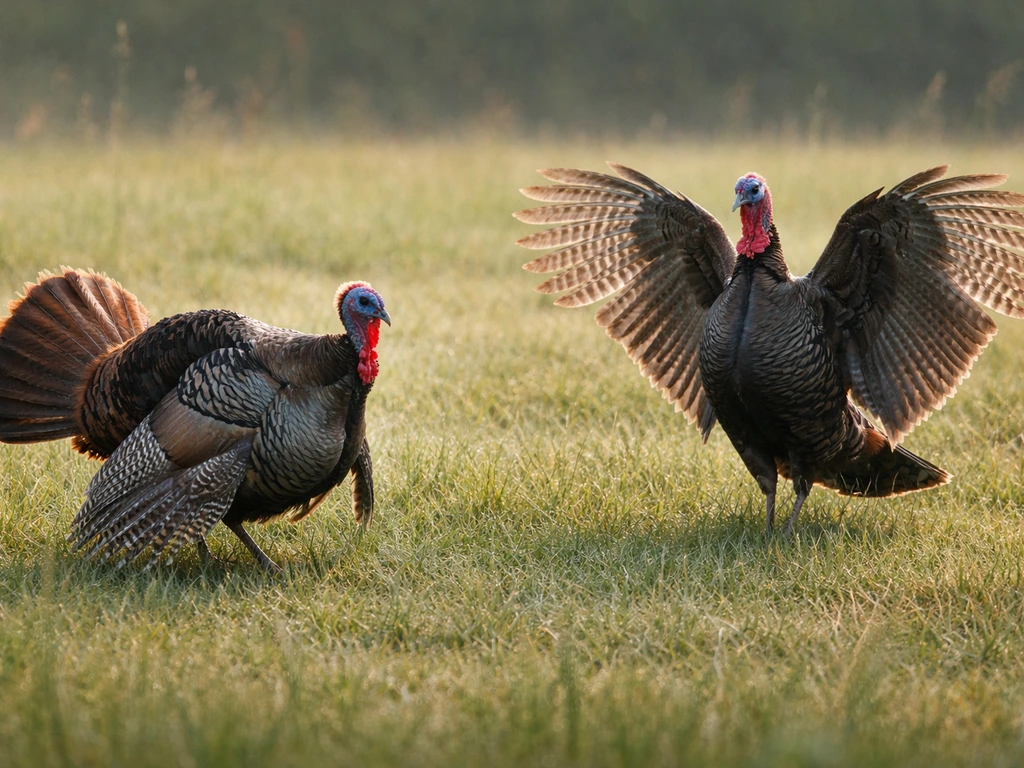
Wing flapping in turkeys can mean a few different things depending on context. During the strut, the wings are dropped and dragged rather than flapped. But outside of the display, wing flapping can signal alertness or act as an exit cue before the bird takes flight. Turkeys also use wing-spreading as a threat or dominance signal in some encounters. These are distinct behaviors from the strut, even though they all involve the wings.
Can turkeys actually fly? The short answer might surprise you
Wild turkeys can fly, and fly reasonably well, just not in the sustained, long-distance way most people associate with bird flight. Audubon's field guide describes them as capable of flying "strongly," and the USDA's wildlife management data puts their typical flight distance at around 400 meters at a stretch. That's not trivial. They use this capability mainly to launch up into tall trees for overnight roosting, where they're safe from ground predators. Young turkeys can make short flights within their first few weeks of life, and getting airborne early is genuinely important for their survival.
What turkeys don't do is sustain flight over long distances the way a migratory bird does. Their flight style is better described as a powerful burst, a strong launch, a relatively short glide or flap to a nearby tree or clearing, and then back to the ground. Think of it as tactical flight rather than traveling flight. This puts them in an interesting middle ground: not flightless like an ostrich or emu, but not built for soaring like a hawk or for long migrations like many songbirds. Their wings evolved for bursts of power, not endurance.
This is actually a great example of how flight mechanics vary dramatically across bird species, something worth exploring if you're curious about why some birds are aerial specialists and others, like turkeys, are fundamentally ground birds that fly when they need to. For example, many flying birds evolved specialized wings and body mechanics that let them travel through the air effectively. The same principle applies to questions about what makes a flying bird's movement distinct from a ground bird's, and why wings alone don't tell the whole story. A bird flying in the sky is an example of aerial locomotion, where flight is being used to get airborne rather than to just display. In general, a flying bird is an example of aerial locomotion rather than ground-based movement flying bird's movement.
The anatomy driving all of this movement
Every movement a turkey makes is rooted in specific anatomy, and it's worth knowing which body parts are doing what.
Legs and feet
Turkeys are built for ground life, and their legs reflect that. They're strong, muscular, and designed for walking long distances, running when needed, and scratching powerfully through hard-packed leaf litter. The feet have three forward-facing toes and one rear-facing toe (called the hallux), which provides grip and stability on uneven woodland terrain. Male turkeys also have a spur on the back of each leg, a bony projection used in dominance fights with other males. The legs do the heavy lifting during foraging, walking, and the quick steps of the strut display.
Wings and primary feathers
Turkey wings are broad and relatively short compared to long-distance fliers, which suits their burst-flight style. The primary feathers, the large outer flight feathers at the wing tips, are key players in two completely different contexts. In flight, they generate thrust and lift. In the strut display, the wings are dropped so those same primary feathers drag along the ground, creating the characteristic brushing or rattling sound that's audible to nearby hens. Small muscles at the base of each feather allow the turkey to precisely control feather position, which is what makes both the display posture and the flight posture possible.
Tail feathers
The tail fan is probably the turkey's most recognizable feature during the strut. The tail feathers are held vertically and spread into a wide, symmetrical fan that can span nearly 180 degrees. This posture is held through muscular effort and the same feather-base muscle system that controls the wings. Outside of display, the tail plays a role in aerial balance and steering during flight, functioning much like a rudder and brake.
Balance and overall posture
The strut display creates an unusual balance challenge. With wings lowered and dragging and the tail held high and vertical, the turkey's center of gravity shifts. Despite looking cumbersome, toms can hold this posture while walking, turning, and responding to rivals or receptive hens. The whole body is engaged: the neck is pulled back, the breast is puffed forward, and the caruncles on the head engorge with blood to produce those vivid colors. It's a full-body postural commitment, which is part of why it signals so effectively, it's genuinely costly to maintain.
A quick reference: turkey movements and what to call them
| Behavior | Correct Term | Context |
|---|---|---|
| Male courtship/dominance display with fanned tail and drooped wings | Strutting | Spring breeding season; dominance encounters |
| Daily walking through habitat | Walking / ground locomotion | Foraging, ranging, moving between areas |
| Kicking through leaf litter with feet | Scratching | Foraging for food |
| Picking food items off the ground | Pecking | Foraging for insects, seeds, acorns |
| Loud resonant call from tom | Gobbling | Spring communication; attracting hens, signaling rivals |
| Short powerful launch to tree or clearing | Flight (burst flight / roosting flight) | Roosting, predator escape, crossing obstacles |
| Wings spread or flapped as signal | Wing display / wing flapping | Alert signal, dominance, pre-flight |
If you're watching a turkey and want to name what you're seeing accurately, the table above covers the most common scenarios. The strut is the showstopper and the most frequently searched behavior, but the full picture of turkey movement includes everything from the efficient walk of a foraging bird to the surprisingly powerful burst of wings when something spooks them out of the underbrush. Each movement tells you something different about what the bird is doing and why, which is the real payoff of knowing the right terminology.
FAQ
Is the term “strutting” or “strut” the correct way to describe a male turkey’s courtship movement?
Both are used informally, but the standard label for the behavior is “strut,” with “strutting” describing the act as it happens. If you’re trying to name what you’re seeing in the field, “strut” is the safest term to use.
Do hens also “strut,” or is this movement only for male turkeys?
The full courtship strut is primarily a male behavior. Hens can show related posture changes around breeding, but the classic puffed, fanned, wings-dragging display with the associated “spitting” and nearby drumming is typically a tom’s show.
If a turkey puffs up and fans its tail, but the wings do not drag on the ground, is it still a strut?
It may be a partial or threat-oriented display rather than the full strut. The defining hallmark of the standard strut is the wings being held low so the primary feathers brush or drag the ground, often producing a rattling or brushing sound.
What should I call it if the bird is walking normally but keeps shaking or dipping its head?
Those behaviors can be part of the strut sequence, but if the bird is not in the full posture (tail held vertical in a wide fan, wings dropped to touch or scrape the ground), it’s better described as normal walking or an alert display rather than the courtship strut.
Is “gobbling” considered a movement term, or is it only a sound?
Gobbling is a vocalization, not a physical movement label like strutting or walking. However, because it happens alongside the strut period and often from a similar posture, people commonly mention it when describing what’s going on visually.
If I see a turkey run instead of walk, what is the movement called?
In general, “running” or “sprinting” describes the faster ground locomotion. The key point is that these are functional locomotion behaviors, unlike the courtship strut which is a specific whole-body display with distinctive tail and wing positions.
How can I tell the difference between a turkey scratching and the wing or feather movements during a strut?
Scratching is foot-driven, leaf-litter based, with repeated clawing motions followed by pecking. Strut-related wing behavior involves wings dropped low with primary feathers dragging, usually paired with a high, vertical tail fan and visible puffed posture.
Do turkeys only fly at night for roosting, or do they fly during the day too?
Roosting is the most common reason people notice, but turkeys can also use short flights during the day as an escape response or to move to another nearby perch or clearing. These flights are typically tactical bursts, not sustained traveling flight.
If a turkey takes off quickly and glides a short distance, what’s the correct way to describe that movement?
That’s best described as short-distance flight or a burst flight, with a launch followed by a brief glide or short flap to a nearby spot. It is different from long-distance aerial locomotion seen in migratory or soaring birds.
Can turkeys strut outside of spring breeding season?
Yes. While strutting is most frequent in spring, toms may strut at other times, especially when asserting dominance or reacting to rivals. Timing alone is not enough, posture cues are the main way to identify it.
Why do the body parts look so extreme during the strut, and does it affect how the turkey moves?
The display changes the bird’s center of gravity, with the tail held high and wings low. Toms can still walk, turn, and respond while maintaining the posture, but it is energetically costly, which is part of why the behavior signals strength and status.
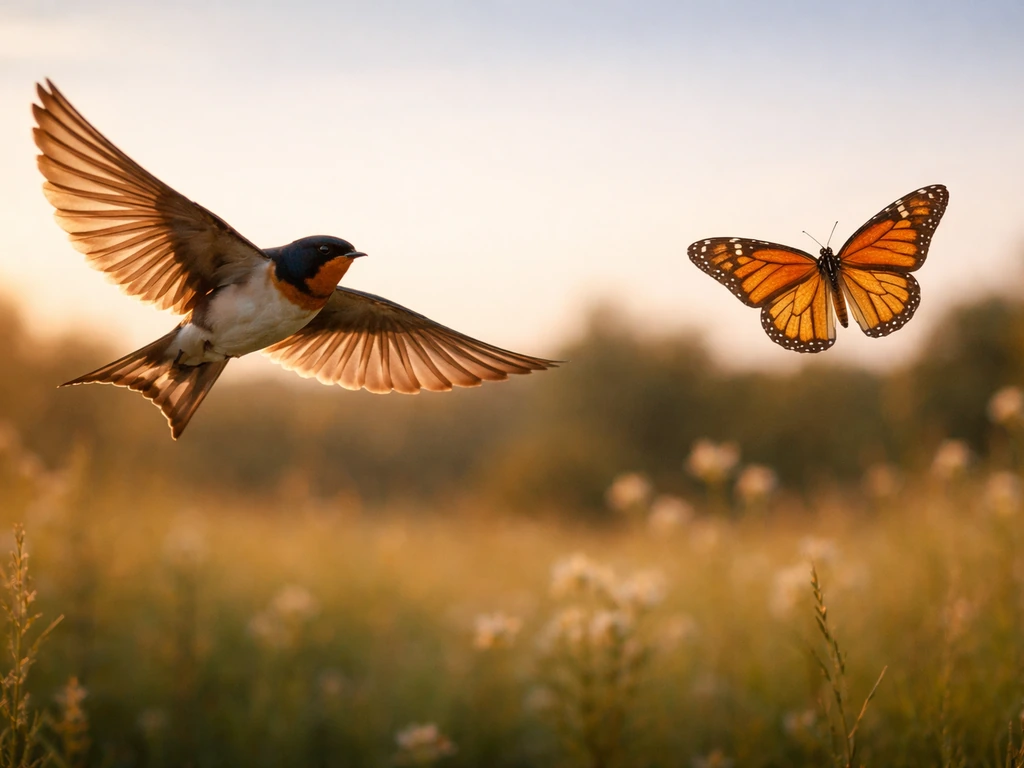
Bird Wings and Butterfly Wings Are an Example of Analogous Structures
Bird and butterfly wings evolved separately but perform similar functions, making them analogous structures, not homolog