
Flying like a bird is not a fantasy you can unlock with the right arm workout, but understanding exactly how birds do it gets you surprisingly close to the real thing in ways that matter. Birds generate lift and thrust simultaneously using a pair of wings that double as engines and airfoils, powered by chest muscles that can hit 400 watts per kilogram during takeoff. Humans can't replicate that physiology, but we can learn the same aerodynamic principles, train our bodies in analogous ways, and use purpose-built tools to genuinely experience bird-like flight mechanics. This guide breaks down what birds actually do, what parts of it translate to humans, and what you can realistically do today.
Fly Like a Bird: What You Heard and What’s Real

Marcus Chen
7 May 2026
What 'fly like a bird' actually means (and what's realistic)
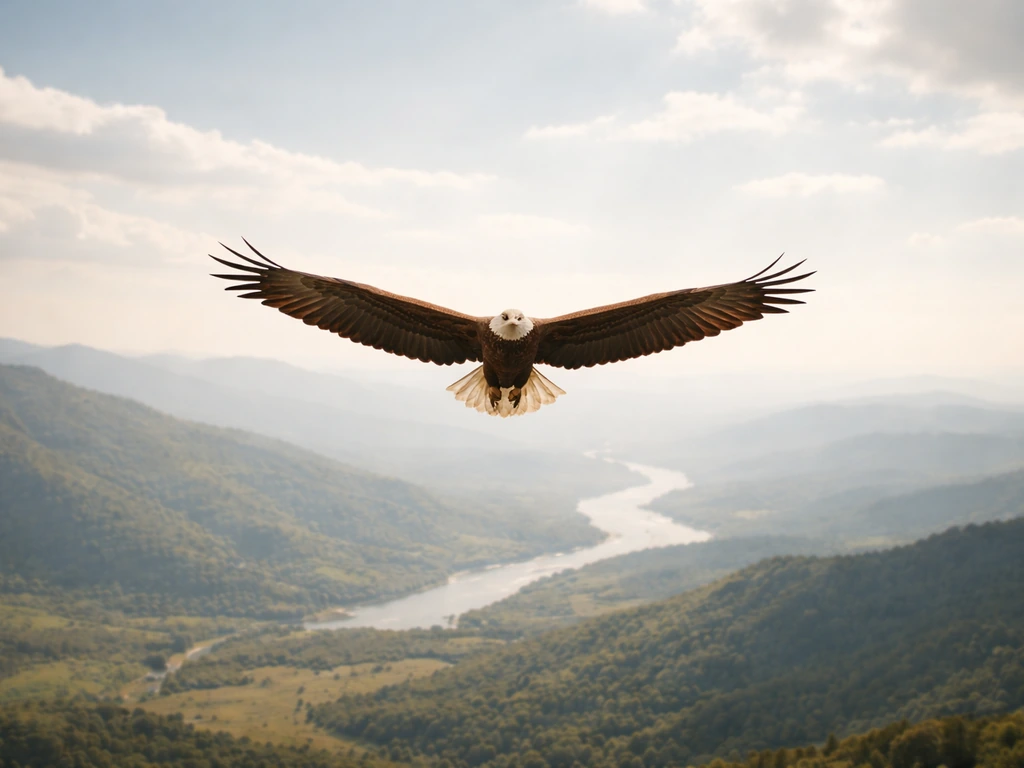
The phrase carries two lives at once. Half the people searching it are quoting a lyric or a meme, tacking on 'uh huh what you heard' as a kind of knowing wink. The other half genuinely want to know: could I actually do it? The answer splits cleanly. The emotional experience of sustained, self-directed aerial movement above the landscape is achievable right now through hang gliding, paragliding, and wingsuit flying. If what you want is that birdlike feeling of flying high and sensing the air moving around you, look to hang gliding and similar aerial sports to get as close as humans can right now sustained, self-directed aerial movement. The biological act of flapping human arms to generate lift is not achievable, and MIT aerodynamicist Mark Drela puts it plainly: our arms and chest simply don't carry enough muscle mass or power density to generate the necessary forces, and no current mechanical wing technology can solve that gap at human scale. So 'fly like a bird' realistically means understanding and applying the same aerodynamic principles birds use, through tools that make those principles work for a human body.
That distinction matters because it changes what you prioritize learning. If you focus on bird biomechanics as your mental model, you'll make better decisions in any human flight activity. Gliding birds, soaring birds, and flapping birds all use the same core physics you encounter in a hang glider or a paraglider. The sibling question of how to actually learn those skills is worth exploring alongside this, since the concepts here feed directly into any practical training path.
Bird flight basics: wings, anatomy, and control
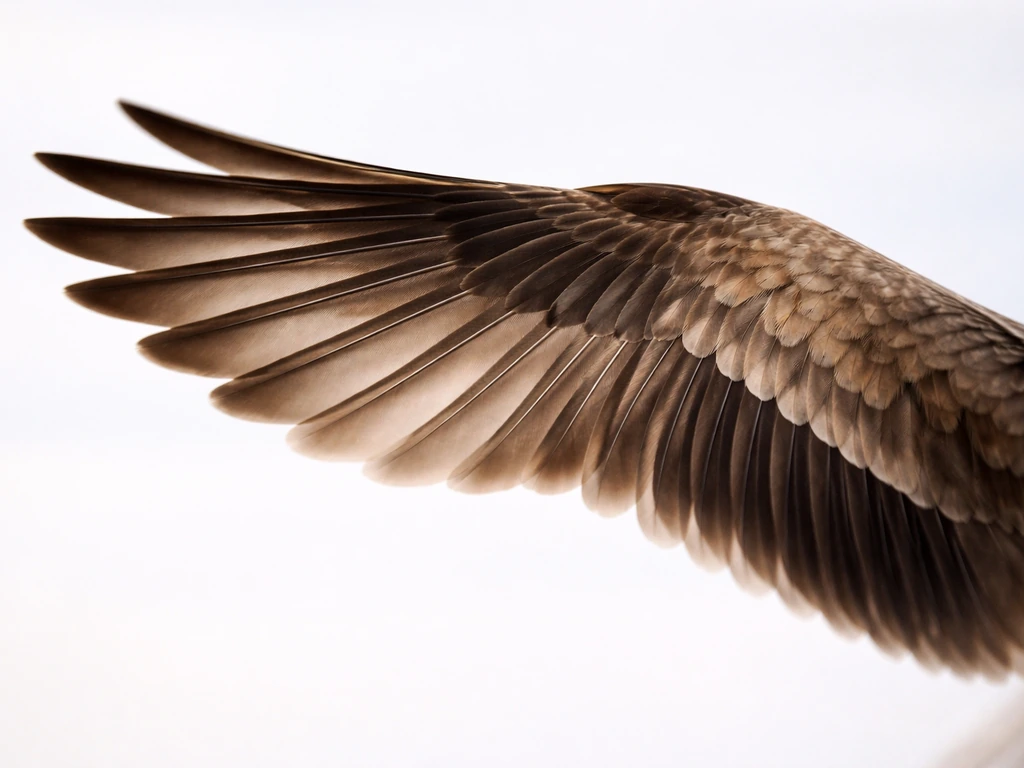
A bird wing is not a single rigid surface. It's a dynamic, morphing structure that the bird adjusts continuously in three dimensions. The primary feathers at the wingtip pivot individually, changing feather geometry as the wing extends or flexes, which directly influences aerodynamic forces. The secondary feathers closer to the body form the main lifting surface. The tail acts as a rudder and brake, used for steering across species as different as pigeons, swallows, and larks. Tail position affects both lift efficiency and directional control, which is why you'll see a landing bird fan its tail dramatically before touchdown.
The muscular engine behind all of this centers on two muscles anchored to the keel, the blade-like ridge running along the breastbone. The pectoralis drives the downstroke and is the primary source of flight power. The supracoracoideus drives the upstroke, pulling the wing back up via a pulley-like tendon that loops over the shoulder joint. In avian flight, the supracoracoideus is the primary upstroke muscle and is antagonistic to the downstroke pectoralis muscle. In flying birds, the keel is large and prominent because those muscles need a massive anchor point. Flightless birds typically have a reduced or absent keel precisely because they've lost the need for that power. Penguins are the interesting exception: they kept the keel because they use those same wing muscles to 'fly' underwater.
Birds also control direction and force using what researchers describe as stroke-plane angle and pronation angle, the exact orientation of the wing relative to the bird's body and the direction of travel. Adjusting these parameters mid-flap is how birds carve turns, accelerate, hover, and brake. It's an extraordinarily sophisticated real-time control system that takes birds years of post-hatch development to master, which should reframe how you think about learning any human flight skill: the biological analog took practice too.
How birds generate lift and thrust: the practical breakdown
Here's where bird flight diverges most sharply from an airplane. On a fixed-wing aircraft, lift and thrust come from separate systems: the wing provides lift, the engine provides thrust. In a bird, the wing generates both simultaneously, and the mechanism shifts depending on what the bird needs at any moment.
The downstroke does most of the work
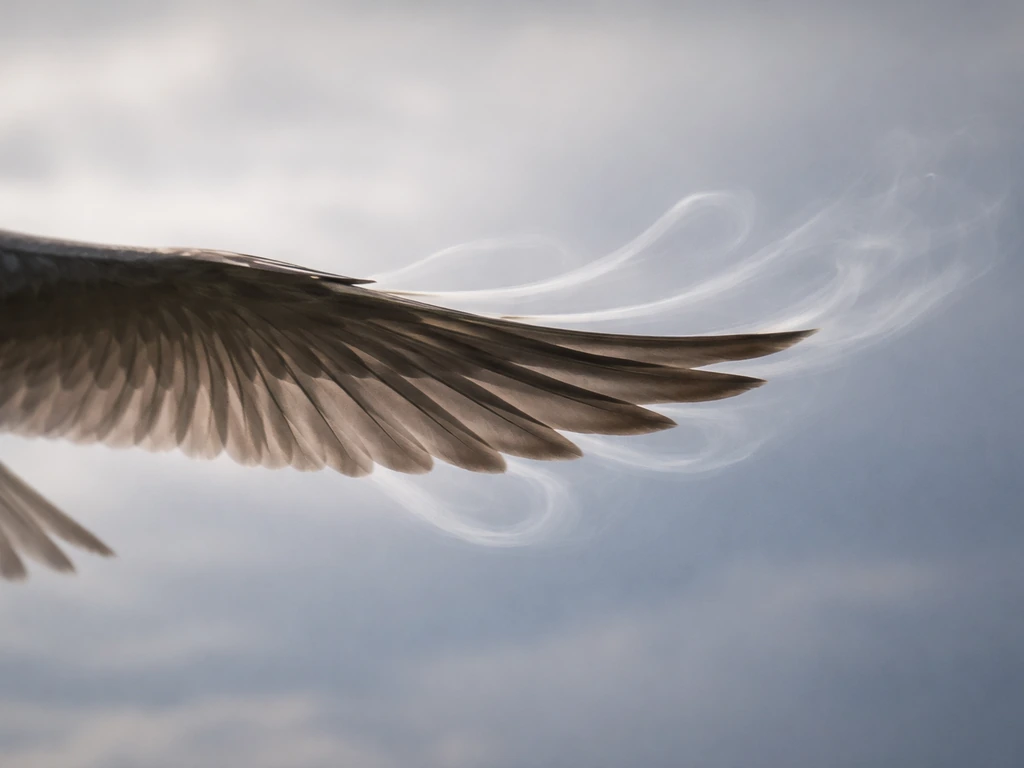
During flapping flight, most thrust is generated on the downstroke. As the wing sweeps downward and forward, the feathers push against the air, creating both a forward force (thrust) and an upward force (lift). The upstroke is more about repositioning the wing efficiently, and birds like hummingbirds have evolved to extract more aerodynamic work from the upstroke than most species, which is why hovering is possible for them but costs enormous energy.
Leading-edge vortices and unsteady aerodynamics
Birds don't just ride smooth laminar airflow. At higher angles of attack, the leading edge of the wing generates a spiraling vortex of air, a leading-edge vortex (LEV), that creates a powerful low-pressure zone above the wing and dramatically boosts lift. This vortex lift increases non-linearly with angle of attack, and dynamic wing morphing (the constant shape-changing birds do) intensifies these vortices further. It's an elegant trick that lets birds generate more lift than a rigid wing of the same size could, especially at the slow speeds where simple aerodynamics would otherwise fail them.
Gliding vs. flapping: an energy tradeoff
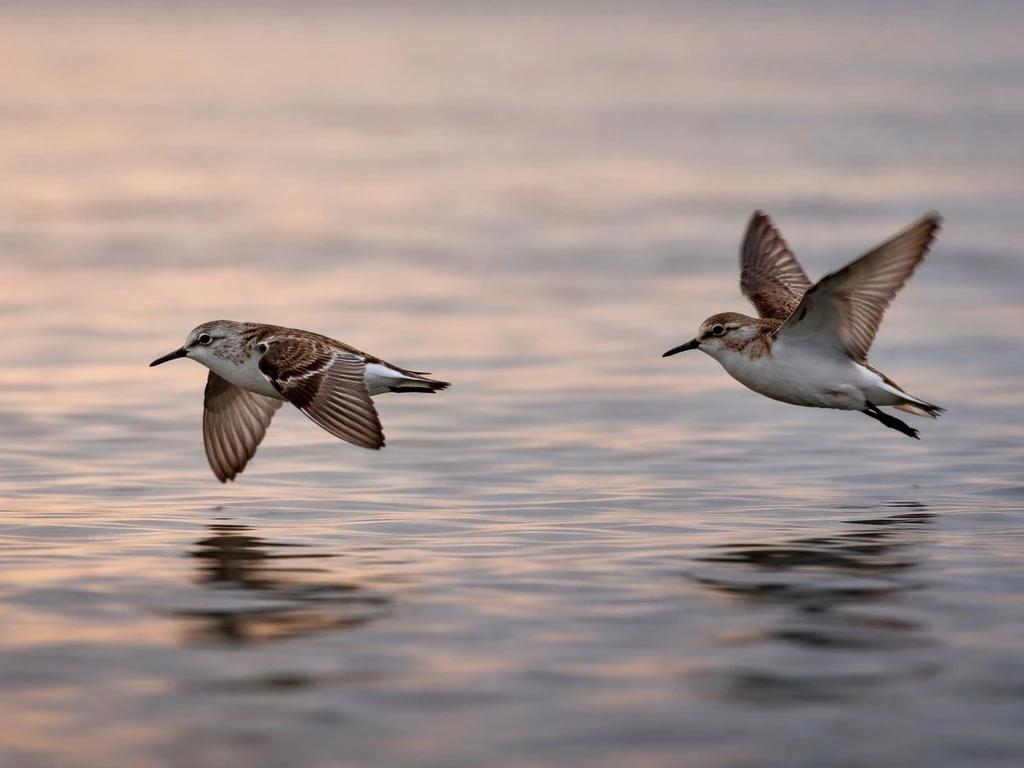
Powered flapping is metabolically brutal. During flight, a bird's metabolic rate can run up to 30 times its resting rate, and the muscle power output during takeoff can reach 400 W/kg. This is why many birds switch between flapping and gliding in what researchers call flapping-gliding modes: brief bursts of flapping to gain energy, then folding into a glide to coast and recover. Large birds like albatrosses take this to an extreme, using dynamic soaring to travel thousands of kilometers on almost no muscle power by exploiting wind gradients above the ocean surface. Wing loading (how much weight each square centimeter of wing must support) and wing shape determine which strategy is cheapest for each species.
| Flight Strategy | How Lift/Thrust Is Generated | Energy Cost | Best Suited For |
|---|---|---|---|
| Powered Flapping | Downstroke generates lift + thrust simultaneously | Very high (up to 30x basal metabolic rate) | Takeoff, slow flight, maneuvering |
| Gliding | Fixed wing angle generates lift from forward momentum | Low (no muscle power once in glide) | Energy-efficient travel, descending |
| Dynamic Soaring | Alternates between wind layers of different speeds | Extremely low | Open-ocean long-distance travel |
| Thermal Soaring | Rising columns of warm air provide altitude for free | Very low | Hawks, eagles, vultures gaining height |
| Hovering | Rapid figure-8 strokes generate lift without forward speed | Extremely high | Hummingbirds at flowers |
Mimicking bird flight in real life: tools, skills, and training paths
The good news is that the aerodynamic principles birds use are exactly the ones taught in hang gliding and paragliding schools. Thermal soaring, ridge lift, weight-shift control, and reading moving air are all skills birds develop instinctively and humans can learn deliberately. Here's a practical roadmap, starting with concepts and moving toward skills you can train today.
Step 1: Build the conceptual foundation
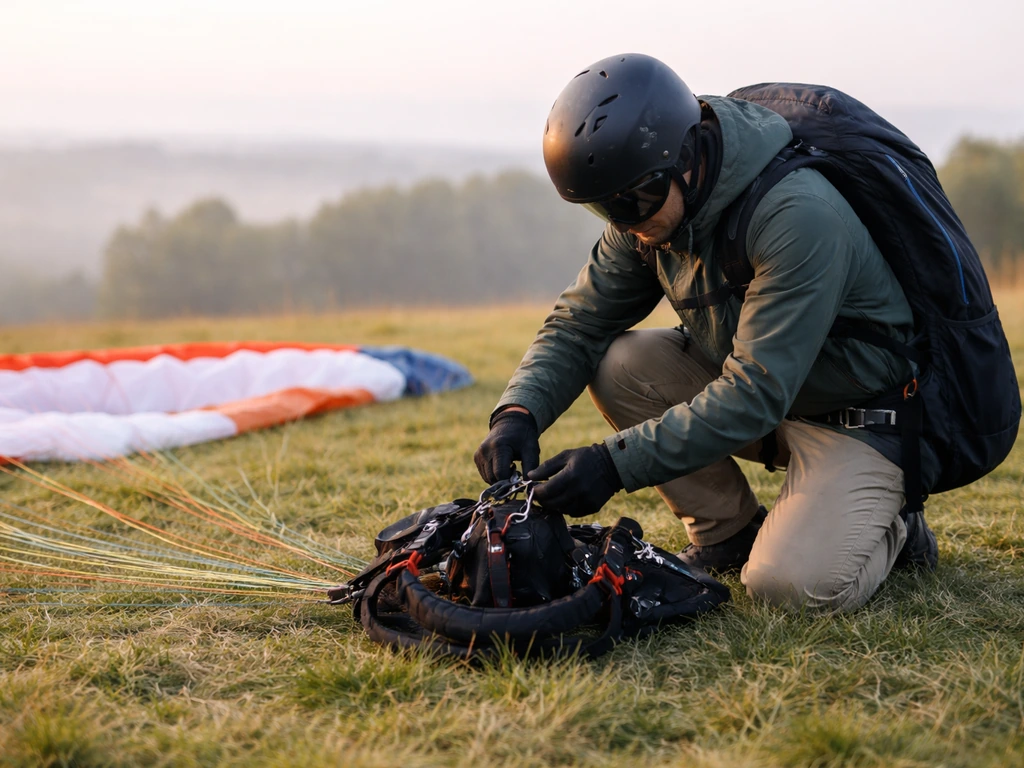
Before you strap into anything, understanding lift, angle of attack, wing loading, and how air moves over a curved surface will make every practical skill click faster. You can even practice fly-like-a-bird line dance steps, focusing on timing, balance, and the “lift” moments in each sequence. The biomechanics covered in this article are a start. The USHPA (United States Hang Gliding and Paragliding Association) also publishes a hang gliding training manual that covers aerodynamics in accessible language. Spending a few hours with that material before your first lesson is time very well spent.
Step 2: Choose your flight analog
Each of these options engages a different part of bird flight mechanics. Hang gliding most closely mimics a large soaring bird: you shift your body weight to steer, read thermals and ridge lift, and manage a rigid wing with a glide ratio similar to a hawk's. Paragliding uses a flexible wing more like the dynamic shape-changing of bird feathers, and the canopy's response to air feels genuinely similar to what a large soaring bird experiences. Wingsuit flying captures the full-body streamlining that birds use during high-speed dives, with the same tradeoff between drag and speed that a peregrine manages. All three require formal instruction. The FAI and PASA both emphasize that self-teaching in these disciplines carries disproportionate risk compared to structured training.
Step 3: Get rated and log air time
USHPA's rating system, built over more than forty years of structured teaching, uses skill levels as guidance for what sites and conditions a pilot is ready for. USHPA’s Pilot Proficiency System document (SOP-12-02) provides standards and recommendations for this kind of instructional rating framework. Beginner equipment requirements include protective back protection in paraglider harnesses and, for hang gliders, wheeled training gliders that reduce ground handling risk. Progressing through the rating system isn't bureaucracy: it's the structured progression that gives you the judgment birds develop from fledgling to adult. There's no shortcut past logged airtime and documented flights, and that's the right answer.
Constraints and safety: why humans can't just flap
This part deserves honest treatment, because the internet is full of people who have strapped wings to their arms and run off a cliff. Practical bird-like “shapeshifting” starts with tools and training that let you experience flight mechanics, not with any literal transformation of your body. The physics works against us in several compounding ways.
- Muscle power density: Bird flight muscles deliver 60 to 150 W/kg during cruise and up to 400 W/kg at takeoff. Human arm and chest muscles, even in elite athletes, can't approach that output sustained over time.
- Flight muscle ratio: Across flying species, the ratio of flight muscle mass to total body mass ranges from about 0.115 to 0.560. Humans have essentially none of our muscle mass dedicated to an analogous flapping function.
- Wing loading: The wing area required to lift a human body at arm-flapping speeds would need to be enormous, and that size creates structural and control problems that no current mechanical wing design has solved.
- Metabolic cost: Even if we could generate the power, sustaining metabolic rates 30 times our resting level is not compatible with surviving a flight of any useful duration.
- Control system: Birds have a nervous system optimized for real-time aerodynamic adjustments across dozens of feathers simultaneously. Human arms have nothing comparable in terms of fine motor authority over an aerodynamic surface.
The physiological, aerodynamic, and geometric constraints that shape bird flight strategies are not minor engineering problems. They're deep biological facts. Small birds, for example, experience disproportionately high metabolic costs during flight because their brief downstrokes and rapid muscle activation timing demand enormous peak power. Scaling those demands to human size and weight makes the problem significantly worse, not better. This is why MIT's position is unambiguous: flapping flight at human scale is not a technology gap that will be closed by a better design. It requires a different biological substrate.
What flightless birds teach us about 'flight'
Flightless birds reframe the whole question in a useful way. They didn't lose flight because they failed at it. They evolved away from it because their ecological niche didn't require it, and other capabilities became more valuable. Emus can cover nearly 3-meter strides and sustain speeds of 40 to 50 km/h for substantial distances. That's not a consolation prize for not flying; it's a specialized performance that outcompetes many flying birds in terrestrial environments. The skeletal difference that makes this possible is revealing: flightless birds typically have reduced wing bones and a smaller or absent keel, freeing up mass for powerful legs. Penguins, as noted above, kept the keel because their wings still power movement through a dense fluid, just water instead of air.
Wing-assisted incline running (WAIR) is one of the most fascinating behaviors in this space. Young birds that aren't yet capable of flight use their developing wings to run up steep inclines, sometimes at angles of 65 degrees or more. The wings don't generate full lift, but they increase traction and stability by pushing the bird into the slope. Researchers think WAIR may represent an evolutionary bridge between terrestrial locomotion and powered flight, and it involves muscle activation patterns similar to those used in ascending flight in adult pigeons. For a human observer, WAIR is a useful reminder that 'flight' exists on a spectrum: even partial aerodynamic force production gives a real locomotor advantage.
Penguins extend this lesson underwater. Studies on swimming penguins show they accelerate forward during both the upstroke and downstroke, extracting propulsive force from the full stroke cycle in water the same way aerial birds do in air. When engineers build biomimetic flapping propulsion mechanisms modeled on penguin wings, they find maximum thrust at an angle of attack around 25 degrees, a number that echoes the aerodynamic principles at work in flying birds. The physics of pushing against a fluid, whether air or water, is the same. Flightless birds didn't abandon that physics; they redirected it.
If you're drawn to the question of what it feels like to actually be airborne, the sensation side of bird flight is worth exploring separately: the sensory experience of altitude, wind, and three-dimensional movement is something human pilots describe in ways that map surprisingly well onto what behavioral biology tells us birds are processing. If you're wondering how it feels to fly like a bird, focus on the sensory side: altitude, wind, and the three-dimensional movement pilots describe. And if the evolutionary and morphological side of flightlessness interests you, the contrast between birds that soar and birds that sprint is one of the clearest windows into how natural selection shapes a body around its environment. Both threads run deeper than a single article can hold, but the biomechanics here are the foundation for both.
Where to start today
If you want to fly like a bird in the most meaningful sense available to a human body, here's the practical sequence: learn the aerodynamic principles (lift, drag, angle of attack, wing loading) so you have a working mental model. Find a USHPA-certified hang gliding or paragliding school in your area and book an intro lesson, which will put you on a beginner glider with an instructor and give you genuine air time within your first session. If you want to know how can i fly like a bird in practice, start by learning these real-world flight analogs and building skill step by step hang gliding and paragliding. Use that first experience to decide which discipline fits how you think and move. Then commit to the rating progression: log flights, document hours, and build judgment alongside skill. The physics of what you're doing in a hang glider is the same physics a red-tailed hawk uses to work a thermal. If you want to approach that bird-like experience systematically, follow a flying bird step by step progression from concepts to on-slope practice. That's not a metaphor. It's the same atmosphere, the same aerodynamic principles, and the same fundamental experience of reading moving air and choosing a line through it.
FAQ
Can I actually fly like a bird by doing special arm exercises or wearing mechanical wings?
Yes, but only in the sense of controlling a glider or wing to replicate the aerodynamic experience birds rely on. Arm-swinging and flapping do not provide enough power for lift at human scale, so the safe “bird-like” version is using structured activities like hang gliding, paragliding, or wingsuit training, where lift is created by the wing and speed management, not by your shoulder muscles.
Which bird-flight concepts translate best to learning human gliding?
If you start with hang gliding or paragliding, you will learn the same core variables birds manipulate, angle of attack and wing loading, but through different controls. In practice, you manage angle of attack by how you position your body and adjust your line through the air, and wing loading changes with your weight and wing area, so always follow training guidance on sizing rather than choosing gear based on comfort alone.
Is wingsuit training a good shortcut if my goal is to feel like I’m flying like a bird?
Wing-suit flying is closer to streamlining and fast flight, but it is not a substitute for hang gliding or paragliding fundamentals. Your first priority should be learning how to read airflow, manage stability, and understand canopy or suit behavior under instructor supervision, because high-speed flow separation and body position errors punish quickly.
Since birds constantly morph their wings, will that prevent humans from achieving the same kind of flight?
No, it is not required for success, but it changes what you should expect from the experience. Birds use dynamic wing morphing and real-time feather control, humans use fixed or flexible wings whose adjustments are mostly limited to steering inputs and pilot positioning, so you should plan for “bird-like mechanics” rather than “bird-like wing shape control.”
What should I focus on as a beginner so I don’t pick the wrong learning goals?
Beginner goals should be oriented around repeatable outcomes, not maximum height. Ask your school about a training plan that includes progressive site exposure, instructor coaching on landing approach, and a clear plan for weather selection (wind and thermals) because most early mistakes come from flying conditions that are outside your current judgment level.
What are the most common beginner mistakes people make when trying “bird-like” flight?
The risk is not only in jumping off cliffs, it is also in early setup decisions. Common mistakes include underestimating crosswinds, launching with gear not sized to your weight, skipping protective equipment, and practicing without a formal progression, so confirm your instructor’s preflight checks and learning steps match your rating pathway.
How do I choose between hang gliding, paragliding, and wingsuit training based on what I’m seeking to feel?
If your main interest is the emotional sensation of sustained airborne movement, choose the discipline based on how you want to be propelled. Hang gliding and paragliding reward reading lift sources and staying aloft, while wingsuit flying emphasizes descent control and fast airflow feel, and each has different training entry requirements and supervision standards.
How quickly can I expect to get real air time and real control, and how is readiness actually judged?
Plan on logging time across multiple flights and conditions, not just mastering one basic routine. Birds build years of fine control after hatch, your analog is a progression where you repeat maneuvers, collect feedback, and update your decision-making, so ask your school how they evaluate readiness beyond the number of lessons.
Next Articles
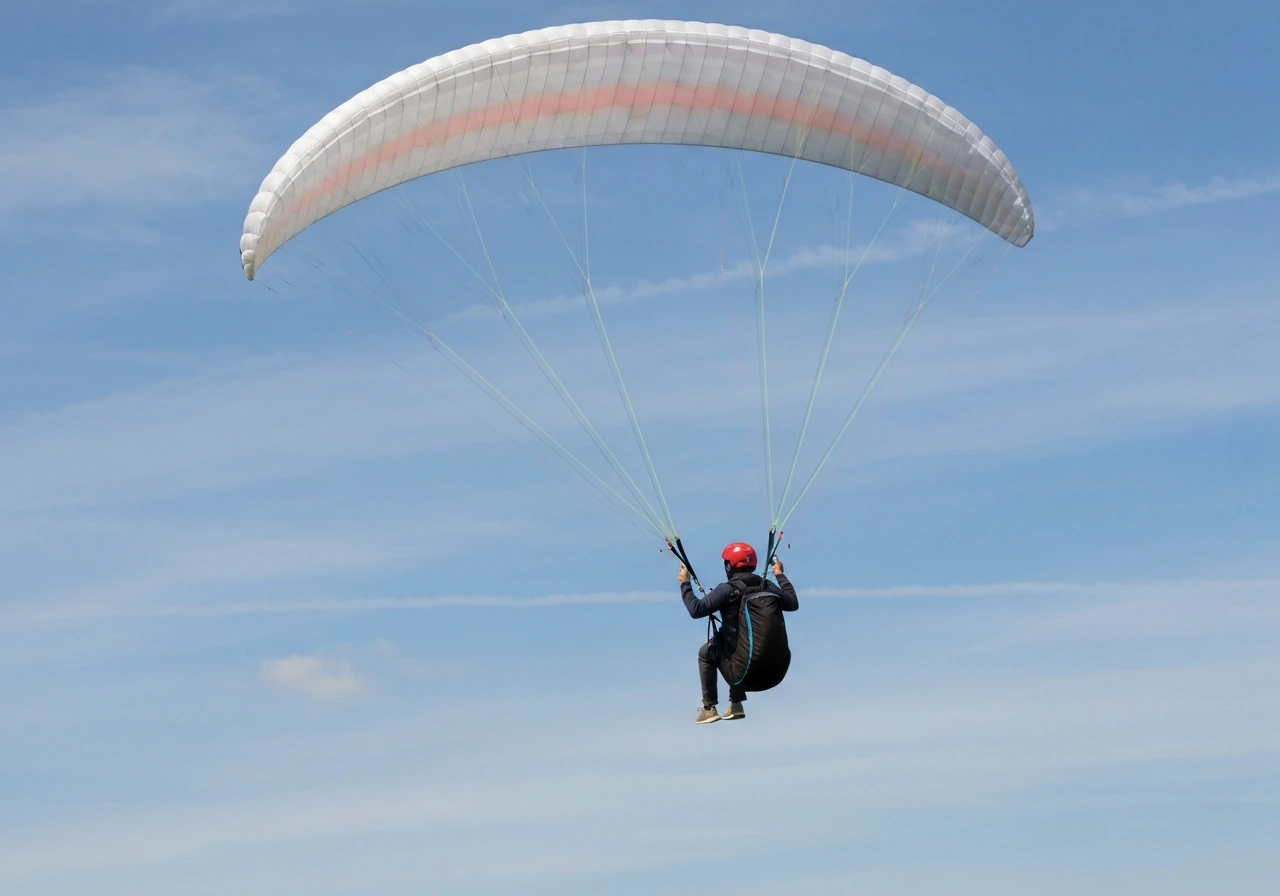
How Can I Fly Like a Bird in Real Life? Steps
Learn bird-flight principles with safe training steps for gliding, posture, lift, and control so you can fly like a bird
Bird Flying High You Know How I Feel Lyrics: Find the Song
Find the exact song and artist for Bird Flying High You Know How I Feel lyrics, then learn the flight metaphor behind it
Bird Has Flown Meaning: Definition and How to Respond
Understand the bird has flown meaning, when it’s used, and how to reply with examples for real-life conversations.