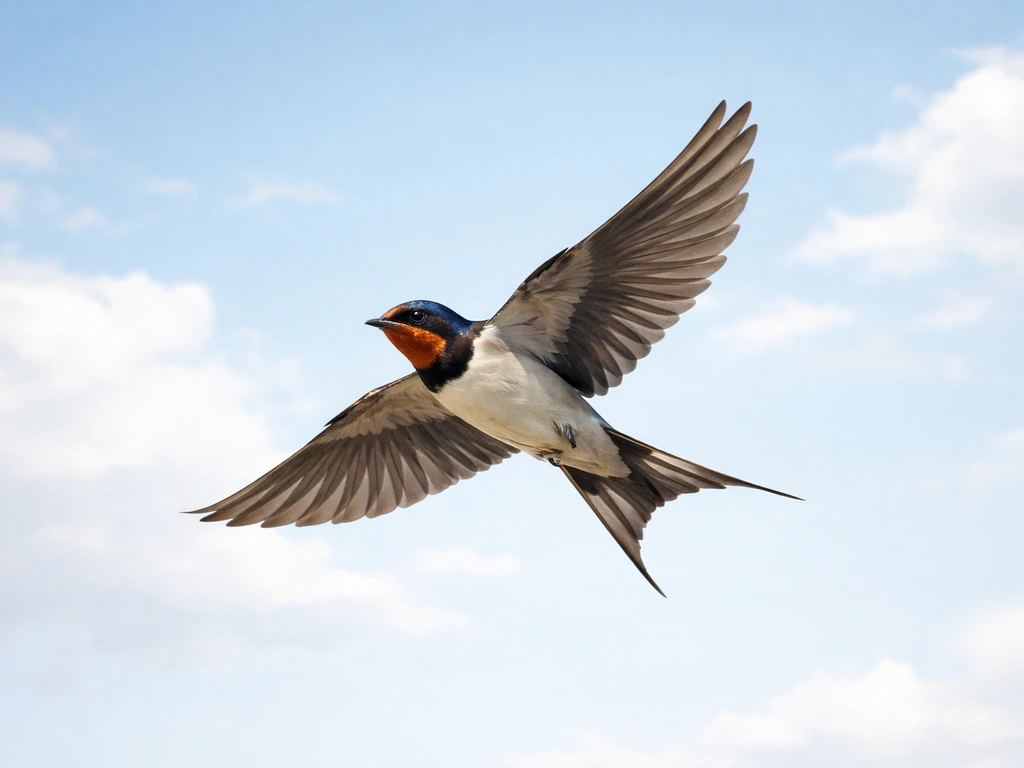
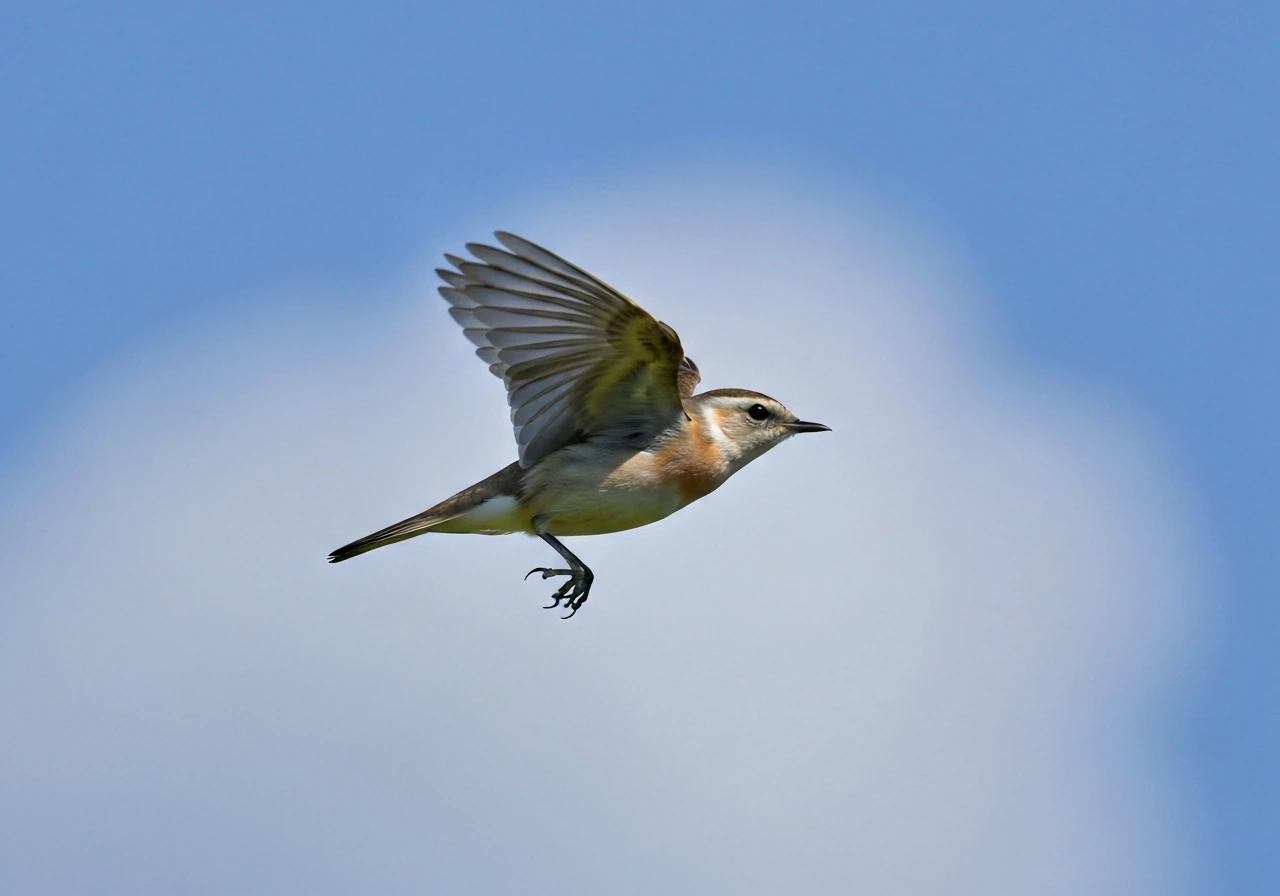
Birds fly by flapping their wings to push air downward and backward, which lifts them up and moves them forward at the same time. That push upward is called lift, and the push forward is called thrust. A bird's body is built from the ground up to make this work: hollow bones keep it light, massive chest muscles power the flapping, and specially shaped feathers fine-tune every movement in the air. Once you understand those three pieces, the whole thing clicks into place.
How Does a Bird Fly Class 3: Lift, Wings, and Control

Marcus Chen
24 Jun 2026
Bird flight basics for Class 3
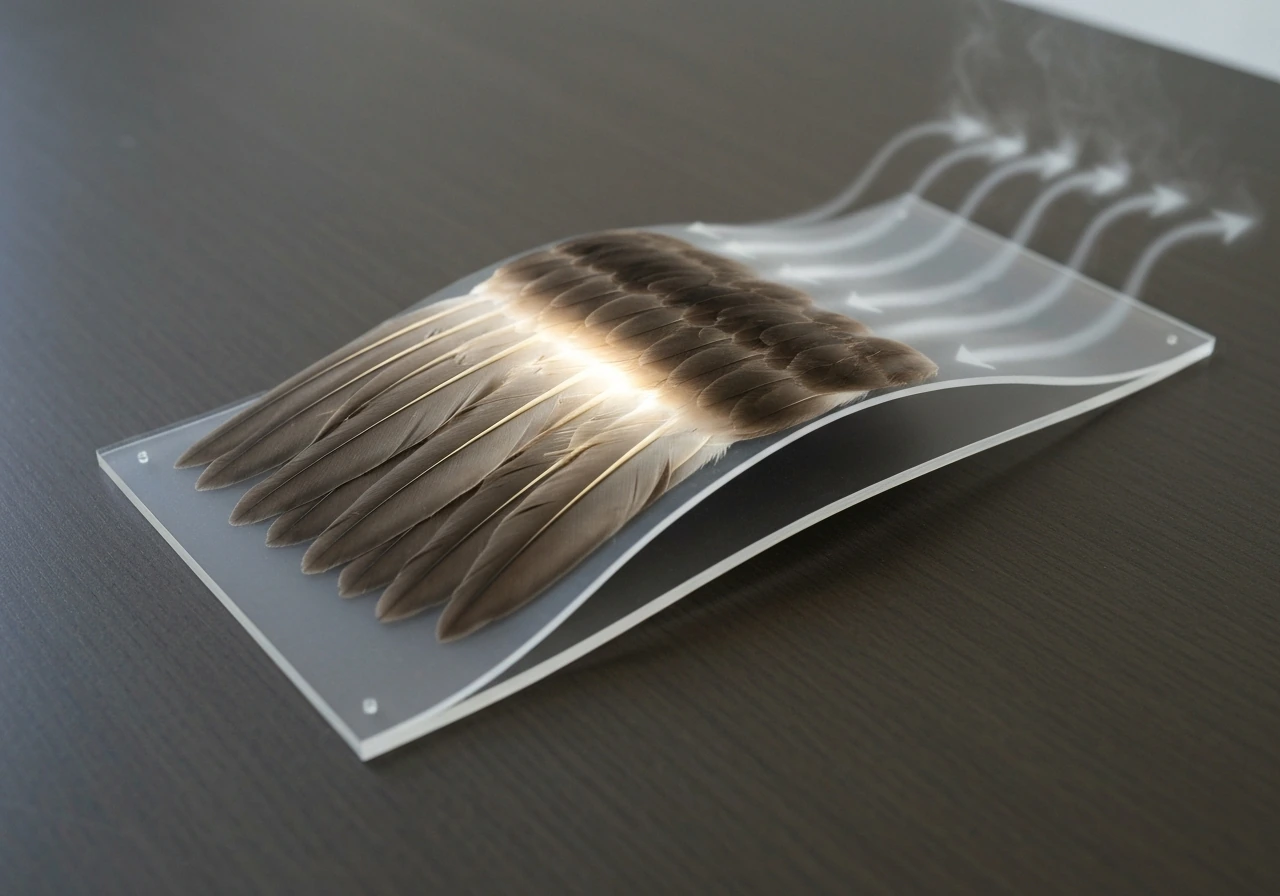
Think of a bird's wing like a curved ramp. When it moves through the air, air rushes over the top of the curved surface faster than it moves underneath. Faster-moving air pushes with less force. So the air above the wing pushes down less than the air below pushes up, and that difference in push is what lifts the bird. Scientists call this difference in air pressure the source of lift. The bird doesn't need to be going incredibly fast, it just needs its wings moving through air at the right angle and speed. Once you know these basics, you can describe a bird flying by pointing out its lift, thrust, and how it adjusts wing angles to control speed and direction how to describe a bird flying.
When a bird flaps its wings downward, it shoves air downward and slightly backward. By Newton's third law (every push has an equal push back), the air shoves the bird upward and forward. So flapping does two jobs at once: it creates lift to stay up and thrust to move forward. That's a remarkably efficient design, and it's why birds can take off from a standing start on a fence post rather than needing a runway.
For a Class 3 student, the simplest mental picture is this: imagine pushing down on water in a swimming pool. You feel the water push back and lift your arms up. Air does the same thing, just a lot faster. Birds' wings are shaped and angled to make that upward push as strong as possible. Many educators even share simple HTML coding examples that visualize how flying birds create lift and drag flying bird html code.
How wings create lift and how birds control speed
The curved shape of a wing is called an airfoil. The curve on top is longer than the flat bottom, so air traveling over the top has to go faster to meet up with the air on the bottom at the trailing edge. That speed difference drops the air pressure above the wing and creates a suction-like upward force. This is the core of how wings generate lift, and it applies just as well to an airplane wing as to a sparrow's.
Birds control their speed and direction in surprisingly precise ways. To slow down, a bird spreads its wings wide and tilts them upward at a steep angle, which catches more air and creates drag (air resistance that slows forward movement). Watch a pigeon landing on a ledge and you'll see it fan its tail and pull its wings into almost a full vertical position in the last half-second before touchdown. To speed up, a bird folds its wings slightly closer to its body to reduce drag and streamlines its posture. To turn, it tilts one wing slightly lower than the other, banking through the turn the way a cyclist leans into a curve.
The tail is a critical steering and braking tool that often gets overlooked. A bird's tail feathers spread out to act as a rudder for side-to-side steering and as an air brake during landing. Birds that perform tight aerial maneuvers, like swallows or kestrels, have deeply forked or highly flexible tails that allow very rapid direction changes.
Feathers, bones, and muscles: the parts that make flight possible
Three body systems work together to get a bird airborne. Understanding each one makes it obvious why birds can fly and, say, a similarly sized rock cannot.
Feathers
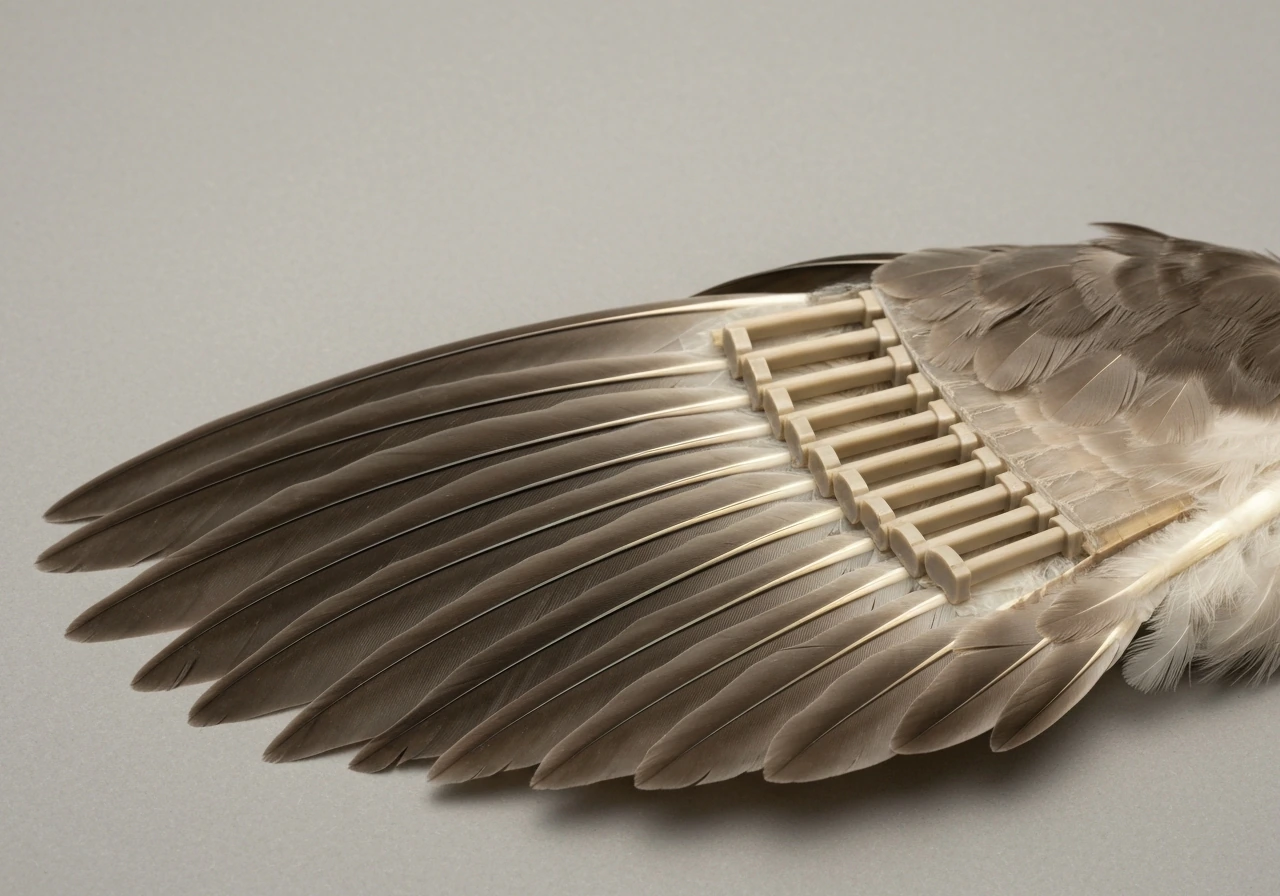
Feathers are the engineering marvel of the bird world. The large primary feathers at the wingtip generate most of the thrust during flapping. The secondary feathers along the inner wing maintain the airfoil shape that produces lift. Smaller contour feathers smooth the bird's surface to reduce drag. Each feather has a central shaft (the rachis) with tiny interlocking barbs that zip together like velcro, creating a smooth surface that resists air. Birds constantly preen to keep those barbs locked together. A feather that's come undone is actually less effective at generating lift, which is why preening isn't just vanity, it's maintenance.
Bones
Bird bones are hollow, with internal struts for strength (similar to the inside of an airplane wing). A pigeon's skeleton weighs roughly 4 grams for a bird that might total 300 grams. Some bones are fused together to reduce the total number of moving parts and add rigidity where it matters most. The sternum (breastbone) has a tall ridge called the keel, which is the anchor point for the massive flight muscles. Flightless birds like ostriches have a flat sternum with no keel, which tells you immediately they haven't needed serious flapping muscles for a long, long time.
Muscles
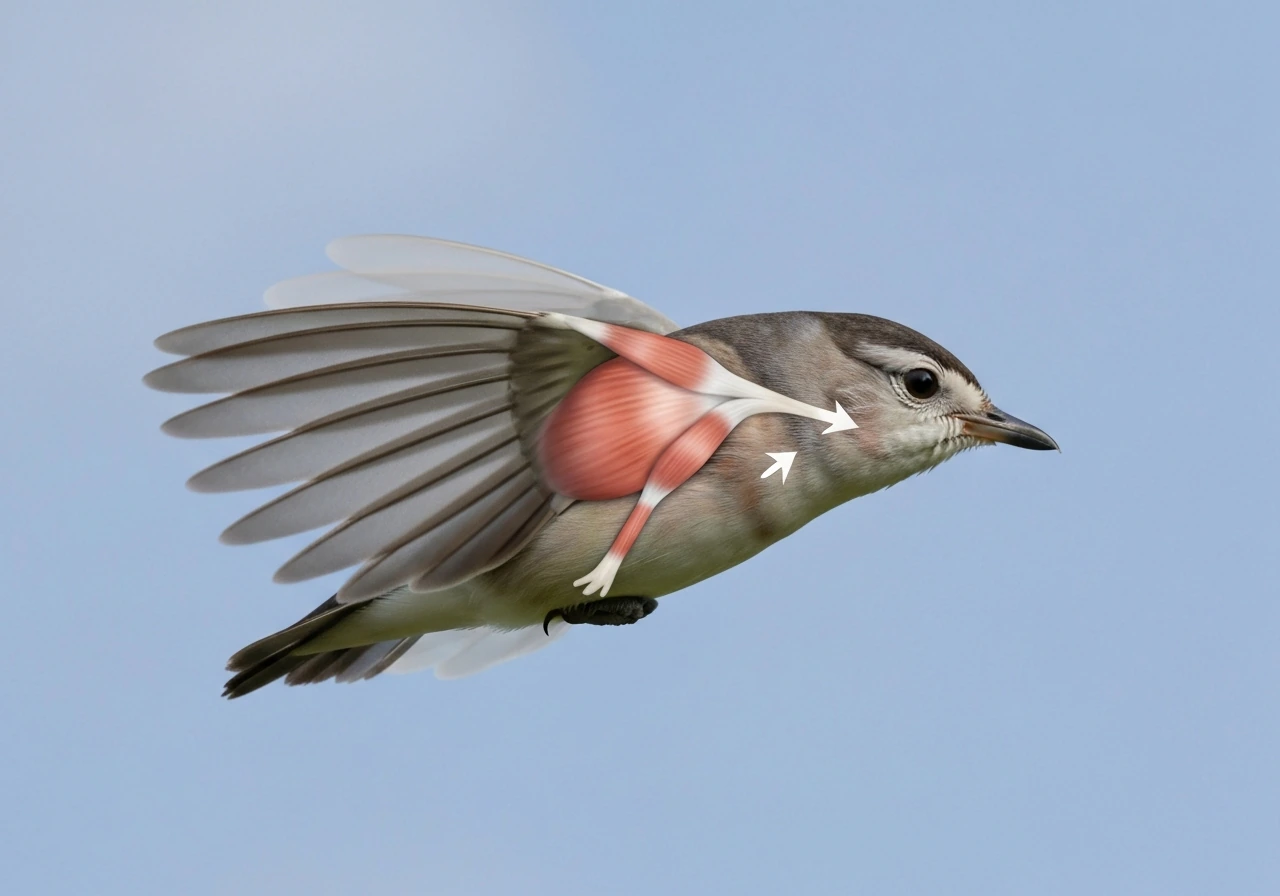
The two main flight muscles are the pectoralis (which pulls the wing downward on the power stroke) and the supracoracoideus (which pulls the wing back up for the next flap). In strong fliers like pigeons, the pectoralis can account for up to 25% of total body weight. That's an extraordinary proportion. Humans have chest muscles too, of course, but ours are nowhere near large enough relative to our body weight to generate the thrust needed to lift us off the ground, which is one reason human-powered flight took so long to achieve and still requires a very carefully designed aircraft.
Different flight styles by bird type
Not all birds fly the same way. Wing shape is a direct clue to flight style, and different species have evolved dramatically different strategies depending on where they live and how they hunt or forage.
| Flight Style | How It Works | Example Birds | Wing Shape |
|---|---|---|---|
| Continuous flapping | Constant up-and-down wing beats for power and lift | Pigeons, ducks, small songbirds | Short, broad, or pointed for quick beats |
| Gliding | Wings held steady; bird descends slowly using gravity | Hawks between thermals, gulls near cliffs | Long, broad wings for efficient glide ratio |
| Soaring (thermal) | Riding rising columns of warm air (thermals) to gain altitude without flapping | Eagles, vultures, storks | Very broad wings with spread wingtip feathers |
| Soaring (dynamic) | Using wind speed differences over ocean waves for energy | Albatrosses, shearwaters | Extremely long, narrow wings |
| Hovering | Rapid wingbeats at a tilted angle to stay in one spot | Hummingbirds, kestrels | Short, pointed wings with rapid rotation |
The key insight here is that birds like eagles or vultures may blank" rel="noopener noreferrer">flap mainly during takeoff and landing, spending most of a long flight riding thermals without flapping at all. A turkey vulture can stay aloft for hours while barely moving its wings, gaining forward momentum from gravity during a glide and then regaining altitude by circling inside a thermal. Britannica similarly describes how, in soaring flight, birds can gain forward motion by gliding with the help of gravity while rising on rising air blank" rel="noopener noreferrer">gaining forward momentum from gravity during a glide. That kind of controlled lift is possible only when the bird has solid ground or air that can push back, like when the bird sees the solid ground and prepares to take off stay aloft for hours. Some albatrosses have been recorded flying for months at sea using dynamic soaring over ocean waves, rarely needing to flap. This is very different from a hummingbird, which beats its wings up to 80 times per second and never really glides at all.
A simple model to understand how birds fly (do this today)
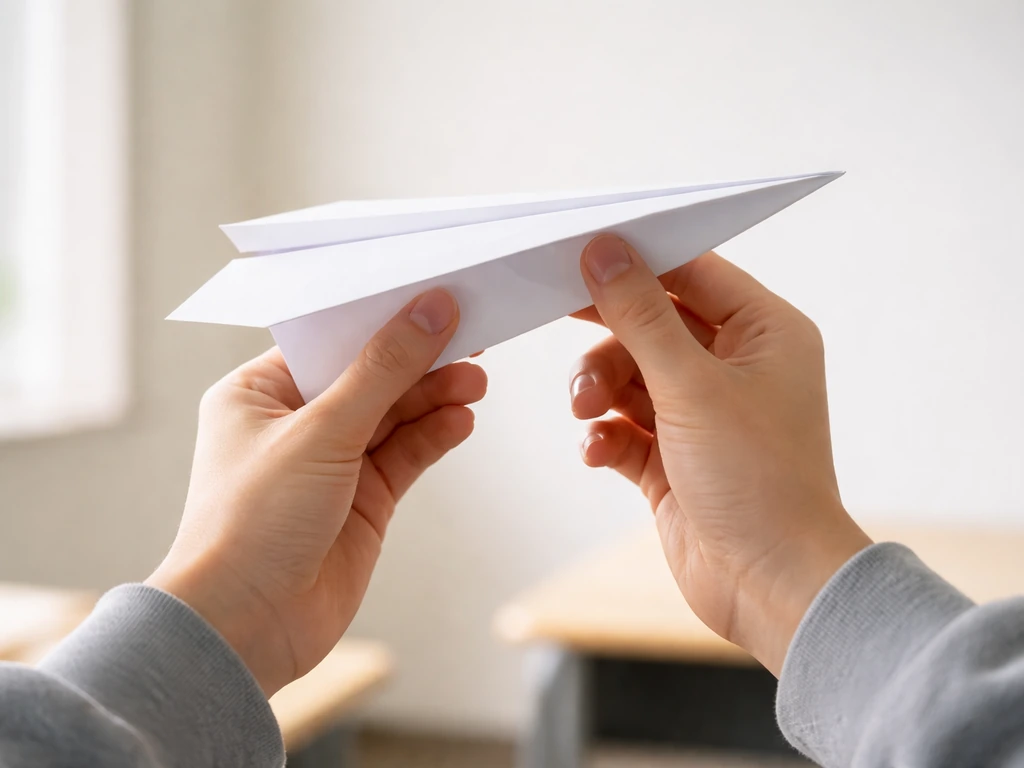
The best way to understand lift and drag is to feel them yourself. NASA uses a paper glider activity in STEM classrooms to connect wing shape and angle to real flight behavior, and you can do a version of it at home in about ten minutes. Here's how.
- Fold a standard sheet of paper into a classic dart-style paper airplane. Throw it gently and watch how far it glides. This is your baseline.
- Now fold the wingtips slightly upward (about 1 cm). These small upward angles are called winglets. Throw again. Most people find it flies straighter and slightly farther because the winglets reduce the vortex drag at the wingtip, exactly the same reason many modern airplanes and soaring birds have upturned wingtips.
- Next, add a small flap of paper under the nose as extra weight (or use a paper clip). Throw again. You'll notice it dips faster because the nose is heavier, showing how weight distribution affects the glide angle.
- Finally, gently curve the wing surface upward in the middle (making it slightly convex on top). This is now a basic airfoil shape. Most people find the plane floats a bit more gently because the curved top surface increases lift.
- Write down what changed each time. You've just run a real aerodynamics experiment.
The connection to birds is direct: the winglet step mirrors how large soaring birds like eagles spread their primary feathers at the wingtip to reduce drag. The weight distribution step mirrors why birds tuck their legs tight against their body during flight. The airfoil step mirrors the curve built into every real bird wing. If you want to go further, try changing the angle you throw the plane (the angle of attack) and notice that too steep an angle causes it to stall and drop, just like a bird that pulls its wings up too sharply during a turn.
Common questions and things people get wrong about bird flight
Do birds flap their wings the whole time they're in the air?
No, and this surprises a lot of people. Many birds use a bounding flight style where they flap for a burst, then fold their wings and briefly freefall in a small arc, then flap again. It saves energy. Larger birds like hawks and eagles flap much less, relying on thermals and gliding for the majority of a long flight. So when you see a hawk circling high overhead without flapping, it's not resting, it's actively working the wind.
Do heavier birds fly the same way as lighter ones?
Heavier birds absolutely can fly, but they need more lift, which means they need either faster speeds (longer runways, like swans that run across water to take off) or bigger wing surface areas relative to their body weight. The ratio of body weight to wing area is called wing loading. Birds with low wing loading (big wings for their weight) fly slowly and efficiently. Birds with high wing loading (small wings for their weight) fly fast but need more energy. A wandering albatross has one of the lowest wing loadings of any bird, letting it soar almost effortlessly. A puffin has very high wing loading, which is why it looks like it's working incredibly hard to stay in the air, because it is.
Why can't humans fly by flapping their arms?
Two reasons working against each other: humans are too heavy for the wing area our arms could provide, and our chest muscles are nowhere near strong enough relative to body weight. A bird's chest muscles can be 25% of its total weight. A human's are maybe 5%. Even if you strapped on wings, you'd need to generate about 60 kg of lift from muscles that simply aren't built for it. Birds evolved their entire skeleton, muscle layout, and feather system over millions of years to solve exactly this problem. We didn't. That said, humans eventually got creative about it with gliders and engines, which is its own remarkable story.
Is a bird's wing the same as an insect's wing?
No. A bird's wing is a modified arm and hand with feathers attached, while an insect's wing is an entirely separate structure that evolved independently. A bird's wing acts like a specialized "hand" for flight, which is why it differs from a typical normal-looking hand structure flying bird hand vs normal. They both generate lift using airfoil principles, but the underlying anatomy is completely different. This is called convergent evolution, where two unrelated lineages arrive at a similar solution to the same problem.
What about birds that can't fly at all?
Ostriches, penguins, and kiwis are among the birds that have lost the ability to fly through evolution, typically because they lived in environments where flying wasn't necessary for survival. Their chest muscles shrank, their wing bones changed, and their keels reduced or disappeared. Penguins are a fascinating case: they essentially fly underwater, using the same wing-stroke mechanics to propel themselves through water that their flying ancestors used in air. The muscle memory of flight is still there, just pointed in a different direction.
FAQ
Does a bird need to flap fast to fly, or is forward movement enough?
Lift is created by wing motion through air and by the wing’s angle, not by gravity alone. If a bird’s wings are held perfectly flat and stiff at the wrong angle, the bird may not generate enough lift and will sink or stall, even if it is moving forward.
How can a bird stay in the air for a long time without flapping? (like eagles or vultures)
Yes, birds can fly without flapping much by using gliding and climbing in air that is pushing back (thermals, updrafts, or wind). This works best when the bird has enough control authority to adjust wing angle and keep lift greater than its weight.
Why do different birds have different wing shapes if lift works the same way?
Wing shape changes how efficiently a bird makes lift. For example, long, narrow wings usually help with soaring and gliding, while shorter, broader wings help with quicker takeoffs and maneuvering. The same lift ideas apply, but the best wing for the bird’s lifestyle differs.
What happens if a bird’s feathers get damaged or don’t fit together well?
A feather that is slightly bent or has barbs not fully interlocked can create more drag and less smooth airflow over the wing. That means the wing might still lift, but it will be less efficient, which can make flapping harder and landings riskier.
How does a bird keep control when the wind is strong or changing quickly?
Control depends on changing wing angle and spreading surfaces to adjust drag and lift balance. In gusty weather, birds increase stability by altering wing posture and using the tail to make quick side-to-side corrections, especially during landing.
Why does a bird sometimes lose altitude if it turns or angles its wings too sharply?
Angle of attack matters. If the bird tilts its wings too steeply, airflow can separate from the wing and lift drops suddenly, leading to a stall-like event. That is why birds adjust smoothly rather than jerking their wings to extreme angles.
How do heavier birds take off if their wings have to create more lift?
Takeoff is easiest when wings can generate a lot of lift quickly, either with an initial run (or stepping off a surface) or by using a strong updraft. Heavier birds often need more wing area or a longer or more assisted takeoff path because wing loading makes lift harder to produce at low speeds.
How exactly does a bird use its tail to slow down and steer?
The tail can act like a brake and a steering surface because spreading tail feathers increases drag and helps the bird redirect airflow. Birds often use this at the end of flight, when they need to slow down precisely before landing.
What is bounding flight, and why does it save energy?
Bounding flight is a strategy that alternates flapping and brief glides or freefalls. The bird flaps for a burst to gain or maintain speed and lift, then reduces effort by letting the next phase of motion carry it, which saves energy overall.
Are bird wings and insect wings basically the same thing for flight?
Birds and insects both use airfoils or lift-like airflow effects, but their wing structures and how they move are different. Birds have wing anatomy and control surfaces built as a single flight system, while insect wings are separate structures that evolved differently.
Why can’t some birds fly even though they have wings?
A bird that cannot fly often lacks the parts that make lift-producing flapping efficient, especially a strong keel for flight muscle attachment and the muscle power ratio for rapid wing beats. Even if it has wings, reduced muscle strength and changed bone structure can prevent sustained flight.
If humans can build gliders or use engines, could we ever fly with muscle power alone like birds?
You can’t copy bird flight by strapping on wings because humans do not have the same muscle strength-to-body-weight ratio, hollow-bone-like weight savings, and coordinated feather system. Human flight only becomes feasible with engines or aerodynamic vehicles designed for different constraints.
How does wing loading explain why some birds look like they flap constantly while others glide smoothly?
Wing loading is the guiding idea: higher wing loading usually means the bird must travel faster to generate enough lift and may appear to work harder. Lower wing loading helps birds glide slowly and efficiently because they can produce lift without high speeds.