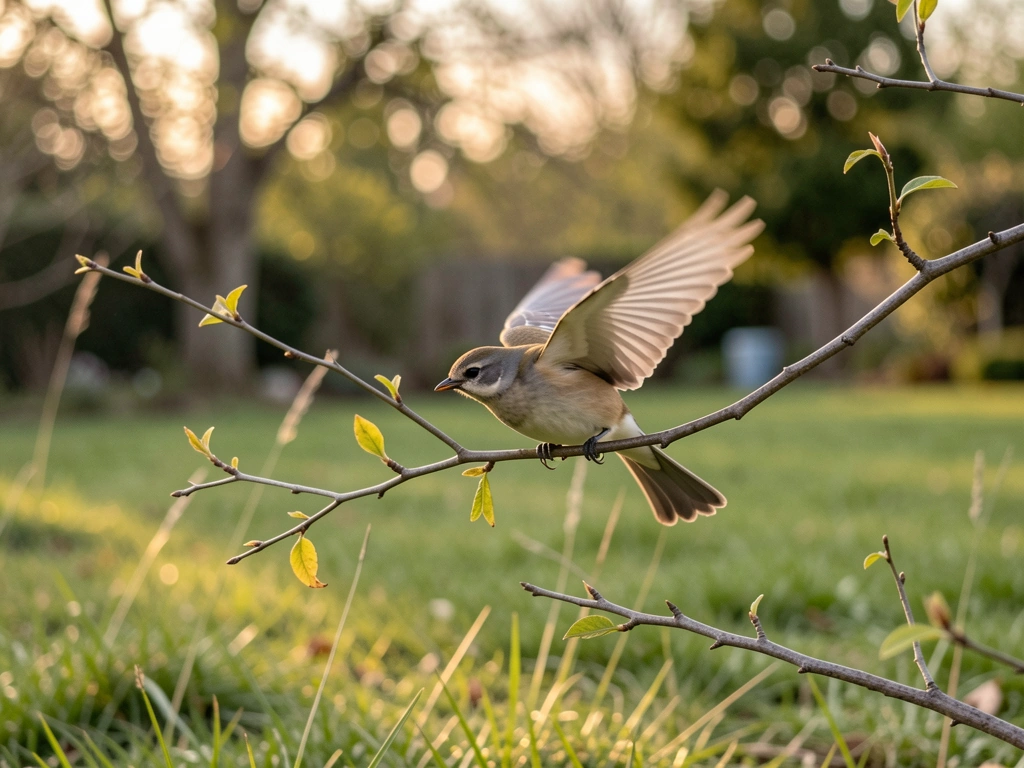
Birds fly by balancing four physical forces: lift, weight (gravity), thrust, and drag. Bird movement is powered by how it controls lift, thrust, and drag as its wings and body interact with the air how does a bird move. In steady level flight, lift equals weight and thrust equals drag. That elegant balance is what keeps a bird airborne without gaining or losing altitude. Everything else, the wing shape, the feathers, the hollow bones, the powerful chest muscles, is biology's way of managing those four forces better than almost anything humans have engineered.
How Does a Bird Fly in the Air? Lift, Thrust, Control

Marcus Chen
22 Mar 2026
The basic physics keeping a bird in the air
Start with gravity. Every bird has mass, and gravity pulls that mass straight down. That downward pull is called weight. To stay airborne, a bird has to generate an upward force, lift, that at least matches its weight. When lift equals weight, the bird neither rises nor sinks. When lift exceeds weight, it climbs. When weight wins, it descends. Simple as that.
Moving through air also costs energy because air pushes back against any object moving through it. That resistance is drag. To keep moving forward, a bird has to continuously produce thrust to cancel drag out. NASA's four-forces framework captures this perfectly: in straight, level flight, lift approximately equals weight and thrust approximately equals drag. The bird's entire anatomy is essentially a machine for achieving that balance as efficiently as possible.
How birds actually generate lift
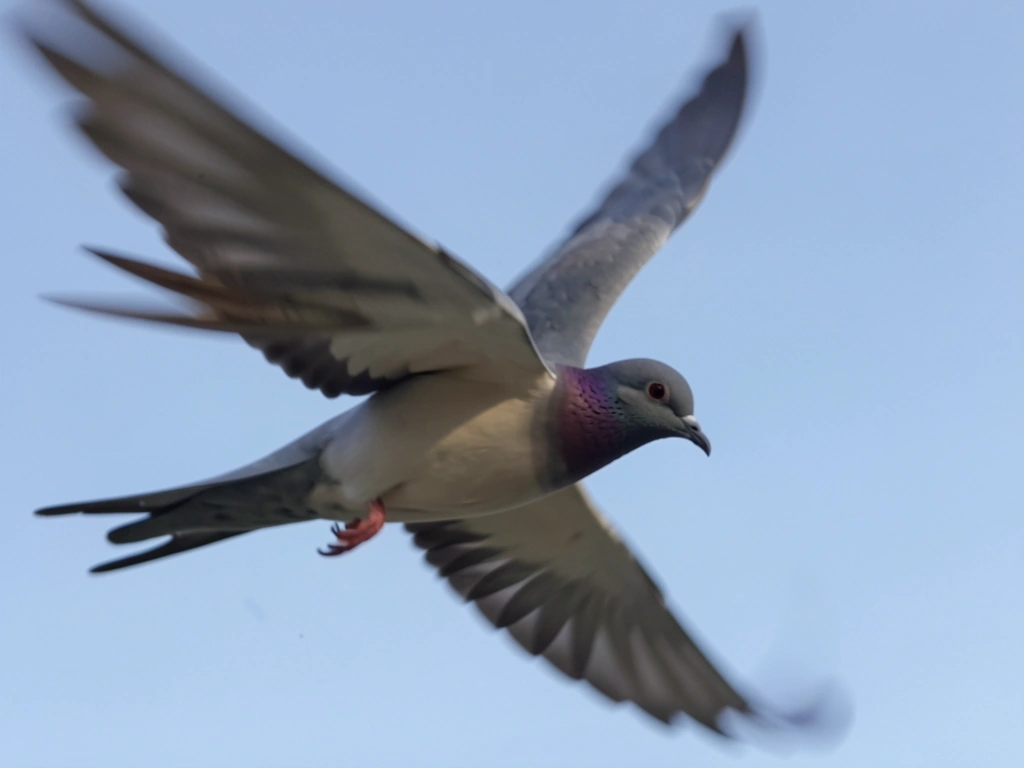
Lift is generated by the wing, and it comes down to airflow. A bird's wing is curved on top and flatter underneath, a shape called an airfoil. When a wing moves through air, that curved upper surface forces air to travel a longer path over the top than under the bottom. That longer path means the air over the top moves faster. Faster-moving air exerts lower pressure (this is Bernoulli's principle in action). NASA presents blank" rel="noopener noreferrer">two common viewpoints for lift generation: a pressure-difference explanation and a reaction-force explanation. The pressure difference, lower above and higher below, pushes the wing upward. That upward push is lift.
The angle at which the wing meets the oncoming air also matters enormously. That angle is called the angle of attack. Tilt the wing slightly upward at the leading edge and you increase lift by deflecting more air downward. But tip it too steeply and the airflow separates from the wing surface entirely, lift collapses, and the bird stalls. You can watch a hawk riding a thermal doing exactly this kind of fine adjustment in real time, tilting and shifting its wings to stay in the rising column of warm air.
Flapping adds another layer. During the downstroke, the wing sweeps down and forward, which pushes air downward and backward. That creates both upward lift AND forward thrust at the same time. This is what makes a bird's wing fundamentally more versatile than a fixed airplane wing. The wing is simultaneously a lifting surface and a propeller, depending on the phase of the wingbeat.
What feathers actually do for lift
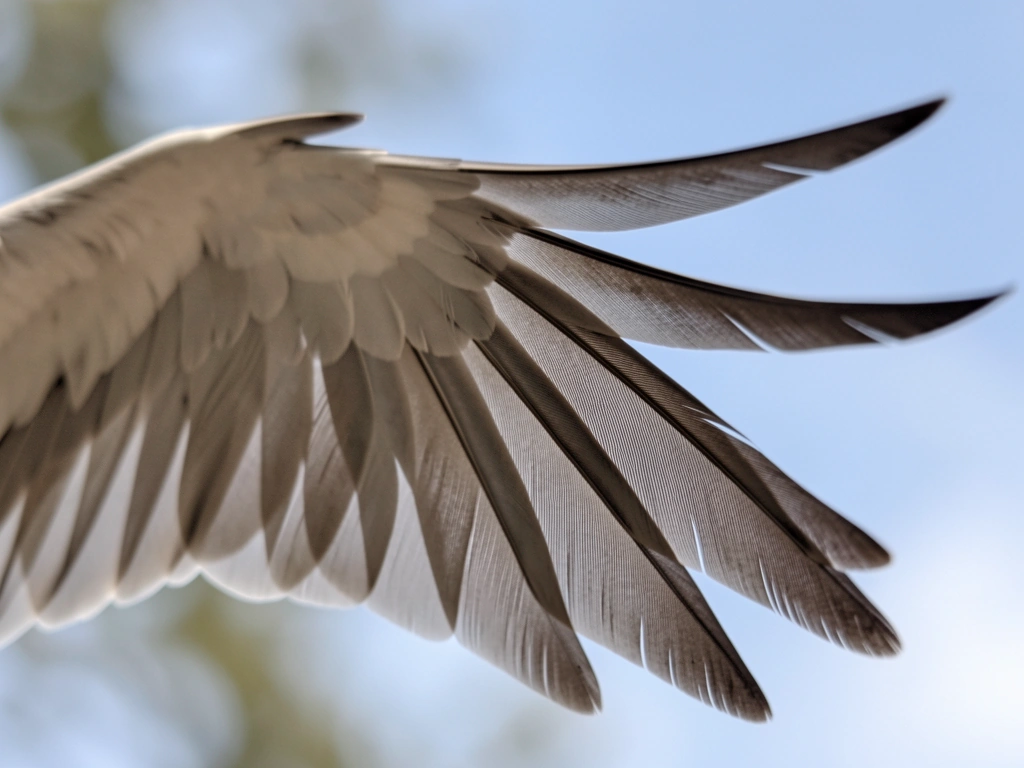
Feathers are not just insulation or decoration. The large primary feathers at the wingtip generate most of the thrust and lift during flapping. The secondary feathers along the inner wing create a smooth airfoil surface. During the upstroke, individual primary feathers can rotate and separate like venetian blinds, letting air pass through and reducing drag. That's a level of aerodynamic refinement no rigid airplane wing can match.
Thrust and drag: the forward-backward battle
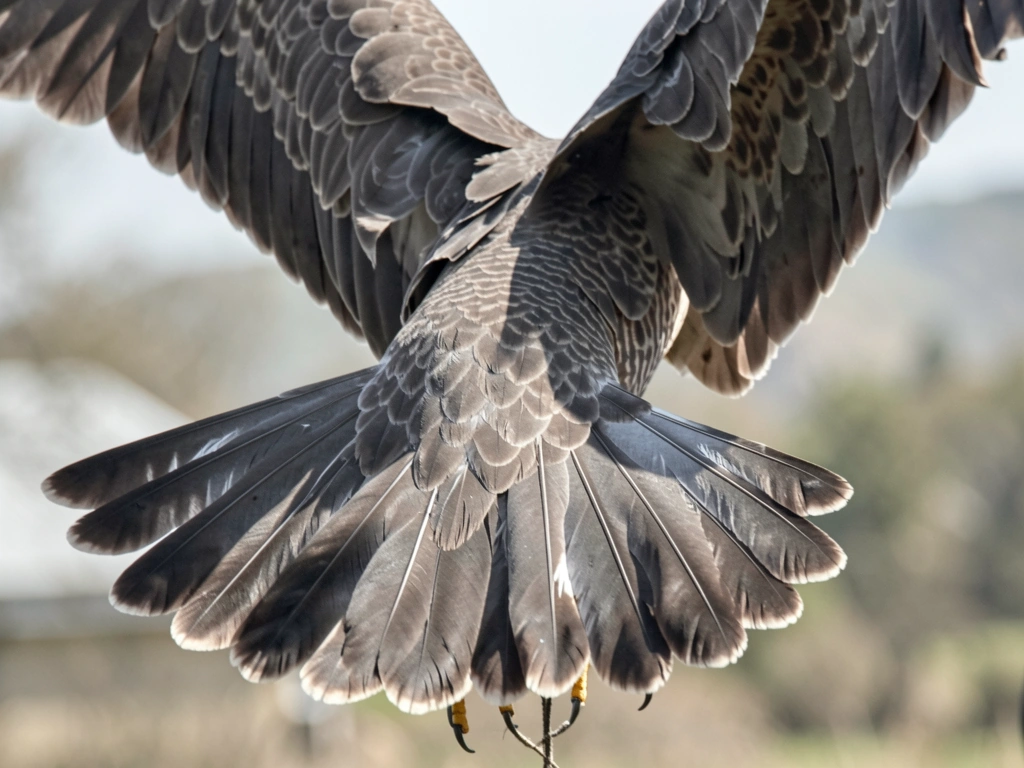
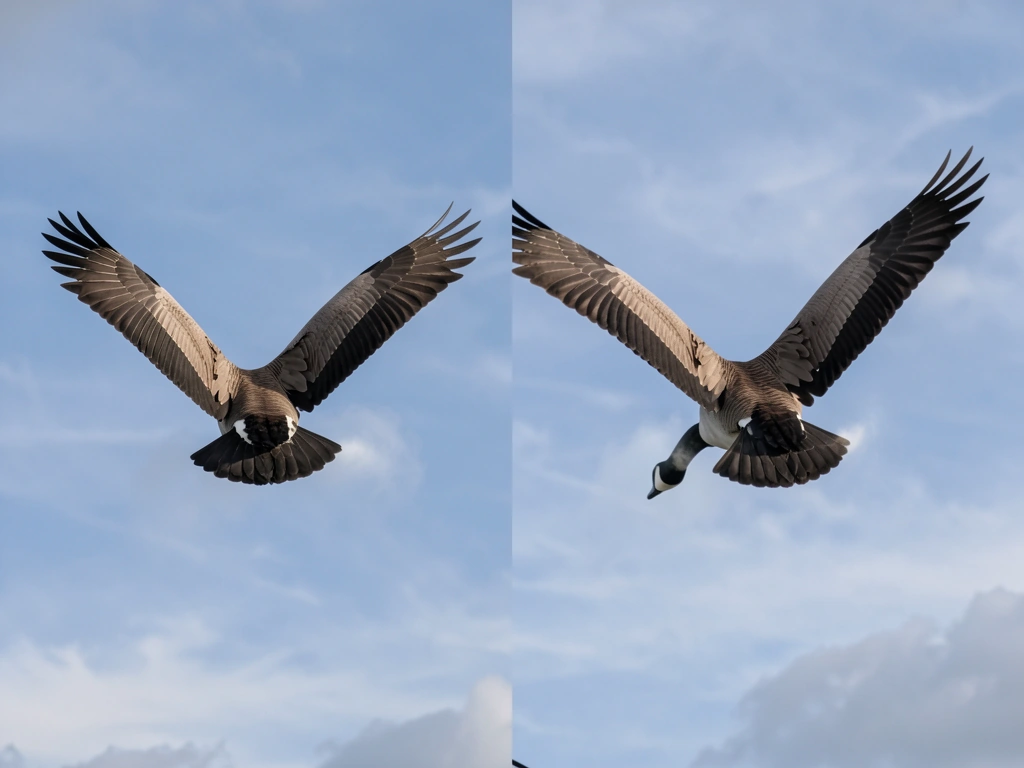
Thrust is what pushes a bird forward. In flapping flight, thrust comes almost entirely from the primary feathers during the downstroke. As the wing sweeps down and forward, those outer feathers act like propeller blades, pushing air backward and driving the bird forward. During gliding (no flapping), a bird trades altitude for forward speed. Gravity itself provides the thrust, pulling the bird gently downward so it moves forward through the air. A skilled glider like a wandering albatross can travel thousands of kilometers this way by using updrafts along ocean wave faces to periodically regain lost altitude.
Drag is the price of moving through air. There are two main types birds deal with. Parasitic drag comes from the body, head, and legs pushing through the air, which is why most birds tuck their legs flat against their bodies in flight. Induced drag is a byproduct of generating lift itself: as the wing pushes air down to create lift, small vortices form at the wingtips that pull backward on the bird. Many birds flying in V-formation (Canada geese are a classic example) are exploiting the upwash from the bird in front to reduce induced drag and save energy.
How birds steer and stay balanced
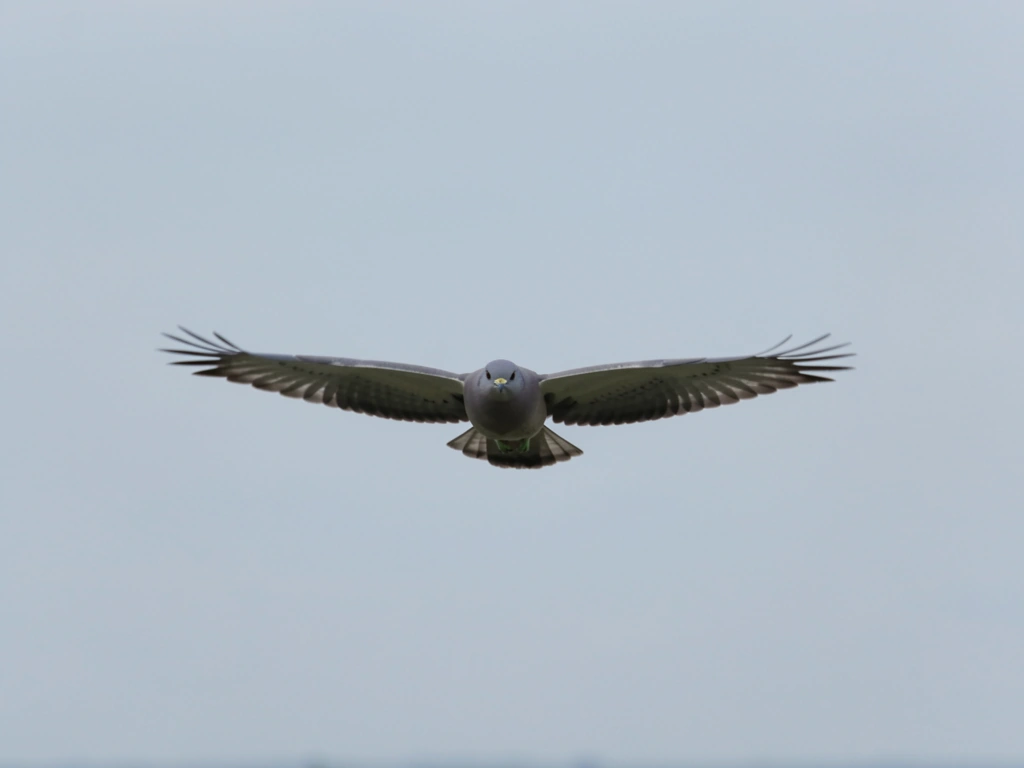
A flying bird controls three axes of rotation, the same three that aircraft engineers talk about: pitch (nose up or down), roll (one wing drops, the other rises), and yaw (turning left or right). The difference is that birds use living, flexible body parts to do this, not mechanical rudders and ailerons.
Pitch is controlled mainly by the tail. Spreading or tilting the tail feathers up or down changes how air flows over the tail and raises or lowers the bird's nose. Watch a red-tailed hawk approaching a perch and you'll see its tail fan out wide and tilt upward sharply, acting as an air brake to slow the descent.
Roll is controlled by adjusting the shape or position of one wing relative to the other. A bird can extend one wing slightly more than the other, or twist the leading edge of a wing, to generate more lift on one side and initiate a bank turn. This is incredibly fast and precise: a peregrine falcon rolling into a stoop can make microsecond adjustments to track a moving target.
Yaw, turning left or right around the vertical axis, is handled by asymmetric tail adjustments and by changing thrust on each wing. Birds have enormous fine-motor control over individual feather groups, which gives them a kind of aerodynamic dexterity that is genuinely difficult to replicate mechanically.
The anatomy that makes all of this possible
None of those aerodynamic tricks would work without the right body plan. Birds evolved a remarkable set of physical adaptations that make powered flight viable.
Skeleton: strong but extremely light
Bird bones are pneumatized, meaning many of them are hollow and connected to the respiratory system, filled with air sacs rather than solid marrow. A frigate bird with a 2-meter wingspan has a skeleton that weighs less than its feathers. The bones are not weak: they have internal struts and cross-bracing that maintain strength. Fusing key bones (like the collarbone into a wishbone, or the pelvis and spine into a rigid synsacrum) removes flexibility where rigidity is needed for force transfer, while joints that do move are precisely engineered for the stresses of flapping.
Muscles: the engine room
The two primary flight muscles are the pectoralis (the downstroke muscle, the large breast muscle) and the supracoracoideus (the upstroke muscle, tucked below the pectoralis and connected to the humerus via a tendon that runs over a pulley-like notch in the shoulder). In strong fliers like pigeons, the pectoralis can account for 15 to 25 percent of total body mass. The supracoracoideus is much smaller but critical: it's what lifts the wing back up after each downstroke without requiring a massive muscle on top of the wing (which would ruin the aerodynamic profile).
Wings: shape matters for flight style
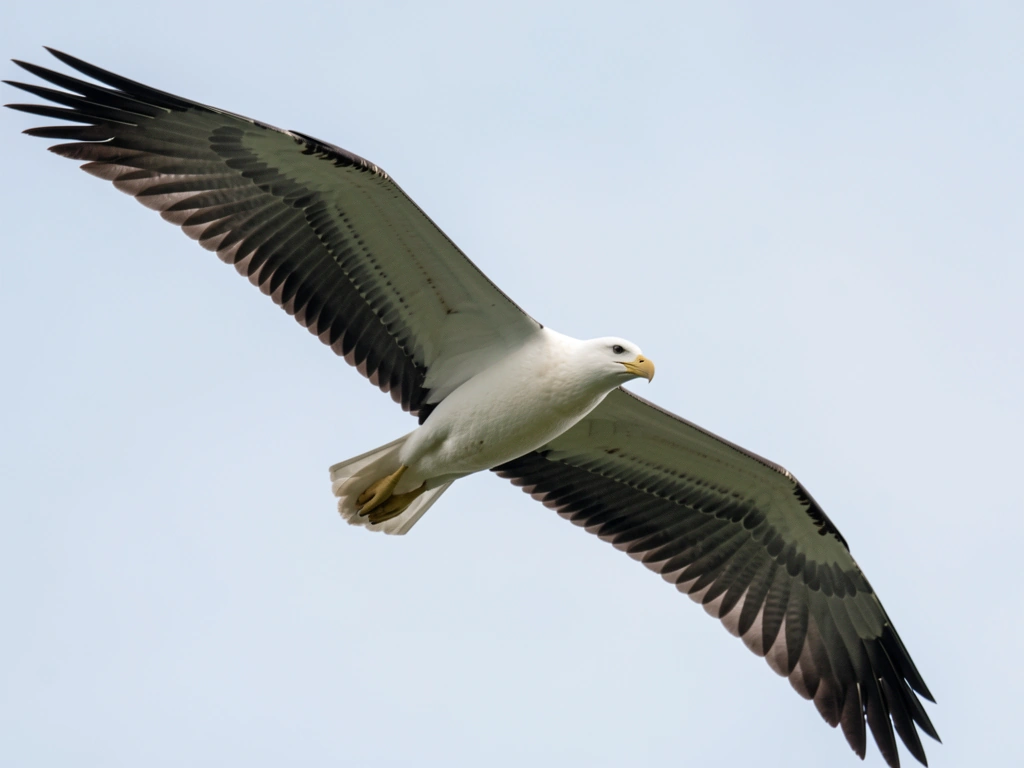
Wing shape varies by flight style, and it's a dead giveaway about how a bird lives. Long, narrow wings (like an albatross) are built for high-speed gliding with minimal drag. Short, broad, rounded wings (like a pheasant or grouse) generate enormous lift quickly for explosive takeoffs from dense cover. Pointed, swept-back wings (like a swift or peregrine) are built for speed and maneuverability. Slotted wingtips (like a bald eagle) reduce induced drag during slow soaring on thermals.
| Wing Shape | Example Birds | Best For | Trade-off |
|---|---|---|---|
| Long, narrow | Albatross, gannets | High-speed dynamic soaring, ocean travel | Poor at slow speeds and tight turns |
| Short, broad, rounded | Pheasant, grouse, owls | Quick takeoff, maneuvering in dense cover | High drag, inefficient for sustained flight |
| Pointed, swept-back | Swift, peregrine falcon | Speed and agility | Less efficient at slow gliding |
| Long, broad, slotted tips | Eagle, vulture, stork | Thermal soaring with low energy cost | Noisy, slow airspeed |
Why birds are nothing like planes (and that's the point)
The most common misconception is that birds are basically small biological airplanes. They're not, and the differences explain a lot about why bird flight looks so fluid and adaptable compared to fixed-wing aircraft.
A plane has fixed wings that only generate lift, and separate engines that only generate thrust. The two jobs are handled by two completely separate systems. A bird's wing does both jobs simultaneously, switching between them stroke by stroke. During the downstroke, the outer wing generates thrust. During gliding, the whole wing generates lift. A bird can morph the shape of its wing in real time, extending or retracting it, fanning or folding individual feather groups, changing the camber (the curve of the airfoil) dynamically. No current fixed-wing aircraft can do this.
Planes also rely on a vertical tail rudder for yaw control. Birds have no such structure. Their tail is a small fan of feathers used mainly for pitch and as a landing air brake. Yaw comes from asymmetric wing adjustments. A bird turning hard left isn't using a rudder; it's generating more thrust on the right wing and rolling into the turn the way a fighter jet does, through coordinated roll and subtle pitch changes.
Another misconception: birds don't flap constantly to generate lift the way a helicopter rotor does. During gliding, soaring, and even portions of the wingbeat cycle, lift is generated passively by the airfoil shape alone. Many large birds (vultures, albatrosses) spend the vast majority of their flight time not flapping at all. A turkey vulture can soar for hours on thermals, barely moving its wings, covering enormous distances for almost no metabolic cost.
Finally, birds have active sensory feedback built into their wings. Specialized mechanoreceptors in the skin at the base of feathers detect pressure changes and airflow disruptions in real time. A bird doesn't consciously calculate angle of attack the way a pilot reads an instrument panel. Its nervous system adjusts wing shape reflexively, before the pilot's brain would even register the change.
How to actually watch a bird fly (and what to look for)
The fastest way to build intuition for all of this is observation. You don't need a field guide or binoculars to start, though both help. Here's what to focus on the next time you watch any bird in flight.
- Watch the wingtips on a large bird gliding, like a crow, gull, or hawk. Look for slotting: the primary feathers at the tip spread apart like fingers. That's induced drag reduction happening in real time.
- Find a bird landing on a branch or power line and watch the tail. The tail fans out and tilts upward sharply in the final second, acting as an air brake. You can see the pitch control mechanism clearly.
- Watch a pigeon or starling take off from the ground. Notice how the wings beat down and forward, not straight down. The angle of the downstroke is what generates forward thrust alongside lift.
- If you can find a hawk or vulture on a calm day, watch how long it goes without flapping. Count seconds between wingbeats. A turkey vulture in good thermal conditions can go 10 to 30 seconds without a single flap.
- Watch a small bird like a sparrow fly in a straight line. You'll see a classic bounding flight pattern: bursts of flapping followed by brief pauses with wings tucked. During the tucked phase, the bird is essentially a ballistic projectile. This saves energy by eliminating drag from extended wings during the coasting phase.
- Look for V-formation flying in geese or pelicans. The birds at the back are drafting in the upwash from the wingtip vortices of the bird ahead, reducing their energy cost by up to 20 to 30 percent.
Quick experiments to feel the physics yourself
Hold a sheet of paper by one short edge and let it droop. Blow steadily across the top surface. The paper lifts. That's Bernoulli's principle: the faster-moving air you're creating above the paper has lower pressure than the still air below, and the pressure difference lifts the paper. It's exactly what happens on the curved upper surface of a bird's wing.
Stick your hand out of a car window at moderate speed with your palm flat and parallel to the ground. Now tilt your fingertips slightly upward. Your hand rises. That's angle of attack generating lift by deflecting airflow downward. Tilt too far and your hand gets pushed back hard instead, that's the drag increase that comes with high angles of attack.
Where to go next
If you want to go deeper, start by looking into how specific birds move, including their ground locomotion and takeoff mechanics, which reveals a lot about the trade-offs between walking and flying anatomy. Understanding how birds land, for example, ties directly back to everything here: the tail as air brake, the wing morphing for slow-speed lift, the split-second coordination of all four forces. Watching a heron land on a thin branch in a crosswind is one of the most instructive aerodynamics demonstrations you'll ever see, and it's free.
NASA's Glenn Research Center has publicly available K-12 aerodynamics materials (search for 'NASA Beginner's Guide to Aeronautics') that are surprisingly readable for adults and go deeper into the math behind lift, drag, and thrust without requiring an engineering background. Pairing those with direct bird observation is genuinely one of the best ways to build a real intuitive model of how flight works, biological or mechanical.
FAQ
Is a bird always flapping to generate lift?
A bird does not need to “beat its wings constantly” to keep flying. In gliding and soaring, the wing’s airfoil shape and the bird’s speed generate lift while gravity and air drag determine how quickly it loses or gains altitude. Flapping is used to restore lost altitude or to change speed and direction, depending on where the bird is in the flight cycle.
What happens if lift, weight, thrust, and drag are not balanced?
If lift equals weight and thrust equals drag, the bird maintains altitude. If only lift increases, it climbs until drag and/or thrust conditions change. If only thrust increases, it speeds up, which can increase lift and also change drag, so the outcome is not always “faster means immediately higher.”
How do birds avoid stalling when they tilt their wings for more lift?
Angle of attack matters, but birds also avoid stalls by continuously adjusting wing shape and airflow through reflexive feather and wing-group changes. That is why a hawk or swift can change pitch and keep the wing operating near an effective lift regime, even while turning or accelerating.
How do birds actually steer during a turn, without rudders?
Turning is not just a left-right movement, it is coordinated changes in roll, pitch, and yaw. Birds typically bank by generating more lift on one wing, while subtle tail and wing adjustments prevent slipping (skidding through the air) so the turn stays smooth rather than turning with loss of airspeed.
Why do some birds glide well while others seem to need frequent flapping?
Small gliding birds can still use gliding flight, but their performance depends strongly on wing loading (their weight relative to wing area) and wind conditions. A bird with higher wing loading usually needs more speed or stronger updrafts to avoid descending quickly.
How does a V-formation help birds fly more efficiently?
V-formation reduces energy cost mainly by reducing induced drag, the backward “tug” created as wings generate lift and tip vortices form. The lead bird breaks the air first, so birds behind it can fly in the upwash and get a small lift advantage that adds up over time.
When birds glide, where does the forward motion come from?
During glides, gravity is effectively the driver that produces forward motion through the air, but it is not “free thrust.” The bird trades altitude for airspeed, and drag determines how quickly that energy is lost. Good gliders manage drag and choose updrafts so they can regain altitude.
What parts of the wing create thrust during flapping, and what creates lift during the same wingbeat?
The “powered flight” advantage depends on how quickly a bird can generate thrust during the downstroke and then manage lift during the rest of the cycle. Birds use the primary feathers as propeller-like blades, but they also adjust camber and effective wing shape so the wing keeps producing lift even as the feather groups rotate.
How do weather and altitude affect how a bird flies in the air?
Air density, wind, and thermals shift the forces all at once. On a cold day or at higher altitude, the air is less dense, so the bird may need more speed or different wing morphing to produce the same lift, which can change how it takes off and how it chooses soaring conditions.
Why do bird bones being hollow help with flight, and are they still strong?
Birds are built with hollow, air-connected bones to reduce mass, but the structural strength comes from internal struts and cross-bracing. That matters because lighter bodies make it easier to keep lift matching weight, while internal supports handle the bending and stress of flapping.
How can I test lift and angle of attack safely in everyday observations?
The simplest way to “see” lift is airflow over a curved surface. If you try a car-window hand demo at higher speeds or with a large tilt, you are effectively increasing angle of attack, which can raise lift briefly but can also increase drag sharply, making your hand get pushed back harder.
Next Article
How Does a Bird Land: Step-by-Step Landing Guide
Learn how birds land step by step, from approach and wing flare to safe touchdown and ways to observe or help.