
If a bird just flew away from you, stop moving. A bird's flight can also be affected by bugs and irritation around the feathers or eyes bird fly bug. The single most important thing you can do in the next 60 seconds is not chase it. Most birds, whether a pet parrot that slipped out the window or a wild songbird that got disoriented indoors, will land somewhere nearby within a minute or two. Your job right now is to keep eyes on it, stay quiet, and resist every instinct to run toward it. After that, the strategy depends heavily on what kind of bird it is, where it landed, and whether it looks hurt.
Bird Flew Away: How to Get It Back Safely and Fast

Marcus Chen
2 Jun 2026
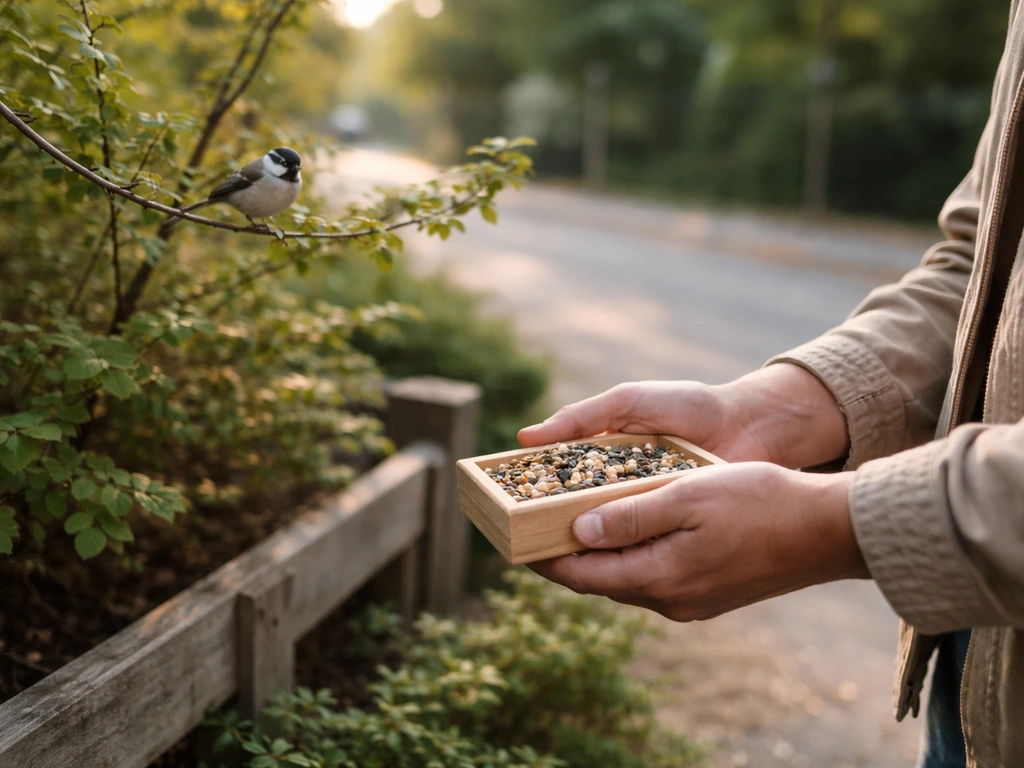
The first 10 minutes: calm down, assess, and don't chase
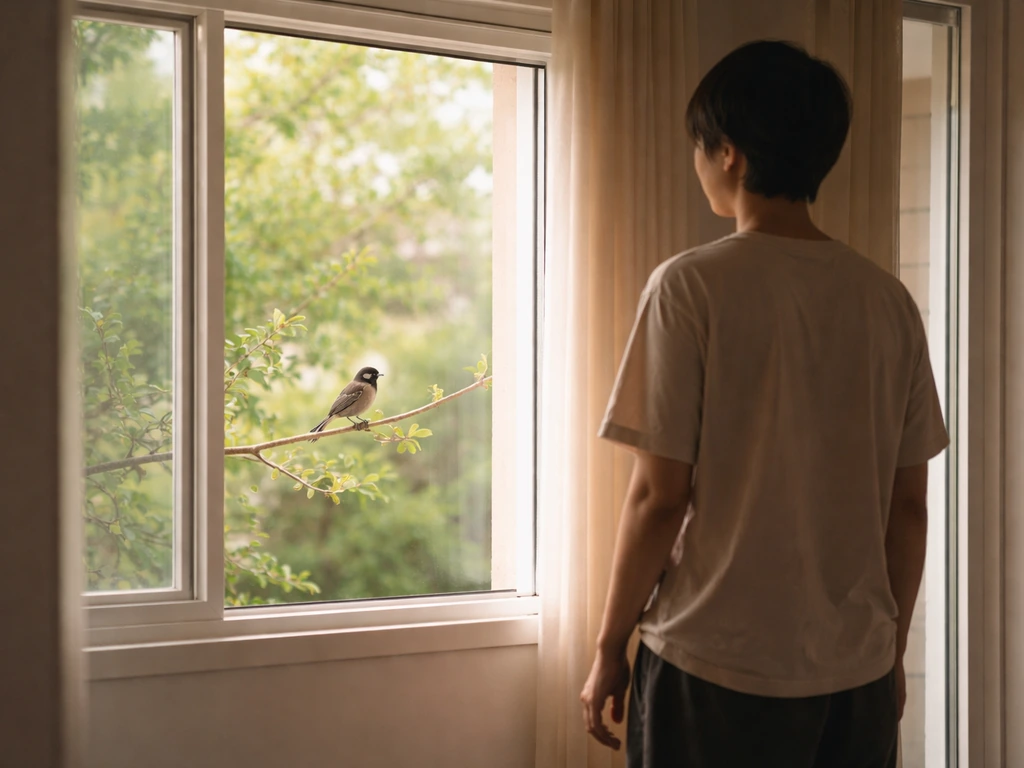
The moment you realize a bird has flown off, your instinct is to pursue. Don't. Chasing a bird, even a hand-raised pet that loves you, triggers its hardwired escape response. Every step you take toward it pushes it further away. Instead, plant yourself where you last saw it, scan the area slowly, and take stock of a few things at once: Is the bird still visible? Is it flying confidently or struggling? Did it land somewhere reachable?
While you're watching, look for distress signals. A bird sitting on the ground or on a low branch with puffed-up feathers, closed or half-closed eyes, and no obvious attempt to move away from you is likely sick or injured, not calm. According to the Tufts Wildlife Clinic, that "quiet, dull" look with fluffed feathers is a classic sign that something is wrong. A healthy bird that just escaped will be alert, looking around, and ready to bolt again the instant you get too close.
If the bird appears healthy and uninjured, you have time to work with. Most escaped pet birds land within 50 to 100 feet of where they took off, often on the highest available perch they can find. Wild birds that flew inside a building tend to head for windows or the brightest light source. Keep that landing spot in your sight line while you move into retrieval mode.
Figure out what you're actually dealing with
The right approach depends entirely on the scenario. A pet cockatiel that slipped through a door is a completely different situation from a robin that flew into your garage, and both are different from a hawk sitting dazed on your lawn. Getting this identification step right saves you a lot of wasted effort and prevents you from accidentally making things worse.
Pet bird that escaped indoors or outdoors
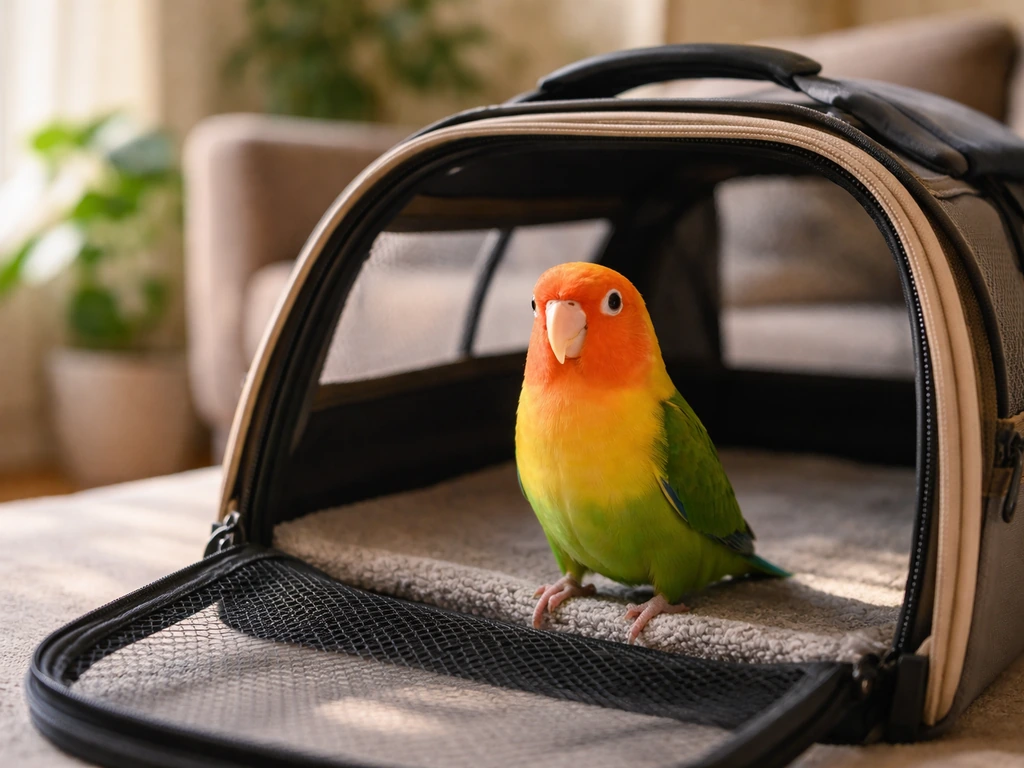
If you own the bird, you have the biggest advantage available: the bird knows you, knows its cage, and associates both with food and safety. Pet birds, especially parrots, cockatiels, budgies, and canaries, are flock-oriented by nature. When they're scared and alone, they want to return to a familiar social group. That's you. The challenge outdoors is that even a tame bird can become disoriented fast when exposed to open sky, wind, and unfamiliar sounds. A bird that has never been fully flighted indoors may not have the navigational experience to find its way back without help.
Wild bird that got inside or flew off course
A wild bird that flew into your house or car and can't find its way out is not "your" bird to retrieve in the ownership sense, but it does need your help to escape safely. These birds are almost always uninjured; they're just trapped and panicking. The goal here is to create an obvious exit and reduce the stimuli that are confusing them, not to catch the bird yourself. Open the largest available window or door, dim interior lights, and step back. Most healthy wild birds will find the exit within minutes once the stress level drops.
Wild bird found outdoors that can't fly
This is the scenario that most often needs professional help. If a wild bird is on the ground and not attempting to fly away from you, something is wrong. Best Friends Animal Society recommends approaching from behind quietly and slowly when a bird is on the ground and unable to fly approach from behind quietly and slowly. The only exception is fledglings, young birds that have left the nest but aren't fully flighted yet, which are a normal part of the breeding season and usually don't need human intervention at all. An adult bird sitting on the ground and tolerating human approach almost certainly needs a wildlife rehabilitator, not a well-meaning attempt at home care.
Use bird behavior to find where it went
Birds follow predictable patterns when they're stressed and looking for a place to land. Understanding those patterns makes your search much more efficient than just scanning randomly. Flight mechanics play a role here too: a small bird with rounded wings, like a budgie or a sparrow, has low wing loading and tends to flutter to the nearest elevated surface rather than traveling long distances. If you want a visual way to study the motion, follow a bird flying animation tutorial to practice the same flight mechanics step by step. A larger bird with longer wings may glide further before landing, which is why a lost cockatoo can end up a surprising distance from home within a short time.
- Birds seek height first. Check rooftops, gutters, the tops of trees, and tall fences before looking at ground level.
- They prefer perches with cover nearby. A branch inside a dense shrub or a sheltered ledge beats an exposed open surface.
- They orient toward familiar sounds. A pet bird outdoors may gravitate toward the sound of other birds, a TV inside, or your voice.
- In unfamiliar territory, birds often freeze for several minutes before moving again. If you saw where it landed, wait and watch rather than approaching immediately.
- Flocking species like budgies and cockatiels are drawn toward any bird calls, including recordings of their own species played from a phone.
Move through the search area slowly and quietly. Sudden movements, even at a distance, can trigger a second flight and you risk losing visual contact entirely. If you have a companion bird at home, bringing it outside in its cage (safely secured) can act as a powerful lure, since most social species will respond to a familiar flock member's calls.
How to lure the bird back without scaring it off
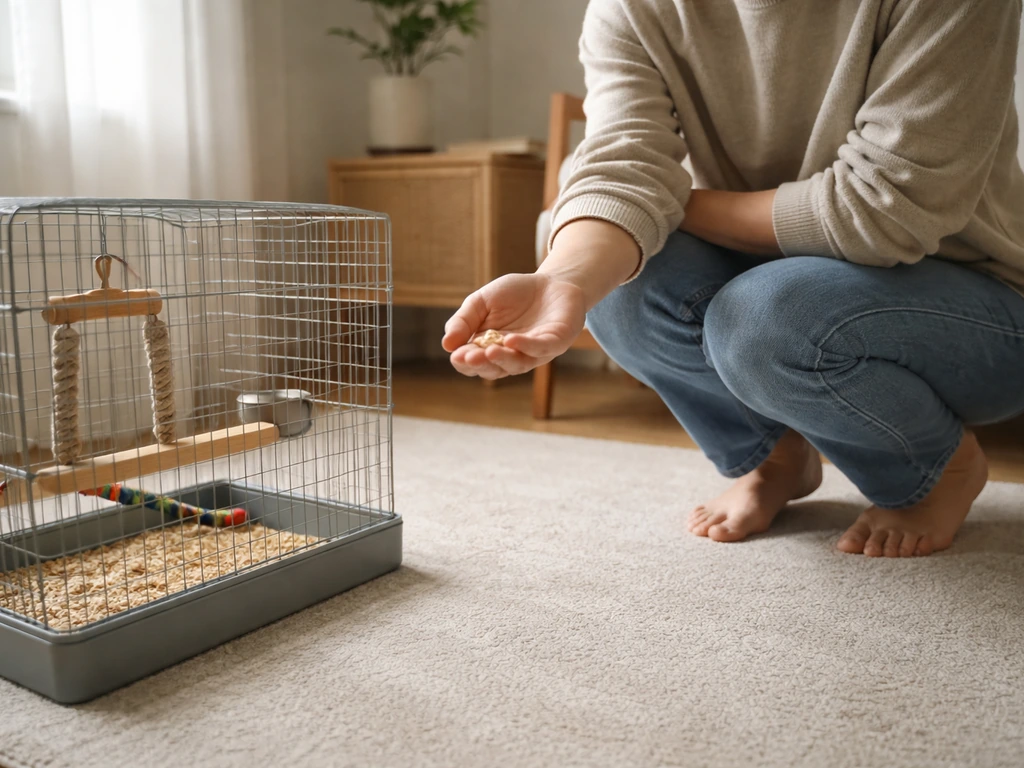
Once you've located the bird, the retrieval phase is about making yourself and the environment feel safe, not about rushing in to grab it. The goal is to give the bird a reason to come to you rather than a reason to flee.
For pet birds
Bring out whatever the bird values most: its favorite food (millet spray works well for small birds, a piece of banana or almond for parrots), its water dish, and ideally its own cage with the door open. Place these near the bird's current location without walking directly toward it. Crouch down to make yourself smaller and less threatening. Use the bird's name and familiar phrases in a calm, low voice. Don't reach out a hand until the bird has voluntarily moved closer to you. St. Louis Avian Rescue's guidance specifically recommends using a calm tone and familiar phrases while slowly moving toward the bird, which matches what most experienced bird owners find works in practice.
Using the cage as a lure
An open cage placed in a visible, familiar spot is one of the most effective tools for recovering an escaped pet bird. For pet birds, RSPCA guidance also supports using an appropriately sized carrier and positioning it so you can help the bird “lure into carrier” by reducing scattering and fear, such as by covering the sides or roof with a pale towel lure into carrier approaches. The cage represents territory, safety, and food all at once. If the bird escaped outdoors, position the cage near the point of escape so the bird associates the smell and sight of it with home. Some owners report success leaving the cage outside overnight with food and water if the bird doesn't return by dusk, though this works better in warm months and carries some predator risk that you'll need to weigh.
For wild birds indoors
Don't try to lure a wild bird with food or calls. Instead, reduce the number of exit options to one obvious one. Close interior doors, pull curtains on all windows except the one you want the bird to use, and leave the room if possible. Wild birds navigate using light gradients, so a single bright open window or door in an otherwise dim room acts as a strong directional cue. This approach uses the bird's own spatial intelligence instead of fighting it.
Encouraging return without causing more fear
There's a clear line between encouraging a bird to come back and inadvertently teaching it that humans are a threat. Everything on the wrong side of that line makes recovery harder and causes real stress to the bird.
| What to do | What to avoid |
|---|---|
| Move slowly and crouch to appear smaller | Running or walking quickly toward the bird |
| Use a calm, familiar voice and the bird's name | Shouting, clapping, or making sudden loud noises |
| Offer food from a still, outstretched hand | Throwing objects to "scare" the bird down from a perch |
| Allow the bird to approach on its own terms | Repeated direct approach attempts that keep flushing the bird |
| Use a companion bird's calls as a passive lure | Chasing the bird across multiple locations until you lose track |
The RSPCA notes that birds can become stressed and aggressive when they feel they can't escape, which is exactly the state you create when you corner a bird before it's ready to trust you. Patience here is not just kindness; it's efficiency. A bird that chooses to land on your hand recovers its composure quickly. A bird that was grabbed in a panic may take days to settle down and may associate handling with fear long afterward.
Species and wing morphology matter here too. A bird with short, rounded wings (like a dove or a budgie) has very different flight agility from a long-winged species built for sustained soaring. If you've ever looked at a bird from above in flight, you know how much the wing shape tells you about where the bird is headed and how fast it can change direction. If you catch the moment from a top view of bird flying, you can estimate wing orientation and adjust your search accordingly. If you want to spot patterns in flight quickly, you can also learn to recognize common group behaviors like a bird flying on top of another bird looked at a bird from above in flight. Looking at a bird from a bird's-eye angle, including top view cues from above, can also help you track its likely path and landing spot bird from above in flight. Understanding that a bird with high-aspect-ratio wings can cover distance quickly helps you prioritize speed in the early search phase rather than assuming the bird is still right nearby.
When to call for help and what to do with an injured bird
Some situations are beyond what you should handle alone, and recognizing them quickly matters.
Signs a wild bird needs professional care
- Visible blood, a dragging wing, or a wing that can't fold properly against the body
- The bird is on the ground and doesn't attempt to move away from you
- Fluffed feathers, eyes partially or fully closed, and no alertness to surroundings
- Labored breathing, open-mouth breathing, or tail bobbing with each breath
- Signs of impact injury such as hitting a window (stunned, lying on its side)
If you see any of these, contact a licensed wildlife rehabilitator rather than attempting extended capture or home care. The UC Davis California Raptor Center, Audubon, and Greenwood Wildlife Rehabilitation Center all give consistent advice here: call first, then act on that guidance. The Raptor Center at the University of Minnesota specifically notes that limiting capture and handling reduces the chance of additional self-injury. For raptors in particular, WSU's College of Veterinary Medicine warns that you can inadvertently cause serious harm if you attempt capture without experience, and recommends calling a local rehabilitator to arrange transport instead.
While you wait for help, you can reduce suffering with a simple approach: place the bird in a cardboard box lined with a towel, cover the top to keep it dark and calm, and keep it in a quiet room away from pets and children. Don't offer food or water unless a rehabilitator tells you to, since an injured bird may have internal injuries that complicate feeding. According to Best Friends Animal Society, a dark, quiet indoor space is the right holding environment until a professional can take over.
Signs a pet bird needs a vet
For a pet bird that came back but seems off, the Merck Veterinary Manual is clear that open-mouth breathing at rest, wheezing, or tail bobbing during breathing are urgent veterinary concerns. Even if the bird looks physically fine after a brief escape, St. Louis Avian Rescue recommends a veterinary checkup regardless, because the bird may have inhaled something, sustained a minor injury that isn't visible, or experienced significant stress that warrants monitoring. Use a carrier with three sides covered by a towel to minimize stress during transport, which is a technique supported by both the RSPCA and Merck's guidance on handling nervous birds.
Prevention: make sure this doesn't happen again
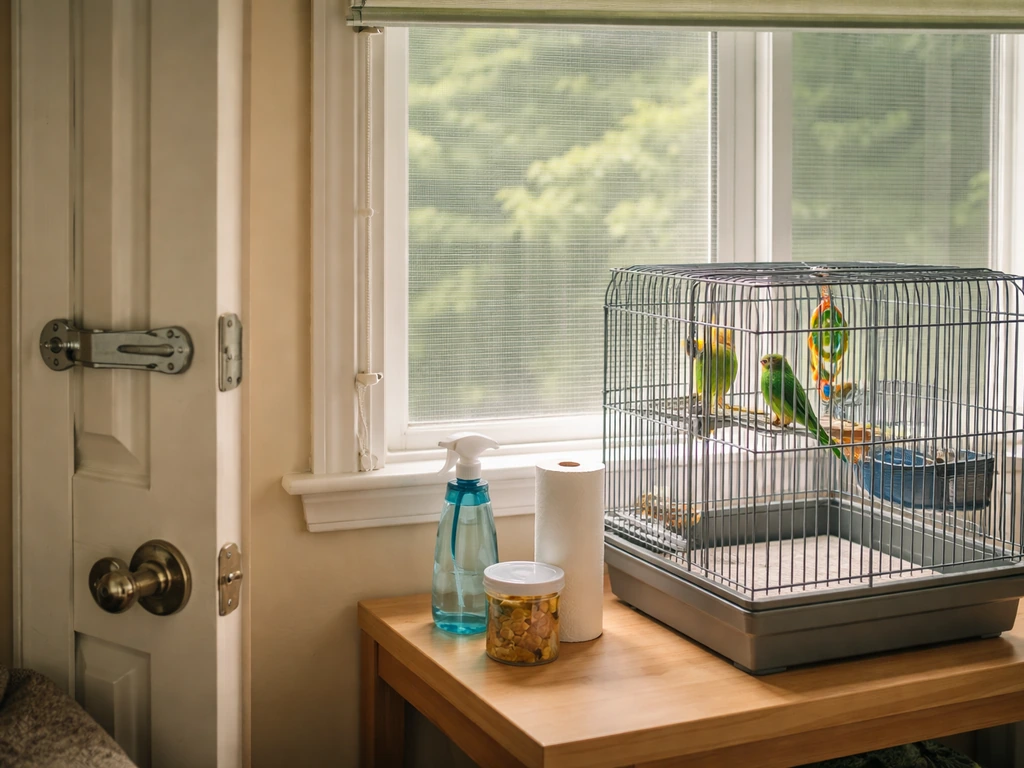
The best time to think about escape prevention is right now, while the memory of the panic is still fresh. Most bird escapes happen through predictable failure points that are easy to fix once you know what to look for.
- Establish a "bird safety zone" before letting a pet bird out of its cage. This means closing windows, pulling window screens down firmly, closing exterior doors, and turning off ceiling fans. Many birds are injured or killed by ceiling fans each year, not escape.
- Use door alarms or posted reminders if you share your home with others. Most escapes happen when a second person opens an exterior door without knowing the bird is out.
- Check window screens for gaps or tears regularly. A bird exploring a windowsill needs only a small gap to slip through.
- Practice recall training. A bird that flies to you on a verbal cue is dramatically easier to recover if it does escape. Even a few minutes of daily step-up and recall practice builds the kind of trust that brings a bird back.
- Use a properly sized travel carrier for any transport, and cover it appropriately. Never transport a bird loose in a car, and always check that a carrier door is fully latched before moving.
- If you take your bird outside, use a proper flight harness designed for your species, not makeshift restraints. Harness-train gradually so the bird is comfortable before any outdoor exposure.
For wild birds that keep flying into your windows, the solution is exterior window film or tape applied in a grid pattern with gaps no wider than 2 inches by 4 inches. Birds can't perceive glass as a barrier, which is one of the more tragic consequences of how avian vision processes transparent surfaces. This is worth a separate deep dive if you're curious about how bird visual perception differs from ours, including how it intersects with flight behavior and navigation.
If your escaped pet bird is microchipped or banded, register the ID with national lost pet databases and contact your local avian vet, bird rescue groups, and animal control immediately. Post clear photos with a description in neighborhood apps and local Facebook groups. The faster word spreads, the better the odds that someone who spots the bird knows to call you. Most recovered escaped birds are found within a quarter mile of their home, often within the first 24 hours, which means your best window for action is right now.
FAQ
What should I do if I cannot see the bird anymore after it flew away?
Start treating it like a short-distance search, not a disappearance. Return to the last visible landing point and scan slowly from there, watching treetops, rooflines, and the highest nearby perch. Listen for calls from nearby birds and, if you own a pet bird, place its cage outside nearby (secured) so its flock calls can help the lost bird re-orient.
How long should I keep looking before switching to a different plan?
For most escaped pets, the highest odds are in the first 1 to 24 hours, but you should not stop early if the bird is still in the area. If you have not spotted it within a short window, change tactics: reposition the open carrier and familiar cage scent/food at likely perches, then re-scan at dawn and late afternoon when birds are more active. For wild birds that do not immediately resolve, contact a rehabilitator rather than extending the search indefinitely.
Is it safe to try to “shoo” the bird back with a broom, net, or towel?
Usually no. Any tool that moves fast, touches the bird, or cornering behavior can trigger a second escape and increase injury risk. Instead, use quiet approaches, reduce options for wild birds to one clear exit, and rely on an open cage plus calm voice for pets.
What if the bird is stuck somewhere high, like a balcony railing or a tree?
Avoid climbing or reaching. Plant yourself where you last saw it, keep the area calm, and offer the bird a visual and scent route home by placing the open carrier or cage below and as close to the landing spot as safely possible. If it is indoors, ensure the route out (one bright exit point) is unobstructed and stay low to reduce perceived threat.
My pet bird is flying in circles and won’t land, what should I do?
If it is repeatedly wheeling, it may be reacting to stress, wind, or a confusing indoor layout. Stop chasing, dim competing lights indoors, and create one obvious landing target (open cage door, familiar perch, and favorite food) so it has a “safe” place to commit to. If the bird keeps circling outdoors at dusk or appears unable to land normally, contact an avian rescue or rehabilitator.
Can I use food to lure a wild bird back outside or into a box?
For wild birds, avoid food or calls as a lure. The better strategy is controlling exits by closing other doors and curtains and leaving a single bright, open window or door. If the bird is on the ground and not attempting to fly away from you, that is a red flag for injury or illness, and professional help is the safer next step.
What are the signs that I should stop and call a wildlife rehabilitator right away?
Stop attempting home capture if the bird cannot or will not fly, sits on the ground with minimal reaction, has visible blood, drooping wings, trouble breathing, or seems “stuck” and calm in a way that suggests shock or injury. Raptors and any bird that shows persistent disorientation also merit professional intervention before you attempt transport or handling.
If I find a possibly injured bird, should I give it water or food?
Do not offer food or water unless a rehabilitator specifically instructs you. Birds with internal injuries can choke or worsen conditions when fed. Instead, prepare a dark, quiet holding space (box lined with a towel, top covered), and keep it away from pets and children.
What is the safest way to transport a sick or stressed bird?
Use a carrier or cardboard box lined with a towel and minimize light and stimulation. Covering three sides (or placing the box so it feels enclosed) reduces stress during transport. Keep the environment quiet, warm, and stable, and handle as briefly as possible while you head to an avian vet or licensed rehabilitator.
If my escaped pet bird comes back, when should I still seek a vet check?
Seek an avian vet check promptly if breathing looks abnormal, even if the bird seems otherwise okay. Also consider a check after any significant time outdoors, exposure to smoke, inhaled dust, or a fall, because stress and minor impacts can show up later as weakness, breathing issues, or appetite changes.
How can I tell whether I should leave the bird alone versus try to approach?
A healthy escaped pet or a healthy wild bird usually looks alert and can react quickly to distance, then fly or move away when you get closer. If the bird is puffed up, appears dull, has closed or nearly closed eyes, or does not try to move when approached, treat it as potentially unwell and contact a rehabilitator rather than continuing to approach.
What escape-prevention step should I do first, after I recover the bird?
Start by fixing the most common access points, doors and windows. Add secure window screens, verify latches and door closures, and consider a predictable “return routine” by practicing with the open cage and a consistent phrase or cue indoors. If window strikes are the issue, apply exterior window film or grid tape using small gaps to reduce collisions.
Next Articles
Bird Flying Top View: How to Draw, Model, and Get PNGs
Learn biomechanics-based tips to draw and model a bird flying top view, plus find or export transparent PNGs safely.
Bird Has Flown Meaning: Definition and How to Respond
Understand the bird has flown meaning, when it’s used, and how to reply with examples for real-life conversations.
Prefix Meaning Flight or Bird: Definition and Examples
Learn the flight or bird prefix meaning, origin, examples, and a checklist to decode new words and avoid look-alikes.