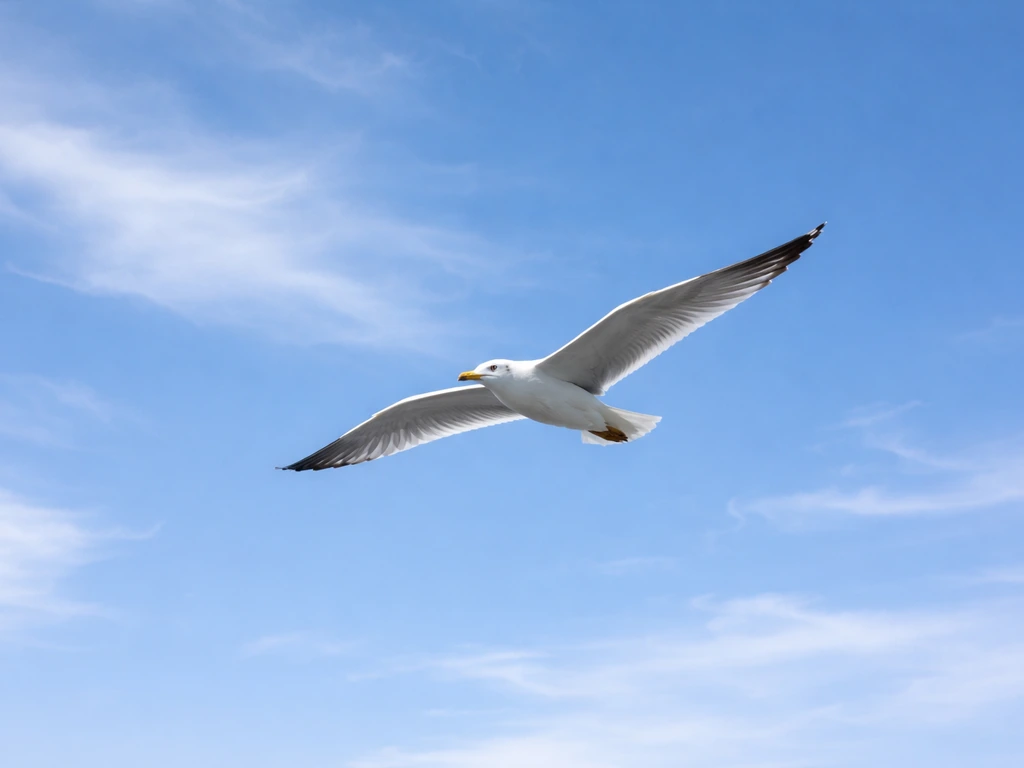
Yes, "A bird is flying in the sky." is perfectly correct English. The grammar, the article choice, and the preposition all work exactly as they should. If you typed this sentence and wondered whether it needed fixing, it doesn't. That said, a few small tweaks can make it fit your specific meaning more precisely, and it's worth knowing which version to reach for depending on whether you mean one random bird or a particular one you're both looking at.
A Bird Is Flying in the Sky: Is It Correct English?

Marcus Chen
6 May 2026
Check if the exact sentence is grammatically correct
"A bird is flying in the sky." hits every grammatical requirement. It has a subject ("a bird"), a present continuous verb ("is flying"), and a prepositional phrase that tells us where ("in the sky"). The Cambridge Dictionary explicitly cites "in the sky" as a natural, standard prepositional phrase for location, which confirms you're not reaching for something unusual here. The sentence starts with a capital letter and ends with a period. There is nothing to correct.
The only situations where someone might question it are: (1) whether "a" is the right article, (2) whether "is flying" captures the right timeframe, and (3) whether "in the sky" is the best preposition choice. All three are addressed below, and in each case the original sentence holds up well.
Why "a" works here (singular, unspecified bird)
"A" is the indefinite article, and its job is to introduce something that is new, unspecified, or not yet known to the listener or reader. Cambridge and Purdue OWL both make the same point: use "a" when the identity of the noun is not already established in the conversation, and use "the" once the referent is known or specific. When you say "a bird is flying in the sky," you're pointing at some bird, not a particular bird both of you have already been watching. That's exactly the situation where "a" belongs.
The choice between "a" and "an" depends on the sound of the following word, not its spelling. "Bird" starts with a consonant sound, so "a bird" is correct. "An eagle" would be correct for the same reason in reverse: "eagle" opens with a vowel sound.
Tense and meaning: single moment vs ongoing action
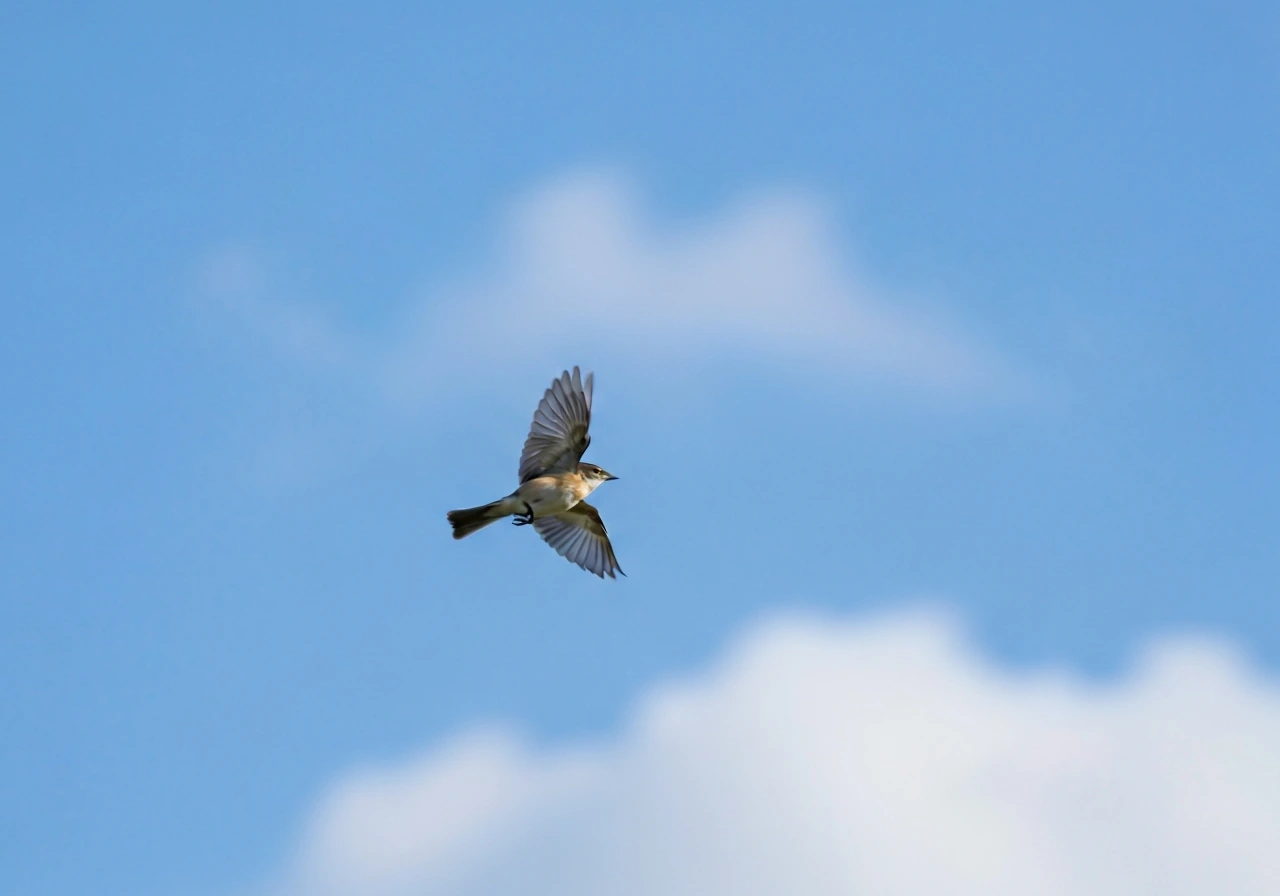
"Is flying" is present continuous, and it's the right tense for this sentence. Cambridge defines present continuous as describing an event in progress at the moment of speaking, and the British Council notes it's also used to describe a scene as if it's unfolding right now. So if you're looking out a window and narrating what you see, "a bird is flying in the sky" captures exactly that live, in-the-moment quality.
Present continuous also covers actions that are temporary or ongoing around the present time, not just events happening at a precise instant. So this phrasing works whether you mean "right this second" or "this morning, while I'm watching." The alternative would be present simple, which Cambridge links to general facts or permanent truths: "Birds fly in the sky" works as a statement of general biology, not a description of something you're watching. That distinction matters if you're writing a caption versus making a general claim.
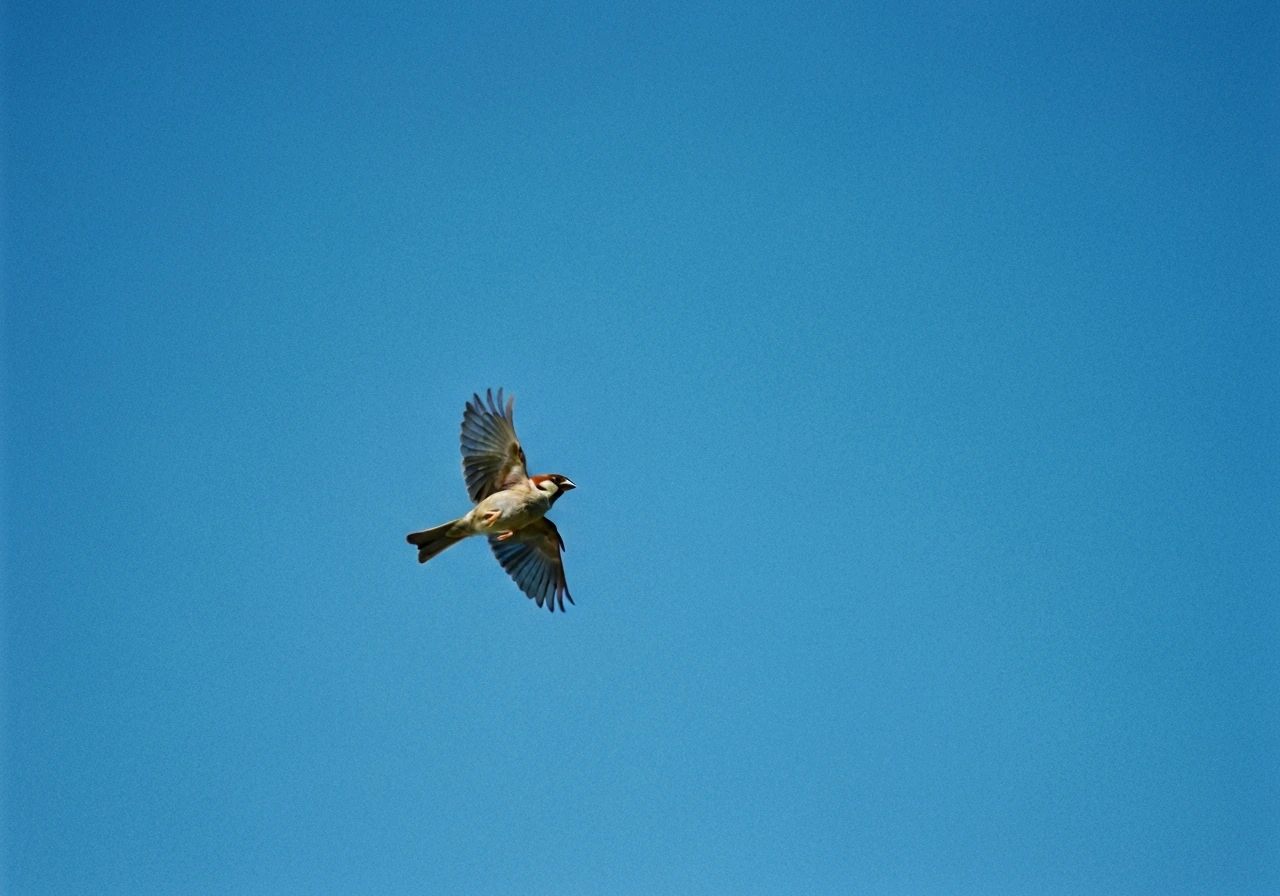
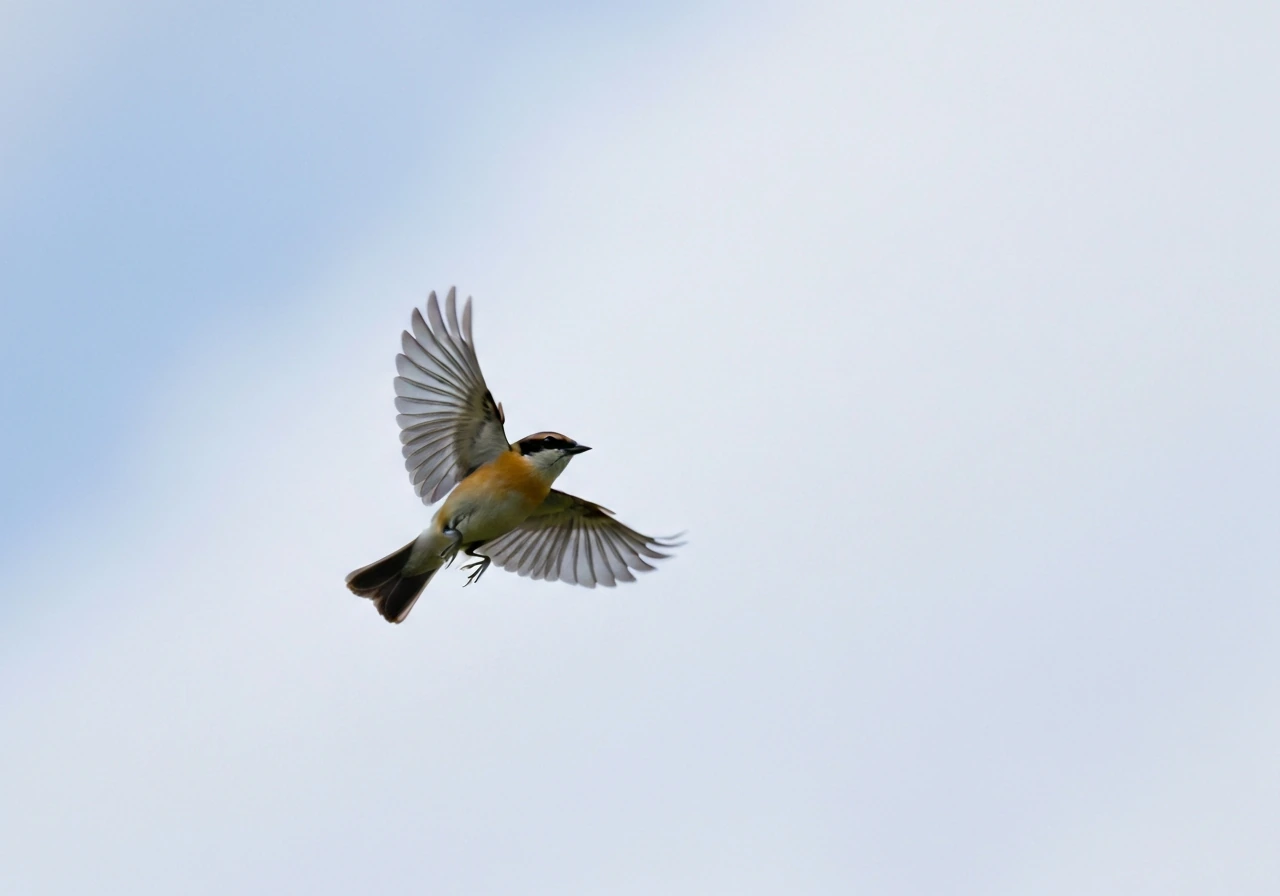
For anyone curious about the actual mechanics behind what the sentence describes, the way a bird sustains flight is a genuinely intricate process involving wing shape, flapping rhythm, and the management of lift and drag. When the bird glides across the sky WuWa, that effortless motion still depends on lift and drag. The sentence is simple; the behavior it names is not. That movement is an example of present continuous motion in the sky a bird is flying in the sky.
Common natural rewrites (through, over, the bird, birds)
The original sentence is correct, but here are the most common variants and when each one fits better:
| Sentence | Best used when | Key difference |
|---|---|---|
| A bird is flying in the sky. | Describing a bird at a general location in the sky | Standard, correct, works in almost every context |
| A bird is flying through the sky. | Emphasizing movement across the sky, not just position | "Through" suggests traveling or cutting across a space |
| A bird is flying over the sky. | Rarely ideal; "over" implies above rather than within | Sounds slightly off because birds fly in/through the sky, not over it |
| The bird is flying in the sky. | Referring to a specific bird already known to both speaker and listener | "The" signals the bird has been identified or mentioned before |
| Birds are flying in the sky. | Making a general or plural observation | Plural subject, no article; broader or more general statement |
A note on "over": Cambridge defines "over" as movement at a higher level or from one side to another of something. "A bird is flying over the mountains" works perfectly, because the bird is crossing above the mountains. But "flying over the sky" doesn't make much sense, because the sky isn't something you fly above. Stick with "in" or "through" when the sky itself is the location.
"Through" is a good choice when you want to emphasize motion and direction, like a swallow cutting through the air. "In" is more neutral and works when you just want to describe where the bird is. If you're writing a caption for a photo or a social media post, "in the sky" almost always reads more naturally.
Punctuation, capitalization, and caption-style variations
For a standard sentence in a paragraph, capitalize the first word and close with a period: "A bird is flying in the sky." That's it. No commas needed, no special punctuation required.
For captions (photo descriptions, social media posts, slide labels), the Chicago style guide and AER Style Guide both recommend sentence case: capitalize only the first word and proper nouns. In a Reddit r/grammar thread quoting The Chicago Manual of Style, commenters discuss how to place periods when punctuation interacts with parentheses Chicago style guide guidance on punctuation with parentheses. If the caption is a full sentence, include a period. If it's a fragment or label, leave the period off. So both "A bird is flying in the sky." (full sentence caption) and "A bird flying in the sky" (fragment label, no period) are acceptable depending on your context.
- Full sentence caption: "A bird is flying in the sky." (capitalize first word, close with period)
- Fragment/label caption: "A bird flying in the sky" (no period needed)
- Title case (for headlines or titles): "A Bird Is Flying in the Sky" (capitalize major words)
- Lowercase for informal social media text is common but not a grammar rule, just a style choice
Quick self-check: choose the best sentence for your intended meaning
Before you finalize your sentence, ask yourself two quick questions. First: is this a specific bird you and your reader both know about, or just any bird? If it's specific, switch "a" to "the. Purdue OWL explains that the definite article "the" is used for specific or particular nouns, while "a"/"an" introduces something not yet identified in the conversation switch "a" to "the. " If it's unspecified, keep "a." Second: are you describing something happening right now, or stating a general fact? If it's happening now or recently, "is flying" (present continuous) is correct. If you're stating a general truth, use "fly" (present simple): "Birds fly in the sky."
- Unspecified bird, happening now: "A bird is flying in the sky." (your original sentence, correct as-is)
- Specific bird you're both watching: "The bird is flying in the sky."
- Multiple birds, general observation: "Birds are flying in the sky."
- Emphasizing movement across the sky: "A bird is flying through the sky."
- General fact about birds: "Birds fly in the sky."
Your original sentence doesn't need fixing. But knowing why it works and what each small change does gives you real control over your writing, whether you're writing a caption, a school exercise, a social media post, or just settling a grammar debate with a friend. If you are using the exact phrase “a bird is flying in the sky” as a caption or label, the tense and punctuation guidance above also helps you polish it to match your context. You can also say this idea in Spanish: “ese pájaro está aprendiendo a volar. In French, you can say the bird is flying in French as “L’oiseau vole.”. ” that bird is learning to fly in spanish.
FAQ
Should I use “a bird” or “the bird” in this sentence?
Use “a bird” when you mean any unspecified bird. Use “the bird” when you and the reader share a specific one, such as “That bird is flying in the sky” after you point it out.
If I am not talking about right now, is “is flying” still okay?
It can be, especially for scenes you are describing around the present time (for example, this morning). If you mean a permanent habit or general rule, switch to present simple: “A bird flies in the sky” sounds more like a general fact, “Birds fly in the sky” is the most natural general statement.
Is “in the sky” always the best preposition?
Not always. Use “in the sky” for location. Use “across the sky” for moving from one side to the other, and “over the sky” is usually awkward. “In the sky” is the safest choice for neutral descriptions.
What if the bird is already in the air but I want to emphasize the path?
Try “A bird is flying across the sky” (side-to-side) or “A bird is flying through the clouds” (entering and moving within). Choose the preposition that matches direction and framing, not just location.
Can I make it sound more natural for a photo caption?
Often you can use a shorter label version without changing meaning: “A bird flying in the sky” (no period) reads well as a fragment. If it is a complete caption sentence, “A bird is flying in the sky.” is also correct.
Would “A bird is flying in the sky” be wrong if it is a past event?
Yes, if the timing is past. For a past moment, use “A bird was flying in the sky” or “A bird flew in the sky,” depending on whether you want a continuing scene (“was flying”) or a completed event (“flew”).
Should there be a comma or extra punctuation anywhere?
No. For this straightforward statement, a period at the end is enough. Add punctuation only if you add extra information, such as a relative clause: “A bird, which was circling above us, was flying in the sky.”
Is “a bird is flying in the sky” correct in British and American English?
Yes. The grammar and common word choices here are standard in both varieties, so you do not need to change “in,” “is flying,” or the article.
Next Article
When the Bird Glides Across the Sky: Field Guide to Gliding
Field signs, biomechanics, and weather cues to tell gliding from soaring and track lift, control, and glide paths.