
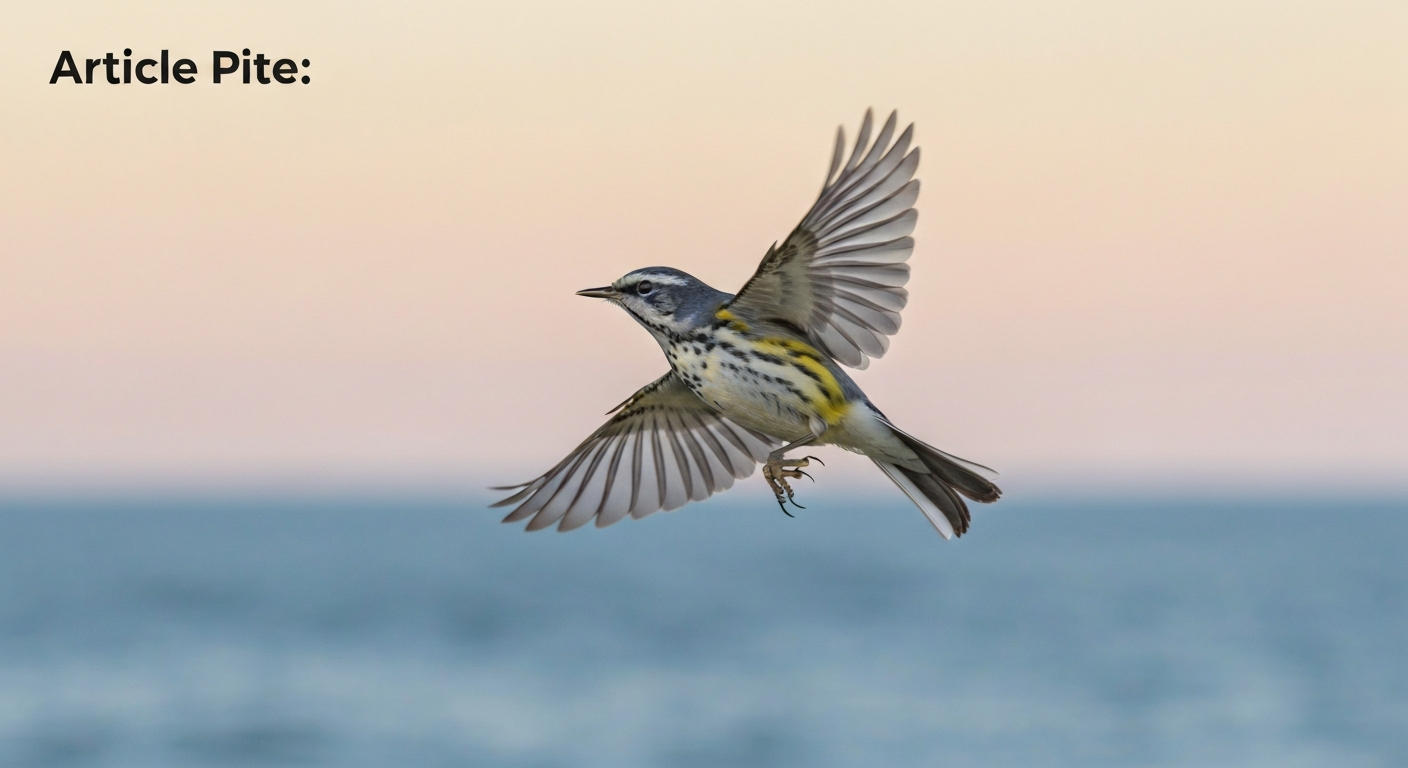
Bird migration is an example of animal migration, a seasonal behavioral adaptation, and long-distance powered locomotion. More precisely, it sits at the intersection of all three: it is a taxon-wide movement phenomenon (animal migration), it is triggered and tuned by biological clocks and environmental cues like day length (seasonal behavioral adaptation), and it is physically executed through sustained, energetically demanding flight (long-distance locomotion). Every autumn when a Blackpoll Warbler weighing less than 15 grams lifts off the northeastern coast of North America and flies roughly 2,700 km non-stop over the Atlantic Ocean to South America, all three of those categories are on full display at once.
Bird migration is an example of animal migration and flight

Marcus Chen
28 Jul 2026
What bird migration actually is
blank" rel="noopener noreferrer">Migration in birds is the periodic, directional, and usually seasonal movement of populations between distinct breeding and non-breeding areas. The word 'periodic' matters here: this is not random wandering or a one-off dispersal event. Birds return to the same breeding territories and often the same wintering grounds year after year, sometimes to within meters of last year's nest site. Ornithologists define it as a 'migration programme,' a package of behaviors, physiology, and orientation abilities that switches on and off in a regulated cycle. blank" rel="noopener noreferrer">The movement-ecology framework developed by Nathan and colleagues in 2008 captures this well: migration emerges from four interacting components acting together: the bird's internal motivational state, its locomotor capacity (flight performance), its navigation capacity (orientation and wayfinding), and external environmental factors like wind, food availability, and temperature. Pull any one of those four out of alignment and migration either doesn't happen or goes badly wrong.
The scope is genuinely staggering. Over 40 percent of the world's roughly 10,000 bird species undertake some form of migration. The Arctic Tern holds the distance record, completing a pole-to-pole round trip of around 70,000 km each year. Bar-tailed Godwits fly non-stop from Alaska to New Zealand, roughly 11,000 km over eight to nine days without landing, without eating, and without sleeping in the conventional sense. At the other end of the scale, a Mountain Quail in California may migrate just 50 km up and down a single mountain slope on foot. All of these qualify as migration under the broad definition.
Types of migration: not all birds do it the same way
Ornithologists carve migration into several overlapping categories, and understanding them helps clarify why 'bird migration' covers such an enormous range of behaviors.
Seasonal (latitudinal) migration
This is the classic image: birds breeding at high latitudes in summer, then flying south to warmer wintering grounds, and returning north the following spring. Warblers, shorebirds, raptors, and waterfowl in the Northern Hemisphere overwhelmingly follow this pattern. It is driven primarily by the availability of food and suitable breeding habitat rather than temperature per se, which is why many birds leave well before winter actually arrives.
Altitudinal migration
Some species trade latitude for altitude. Instead of flying thousands of kilometers horizontally, they simply move up and down a mountain. In summer they breed at high elevations where insect food is briefly abundant; in autumn they descend to valley floors or foothills to avoid snow and find food. The American Dipper, the Dark-eyed Junco, and several Himalayan species all use this strategy. Distances may be short, but the physiological demands and the underlying migration programme are essentially the same as in long-distance migrants.
Partial migration
In a partial migrant species, only some individuals migrate while others remain resident year-round in the breeding area. European Robins are a classic example: females tend to migrate south while many males stay put and defend winter territories. This variation within a single species is ecologically fascinating because it shows that the 'migration programme' is not a fixed species-level trait but rather a threshold that different individuals cross depending on their age, sex, body condition, and local resource levels.
Nomadism
Nomadism is sometimes treated as a separate phenomenon from migration rather than a subtype of it, but it belongs in the same conversation. Nomadic birds like the Red Crossbill move opportunistically in response to unpredictable food sources (in this case, conifer seed crops) rather than following a fixed seasonal schedule. Their movements are still periodic and directional in a loose sense, but they lack the predictable route fidelity of classical migrants. Nomadism grades into what ecologists call 'irruption,' the occasional mass movements of species like Snowy Owls southward during years of prey scarcity.
How birds know where to go: navigation and orientation cues
This is one of the most actively researched areas in all of behavioral biology, and the answer turns out to be genuinely multi-sensory. Migratory birds do not rely on a single navigational system. They layer several independent compasses and positional cues on top of each other, cross-checking and recalibrating as they travel. The redundancy is the point: if one system is disrupted (by overcast skies, for example), the others compensate.
- Sun compass: Birds use the position of the sun combined with an internal circadian clock to derive a compass direction. Because the sun moves across the sky, the clock compensation is essential, and birds that have been experimentally phase-shifted (kept on artificial light schedules) make predictable compass errors that confirm the clock's role.
- Star map: Nocturnally migrating songbirds learn the rotation pattern of the night sky during a sensitive period as juveniles and use the celestial pole (near Polaris in the Northern Hemisphere) as a reference for north. Unlike the sun compass, this does not require time compensation.
- Magnetic compass: Birds possess a light-dependent magnetic compass, most likely based on cryptochrome proteins in the eye that form radical pairs whose spin states are influenced by the geomagnetic field. This gives birds an inclination compass (distinguishing poleward from equatorward) rather than a polarity compass like a conventional bar magnet. A separate magnetite-based system in the beak may provide positional (map) information about field intensity.
- Olfactory cues: Evidence particularly from Eurasian studies suggests that some species, especially long-distance oceanic travelers, use smell to build a 'map' of atmospheric odor gradients. This remains more controversial than the other systems but has experimental support from GPS-tracked pigeons whose olfaction was blocked.
- Learned landmarks: Experienced adults incorporate visual landscape features, coastlines, river valleys, and mountain ridges as navigation aids, which is one reason adult birds often outperform first-year birds on their inaugural migration.
The integration of these systems is described in Mouritsen and Ritz's foundational review on magnetoreception: the magnetic compass appears to be processed in a region of the visual pathway, suggesting that birds may literally 'see' magnetic field information superimposed on their visual field. That is a striking thought, and it remains one of the genuinely open questions at the edge of sensory neuroscience.
The physiology behind migration: how a bird prepares its body
A migratory bird is not physiologically the same animal in September as it was in June. Migration triggers sweeping, reversible changes throughout the body, and understanding them makes the accomplishment of long-distance flight far less mysterious.
The internal clock and hormonal control
Migration is timed by a circannual (roughly year-long) internal clock, first characterized by Eberhard Gwinner, that runs even in birds kept under constant artificial conditions with no seasonal cues. In the wild, this endogenous rhythm is entrained and reset by photoperiod, the changing ratio of daylight to darkness across the year. As days lengthen in spring, photoreceptors in the avian brain (birds have light-sensitive cells in the brain itself, not just in the retina) trigger hormonal cascades through the hypothalamic-pituitary-gonadal axis. Corticosterone levels shift in ways that promote migratory restlessness (Zugunruhe), hyperphagia (dramatic overeating), and fat deposition. Essentially, hormones flip the bird from a breeding mode to a travel mode.
Fat deposition and organ remodeling
Fat is the primary fuel for migratory flight, and for good reason: triacylglycerol (the main component of bird fat) yields roughly 9 kcal per gram, more than twice the energy density of carbohydrate or protein. Before departure, migratory birds enter a state called hyperphagia and can double their body mass in fat deposits within days. A Ruby-throated Hummingbird may add 2 grams of fat to a 3-gram lean body mass before crossing the Gulf of Mexico. Plasma triglyceride levels spike, lipid transport pathways are upregulated, and the muscles increase their fatty-acid oxidation capacity. At the same time, organs that are not needed during flight shrink. The digestive tract, the liver, and the kidneys all decrease in mass during sustained flight, reducing the metabolic cost of carrying dead weight. These changes are phenotypically flexible and reverse rapidly during stopovers when the bird resumes feeding.
Respiratory and circulatory support
Birds have a uniquely efficient respiratory system: a unidirectional flow-through arrangement of air sacs and lungs that extracts more oxygen per breath than the tidal in-out breathing of mammals. During sustained migratory flight at altitude, this system is essential. The heart rate increases dramatically during flight, and the cardiovascular system of migratory birds shows measurable hypertrophy (enlargement) compared to non-migratory relatives. Combined with the high mitochondrial density in flight muscles and the dominance of fast oxidative-glycolytic fiber types, the avian flight apparatus is tuned for sustained aerobic output in a way that has few parallels in vertebrate biology.
Energy budgeting and endurance: flying as efficiently as possible
Flying is expensive, and migrating birds operate under tight energetic constraints. The core tool for thinking about flight energetics is the power curve: a U-shaped relationship between metabolic power output and flight speed. At very low speeds the bird must work hard to generate lift (high induced drag); at very high speeds it fights air resistance (high profile and parasite drag). Somewhere in between sits the minimum-power speed (Vmp, slowest sustainable flight) and a somewhat faster maximum-range speed (Vmr, which maximizes distance per unit of fuel consumed). For a bird trying to migrate as cheaply as possible, flying close to Vmr is the rational strategy.
Colin Pennycuick's aerodynamic models, formalized in his 'Flight' software and his 2008 book 'Modelling the Flying Bird,' are the standard framework for calculating these curves for real species. The models take wing area, wingspan, body mass, and air density as inputs and produce predicted flight speeds, power costs, and maximum range estimates. One robust prediction is that as a bird burns fuel and gets lighter over a long flight, its optimal speed decreases, so birds should ideally slow down progressively as they migrate. Satellite-tracked Godwits show hints of exactly this pattern.
Stopover ecology: why rest stops can matter more than flight
Here is a counterintuitive finding from migration ecology: for most species, the total time a bird spends sitting at stopover sites refueling substantially exceeds the time it spends actually flying. Schmaljohann's 2022 synthesis in Biological Reviews makes this point forcefully. A Dunlin migrating from Siberia to Africa may spend 60 to 70 percent of its total migration time at stopovers. This means that what happens at stopover sites, food abundance, weather, predation pressure, disturbance, and the bird's arrival fuel state, determines migration speed and success at least as much as the bird's flight performance.
Refueling rates depend heavily on habitat quality. A shorebird stopping on a mudflat rich in invertebrates can rebuild its fat reserves in a few days; the same bird on a degraded or disturbed shoreline may take two or three times as long, arriving on the breeding grounds too late to claim a high-quality territory. Wind conditions also matter: birds assess tailwind assistance and tend to depart when winds are favorable, which can compress or extend stopover duration by days. Predation risk is a real constraint too: a fat, heavy bird is a slower, more catchable bird, so there is a genuine trade-off between arriving fully fueled and minimizing exposure time at any single site.
The conservation implication is immediate. Protecting breeding and wintering grounds matters, but so does protecting the network of stopover habitats in between. The loss of even a single high-quality refueling site on a narrow migratory corridor (the Yellow Sea mudflats used by East Asian shorebirds, for example) can have population-level consequences for species that depend on it.
The anatomy and biomechanics that make long-distance flight possible
You cannot understand why some birds migrate thousands of kilometers and others barely leave their county without looking at wing shape. The key parameters are aspect ratio (wingspan squared divided by wing area, a measure of how long and narrow the wing is) and wing loading (body mass divided by wing area, a measure of how much weight each square centimeter of wing must support). These two numbers do a remarkably good job of predicting both flight style and migration distance.
| Wing type | Aspect ratio | Wing loading | Typical flight mode | Migration tendency |
|---|---|---|---|---|
| High-aspect, pointed (e.g., Swift, Godwit) | High (10+) | Moderate to high | Fast continuous flapping, some gliding | Long-distance migratory |
| Elliptical (e.g., warblers, thrushes) | Moderate (5-7) | Low to moderate | Flap-bounding | Short to medium-distance migratory |
| Broad, slotted (e.g., eagles, vultures) | Moderate with tip slots | High | Thermal soaring, gliding | Some long-distance soaring migrants |
| Short, rounded (e.g., turkeys, grouse) | Low (<5) | High | Short bursts of powered flapping | Mostly non-migratory or altitudinal |
Comparative studies confirm that wing aspect ratio and related shape indices (such as Kipp's index, which measures how far the longest primary extends beyond the next longest) are among the best predictors of migration distance across species. The mechanistic reason is drag: a long, narrow wing generates less induced drag per unit of lift, which translates directly into lower fuel costs per kilometer traveled. Species that need to cover huge distances have been under strong selection pressure for high-aspect-ratio, pointed-tipped wings.
How wing form supports long-distance flight: flapping, gliding, and soaring
Most long-distance migrants are continuous flappers: they power through the air using rapid, rhythmic downstrokes by the pectoralis (the large breast muscle, often accounting for 15 to 25 percent of total body mass in strong fliers) and upstrokes assisted by the supracoracoideus (the smaller, deeper breast muscle that attaches via a tendon routed over the shoulder like a pulley system). The flight muscles of migratory birds are dominated by fast oxidative-glycolytic fibers, which sustain prolonged aerobic output and resist fatigue better than the fast glycolytic fibers typical of burst-flight specialists.
Smaller passerines commonly use flap-bounding flight: alternating bursts of powered flapping with brief ballistic bounds (wings folded) to reduce average drag during the non-flapping phase. This is energetically advantageous for small birds where flapping is relatively cheap per wingbeat. Larger broad-winged species like storks and raptors exploit thermal soaring: they circle in rising columns of warm air to gain altitude for free, then glide forward losing height slowly, then find the next thermal. This strategy can move a bird hundreds of kilometers per day at near-zero muscular cost, but it depends entirely on thermals, which form over land and not over open water. Albatrosses use dynamic soaring instead, harvesting energy from wind-speed gradients over the ocean surface in a continuous figure-eight pattern that similarly requires almost no muscular power for sustained travel.
It is worth noting here that bird wings and butterfly wings represent analogous structures shaped by convergent evolution: both generate lift, but they arrived at that function through entirely independent evolutionary histories. Bird wings and butterfly wings are an example of analogous structures. Bird wings are modified forelimbs; insect wings are novel outgrowths. The aerodynamic mechanisms also differ. Insect hovering (as studied by Charles Ellington) relies on unsteady mechanisms like leading-edge vortices and, in very small insects, the clap-and-fling mechanism. Bird flapping at migration speeds operates in a different aerodynamic regime where quasi-steady assumptions work much better.
A bird flying in the sky is, at its most fundamental level, an example of powered locomotion: the conversion of chemical energy (fat) into mechanical work (lift and thrust) against gravity and drag. Put simply, the flying of a bird is an example of powered locomotion. See the related article flying bird is an example of for a focused discussion. Understanding flight mechanics more broadly, including concepts like angle of attack, lift coefficient, and boundary layer behavior, illuminates why migration is so demanding and so impressive. The skeletal adaptations reinforce the picture: a fused, lightweight skeleton (the wishbone or furcula stores and releases elastic energy during the wingbeat cycle), pneumatized bones that reduce mass without sacrificing rigidity, and keeled sternums that anchor the massive pectoralis muscles all contribute to a body plan optimized for sustained flight.
A note on ground-based and burst-flight birds
Not every bird is built for long-distance travel. The Wild Turkey is a useful contrast: its movement is primarily terrestrial walking and running (locomotion by bipedal gait), supplemented by short explosive flights of a few hundred meters when flushed by a predator. Its flight muscles are packed with fast glycolytic fibers (that is why turkey breast meat is pale: glycolytic fibers have low myoglobin content), which supply power rapidly but fatigue quickly. This anatomy makes turkeys excellent at burst escape flight but entirely unsuited for sustained migration. The movement of a turkey bird is best described as terrestrial locomotion with occasional burst flight, a stark contrast to the sustained endurance flight of a godwit or a swift.
Ecological, evolutionary, and conservation significance
Migration is not just a logistical challenge for individual birds: it is one of the most consequential phenomena in global ecology. Migratory birds transport nutrients, seeds, and parasites across continents. They link ecosystems that would otherwise have no direct biological connection: an insect outbreak in a boreal forest may be controlled by warblers that spent the winter in a Caribbean mangrove. The energetic investment in migration means that migratory species are sensitive to conditions across their entire annual range, making them valuable ecological indicators and making their conservation genuinely complex.
From an evolutionary standpoint, migration is a derived trait that has evolved independently many times within birds (and many more times across the animal kingdom). The consistent finding that long-distance migrants evolve higher aspect-ratio wings, greater hyperphagia capacity, and more precise circannual clocks is a compelling demonstration of natural selection shaping the whole organism simultaneously: behavior, physiology, and morphology all move together. The movement-ecology framework is useful precisely because it captures this integration: migration is not just a behavioral decision or just a physical feat, it is the coordinated output of an entire biological system.
Conservation pressures on migratory birds are accumulating from multiple directions simultaneously: habitat loss at breeding grounds, stopover sites, and wintering grounds; light pollution that disrupts magnetic compass and star-navigation systems; glass-building collisions; and climate-driven phenological mismatches where peak insect emergence no longer aligns with peak nestling demand. Long-distance migrants have declined disproportionately in North America and Europe over the last several decades, and the multi-habitat dependency that makes migration ecologically fascinating is exactly what makes migratory species so difficult to protect.
Putting it all together: migration as a system
Bird migration is an example of so many things at once that it resists single-category thinking. It is animal migration, yes. It is a seasonal behavioral adaptation shaped by photoperiod and circannual clocks. It is long-distance powered locomotion performed by a body that has been extensively remodeled, physiologically and anatomically, for exactly that purpose. And it is a feat of navigation that integrates at least four independent sensory systems. The Blackpoll Warbler I mentioned at the start weighs the same as three paper clips. It crosses the Atlantic Ocean using fat stored under its skin, a magnetic compass in its eye, a star map learned in the nest, and wing shape refined by millions of years of selection. Whatever category you place migration in, the biology underneath it is extraordinary. For another relevant comparison, see a bird flying in the sky is an example of.
FAQ
What is bird migration an example of?
Bird migration is an example of animal migration — specifically a seasonal, often long‑distance, periodic movement of bird populations between breeding and non‑breeding areas. It is simultaneously a seasonal behavioural adaptation (a circannual ‘migration program’ triggered and entrained by photoperiod and other cues) and a form of long‑distance powered locomotion (sustained flight over geographic scales).
How do biologists frame migration mechanistically?
Movement ecologists describe migration using four interacting components: the organism’s internal state (motivation, hormonal/circannual program), its motion capacity (locomotor/energetic ability), its navigation capacity (orientation systems and cues), and external factors (weather, resources, predators). This integrative framework explains why, when and how birds migrate.
What biological mechanisms prepare birds for migration?
Preparation involves endogenous circannual rhythms entrained by photoperiod, hormonal changes (e.g., reproductive axis and corticosterone), rapid fattening through increased food intake and metabolic shifts, reversible organ remodelling (e.g., digestive tract changes), and altered behaviour (migratory restlessness or Zugunruhe). These changes increase fuel stores and flight readiness.
What navigation cues and strategies do migrating birds use?
Migratory birds use multisensory orientation: sun‑compass with circadian time compensation, star maps for night migrants, a light‑dependent magnetic compass (likely involving cryptochrome), olfactory cues for some species, and learned visual landmarks. Birds integrate these cues and use experience and weather information to route and time movement.
How do birds fuel and manage energy during migration?
Migratory birds primarily accumulate adipose (triacylglycerol) fat as the main fuel for endurance flight. They upregulate lipid transport and metabolism, often increasing plasma triglycerides. Stopover sites are used to refuel; decisions about stopover duration depend on food availability, weather/winds, predation risk and the bird’s fuel state. Protein contributes a smaller, variable share for maintenance and gluconeogenesis.
What is stopover ecology and why is it important?
Stopover ecology concerns the sites and time birds spend between flights to rest and refuel. Refuelling rate and stopover duration strongly influence migration speed and survival. Empirical work shows total stopover time often exceeds cumulative flight time, so stopovers are central to migration performance, population connectivity and conservation planning.