
Four things enable a bird to fly: lift, thrust, drag, and the biological machinery to manage all three against gravity. Lift is generated by the wing pushing air downward, thrust comes from the flapping stroke, drag is the air's resistance that must be overcome, and the whole system works because birds evolved extraordinarily light, powerful, and efficient bodies to keep the math in their favor. These same lift and propulsion mechanics explain why birds can fly in the first place why do bird fly. Every bone, feather, muscle, and breath a bird takes is tuned to solve the same engineering problem that took humans centuries to crack. Because birds gradually build stronger wingbeats and better control, learning how to fly is largely about practice and development over time how does a bird learn to fly.
What Enables a Bird to Fly: Forces, Anatomy, and Limits

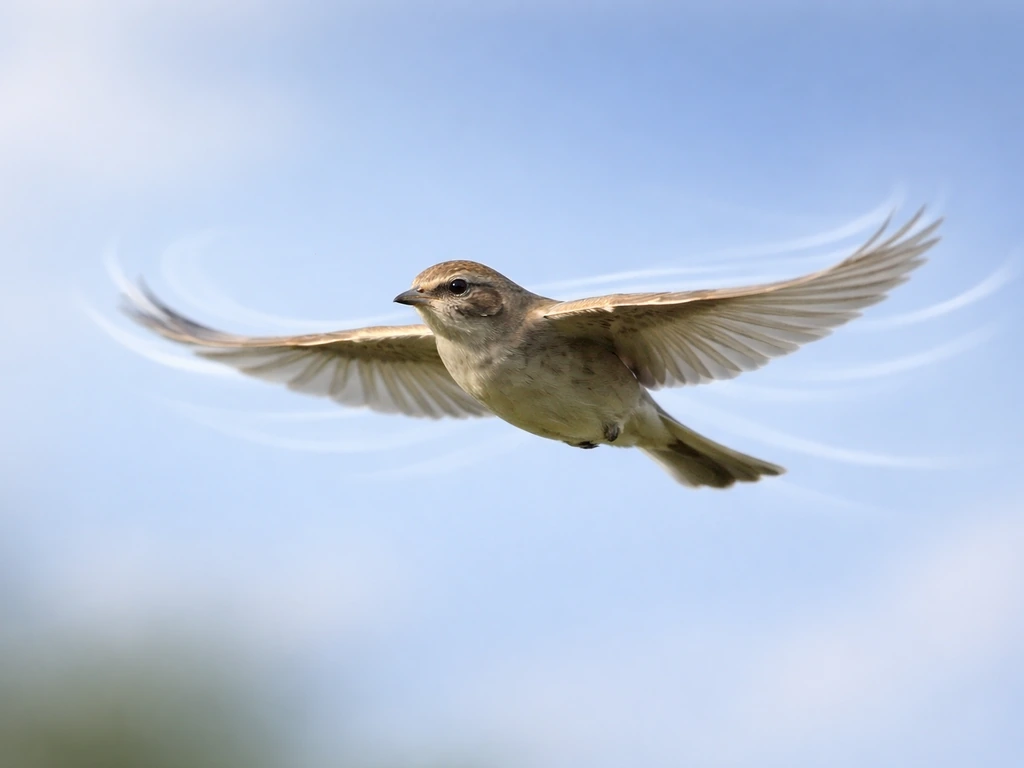
The four forces every flying bird has to balance
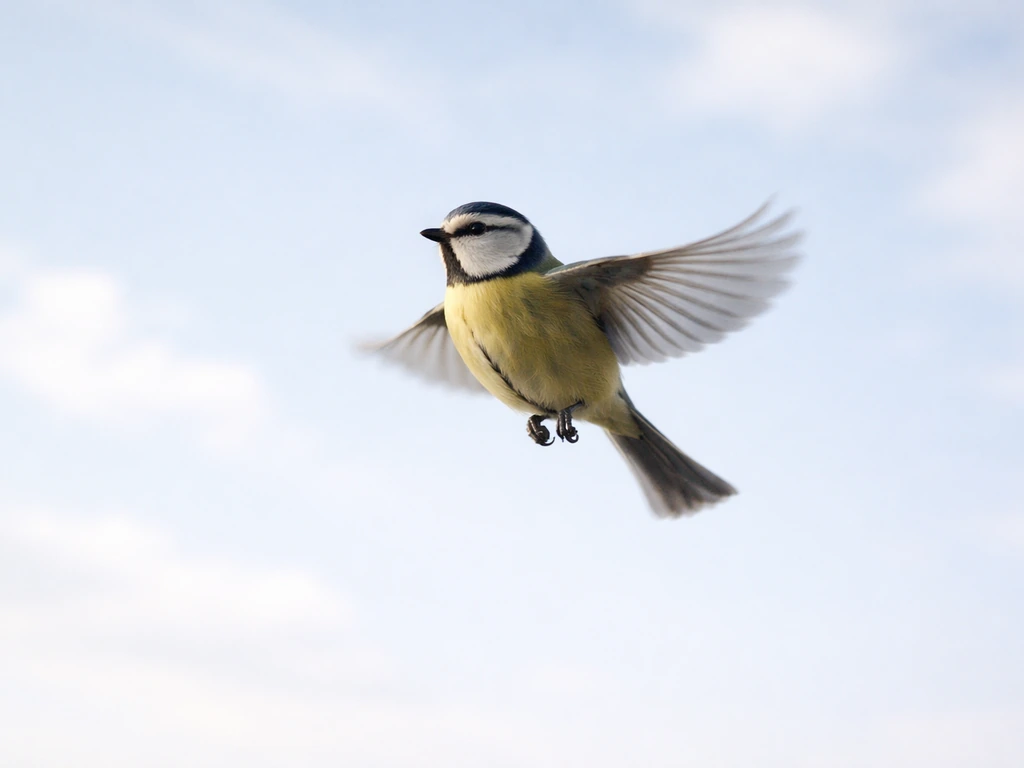
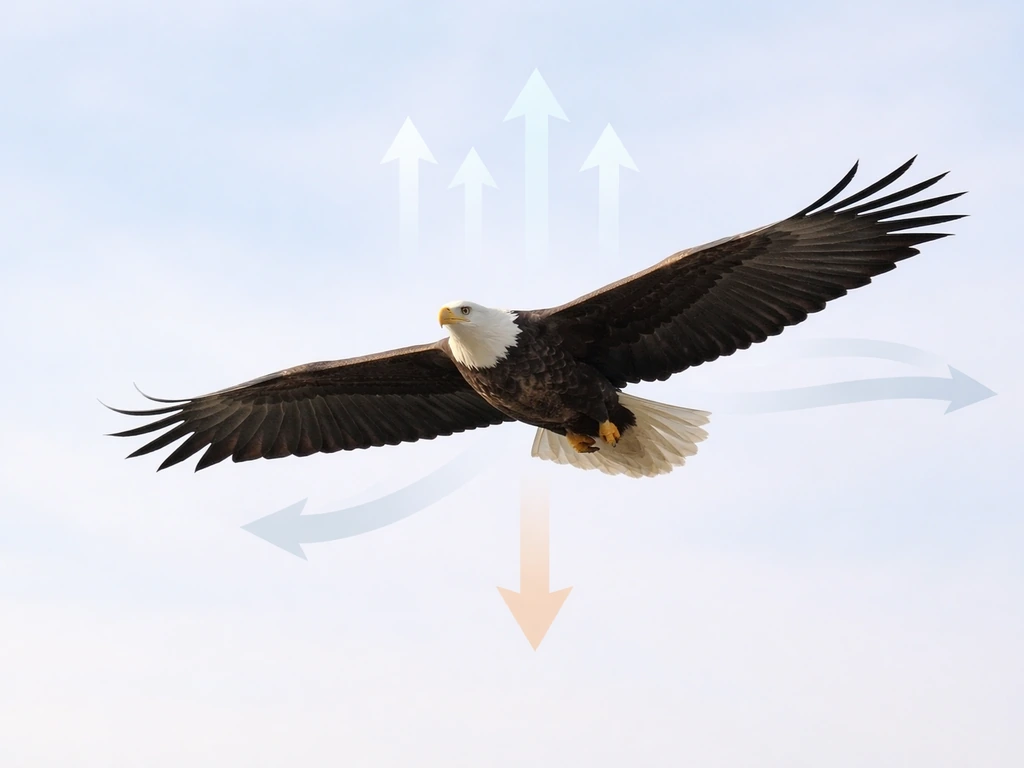
In steady, level flight, two pairs of forces are in balance: lift equals weight, and thrust equals drag. That's the core equation. The moment any one of those four goes out of balance, the bird climbs, descends, accelerates, or slows down. Lift (L) scales with the square of airspeed, air density, wing area, and a shape-dependent lift coefficient: L = ½ρV²SCL. That formula tells you something immediately useful: a bird can generate more lift by flying faster, spreading its wings wider, or changing the shape of the wing to increase CL, and real birds use all three strategies depending on what they need.
When a bird climbs, it's running a surplus: thrust has to exceed drag enough to also push against the vertical component of weight. You can see this in a pigeon launching off a ledge, the first few wingbeats are deep, fast, and powerful precisely because the bird needs thrust well above drag to gain altitude. Drag follows the same scaling as lift (D = ½ρV²SC_D), which means aerodynamic shape isn't just about looking sleek, it directly determines how hard the muscles have to work.
During flapping flight specifically, the wing doesn't just push air down to generate lift, the flight muscles rotate that lift vector forward so it also acts as thrust. This is how a bird sustains both height and forward motion from a single flapping stroke, a surprisingly elegant solution that couples lift and propulsion into one system.
Wings and feathers: the lift-generating hardware
A bird's wing is a biological airfoil. It's cambered, meaning it curves from front to back, and that curvature is critical. A cambered airfoil can generate positive lift even at a zero or slightly negative angle of attack, and it increases the maximum lift coefficient the wing can achieve before it stalls. Watch a hawk circling overhead and you'll notice the wing isn't flat, it bows gently upward, mimicking the cross-section of an airplane wing that engineers spent decades perfecting.
The feathers doing most of the aerodynamic work are the remiges, the long flight feathers arranged along the trailing edge of the wing. They're asymmetrical, stiffer on the leading-edge side of the shaft than the trailing side, and that asymmetry is aerodynamically deliberate. Symmetrical feathers behave more like drag-producing paddles; asymmetrical ones slice through the air and generate lift efficiently. Some species, like owls, have serrated leading-edge feathers that smooth airflow and dramatically reduce noise, an adaptation that makes silent hunting possible but also improves flow control over the wing surface.
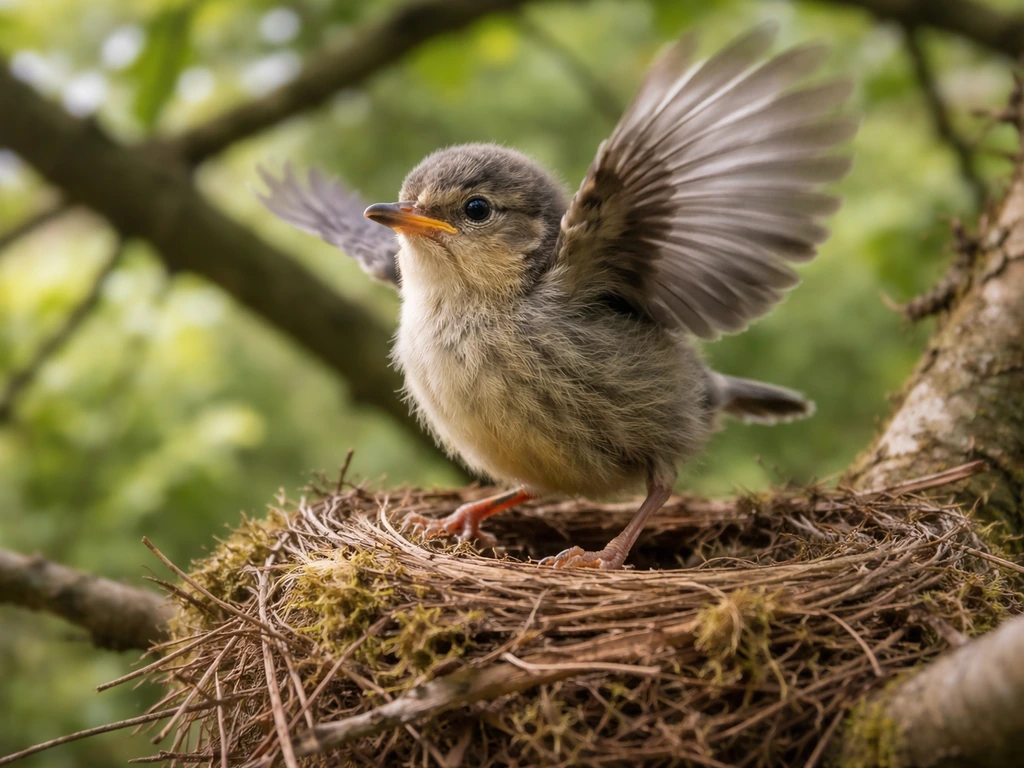
Feather design isn't fixed across a bird's life either. Young ground birds have relatively loose, flexible, symmetrical feathers that produce drag-heavy, low-efficiency aerodynamics. As they mature, those feathers transition to the stiffer, asymmetrical, tightly interlocking structure capable of producing the higher lift coefficients needed for true flight. It's a developmental window into evolutionary history, the feather design itself tells the story of moving from "barely works" to "highly optimized."
Muscles and power: what actually drives the wingbeat
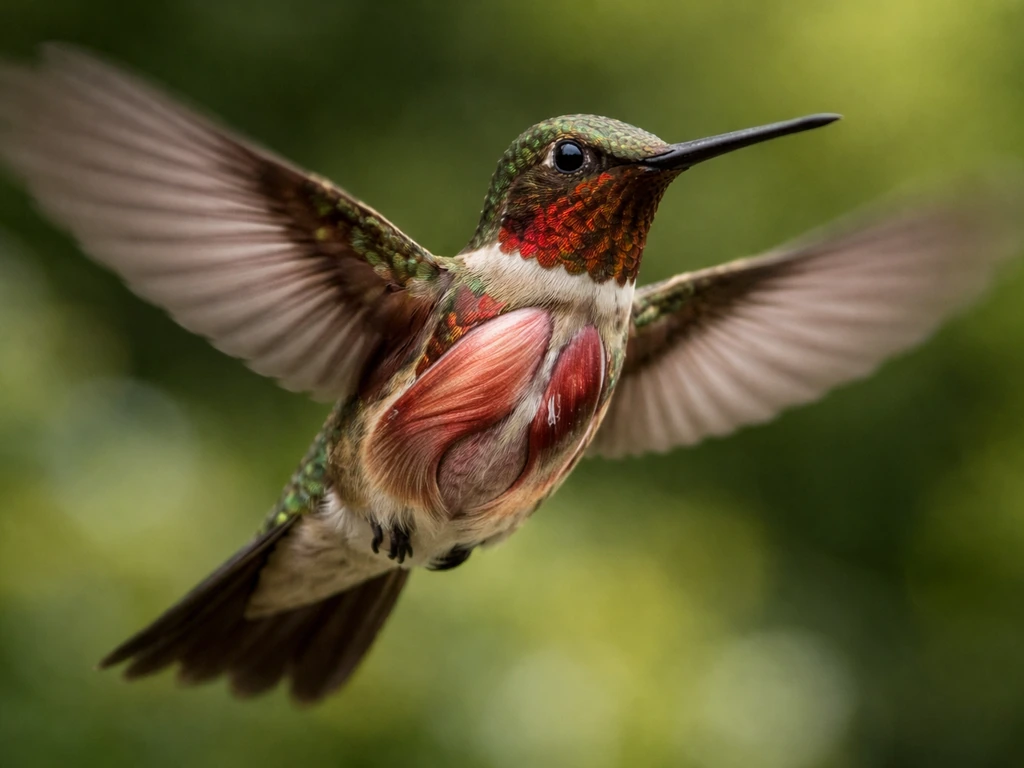
The two muscles that matter most are the pectoralis (which drives the downstroke) and the supracoracoideus (which drives the upstroke and recovery). The pectoralis is almost always the larger of the two, in many birds it makes up 15 to 25 percent of total body mass, and its work output can be measured using a "work loop" approach that tracks how force and length change through each wingbeat cycle. Think of it as measuring the mechanical efficiency of a piston through its full cycle. The area enclosed in that loop is the net mechanical work per wingbeat.
Hummingbirds take this to an extreme. Their wingbeat frequency is so high (around 40 to 80 beats per second depending on species) that their pectoralis and supracoracoideus are composed almost entirely of a single fast-twitch, highly oxidative fiber type, the only bird muscles known to be this uniform. It's a specialization for sustained, rapid, metabolically expensive flapping that no other bird family has matched. By contrast, soaring birds like albatrosses have relatively slow-twitch, fatigue-resistant fibers suited for holding a glide for hours.
Flight muscle power scales with body mass and wingbeat frequency across species. Larger birds need more absolute power but less mass-specific power per kilogram, which is part of why very large birds tend to soar rather than flap continuously. The energetics simply don't favor constant flapping at swan or condor scales.
Skeleton and body shape: built for air, not ground
The most important bone in understanding bird flight isn't the wing bone, it's the sternum. The keeled sternum, also called the carina, is a deep blade of bone projecting from the breastplate that gives the enormous flight muscles something rigid to anchor to. Without it, the pectoralis would have nowhere to pull from. Large, deep keels are consistently associated with powered flapping flight; narrower, shallower sterna correlate with running-based locomotion. This is one of the clearest structural signatures separating flighted from flightless birds.
Beyond the sternum, bird skeletons are riddled with weight-saving adaptations. Many bones are hollow and reinforced internally with struts, a design that maintains structural strength at a fraction of the weight of solid bone. The skeleton is also highly fused in key regions, reducing the number of moving parts and concentrating stress where it can be handled most efficiently. The result is a body that carries its mass close to the center of gravity, which makes aerodynamic control easier and reduces the energy cost of maneuvering.
Body shape matters for drag as much as lift. Birds tuck their feet, pull in loose feathers, and adopt a torpedo-like posture during fast flight. During takeoff, research on pigeons has shown that the timing of leading-edge vortex attachment to the wing enhances instantaneous lift at exactly the moment the bird needs it most, during the first strokes off the ground. During landing, the same birds spread their wings and tail to increase drag and slow down while maintaining enough lift to land without crashing. The skeleton and musculature have to support all of those posture changes dynamically.
Breathing and circulation: the hidden performance engine
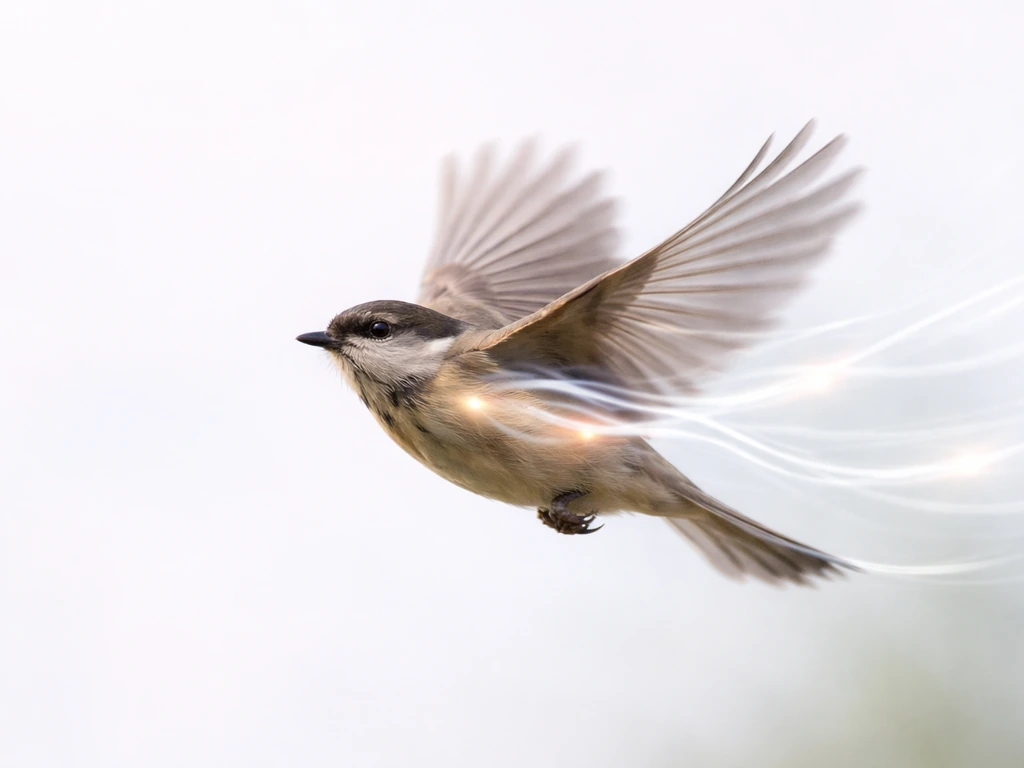
A bird's oxygen demand during flight can increase more than ten times compared to rest. That's a brutal metabolic spike, and the avian respiratory system is built to handle it in a way mammal lungs simply cannot. Birds have small, rigid lungs connected to a series of air sacs that act as bellows. Air flows through the system in one direction, always fresh air moving through the gas-exchange surfaces, rather than mixing with stale air the way it does in the in-and-out tidal breathing of mammals.
Gas exchange in bird lungs uses a crosscurrent-like design, where blood flows roughly perpendicular to the direction of airflow through tiny tubes called parabronchi. This geometry makes oxygen extraction from each breath significantly more efficient than the countercurrent systems in fish gills or the simple exchange surfaces in mammal lungs. The practical result is that birds can extract enough oxygen to sustain flight at altitudes and workloads that would incapacitate most other vertebrates. Bar-headed geese fly over the Himalayas at altitudes where the air has roughly half the oxygen concentration of sea level, and they manage it because their respiratory system is that efficient.
Circulation is matched to respiration: avian hearts are large relative to body size and beat fast, pumping oxygenated blood to the muscles at rates that would be extraordinary in a mammal of comparable mass. The combination of efficient gas exchange and high cardiac output is what makes sustained powered flight metabolically possible.
Control and maneuvering: how birds steer and stay stable
Generating lift is only half the problem. A flying bird has to stay oriented, steer precisely, and respond to sudden gusts or obstacles in milliseconds. It does this through a combination of sensory systems, neuromuscular reflexes, and mechanical feedback that are deeply integrated. The vestibular system in the inner ear detects rotations and accelerations. The visual system, with eyes that in many species provide nearly 360-degree coverage, feeds real-time spatial information to the brain. Mechanoreceptors in the feathers and skin detect airflow changes over the wing surface.
Head stabilization is a key part of this system. Pigeons during turning flight keep their head oriented in space even as the body rotates beneath it, using visual and vestibular signals to coordinate neck muscles. This stabilization isn't just for comfort, it's essential for the visual control of flight. An unstabilized visual field during fast turning would make it nearly impossible to track targets, avoid obstacles, or judge landing surfaces accurately. Some insects solve this with halteres, gyroscopic organs that detect rotation directly, and interestingly the same neural pathways are involved in birds' own stabilization reflexes.
Steering is accomplished through asymmetric wing movements, tail spreading and tilting, and changes in the angle of individual feather groups. A bird banking into a turn reduces lift on the inside wing while increasing it on the outside, just like an airplane rolling into a bank. The tail spreads to increase drag and stabilize the turn, and the alula, a small group of feathers on the leading edge of the wing, can be deployed to prevent stalling at low speeds, exactly like a leading-edge slat on a commercial aircraft.
Why some birds can't fly: the trade-offs of flightlessness
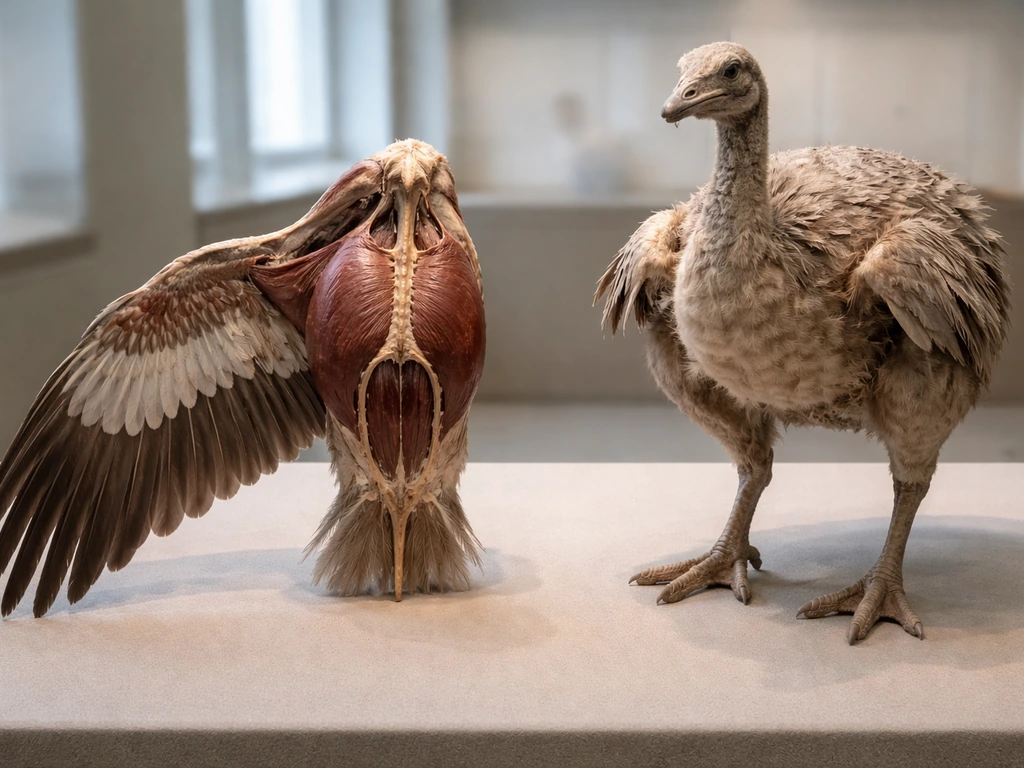
Flightlessness is not a failure of evolution, it's an optimization for a different set of pressures. When the cost of maintaining flight apparatus (heavy pectoral muscles, a keeled sternum, hollow bones, high metabolic rates) outweighs the survival benefit of flying, natural selection can favor reducing or eliminating those structures. In environments without terrestrial predators, like island ecosystems, or where food is best exploited on the ground or in water, flightlessness has evolved independently dozens of times.
The anatomical signatures are consistent. Flightless ratites like ostriches, emus, and kiwis lack the keeled sternum that anchors flight muscles in flying birds. Their flight muscles are reduced or vestigial, their wing bones are smaller and often simplified, and their body density is higher because there's no evolutionary pressure to keep bones hollow and light. Ostriches compensate with powerful legs built for running at speeds up to 45 mph, a completely different locomotor solution to survival.
| Feature | Flying Birds | Flightless Birds (e.g., Ostriches, Emus) |
|---|---|---|
| Sternal keel | Large, deep, projects cranially | Absent or greatly reduced |
| Flight muscles | Large pectoralis and supracoracoideus | Reduced or vestigial |
| Bone density | Hollow, pneumatized, lightweight | Denser, heavier |
| Wing bones | Full-length, structurally specialized | Reduced in size and complexity |
| Feather symmetry | Asymmetrical remiges for lift | Symmetrical, non-aerodynamic feathers |
| Metabolic rate | Very high during flight | Lower, ground-adapted |
Penguins are an interesting middle case. They retained a keeled sternum and powerful pectoral muscles, but redirected those assets toward underwater "flight," flapping through water rather than air. Their wings became dense, paddle-like flippers optimized for a medium about 800 times denser than air. The underlying muscular machinery is recognizably similar to a flying bird's, but the wing morphology diverged completely.
Wing loading and aspect ratio: why different birds fly so differently
Not all flight looks the same, and the differences come down to two key ratios. Wing loading is body weight divided by wing area. A bird with high wing loading (heavy body, small wings) has to fly fast to generate enough lift, which is why ducks need a running water takeoff but are fast and efficient in cruise. A bird with low wing loading (light body, large wings) can fly slowly, soar easily, and catch thermals. Albatrosses and vultures sit at this extreme.
Aspect ratio is wingspan squared divided by wing area, essentially how long and narrow the wing is. High aspect ratio wings (long, narrow, like an albatross) are efficient at high speeds and in soaring because they generate less induced drag. Low aspect ratio wings (short, broad, like an owl or a hawk hunting in dense forest) are more maneuverable at low speeds but less efficient in cruise. You can predict a bird's lifestyle fairly accurately just by looking at its wing shape. A long, swept, narrow wing means open-country soaring or fast pursuit. A short, rounded wing means forest maneuvering or burst flight from cover.
What to look for the next time you watch a bird fly
Understanding the system makes watching birds genuinely more interesting. Here's what to pay attention to when you're outside:
- Watch the downstroke: the primary feathers (outermost remiges) twist to angle forward during the power stroke, generating both lift and thrust simultaneously. You can sometimes see this with large slow-flapping birds like herons.
- Look at wing shape in silhouette: long, narrow wings mean soaring efficiency; short, rounded wings mean agility and burst speed. A raptor hunting in a hedgerow will look completely different from one hunting over open fields.
- Notice the alula: when a bird lands or takes off slowly, look for a small tuft of feathers lifting away from the leading edge of the wing. That's the bird preventing a stall at low airspeed.
- Watch head position during turns: a pigeon or crow banking around a corner keeps its head still while the body rotates. That head stabilization is active visual flight control in real time.
- Compare takeoff strategies by species: a duck needs a long run, a pheasant explodes near-vertically, a swift can barely take off from flat ground at all because its wings are built for speed, not slow-speed lift. Each strategy reflects the underlying force balance differently.
- Look at gliding posture: soaring birds spread their tail and primary feathers to maximize lift at low speeds. When they accelerate or dive, those feathers tuck back. The wing is continuously being reshaped in flight.
The more you understand the biomechanics, the harder it becomes to watch a bird take off without seeing the physics happening in real time. If you're also curious how is a bird adapted to fly in the real world, the forces and body hardware described here connect directly to the bird's wingbeats, feathers, and control. The keel anchoring the downstroke, the asymmetrical feathers slicing air into lift, the crosscurrent lungs pulling oxygen into blood fast enough to power it all. But it is the right feather structure, including the asymmetrical flight feathers, that helps the bird generate the lift needed for takeoff and steady flight pulling oxygen into blood fast enough to power it all. Flight isn't magic, but once you see the whole system working together, it's genuinely more impressive than if it were. Flight isn't magic, but once you see the whole system working together, it's genuinely more impressive than if it were what are the features that help a bird to fly. Flight isn't magic, but it helps explain why the bird can fly by showing how lift, thrust, and control work together. Birds fly because their wings generate lift and their bodies supply the thrust, power, and control needed to stay airborne. If you want a quick, systems-level view of how is a bird able to fly from lift and thrust to stability, this breakdown gives you the key pieces in one place.
FAQ
What enables a bird to fly if lift depends on airspeed?
Beyond anatomy, the immediate enabler is having enough airspeed to generate lift at the wings’ current angle of attack, which is why many birds need a run, a hop, or a climb into wind or updraft before they can fly even if their body is fully flight-capable.
What causes a bird to lose lift and stall?
A bird can stall if it exceeds the wings’ maximum lift capability, typically by flying too slow for the wing shape or by pitching up too much, so successful flight is about staying within a narrow operating range of angle of attack and speed.
Do birds always keep lift equal to weight while flying?
In the balance equation, lift must equal weight only for steady level flight, during turns and climbs birds deliberately break that balance, for example increasing thrust for vertical acceleration while banking to redirect forces.
Why can two birds flying at the same speed use very different amounts of effort?
Drag is not just “speed loss,” it changes with posture, feather spacing, and wing shape, so birds actively manage it by changing how spread their tail is, how tucking affects exposed area, and how feathers align to reduce turbulence.
What makes takeoff work even if the wings generate lift only when moving?
For a fast takeoff, birds time the wing’s leading-edge flow behavior so the wing produces high lift at the exact moment it needs to clear the ground, which is why flaps at the wrong moment can feel “powerful” but still not result in clean liftoff.
How does wind help or hinder what enables a bird to fly?
Wind matters because it changes effective airspeed over the wings, so a bird can fly “slower” relative to the ground in a headwind but still achieve the airspeed needed for lift.
How do hummingbirds stay aloft without moving forward much?
Hummingbirds can hover because they continually generate lift with wing motion, and because their wingbeat frequency and muscle fiber specialization let them supply the metabolic power needed to keep thrust-like effects and lift stable.
What enables a bird to glide without flapping continuously?
Many birds can glide because they have wings and body shapes that minimize induced drag, so they can trade altitude for forward speed while keeping enough lift to avoid stalling until they choose to flap again.
Can a bird change its lift without changing its wing size?
Even though feathers look static, birds can vary the angles and deployment of feather groups, which lets them fine-tune lift distribution along the wings instead of relying on one fixed wing shape.
Why is the keel on the sternum so important for what enables a bird to fly?
Flight muscles need a rigid anchor, that’s why the keeled sternum is a key structural enabler, and losing that anchoring (as in most flightless birds) removes the mechanical advantage needed for powerful wingbeats.
Why do some birds need to flap more than others to stay airborne?
Different birds survive with different strategies because wing loading and aspect ratio change the optimal speed range, so “flight ability” is really “ability to generate lift efficiently in a particular speed and maneuver regime.”
Can a bird that is biologically built to fly still fail to take off?
Yes, a bird can be healthy and still be grounded if conditions are wrong, for example low airspeed due to still air, inadequate updrafts, or a posture that puts the wing near stall conditions.
Learn what makes birds fly: lift and thrust forces, wing motion, muscles and oxygen, control, and why some birds are fli
How fledglings go from nest to first flight: practice, biomechanics, species differences, and safe steps for found baby
How bird flight works and why it evolved, plus which birds can’t fly and why they still survive.