
Birds fly because evolution shaped them into extraordinarily efficient flying machines, and flight solves almost every major survival problem a bird faces: finding food, escaping predators, migrating to better climates, and raising young safely off the ground. That is the short answer. But the longer answer, the one that actually makes sense of what you are watching when a pigeon launches off a ledge or a hawk circles overhead, involves a beautiful combination of physics, anatomy, and millions of years of fine-tuning. Let's get into all of it.
Why Do Birds Fly? How Flight Works and Why It Evolved

Marcus Chen
3 Apr 2026
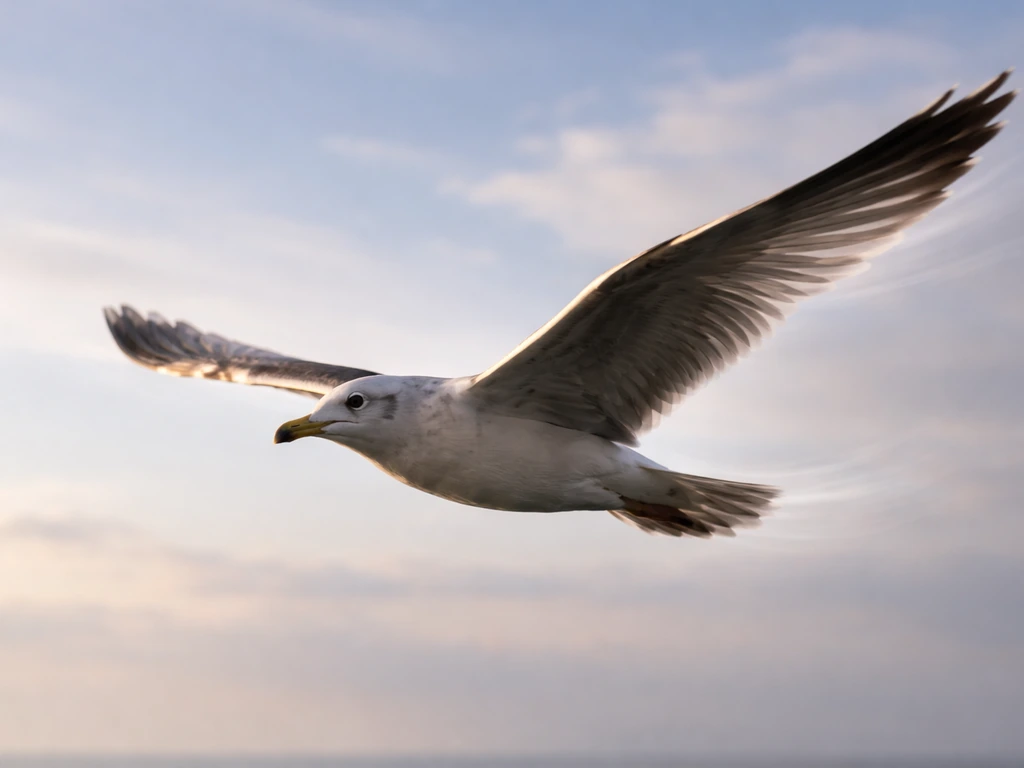
How bird flight works: wings, lift, and thrust
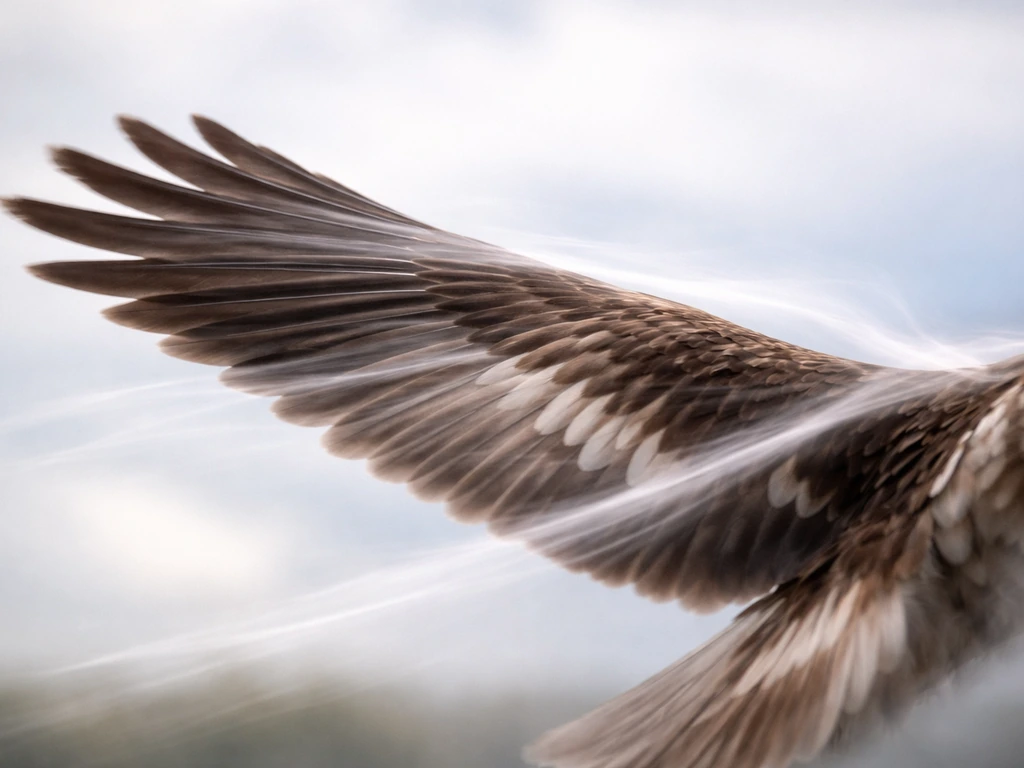
Every flying bird, like every aircraft, has to manage four forces simultaneously: lift (the upward force), thrust (the forward force), drag (air resistance pushing back), and weight (gravity pulling down). When a bird is flying at a steady speed, thrust roughly cancels out drag, and lift roughly cancels out weight. Tip that balance in any direction and the bird climbs, dives, speeds up, or slows down. Understanding what makes a bird fly is really understanding how those four forces stay in balance.
Wings are the key to lift. A bird's wing is curved on top and flatter on the bottom, which means air traveling over the top has to move faster than air underneath. Faster air means lower pressure, and lower pressure above the wing creates an upward push. The angle at which the wing meets the air, called the angle of attack, is also critical. Tilt the wing up slightly and you get more lift. Tilt it too far and the airflow separates from the wing surface, you lose lift, and the bird stalls. Birds manage this instinctively by adjusting feather position and wing shape in real time.
Flapping adds thrust, but it also makes flight far more complex than gliding. When a bird flaps, the downstroke pushes air backward and downward, which drives the bird forward and upward. Researchers have found that flapping wings generate lift through mechanisms including leading-edge vortices (LEVs), swirling pockets of air that form along the front edge of the wing during flapping and contribute meaningfully to lift at bird-sized scales. This is quite different from a simple flat plate pushing air around, and it is part of why bird wings are shaped the way they are and why small changes in wing morphology can have real aerodynamic consequences.
Control is the third piece of the puzzle. Birds control pitch (nose up or nose down), roll (banking left or right), and yaw (rotating left or right around a vertical axis) by shifting how forces are distributed across their wings and tail. You can actually see this happening: watch a bird bank into a turn and you will notice one wing slightly raised, the tail fanned or twisted, and the whole body tipped into the curve. That is active aerodynamic control, not just passive coasting.
Why birds can fly: evolution, anatomy, and energy
Flight did not happen overnight. The fossil record, including Archaeopteryx, shows us creatures caught mid-transition between ground-dwelling dinosaurs and true birds. There are competing theories about how flight got started, whether early birds glided down from trees or launched from the ground and used feathered arms for balance and control. What is clear is that once controlled flight evolved, the avian body plan reorganized itself around it completely, making birds arguably the most specialized fliers in the animal kingdom.
The evolutionary drivers are practical and powerful. Flight lets birds escape predators in a fraction of a second, hunt from the air with precision, cross continents to follow food and warmth, and place nests in locations that ground predators cannot reach. One compelling theory even links the evolution of flight to parental care, arguing that the ability to transport food, defend nesting sites on cliffs or in tree canopies, and migrate seasonally to richer feeding grounds gave early fliers a significant reproductive edge. When you add all of that up, it is not surprising that flight was selected for aggressively.
Anatomy made it possible. If you want to understand what enables a bird to fly, start with the skeleton. Bird bones are hollow but structurally reinforced, dramatically reducing body weight without sacrificing strength. The sternum, the breastbone, has a large blade-like projection called the keel, and that keel is the anchor point for the major flight muscles. blank" rel="noopener noreferrer">The pectoralis (downstroke) and supracoracoideus (upstroke) muscles attach there, giving them the leverage needed to power fast, sustained flapping. No keel, no effective anchor, no powered flight.
The respiratory system is equally impressive. Birds have small, rigid lungs connected to a network of large air sacs, making their total respiratory volume roughly twice that of a similarly sized mammal. More importantly, this system keeps air flowing in one direction through the lungs continuously, rather than the in-and-out bidirectional flow mammals use. The result is far more efficient gas exchange, which is critical when flight muscles are burning oxygen at very high rates. It is one of the reasons a bird can sustain flapping flight that would exhaust a similarly sized mammal almost immediately.
Feathers, of course, are essential. Flight feathers, the long stiff asymmetrically shaped feathers on the wings and tail, are the primary generators of thrust and lift. Their asymmetric shape is not accidental: the narrower leading vane and wider trailing vane create an airfoil effect. The outermost feathers at the wingtip are especially important because they can splay apart like fingers to reduce the drag-inducing vortices that form at wingtips. If you want to go deeper on exactly which feathers help the bird to fly and how each type contributes, there is a lot more nuance to explore there.
When a bird can't fly: flightless species and real limits
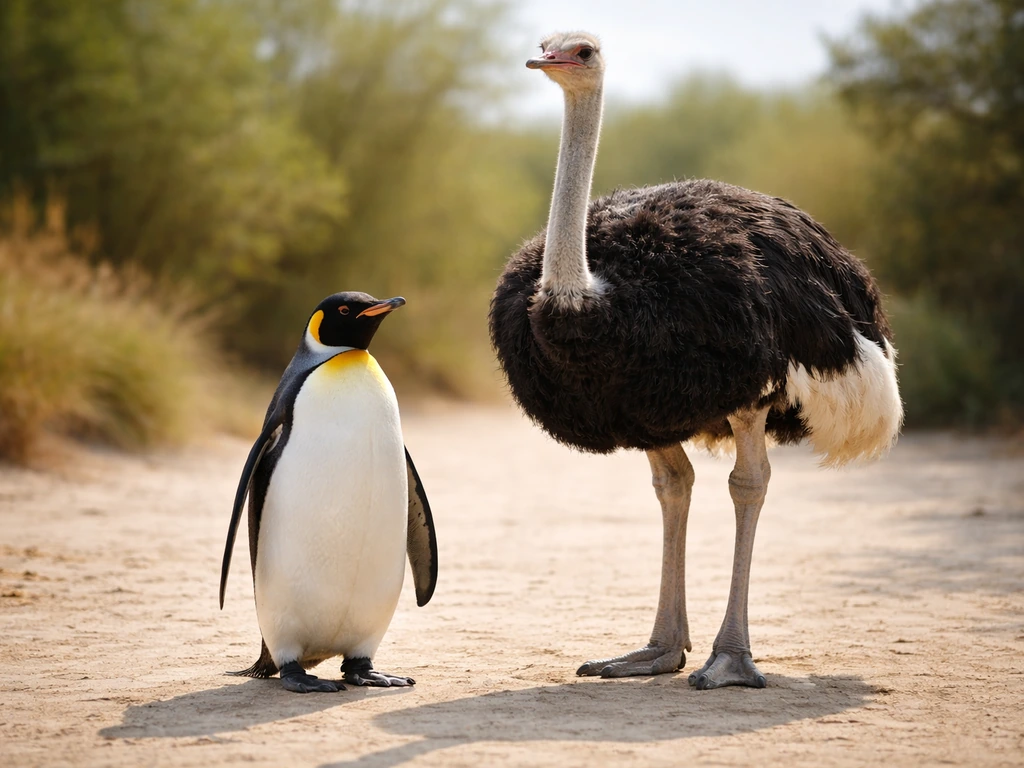
Here is something that surprises a lot of people: not all birds fly. About 60 species alive today, fewer than 1% of all bird species, are completely flightless. Ostriches, penguins, kiwis, emus, and cassowaries are the most familiar examples. These birds evolved flightlessness as a trade-off, typically in environments where the survival advantages of flight (escaping predators, long-distance migration) became less important than the advantages of large body size, powerful legs, or swimming ability.
The anatomy of flightless birds tells the story clearly. Ratites, the group that includes ostriches and emus, have flat unkeeled sternums. Without that keel, there is nowhere for large flight muscles to anchor, so even if the bird wanted to flap its wings powerfully, the mechanical foundation is not there. Penguins took a different route: they kept strong wings and chest muscles but evolved those wings into rigid flippers optimized for swimming. Flight feathers in some flightless species are also reduced or structurally altered. In kiwis, for example, the barbules that normally zip feather barbs together into a smooth, stiff surface are largely absent, giving the feathers a hair-like fluffiness that is completely unsuitable for generating aerodynamic lift.
Research comparing flightless birds to their closest flying relatives has found something interesting about the pace of change: the body tends to transform faster than the feathers during the evolutionary transition away from flight. Skeletal structure, muscle mass, and overall body proportions shift quickly, while feather form can lag behind. That tells us the musculoskeletal system is under the most intense selection pressure when flightlessness evolves.
Temporary inability to fly is also real, even in species that can normally fly. Molt, the period when birds shed and regrow flight feathers, creates gaps in the wing surface that reduce aerodynamic performance. Studies have shown that wing gaps during molt primarily reduce flight performance, while wing damage can create asymmetric effects that make controlled flight even harder. Some songbirds cope with this by minimizing the molt gap and compensating aerodynamically by increasing their angle of attack during escape flights, essentially working harder with a reduced wing to make up for lost area.
No bird can fly vs. specific species: clearing up the confusion
The phrase "no bird can fly" is simply wrong as a general statement, but it is understandable why the question comes up. The existence of ostriches, penguins, and kiwis can make it seem like flight is optional or unreliable in birds. The more accurate framing is: most birds can fly, and the roughly 60 species that cannot are exceptions shaped by specific evolutionary pressures, not evidence that flight is a general limitation of the group.
A useful way to think about it: why the bird can fly in the first place comes down to a specific set of anatomical features, a keeled sternum, flight-ready feathers, hollow bones, efficient respiration, and appropriate body mass relative to wing area. Flightless birds have lost or reduced one or more of those features as a result of natural selection in environments where flight was no longer the best survival strategy. That is a very different thing from saying birds in general cannot fly.
It is also worth being precise about what "can't fly" means in a given context. A penguin cannot fly through the air but is an extraordinary underwater swimmer, using its wings in exactly the way a flying bird uses them, just in a denser medium. An ostrich cannot fly but can sustain running speeds of up to 45 mph, making it the fastest two-legged animal on Earth. These are not failed birds; they are birds that traded one remarkable capability for another.
Can any bird fly? How species, age, and health change the answer
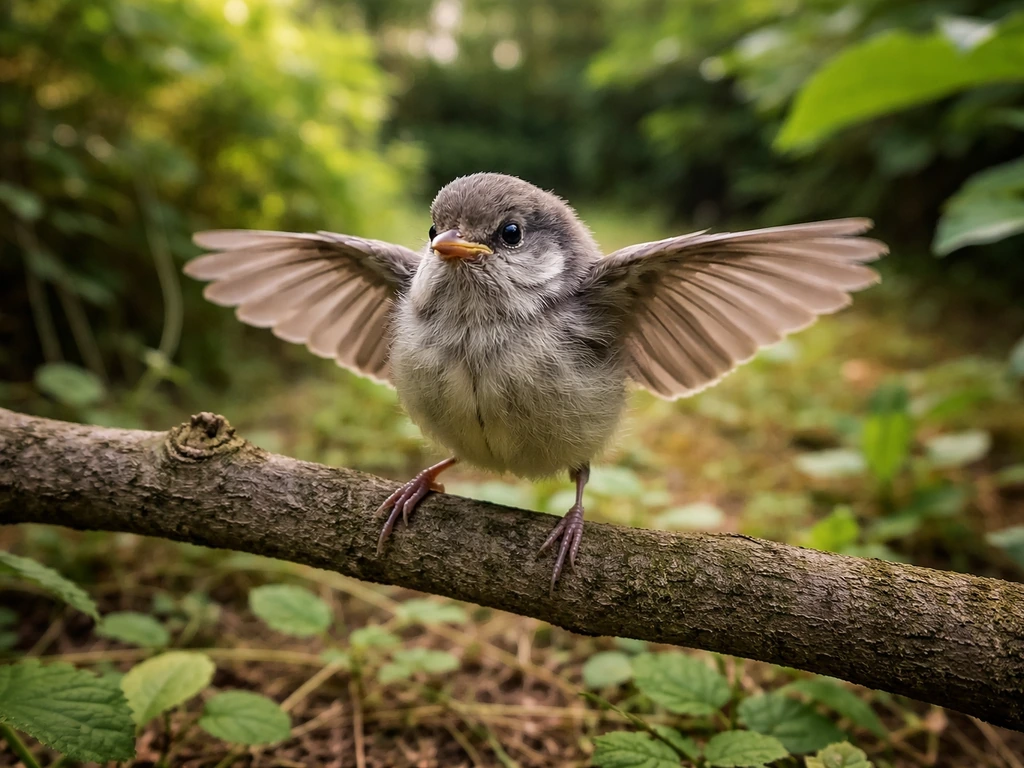
Whether a particular bird can fly depends on several overlapping factors, and it is worth running through them clearly rather than assuming the answer is always yes or always no.
| Factor | Effect on Flight Ability | Example |
|---|---|---|
| Species | Flightless species lack keel, flight muscles, or functional flight feathers | Ostrich, kiwi, penguin |
| Age (chicks) | Young birds cannot fly before flight feathers fully develop | Most songbird fledglings, raptors |
| Molt stage | Wing gaps reduce aerodynamic performance temporarily | Many passerines mid-summer |
| Injury or wing damage | Can cause asymmetric or reduced flight; may ground a bird entirely | Any species with broken primary feathers |
| Body condition | Extreme fat loads or illness reduce flight performance | Pre-migration birds at peak mass |
| Wind and thermal conditions | Soaring birds depend on updrafts; calm conditions limit altitude gain | Vultures, eagles, albatrosses |
Young birds deserve special mention. A chick that has not yet grown its flight feathers physically cannot fly, regardless of species. The process of learning to fly involves both physical development and practiced coordination. If you have ever watched a fledgling hopping around on the ground and wondered whether it is injured, you were probably watching a bird in the brief window between leaving the nest and completing its first real flights. Understanding how a bird learns to fly makes that phase a lot less alarming to witness.
Body mass matters more than most people realize. Birds that are carrying unusually large fat reserves, which is normal and necessary before long migratory flights, are actually somewhat impaired in their flight maneuverability and quick-escape performance. They compensate by flying at night when predator pressure is lower, or by staging carefully to avoid being caught in the open when they are at their heaviest. Even at peak condition, a bird's ability to fly is always a negotiation between power, weight, and aerodynamic efficiency.
How to observe and test this in real life
You do not need a lab to verify most of what is described here. Birds are everywhere, and watching them with the right framework in mind turns a casual observation into a genuine lesson in biomechanics. Here are some specific things to look for and what they tell you.
- Watch a bird take off and notice the downstroke: the wings push down and back simultaneously, launching the bird forward. That single motion is generating both lift and thrust at once.
- Compare flapping flight to gliding. When a bird glides, it holds wings steady and relies on gravity and air currents for forward motion. When it flaps, it is actively generating thrust. The transition between the two is easy to see in larger birds like crows and hawks.
- Look for wingtip spreading. Many large birds splay their outermost feathers during slow flight or landing. Those separated feathers reduce wingtip vortices and help the bird maintain lift at low speeds without stalling.
- Watch a bird bank into a turn. You will see pitch, roll, and yaw all happening together: one wing drops, the tail twists slightly, the body angles into the curve. That is three-axis control in real time.
- Find a soaring bird (a vulture, hawk, or large gull) on a warm afternoon and watch it circle without flapping. It is riding a thermal updraft, a column of warm rising air, using the wind gradient between the ground and altitude to stay aloft for free. This is dynamic soaring in its most visible form.
- If you can observe birds during late summer, look for gaps in the wing feathers. Those are molt gaps, and on a bird in active molt you can sometimes count exactly which primary feathers have dropped and which are regrowing. That is the wing damage and molt research made visible.
Choosing the right species for observation helps a lot. For basic flight mechanics, pigeons and crows are ideal because they are common, large enough to watch easily, and use a wide range of flight styles including slow flapping, fast direct flight, and gliding. For soaring, watch large raptors or vultures on sunny afternoons near open fields or ridges. For a stark contrast with flightless birds, a zoo or wildlife center with penguins or ostriches lets you see exactly what the anatomy looks like without the keeled sternum and full flight feathers.
The features that help a bird to fly are not abstract once you start watching with them in mind. The hollow bones show up as surprisingly light carcasses. The keel is the sharp ridge you can feel on the breastbone of a chicken or turkey at dinner. The asymmetric flight feathers are obvious if you pick one up and look at the two vanes on either side of the central shaft. The biology is not hidden; it is just waiting for you to know what to look for.
One final practical test: look up a specific bird species you are curious about and check whether it is classified as a ratite or has any flightless relatives. If it does, look at photos comparing the sternum or wing structure. The anatomical difference between a flying bird and a flightless one is visible enough that once you have seen it, the whole story of how and why birds fly starts to feel much more concrete. If you want to dig into the specific adaptations involved, exploring how a bird is adapted to fly will give you a much richer picture of just how comprehensively the avian body plan is organized around getting into the air and staying there.
Birds fly because flight works. It solves problems that matter for survival, and the anatomy to pull it off evolved in a tightly integrated way across bones, muscles, feathers, lungs, and nervous system. The roughly 60 species that do not fly are the exception that proves the rule: they are birds that found a different solution to survival, and their bodies show exactly what had to change to make flight optional. For everything else in the avian world, getting airborne is not just something birds do. It is what birds are built for.
If you want to go further into the mechanics, how a bird is able to fly covers the physiology in more depth, pulling together the wing anatomy, muscle function, and feather structure into a single clear picture of what is actually happening on every wingbeat.
FAQ
Is the main reason birds fly just for escaping predators?
Predator avoidance is a big driver, but flight also supports energy-efficient long-distance movement, precise aerial feeding, and safer nesting sites. For many species the “why” changes by season, for example migrating is more about tracking food and climate than immediate escape.
Why can some birds soar for a long time without flapping much?
Soaring depends on gliding efficiency and finding air that reduces the need for thrust. Raptors and vultures often ride rising air along ridges or in thermals, where lift from the airflow can offset weight without continuous wingbeat.
What happens to a bird’s flight if it stalls, does it just fall?
A stall usually means the wing is at an angle of attack that no longer produces enough lift because airflow separates. Many birds recover quickly by lowering the wing angle, changing posture, and sometimes switching to short, forceful flaps to regain controlled lift.
Can a bird flap in place, or does it always need forward motion?
True hover is energetically expensive, but some birds can generate lift with minimal forward speed by producing strong downstrokes and using wing motion to keep thrust and lift balanced. Hovering is more common in birds that have wing shapes and muscle power suited to rapid, high-frequency control.
Do larger birds have a harder time flying because they are heavier?
Generally, yes, body mass makes maneuverability and quick takeoff harder. Birds offset this with higher lift generation from wing area, specialized feather structure, and efficient oxygen delivery, but as size increases the physics of lift and drag becomes increasingly limiting.
Why do birds sometimes glide after flapping, is that always “saving energy”?
Often it is, but gliding can also be a control strategy. After a few flaps a bird may enter an efficient attitude where lift and drag balance, then adjust with small posture changes to set up the next maneuver or landing.
During molt, can a bird still get away from predators if its wings are weakened?
Yes, but it may change tactics. The article notes songbirds can compensate by reducing molt gap effects and using higher angles of attack during escape flights, but performance is typically still reduced compared with full feather coverage.
If flightless birds cannot fly, why do they still have wings?
Wings can be useful even when aerodynamic flight is gone. Flightless birds may use wings for balance while running, for display and communication, or in the case of penguins for powerful swimming propulsion in a denser medium.
How do young birds learn to fly if they are not physically ready yet?
They rely on a combination of feather development and practiced coordination. Many fledglings perform short hops and controlled glides as their flight feathers firm up, and parents often keep watch while the chick transitions from ground movement to real flight patterns.
Do birds fly more at night because it is simply safer, or are there other reasons?
Safer conditions can be one reason, but the article also highlights that heavy migratory fat reserves can impair quick escape and maneuvering. Flying at night can reduce predator encounters and help manage the tradeoff between power and weight during peak condition.
Next Articles

Bird Has Flown Meaning: Definition and How to Respond
Understand the bird has flown meaning, when it’s used, and how to reply with examples for real-life conversations.
Prefix Meaning Flight or Bird: Definition and Examples
Learn the flight or bird prefix meaning, origin, examples, and a checklist to decode new words and avoid look-alikes.
Flyer Meaning Bird: What It Says About Flight Ability
Clarifies flyer meaning for birds and explains which species fly well and why, plus a checklist to verify in context.