
Birds fly because their bodies are built around one elegant trick: generating more upward force than gravity pulls them down, while pushing forward faster than drag slows them. They do this with curved, lightweight wings that split airflow to create lift, powerful chest muscles that drive those wings through a stroke sequence that produces both lift and thrust, and a skeleton so light it barely weighs more than the bird's feathers. Every part of a flying bird, from the hollow bones to the interlocking feather barbules to the forked air sac system in its chest, exists to make that core trick as efficient as possible.
How Is a Bird Able to Fly? Mechanics, Biology, and Flight Styles

Marcus Chen
15 May 2026
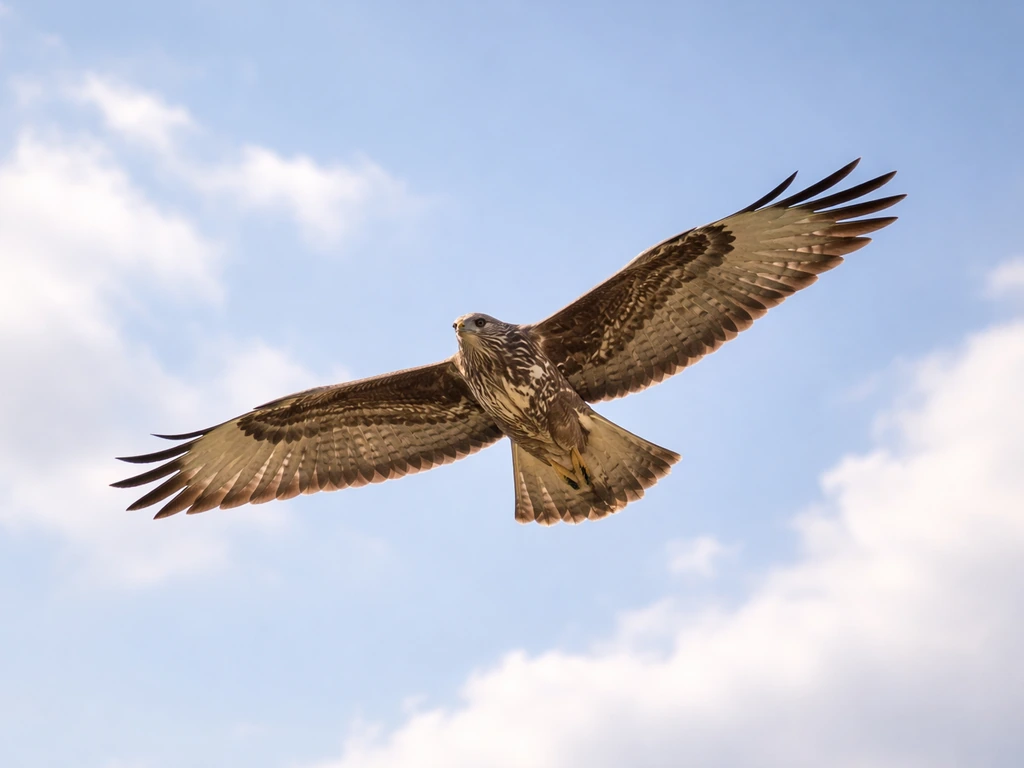
The four forces every bird has to manage
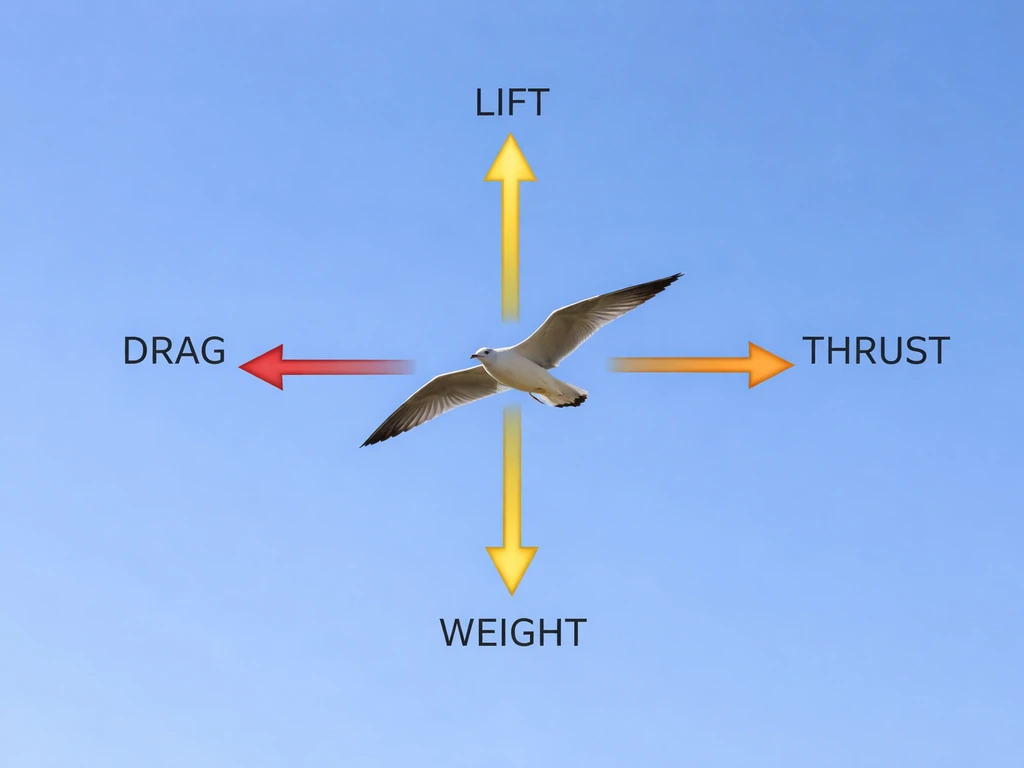
Flight comes down to balancing four forces: lift (upward), weight (downward), thrust (forward), and drag (backward). If you want a broader starting point beyond forces, see what makes a bird fly balancing four forces. A bird in steady level flight is continuously juggling all four. Lift has to equal weight so the bird doesn't sink, and thrust has to overcome drag so it keeps moving forward. What makes birds impressive is that they generate lift and thrust using the same tool, the wing, rather than having separate engines and wings the way an airplane does. If you also want the broader story behind why do bird fly, the balance of lift, thrust, and drag is the starting point.
Lift is created by the wing's airfoil shape. Bird lift and thrust come from the wing, which is one of the key factors in how is a bird adapted to fly. That is why birds can fly: their wings generate lift and thrust while the rest of the body is built to support and fuel that system why the bird can fly. A cross-section of a bird's wing looks like a teardrop cut in half: rounded on the leading edge, tapering to a thin trailing edge. As air flows over that curved upper surface, it has to travel a longer path than air flowing under the flatter lower surface. This difference in path length creates a difference in air pressure, lower above the wing and higher below, and that pressure difference is what pushes the bird upward. The angle the wing makes with oncoming air, called the angle of attack, amplifies this effect up to a point. Tilt the wing too steeply and the airflow separates and the wing stalls.
During a powered downstroke, the wing doesn't just push air downward to create lift. During powered flapping, downstrokes generally provide most of the thrust component that counters drag, while upstrokes can contribute thrust depending on wing kinematics and morphology blank" rel="noopener noreferrer">downstrokes provide most of the thrust component. The aerodynamic force vector actually rotates forward as well, contributing a thrust component that counters drag. The upstroke can also contribute thrust in many species, depending on how they fold or twist the wing during that phase. In gliding flight, thrust is effectively zero and the bird is trading altitude for forward speed, with drag causing a slow, controlled descent while lift still balances most of the bird's weight.
The anatomy that makes flight physically possible
A skeleton built for lightness and strength
Bird bones are hollow and internally braced with a strut-like lattice, bringing down skeletal weight dramatically without sacrificing structural strength. Many bones are also fused or reduced compared to their reptilian ancestors, cutting dead weight. Counterintuitively, some bird skeletons weigh less than their feathers do. The entire skeletal architecture is organized around supporting the wing stroke, from the wide, rigid sternum that anchors flight muscles to the fused collarbone (the wishbone, or furcula) that acts as a spring, storing and releasing energy with each flap.
The pectoral muscles and the keel
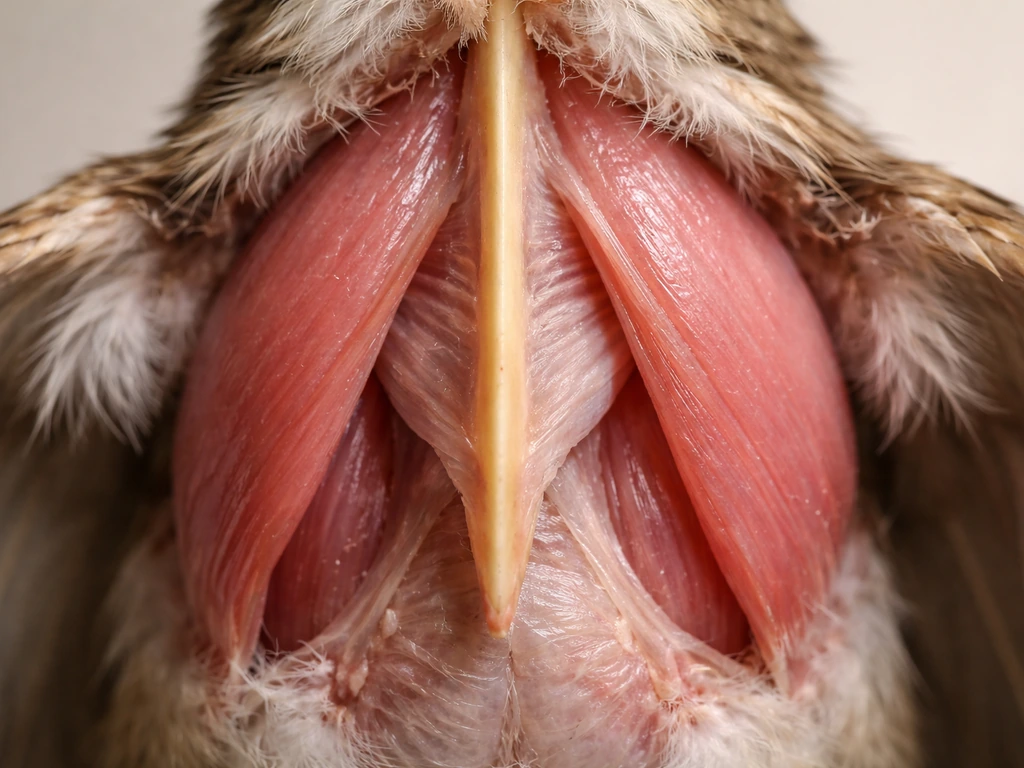
The two main flight muscles sit on the chest. The pectoralis, the larger of the two, pulls the wing down on the power stroke. The supracoracoideus, running underneath it, handles the upstroke. What's genuinely clever about this arrangement is that both muscles attach below the shoulder, not above it. The supracoracoideus threads its tendon through a small bony tunnel called the foramen triosseum, which redirects the pull upward like a pulley system. This puts most of the bird's muscular mass low in the body, improving aerodynamic stability.
The sternum's ventral keel is the structural anchor for all of this. In strong fliers, the keel is deep and prominent, giving the pectoralis a large surface area for attachment and acting as a long lever arm. Research linking keel morphology to locomotor mode has confirmed that deeper keels correlate with powered flapping flight. It's one of the cleanest structure-function relationships in vertebrate anatomy.
The respiratory system that fuels the engine
Flapping flight is metabolically brutal. Birds handle the oxygen demand with a respiratory system that is genuinely more efficient than a mammal's. Instead of lungs that inflate and deflate like bellows, birds have rigid lungs connected to a series of air sacs that act as bellows while the lungs themselves maintain a near-continuous flow of fresh air. This cross-current flow system extracts more oxygen per breath than a mammal's tidal system can. During flight, ventilation increases substantially to keep pace with the metabolic load, and the air sacs also help reduce the bird's overall density, contributing marginally to buoyancy.
How wings and feathers actually move air
Feathers are precision aerodynamic surfaces
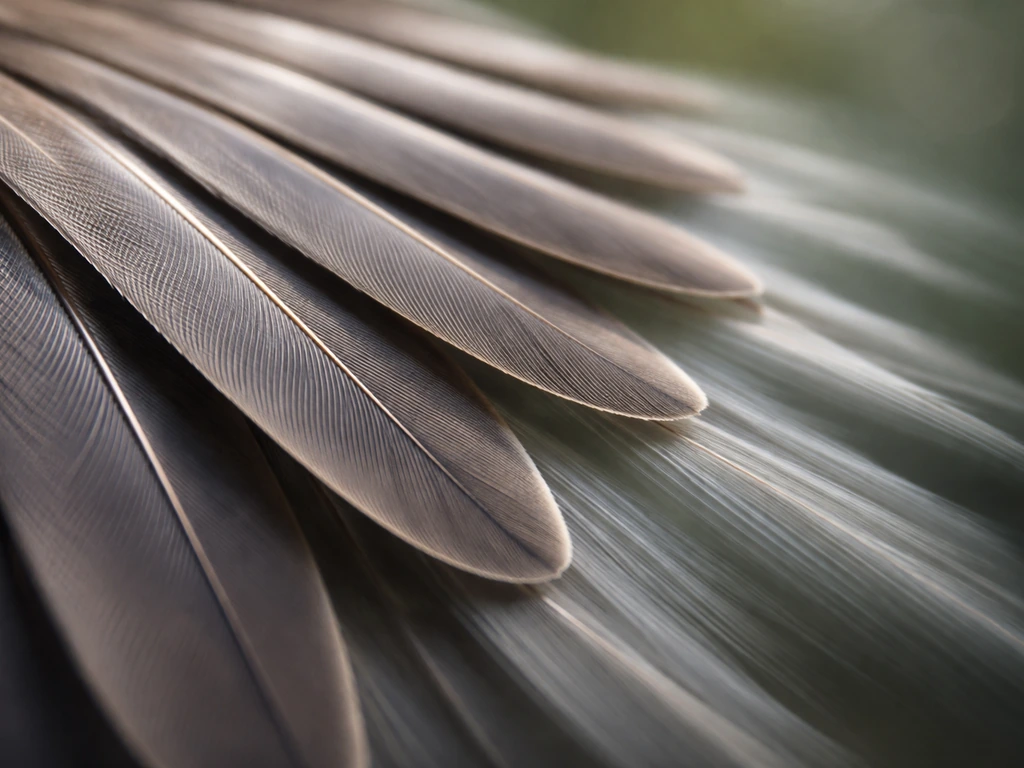
A bird's wing surface is built from two major feather groups. Primary feathers at the wingtip are the main thrust generators, particularly during the downstroke. Primary feathers help generate thrust during the downstroke, which supports the bird's ability to fly. Secondary feathers, closer to the body, are more closely associated with lift generation, maintaining the camber of the inner wing. Both groups lock together during the downstroke via interlocking barbules (the tiny hooks on each feather strand), creating a solid aerodynamic surface that doesn't let air leak through. On the upstroke, primaries can separate and twist, letting air pass between them so the bird wastes less energy fighting its own wing on the recovery stroke.
Wingtip feather shape matters more than most people realize. Many soaring birds have "slotted" primaries, feathers with notches or emarginations along their edges that cause the tips to splay out during flight. These individual feather tips behave like small independent airfoils and appear to reduce induced drag at the wingtip in a way that is functionally similar to the winglets you see on commercial aircraft. Birds figured out winglet aerodynamics long before engineers did.
Flapping vs. gliding: two different modes, same wing
Flapping flight is not just "moving wings up and down." During each downstroke, the wing sweeps forward and down in a complex arc, and the feathers adjust their pitch throughout the stroke to maintain optimal angle of attack. Research on propulsive efficiency in flying animals shows that the ratio of flapping speed to forward flight speed (described by the Strouhal number) tends to cluster in a narrow range, roughly 0.2 to 0.4, across most bird species. This is the sweet spot for efficient thrust production, and birds seem to tune their wingbeat frequency and amplitude instinctively to stay in that range at their natural cruising speeds.
Gliding is energetically cheap but requires altitude or an updraft to sustain. In a clean glide, the bird stretches its wings out, maintains a slight positive angle of attack, and trades height for forward motion. The glide ratio, how far the bird travels horizontally for each meter of altitude lost, depends almost entirely on the wing's lift-to-drag ratio. The better that ratio, the shallower the glide.
How birds steer, stabilize, and land without crashing
Controlling a flapping body in three-dimensional airspace in real time is a genuinely hard problem. Birds solve it by continuously adjusting wing shape, tail position, and body angle in response to sensory feedback from their inner ear, vision, and mechanoreceptors in the feather follicles that detect pressure and airflow changes.
Turning is mostly handled by asymmetric wing adjustments. Banking into a turn reduces lift on one side and the bird rotates. The tail acts as both a rudder for yaw control and an elevator for pitch. There are also passive stabilization effects built into flapping itself: research on "flapping counter-torque" shows that the aerodynamic forces produced during flapping naturally damp out unwanted rotational motion, giving birds a degree of built-in stability that reduces how much active correction they need to make.
Takeoff and landing are the most aerodynamically complex phases of flight, and they work differently than you might expect. A 2019 study using time-resolved force measurements found that birds don't simply use lift for support and drag for braking. During takeoff, drag actually contributes a significant upward force component in the early wingbeats, helping launch the bird before forward speed is high enough to generate much conventional lift. During landing, the bird essentially rotates the total aerodynamic force vector backward and upward, using the wing as a brake while simultaneously preventing a stall. The tail fans out, the legs drop, and the wing angle increases steeply to bleed off speed in the final meters.
Why different species fly so differently
Wing shape is the single best predictor of how a bird flies. Two measurements matter most: aspect ratio (wingspan relative to wing width) and wing loading (body weight divided by wing area). High aspect ratio wings, long and narrow, are built for efficiency and gliding. Low aspect ratio wings, short and broad, are built for maneuverability and quick acceleration.
| Flight style | Wing shape | Example birds | Key advantage |
|---|---|---|---|
| Soaring/gliding | Long, narrow (high aspect ratio) | Albatross, vulture, frigatebird | Minimal energy use; excellent glide ratio |
| Fast flapping | Pointed, medium aspect ratio | Falcon, swift, pigeon | High speed; efficient cruising |
| Maneuvering | Short, broad, rounded | Sparrow, woodpecker, jay | Tight turns; quick acceleration in dense vegetation |
| Hovering | Broad, high-stroke amplitude | Hummingbird | Sustained stationary flight; lift on both strokes |
| Dynamic soaring | Very long, narrow | Albatross | Extracts energy from wind shear; can fly indefinitely |
Hummingbirds are the extreme case at one end of the spectrum. To hover, they rotate their wings in a figure-eight pattern, generating lift on both the downstroke and upstroke by inverting the wing on the recovery stroke. Time-resolved aerodynamic studies on hummingbird hovering confirm that lift forces vary dramatically across the wingbeat cycle, with the bird constantly adjusting stroke amplitude and kinematics to maintain altitude at near-zero forward speed. The metabolic cost is enormous relative to body size.
At the other extreme, wandering albatrosses use dynamic soaring to travel thousands of kilometers over open ocean with almost no flapping. They exploit the wind speed gradient between the ocean surface (slow) and higher altitudes (fast), repeatedly diving toward the surface to gain airspeed and then climbing into the faster wind to trade that speed for altitude. It's essentially a perpetual energy extraction loop from the atmosphere itself.
Flightless birds: what happens when the system breaks down
Flightless birds don't represent failed flying birds. They represent birds for which flight stopped being worth the cost. Flight is metabolically expensive and requires a large investment in chest muscle mass. When an ancestral population colonized an island or environment without aerial predators, natural selection stopped penalizing the individuals with smaller wings and lighter flight apparatus. Over generations, the flight system degraded in a predictable pattern.
The most consistent anatomical marker of flightlessness is the sternum. Flightless ratites like ostriches, emus, and kiwis have a flat sternum with a blank" rel="noopener noreferrer">reduced or absent keel. Without the keel, there's no anchor for large pectoral muscles, so the flight muscles atrophy or never develop to useful size. Developmental studies on the emu specifically show that the forelimb growth program is downregulated early, producing reduced wing bones in proportion to the body. The wings exist, they're just structurally and muscularly insufficient for flight.
Research on independent flight loss in ratites shows that different flightless lineages arrived at the same morphological outcome, flat sternum, small wings, enlarged legs, through distinct developmental pathways. This is a striking case of convergent evolution driven by the same selective pressure: if you don't need to fly, maintaining the machinery is a waste of energy. The resources get redirected to whatever the bird actually needs, in ostriches and emus, that's powerful running legs.
This contrast reinforces what makes flight work in the first place. Every feature that flightless birds lack or have reduced, the keel, the large pectoralis, the asymmetric primary feathers, the efficient air sac respiration optimized for aerobic output, is something flying birds depend on. Flightless birds are essentially a natural experiment in what happens when you remove those features one by one.
How to actually observe these principles yourself
You don't need a laboratory to develop a real intuition for bird flight mechanics. The best classroom is a park or backyard with a mix of species, and knowing what to look for turns an ordinary afternoon into a genuinely informative observation session.
- Watch takeoff closely. Notice how a bird crouches and then drives down hard with its first wingbeat before it has enough forward speed for conventional lift. That initial deep downstroke is doing the heavy aerodynamic lifting (literally) before airspeed builds. Pigeons are great for this because they're bold and common and take off constantly.
- Compare wing shapes across species. Crows and red-tailed hawks are often seen in the same airspace. The hawk's broad, slotted-primary wings are designed for soaring on thermals with minimum flapping. The crow's more uniform wing is built for active flapping flight. Watch how the hawk circles without flapping while the crow is constantly working.
- Watch a landing in slow motion if you have a phone camera. Look for the moment the bird fans its tail, drops its legs, and steeply pitches its wings back. That wing-brake maneuver is the bird reorienting its aerodynamic force vector to kill forward speed without stalling.
- Find a hummingbird feeder and watch the wing stroke from the side. At the right angle you can see the figure-eight path and the wing inversion on the recovery stroke that allows them to generate lift going both directions.
- Try the Smithsonian's "How Wings Work" activity, which uses airfoil cross-sections and lets you manipulate angle of attack directly. It makes the pressure-difference explanation of lift tangible in a way that text descriptions rarely do. Then watch a soaring bird and notice how it subtly pitches its wings to adjust altitude without flapping.
- Look up a chicken or turkey skeleton image from a natural history museum collection. Find the keel on the sternum and compare it to an image of an ostrich sternum. The structural difference between a flying and flightless bird is immediately obvious and concretely illustrates why the keel matters.
- To understand feather mechanics, hold a large flight feather (molted feathers from Canada geese or turkeys are easy to find) and gently separate the barbs with your fingers, then zip them back together by running your fingers along the shaft. That zipping is the barbule hook system that keeps the flight surface airtight during the downstroke.
If you want to go deeper into any of these threads, the site covers closely related questions in detail: why different species have evolved their particular flight styles, how birds learn to fly in the first place, which specific feathers are doing which jobs aerodynamically, and how the full suite of adaptations, from hollow bones to feather microstructure, work together as a system. Bird flight is one of those topics where every answer opens three more questions, which is exactly what makes it worth watching carefully.
FAQ
How is a bird able to fly if it weighs so much compared to its wings?
Weight is only half the story. The wings create lift by shaping airflow and operating at an effective angle of attack, and the bird continuously adjusts wingbeat and body posture to keep lift nearly equal to weight. That means a bird can fly even with wings that do not “carry” the bird like a rigid platform, because lift is generated dynamically throughout each wingbeat cycle.
Why do birds sometimes fall even though their wings look aerodynamic?
Most falls happen when lift or thrust drops below what the bird needs. Common causes include a wing stall from an angle of attack that is too steep, a sudden gust or turn that forces rapid re-optimization, or reduced thrust from fatigue or slower wingbeat cadence. In gliding, losing adequate forward speed is another quick path to insufficient lift.
Do birds need to flap to keep flying, or can they stay up without flapping?
They can stay aloft without flapping if lift remains high enough to balance weight. During glides, thrust is effectively near zero, so the bird trades altitude for forward speed, then uses that speed to maintain lift. Some birds can also use updrafts or wind gradient so they lose less altitude than expected for a given glide angle.
How does a bird generate forward motion if the wing mainly pushes air downward?
The wing force is not purely vertical. During the downstroke, the aerodynamic force vector tilts forward as the wing moves through the air, creating a thrust component that counters drag. In many species, the upstroke and wing folding also affect net efficiency, so forward speed comes from the combined effect of the whole wingbeat cycle.
What’s the biggest mistake people make when trying to understand bird flight?
Treating flight like a one-force problem, usually “birds just need lift.” In reality, steady flight requires a continuous balance of lift and weight plus thrust and drag, and those balances change in turns, climbs, and takeoffs. That’s why the wing, tail, and body angle all matter together, not just wing shape alone.
How do birds avoid stalling when they bank and turn?
They reduce or reshape forces rather than simply keeping the same wing angle. By banking, a bird changes how lift is distributed, then uses tail position and asymmetric wing adjustments to rotate and reorient the lift vector. Birds also time wingbeat adjustments so that effective angle of attack stays near the efficient, non-stalled range.
Why can some birds glide for a long time while others must flap constantly?
It depends largely on wing loading and aspect ratio. High-efficiency gliders typically have long, narrow wings (higher aspect ratio) and lower wing loading, which improves lift-to-drag and lets them sustain lift with less thrust. Birds with heavier bodies relative to wing area must generate more lift per wing area, often increasing drag and making flapping more necessary.
Can a bird “hover” like a hummingbird, and what makes hovering different?
Hovering at near-zero forward speed is possible, but it demands a different wingbeat strategy and much higher energy use. Hummingbirds generate lift on both downstroke and upstroke by inverting or twisting the wing to keep useful airflow patterns, so they do not rely on forward motion to produce lift.
Why do young birds or newly fledged birds struggle with flight at first?
Flight requires precise, real-time control, not just the anatomy. Even with functional wings, the bird must learn how to tune wingbeat frequency, wing angle, and body posture to local airflow and its own energy state. Early errors often look like poor speed control or over-aggressive angles of attack.
What determines whether a bird can take off successfully?
Takeoff depends on how quickly the bird can generate adequate aerodynamic force relative to its body weight. Birds may use drag-derived lift early in the wingbeats, and they often rely on a combination of steepening wing angle, leg push, and tail/attitude control to avoid stalling while accelerating. Strong fliers also benefit from a sternum keel that provides a better anchor and lever for power muscles.
How does feather microstructure help with flight?
Interlocking structures on feathers can form a more sealed, continuous aerodynamic surface during the power stroke, reducing leakage that would weaken lift and thrust. On recovery, controlled separation and twisting can reduce the energy cost of moving the wing against the airflow, improving overall efficiency of the wingbeat cycle.
Next Articles
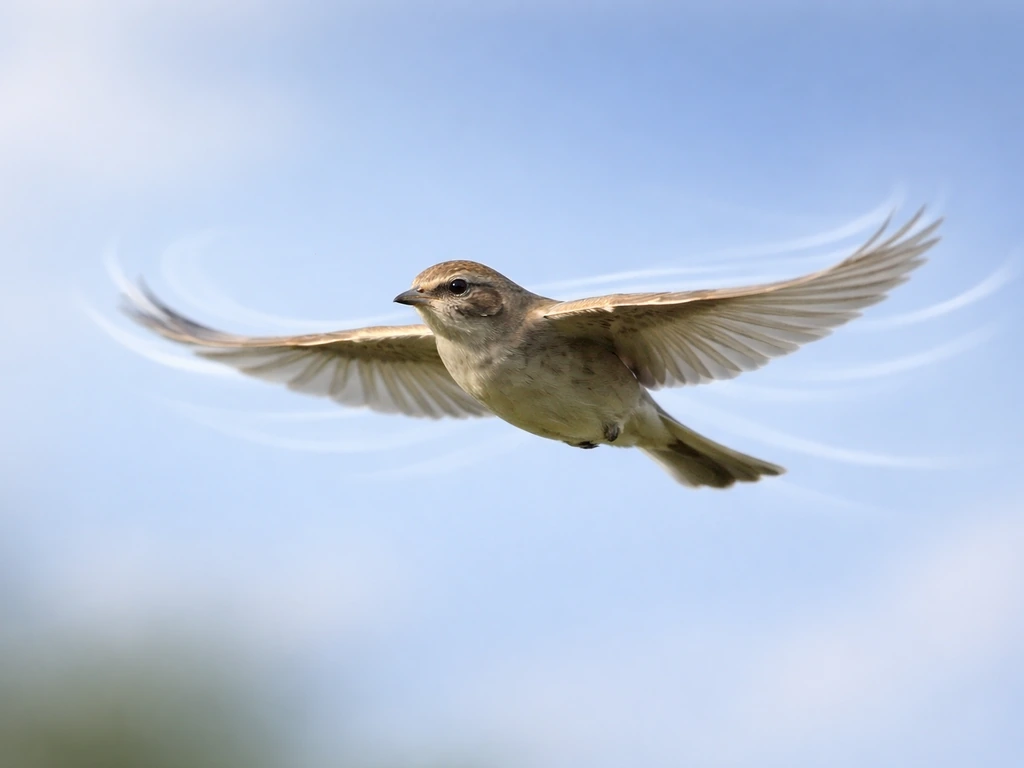
What Enables a Bird to Fly: Forces, Anatomy, and Limits
Learn how lift, thrust, and bird anatomy work together, and what limits flight in different species
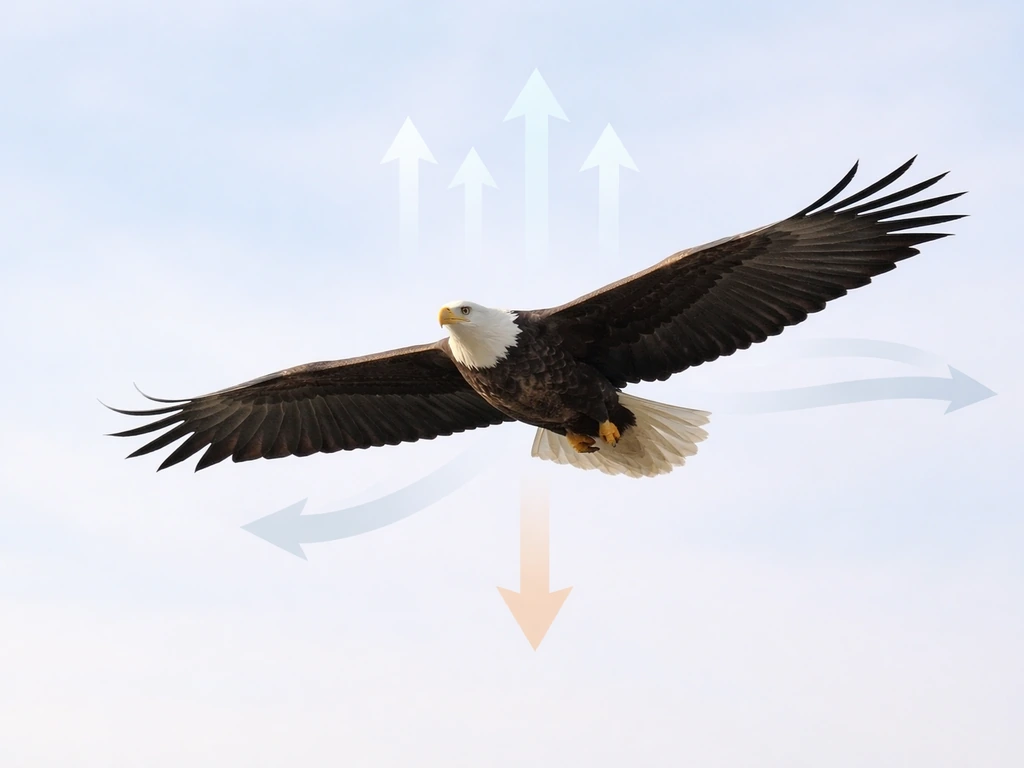
What Makes a Bird Fly: Forces, Body, and Flight Control
Learn what makes birds fly: lift and thrust forces, wing motion, muscles and oxygen, control, and why some birds are fli
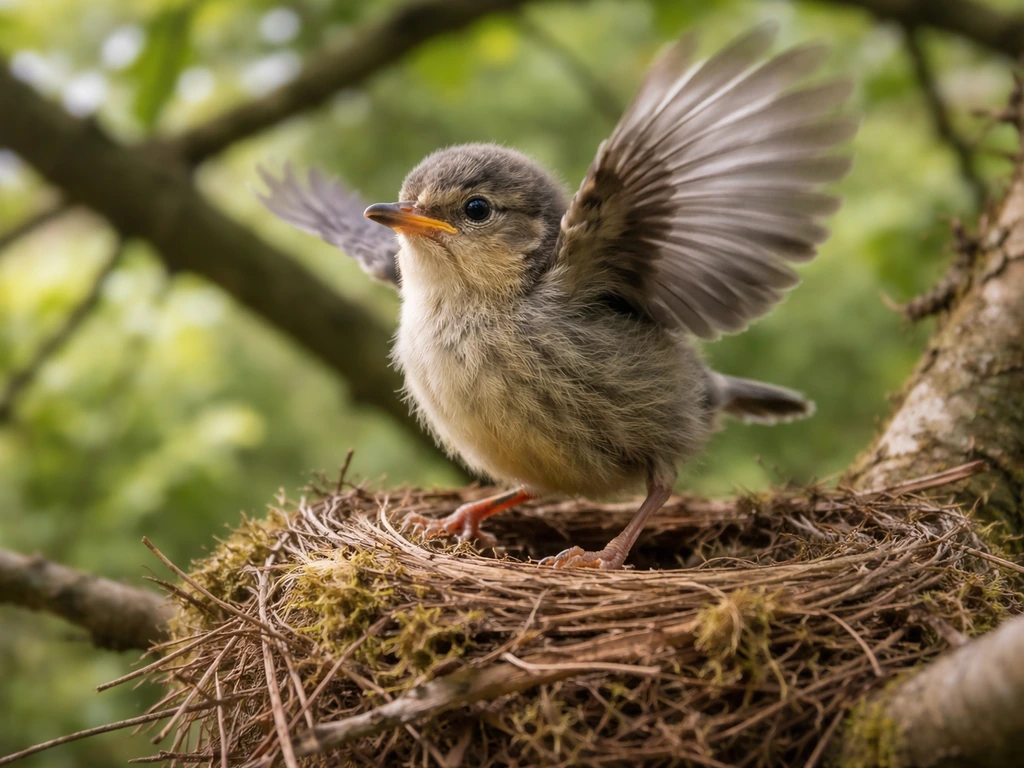
How Does a Bird Learn to Fly From Nest to First Flight
How fledglings go from nest to first flight: practice, biomechanics, species differences, and safe steps for found baby