
The feathers that most directly enable a bird to fly are the flight feathers of the wing, specifically the primaries (outer wing feathers that generate thrust) and secondaries (inner wing feathers that form the lift-producing airfoil), backed up by contour and covert feathers that smooth airflow over the wing surface, and tail feathers (rectrices) that handle steering, braking, and stability. Each group has a distinct aerodynamic job, and a bird needs all of them working together in the right arrangement to actually get off the ground and stay there.
Which Feathers Help a Bird Fly: Wing, Tail, and Control

Marcus Chen
18 May 2026
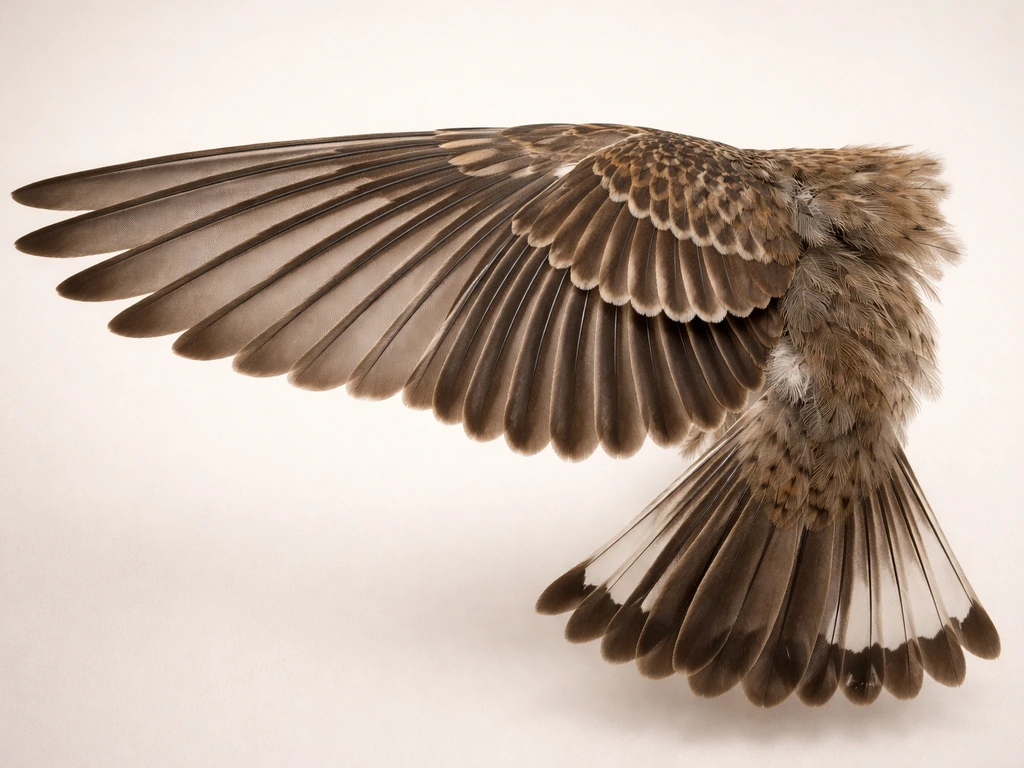
Feather basics: the parts of a wing and tail
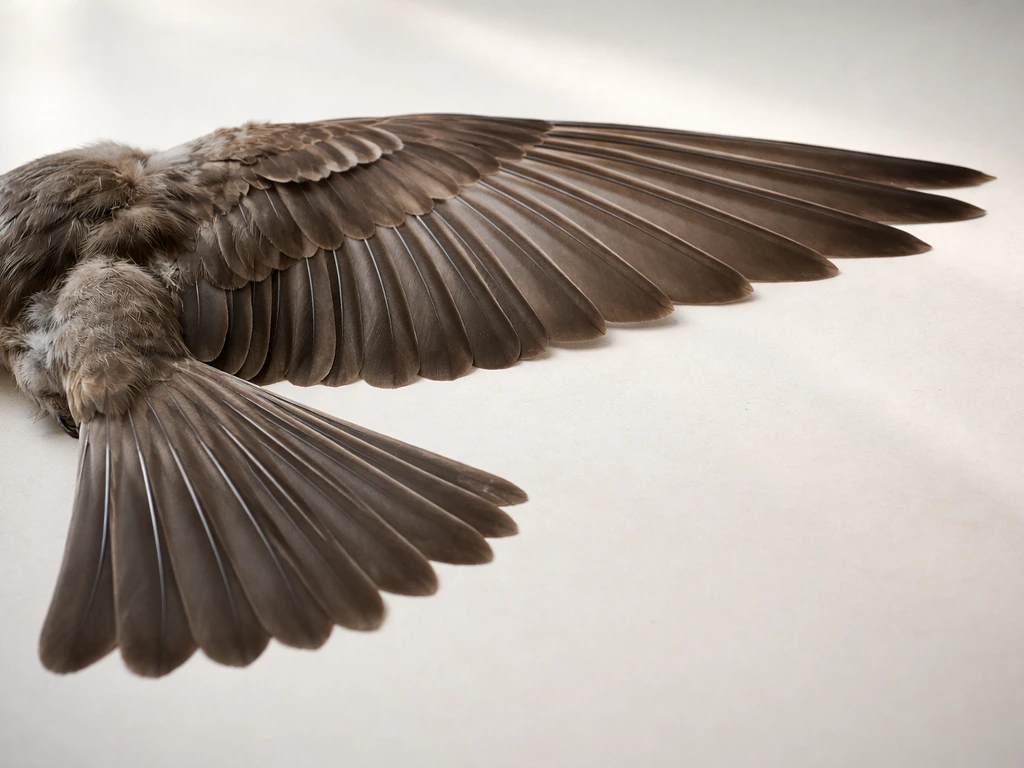
Before getting into what each feather type does, it helps to know where on the bird you're actually looking. A bird's wing maps roughly onto a human arm: there's a shoulder region, a forearm, and a "hand" at the tip. The long flight feathers attached to the hand bones are your primaries. The flight feathers running along the forearm bone (the ulna) are the secondaries.
Closer to the body, tucked near the shoulder, sit the tertials. Overlaying all of these at their bases are the covert feathers, arranged in overlapping rows like roof tiles. At the front edge of the wing, near where the thumb would be, is a small cluster called the alula. And at the back of the bird, a fan of tail feathers called rectrices rounds out the flight apparatus.
The U. S. Fish and Wildlife Service's Feather Atlas uses this exact positional system, labeling primaries (P1, P2... ), secondaries (S), tertials (T), and rectrices (R) to standardize identification.
What makes any of these feathers aerodynamically useful at all comes down to feather structure. Each flight feather has a pennaceous vane, a flat surface built from barbs that interlock via tiny barbules, almost like a zipper. This interlocking creates a coherent, air-resistant surface that behaves like a miniature airfoil. Break that interlocking, and you get a leaky, turbulent surface that disrupts lift and predictable airflow. So when you're asking which feathers help a bird fly, the short answer is: the ones with intact, properly interlocked vanes, arranged in the right sequence across the wing. What makes a bird fly is the way those intact, interlocked feathers create lift, thrust, and controllable airflow together.
Primaries, secondaries, and tertials: the main lift and thrust feathers
Primaries are the workhorses of thrust. Attached to the bird's fused hand bones at the outer wing tip, they're the feathers you see splayed and separated at the tips of a soaring hawk or eagle. Because of their position at the outer wing, they sweep through the largest arc during a wingbeat and generate most of the forward propulsive force.
They're also individually controllable to a degree that secondaries simply aren't, which means the bird can adjust each primary like a tiny rudder to fine-tune thrust and direction at the wing tip. Most songbirds have 10 primaries, and in many raptors these outer primaries are emarginated, meaning they have a distinct narrowing on the leading-edge vane that makes each feather act like a separate airfoil, reducing turbulence and helping the bird extract lift even from turbulent air at slow speeds.
Secondaries are the lift specialists. Running along the inner wing (the forearm), they overlap each other to form one continuous, smooth airfoil surface. When you look at a bird gliding and see that clean, curved inner wing, you're looking at secondaries doing their job. Because they're closer to the body and their individual movement is more constrained, they aren't manipulated feather-by-feather the way primaries are. Instead they work together as a unit, and that overlap is the point: it produces the efficient, high-lift airfoil shape that keeps the bird aloft without burning unnecessary energy.
Tertials sit at the innermost part of the wing, closest to the shoulder. They're grouped with primaries and secondaries under the collective name remiges, but they contribute less to active lift and thrust than their outer counterparts. Think of them as a transitional zone, blending the wing aerodynamically into the bird's body and helping smooth airflow where the wing meets the torso. In many field guides they get less attention than primaries, but missing or damaged tertials do affect the smoothness of the whole wing's aerodynamic surface.
The alula: your built-in stall prevention device
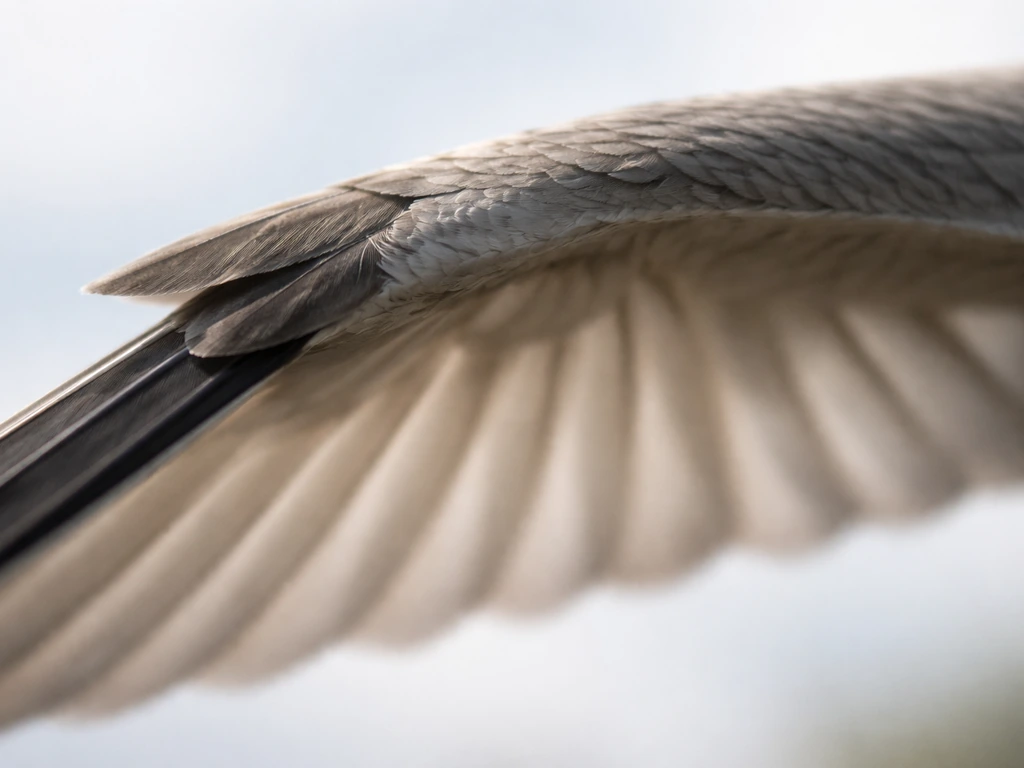
The alula, sometimes called the bastard wing, is a cluster of small feathers at the leading edge of the wing near the thumb joint. At normal flight speeds you barely notice it. But when a bird slows down sharply, say during landing or a tight turn, the alula lifts away from the wing surface and acts as a flow-control device.
Research using particle image velocimetry has shown it can induce a small leading-edge vortex and delay boundary-layer separation, effectively pushing back the stall point and allowing the bird to fly at a steeper wing angle without losing lift. Think of it as the avian equivalent of a leading-edge slat on a commercial aircraft. Without it, low-speed, high-angle maneuvers would be much harder to pull off cleanly.
Contour and cover feathers: shaping the wing's airflow
If primaries and secondaries are the engine of flight, covert feathers are the aerodynamic fairing. Coverts are arranged in multiple overlapping rows across the upper and lower surfaces of the wing, covering the bases of the flight feathers and smoothing the transition between feather layers. The upper wing coverts are divided into secondary coverts (which overlay the secondaries) and primary coverts (which overlay the primaries), and within those groups there are greater, median, and lesser covert rows stacked toward the leading edge of the wing. Their job is to maintain a clean, continuous surface profile, eliminating the gaps and steps that would otherwise trip the airflow into turbulence.
Here's why that matters in practice: engineering studies inspired by covert feathers have shown that small, passively deployable flap-like structures on the suction side of a wing can produce up to about 50% more lift and around 30% less drag in post-stall conditions compared to a bare wing surface. Birds evolved this solution millions of years ago. When a covert feather lifts slightly under separated flow, it acts as a flow-control device that re-energizes the boundary layer, delaying full stall. So coverts aren't just passive padding; they're active participants in keeping the airfoil functional at the edges of the flight envelope.
The broader contour feathers, which cover the body generally, also shape the bird's overall streamlining. They reduce drag by smoothing the body's profile, ensuring that the air the wing has to push through is as clean as possible. Understanding what enables a bird to fly requires recognizing that it's not just the big flight feathers doing all the work; the whole surface matters.
Tail feathers and control surfaces: steering, braking, and stability
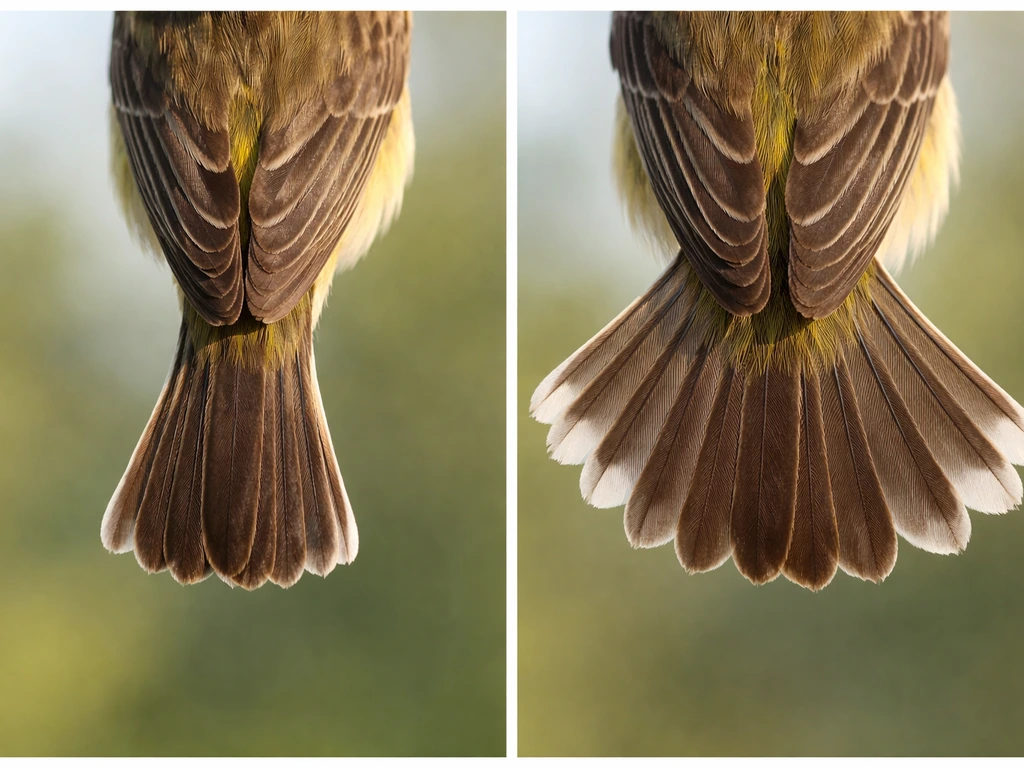
Most birds have 10 to 12 rectrices (tail feathers), arranged in a fan that can spread, fold, tilt, and twist. They are not just decorative. Aerodynamically, the tail is a control surface that handles yaw (left-right turning), pitch (nose up/nose down), and braking. Wind-tunnel and field studies on bird tails confirm their role in yaw stability, with tail shape directly affecting how easily a bird can hold a straight course or execute a banking turn. A broader tail produces more drag but also more control authority at low speeds, which is why many birds fan their tails wide during landing.
Pitch stability is where the tail does some of its most subtle work. During a wingbeat, the downstroke pushes air backward and slightly downward, and some of that induced airflow reaches the tail. Research on hovering passerines has shown that this jet of wing-induced air impinging on the tail actually creates a downward force on the tail surface that helps counteract the nose-pitching tendency created by the wings.
PMC review material on bird flapping stability and energetic costs discusses the tail’s role in aerodynamic stability, including pitch coupling effects from wing-generated airflow [Research on hovering passerines has shown that this jet of wing-induced air impinging on the tail](https://pmc. ncbi. nlm. nih.
gov/articles/PMC9805461/). In other words, the tail and wings are aerodynamically coupled, not independent systems. Disrupt one, and you affect the other.
Braking is the tail's most visible job to any casual observer. Watch a bird come in to land on a fence post: the tail fans fully open and tilts sharply upward, acting as a speed brake by increasing drag. At the same time, the wings pitch to a high angle of attack and the alula deploys. It's a coordinated multi-surface action, and the tail's contribution is essential to a controlled stop rather than a crash.
How feather arrangement affects flight performance (glide vs flapping)
Not every flight style uses these feathers the same way, and that's where things get interesting. In active flapping flight, the primaries dominate: they're the main thrust generators, and the bird adjusts them continuously to manage speed and direction. The secondaries maintain the lift airfoil between wingbeats. Think of a crow flapping across a field: lots of primary activity, secondaries held relatively steady.
In soaring and gliding, the emphasis shifts. A red-tailed hawk riding a thermal is barely flapping; it's exploiting the lift generated by its broad, high-aspect secondary airfoil, with the primaries spread and slotted to manage drag and allow differential lift across the wing tip. The slots formed by separated, emarginated primaries reduce induced drag, letting each outer feather behave as an independent mini-wing. That's why soaring birds tend to have broad wings with conspicuous tip slots, while fast-flapping birds like swallows and swifts have swept, narrow wings where the primaries are long and pointed and the secondaries are proportionally reduced.
Feather integrity matters enormously across both styles. Studies on molting hummingbirds show that feather gaps from molt reduce lift and increase flow fluctuations, with the performance hit scaling roughly with how much wing area is lost. In molting hummingbirds, feather gaps created during wing feather moult reduce lift and increase flow fluctuations, with large performance impacts reported especially when medial flight feathers are missing [feather gaps from molt reduce lift and increase flow fluctuations](https://pmc. ncbi.
nlm. nih. gov/articles/PMC5830773/). Missing a medial (middle) flight feather during molt causes a measurable drop in the lift-to-torque ratio, and missing multiple feathers can compromise the bird's ability to support its own weight in hover.
In asymmetric cases (one wing damaged, one intact), the control problems become acute. This is why most birds molt symmetrically, replacing corresponding feathers on both wings at the same time.
| Feather Group | Location | Primary Role | Most Important In |
|---|---|---|---|
| Primaries | Outer wing (hand bones) | Thrust and propulsion | Flapping flight, tight maneuvering |
| Secondaries | Inner wing (forearm/ulna) | Lift and airfoil formation | Gliding, soaring, sustained flight |
| Tertials | Innermost wing (shoulder) | Airfoil transition, body-wing blend | All flight styles |
| Alula | Leading edge, thumb joint | Stall delay, high-AoA control | Low-speed flight, landing, turns |
| Coverts (upper/lower) | Over flight feather bases | Surface smoothing, passive flow control | All flight styles, especially near stall |
| Rectrices (tail) | Tail fan | Steering, pitch stability, braking | Maneuvering, landing, stability |
Practical identification: what to look for on real birds
You don't need to handle a bird to start recognizing these feather groups. The next time you watch a gull, hawk, or even a pigeon, here's what to look for.
- Primaries: the long, outermost wing feathers visible at the tip. On a perched bird they often extend past the tail. They tend to be asymmetrical (narrower on the leading edge, wider on the trailing edge), which is the classic aerodynamic vane shape. In raptors and many large soaring birds, look for the emargination: a notch or narrowing on the inner vane that makes each primary look slightly pinched toward the tip.
- Secondaries: shorter than primaries, running in a row along the inner part of the wing. On a perched bird they form the main visible surface of the folded wing. Many species show a distinct color pattern or speculum (like the blue patch on a mallard's wing) precisely because the secondaries are so visible.
- Tertials: three or so feathers sitting at the innermost part of the wing, often covering the folded primaries on a perched bird. Birders use tertial patterns heavily for species identification in the field.
- Alula: a small tuft of two to five stiff feathers at the leading edge of the wing, near where the 'thumb' would be. It's most obvious in flight at low speed or when a bird lands — it lifts slightly away from the wing. You can sometimes spot it as a small separate projection on a large bird banking in a turn.
- Coverts: the overlapping rows of feathers covering the upper surface of the wing between the leading edge and the flight feathers. On many songbirds the greater and median covert tips form wing bars, the horizontal stripes that are a key identification feature. The under-wing coverts create the smooth lower surface visible when a bird glides overhead.
- Rectrices: the tail feathers, typically 10 to 12. Spread tails show them fanned out clearly. Look for the central pair (often longest in some species) versus the outer rectrices. Asymmetry in the spread tail during banking is visible with patience and binoculars.
A useful exercise: watch a bird landing, ideally a larger species like a crow, gull, or hawk. In the last two seconds of approach, you can often see the alula deploy as a small leading-edge protrusion, the primaries twist to increase angle of attack while the wingtip slots open between them, and the tail fan wide and tilt upward. That single landing sequence shows you most of the feather groups covered in this article doing their jobs in real time.
What to do next if you want to go deeper
If this has sparked a broader curiosity, the mechanics of how birds actually learn to use these feathers in coordinated flight, or the deeper question of what makes a bird capable of flight at all from an anatomical standpoint, are worth exploring in detail. The U. S.
Fish and Wildlife Service's Feather Atlas is freely available online and lets you zoom into high-resolution scans of individual primaries, secondaries, and rectrices from hundreds of species, complete with vane asymmetry and emargination clearly visible. For biomechanics, looking at how different species have evolved distinct flight capabilities reveals why the same feather groups perform very differently in a swift versus a vulture versus a hummingbird.
The feathers are the same categories; the proportions, shapes, and arrangements are what evolution has tuned for each ecological niche.
The core takeaway is this: no single feather type flies a bird. At a high level, birds fly because their wings create lift, and their muscles and feather shape keep that lift controllable across different speeds and angles. It's the primaries generating thrust, the secondaries building lift, the coverts and alula managing the boundary layer, and the tail holding it all stable and steerable.
If you're also wondering what makes flight possible overall, the key features that help a bird to fly include the wing feathers and how they work together to generate lift, thrust, and control. All of those specialized feathers work together to convert wing motion into lift, thrust, stability, and control, which is how is a bird able to fly.
Together, those feather features are what let a bird generate lift and thrust, and then control its wing shape to fly how is a bird adapted to fly?. Lose any one group and flight degrades. Keep them intact, properly arranged, and interlocked at the barbule level, and you have one of the most aerodynamically refined structures in the natural world.
FAQ
If I see wing feathers splayed or missing, which matters most for whether a bird can still fly?
The most important ones are the wing flight feathers with intact, properly interlocked barbs (primaries and secondaries). If the barbules on those vanes come apart from wear, molt, or damage, the feather surface becomes leaky and lift and thrust efficiency drop quickly, even if the feather is still present.
Do alula feathers help with normal flapping, or only during landing and slow flight?
The alula mainly helps at low speeds or high angles of attack, like landing and tight turns. At cruising speed it can be subtle, so it is not typically the first feather group you would expect to “notice” as the reason for sustained flight.
Can a bird fly if one feather type is partially damaged, or does missing always mean no flight?
Yes. A bird can still glide or make short flights with missing noncritical feathers, but performance degrades sooner when the gaps are on the leading edge or along the main lift surface. Missing middle or tip elements tends to change both lift generation and controllability more than small losses near the body.
Is it enough to have feathers, or does their exact position on the wing matter?
Primaries and secondaries rely on their arrangement, not just their presence. For example, primaries at the wingtip and their leading edge geometry help with thrust generation and fine control, while secondaries provide the smooth, continuous lift airfoil. Swapping or misalignment would break the airfoil shape even if the feathers are intact.
Why do birds often molt symmetrically, and what flight problems can asymmetric molt cause?
Molting creates temporary feather gaps that can reduce lift and increase airflow fluctuations. Birds typically reduce risk by molting symmetrically (matching feathers on both wings) and by changing behavior (less hovering, more perching), because asymmetric gaps make steering and compensation harder.
Which tail feathers help a bird slow down and land safely, and are they more important than wing feathers during braking?
The tail matters most for control and stability, especially yaw and braking. During rapid deceleration, the tail fan and tilt increase drag, and this coordination with wing angle of attack and the alula determines whether the bird stops smoothly or with instability.
How does the “which feathers help the bird to fly” answer change between soaring and fast flapping?
Soaring birds often rely more on the secondary-based airfoil and use primaries to tune drag and spanwise lift. In fast flapping birds, primaries do more continuous work for thrust and speed changes, while secondaries stay comparatively steadier to preserve lift between wingbeats.
Why do some birds fan their tails wide at landing, even though it seems like it would slow them too much?
A broader tail generally increases control authority at low speeds because it creates more aerodynamic leverage, but it also increases drag. That tradeoff is why you may see tail fanning during landing, even though the bird would likely not want the same drag penalty during cruising.
What’s a practical “spotter’s checklist” I can use to identify these feather functions during a real landing?
Look for multiple cues together: an alula protruding near the leading edge during the last approach moments, primaries separating to change angle of attack and opening small tip slots in some birds, and a tail fan that tilts upward during braking. One cue alone can be misleading.
Do different bird species use the same feathers the same way, or is the importance order different?
Not every bird has the same wing layout. Raptors may show more obvious tip slots and emargination, while other groups (like swifts) have wing shapes that emphasize different primary and secondary proportions. So the same feather categories work, but their relative contribution depends on wing planform and flight style.
Next Articles
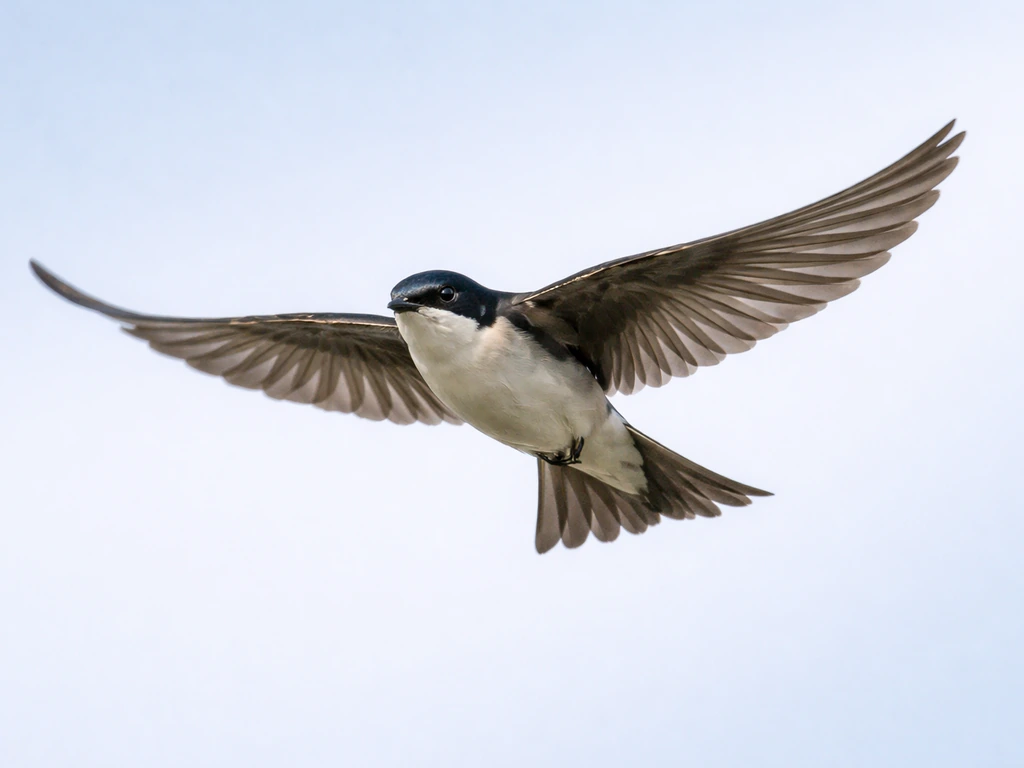
How Is a Bird Adapted to Fly? Key Anatomy and Mechanics
Learn how birds fly: lightweight bones, powerful breast muscles, feather lift, wing shape, and aerodynamics for soaring
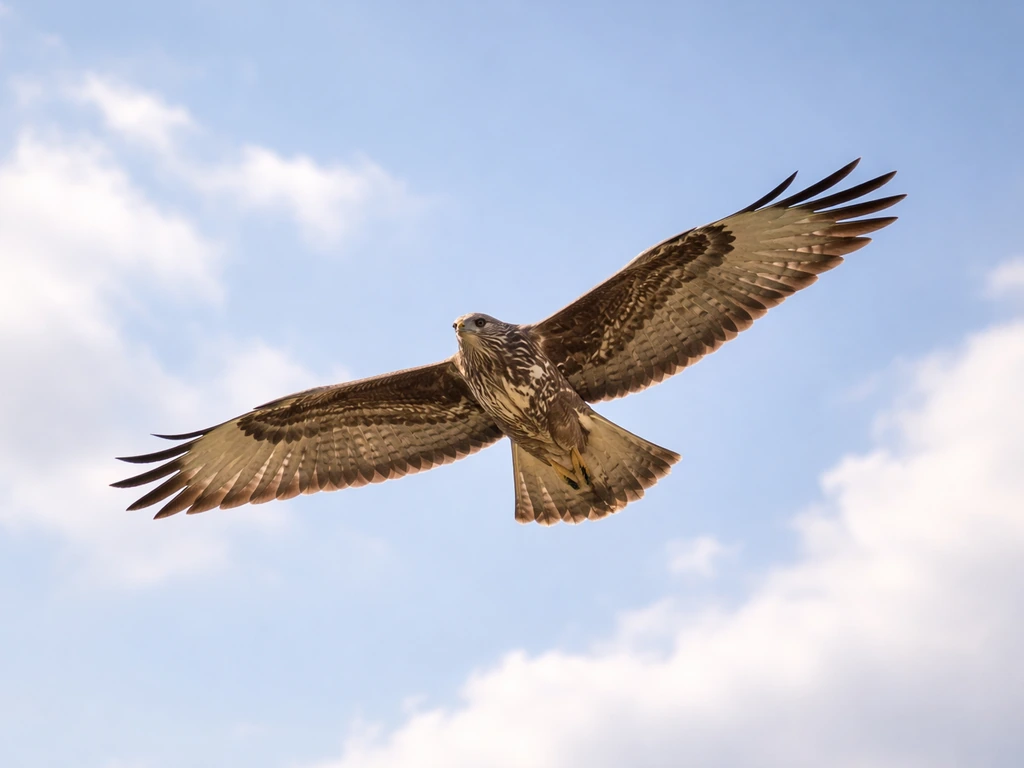
How Is a Bird Able to Fly? Mechanics, Biology, and Flight Styles
Learn how birds generate lift, thrust, and control in flight, plus soaring vs hovering and why some can’t fly.
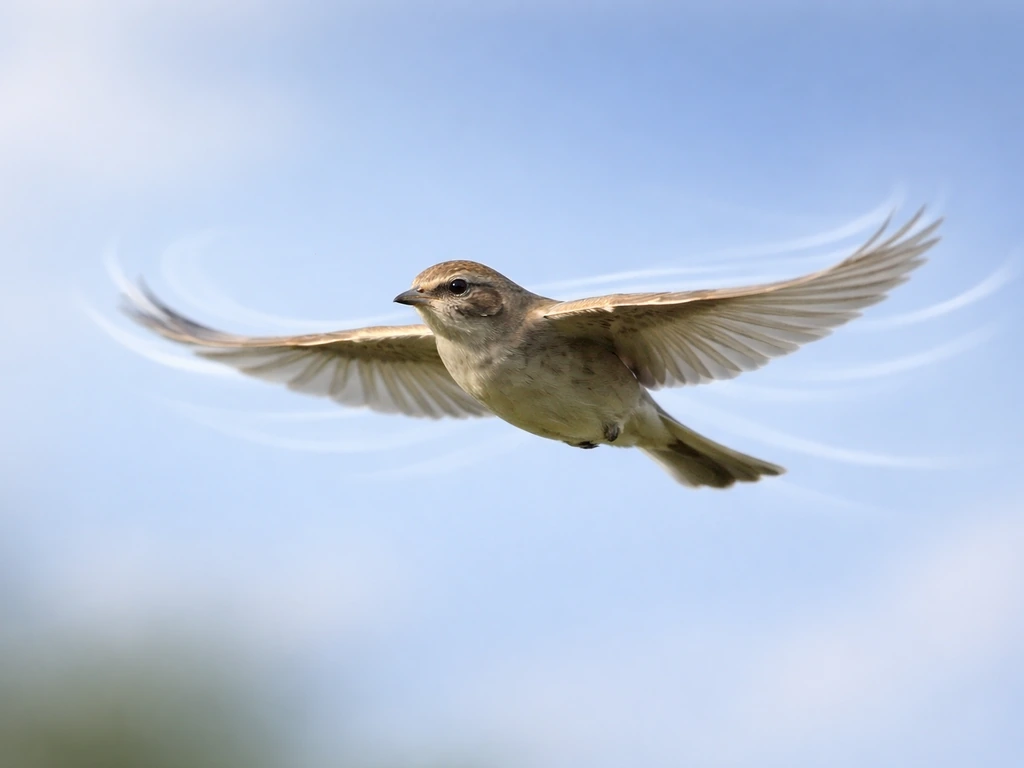
What Enables a Bird to Fly: Forces, Anatomy, and Limits
Learn how lift, thrust, and bird anatomy work together, and what limits flight in different species