
A wild bird that lets you walk right up to it is almost always telling you something important. It could be perfectly healthy and simply habituated to people, the way urban house sparrows and pigeons treat foot traffic as background noise. Or it could be injured, stunned from a window strike, a fledgling that hasn't learned to fly yet, or deep in a breeding-season territorial trance. The answer matters because your next move, whether that's backing away quietly or carefully boxing the bird for transport, depends entirely on which of those situations you're actually looking at. For a related anecdote about social interactions among wild birds, see some birds were flying and met a bird.
Bird Not Flying Away When Approached Reddit: Causes & Steps

Marcus Chen
8 Aug 2026
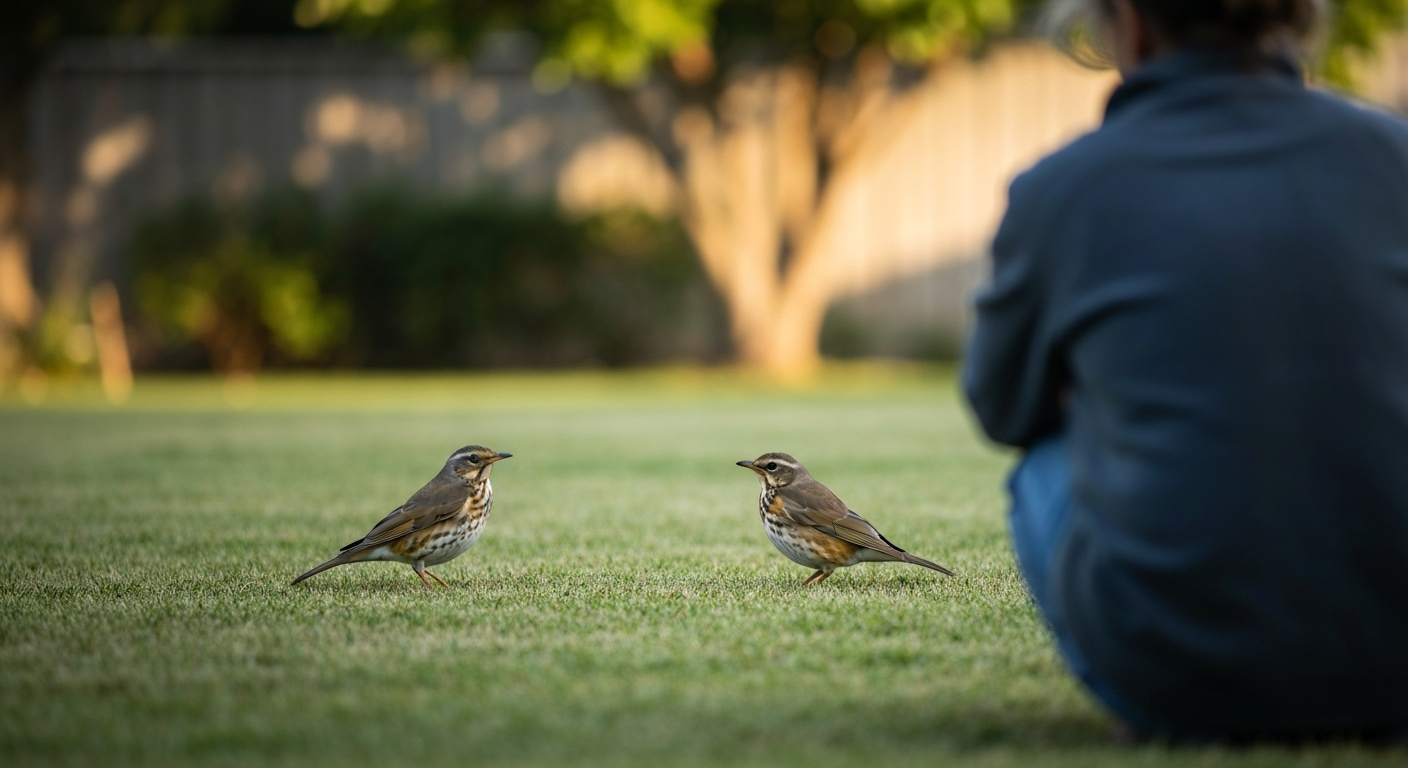
Why a wild bird might not fly away when you approach
Birds evolved a finely tuned threat-detection system, and "fly now" is almost always the safest default. When a bird breaks that rule, there's always a reason rooted in biology, behavior, or circumstance. Researchers studying this have formalized it as flight-initiation distance, or FID: the gap between you and the bird at the moment it decides to leave. Urban birds routinely show much shorter FIDs than their rural counterparts, and large-scale datasets covering 6,369 FID estimates across 147 species confirm this is a real, measurable, population-level pattern, not just random variation. Experimental and comparative studies show urbanization can reduce birds’ wariness via both within‑individual habituation and between‑generation selection for bolder phenotypes (synurbization): The role of habituation in the adjustment to urban life: An experimental approach with burrowing owls, ScienceDirect blank" rel="noopener noreferrer">The role of habituation in the adjustment to urban life: An experimental approach with burrowing owls — ScienceDirect. So a bird that stays put isn't automatically in trouble. For a quick checklist, see bird not flying away when approached. But it might be.
Every reason a bird might hold its ground
- Habituation to humans: Urban and suburban birds, especially species like pigeons, house sparrows, European starlings, and American crows, live alongside people daily and gradually reduce their alarm responses through individual learning. Studies on burrowing owls show this is a genuine within-individual behavioral shift, not just population filtering.
- Synurbization and bold phenotypes: Over generations, cities select for bolder, less fear-prone individuals. This means some birds are genetically predisposed to shorter FIDs, a process called synurbization. The bird isn't tame; it's a product of urban evolutionary pressure.
- Injury or illness: A bird that cannot or will not fly away despite close approach is a classic sign that something is physically wrong. This is the most urgent scenario and requires a closer (but careful) assessment.
- Molt: During heavy feather molt, particularly a simultaneous flight-feather molt in some ducks and geese, birds are literally flightless for several weeks. They're not sick; they're temporarily grounded by feather replacement.
- Fledgling behavior: Young birds that have recently left the nest often sit on low branches or the ground, unable to fly well yet. A parent is almost always nearby. This is the most commonly misread situation people post about on Reddit.
- Nesting and territorial behavior: A brooding bird on a nest, or an aggressively territorial male during breeding season, may stand firm to protect eggs, young, or a territory rather than retreat.
- Food association: Birds at well-stocked feeders or in parks where people regularly offer food can become so accustomed to the food reward that they override their normal flight threshold.
- Stunned from a window or vehicle collision: Window strikes are responsible for an estimated hundreds of millions to potentially close to a billion U.S. bird deaths annually. Many birds are not killed outright but are concussed. They sit on the ground or a windowsill, often upright but unresponsive, temporarily unable to coordinate a takeoff.
- Species-specific boldness: Some species are simply bolder by nature. Robins in the UK follow gardeners for worms. Keas in New Zealand investigate hiking gear. Black-capped chickadees will eat from a patient hand. These behaviors are encoded in the species' ecology, not a sign of illness.
How to tell if the bird is injured, ill, or stunned
Before you do anything else, observe the bird from where you are. Most of the information you need is visible from a few meters away, and moving in too quickly can cause a panicked bird to injure itself further or flush a fledgling into genuine danger. You're looking for a cluster of specific physical and behavioral signs that veterinary and wildlife rehabilitation guidelines consistently flag as red alerts.
Red-flag signs that signal a bird needs help
- Drooping or asymmetrical wing: One wing hanging lower than the other strongly suggests a fracture or soft-tissue injury to the wing or shoulder. A healthy perching bird holds both wings symmetrically against its body.
- Open-mouth or labored breathing: Birds breathe through their beaks only when under severe stress or when respiratory function is compromised. Sustained open-beak panting at rest is a serious sign.
- Inability to stand or perch: If the bird is lying on its side, sitting flat on the ground on its belly rather than its feet, or toppling when it tries to stand, that points to neurological damage, severe weakness, or leg/foot injury.
- Obvious wounds, blood, or protruding bone: Active bleeding or visible fractures are emergencies. Window-strike birds sometimes show no external bleeding but have internal head trauma.
- Neurological signs: Head tilt, circling, seizure-like trembling, or a glazed, unresponsive stare all indicate central nervous system involvement, most commonly from a collision concussion.
- Swollen or closed eyes: Eyelid swelling or discharge often signals infection, impact trauma, or systemic illness.
- Extreme lethargy or unresponsiveness: A bird that allows you to pick it up without resistance, or doesn't react at all to your presence, is in a critical state.
A bird that shows none of these signs but is still on the ground may simply be a fledgling, resting after a long migratory flight leg, or a species that forages terrestrially. Context matters enormously here. A thrush on the lawn in October is probably fine; the same species lying on a windowsill in June with one wing drooping is not.
Simple flight tests and approach assessments you can do from a distance
Before approaching, try a low-stakes stimulus test. Take a slow step or two toward the bird from about 10 meters away and watch its response. A healthy bird will watch you intently, crouch slightly, and fly off as you close the gap. For related guidance on interpreting and responding when a bird is flying directly toward a stationary bird-watcher, see the linked guidance on approach behaviors and safety. A stunned or injured bird may not react at all, may attempt a short flap and fail to become airborne, or may hop away weakly rather than fly. A fledgling will often make short fluttery hops and call loudly, which sometimes triggers a parent response from nearby cover.
If the bird makes no movement after you walk to within 2 to 3 meters, that's diagnostically significant. A healthy wild bird almost never allows that kind of proximity without a compelling reason (nesting, food, or severe habituation). At that point, shift your attention to the physical signs listed above. You're not yet touching the bird. You're reading it.
One useful check: watch the keel (breastbone). In a bird viewed from the side, you can often see whether the chest is moving rhythmically and calmly or heaving rapidly. Rapid, shallow chest movement at rest, combined with reluctance to fly, is a meaningful indicator of respiratory distress or shock.
Fledgling vs adult: completely different situations
This is by far the most common reason people post confused "why won't this bird fly?" threads on Reddit and similar forums, and it's also the situation most likely to result in well-intentioned harm. A fledgling is a young bird that has left the nest but is not yet a fully capable flier. It's at a normal developmental stage, not abandoned and not injured. Fledglings have most of their feathers but a shorter tail and often a gape line (a yellow or pale stripe at the base of the bill) still visible. They sit on the ground or low shrubs and call frequently.
The parent birds are nearby, watching, and will continue to feed the fledgling on the ground for days. Picking up a fledgling and "rescuing" it removes it from parental care and dramatically reduces its chances of survival. The classic advice holds: if the bird has feathers and isn't injured, leave it alone. The only exception is if it's in immediate physical danger, such as on a busy road or in a cat's path, in which case you can move it a short distance to nearby cover.
A nestling is younger, mostly or entirely naked or downy, and clearly not ready to be outside the nest. If you find a nestling on the ground and can locate the nest, you can place it back. The myth that a parent will abandon a touched chick is not supported by avian biology; birds have a poor sense of smell and won't reject their young based on human scent.
| Feature | Fledgling | Nestling | Injured Adult |
|---|---|---|---|
| Feathers | Mostly feathered, short tail | Naked or downy | Fully feathered |
| Mobility | Hops, short flaps | Cannot stand or hop | Limited or absent flight |
| Behavior | Loud calls, alert | Open-mouthed, weak | Lethargic or panicked |
| Parent nearby? | Almost always yes | Usually yes | Not relevant |
| What to do | Leave it alone | Return to nest if possible | Assess and possibly contain |
Step-by-step: when to give space, when to step in
- Step back and observe first. Move at least 5 to 10 meters away and watch for 5 to 10 minutes. Many stunned birds, particularly window-strike victims, recover on their own within 30 to 120 minutes if left alone in a safe spot. This observation window is standard protocol at wildlife clinics.
- Remove immediate hazards. If there are cats, dogs, or heavy foot traffic near the bird, gently create distance between the bird and those hazards, either by moving pets indoors or placing a loose barrier. Don't pick up the bird yet.
- If it's a fledgling with no injury signs, walk away. Parental care is still happening. Monitor from a distance if you're concerned.
- If the bird shows red-flag injury or illness signs (see above), or if it has not moved or recovered after the observation window, intervention is appropriate.
- If it's near a window and shows signs of concussion (dazed, sitting upright but unresponsive), proceed to safe containment.
- Contact a licensed wildlife rehabilitator before or during containment to get real-time guidance specific to your region and the species involved.
How to safely handle, contain, and transport a bird
If intervention is clearly necessary, the containment method matters as much as the intervention itself. The core principles from every wildlife clinic I've reviewed are consistent: darkness calms the bird, warmth supports recovery, and quiet prevents additional stress-induced injury.
What to use
- A cardboard box with ventilation holes punched in the sides and lined with a folded towel or paper toweling. The towel gives the bird's feet something to grip and prevents slipping injuries.
- Thick gloves, ideally leather work gloves, to protect your hands. Even small birds can scratch, and larger species like herons or raptors can cause serious puncture wounds.
- A light, breathable cloth such as a t-shirt to drape over the bird before gently picking it up. This reduces visual stimulation and calms the bird.
- A heat source if available: a heating pad set to low placed under one half of the box (not covering the whole floor, so the bird can move away if too warm).
Do's and don'ts
| Do | Don't |
|---|---|
| Use gloves when handling any wild bird | Handle barehanded, especially birds you suspect are sick |
| Place in a dark, quiet, ventilated box | Put in a cage with wire mesh (toes and feathers catch and break) |
| Keep warm and still | Leave in direct sunlight or a hot car |
| Contact a rehabilitator immediately | Attempt to feed or give water unless explicitly instructed |
| Transport in the box on the car seat or floor | Let the bird loose in the car cabin |
| Wash hands thoroughly after any contact | Bring the bird into your home if you have pet birds (disease risk) |
The single most consistently violated piece of guidance is the feeding rule: do not give food or water to an injured or stunned wild bird during initial containment. This isn't arbitrary. Aspiration (inhaling water into the lungs) is a genuine risk in a compromised bird, and incorrect nutrition at the wrong time can cause more harm than the original injury. Water and food can wait until a qualified rehabilitator assesses the bird.
Who to call, and what the law actually says
In the United States, most wild birds are protected under the Migratory Bird Treaty Act (MBTA). You cannot legally keep a migratory bird in your possession beyond the brief window needed to transport it to a licensed rehabilitator. The USFWS Good Samaritan provision (50 CFR 21.31(a)) explicitly allows any member of the public to temporarily take possession of a sick, injured, or orphaned migratory bird for the sole purpose of getting it to a permitted facility. This means you're legally covered for transport, but not for ongoing care without a federal rehabilitation permit, and most states layer additional permitting requirements on top of that.
Who to contact
- Licensed wildlife rehabilitators: The primary resource. The USFWS maintains a directory, and most state wildlife agencies have searchable databases. The National Wildlife Rehabilitators Association (NWRA) and the International Wildlife Rehabilitation Council (IWRC) also have locators. Many rehabilitators will guide you over the phone before you even pick up the bird.
- Avian-capable veterinary clinics: Not all vets treat wild birds, but many avian specialists will perform initial triage. Call ahead to confirm.
- Local animal control: Useful when you can't reach a rehabilitator quickly, particularly for large birds like geese, herons, or raptors in urban areas.
- State wildlife agency or conservation officer: Required contact for certain species, particularly raptors and waterfowl, and for disease-surveillance reporting if you find multiple sick or dead birds.
Disease and safety considerations
Wild birds do carry zoonotic diseases, and this is not a reason to panic but it is a reason to use basic precautions every time. Chlamydia psittaci (the bacterium causing psittacosis/ornithosis) can be transmitted through dried droppings or respiratory secretions, particularly from pigeons and psittacine birds. Salmonella is a real risk from any wild bird contact. Highly pathogenic avian influenza (HPAI H5N1) has been documented in wild bird populations, and as of 2024 and 2025, CDC guidance recommends minimizing direct contact with sick or dead wild birds, wearing gloves and eye protection, and using an N95 mask if handling is unavoidable. Wash hands immediately and thoroughly after any bird contact. Wild birds are not rabies vectors (unlike bats and terrestrial mammals), but the other zoonoses listed above are legitimate considerations, especially for immunocompromised individuals.
Raptors and herons require extra caution
Hawks, owls, herons, and similar birds can cause serious injury even when debilitated. Talons on a red-tailed hawk exert roughly 200 pounds per square inch of crushing force, and a great blue heron's bill is essentially a biological spear aimed at eyes. If you encounter an injured raptor or large wading bird, contact a licensed rehabilitator immediately rather than attempting containment on your own. They will often dispatch someone or walk you through species-specific capture techniques.
What this means for the biology of bird flight
It's worth stepping back and appreciating what a bird not flying actually reveals about the mechanics of flight itself. Noting that a bird is flying towards north can provide a useful clue about migratory movement or a recent disturbance that prompted takeoff. For an applied example of flight dynamics, see the observation titled "a bird is flying due east.". For related identification tips, see a short guide on how to tell a bat from a bird when flying. Flight is extraordinarily metabolically expensive. The pectoral muscles driving the downstroke can account for 15 to 25 percent of a bird's total body mass. A bird that has struck a window hard enough to cause concussion has essentially suffered blunt trauma to the organ system that coordinates every aspect of takeoff, the brain and nervous system routing signals to those muscles. See a related note on situations where a bird is flying directly toward a stationary object. Even a brief disruption to that neurological pathway grounds the bird completely, which is why collision victims often look superficially normal but cannot coordinate a launch.
Wing loading, the ratio of body weight to wing area, also explains why some birds are more vulnerable once grounded. Heavy-bodied birds with high wing loading, think diving ducks or grebes, need a running start across water to generate enough lift. A grounded grebe on land is essentially stranded even if it's uninjured, because the surface doesn't give it the run-up it needs. This is a flight mechanics problem, not an injury problem, and understanding that distinction can save you an unnecessary call to a rehabilitator.
Posting about it on Reddit and social media: a quick note
The Reddit thread format, where someone posts a photo of a bird sitting suspiciously still and asks "is this normal?", is genuinely useful for rapid crowdsourced ID and behavioral context. The bird-focused subreddits attract experienced birdwatchers and sometimes actual ornithologists who can identify a species from a blurry phone photo and tell you within minutes whether it's a fledgling robin or an injured woodcock. Use that. But treat the collective Reddit response as a starting point, not a diagnosis. The bird in front of you needs a licensed professional if there's genuine doubt about its condition. Post the photo, get the ID and behavioral context, then call a rehabilitator. A common lyric caption people use when sharing bird photos online is 'a little bird was flying south for the winter.'. Those two actions are complementary, not substitutes for each other.
If you're documenting the bird for a post, take your photos from a distance using your phone's zoom. Don't crouch over the bird for a better shot. The stress of sustained close human presence can push an already compromised bird into fatal cardiac arrest. A respectful distance helps the bird and still gives you the image you need.
A quick comparison of the most common scenarios
| Scenario | Likely cause | Flight ability | Recommended action |
|---|---|---|---|
| Urban pigeon sits near feet | Habituation / synurbization | Fully capable | Observe and leave it; it's fine |
| Bird on windowsill, dazed | Window-strike concussion | Temporarily impaired | Box, dark/warm/quiet, call rehabilitator |
| Small fluffy bird on lawn, calling | Fledgling out of nest | Developing, not full | Leave alone, keep pets away |
| Bird lying on side, wing drooped | Injury or severe illness | Unable | Contain carefully, call rehabilitator urgently |
| Duck unable to take off from land | Species biology (grebe/merganser) or molt | Impaired or absent during molt | Observe for injury signs; contact rehabilitator if injured |
| Songbird on feeder, puffed up | Illness (salmonellosis common) | May still fly weakly | Do not approach; consider removing feeder temporarily; report if multiple birds affected |
FAQ
Why might a wild bird not fly away when I approach?
Several evidence‑based reasons: habituation to humans in urban/suburban populations (shorter flight‑initiation distances), individual boldness or selection for tolerant phenotypes, recent molt or feather wear reducing flight performance, injury or illness (trauma, fracture, neurological signs), stunned from a collision (especially window strikes), fledgling behavior (young birds often stay put while parents are nearby), nesting or territorial defense, food association (birds that are fed by people), or species‑specific ecology (some species are naturally less wary).
How do researchers measure bird tolerance to human approach?
Flight‑initiation distance (FID) is a standardized metric: the distance at which a bird takes flight when approached. Large datasets (thousands of estimates across many species) show consistent differences by urbanization, species, and context, reflecting habituation and selection for bolder individuals.
What observable signs indicate the bird may be injured or sick and needs help?
Red‑flag clinical signs: drooped or asymmetrical wing(s), open‑mouth or labored breathing, heavy or active bleeding, inability to stand or perch, visible fractures or protruding bone, neurologic signs (head tilt, circling, seizures), extreme lethargy/unresponsiveness, eyes swollen/closed. These signs suggest professional care is needed.
What safe, step‑by‑step assessment should I perform from a distance?
1) Keep pets and people away. 2) Observe quietly from several meters for 1–5 minutes: note posture, breathing rate, ability to perch, alertness, and if parents or other birds are nearby. 3) If the bird moves normally and flies short distances, it may be fine. 4) If it remains immobile but shows no red flags after 30–120 minutes (for suspected concussion/window‑strike), it may recover; if red flags persist or worsen, prepare to intervene and contact a licensed rehabilitator or avian veterinarian.
If I need to contain a stunned or injured bird, what is the correct procedure?
Only if safe and legal to do so: 1) Wear gloves (and eye protection/N95 if disease concern) and keep handling minimal. 2) Gently cover the bird with a towel to calm it. 3) Place it in a well‑ventilated box lined with a towel. 4) Keep the box dark, quiet, and warm; do NOT feed or give water unless instructed by a rehabilitator. 5) Transport promptly to a licensed rehabilitator or avian‑capable vet; contact them first if possible.
When should I not intervene and instead just give the bird space?
Give space if the bird is alert, perching normally, vocalizing, or moving and able to fly short distances. Also yield to nesting birds or when parents are present (especially for fledglings). Avoid intervention if you lack safe means to capture or transport without risk to you or the bird, or if local regulations restrict handling—contact a permitted rehabilitator for advice.