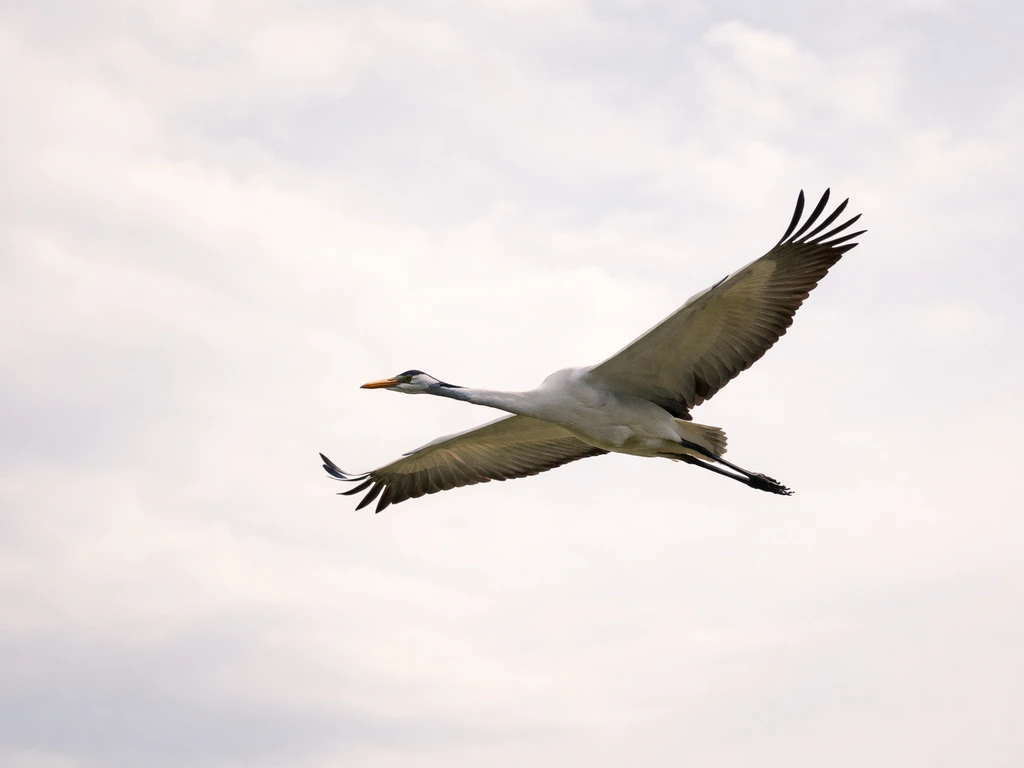
Yes, cuckoos can absolutely fly, and they do it impressively well. The common cuckoo (Cuculus canorus) migrates thousands of kilometers every year between Europe and sub-Saharan Africa, crossing the Sahara Desert in a single sustained push. Far from being a ground-bound oddity, a cuckoo in the air is a capable, long-distance powered flier with a silhouette so hawk-like that experienced birders regularly do a double-take.
Can Cuckoo Bird Fly? Flight Ability, Cues, and Proof

Marcus Chen
17 Jun 2026
What "flying" actually means for a cuckoo
When most people ask whether a cuckoo can fly, they usually mean one of two things: can it get airborne at all, or does it fly in a meaningful, sustained way? The answer to both is yes. The Boeing Bird of Prey is a famous aviation concept often discussed in terms of whether it ever truly flew did the boeing bird of prey ever fly. Cuckoos are classified as volant birds, meaning flight is a normal, functional part of their daily and annual life. They are not gliders that barely manage to cross a garden, and they are not occasional hoppers like some ground-feeding birds. Powered, directed flight is their default mode of travel. The common cuckoo's annual migration cycle, documented by satellite telemetry, shows adults making sustained long-distance flights from breeding grounds in Scandinavia or the UK to wintering areas in south-western Central Africa and back, year after year. That is not a bird that struggles to fly.
It is also worth separating flight ability from flight frequency. Cuckoos spend a lot of time perched and calling, which is the behavior most people encounter in spring and early summer. That stillness can create the impression of a bird that does not fly much. But perching and vocalizing is a behavioral strategy, not a physical limitation. When a cuckoo needs to move, it moves through the air.
What cuckoos actually do in the air
The most dramatic example of cuckoo flight is migration. Tracking data published in peer-reviewed journals shows that common cuckoos undertake loop migrations, flying a different route outward than on return. One widely documented example involves an adult completing roughly 5,000 km of flight before crossing the Sahara in a single aerial push, without stopping. Juveniles, navigating entirely on instinct without parental guidance, also make this journey successfully, as confirmed by satellite tracking of first-year birds. This is sustained powered migration, not gliding or drifting.
On a smaller scale, during breeding season cuckoos fly between perches to survey territory, chase potential hosts, and deposit eggs. The female must move quickly and covertly when laying in a host nest, which requires precise, agile flight into and out of dense vegetation. Males fly display routes and call from exposed branches, then relocate constantly as they monitor rivals. The squirrel cuckoo, a related species common in Central and South America, is known to glide conspicuously across forest clearings and even call in flight. Yellow-billed cuckoos, familiar to North American readers, fly in a notably straight path using sharp wingbeats with a brief pause between each beat, a distinctive aerial signature you can learn to recognize. Some species, like the yellow-billed cuckoo, have flight patterns that can feel surprisingly like a helicopter in how they use sharp wingbeats and brief pauses Yellow-billed cuckoos.
The anatomy behind the flight
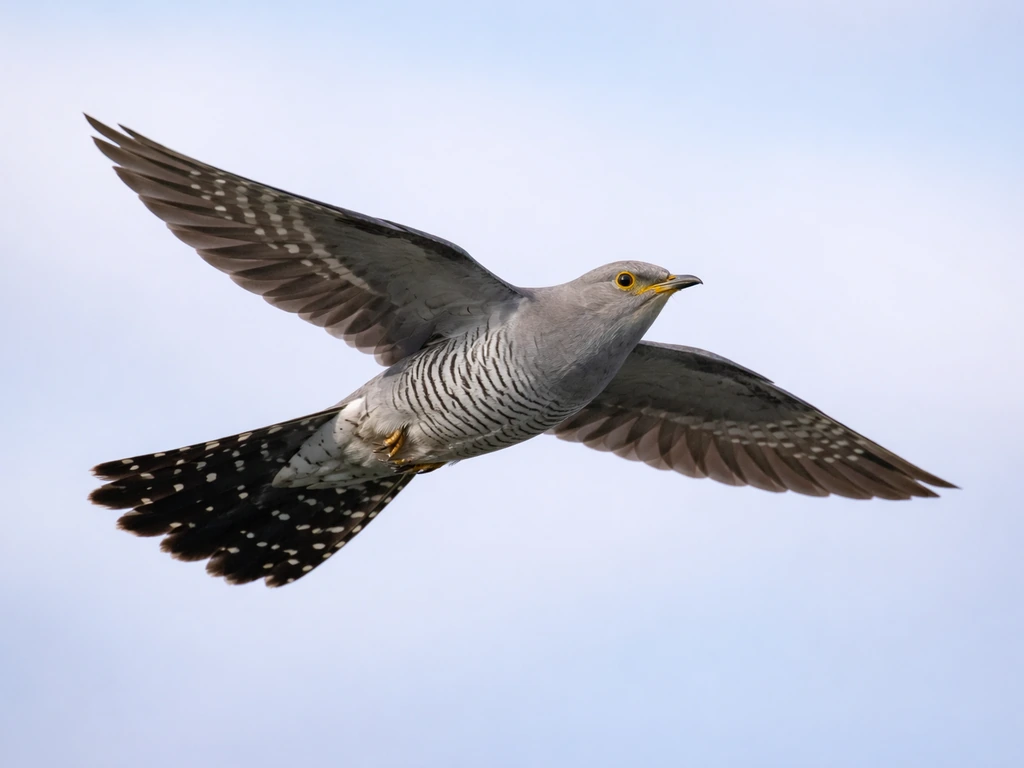
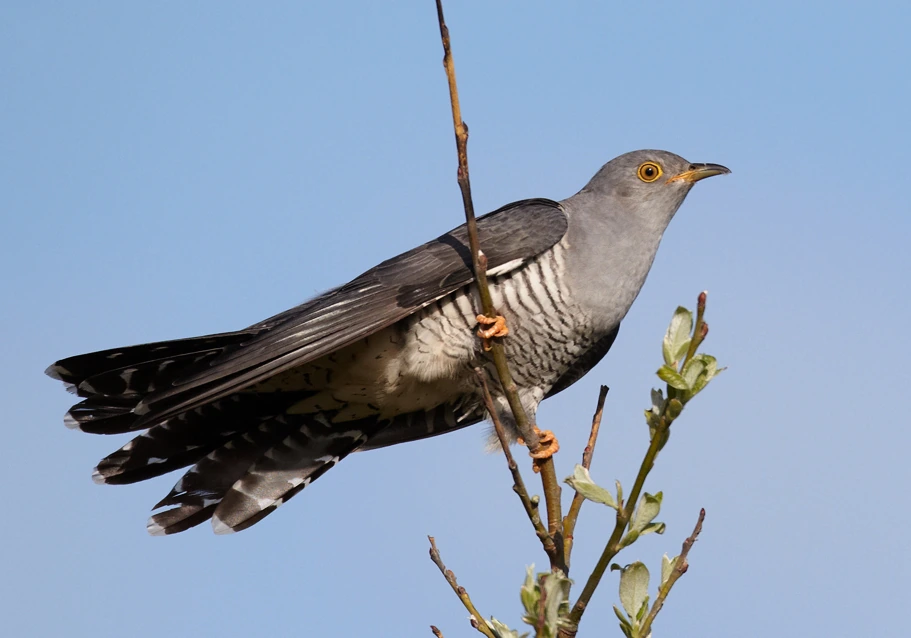
Cuckoos have the body plan of an efficient aerial traveler. Their wings are long and relatively pointed, which corresponds to a higher aspect ratio (the ratio of wingspan to wing width). High aspect ratio wings reduce drag during sustained forward flight and lower the energetic cost of each kilometer covered, which is exactly what a long-distance migrant needs. The Cornell Lab’s All About Birds guide for the common cuckoo describes it as a blank" rel="noopener noreferrer">long-winged, long-tailed bird in flight and provides identification and behavior context, including its flight characteristics. Their tails are long and graduated, and that length is functional: a long tail acts as a rudder and stabilizer, giving the bird fine directional control. In flight, that combination of long pointed wings and long tail produces the hawk-like silhouette that makes cuckoos so frequently misidentified.
More terrestrial cuckoos, like the roadrunner of North American deserts, have evolved shorter, more rounded wings suited to short bursts and ground maneuvering rather than sustained flight. The common cuckoo and its close relatives in the genus Cuculus sit at the other end of that spectrum, with wing morphology tuned for efficient powered flight over long distances. Research linking wing metrics to flight style confirms that pointed wings and low wing loading (mass per unit wing area) are associated with reduced flight costs during migration, which fits the cuckoo's biology precisely.
The flight muscles are also well developed. Cuckoos are not hoverers (unlike hummingbirds, which are famous for flying backwards, a feat no cuckoo attempts), but their pectoral muscles generate the sustained downstroke power needed for direct, level flight over long distances. Think of them as long-haul fliers rather than aerobatic performers.
How to recognize a cuckoo in flight
If you are in the field and wondering whether the bird you just saw flying is actually a cuckoo, here are the practical cues to look for. The overall impression in flight is falcon or sparrowhawk, but with a longer, more drooping tail. The wingbeats are shallow and fairly rapid, rarely rising above the body plane, giving the bird a distinctive stiff-winged look compared to most similarly sized birds. It tends to fly in a straight line rather than weaving. For the yellow-billed cuckoo specifically, watch for rufous (reddish-brown) flashes in the wing during the downstroke and the bold white spots on the underside of the long tail, which are visible both perched and in flight.
- Long tail trailing behind, often appearing slightly drooped in flight
- Wings held stiffly and beating shallowly, rarely raised above body level
- Straight, direct flight path without much weaving or undulation
- Hawk-like silhouette: long wingtips, long tail, relatively small head
- Yellow-billed cuckoo: rufous wing flash visible during wingbeats
- Common cuckoo: pointed wingtips and overall falcon impression at distance
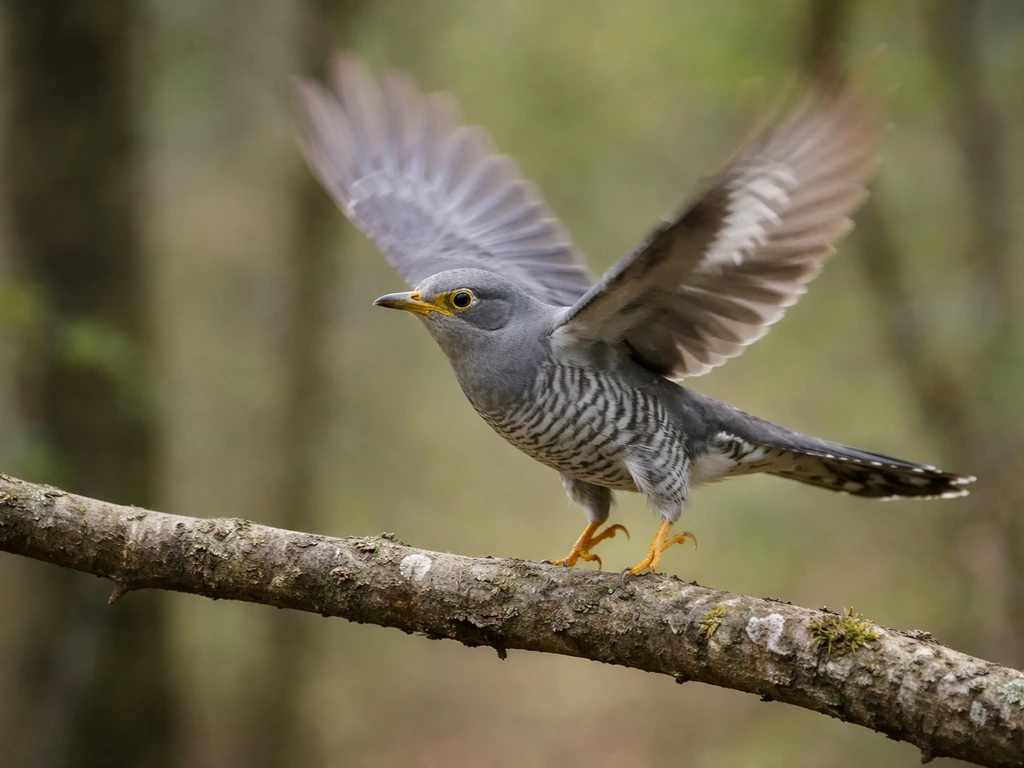
- Takeoff is typically abrupt from a perch, landing deliberate and often accompanied by tail-pumping
Behavior around landing is also useful. Cuckoos often bob or pump their tail after landing, which is a reliable behavioral cue. Watching how a bird moves between perches, as field ornithologists recommend, is frequently more informative than trying to nail down plumage details at distance. If you see a bird with that hawk silhouette bobbing its tail after landing in a hedgerow, you are almost certainly looking at a cuckoo.
Why people sometimes think cuckoos cannot fly
There are a few reasons the question even comes up, and they are all worth addressing directly. The most common one is misidentification. People familiar with mechanical cuckoo clocks, the animated toy bird that pops out and calls, sometimes carry a vague mental image of a small, non-flying creature. The real bird shares almost nothing with that cartoon beyond the call. A second source of confusion is behavioral: cuckoos spend extended periods perched and motionless, especially while calling. A bird you hear for twenty minutes without seeing move can feel like something that stays put rather than flies.
Ground observation is another factor. Cuckoos occasionally forage on the ground, especially when searching for hairy caterpillars, which are a dietary specialty most other birds avoid. Seeing a cuckoo walking on the ground and then losing sight of it can leave the impression it simply walked away. In reality it almost certainly flew, but cuckoos are quick and secretive when moving between perches, especially near host nests.
Weather matters too. Like most birds, cuckoos reduce flight activity during heavy rain or storms, perching quietly and waiting conditions out. If you happen to observe cuckoos during a wet spell, you might see little aerial activity for hours. This is not a flight limitation; it is sensible energy management. Research on migratory birds confirms that poor atmospheric conditions cause significant reductions in flight behavior across many species.
Finally, injured or juvenile birds can appear grounded. A young cuckoo that has recently fledged but is not yet a strong flier, or an adult with a wing injury, may stay low and move clumsily. This is worth noting if you find a bird that genuinely seems unable to fly, since that individual may need help rather than simply being a representative of its species.
How to verify what you are seeing: quick steps
If you want to confirm whether the bird you are watching is a cuckoo, and whether it is actually capable of flight, here is a practical sequence to follow. If you are also wondering does crane bird fly, compare its typical soaring and ground habits with what cuckoos do in the air.
- Listen first: the common cuckoo's two-note call (the classic "cuck-oo") is unmistakable and carries far. The yellow-billed cuckoo gives a hollow, knocking series of "ka-ka-ka-kow-kow" notes. Hearing the call immediately confirms species.
- Check the silhouette in flight: long tail, long pointed wings, small head, direct flight path. If it looks vaguely like a falcon but flies with shallower wingbeats, you are on the right track.
- Watch for tail behavior on landing: tail pumping or bobbing after perching is a reliable cuckoo field mark that distinguishes it from hawks or doves.
- Look for rufous wing flash (yellow-billed and black-billed cuckoos) or plain gray-brown wings with barred underparts (common cuckoo) during flight.
- Note the habitat and season: common cuckoos are in Europe and Asia from April to August; yellow-billed cuckoos are in North America from May to September. Seeing a bird in the right place and time narrows identification significantly.
- Cross-check with a reliable field guide or the Cornell Lab's All About Birds website, which includes photos, range maps, and audio recordings for every species.
- If the bird appears injured or truly cannot fly, contact a local wildlife rehabilitator rather than handling it yourself.
Cuckoos versus other birds people wonder about

It is worth a quick comparison to put cuckoo flight in context. Unlike cranes, which are powerful but need a long runway for takeoff, cuckoos launch quickly from perches. Unlike the hummingbird, which flies backwards with extraordinary hovering precision, cuckoos are built for forward sustained flight rather than aerial dexterity. That is not a behavior cuckoos are known for, but it is a useful contrast to how they move through the air flies backwards. Their niche is closer to a falcon or swift in terms of flight economy, though their wingbeat style is distinctly their own. If you have spent time watching cranes or raptors and then encounter your first cuckoo in flight, the most striking thing is how purposeful and direct it looks, covering ground efficiently without wasted movement.
| Species | Flight style | Migration? | Notable cue in flight |
|---|---|---|---|
| Common cuckoo | Direct, powered; hawk-like silhouette | Yes, long-distance to Africa | Long tail, shallow wingbeats, falcon impression |
| Yellow-billed cuckoo | Straight path, sharp wingbeats with pause | Yes, to South America | Rufous wing flash, bold white tail spots |
| Squirrel cuckoo | Glides across clearings, perches openly | Mostly resident | Long tail, calls in flight |
| Greater roadrunner | Short bursts; primarily ground-running | No | Rarely seen in sustained flight |
The takeaway is straightforward: cuckoos are real, capable fliers. The common cuckoo is one of the more impressive long-distance migrants in the bird world, and even the more sedentary cuckoo species use flight as a routine part of daily life. The first bird to fly is often debated, but studying real flying birds like cuckoos helps clarify how flight evolved in birds over time cuckoo is one of the more impressive long-distance migrants. If you see one perched and calling, appreciate that you are looking at a bird that may have recently arrived from Central Africa under its own wing power. That is worth knowing the next time someone insists the cuckoo is just a clock bird.
FAQ
Can cuckoo birds fly long distances nonstop, or do they stop to rest like many migrants?
Many cuckoos undertake long, uninterrupted migration pushes, especially during the major trans-Sahara leg, but exact stop frequency varies by age and route. If you are tracking or observing from the ground, the key clue is whether you see a single sustained, directional crossing, because true “resting stopovers” are usually visible only when birds are near land and weather fronts.
Do cuckoos only fly in migration season, or do they fly locally during breeding?
They fly much more than their spring calling makes it seem. During breeding, they routinely move between perches, chase or reposition for territorial reasons, and females must make fast, concealed movements into and out of host nests, so short flights within a few hundred meters are common even when the bird appears mostly stationary.
How can I tell whether a flying bird is a cuckoo versus a similar hawk-like species?
Use the combination of silhouette and movement: cuckoos often show a longer, more drooping tail than many raptors of similar size, shallow rapid wingbeats that keep the wing profile relatively stiff, and straighter routing with less weaving. Adding behavior helps too, a tail bob or pump after landing is a practical confirmation cue.
If I only hear a cuckoo and never see it flying, does that mean it cannot fly?
Not at all. Cuckoos can remain perched for long stretches while calling, using stillness as part of their signaling and host-survey strategy. You are more likely to miss them because their takeoffs and re-perching can be quick and hidden by hedges or dense vegetation.
Why would I see a cuckoo on the ground if it is built for flight?
Ground activity can happen, particularly when they are hunting preferred prey like hairy caterpillars. The mistake people make is assuming the bird walked away permanently, in reality it often moves discreetly between cover and may take off suddenly once it feels exposed.
Do weather conditions completely stop cuckoo flight?
They do not “ground” cuckoos permanently, but heavy rain and storms commonly reduce how often and how far they fly. If you visit during wet spells, expect longer quiet periods on perches, the bird is typically waiting out conditions rather than showing a lack of flight ability.
What should I do if I find a young or injured cuckoo that seems unable to fly?
Treat it as a potential welfare case, because recently fledged juveniles or adults with wing injuries can appear clumsy or unable to launch. Avoid handling unless necessary, keep pets and people away, and contact a local wildlife rescue or bird rehabilitation group for the correct next step.
Next Article
Does a Crane Bird Fly? How and Why Cranes Can Fly
Do crane birds fly? Learn why cranes can, how they fly, and what factors like injury or molt may ground them.