The bird most people are thinking of when they say 'flies like a helicopter' is the hummingbird. It hovers in one spot with wings beating up to 80 times per second, moves forward, backward, and straight up or down, and can stay perfectly stationary mid-air while feeding. If you were also wondering what bird fly backwards, that same kind of wing control shows up in a few hover-capable species like hummingbirds.
Which Bird Flies Like a Helicopter? How to Identify It

Marcus Chen
23 Jun 2026
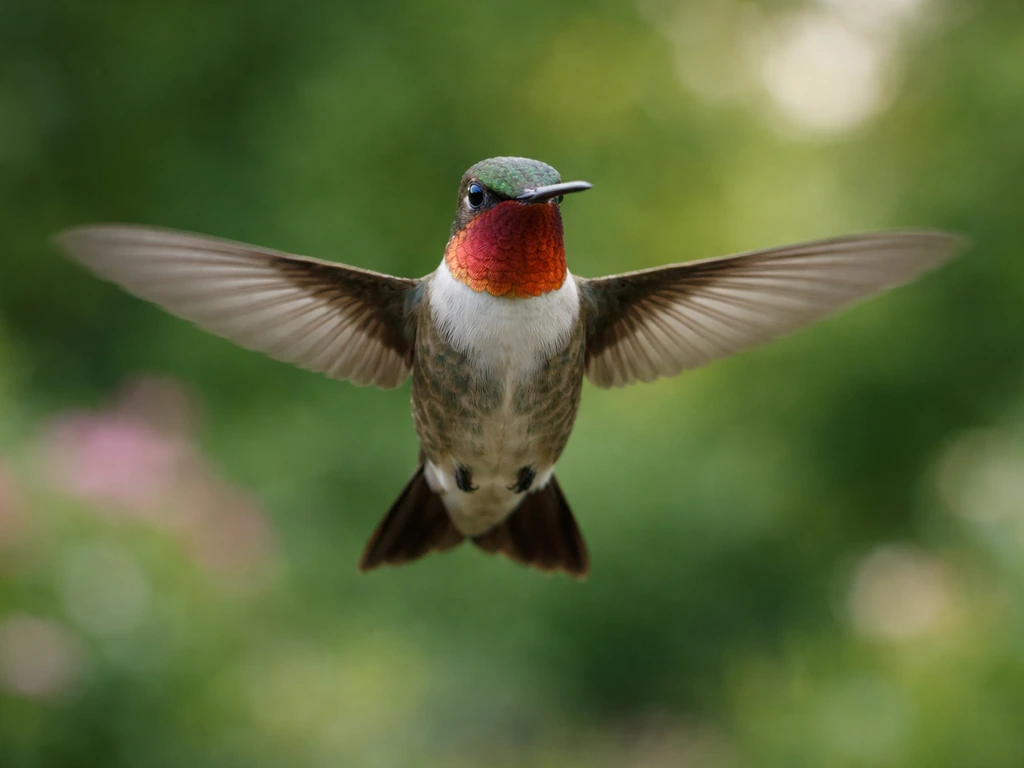
Nothing else in the bird world comes close to that kind of sustained station-keeping. That said, a few other birds, American kestrels, belted kingfishers, and certain terns, pull off brief helicopter-like hover moments that can look just as striking in the field. The species you're seeing depends heavily on where you are, what habitat you're in, and exactly what the bird is doing.
What 'helicopter-like' flight actually looks like
When people reach for the helicopter metaphor, they're almost always describing one of two things: a bird holding completely still in the air without perching, or a bird that moves with sharp, controlled direction changes that feel mechanical rather than soaring or gliding. A helicopter doesn't coast. It applies thrust constantly and can redirect that thrust instantly. That's the key observable cue.
True hovering means the bird's body is essentially motionless in space while its wings are doing all the work. You'll notice the wings appear blurred or even invisible because they're moving too fast to track, while the bird's head and body stay rock-solid still. The bird isn't drifting on a thermal or riding wind, it's actively generating lift on every single wingbeat, both the downstroke and the upstroke. That's the technical signature of helicopter-style flight, and hummingbirds are the masters of it. Compare that with what does crane bird fly looks like, since cranes have very different flight behavior than hovering birds.
A secondary version of 'helicopter-like' is what a kestrel does over a field: it faces into the wind, fans its tail, and holds position in the sky while scanning the ground below. Its head stays eerily still (birds of prey stabilize their heads to keep their vision locked on a target) while its wings beat or adjust. It's not as sustained or as omnidirectional as a hummingbird, but from a distance it absolutely looks like something hovering under mechanical control.
The top candidates, by behavior and region
If you're in North America, these are the birds most likely behind your sighting. Each has a distinct reason for hovering and a different look in the field.
| Bird | Region | Hover style | Reason for hovering | Wing blur? |
|---|---|---|---|---|
| Hummingbird (various species) | North and South America | Sustained, omnidirectional | Nectar feeding | Yes — wings invisible |
| American Kestrel | North America (open habitats) | Wind-assisted station-keeping | Hunting insects/small prey | Partial — wings visible but fast |
| Belted Kingfisher | North America near water | Brief vertical hover before dive | Fish targeting | No — wings clearly visible |
| Terns (various) | Coasts, lakes, rivers globally | Short hover before plunge dive | Fish targeting | No — wings visible |
| Common Kestrel | Europe, Asia, Africa | Wind-assisted station-keeping | Hunting small mammals/insects | Partial — wings visible but fast |
Hummingbirds are found throughout the Americas, with the ruby-throated hummingbird covering most of eastern North America during summer. If you're anywhere near flowering plants, feeders, or woodland edges in the Americas and you saw something hovering at a flower, it's almost certainly a hummingbird. If you're in Europe or Africa and saw a small hovering bird, you're looking at the common kestrel, hummingbirds don't exist there.
American kestrels are worth a special mention because they show up frequently in open fields, highway medians, and grasslands across North America. People often describe them as 'hovering like a drone' or 'hanging in the air.' They're small for a raptor (about the size of a robin), and they really do look like they're frozen in the sky. Unlike hummingbirds though, they're usually working with the wind rather than generating all their lift independently.
How to tell which species you're actually seeing

Run through these five field checks quickly. Together they'll narrow down the species within a minute or two of observation.
- Size: Hummingbirds are tiny — 3 to 5 inches long, lighter than a nickel. Kestrels are small but obviously bird-sized, around 9 to 12 inches with a wingspan around 22 inches. Kingfishers are stocky and robin-to-jay sized. If it looks insect-small at close range, it might even be a hummingbird hawk-moth (see below).
- Wing blur: Can you see individual wingbeats? Hummingbird wings are completely invisible in flight — just an audible hum and a shimmer. Kestrel wings are fast but visible. Kingfisher wings are clearly defined and noisy.
- Habitat: Near flowers or a feeder? Hummingbird. Over an open field or highway median? Kestrel. Hovering over water and then diving straight down? Kingfisher or tern.
- What happens next: Does the bird stay hovering for 10, 20, 30 seconds while feeding? Hummingbird. Does it dive sharply to the ground after hovering? Kestrel or tern. Does it plunge into water? Kingfisher.
- Sound: Hummingbirds make a distinctive humming or buzzing sound from their wings — you'll hear it if you're within 10 feet. Kestrels are mostly silent while hovering and call with a sharp 'klee-klee' sound. Kingfishers are loud and rattling in flight.
Posture is another useful cue. A hovering hummingbird holds its body at roughly a 45-degree angle, tilted forward, with its bill pointed at the flower. A kestrel faces directly into the wind with its tail fanned and its body nearly horizontal. A kingfisher hovers with its heavy head and bill aimed straight down at the water. These are very different silhouettes once you know what you're looking for.
Why they can hover and maneuver like that
The helicopter analogy holds up surprisingly well for hummingbirds. A helicopter generates lift by spinning rotor blades continuously, producing thrust on every part of the rotation cycle. Hummingbirds do something remarkably similar with their wings: they generate lift on both the downstroke and the upstroke. Most birds only generate significant lift on the downstroke and use the upstroke mostly for repositioning. Hummingbirds rotate their wings at the shoulder joint during each stroke so the leading edge stays properly oriented on the way up as well as the way down. The result is lift production through the full cycle, which is what lets them stay in one place.
The wingbeat frequency is what makes this possible at a practical level. Hummingbird wings beat anywhere from 20 to 80 times per second depending on the species and what the bird is doing. At those frequencies, the inertia of the body is so much greater than the brief forces of each individual wingbeat that the body barely moves between strokes. The bird's center of mass stays essentially fixed in space while only the wings are moving. It's the same principle that lets a helicopter hover: continuous, high-frequency thrust balanced against gravity.
Kestrel hovering works on different physics entirely. When conditions are right, the kestrel faces into a headwind and uses the wind's lift across its wings to offset its weight, requiring very little or no flapping to maintain position. On calm days it does flap, quickly and continuously, but in a good breeze it can seem almost motionless without obvious effort. This is sometimes called 'wind hovering' or 'kiting,' and it's distinct from the powered hovering of hummingbirds. Researchers have noted that kestrels make fine adjustments with their tails and wingtips to maintain head stability while scanning below, which gives the sighting that eerie 'locked in space' appearance.
The biology behind the look: muscles, wings, and feathers
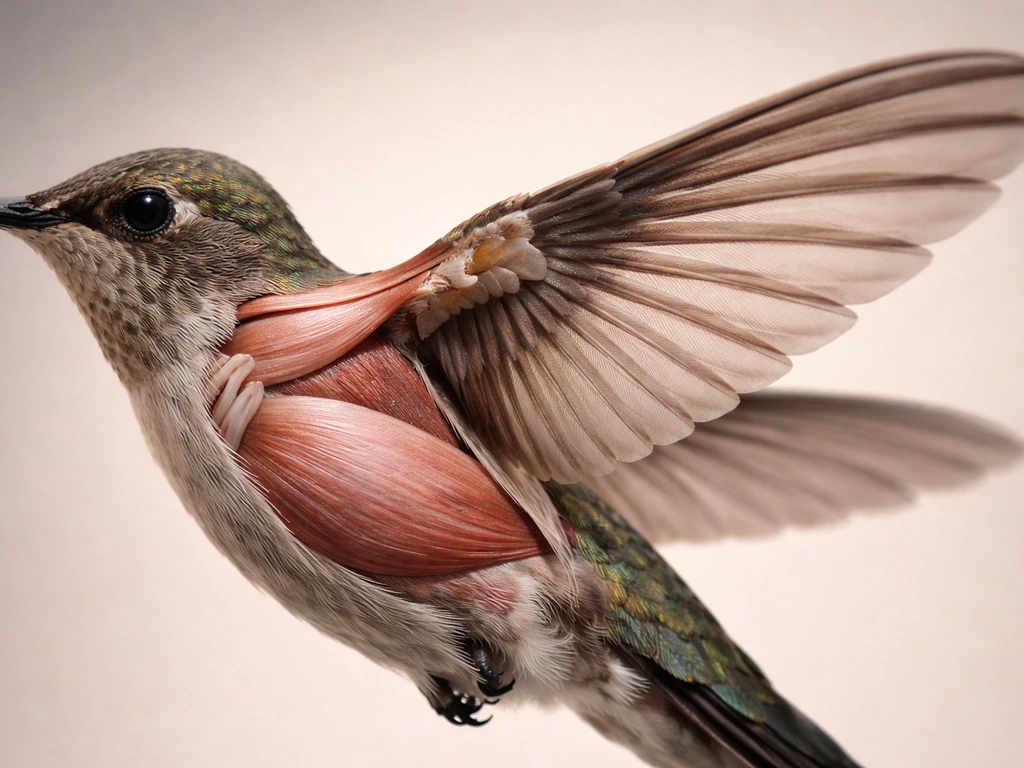
In most birds, the pectoralis major (the large chest muscle that powers the downstroke) is around 8 to 11 percent of body mass, and the supracoracoideus (the smaller muscle that powers the upstroke) is much smaller, roughly a 10:1 ratio.
Hummingbirds’ pectoralis major makes up about 8, 11% of body mass, and review evidence highlights how flight muscles enable power and control for hovering [pect oralis major (the large chest muscle that powers the downstroke) is around 8 to 11 percent of body mass](https://pmc. ncbi. nlm. nih.
gov/articles/PMC3130450/). Hummingbirds have a radically different arrangement: their pectoralis to supracoracoideus ratio is closer to 2:1. That means the upstroke muscle is proportionally massive, which is exactly what you'd expect in a bird that needs to generate lift on the way up as well as the way down.
Hummingbird wings are also structurally different from most birds. The wing bones from the wrist to the wingtip make up a large proportion of the total wing length, and the shoulder joint has an unusual range of motion that allows the full rotation needed for lift generation on both strokes. High-speed video studies show that hummingbirds dynamically morph their wing shape throughout each stroke, adjusting camber and area in real time to tune aerodynamic performance. Think of it as a rotor blade that's also actively reshaping itself mid-rotation.
The tail plays a role too, especially for stability and fine control. Research from Harvard has shown that hummingbirds use tail angle adjustments to manage stability during turbulent conditions, essentially acting as a control surface similar to the tail rotor on a helicopter. You can sometimes see this in slow-motion footage: the tail fanning and tilting subtly as the bird adjusts its hover position.
One fascinating detail: hummingbirds have been documented doing what researchers call 'intermittent hovering,' where they briefly pause their wingbeats mid-hover and still maintain their vertical position for a moment. The physics behind this are still being studied, but it's one more piece of evidence for how finely tuned their hovering mechanics are compared to any other bird.
Common confusion: flight styles that look like hovering but aren't
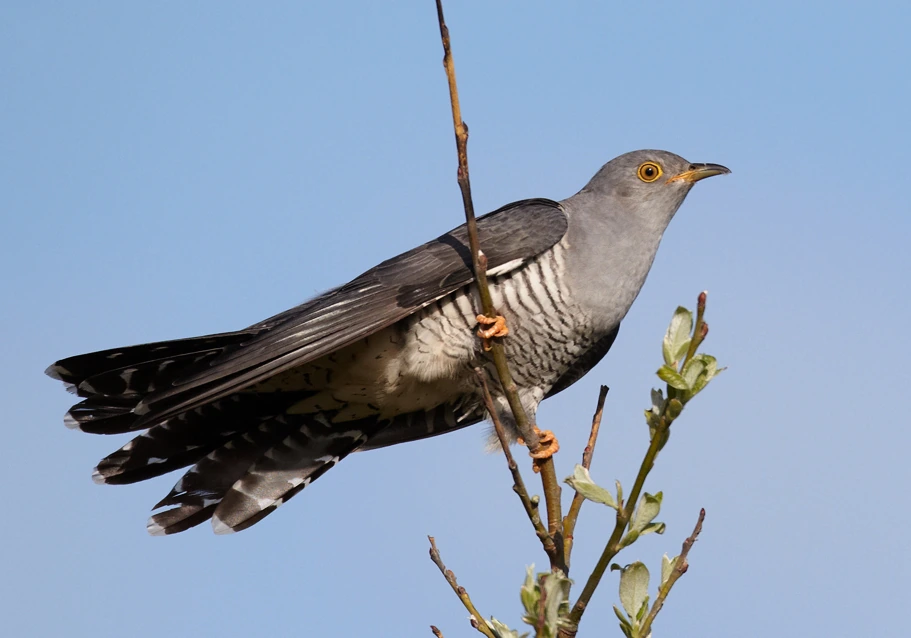
Several birds do brief hover-like moves that can fool you, and at least one non-bird gets mistaken for a hummingbird on a regular basis. So, if you're wondering whether a cuckoo bird can fly, it helps to compare how its flight looks against true hovering mechanics hover-like moves. Here's what to watch out for.
Terns and kingfishers: 'hover then dive'
Forster's terns, little terns, common terns, and belted kingfishers all pause above water in what looks like a hover before diving. The pause is real, they're triangulating the position of a fish, but it typically lasts only a few seconds and the bird's body isn't held as steadily as a true hoverer. Watch for the plunge dive immediately after. If the bird drops straight into the water, you're watching a hunter positioning for a strike, not a helicopter-style hover for feeding.
Swifts and swallows: fast darting flight
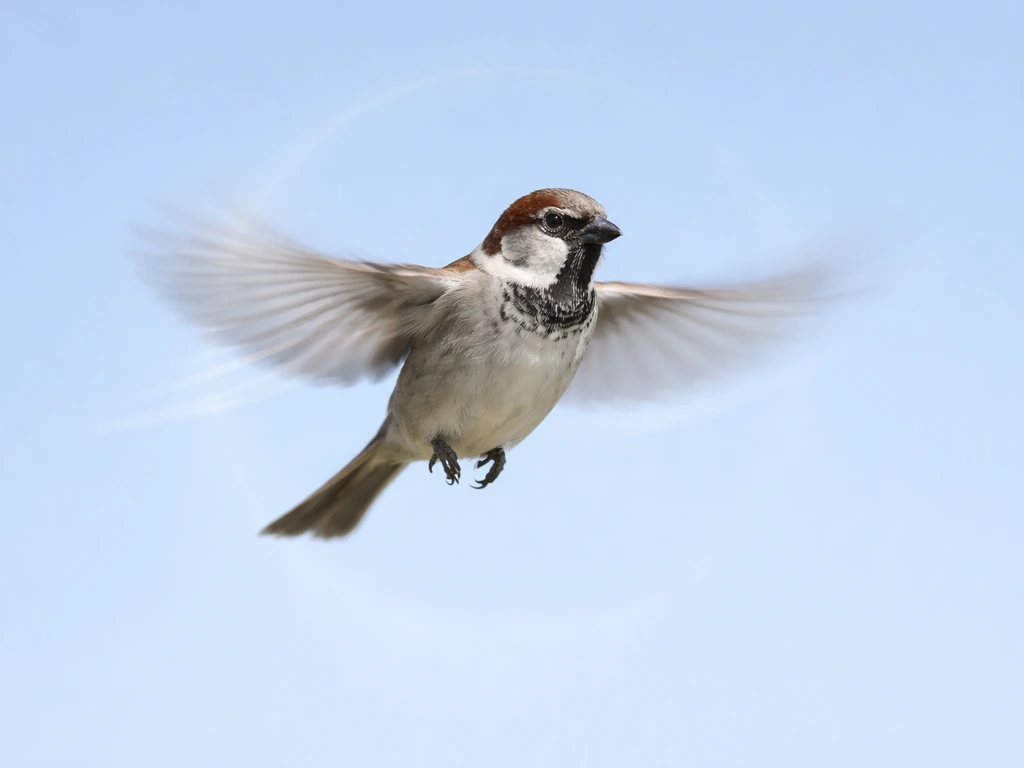
Swifts and swallows do rapid, erratic aerial maneuvers that can seem chaotic and mechanical at a distance. But they don't hover, they're in continuous forward motion, chasing insects through the air. Swifts in particular have very stiff, scimitar-shaped wings that beat at only about 4 to 8 times per second (compared to hummingbirds' 20 to 80), and they're built for speed and efficiency in forward flight, not station-keeping. If the bird you saw was darting and sweeping through the air without stopping, that's likely a swift or swallow, not a hoverer.
The hummingbird hawk-moth
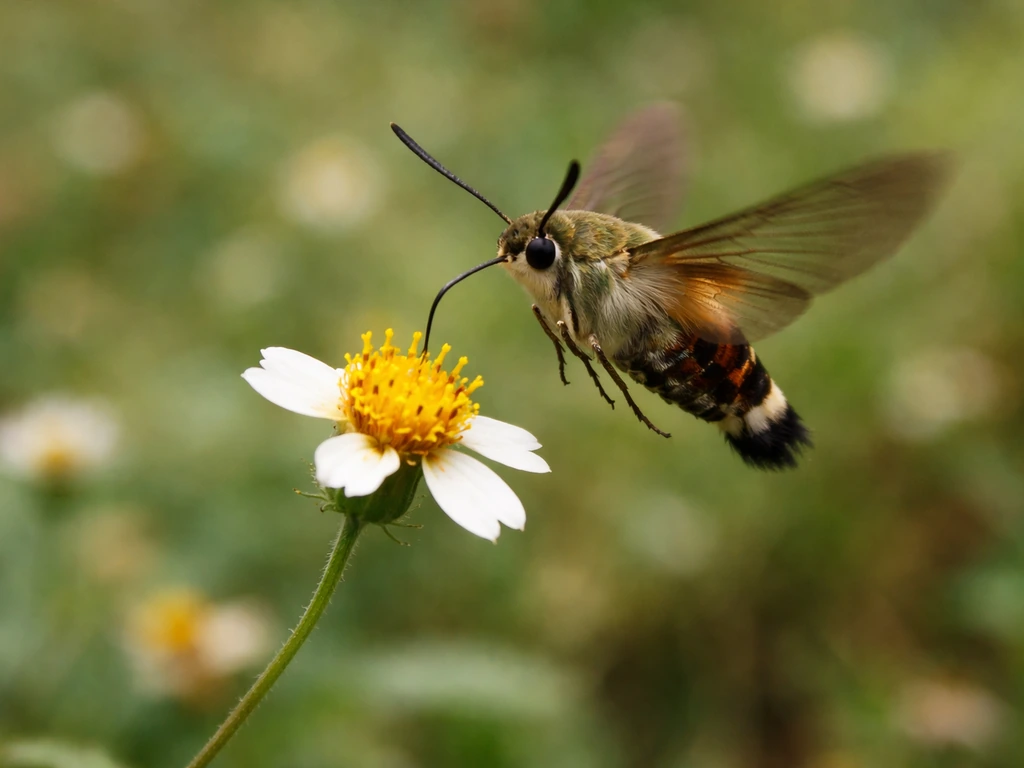
This one catches people off guard regularly. The hummingbird hawk-moth is an insect found across Europe, Asia, and parts of Africa that hovers at flowers with a rapid wingbeat and an audible hum, almost identical to what a hummingbird looks like in flight. In North America, several species of sphinx moths (also called hawk moths) do the same thing. If you're in Europe and you think you saw a 'tiny hovering bird,' there's a real chance it was this moth. It's genuinely one of the most convincing mimics in the natural world. The key giveaway: it's the size of a thumb, and if you look closely, you'll see the antennae.
Darters and other fast neck-movers near water
Anhingas and darters (water birds related to cormorants) don't hover, but people sometimes describe their rapid, snaking head and neck movements when fishing as 'helicopter-like.' This is a different kind of 'mechanical-looking' motion, it's the quick lateral repositioning of the head and neck underwater or at the water surface. If you saw rapid, darting movements near water at the surface level rather than in the air above it, this might be your bird.
How to confirm what you saw right now
The fastest way to confirm a sighting is to note four things while the bird is still in view (or as soon as you can): the size relative to something familiar (a sparrow, a robin, a crow), the habitat (flower garden, open field, over water, woodland edge), what the bird did right before and right after the hover, and whether you could see individual wingbeats or if the wings were a blur. Those four data points will eliminate most candidates immediately.
If you can, take a video on your phone, even a shaky, distant clip is useful. Slow it down in playback and look at the wingbeat pattern and body posture. Cornell Lab's All About Birds website and app is the most practical identification resource for North American birds, with photo comparisons, sound recordings, and behavior descriptions for every hummingbird species and raptor you'd encounter. eBird (also from Cornell Lab) lets you check what species have been reported recently in your exact location, which is incredibly useful for narrowing down which hummingbird species you might be seeing in your region.
For the kestrel specifically, the Merlin app from Cornell Lab is excellent, you can describe the bird by size, behavior, and habitat and it'll give you a ranked list of likely species. HawkWatch International's fact sheets are worth bookmarking if you're near open country or farmland where kestrels are common.
One last useful check: time of day and season. If you want the bigger question, what was the first bird to fly is still tied to early bird evolution and the appearance of flight adaptations in the fossil record. Hummingbirds in North America are present roughly April through September before migrating south, and they're most active at dawn and dusk. Kestrels are year-round residents across much of North America and are most visible in open habitats during daylight hours, especially late morning and afternoon. If you're seeing helicopter-like hovering over a field in February, you're almost certainly watching a kestrel, not a hummingbird.
For readers curious about other unusual flight abilities in birds, some of these same hovering species also show up when asking what bird can fly backwards, hummingbirds can, and it's for the same mechanical reasons covered here. The thread connecting all of it is wing control: the more precisely a bird can reshape and reorient its wing on the fly, the more directions and speeds it can manage. A peer-reviewed kinematics study on Anna’s hummingbirds (Calypte anna) quantifies hovering performance across different heights above ground, showing how hover posture changes in ground effect blank" rel="noopener noreferrer">adjusts with environment (ground effect).
FAQ
How can I tell if I’m seeing powered hovering (hummingbird) versus wind hovering (kestrel)?
Use the “hover to feed” timing test. True hover-feeders (especially hummingbirds) usually hold position long enough for repeated wingbeats over a specific target like a flower or feeder, then leave briefly and return. Kite-like raptors (like kestrels) often pause, scan, then make a quick, decisive drop toward prey rather than repeatedly sipping from the same spot.
What visual clues confirm the body is truly stationary, not just my viewing angle? (false hover)
Look for the wings doing the work while the body stays nearly fixed. If the bird’s head, chest, and body remain visually steady in the frame while the wings form a consistent blur, that supports true hovering. If the body keeps sliding forward, you are likely seeing a fast forward-flying hunter that only looks stationary from your angle.
If it looks like a tiny helicopter over flowers, how do I avoid mistaking a moth for a hummingbird? (quick checks)
Assume insects are possible before assuming a bird if the “bird” is extremely small, hangs at flowers, and the movement includes a continuous hovering hum-like effect. The hummingbird hawk-moth is a common mimic, and the most practical check is scale (about thumb size) and antenna visibility if you can get a clearer look.
What should I look for if the bird hovers briefly over water, then dives? Could it still be helicopter-like hovering?
If you see repeated sharp pauses at water followed by an immediate plunge, that points to plunge-divers rather than station-keeping hoverers. For Forster’s terns, little terns, common terns, and belted kingfishers, the key pattern is “pause, then drop straight into the water.” True hoverers typically feed without that fast, committed plunge.
My sighting looks chaotic and mechanical, but it never seems fully still. Could it be a swift or swallow instead of a helicopter hoverer?
Compare wingbeat count and rhythm. Swifts and swallows may look mechanical, but they typically keep moving and their wingbeat rate is much slower than hummingbirds, so the “blur while stationary” signature is usually missing. Another giveaway is continuous forward travel, even if it is zigzagging.
Can posture and silhouette reliably separate a hovering hummingbird from a hovering kestrel?
If the body is angled differently, that helps. Hummingbirds often show a forward-tilted posture toward a flower, while kestrels face into wind with a more horizontal body and fanned tail. If you can only see silhouette against sky, posture and tail spread often separate these two even when wing motion is hard to see.
How do I distinguish a hovering kingfisher from a hummingbird when both can appear to hover near targets?
Look for head and bill alignment relative to the surface being searched. A kingfisher’s hovering silhouette tends to point more directly downward (heavy head, bill aimed toward water), while hummingbirds more often orient toward a feeding target like a flower. Rapid head movements alone near water can also be “hunting motion” rather than true aerial hover.
If it’s the wrong season or location for hummingbirds, what’s the fastest way to revise my ID?
Use a location-season sanity check. In North America, hummingbirds are largely April through September and are most common at dawn and dusk, while kestrels can be seen year-round and often show up in open areas during daylight. If the date and habitat don’t match hummingbird likelihood, the safer default is kestrel.
What’s the best way to record and review a sighting so I can confirm helicopter-like flight? (video tips)
If you can record video, frame it so you capture body posture plus at least one second of wing motion. Then slow down and check whether the bird pauses vertically while the wings continue high-frequency blur, or whether the bird keeps translating through space. Even shaky clips are useful if the wingbeat pattern and whether the body drifts are visible.
Next Article
Can Cuckoo Bird Fly? Flight Ability, Cues, and Proof
Yes, cuckoos can fly. Learn flight cues, wing anatomy, common behaviors, and how to confirm sightings.