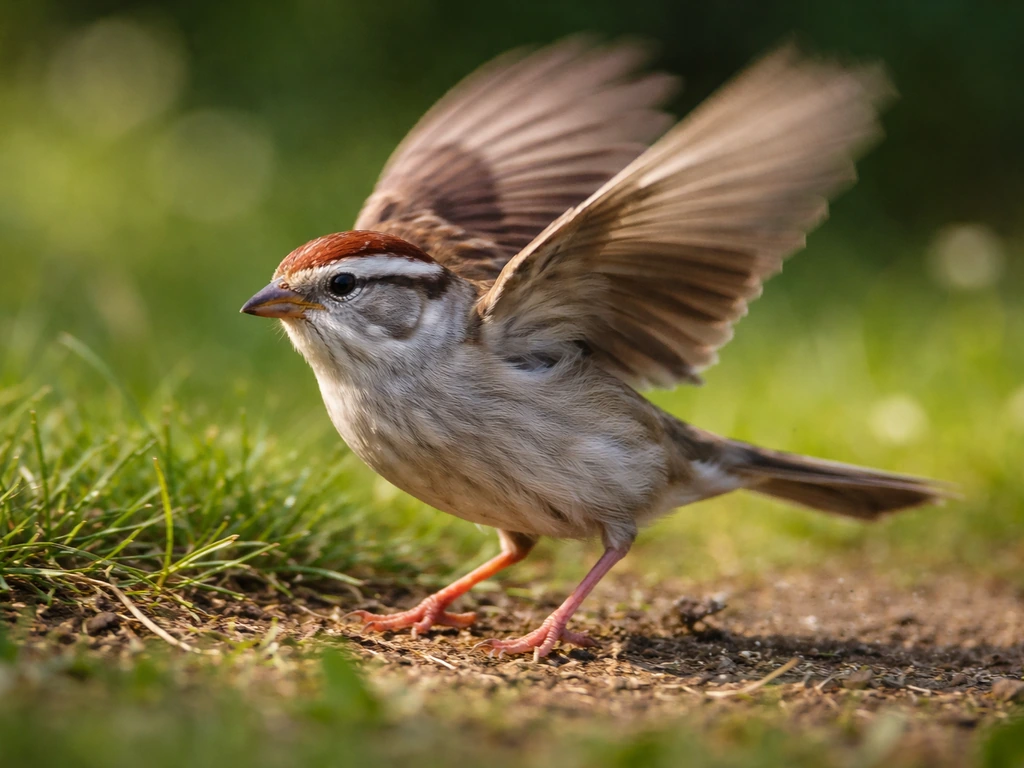
If you saw a video of a bird stuck in mid air and you're trying to figure out what happened, the most likely explanation is a camera trick: the bird's wing-flap rate synchronized perfectly with the camera's frame rate, making the wings look frozen while the bird glides forward. It's an optical illusion, not a distressed bird. But if you're watching something unfold right now in real life, that's a different situation entirely, and a bird that genuinely can't move out of a spot may be entangled, injured, or in serious trouble. This guide will help you tell the difference and know exactly what to do.
Video of Bird Stuck in Mid Air: What It Means and What to Do

Marcus Chen
29 Jun 2026
What 'bird stuck in mid air' usually means: glitch vs. real biology
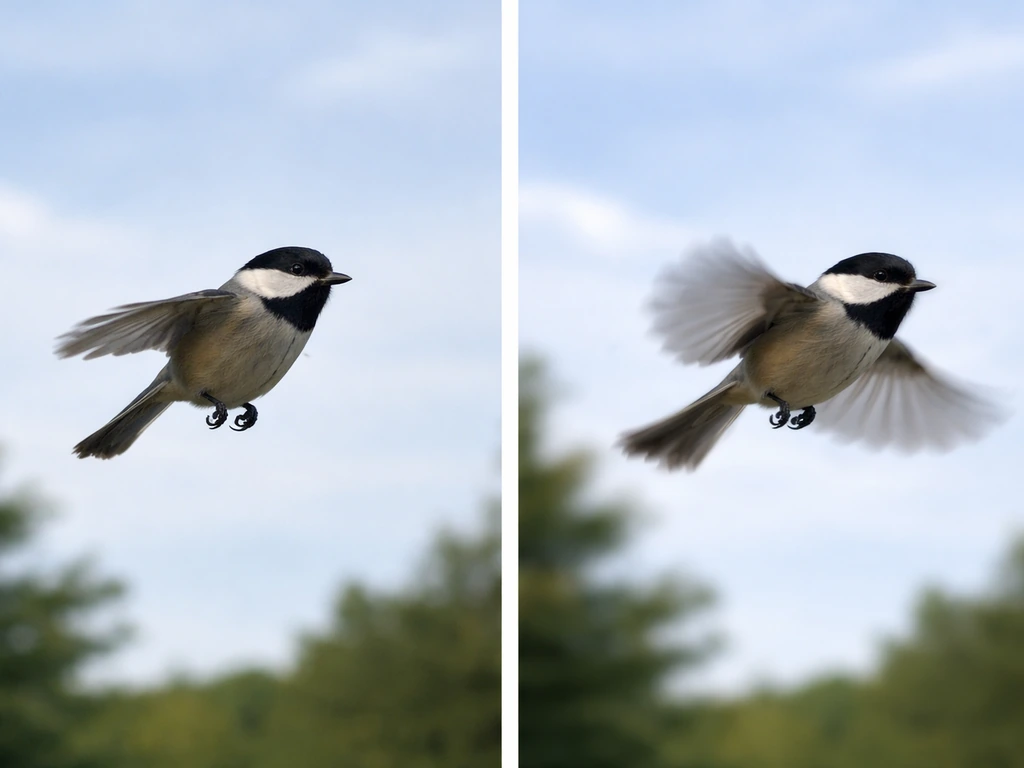
Most viral clips of birds that appear frozen or floating in the air are showing you a camera artifact, not an emergency. The most famous version of this is frame-rate synchronization: when a camera records at roughly the same frequency as a bird's wing-beat cycle, each frame captures the wings at nearly the same position in their arc. The result looks like a bird gliding in place with rigid wings, when in reality those wings are beating normally. Security cameras are especially prone to this because they record at fixed, often lower frame rates. The bird keeps moving forward through the frame, but the wings appear motionless.
A second common culprit is rolling shutter distortion. Most consumer cameras and phone sensors scan across the image row by row rather than capturing the whole frame in a single instant. When a fast-moving subject like a bird fills the frame, the top of the image and the bottom were captured at slightly different moments. This can produce a wobbly, stretched, or 'frozen' look, especially when combined with camera movement. A key way to spot the difference is to look for artifacts that become obvious in bird flight in slow motion. You may also see compression artifacts in low-quality or heavily encoded video, where motion-prediction algorithms leave ghost images or briefly lock a moving subject in place.
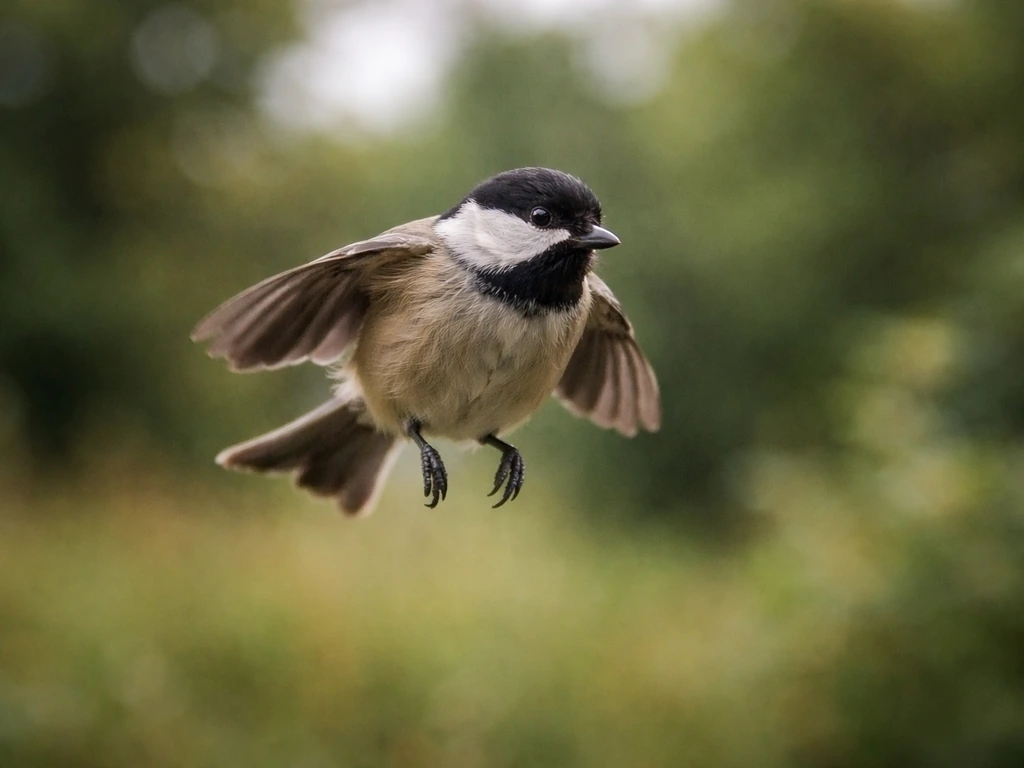
On the biology side, actual hovering does happen. Hummingbirds are the obvious example, but many raptors, kestrels in particular, perform a hunting hover by flying into a headwind at a speed that exactly cancels their forward motion. Larger birds like eagles and hawks can also appear nearly stationary when riding a strong thermal or updraft. In those cases, the bird is working hard aerodynamically; it just looks effortless from the ground. So a 'stuck' bird isn't always a problem. The question is whether the bird is in control.
If it's happening right now in front of you
If you're watching a bird that appears genuinely stuck or motionless in the air and it's not flying away, pause before doing anything. A bird that is hovering or soaring normally will look smooth and controlled, even if it seems still. A bird in trouble will look asymmetric, jerky, or will be losing altitude despite flapping hard. Tufts Wildlife Clinic notes that distress and injury indicators can include a drooping wing, lameness, inability to stand, breathing problems, or the inability to fly away in addition to other causes. Here are the immediate steps to take:
- Stop moving and stay quiet. Human presence adds stress that can tip a struggling bird into panic or injury.
- Keep pets and children back. Dogs and cats instinctively approach and can seriously injure a bird that's already compromised.
- Watch from at least 75 feet away (roughly two bus lengths) to observe without disturbing.
- Note what the bird is doing: is it gaining or losing altitude? Are both wings moving symmetrically? Is it tangled in anything visible?
- Do not throw objects, clap, or try to 'help' it fly. A bird that can't fly shouldn't be forced to.
- If the bird comes down, do not approach immediately. Give it one full hour to recover on its own before intervening.
The real causes: what actually gets a bird 'stuck'
When a bird genuinely can't maintain normal flight, there are five main causes worth knowing.
Entanglement in line or debris
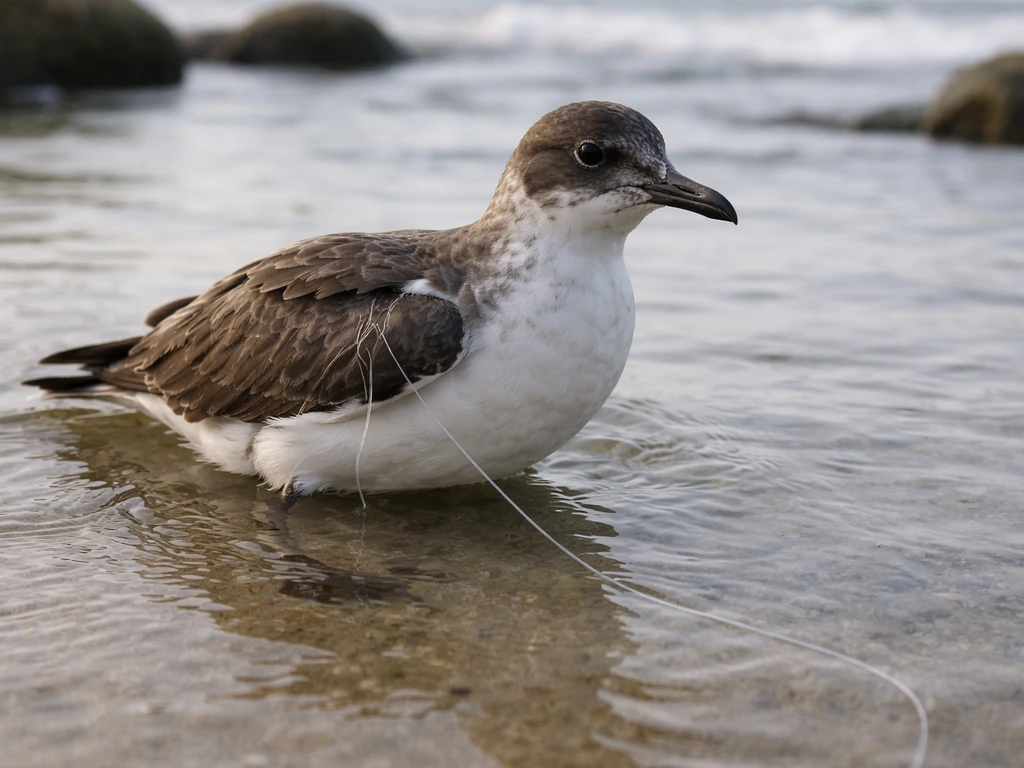
Monofilament fishing line is one of the most dangerous materials birds encounter near water. A single strand can wrap around a leg, wing, or beak mid-flight, causing the bird to stall or flutter in place before coming down. Deeply embedded entanglement can cut off circulation within hours. A bird tangled in line near a dock or shoreline may appear to hover or jerk erratically at low altitude before landing awkwardly. Kite string, balloon ribbon, and mesh netting cause similar problems.
Wind, thermals, and updrafts
A sudden strong gust or an unexpected thermal column can temporarily halt a bird's forward progress, making it look pinned in place. This is almost always benign. Raptors and large soaring birds actively seek these conditions. Even smaller songbirds can be briefly stalled by a strong headwind before adjusting their wing angle and pushing through. If the bird looks relaxed and resolves the hover within seconds, it was just riding the air.
Wing or leg injury
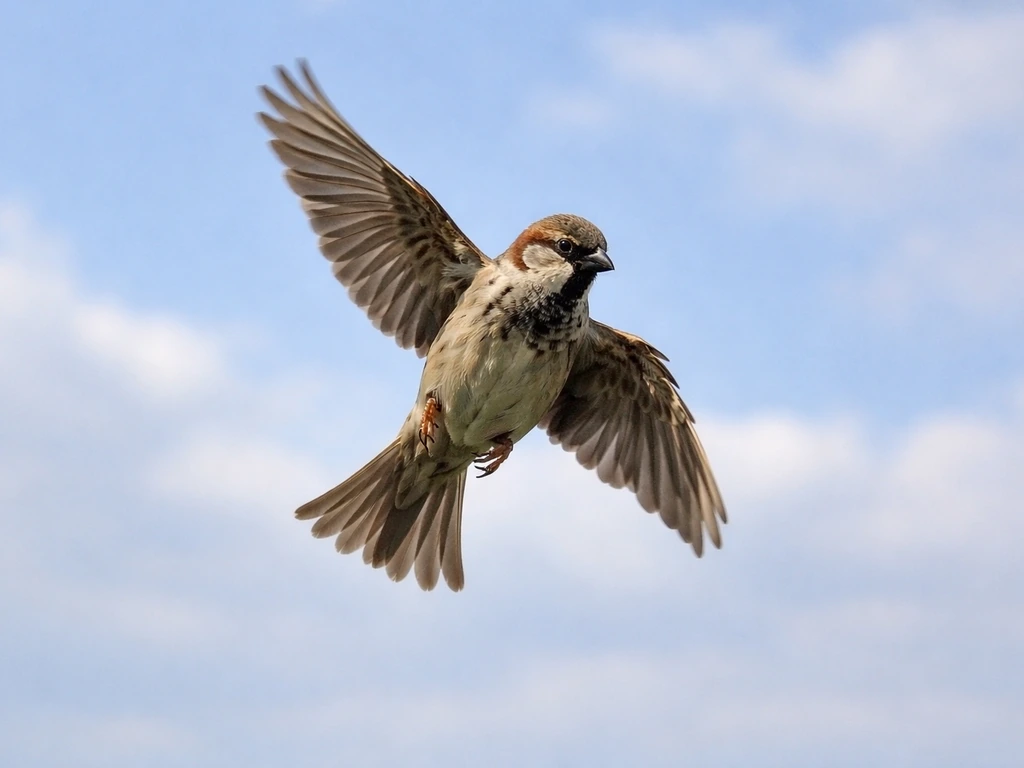
A fractured wing or injured shoulder joint will show up as asymmetric flight: one wing beating higher or more weakly than the other, one side dropping, or a bird that keeps circling or losing altitude on one side. These birds often look like they're struggling against themselves. A leg injury may not affect flight immediately but will show when the bird tries to land.
Predation stress and threat response
A bird being chased or targeted by a raptor may freeze, dive, or behave erratically in mid air. What looks like a bird 'stuck' might actually be a prey species caught in a hover as it monitors a hawk. Small birds being mobbed or a songbird caught in the sight line of a peregrine will sometimes stall and drop into cover deliberately. This is normal behavior and requires no intervention.
Exhaustion
Migratory birds can arrive at a stopover point severely depleted. An exhausted bird may barely clear rooftop height, hover clumsily near a window, or land on unusual surfaces like a boat deck or a person's shoulder simply because it has nothing left. These birds need rest and time more than anything else.
How to read the video: identifying the bird and assessing what you're seeing
Whether you're reviewing a clip or showing someone else a video, here's how to quickly assess what's actually happening.
- Body shape and size: stocky with a rounded head suggests a raptor like a kestrel or hawk; long narrow wings suggest a swallow or swift; a large flat silhouette suggests a heron or eagle.
- Wing movement: are the wings beating at all? If the wings are completely still and the bird is moving forward, it's gliding normally. If one wing is partially extended and the other isn't, that's a red flag.
- Altitude change: a bird losing altitude while flapping hard is in distress. A bird that maintains height while barely moving horizontally is likely hovering on a thermal or headwind.
- Body posture: limp tail, dangling legs, or a head drooping forward all suggest injury or extreme exhaustion.
- Surroundings: is there a wire, net, or line nearby? Is the bird near a window or building? Low-altitude irregular movement near structures suggests collision or entanglement.
- Camera artifacts to rule out: does the bird's body move forward normally while only the wings look frozen? That's almost certainly a frame-rate sync illusion, not a problem.
If you're watching slow-motion footage, keep in mind that high-speed cameras reveal a remarkable amount of detail about a bird's stroke mechanics that looks unusual at normal speed. Videos shot at 240 or 480 frames per second and then played back slowly will show wing feathers fanning, separating, and flexing in ways that can look bizarre or like something is wrong. Related footage types like bird flight in slow motion, birds flapping wings in slow motion, or bird takeoff footage often generate the same questions because the detail level is unfamiliar. In those cases, the bird is almost always fine.
When and how to get help
If a bird has come down and isn't flying away after an hour, that's your signal to act. Here's how to move forward safely.
Call before you touch anything
Your first call should be to a licensed wildlife rehabilitator or your local animal control agency. In the US, handling most wild birds without a permit is federally restricted, so this isn't just a safety suggestion, it's a legal one. A rehabilitator can tell you over the phone whether the situation warrants intervention and walk you through exactly what to do. Search 'wildlife rehabilitator near me' or use the National Wildlife Rehabilitators Association directory.
Approaching a small bird
For small songbirds, if you've been instructed to contain the bird, approach slowly and quietly. Use a light cloth or small towel to gently pick it up, covering its eyes, which reduces panic. Place it in a ventilated cardboard box or paper bag that's securely closed. Put a small piece of cloth inside for grip. Keep it in a warm, dark, quiet place. Do not offer food or water, which can cause aspiration in a stressed bird. Transport to a rehabilitator as quickly as possible.
Approaching a large bird or raptor
Hawks, owls, herons, and other large birds are a different matter. Even an injured raptor can inflict serious wounds with its talons. Unless you have been specifically instructed by a rehabilitator and have thick gloves, do not attempt to pick up a large bird on your own. Call animal control or a licensed raptor rehabilitator and wait. If you must contain a raptor while waiting, use a large towel to gently drape over the bird from behind, control the feet first, and transfer it to a secure kennel or large box. Minimize movement and keep it dark and quiet.
What not to do
- Do not give the bird food or water unless instructed by a rehabilitator.
- Do not keep the bird longer than necessary before getting it professional care.
- Do not release a bird that seems injured just to see if it can fly; a crash landing will make injuries worse.
- Do not handle a bird with bare hands if you can help it, both for disease protection and to reduce stress on the bird.
- Do not put the bird in a cage with wire mesh it can damage its feathers against.
How to prevent these situations in your yard or observation area
Most bird injuries near homes are preventable with a few simple adjustments.
Window collisions
Window strikes are among the most common causes of sudden mid-air stall behavior: a bird flying at speed hits glass and bounces down, looking like it 'dropped out of the air.' Place bird feeders either within 3 feet of a window (so birds don't build up enough speed to be seriously hurt on impact) or more than 30 feet away (so birds have time to identify the glass). On the windows themselves, apply decals or visual markers on the outside surface in a grid pattern with roughly 2-inch spacing both horizontally and vertically. This breaks up the reflection enough that birds recognize the barrier.
Fishing line and outdoor debris
If you fish near areas where birds forage, dispose of monofilament line properly. Never leave tangled or cut line on the ground or in the water. Many tackle shops and marinas have monofilament recycling tubes. Netting, kite string, and loose ribbon are all entanglement risks for low-flying birds near your property.
Safe observation habits
Keep pets indoors or supervised when birds are active, especially during dawn and dusk feeding times. The CDC specifically recommends keeping pets away from bird feeder and bird bath areas to avoid predation and disease transmission. When you're out watching birds, use the thumb test as a rough distance guide: hold your thumb at arm's length; if your thumb covers the bird completely, you're far enough away to avoid disturbing it. The 75-foot guideline used in national parks is a good default when in doubt.
Why birds look 'stuck': the flight mechanics behind the illusion
Understanding why a bird can appear motionless, even when functioning normally, comes down to the physics of low-speed flight. In normal forward flight, a bird's wings generate lift to counteract body weight and net thrust to overcome drag. When a bird slows to near-zero airspeed, hovering becomes the extreme low-speed limit of this system. To hover, a bird must generate lift equal to its full body weight from wing movement alone, with no contribution from forward motion. This is energetically expensive, which is why true hovering specialists like hummingbirds have evolved unique wing anatomy that allows the upstroke to generate lift as well as the downstroke.
For birds that hover only briefly, like kestrels or some terns, the trick is finding a wind speed that matches their natural cruising speed. The bird flies into the wind at the same velocity the wind pushes back, so relative to the ground it appears stationary. Aerodynamically it's flying normally; it just has a ground speed of zero. The tail fans out, the wings adjust their pitch continuously, and small adjustments are constantly being made. It looks effortless from a distance but it's a constant active process.
A bird on the verge of a stall looks different from a healthy hover. The stall happens when the wing's angle of attack (the angle it presents to oncoming air) exceeds the point where airflow can remain attached to the wing surface. Lift drops suddenly. In a normal takeoff or landing, birds flare their wings and tail to deliberately approach this edge in a controlled way, using drag to slow down.
A bird that hits a stall unexpectedly, from a gust, an injury, or exhaustion, will drop asymmetrically or tumble, which is the moment that looks alarming on camera. A bird that hits a stall unexpectedly, from a gust, an injury, or exhaustion, will drop asymmetrically or tumble, which is the moment that looks alarming on camera, and you may see similar dynamics in bird taking off slow motion clips to compare the timing.
When you're watching slow-motion bird footage, what looks 'wrong' is often just the normal machinery becoming visible. High-speed cameras capture primary feathers separating on the upstroke, wingtips bending dramatically under load, and the tail acting as an independent control surface adjusting pitch and yaw several times per second. Footage like bird takeoffs in slow motion or wing-flapping captured at high frame rates reveals all of this structure that's invisible in real time. It's not a glitch in the bird; it's the camera finally keeping up.
Your action plan at a glance

Run through this checklist whenever you see footage or a real-life situation that looks like a bird stuck in mid air.
- Is this a video? Check for frame-rate sync (wings frozen, body moving forward) or rolling shutter artifacts before assuming anything is wrong.
- Is it happening live? Stop, stay back at least 75 feet, and quietly observe for one full hour before intervening.
- Watch for distress signs: asymmetric wing movement, one wing drooping, loss of altitude while flapping hard, dangling legs, or tangled line.
- If the bird is grounded and not recovering, call a licensed wildlife rehabilitator or animal control before touching it.
- If instructed to contain it: small birds go in a ventilated, dark, closed box with cloth lining; large birds and raptors require thick gloves and expert guidance.
- No food, no water, no forcing flight. Keep it warm, dark, and quiet until you reach a professional.
- After the fact, prevent future incidents: apply window decals in a 2-inch grid, place feeders within 3 feet or beyond 30 feet of glass, dispose of fishing line properly, and keep pets supervised around bird activity areas.
FAQ
How can I tell in real life whether a “stuck” bird is truly motionless or just looks that way?
It depends on whether the bird is actually able to change position. If it remains in the same exact spot relative to landmarks and shows no forward drift for more than a few seconds, treat it as a potential emergency. If it slides forward slightly, even with wings looking rigid, it is more likely a camera or physics illusion (frame-rate sync or low-speed hovering).
What body signs suggest the bird is injured rather than hovering normally?
Yes. If the bird cannot lift and the same body side keeps dropping (one wing higher or lower, repeated circling, or continual loss of altitude), that points to injury rather than normal hover. Also watch for fluffed posture, open-mouth breathing, or an inability to reposition once the gust changes, these are stronger trouble signals than the exact wing beat pattern.
Should I try to grab the bird to “help” if it looks stuck in mid air?
No, and it can worsen stress or cause additional injury. For wild birds, minimize handling. If you see a bird on the ground or low in the open, the safer next step is contacting wildlife rehabilitators or animal control first, then only contain if instructed or if the bird is small, in immediate danger, and you can handle it calmly (dark, quiet, ventilated container).
Does checking the clip in slow motion always confirm whether it’s an illusion?
If it is a camera illusion, slowing playback or zooming often makes the problem worse to interpret because compression and rolling shutter artifacts become more obvious. The better test is comparing multiple frames around the moment of “freeze” and looking for consistent forward motion of the body while only wing motion appears locked. If the whole bird’s position is stable in the world, that increases the chance it is real.
What is the safest way to temporarily contain a small bird while waiting for help?
For small birds, covering the eyes reduces panic, but the key is container choice and ventilation. Use a ventilated cardboard box or paper bag that is securely closed, add a small cloth for grip, keep it warm without overheating, and avoid food or water because a highly stressed bird can aspirate.
How should I handle a “stuck” large bird like a hawk or owl if I can’t get a rehabilitator immediately?
For raptors and other large birds, handling without instructions is risky because talons can cause severe injury, even when the bird seems “still.” If you must wait, reduce movement and keep it dark and quiet. Use a towel draped from behind to control feet first, then transfer to a secure large box or kennel only if you can do so safely.
If a bird has landed or dropped low, when should I stop waiting and start acting?
Do not assume “it will fly off” indefinitely. The article’s guidance to act after about an hour applies especially when the bird is on the verge of failing, landing awkwardly, or not regaining controlled flight after repeated attempts. If you find entanglement, a bird near traffic, or an obviously injured posture, shorten that timeline and contact help sooner.
What should I do at home to prevent repeat window strikes after seeing a “stuck” bird incident?
If the bird appears to hover near a window area, prioritize window-strike prevention even if you rescue one bird. Place feeders either very close (around 3 feet) or far away (more than 30 feet), and add outside visual markers in a grid on the glass. If the bird is repeatedly stalling around the same window, these changes can prevent recurrence.
What’s the best response if I think a fishing line or netting caused the bird to get “stuck”?
Monofilament can act like a moving snare, and even small amounts can tighten as the bird moves. Check nearby docks, shorelines, and low vegetation for loose line or cut strands, then dispose of it properly rather than leaving it “for later.” If you suspect line is involved, contact wildlife help rather than attempting removal unless instructed, embedded entanglement can be life-threatening.
Can the thumb-distance rule prevent me from causing harm when I’m watching closely?
The distance rules are mainly to avoid disturbing normal behavior, not to treat emergencies. Use the thumb test as a quick check, but if the bird looks asymmetric, jerky, or is losing altitude, don’t crowd it. Back off enough to keep it calm, then call for help if it doesn’t resolve quickly.
What should I do if the bird seems more like it’s exhausted than entangled or injured?
If the bird is depleted from exhaustion, it may choose a low, unusual surface (boat deck, rooftop edge, even a person’s shoulder) and not respond as strongly. In that case, the most helpful action is quiet containment and a fast handoff to a rehabilitator, since dehydration and energy loss are time-sensitive even if there’s no visible injury.
Could a viral “stuck bird” post be misleading, and what should I verify first?
Yes. If you are trying to interpret “stuck mid air” from a viral clip, look for birds that appear frozen only on a specific device or specific camera angle. Consistent artifacts across similar uploads often indicate camera issues (frame-rate sync or rolling shutter) rather than a single distress event. Still, if you see real-world cues of trouble, treat it as real regardless of what the video suggests.
Next Article
Bird Taking Off Slow Motion: Causes and Field Checklist
Understand why birds seem to take off slowly on video, then use a field checklist to spot wing issues and hazards safely