
Birds fly because of a tightly integrated system of anatomy, aerodynamics, and physiology working together. The key features are: a lightweight but strong skeleton (with hollow, air-filled bones and a keeled breastbone), two powerful pectoral muscles that drive the wings, a uniquely efficient respiratory system that keeps oxygen flowing continuously, a set of feathers that shape and control airflow, and a tail that handles steering and stability. Take away any one of these, and flight either becomes impossible or severely limited, which is exactly what you see in flightless birds like ostriches and penguins.
What Are the Features That Help a Bird Fly? Key Flight System

Marcus Chen
4 Jul 2026
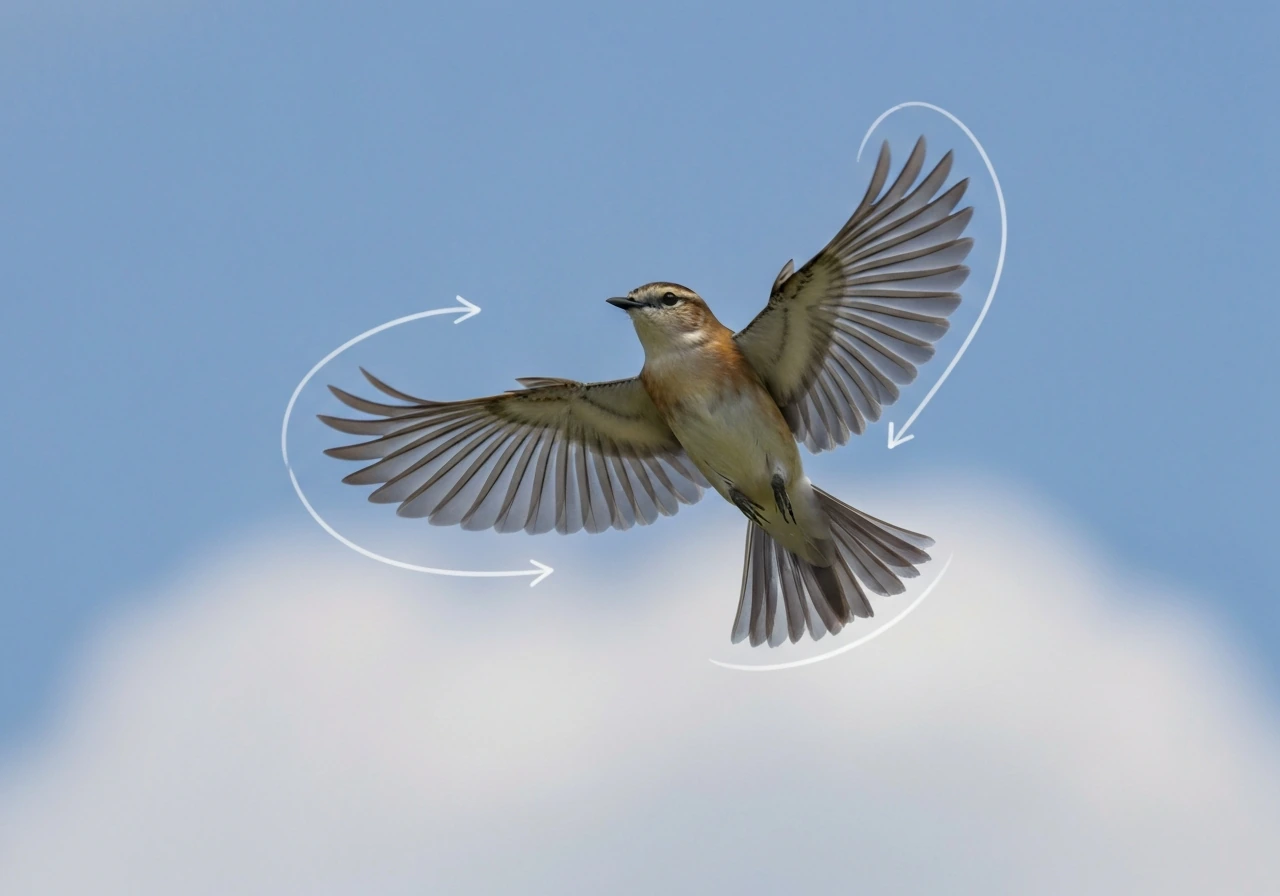
The basic anatomy that makes flight possible
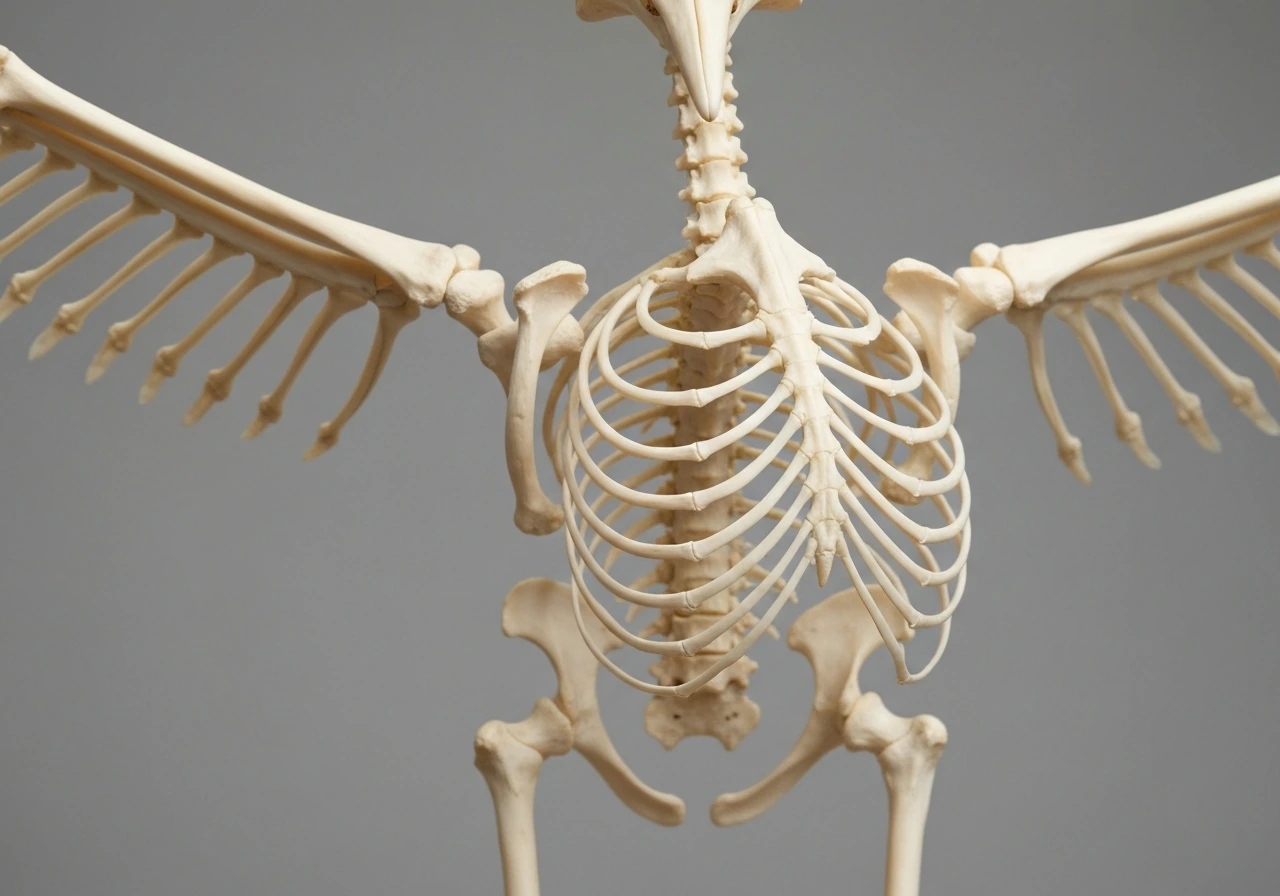
Start with the skeleton. A flying bird's bones are pneumatized, meaning they contain air-filled cavities connected to the respiratory system's air sacs. To understand how a bird learns to fly, it helps to look not only at anatomy but also at development and practice from the nest to the first flights A flying bird's bones are pneumatized. This keeps the skeleton surprisingly light without sacrificing structural strength. The wings themselves are a modified forelimb, with a humerus, radius, ulna, and a fused hand region (the carpometacarpus) that anchors the primary feathers. But the real engineering story is in the chest.
The sternum (breastbone) in flying birds projects forward into a prominent ridge called the keel, or carina. Think of it as the anchor point for the entire flight engine. Without a deep keel, there's nowhere for the major flight muscles to attach with enough leverage. This is not a minor detail: it's the single most reliable skeletal indicator of whether a bird can generate powered flight. If you want to connect the anatomy to motion, next look at how is a bird adapted to fly in practical terms.
Supporting the keel is a shoulder girdle made up of the coracoid, scapula, and furcula (the wishbone). These bones brace the thorax against the enormous forces produced during flapping, essentially stopping the chest from collapsing inward every time the wings beat downward. This shoulder girdle built from the coracoid, scapula, and furcula helps strengthen the thorax for wing loading, supporting powerful flapping braces the thorax against the enormous forces produced during flapping. The furcula also acts somewhat like a spring, storing and releasing elastic energy across each wingbeat cycle.
The two flight muscles you need to know
Two muscles do nearly all the work of powered flight. The pectoralis is the big one, driving the powerful downstroke that generates lift and thrust. It's the breast meat you see on a chicken or turkey, and in strong fliers it can account for 15 to 25 percent of total body mass. The second muscle, the supracoracoideus, sits beneath the pectoralis and controls the upstroke, pulling the wing back up and forward to reset for the next beat. It's only about one-fifth the mass of the pectoralis, but it's critical, especially at slow speeds and during hovering. Both muscles attach to the humerus and anchor on the keeled sternum. Without the keel, neither muscle has the leverage it needs.
How wings generate lift and manage airflow
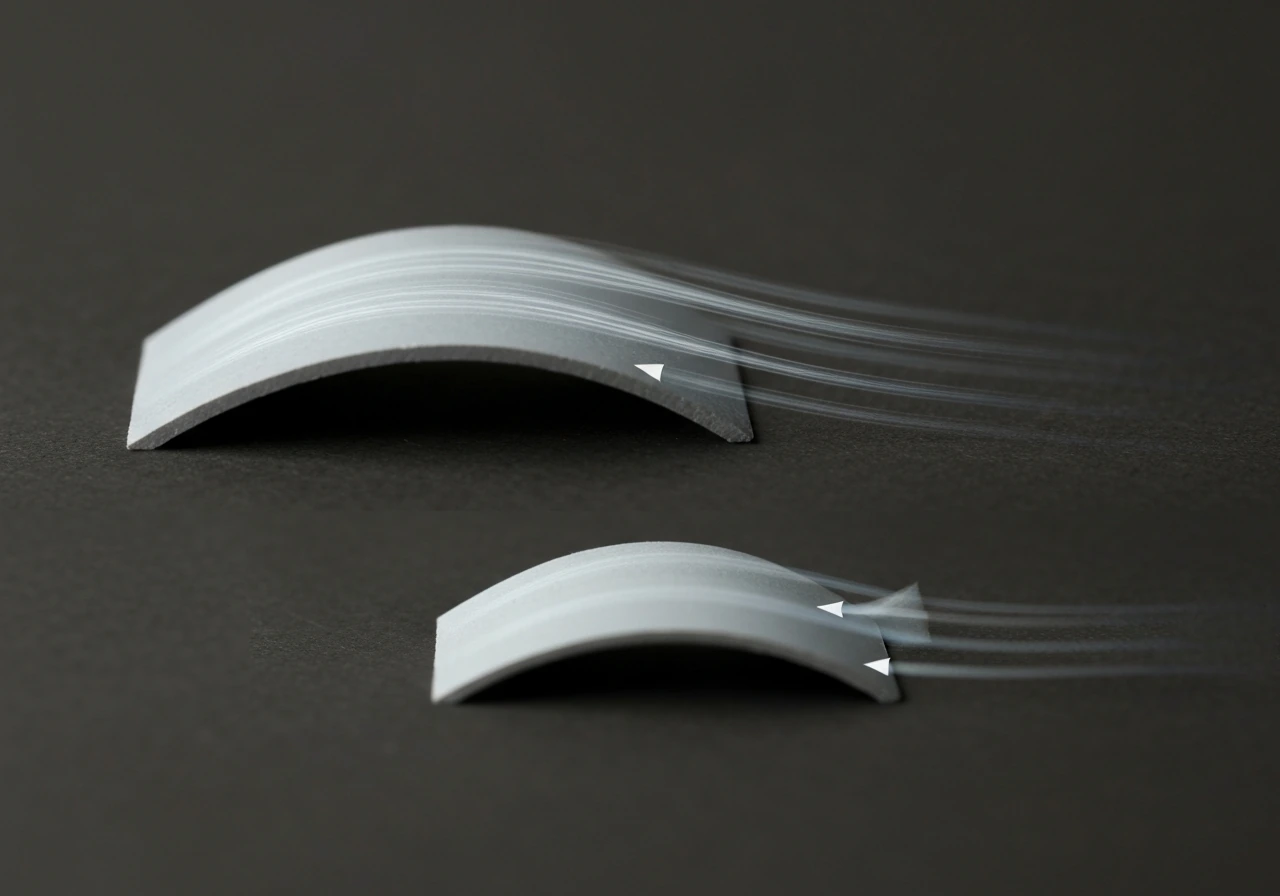
A bird's wing is an airfoil: curved on top, flatter on the bottom. As the wing moves forward through air, it forces air to travel faster over the curved upper surface than the flat lower surface. Faster air means lower pressure, and that pressure difference is what generates lift. This is exactly the same principle behind aircraft wings, and birds have been refining it for roughly 150 million years.
During a flapping wingbeat, the downstroke is primarily the power stroke: the wing pushes air downward and backward, producing both lift (upward force) and thrust (forward force). The upstroke in many birds is more of a recovery stroke, with the wing partially folded to reduce drag. In birds that hover, like hummingbirds, both the downstroke and upstroke generate lift through a nearly figure-eight wing motion.
Gliding vs. flapping: two ways to stay airborne
Flapping and gliding are two ends of a spectrum, and most birds use both at different times. Flapping is energetically expensive but gives full control over speed and direction. Gliding trades altitude for forward movement by angling the wings to let gravity do the work, costing almost no muscle energy. Soaring birds like albatrosses and vultures have evolved to exploit rising air currents (thermals and ridge lift), staying airborne for hours without a single flap. The wing shape determines which strategy a bird is best suited for.
Feather mechanics: more than just covering
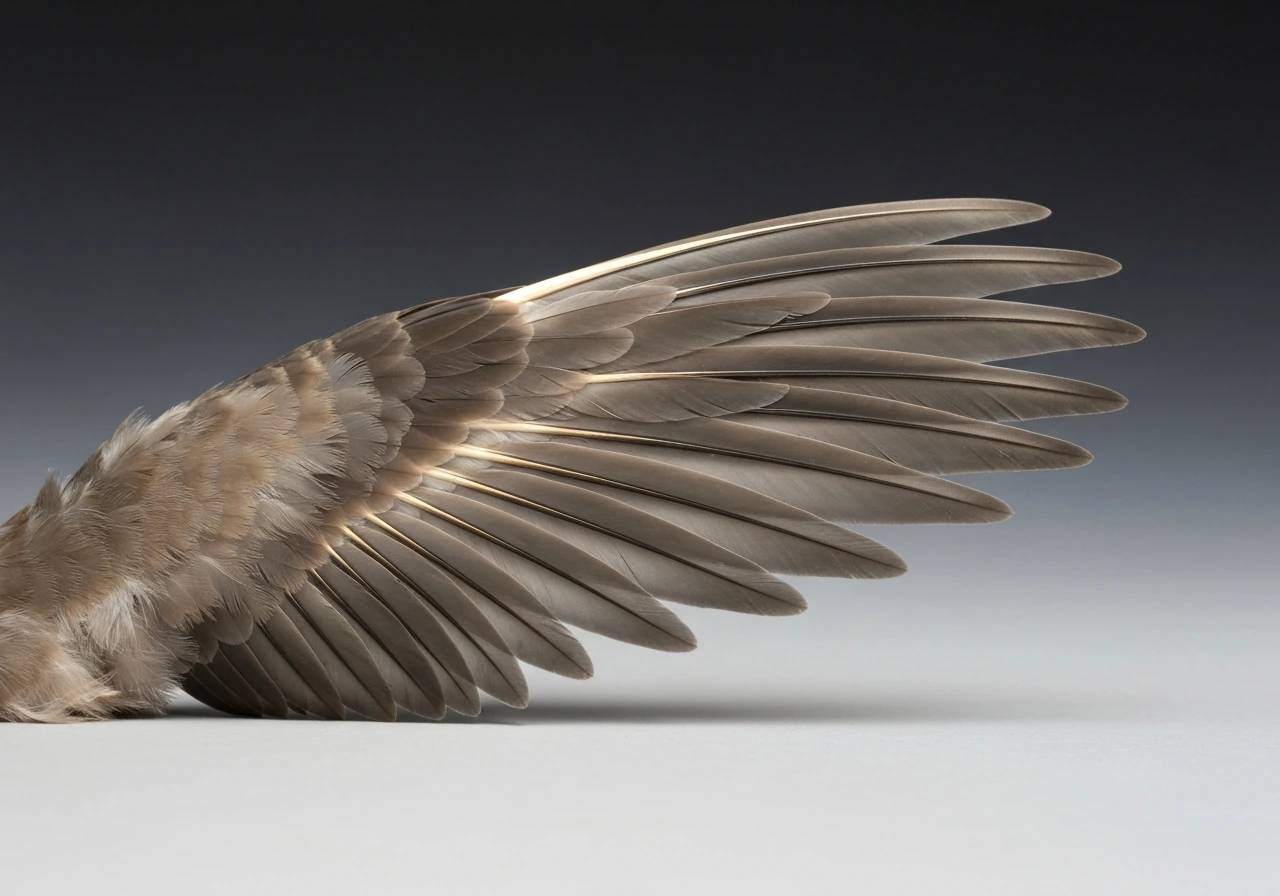
The primary feathers (the long outer flight feathers attached to the hand region) generate most of the thrust, while the secondary feathers (attached to the forearm) contribute the bulk of the lift surface. Specialized flight feathers and feather mechanics help a bird generate lift and manage airflow so it can stay airborne primary feathers. These feathers are not rigid: they flex and twist under aerodynamic load. This passive aeroelastic deflection is actually useful: as airspeed increases, the feather tips twist to reduce their local angle of attack, which helps delay stall and provides a degree of automatic roll stability without the bird doing anything consciously.
At the wingtip, many birds (hawks, eagles, storks) have slotted primaries: the outer feathers splay apart like fingers, creating a non-planar, slotted configuration. This reduces induced drag, the energy penalty of generating lift, and gives the bird finer roll and yaw control near stall. You can think of each slotted feather as a tiny winglet redirecting tip vortices more efficiently. These slots can even be deployed asymmetrically to help roll the body during turns.
One more small but important structure: the alula, a tuft of feathers on the leading edge of the wing attached to what corresponds to the bird's thumb. At slow speeds and high angles of attack (think landing or tight maneuvering), the bird raises the alula slightly, which generates a leading-edge vortex that keeps airflow attached and maintains lift even when the wing is on the verge of stalling. It's essentially the bird's equivalent of a leading-edge slat on a commercial aircraft.
The respiratory and energy systems that keep birds airborne
Flight is extraordinarily metabolically demanding. A bird's muscles need a continuous, high-volume oxygen supply that mammalian lungs simply couldn't provide at the same body size. Birds solved this with one of the most efficient gas-exchange systems in vertebrate biology.
Instead of the bidirectional tidal breathing mammals use (air in, air out through the same path), birds breathe unidirectionally. A network of air sacs (typically nine of them) acts as bellows, directing air through the lungs in one continuous direction across two breath cycles: inhale, air moves to the caudal (rear) air sacs; exhale, that same air moves through the lung; second inhale, it continues to the cranial (front) air sacs; second exhale, it exits. The lung itself is not the part that expands and contracts: it stays relatively rigid, and air flows through tiny tubes called parabronchi in one direction continuously.
Inside those parabronchi, gas exchange happens through a cross-current architecture: blood flows through the exchange tissue at roughly a right angle to the direction of airflow. This geometry extracts more oxygen from each breath than a parallel-flow or counter-flow system would allow, and it's a big part of why birds can sustain powered flight at altitudes where mammals would pass out. Altogether, these respiratory and energy systems are a major reason why the bird can fly for extended periods. Bar-headed geese famously fly over the Himalayas at altitudes above 7,000 meters, partly because of this system.
On the cellular level, bird flight muscles are densely packed with mitochondria and oxidative enzymes, supporting high-capacity aerobic metabolism. During sustained or migratory flight, the primary fuel source is stored fat (lipids), which provides roughly twice the energy per gram compared to carbohydrates. Some birds also catabolize a small amount of protein during very long endurance flights. Long-distance migrants can sustain flight for dozens of hours by tapping these fat reserves efficiently, and studies on migratory birds show that exercise endurance can differ substantially between short- and long-distance migrants even when their peak aerobic capacity measurements look similar.
Control and stability: feathers, tail, and fine-tuned steering
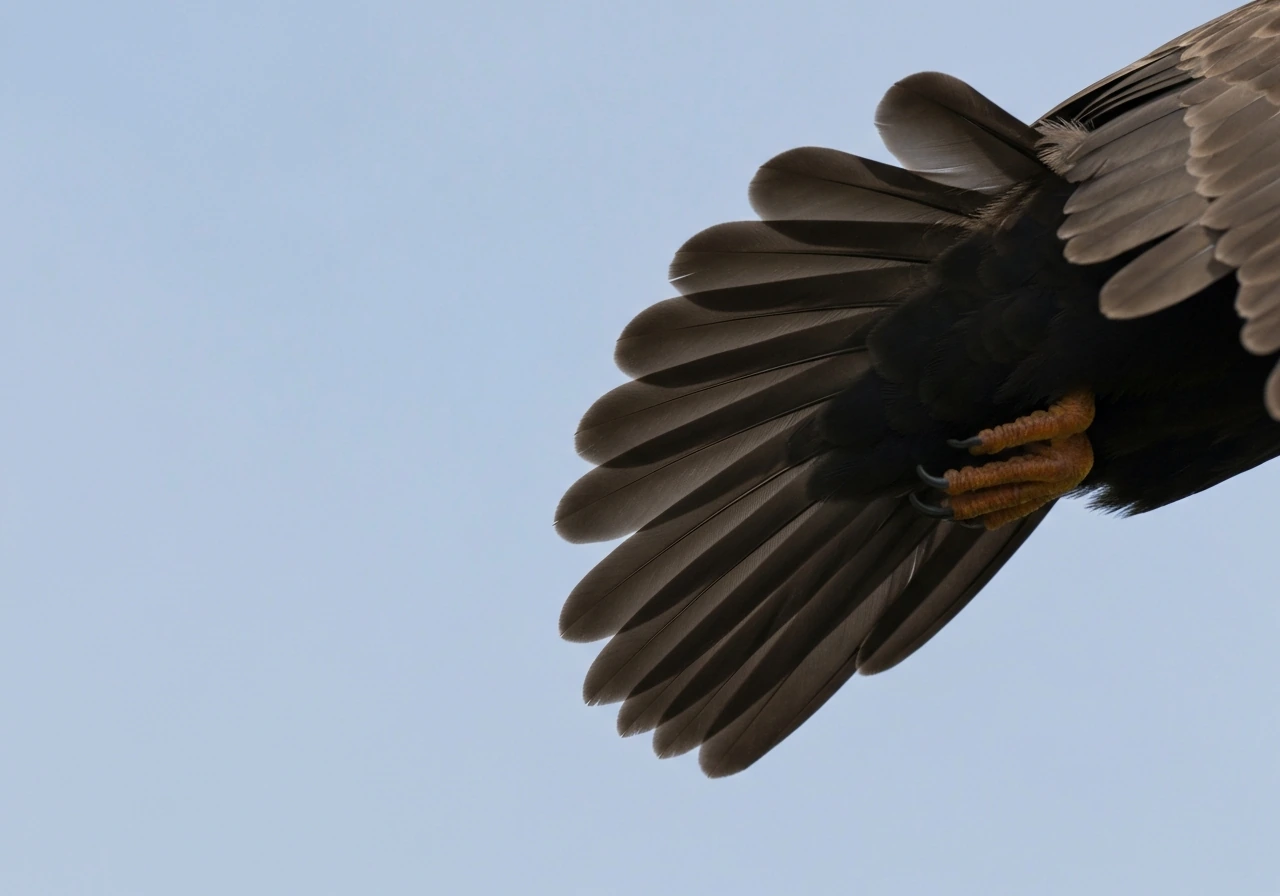
Generating lift is only half the problem. Staying stable, turning precisely, and landing without crashing requires a whole separate set of features. Birds handle this through a combination of tail geometry, asymmetric wing adjustments, and the passive mechanical properties of individual feathers.
The tail fan of rectrices (tail feathers) is a multi-purpose control surface. Spreading the tail increases drag and provides a braking effect during landing. Cocking the tail upward or downward pitches the bird's nose. And the tail contributes significantly to yaw stability: research specifically focused on how bird tails influence yawing moments confirms that a spread tail acts as a stabilizing fin, keeping the bird from spinning off-axis during straight flight and helping it recover from small disturbances. Barn swallows with longer tails show measurably different stability characteristics from shorter-tailed individuals.
Turning is managed through asymmetric wingbeat kinematics. Hummingbirds, for example, control the radius of a turn through asymmetrical beating (one wing beats with more force or a different stroke amplitude than the other), while they use overall body tilt to control turning velocity. The same principle applies in modified forms to other agile fliers like falcons and swallows. Coarser adjustments to wing shape, like partially folding one wing or changing the angle of the alula, provide additional roll and pitch authority.
How flight features differ across species
Not all birds fly the same way, and their anatomy reflects that. Wing loading (body mass divided by wing area) is one of the most useful numbers for predicting a bird's flight style. Low wing loading means a large wing relative to body weight, which translates to slow, efficient soaring. High wing loading means a small wing relative to mass, which means the bird must fly fast to stay airborne and is built for speed and power rather than efficiency.
| Flight style | Example species | Wing shape | Wing loading | Key adaptation |
|---|---|---|---|---|
| Dynamic soaring | Albatross | Long, narrow (high aspect ratio) | Moderate to high | Exploits wind gradient over ocean for nearly effortless gliding |
| Thermal soaring | Turkey vulture, eagle | Broad, slotted tips | Low | Slotted primaries reduce induced drag; circles in thermals |
| High-speed pursuit | Peregrine falcon | Tapered, swept | High | Streamlined shape minimizes drag at extreme speed |
| Agile maneuvering | Barn swallow, swift | Swept, pointed | Moderate | Long tail and swept wings for rapid direction changes |
| Hovering | Hummingbird, kestrel | Short, broad | Low | Symmetric up/downstroke; figure-eight wingbeat path |
| Flap-glide (intermittent) | Woodpecker, finch | Rounded | Moderate | Alternates bursts of flapping with wings-folded gliding |
The supracoracoideus muscle is a good indicator of flight style on its own. In species that hover or perform slow maneuvering flight, this muscle is proportionally larger relative to the pectoralis because active upstroke control matters more. In fast-cruising birds where the upstroke is partly passive (aerodynamics recover the wing position automatically at high speed), the supracoracoideus can be proportionally smaller. Comparing this ratio across species reveals a lot about how they actually use their wings.
What flightless birds lack (and what that tells us)
Flightless birds are essentially a controlled experiment in what happens when you remove one or more key flight features. The most consistent missing piece is the sternal keel. Ratites, the group that includes ostriches, emus, rheas, cassowaries, and kiwis, are defined in part by their flat (ratite means "raft-like") sternum with no projecting keel. Without the keel, the pectoralis and supracoracoideus have no mechanical leverage, which means no powerful downstroke, which means no powered flight regardless of wing size. Together with the wing structure and muscle control described earlier, these missing features explain what enables a bird to fly powered flight.
Ratites also show other skeletal changes: reduced or absent clavicles (emus are an exception), fusion of the scapula and coracoid into a single unit, and reduced skeletal pneumatization. In ostriches and emus, only the femur is pneumatized, compared to the extensive pneumatization seen in strong fliers. The thoracic girdle has been restructured from a flight-force-bearing system into one optimized for bipedal running.
Penguins are a fascinating exception worth knowing. They are genuinely flightless in air, but they have retained a keeled sternum and large pectoral muscles. Those muscles were repurposed for wing-propelled underwater swimming, where the physics of generating thrust through a dense medium (water vs. air) is different but mechanically analogous. This tells you that losing the keel is not inevitable when flight disappears: sometimes the muscle-keel system survives because it gets a new job.
Weak fliers, like rails or some domesticated chickens, often sit in the middle: they have a keel and functional flight muscles, but the muscles are proportionally small, the wing loading is high for their body size, or the feather structure is less optimized. They can get airborne but can't sustain it for long or at altitude. Understanding what they're missing is actually the clearest way to understand why the full set of features matters in strong fliers.
What to look for on a real bird
If you want to connect all of this to something you can actually observe, here's what to look for. Those same anatomy and airflow systems are also the answer to how is a bird able to fly connect all of this. On a dead bird or a museum specimen, press your finger along the center of the breastbone: in a strong flier, you'll feel a sharp ridge (the keel) projecting outward.
On a live bird, watch the wingtip feathers during a slow glide or landing approach: if you see the outer primaries spread apart like fingers, you're watching slotted wings manage induced drag in real time. Look for the alula raising slightly during a bird's final approach to a perch.
In swallows or swifts, notice how they tilt their whole body through a turn rather than just angling a wing tip: that's body orientation controlling turning velocity, exactly as documented in hummingbird flight studies.
Understanding how a bird is adapted to fly, or why some birds can't fly at all, becomes much clearer once you see these features as a system rather than a checklist. The short answer to why do bird fly is that their anatomy, wing design, and energy systems work together to generate lift and sustained thrust why some birds can't fly at all. The skeleton provides the frame and anchor points, the muscles provide the power, the feathers shape and manage the airflow, the respiratory system keeps the fuel burning at a rate no mammal can match, and the tail and wing posture handle the fine-tuning. Change any one component significantly, and you shift the bird's entire flight envelope: sometimes toward a specialized niche, sometimes all the way to flightlessness.
FAQ
If a bird has big wings, does that guarantee it can fly strongly?
Most birds need the keel and the two main chest muscles, because powered flight depends on leverage for a strong downstroke. If you only focus on wings or feathers, you can still get fooled by birds that have functional wings but short endurance or limited altitude capability.
How can I tell from the bird’s build whether it will be a slow glider or a fast flier?
Wing loading is the easiest quick predictor to compare “how they fly.” Low wing loading usually means gliding and soaring are efficient, while high wing loading typically requires faster speeds to maintain lift, making takeoffs and sustained hovering harder.
When do feather features like slotted primaries and the alula matter most?
Slotted primaries and the alula are most useful right near the edge of stall. That means you will notice their behavior during slow approaches, landing, or tight maneuvers, not during high-speed cruising.
What limits a bird’s ability to fly at high altitude, even if the anatomy looks like a flier?
Not exactly. Even with the right skeleton and muscles, flight can fail if the bird cannot supply enough oxygen and sustain muscle metabolism. Birds that struggle at high altitude often show it through reduced endurance or altered flight behavior rather than “missing” any single structure.
Why do some birds hover but others cannot, even if they both can fly?
Hovering usually demands active control of the upstroke, so the supracoracoideus tends to be relatively larger in those species. Fast-cruising birds often rely more on aerodynamic recovery at speed, so they do not need the same degree of upstroke muscle investment.
Do birds always flap to stay in the air?
A bird does not need to flap all the time, but it does need enough wingbeat power when it cannot rely on lift from the environment. Look for birds alternating flapping with glides, especially in wind or thermal conditions.
How do tail movements help with landing without overshooting or crashing?
Yes. During landing, the tail and wing posture change your drag and control forces. A spread tail can increase braking and stabilize heading, but the exact pattern varies by species and approach speed.
Why do birds with similar-sized wings still differ a lot in maneuverability?
Wings can look similar across species, yet stall behavior and maneuver control can differ because feather mechanics and wing shape change the delay to stall and the effectiveness of tip control. Two birds with the same wing size can still have different safe-speed ranges.
Are flightless birds always missing the same structure that flying birds have?
In many cases, the key missing piece is the sternal keel, but that does not mean “no keel equals flightlessness” in every evolutionary scenario. Penguins show that some flight muscle systems can be repurposed if the bird switches its primary thrust medium from air to water.
What are the best real-world signs to check if a bird specimen can do powered flight?
If you compare a museum specimen, you can feel for the keel, but that only tells you the skeletal anchor strength. For a fuller test of “can it fly,” you also need to consider muscle size and the integration of wing and feather mechanics, not just one bone.
Next Articles
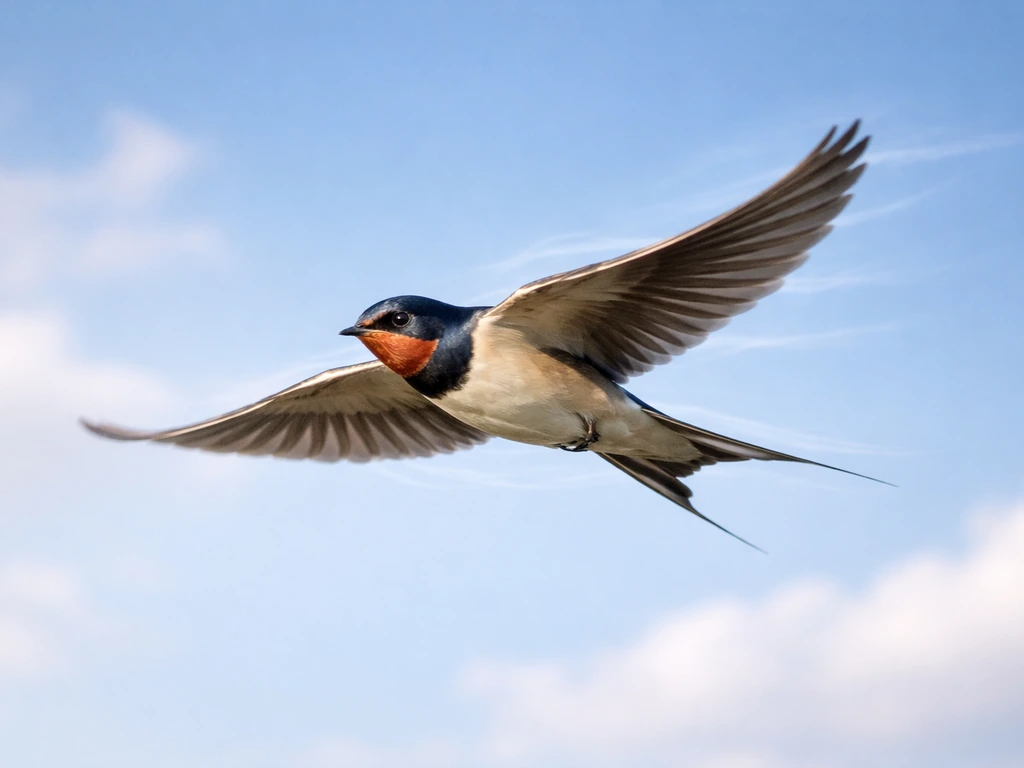
Why the Bird Can Fly: Lift, Thrust, Control, Anatomy
Learn why birds can fly: lift and thrust from wings, control via feathers, and anatomy built for flight versus flightles
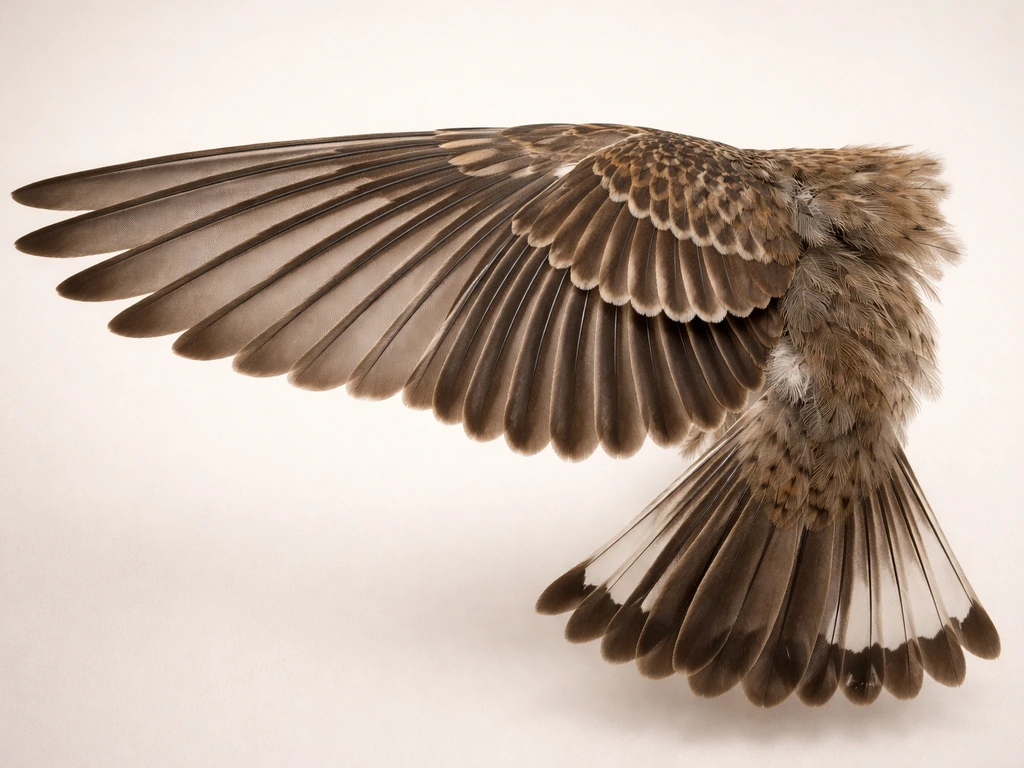
Which Feathers Help a Bird Fly: Wing, Tail, and Control
Learn which feathers enable flight: primaries, secondaries, tertials, wing coverts, and tail controls for lift and steer
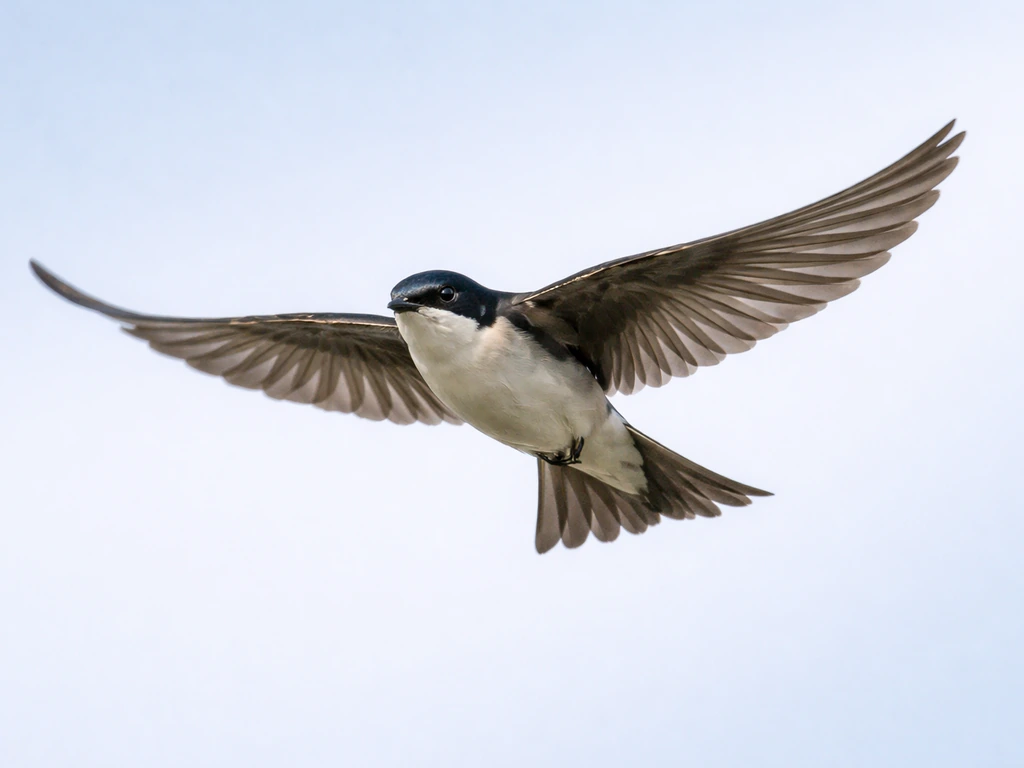
How Is a Bird Adapted to Fly? Key Anatomy and Mechanics
Learn how birds fly: lightweight bones, powerful breast muscles, feather lift, wing shape, and aerodynamics for soaring