
Birds can fly because their bodies are built, from the inside out, to solve three problems at once: generating lift to rise against gravity, generating thrust to move forward, and maintaining control so they don't tumble out of the sky. When you put these pieces together, you can see exactly what makes a bird fly rather than just why wings matter lift, thrust, and control. Every system in a bird's anatomy, from hollow bones to curved feathers to a massive chest muscle, exists to serve one or more of those three jobs. No single feature explains flight. No single feature explains flight; instead, bird flight depends on a coordinated three-force system of lift, thrust, and control what enables a bird to fly. To understand how is a bird adapted to fly, look at how lift, thrust, and control are built into wing shape, feather design, body weight, and the muscles and skeleton that power flight. It's a toolkit that evolution has been refining for roughly 150 million years.
Why the Bird Can Fly: Lift, Thrust, Control, Anatomy

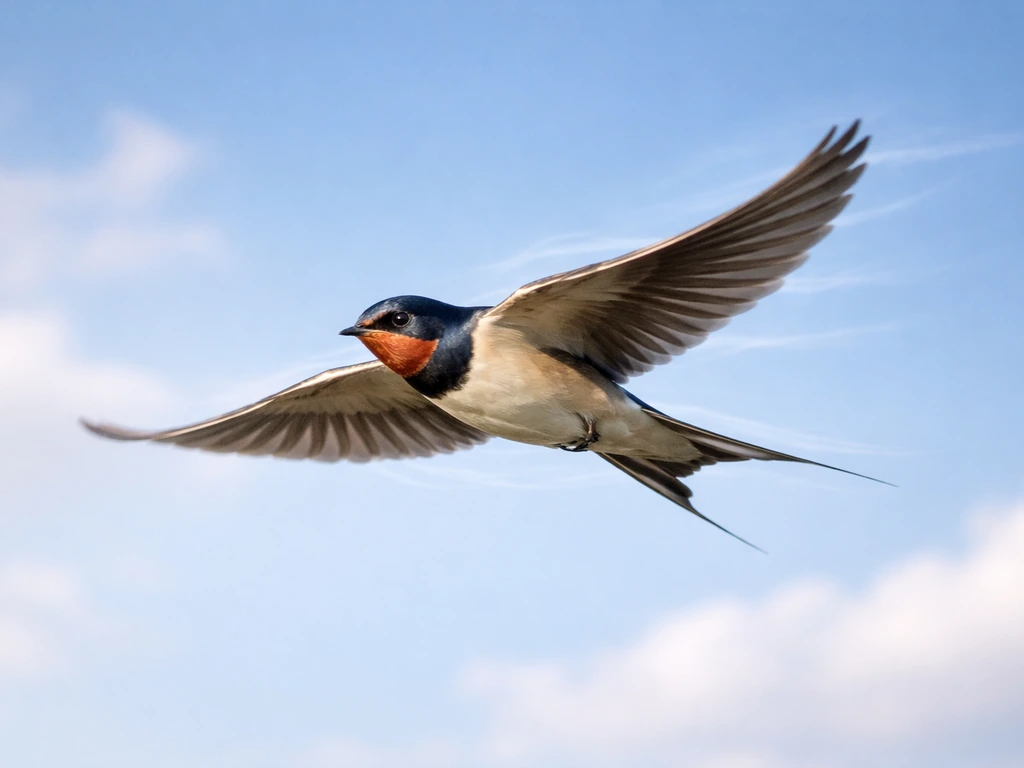
What 'can fly' really means: lift, thrust, and control
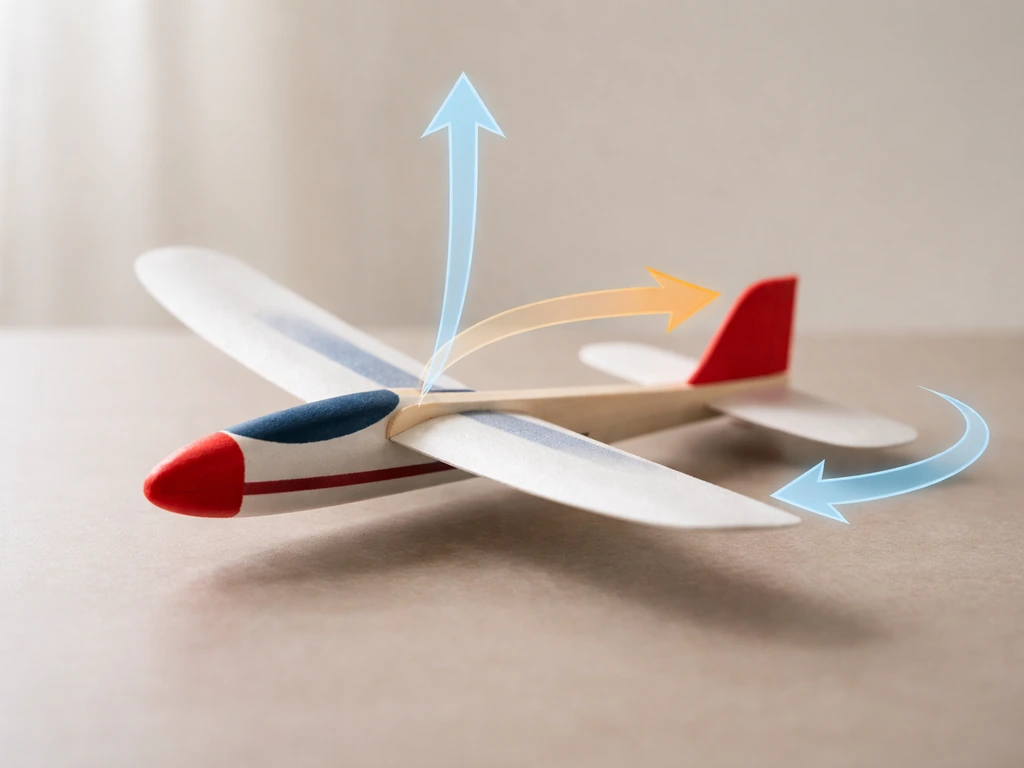
When people ask why birds can fly, they usually want to know about wings. But wings alone are not the answer. Flight requires three things working together simultaneously. Lift is the upward force that keeps a bird airborne, generated when air moves faster over a curved wing surface than under it, creating a pressure difference. Thrust is the forward force that keeps a bird moving through the air fast enough for the wings to keep generating lift. Control is the bird's ability to steer, bank, stabilize, and land without crashing.
These three forces map directly onto the anatomy. Lift comes mainly from wing shape and angle. Thrust comes primarily from the downstroke of flapping. Control comes from adjustable wing geometry, tail position, and subtle shifts in body posture. Understanding this three-part framework is the fastest way to make sense of everything else, including why certain birds fly differently from others and why some birds cannot fly at all.
Wing and feather anatomy that makes lift possible
A bird's wing is not a flat surface. It's a three-dimensional structure that can change shape mid-flight. The wing can alter its angle relative to the airflow, spread or close the feathers at the tips, and physically shorten or lengthen by flexing at the wrist and elbow. That adaptability is what makes bird flight aerodynamically sophisticated rather than just a fixed gliding surface.
The feathers do much of the aerodynamic work, and different feathers have different jobs. Primary flight feathers sit on the outermost, distal part of the wing and create most of the propelling force in flight. The secondary feathers, attached to the ulna bone along the inner wing, are less mobile but provide a greater share of lift. Think of it this way: the primaries push, the secondaries carry.
At the wingtips, many species have what are called slotted wingtips, where the outer primary feathers spread apart and splay upward under aerodynamic load. This staggered, non-planar configuration is not random. The slots reduce induced drag (the drag created as a byproduct of lift) and help manage the vortices that swirl off the wingtip. It's a biological solution to the same problem aircraft engineers address with winglets.
There's also a small but critical structure called the alula, a tuft of feathers attached to the bird's 'thumb.' When a bird slows down or comes in to land, it moves the alula slightly forward and upward, creating a narrow slot on the leading edge of the wing. This slot smooths airflow over the wing at steep angles, delaying the stall that would otherwise cause the wing to stop generating lift. It functions almost identically to the leading-edge slats on a commercial aircraft.
Bird body engineering: lightweight skeleton and powerful muscles
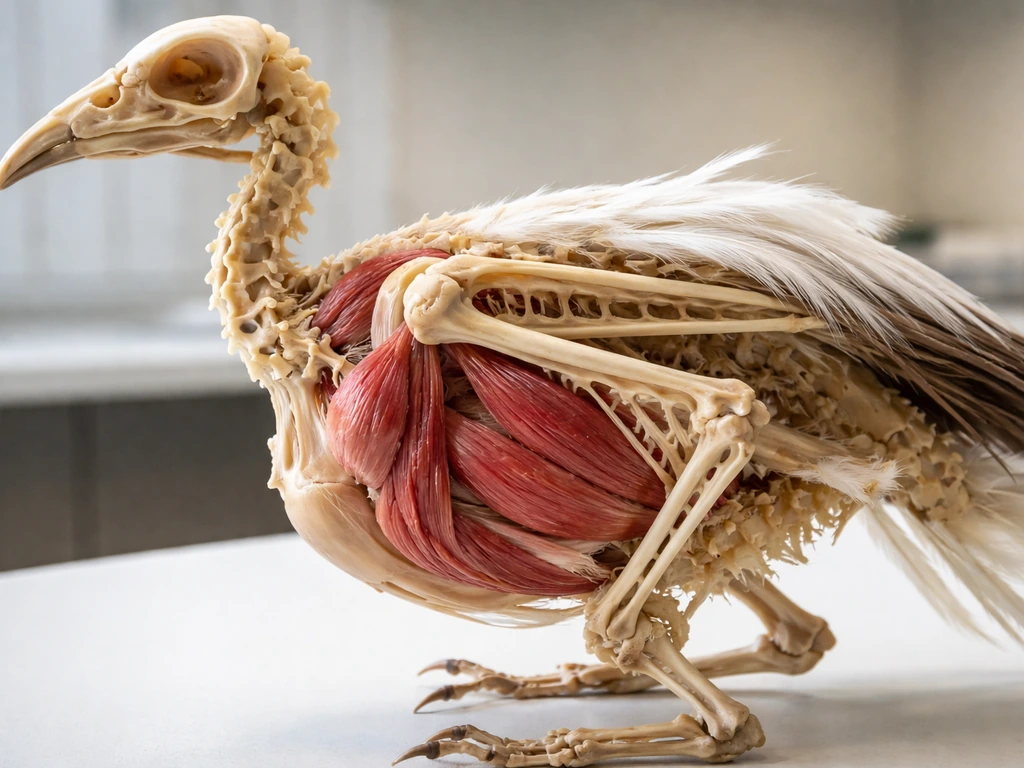
Feathers and wing shape would mean nothing if the body beneath them were too heavy to get off the ground. Bird skeletons solve this with pneumatization: many bird bones are hollow and connected to the respiratory system, so air sacs extend into the bones themselves. This integration gives birds a skeleton that is both structurally strong and dramatically lighter than a comparably sized mammal's skeleton.
The muscle side of the equation is equally important. Two large paired muscles power wing movement. The pectoralis major, the biggest muscle in a flying bird's body, pulls the wing down on the power stroke. The supracoracoideus, sitting beneath it, raises the wing for the upstroke. Together they make up roughly 15 to 25 percent of a flighted bird's total body weight, which tells you just how central flapping is to the whole enterprise.
Both muscles anchor to the keel, a blade-like ridge that projects from the sternum (breastbone). The keel is the structural cornerstone of flight. Without it, those large muscles would have nothing solid to pull against, and the mechanical leverage needed to flap a wing would simply not exist. The keel's presence or absence is one of the clearest anatomical dividing lines between birds that fly and birds that do not.
How flapping works: converting effort into thrust and motion
Flapping is not as simple as 'wings go down, bird goes up.' The downstroke and upstroke do different things, and the way the wing moves through each phase is asymmetrical by design. The downstroke is the power stroke. As the wing sweeps downward and slightly forward, it pushes air back and down, generating both thrust and the vertical component of lift that keeps the bird aloft. The upstroke is more of a recovery phase in most birds, though in faster or more agile fliers the upstroke can also contribute meaningful thrust depending on wing kinematics.
The timing and angle of the wing through the downstroke is finely tuned. Research on cockatiels and other birds shows that the wing's angle of attack (the angle at which the wing meets oncoming air) changes continuously through the stroke. Mid-downstroke, a relatively low angle of attack allows energy to be stored in the supracoracoideus tendon, which then assists in powering the upstroke. This mechanical efficiency is not incidental; it makes sustained flapping energetically feasible.
At slower flight speeds, a bird flaps with a higher effective angle of attack and more vigorous downstroke to generate enough force to stay aloft. At higher speeds, the aerodynamic requirements shift: the advance ratio (the ratio of the bird's forward speed to its wingtip speed) increases, and the wing needs to produce less raw lift per stroke because forward momentum is already helping. Birds adjust both wing shape and the kinematics of their flapping stroke to handle this changing balance across the speed range.
Flight control in the air: steering, stability, and maneuvering
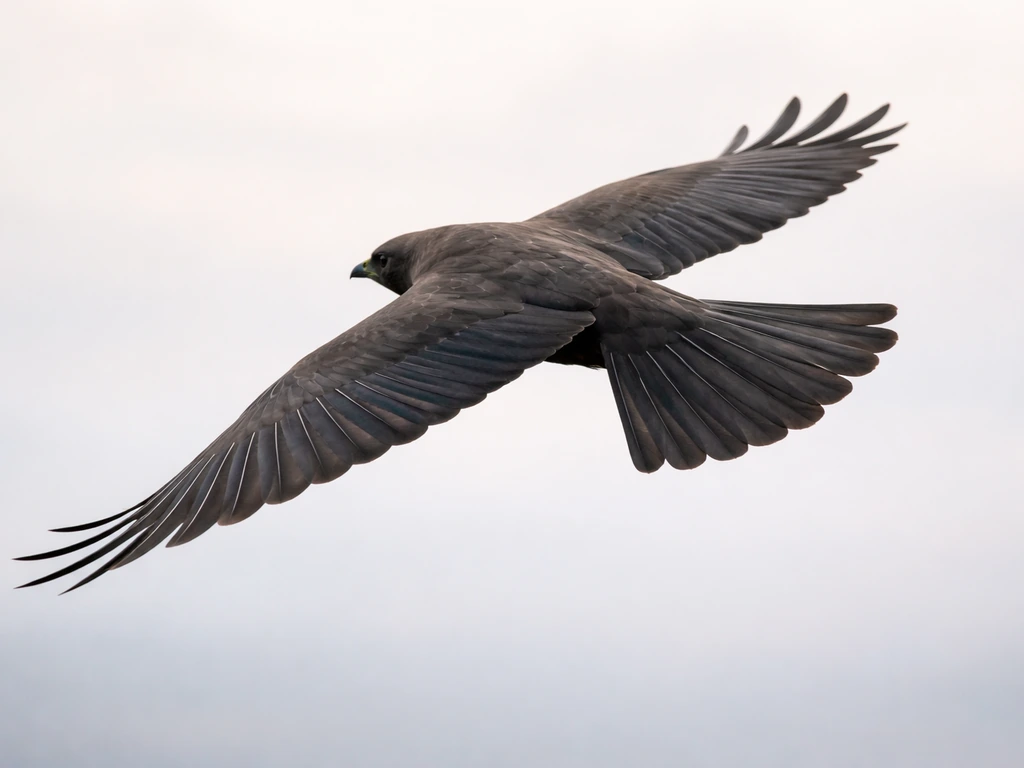
Staying in the air is one challenge. Going where you want to go is another. Birds handle control through a combination of passive stability built into their body shape and active adjustments made in real time by their nervous system.
The tail is a primary control surface. In a study on bird flapping flight, tail aerodynamics are discussed as influencing pitch stability modes alongside passive morphology and active neural stabilization The tail is a primary control surface. It adjusts pitch (nose up or nose down) through up-and-down fanning movements. For lateral control and roll, birds tilt the tail and twist it, coupling tail movement to wing adjustments. Because birds lack a vertical fin like an aircraft's rudder, yaw stability (resistance to spinning around the vertical axis) comes from a combination of wing and body geometry and subtle tail movements. Research on soaring birds shows that dihedral angle (the slight upward V-shape of spread wings) contributes to passive roll stability, reducing how much active correction the bird has to make.
Wings themselves are major control tools. Asymmetric wing twisting, where one wing changes its angle of attack relative to the other, can drive roll to initiate a turn. Spreading or retracting one wing changes the lift distribution and lets a bird bank sharply. This is how birds execute the tight, rapid turns you see in swallows or starling murmurations. It's not magic; it's active morphing of aerodynamic surfaces happening faster than the eye can follow.
Why some birds can't fly: flightless species explained
Flightlessness is not a defect. It's an evolutionary strategy that has appeared independently many times across bird lineages. Ratites (ostriches, emus, rheas, kiwis, and cassowaries) are the most familiar group, but penguins and several island species also lost flight. In each case, the underlying anatomy changed in predictable ways.
The most consistent change is in the sternum and keel. Ratites have a flat, unkeeled sternum, which means the large flight muscles have no ridge to anchor against. Without that anchor, the mechanical leverage for powerful flapping simply cannot exist. Smaller pectoral muscles, a smaller or absent sternum keel, and often reduced wing bones follow from the same evolutionary logic: once flight stops being necessary or advantageous, the energetically expensive structures that support it get reduced over generations.
Penguins are an instructive exception. They retained a keel and large pectoral muscles, but their wings became dense, flipper-like structures adapted for underwater propulsion rather than aerial flight. Their bones are less pneumatized and denser, which would make flight energetically impossible even if their wing shape still permitted it. Flightlessness in penguins is not about absent flight hardware so much as hardware that was repurposed.
| Feature | Flying Bird | Ratite (e.g., Ostrich) | Penguin |
|---|---|---|---|
| Sternal keel | Prominent, well-developed | Absent or greatly reduced | Present |
| Pectoral muscle mass | 15–25% of body weight | Greatly reduced | Large (for swimming) |
| Wing bones | Pneumatic, lightweight | Reduced | Dense, flipper-adapted |
| Flight feathers | Asymmetric, aerodynamic | Soft, non-aerodynamic | Scale-like, reduced |
| Primary locomotion | Aerial flight | Running | Swimming |
Species differences and what to observe to understand bird flight
Not all flying birds fly the same way, and the differences come down to two key measurements: aspect ratio and wing loading. Aspect ratio is the ratio of wingspan to average wing width. A high aspect ratio means long, narrow wings, like those of an albatross or a swift. These wings minimize induced drag and are efficient for sustained gliding or fast travel. A low aspect ratio means short, broad wings, like those of a pheasant or a woodcock. These generate powerful lift quickly, enabling explosive takeoffs and agile maneuvering in tight spaces, at the cost of efficiency over distance.
Wing loading is the bird's body weight divided by wing area. Birds with high wing loading (heavy relative to their wing size, like many ducks) need to fly faster to generate enough lift and cannot fly as slowly. Birds with low wing loading (light relative to wing area, like many raptors) can soar at low speeds and ride thermal updrafts efficiently. These two variables, aspect ratio and wing loading, explain most of why a hummingbird and a condor look like they're doing completely different things even though both are technically 'birds flying.'
If you want to connect this biology to what you actually see outdoors, here's a practical checklist of things to observe on any flying bird:
- Wing shape at rest and in flight: are the wings long and narrow (high aspect ratio, built for efficiency) or short and broad (built for power and agility)?
- Wingtip silhouette: do the outer primaries splay into slots (common in soaring birds like hawks) or are the tips pointed and swept back (common in fast fliers like falcons and swifts)?
- Flapping rhythm: slow, deep wingbeats suggest large muscles working against high wing loading; rapid shallow beats suggest smaller wings at high stroke frequency
- Tail use during landing: watch for the tail spreading wide and angling down to act as an aerodynamic brake, and look for the alula lifting on the leading edge of the wing as the bird slows
- Glide-to-flap ratio: soaring birds (thermal specialists) rarely flap; fast direct fliers flap almost continuously; this ratio reflects their wing morphology and energy strategy
The anatomy behind flight connects directly to what you can observe. A red-tailed hawk circling a thermal is demonstrating high aspect ratio, low wing loading, and passive stability working together. A pheasant exploding out of the brush is showing you what large pectorals, a prominent keel, and low aspect ratio wings can do when burst power matters more than efficiency. Once you know what to look for, every bird in the air is a working demonstration of the biomechanics covered here.
The question of why birds can fly is ultimately a question about how many separate biological systems evolved to solve the same three problems: lift, thrust, and control. Bird flight depends on more than one trait, so the best way to understand it is to look at how lift, thrust, and control work together what are the features that help a bird to fly. To answer how does a bird learn to fly, it helps to look at development, practice, and the role of nervous system and muscle control as fledglings grow. The feathers, the hollow bones, the keel, the pectoralis, the alula, the tail, the wing geometry, all of them are solutions to those three constraints. Flightless birds tell the story in reverse: remove the keel, reduce the muscles, and the capacity for flight disappears. Understanding that cause-and-effect chain is the clearest answer to the question, and it's also one of the more elegant stories in all of natural history.
FAQ
If wings are not the only reason, what single feature most clearly distinguishes a bird that can fly from one that cannot?
The keel (sternum ridge) is a strong dividing line. Birds that fly have a prominent keel for anchoring the large pectoral muscles, so they can generate the leverage needed for repeated power strokes.
Why do some birds glide well but struggle to flap continuously?
Gliding tends to work best when wing shape and wing loading support efficiency, for example higher aspect ratio and lower wing loading. Even a bird with capable muscles may need fewer flaps if it can exploit thermals or updrafts, but it will still rely on flapping to gain altitude or recover from sink.
What’s the difference between “stall” during flight and losing lift more generally?
A stall is a specific failure mode tied to angle of attack reaching too high a value, which disrupts smooth airflow over the wing. The alula and leading-edge slotted wingtips help delay that stall, which is why birds can land and slow down more safely.
Do feathers increase lift because they are soft, or because of their shape and arrangement?
It’s mainly their arrangement and aerodynamic function, not softness. For example, primaries do much of the propelling work, secondaries contribute more to lift, and the way feathers spread or splay helps manage airflow and vortices at the wingtip.
Why can birds turn so sharply if they don’t have aircraft-like rudders?
Birds rely on coordinated wing and tail control rather than a vertical rudder. Yaw control comes from body and wing geometry plus subtle tail adjustments, while roll and bank come from asymmetric wing twisting and changing lift distribution across the wings.
What determines whether a bird’s upstroke contributes thrust, or is mostly just “recovery”?
Wing kinematics and the bird’s flight style matter. In many birds the upstroke is mainly recovery, but faster or more maneuverable species can use upstroke timing and wing motion to add measurable thrust depending on how their wing changes angle during the cycle.
Why do small birds like hummingbirds seem to hover, while larger birds do not?
Hovering is an extreme case of producing enough lift and thrust at very low forward speed. It generally requires high-effective angle of attack control, rapid flapping frequency, and enough muscle power relative to body weight, so anatomy and muscle performance become more demanding as you try to remove forward momentum.
How do wing aspect ratio and wing loading connect to what you see, like swifts versus pheasants?
Aspect ratio influences induced drag and efficiency, so high aspect ratio suits sustained fast travel and gliding, while low aspect ratio favors quick lift generation and agile takeoffs. Wing loading tells you how fast the bird must fly to make sufficient lift, so heavier birds relative to wing area need higher speeds.
Can a bird temporarily “stop flying” without being flightless, like during storms or injuries?
Yes, a bird can lose the ability to fly effectively without becoming flightless genetically. Fatigue, injury, or damaged wing structure can reduce thrust generation, control authority, or stall margins, so the bird may rely on gliding, short bursts, or assistance from updrafts rather than sustained flapping.
How does a bird manage stability in turbulence if control is only partial?
Birds combine passive stability (body and wing geometry like dihedral effects) with active micro-adjustments from the tail, wings, and posture. In rough air they continuously modulate wing angle and tail pitch to keep lift centered over their body, reducing tumble risk.
What’s a common misconception about why birds fly that this article doesn’t fully cover in one place?
A frequent mistake is treating flight as a single recipe, for example “wings create lift.” In reality, lift, thrust, and control must be coordinated in real time, and many anatomy features exist because they solve different parts of that combined problem.